
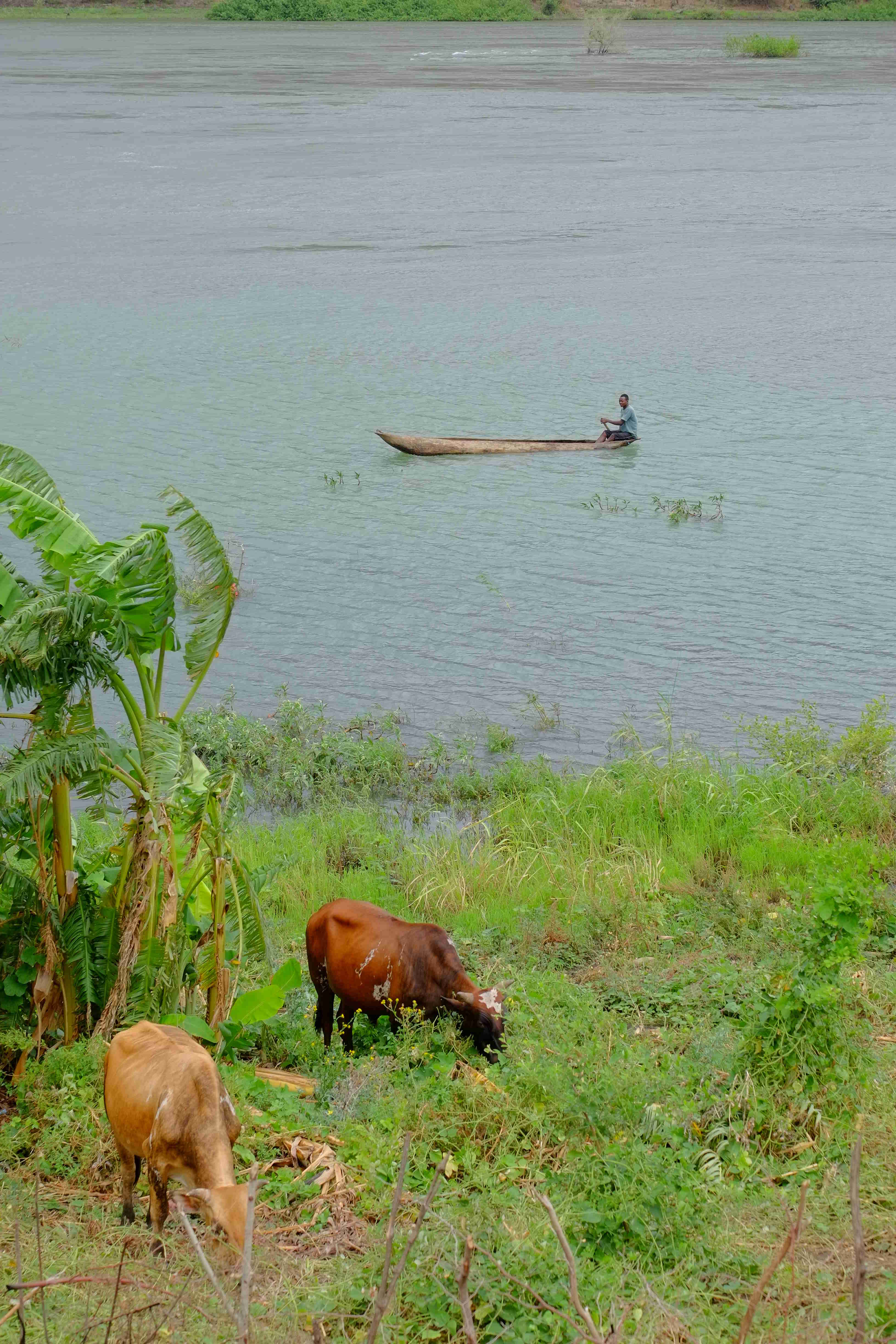
After its ‘ghost’ phase between 2018 and 2021, when the Mphanda Nkuwa Hydroelectric Project Implementation Office (GMNK) had already been created but no one could find it (not even MIREME, the Ministry of Mineral Resources and Energy), over the past year GMNK has been effusively communicating several advances made on the project. Most of these news concerns new partners, potential investors, and calls for studies that are necessary for the different stages of the project. The Jornal Notícias on the 14th of September 2022, however, brought an unprecedented report on a topic that until then had been treated as taboo by our government: the opinion of local communities regarding the project.
Entitled ‘Communities say yes to Mphanda Nkuwa’, the article reports that the population of Chirodzi-Nsanangue, one of the villages that will be resettled to make way for the project, welcomes the construction of this dam. A great deal of information contained in this article, and in a similar television programme broadcasted by TVM (Mozambique’s public TV channel) on the 7th of the same month, raises some questions that deserve to be debated and problematized.
A doctor’s visit
The above-mentioned article and report were produced as a result of the first meeting of the GMNK (accompanied by its consultants) with the Chirodzi community since the revitalization of the project in 2018.
Coincidence or not, this GMNK visit to Chirodzi came just a few weeks after the launch of the study ‘Mphanda Nkuwa Dam: a climate change millstone around Mozambique’s neck’, which took place on 21 July; an event during which the GMNK Director was questioned by some community members as to why no meetings had been held with local communities since the project’s revitalization. On this same occasion community members also asked Director Carlos Yum about what benefits this project would bring to local communities, about maintaining their subsistence activities (fishing, livestock and agriculture) and about the land that would be made available for their resettlement. Some of the responses given by the GMNK Director were considered ‘disrespectful’ by the people who attended the event, as he stated that local populations should not only focus on individual benefits, but believe in the ‘macroeconomic’ benefits that the project will bring to the country. Most of the questions raised by the local communities were answered evasively, ambiguously or unclearly by the Director, missing an opportunity to finally clarify some of the issues that have been troubling these people.
This mention of the macroeconomic benefits of the project and the disregard for the concerns of local populations is in line with a concept that has been presented by several scholars and specialists, in which they call ‘sacrifice zones’ those regions that are buffeted by high environmental impacts and social problems due to the existence of polluting industries or other megaprojects, projects that are usually justified by an alleged ‘greater good’ that supposedly will benefit the country as a whole. Some sociologists have observed that the existence of sacrifice zones is made possible by a culture of vulnerability of the human and environmental rights of marginalized or disadvantaged populations, through which it is evident that some people have rights and privileges, and others suffer the impacts.
Returning to the meeting on the 7th, it is important to mention that it took place during Victory Day, a public holiday, and a day of celebration in the community, which in itself is quite unusual. JA! was present at the meeting that lasted no more than 15 minutes, and consisted of only one person speaking, the representative from GMNK. Of the various communities that will be affected by the project, only the community of Chirodzi-Nsanangue (main neighbourhood) was present, and other communities were not invited (nor their leaders), such as Bairros 1 to 6 of Chirodzi, Chococoma, and Luzinga, among others. No time was given for questions, comments or concerns that the community might have, nor were their concerns documented: no one had the right to speak apart from the GMNK. As we observed on the ground, and according to reports we received from various community members, this first GMNK visit to Chirodzi seemed to have only two purposes: to inform the community that the project is moving forward at full speed; and to produce reports to let the rest of the country know that the communities support the project.
The siege on civil society
Both the Notícias article and the TVM report, media outlets known for being aligned with our government’s interests and agenda, also stated that there are some NGOs that have been instrumentalizing communities so that they do not accept Mphanda Nkuwa’s dam project.
However, Justiça Ambiental has been working with communities in the region for 22 years, with regular visits and activities during the ‘dormant’ phases of the project, and we have never known or come across such organizations. It is really deplorable that some civil society organizations tend to treat local communities as if they were their property, speaking on their behalf and controlling their opinions, but we were not aware that this could be happening in Chirodzi.
However, this persecution of organizations that criticize so-called development projects is already well known. They are referred to as anti-patriotic, anti-development, or even terrorist organizations. Now, the government is preparing to tighten its grip on civil society even further, seeking to pass a highly controversial law that gives the government excessive powers, including to extinguish non-profit organizations for failing to report on their activities. It is easy to imagine what kind of organizations would be the first to suffer such reprisals.
The fact is that certain truths about these megaprojects – their impacts on the environment, the appalling conditions in which local communities are usually resettled, or how promises of employment never materialize – when said out loud do not please the government. What if people discover that the words spoken during community consultations only serve to convince them to accept the project? Worse, what if they decide to organize themselves so that the project progresses only according to their requirements, respecting their wishes, and ensuring that they truly benefit from it?
Communities accuse manipulation of information
Having been present in the region since 2000, and having cultivated a relationship of friendship and solidarity with these communities that was maintained even when the project seemed to have been shelved, JA! has received numerous requests for support, legal training and advice from people who fear the loss of their land with the arrival of the dam. JA!’s activities in this and other communities threatened or affected by megaprojects has been based on sharing information and exchanging experiences on the environmental and social impacts of this type of project, on empowerment and legal capacity building actions so that communities are able to defend their rights and negotiate the terms on which they agree (or not) to give up their land, and in activities that seek to raise the voice and raise awareness of the concerns of local communities through interviews, videos and articles.
When the Jornal Notícias of 14 of September reached Chirodzi and the surrounding area, it caused a lot of indignation within the community. The JA! team began to receive phone calls, SMS and videos from various community members expressing their displeasure with the information portrayed there, and accusing Notícias of manipulating the information, spreading lies and not having asked community members what they think of the project. Several families from two of the neighbourhoods’ threatened by the dam wrote petitions where they ask for some honest, independent and impartial media agency to go to Chirodzi and neighbouring communities in order to listen to the real opinions of the communities. This avalanche of outrage seems to confirm what JA! observed in the field: that there was no interest on the part of the GMNK to hear and make known the real opinion of the local communities regarding this project.
Rights, justice and paths to peace
We will not mention here the numerous risks and potential impacts that we have been pointing out over the last 22 years, and which have been neglected at all stages of the project. It’s not even up to JA! to clarify whether the community is for or against the project. It is up to us, as a civil society organization, to present our position, justify it and bring it up for debate in the public space, with the government, with the actors involved, with the local communities, pressing for responses and policies that deal with the problems we face as a society.
The question that arises at the moment is another: why does the government insist on not listening to the local communities which will be affected by the Mphanda Nkuwa project? Why does it insist on belittling their concerns, and masking them with a large media apparatus, to make it appear that the project is moving forward with local support? If local communities put their needs and demands forward for the advancement of the project, will these be respected and fulfilled? And if communities say they are opposed to the project as it stands, and claim their right to say no, will the government be willing to listen to them?
We believe that dialogue, and the broad participation of civil society in these types of issues, can help us start to embark on a development model that meets the needs and desires of the majority of the population, consequently reducing the social tensions and wars that we have in our country which are also caused by the exclusion of the majority of the population from decision-making processes.
The path we have been following, as a country, neither serves nor benefits the people. The attack on civil society organizations and any critical voice reflects our government’s lack of commitment to democracy and broad public participation. It is urgent that we chart new paths that lead us to peace and to a model of a country that we can be proud of – something radically different from what we are experiencing today.
*This article was originally published in Jornal Savana in Portuguese on 30th September, 2022
 JA4change