Monthly Archives: August 2023

Do we still need to build more dams given their long-term effects on communities? Lessons from Kariba

Joshua Matanzima (The University of Queensland)

On 17 May 1960, the Kariba Dam was officially opened by the Queen Mother as part of her Royal Visit to the then Central African Federation (CAF) comprising Nyasaland, Southern and Northern Rhodesias (i.e. Malawi, Zimbabwe and Zambia respectively). Located in the north-western parts of Zimbabwe, the dam’s actual construction commenced in 1955 and was completed in 1958. It was designed by the French engineer Andre Coyne and built by an Italian construction firm, Impresit. The dam was constructed for the sole purpose of electricity generation, to provide energy to the growing industries in Southern Rhodesia and the Copperbelt mines in Northern Rhodesia during the world Post- World War Two. However, it later became a hub for many other socio-economic activities including conservation, hunting, modern exploration, tourism, recreation and fisheries. It was financed by the largest loan that the World Bank had given up until that time (Scudder 2005). The dam stands 128 metres tall and 579 metres long (as shown in Figure 1). The dam forms Lake Kariba, which extends for 280 kilometres (170mi) and holds 185 cubic kilometres (150,000,000acre⋅ft) of water.
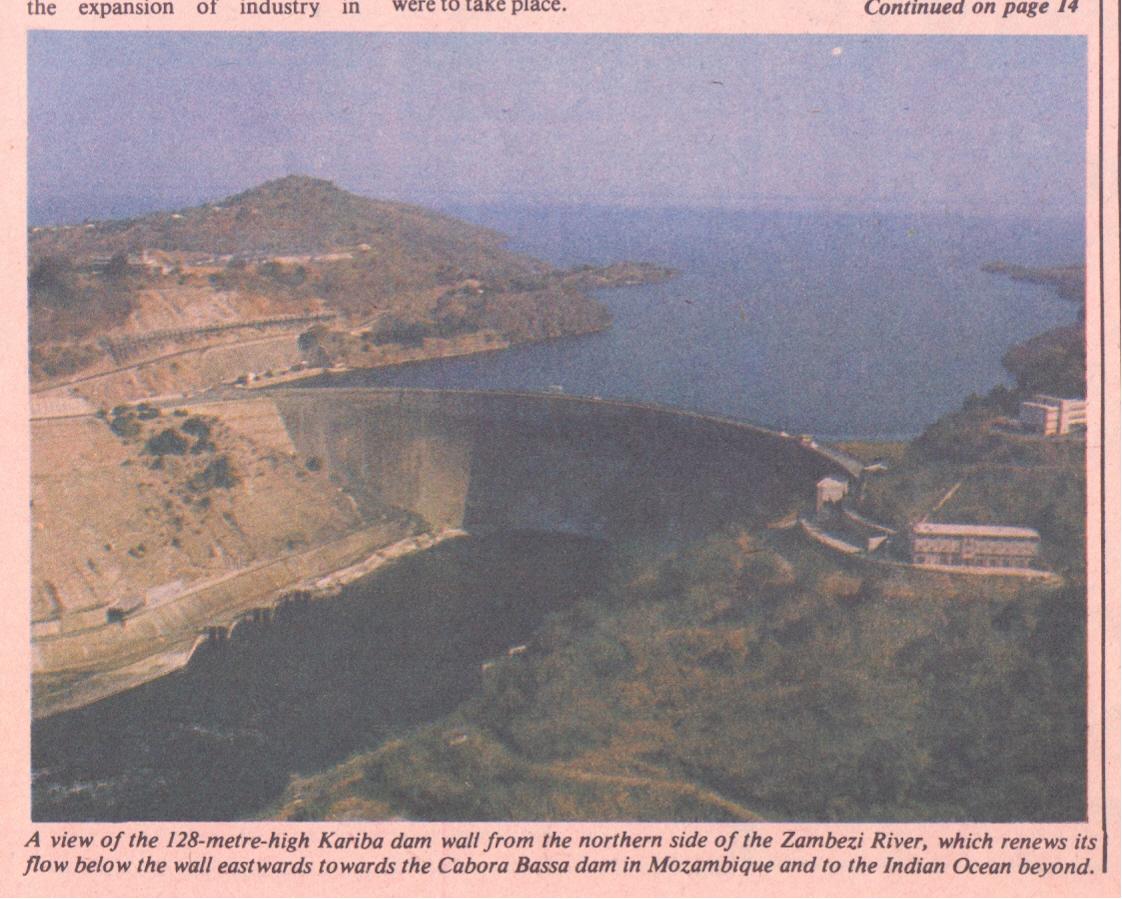
The Kariba Dam Wall

The dam wall blocked the natural flow of the Zambezi River (at the Kariba gorge) which sustained life for many groups of people. Its construction resulted in unacceptable long- term environmental and social impacts that have been widely studied by professors Elizabeth Colson and Thayer Scudder over a course of 60 years (Colson 1971; Scudder 2005). However, findings from their studies are based on research conducted in Zambia, here a summary of such long- term effects on the Tonga, Shnagwe and Korekore speaking peoples of the Zimbabwean side are discussed. More than 57 000 people including the Tonga and Shangwe and Kore-kore speaking peoples were displaced from both sides of the Zambezi.

Before, the Kariba Dam construction, people’s homesteads were in the immediate vicinity of the river on both sides. Socio-cultural and economic life revolved around the river. As illustrated in Figure 2: fishing, riverine agriculture and livestock rearing formed the basis of the economy. In addition, the river had a religious significance to the Tonga, Shangwe and Korekore people. It had sacred pools, rapids and gorges (from Victoria Falls to the Kafue confluence) that were homage to their spirits including Nyaminyami the river god and ancestors (Saidi and Matanzima 2021). People had stronger attachments to the riverine landscapes. Sacred places along the river including rainmaking shrines, malende, marked by the presence of baobab trees were approached with awe and respect, and were burying grounds for the Chiefs. People from both sides of the river conducted ritual and religious ceremonies together. The river was not a barrier of communication, but it facilitated it.
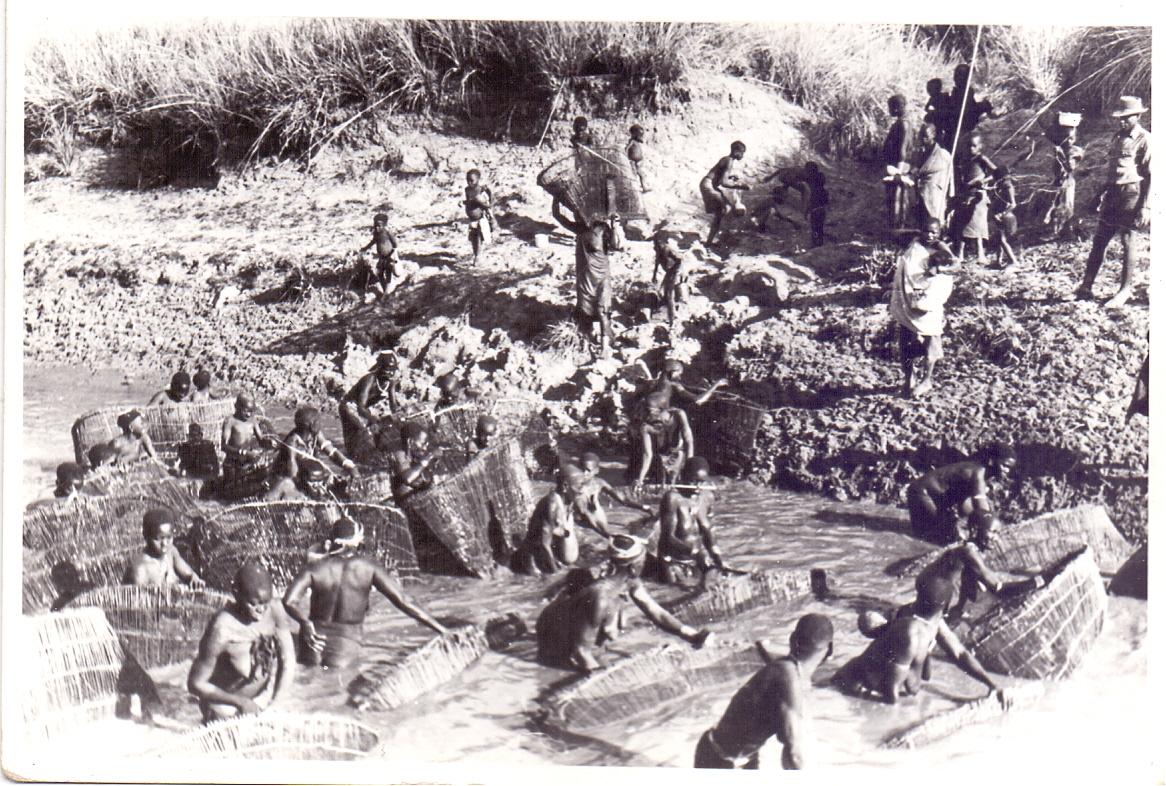
Tonga women fishing with baskets in the Zambezi before Kariba Dam.

When the dam was constructed, there was permanent separation of communities. People were moved to two different countries. Also, within each country there were haphazard movements of people across chieftaincies that separated people (Matanzima and Saidi 2020). Since the late 1950s, most people never had a chance to reunite.

Cultural property (homes, religious sites) was destroyed by heavy machinery which was used to clear roads and inundation from flooding. Though, the Lake had inundated their cultural property; during the colonial period, the Tonga and Shangwe people were denied access to the waterscape for religious and economic reasons. In the postcolonial era, though they gained a certain measure of access, the Lake’s industries were dominated by major ethnic groups including the Shona and the Ndebele people. For this reason, people were not given adequate support to reunite with their spirits in the water. Riverine Identity was foreclosed. People had for a long time identified themselves with the River as they lived along it, but overnight this identity was lost. Resulting in them becoming identified through many derogatory identities including uncivilized, childish, lazy and two toed people. The attachment to the river that sustained economies, social life and culture abruptly ended.

In the long-term people were left with no natural assets to [re]construct sustainable livelihoods, resulting in long-term socio-economic impoverishment. There were also secondary displacements. In Mola, for example, growing conservation interests around the dam resulted in Tonga people being pushed further inland in the 1960s, where they conflicted with their hosts over natural resources. During the Zimbabwe’s Liberation War in the 1970s, they were displaced again. These forms of secondary displacements worsened their impoverishment.

It is essential to have such longitudinal data on the effects of dams for many reasons, including the following: a) Long-term data about the early dams to be constructed in this region including Cabora Bassa and Kariba are essential because we can draw lessons from them in our contemporary decisions to build dams; b) Longitudinal data can also be used in campaigns against the construction of dams, especially when we emphasize their intergenerational impacts on lives and livelihoods on impacted communities; c) in addition, such data can inform and reinforce the work of such civil society groups and NGOs as “International Rivers”, “RiverWatch” and “EuroNatur” whose work is to achieve social and environmental justice through raising awareness about the impacts of dam building; d) we are in a better position to assess the relevancy of dams in the long-term and coming up with decisions to decommission them. Dam decommissioning should be informed by adequate information about their advantages and disadvantages; and e) we also get to understand different shifts in the governance of dams over time and how that affect communities (including displaced people). In the case of the Kariba dam, for example, it has been governed both by colonial and postcolonial governments. Different policies are implemented in disregard of the impacted communities, which then worsen their plight. Apart from Kariba, the validity of longitudinal data has also been emphasized in studies of the resettlement impacts of the Three Gorge Dam in China by Brooke Wilmsen (Wilmsen 2016; Wilmsen and van Hulten 2017).

The ongoing long-term effects of large dams on Indigenous people raise the controversial question: do we still need to construct more dams? In recent years we have seen mega dams being decommissioned mainly in the global north because they become unnecessary in the long run. Such a turn in the relevancy of dams pushes us to [re]think our decisions to build dams.

In the contemporary haste to transition from use of fossil fuels to clean energy in order to meet the net-zero target, dams are increasingly being considered as an option for clean energy production by governments. This may entail that governments may need more dams than ever before. Which may mean minimal dam decommissioning. However, it is essential to consider other clean energy sources such as roof top solar systems that have minimized impacts on human communities and the environment. Energy transitions must be achieved through ‘just’ methods that do not harm Indigenous communities and the environment. We should consider stopping dam building especially when its unnecessary and consider other options. The unnecessary nature of dams can be calculated through cost benefit analysis and their overall long term social and environmental impacts. Research has shown that in most cases the costs of maintaining a dam exceeds their benefits (Ansar et al. 2014; Scudder 2017, 2019).

Sources:

Ansar, A., Flyvbjerg, B., Budzier, A., & Lunn, D. (2014). Should We Build More Large Dams? The Actual Costs of Hydropower Megaproject Development. Energy Policy, March 2014, 1-14. Retrieved from SSRN: https://ssrn.com/abstract=2406852

Matanzima, J., & Saidi, U. (2020). Landscape, belonging and identity in Northwest Zimbabwe: A semiotic analysis. African Identities, 18(1–2), 233–251. https://doi.org/10.1080/14725843.2020.1777839

Saidi, U., & Matanzima, J. (2021). Negotiating Territoriality in North-Western Zimbabwe: Locating The Multiple-Identities of BaTonga, Shangwe, and Karanga in History. African Journal of Inter/Multidisciplinary Studies, 3(1), 61–74. doi: 10.51415/ajims.v3i1.864

Scudder, T. (2005). The future of large dams: Dealing with social, environmental institutional and political costs. Earthscan.

Scudder, T. (2017). The good megadam: Does it exist, all things considered? In B. Flyvbjerg (Ed.), The Oxford handbook of megaproject management (pp. 428–450). Oxford University Press.

Scudder, T. (2019). Large Dams: Long-term impacts on riverine communities and free-flowing rivers. Springer Nature.

Wilmsen, B. (2016). After the Deluge: A longitudinal study of resettlement at the Three Gorge Dam. World Development, 84, 41-54.

Wilmsen, B., & van Hulten, A. (2017). Following resettled people over time: The value of longitudinal data collection for understanding the livelihood impacts of the Three Gorges Dam, China. Impact Assessment and Project Appraisal, 35(1), 94-105. DOI: 10.1080/14615517.2016.1271542
Tagged , ,

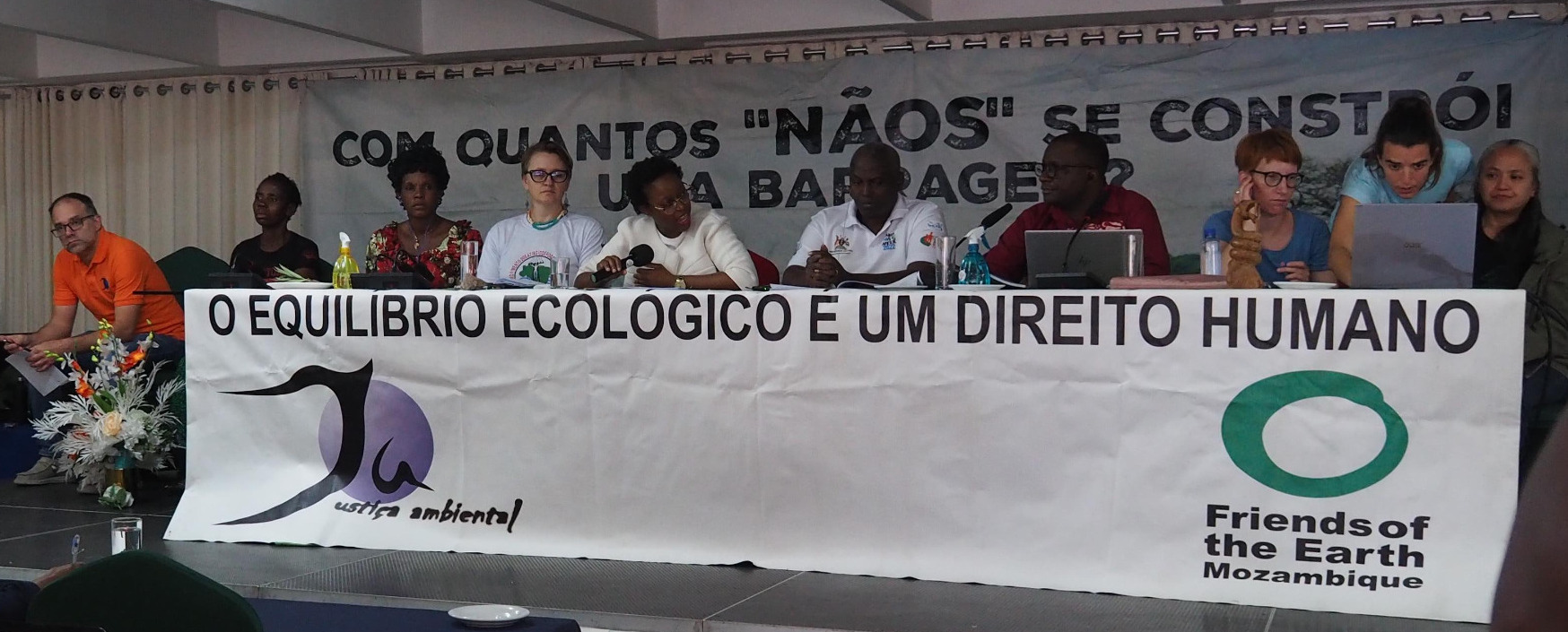
The Maputo Declaration on Rivers and Dams

6 July 2023

PREAMBLE

We, the social movements, civil society organisations, grassroots communities, lawyers, academics, experts and others, from several provinces of Mozambique and also from South Africa, Zimbabwe, Zambia, Democratic Republic of Congo, Uganda, Nigeria, Cameroon, Sri Lanka, Philippines, Brazil, Cuba, France, Ireland, Switzerland and Bosnia-Herzegovina, have met at our 4th International Conference on Rivers and Dams in Maputo, Mozambique, on 6th July 2023.

We acknowledge the decades-long history of dam struggles, this declaration builds on the Manibeli declaration 1992, Curitiba 1997, Rasi Salai 2003 and Temaca 2010, and we move towards the fourth International Meeting of People Affected by Dams, to take place in the Brazilian Amazon, in 2025.

We note that we live in a capitalist, imperialist, neocolonial, patriarchal and racist system that is the main enemy of rivers and communities, that places profits above life and grabs territories and common goods. We commit ourselves to build an alternative to this system of death, violence and destruction, and to continue mobilising at all levels towards an energy model for peoples, in defence of life, peace, health, education, water, energy, food and decent work. We stand for internationalist solidarity, system change and power to the people.

We denounce the human rights violations of dam-affected communities across the world, including past injustices which have still not been redressed. We reiterate that any struggle in defence of territories and human rights is legitimate, fair and necessary. Specifically, we denounce the intimidation and persecution of local communities by the Mphanda Nkuwa dam project proponents in Mozambique for speaking up and resisting against this project and we reaffirm our solidarity with all affected peoples.

CONCERNS

We note with concern that over 200 million people globally have already been displaced due to dam projects, while millions more have lost their livelihoods. Africa, Asia and Latin America are the regions most affected by dams, with many displaced peoples. In Africa, for example, 57,000 people in Zimbabwe and Zambia were displaced by the Kariba Dam in the late 1950s; 100,000 people in Egypt and Sudan by the Aswan Dam; 80,000 people in Ghana by the Akosombo Dam and thousands in the Democratic Republic of the Congo by Inga I & II. In Asia, for example, the Sardar Sarovar Dam on the river Narmada in India displaced 200,000 people; China’s Three Gorges dam displaced 1.2 million people; Kaliwa dam in the Philippines stands to inundate 28,000 hectares of forestland in indigenous ancestral domain, and many others.

We are concerned that the human rights of dam-affected communities, particularly indigenous peoples, are systematically violated. They face harassment, intimidation, incarceration and other abuses. Compensation is usually unfair, inadequate, and delayed, if it takes place at all.

We note that as the climate crisis worsens, the hydropower industry is attempting to recast large dams as a climate-friendly energy source but nothing could be further from the truth. Dam reservoirs, particularly in the tropics, are a globally significant source of methane, a potent greenhouse gas. Free-flowing rivers, on the other hand, play a crucial role in trapping carbon. Dams are uniquely vulnerable to floods and droughts – which are only increasing in frequency and severity with climate change – raising the risk of dam failures during floods and power outages when reservoirs run dry. Also, big dam reservoirs flood forests and agricultural land and destroy biodiversity and fisheries, while leaving downstream wetlands and forests dry. These impacts worsen the ability of ecosystems and the indigenous and rural peoples that depend on them to adapt to climate change.

We note with concern that now the hydropower industry is again trying to rebrand dams as green by promoting hydropower as a key fuel source for hydrogen. This is another false solution which carries huge risks and is not designed to provide energy for local people, but rather for export to foreign markets.

We denounce international financial institutions, banks and companies that are involved in financing and construction of dams while disregarding the negative impacts to peoples and planet.

We understand that not only mega dams but also small dams and run-of-river projects bring negative environmental and social impacts to society and ecosystems. Hydropower is presented as clean energy, but the construction and use of hydropower causes permanent damage to the environment and the destruction of river-dependent ecosystems.

We are encouraged by the World Commission on Dams (WCD) report, released by President Nelson Mandela 23 years ago, in 2000, whose key findings demonstrated that the purported benefits of large dams are regularly undermined by cost overruns and delays while most dams, particularly in the global South, under-perform, and that the social and environmental costs of dams borne by affected communities, downstream communities, taxpayers and the natural environment have been “unacceptable and often unnecessary”.

DEMANDS

We strongly call upon the governments, corporations, financiers and United Nations bodies to:

  1. Stop construction of all dam projects on our rivers until the guidelines of the World Commission of Dams (WCD) are fully followed, and decommission all old and inefficient dams while redressing past injustices caused by these dams.
  2. Stop international financing and public subsidies going to dam projects, from the World Bank, Belt Road/Asian Infrastructure Investment Bank, African Development Bank, and others.
  3. Address the historical injustices perpetrated against displaced communities for the last many generations, by the Narmada, Belo Monte, Inga I and II and Kariba dams, and against many other victims of dam displacements globally.
  4. Protect the land, forest and other rights of Indigenous Peoples and local communities, including customary rights.
  5. Focus on energy access for almost 800 million people worldwide, 600 million of whom are in Africa. We demand community-owned, locally-appropriate renewable energy options instead of big damaging dams.
  6. Stop the criminalisation of dam-affected communities and struggles, and the militarisation in dam-affected areas.
  7. Ensure Free, Prior and Informed Consent (FPIC) of Indigenous Peoples and affected communities, including their right to say NO.
  8. Adhere to the World Commission on Dams (WCD) guidelines for public participation and consultation in decision-making related to rivers and water at all stages of planning.
  1. Ensure that existing dams have acceptable ecological flows and that biodiversity, natural species and sensitive habitats are protected, not turned into commodities, as a real solution to tackle the climate crisis.
  2. Swiftly finalise, adopt and implement a strong and effective UN binding treaty to stop the impunity of transnational corporations, which is relevant and appropriate in responding to the struggles of peasant communities, fisherfolk, and people affected by extractivism in the global South.
  3. Stop the export of the resources of Africa and the global South, including hydrogen, for the benefit of others.

RIVERS FOR LIFE, NOT FOR DEATH!

ADOPTED BY THE INDIVIDUALS, ORGANISATIONS AND COLLECTIVES PRESENT AT THE 4th INTERNATIONAL CONFERENCE ON RIVERS AND DAMS, JULY 6th 2023:

Organisations and collectives

  1. Action pour les Droits, l’Environnement et la Vie ADEV (Democratic Republic of the Congo)
  2. Alternactiva – Acção pela Emancipação Social (Mozambique)
  3. Basilwisi Trust (Zimbabwe)
  4. BioVision Africa (Uganda)
  5. Centre Congolais pour le Développement Durable CODED (Democratic Republic of the Congo)
  6. Center for Environment (Bosnia and Herzegovina)
  7. Centre for Applied Legal Studies CALS (South Africa)
  8. Centre pour la Justice Environnementale (Togo)
  9. Centro de Educación y Promoción de Desarrollo Sostenible CEPRODESO (Cuba)
  10. Centro Memorial Martin Luther King Jr. CMLK (Cuba)
  11. Coalition pour la Réforme et le Suivi de l’Action CORAP (Democratic Republic of the Congo)
  12. FishNet Alliance (Africa)
  13. Friends of Lake Turkana (Kenya)
  14. Friends of the Earth Africa (Africa)
  15. groundWork (South Africa)
  16. Grupo de Jovens Activistas de Moatize GJAM (Mozambique)
  17. Health of Mother Earth Foundation HOMEF (Nigeria / Africa)
  18. Justiça Ambiental JA! (Mozambique)
  19. Legal Right and Natural Resources Center LRC (Phillipines)
  20. Missão Tabita (Mozambique)
  21. Movimento de Atingidos por Barragens MAB (Brazil)
  22. Movimiento de Afectados por Represas MAR (Latin America)
  23. Mulher, Género e Desenvolvimento MuGeDe (Mozambique)
  24. Observatório das Mulheres (Mozambique)
  25. Pro Natura / Friends of the Earth Switzerland (Switzerland)
  26. Right to Say No Campaign (South Africa)
  27. Solidarité des Femmes sur le Fleuve Congo SOFLECO (Democratic Republic of the Congo)
  28. South African Waste Pickers Association SAWPA (South Africa)
  29. South Durban Community Environmental Alliance SDCEA (South Africa)
  30. Southern Africa Campaign to Dismantle Corporate Power (Southern Africa)
  31. Vaal Environmental Justice Alliance VEJA (South Africa)
  32. Women of Change (Lephalale, South Africa)
  33. WoMin African Alliance (Pan-african network)

Individuals

  1. Alexandre Morais (Mozambique)
  2. Alex Chipissani (Mozambique)
  3. Allan Basajjasubi (Jurist – South Africa)
  4. António Morais (Mozambique)
  5. António Vicente Sede (Mozambique)
  6. Aparício de Nascimento (Mozambique)
  7. Ana Brígida Novela (Mozambique)
  8. Anabela Lemos (Mozambique) 
  9. Apollin Koagne Zouapet (Human rights lawyer – Cameroon)
  10. Bertrand Sansonnens (Switzerland)
  11. Carlos Mhula (Mozambique)
  12. Celso dos Anjos Pereira Dias (Mozambique)
  13. Charles Artur (Mozambique)
  14. Ching Maganiso (Mozambique)
  15. Christopher Mweembe (Zimbabwe)
  16. Daniel Américo (Mozambique)
  17. Daniel Ribeiro (Mozambique)
  18. David Sthuntsha Mokoena (South Africa)
  19. Desmond D’SA (South Africa)
  20. Dipti Bhatnagar (Mozambique)
  21. Eliana N’Zualo (Mozambique)
  22. Erika Mendes (Mozambique)
  23. Farelo dos Reis (Mozambique)
  24. Fátima Lenade (Mozambique)
  25. Fazbem Artur (Mozambique)
  26. Félix Manuel (Mozambique)
  27. Janete Eusébio Cantiga (Mozambique)
  28. Jorge Josefa (Mozambique)
  29. Juan Francisco Santos Estévez (Cuba)
  30. Latifo Patreque (Mozambique)
  31. Lenine Francisco (Mozambique)
  32. Lídia Zacarias (Mozambique)
  33. Lourenço Cesário (Mozambique)
  34. Lucas Atanásio Catsossa (Mozambique)
  35. Lucy Pitse Duba (South Africa)
  36. Mahomed Shahid Jusob (Mozambique)
  37. Mai Taqueban (Philippines)
  38. Mantwa Mokoena (South Africa)
  39. Manuel Passar Luciano (Mozambique)
  40. Moisés Cuambe (Lawyer, Mozambique)
  41. Neli Vicente (Mozambique)
  42. Nino Cesário (Mozambique)
  43. Patrick Martin Bond (Center for Social Change, University of Johannesburg, South Africa)
  44. Paulo Afonso (Mozambique)
  45. Rachida Quirino (Mozambique)
  46. Ruth Jossefe (Mozambique)
  47. Rodrigues Bicicleta (Mozambique)
  48. Salima António Canhoca (Mozambique)
  49. Samuel Gabriel Mondlane (Mozambique)
  50. Saquina Mucavele (Mozambique)
  51. Saúde Almeida (Mozambique)
  52. Saúde Tiago (Mozambique)
  53. Simson Mwale (Zambia)
  54. Soniamara Maranho (Brasil)
  55. Stiven Azevedo (Mozambique)
  56. Sven Peek (South Africa)
  57. Terezinha da Silva (Social activist, Mozambique)
  58. Timóteo Bento (Mozambique)
Tagged