Monthly Archives: September 2025

Energy projects fuel hunger in Palma,

Mozambique

September 2025
Once-thriving communities on the Afungi Peninsula of Palma Bay, in the far north of
Mozambique, have become landless, “slim”, and dispossessed of peaceful futures – as a
direct result of mega liquefied natural gas (LNG) projects majority owned by TotalEnergies,
ENI, and ExxonMobil.
The resettlement process for the communities required to relocate for the gas projects has
been mangled, and it is the most vulnerable who are paying the cost for energy giants to
industrialise their lands. While the Mozambique LNG project remains suspended, and two
others remain without final investment decision, African financial institutions must take the
moment to assess if they will continue their support for a project that has directly harmed
local peoples.
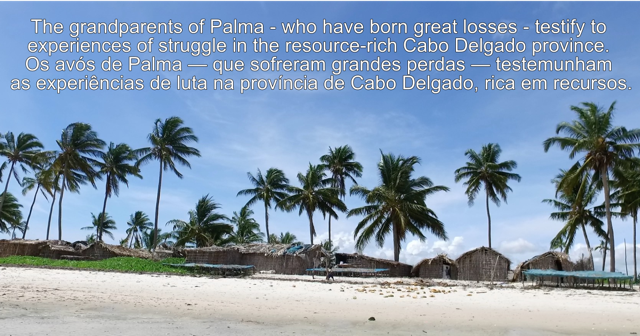
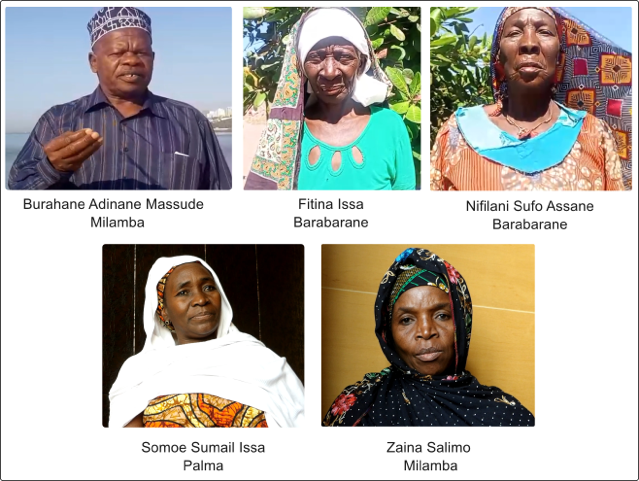
The grandparents of Palma – who have born great losses – testify to experiences of struggle
in the resource-rich Cabo Delgado province.
“Since the day we left until today, we have not received any support, not even farmland…at
my age, I can’t get food, I don’t have a farm,” explains Senhora. F, originally from
Barabarane village where she farmed, fished, and gathered firewood and medicines from the
land.
Senhora. A, who supported her family from the sale of fish brought in by local fishing boats
says: “Without fish I am lifeless…Our lives now are made up of land struggle.”

For the elderly of Palma, who have watched their communities disintegrate since the gas
companies arrived, there is now only a bleak hope that their families can live in dignity.
Commercially viable gas fields were found far offshore in the Rovuma Basin in around 2010.
Then, the grandparents of Palma were still strong, working the shore and their vast lands,
and spending long days at sea. Life was hard, and socio-economic conditions were not
idyllic, but they were surrounded by beauty, they had stable homes in thriving communities,
and their children were healthy.
When their lands were required for the gas projects, they entered into negotiations for
resettlement with hopes fed by promises of a better life for their children – promises of new
homes and farmlands to replace what they had lost, education and jobs for their children, a
hospital, a football field, and an expansion area for their children, who would soon start their
own families.The first families were relocated in 2019. Since then, they have been caught up
in negotiation processes aimed at serving the gas interests. The land and livelihoods they
hoped to leave as inheritance have become sites of struggle where their children – now
adults – are driven to protest at the company gates to demand what was promised to their
parents.
Senhor S, who lived his life and raised his children in Barabarane states, “My children left
behind land, houses, and everything they had, and to this day they have not been
compensated for their property.” He wears a kofi (a type of cloth cap) as a symbol of faith,
wisdom, and respect in the community.
Some lament their lost homes and destroyed livelihoods, and speak of poor or no
compensation, and no support. Many speak of hunger, of their children and neighbours
looking “slim”, of the daily search for food and water. In addition to lands taken, access is
now restricted to many important coastal and fishing grounds.
Senhor B, who once had a fishing business in Milamba village states, “With the arrival of the
company, I am unable to carry out fishing activities due to the resettlement they have
imposed on us…. I can’t feed my children either, as I did before Total came along.”
Losing land and access to the sea means losing the ability to survive. There are enormous
intangible losses that can never be compensated, such as the unforgettable flavor of local
food, guaranteed by the centuries-old mango trees; the shelter and food provided by the old
coconut palms; and the colorful bed mats woven from wild strawn.
Senhor S, who lost farmlands in Nsemo, explains that the limited cash compensation is not a
fair replacement for ever-providing natural resources, “If you give us money how are we
going to live as human beings? How will my children and grandchildren survive?”
French company TotalEnergies leads the resettlement work on the Afungi gas site, and is
majority owner of the Mozambique LNG project. The project shares land use rights for the
gas site with the Rovuma LNG project of Italian company ENI and American company
ExxonMobil. About 32 financial institutions have committed approximately USD 15 billion to
Mozambique LNG, including four South African banks and five African public institutions.
Collectively, the African financial institutions involved have committed around
USD 2.5 billion. All have been informed of the communities’ unresolved resettlement
grievances as well as other severe risks, including environmental and climate risks.
Over the years, tireless attempts and proposals from communities for a resolution were
largely ignored by the company, and formal complaints processes through the Mozambican
government yielded further delays. Confusion and tension were also created when fields in
some communities were taken – some without payment, some without even agreement –
and then allocated as compensation fields to resettled communities. A key flaw in the

resettlement process is that communities were not provided legal assistance, and civil
society organisations were impeded from providing support. It was only after a series of
brave protests starting in November 2024 that the gas company re-entered negotiation.
Since then, new agreements have been signed in some communities but payments have not
been made, and in other communities, negotiations are still underway.
Across Africa, similar grievances have been raised against TotalEnergies relating to lands
taken, livelihoods destroyed, inadequate or lack of compensation, and unmet compensation
promises, in addition to the severe environmental and climate risks of the company’s
projects, and links to human rights violations. In late August, affected communities and civil
society connected their struggles across the continent to call TotalEnergies and its
supporters to account. As part of the Kick Total Out of Africa week of action, the Cabo
Delgado communities spoke at an intercontinental tribunal, alongside communities in
Uganda, South African and the DRC, demanding accountability and reparations for the
socio-economic, environmental and human rights violations associated with the company.
In Palma, the gas-related displacement cannot be separated from the instability created by
the raging regional insurgency, or the responding militarisation of the region that was
accompanied by further extortion and violence against civilians. Ultimately, gas development
would deliver low economic benefits for Mozambique, and only after about another decade.
The projects make use of tax avoidance mechanisms, the gas stakes of Mozambican state
company ENH are considered to be “virtually worthess”, and the gas is already potentially
stranded.
Although there is ongoing insistence that the TotalEnergies project will resume (albeit with
shifting target dates), the risks associated with gas development remain extremely high. For
the people of Palma, the hopes of a better life from gas have become a reality of loss and
hunger. Financial institutions must take into account the real experiences of the men and
women who have witnessed the projects unfolding and experienced their impacts. They
must withdraw their support for development that offers little to Mozambique in return for the
lands and sea it takes.
Déclaration de Maputo de solidarité avec les peuples Palestinien et Sahraoui

Déclaration de Maputo de solidarité avec les peuples Palestinien et Sahraoui

Demande des participants au 9e atelier de Maputo sur l’impunité des entreprises et les droits humains pour la libération de la Palestine et du Sahara Occidental, Maputo, 1er août 2025

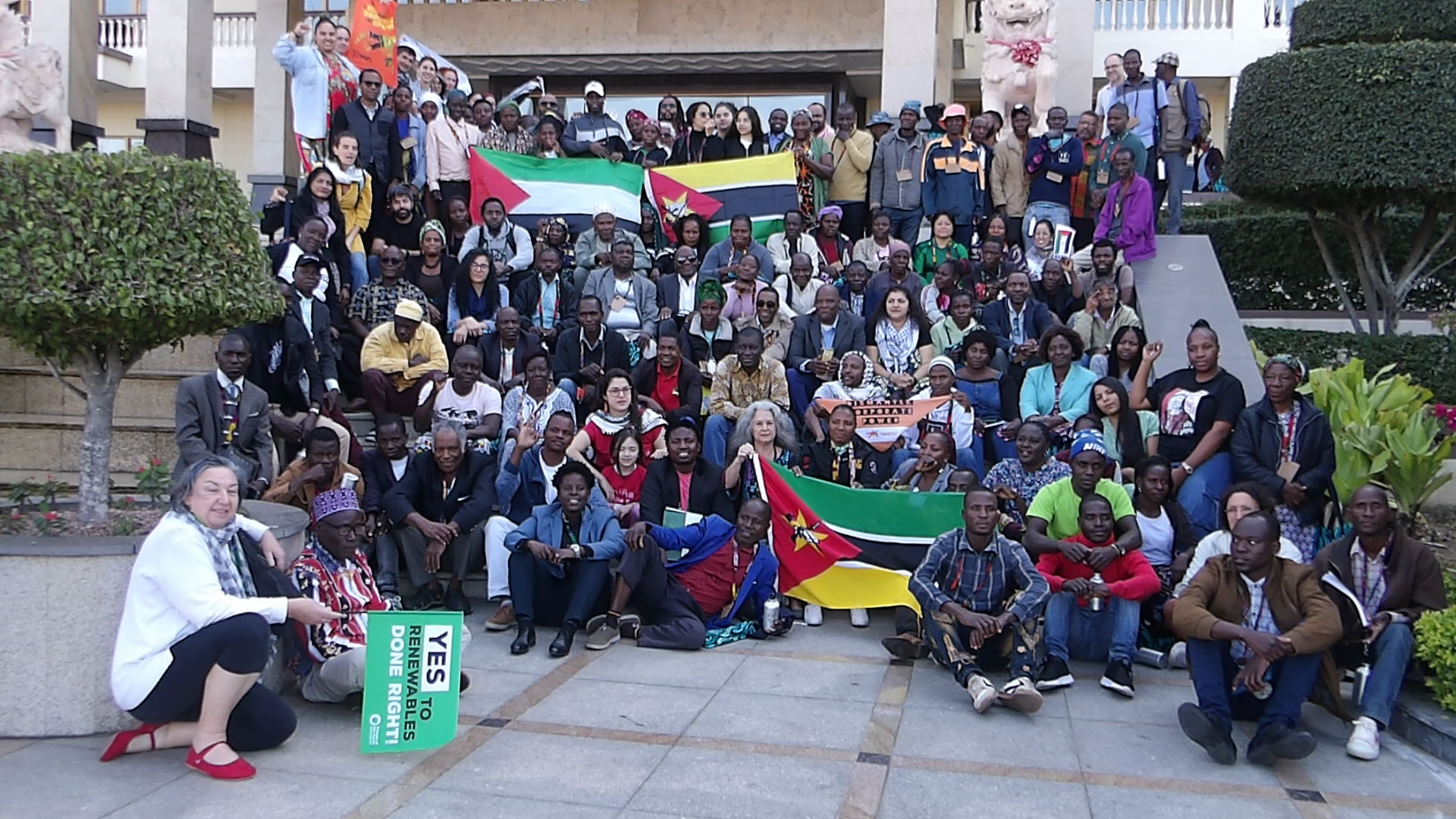
En tant que personnes et organisations venues de 30 pays à Maputo pour renforcer la solidarité internationale et élaborer une stratégie de résistance contre l’exploitation de nos terres et de nos mers par les sociétés transnationales, nous reconnaissons leur complicité dans l’occupation des territoires des peuples autochtones à travers le monde. Cela est évident tant en Palestine qu’au Sahara Occidental.

Nous sommes fermement solidaires du peuple Palestinien qui subit un génocide. La situation à Gaza s’est détériorée à des niveaux sans précédent. L’occupation israélienne utilise la famine comme arme de guerre, les civils se voient refuser l’accès à la nourriture, à l’eau et aux fournitures médicales essentielles, ce qui entraîne une malnutrition généralisée et des décès évitables. Les zones résidentielles, les hôpitaux et les écoles ont été soumis à des frappes aériennes incessantes, causant la mort de plus de soixante mille civils, en particulier des femmes et des enfants. Plus de 1,5 million de personnes ont été déplacées de force, pour ensuite subir de nouvelles attaques. Pendant ce temps, une guerre silencieuse se déroule en Cisjordanie et Israël poursuit son annexion. Comme le souligne le dernier rapport de la Rapporteuse Spéciale des Nations unies sur les territoires palestiniens occupés, Francesca Albanese, intitulé « De l’économie de l’occupation à l’économie du génocide », les entreprises ont contribué de manière significative au génocide en cours et en ont tiré profit, en fournissant à Israël les armes et les machines nécessaires pour détruire des maisons, des écoles, des hôpitaux, des lieux de loisirs et de culte, des moyens de subsistance et des actifs productifs, afin de séparer et de contrôler les communautés et de restreindre l’accès aux ressources naturelles.

En tant qu’organisations engagées en faveur des droits humains et de la justice, nous exhortons tous les gouvernements, organisations de la société civile, institutions et individus à prendre des mesures décisives contre le génocide en cours.

Le Sahara Occidental reste une colonie en Afrique, dont la majeure partie du territoire est occupée par le Maroc depuis 1975, après le départ soudain et la décolonisation non conclue du territoire par l’Espagne, l’ancienne puissance coloniale. Le peuple sahraoui poursuit sa lutte pour l’indépendance et continue d’être victime de violations des droits humains, notamment des tortures et des disparitions. Ses terres et ses ressources sont exploitées à la fois par le Maroc et par des sociétés transnationales, sans le consentement du peuple sahraoui, ce qui est contraire au droit international.

Pour la Palestine, le Sahara Occidental et les autres territoires occupés ou des territoires en proie à des conflits incessants, tels que la République Démocratique du Congo, le Soudan, Cabo Delgado au Mozambique, nous condamnons toutes les formes de colonisation et dénonçons la complicité des sociétés transnationales. Nous demandons que soit reconnu que les pays et les citoyens du monde entier qui profitent des ressources pillées dans les territoires occupés sont complices de ces occupations et des violations brutales des droits humains. Nous sommes fermement solidaires des peuples qui résistent à la spoliation et à la destruction de leurs territoires. Nous unissons nos forces pour exiger un avenir où la vie passe toujours avant le profit.

Pour la Palestine, nous demandons:

  1. Un cessez-le-feu immédiat: l’arrêt inconditionnel et permanent de toutes les opérations militaires à Gaza.
  2. Un accès humanitaire sans restriction: ouvrir les frontières et permettre aux organisations humanitaires d’acheminer des fournitures essentielles à la population de Gaza, et à la population de Gaza d’accéder à ces fournitures en toute sécurité.
  3. La responsabilité des crimes de guerre: mener des enquêtes indépendantes sur tous les crimes de guerre et toutes les violations du droit international, et tenir les auteurs responsables.
  4. La liberté et la protection des prisonniers palestiniens et la fin de leur traitement inhumain dans les prisons Israéliennes.
  5. La libre circulation des Palestiniens: reconnaître et garantir le droit des Palestiniens à la libre circulation.
  6. La fin de l’occupation et l’affirmation des droits et de la liberté des Palestiniens: nous défendons les droits humains inaliénables des Palestiniens à la liberté, à la justice, au retour et à l’autodétermination, ainsi que le retrait complet des troupes étrangères et des occupants illégaux du territoire palestinien.
  7. Boycott, désinvestissement et sanctions économiques: Appeler les gouvernements à rompre leurs relations diplomatiques, à mettre en place des embargos commerciaux et des sanctions économiques contre l’occupation israélienne. Appeler également au boycott académique et sportif ainsi qu’au désinvestissement dans les entreprises israéliennes.
  8. Les États doivent respecter leurs obligations au titre de la Convention des Nations Unies pour la prévention et la répression du crime de génocide.

De plus, nous pensons que la seule solution juste et durable consiste à établir un seul État démocratique, du fleuve à la mer, où les réfugiés palestiniens puissent retourner, où les colonies israéliennes soient démantelées et où tous les habitants jouissent de droits de citoyenneté égaux dans un pays décolonisé qui garantit la liberté et la dignité pour tous à travers un processus de vérité et de réconciliation qui traite les injustices historiques et offre des réparations pour la dépossession des Palestiniens.

Pour le Sahara Occidental, nous demandons:

  1. La fin de l’occupation illégale: Appeler à la fin de l’occupation marocaine des territoires du Sahara Occidental.
  2. Respect du droit à l’autodétermination du peuple Sahraoui, qui doit être libre de décider de son avenir politique, notamment par la reconnaissance de la République arabe sahraouie démocratique (RASD) comme gouvernement légitime du Sahara occidental.
  3. Retour des réfugiés Sahraouis, garantissant ainsi le droit des personnes vivant dans les camps de retourner dans leur patrie dans des conditions sûres et dignes.
  4. La libération des prisonniers politiques: Libérer tous les prisonniers sahraouis illégalement emprisonnés par la puissance occupante.
  5. La protection des ressources naturelles: Mettre fin au pillage des ressources naturelles du Sahara Occidental par la puissance occupante et les sociétés transnationales.
  6. La protection des droits humains: garantir la surveillance et la protection des droits humains dans les territoires occupés par des organismes internationaux indépendants.
  7. La liberté de circulation de tous les Sahraouis: garantir et assurer le droit de circulation de tout le peuple sahraoui.
  8. Les États africains doivent respecter leurs engagements régionaux et internationaux: l’Union africaine et ses États membres doivent veiller au respect des objectifs de l’Acte constitutif de l’Union en matière de respect et de protection des droits du peuple sahraoui en vertu de la Charte africaine des droits de l’homme et des peuples et des instruments pertinents relatifs aux droits des peuples.

A luta continua!

SIGNATURES

Organisations nationales

Justiça Ambiental (JA!) – Friends of the Earth Moçambique

Palestine Environmental NGOs Network (PENGON), Friends of the Earth Palestine

National Union of Sahrawi Women (UNMS) – Western Sahara

Les Amis de la Terre – Togo / Friends of the Earth – Togo

Sikkim Indigenous Lepcha Tribal Association (SILTA) – North East India

Affected citizens of Teesta (ACT) Sikkim – North East India

Climáximo – Portugal

Centre for Financial Accountability (CFA) – India

Sustainable Development Institute (SDI) – Liberia

10. Núcleo para Desenvolvimento Comunitário de Cabo Delgado (NUDEC) – Moçambique

11. Centre Congolais pour le ( Droit du ) Développement Durable (CODED) – R.D. Congo

12. Magamba Network – Zimbabwe

13. Buni Media – Kenya

14. Journal Rappe – Senegal

15. Mouvement Africain pour les Droits Environnementaux dans la région de l’Est BURKINA Faso (MADEE) – Burkina Faso

16. Natural Resource Women Platform (NRWP) – Liberia

17. Plataforma da Sociedade Civil da Província de Manica (PLASOC) – Moçambique

18. Zimbabwe Smallholder Organic Farmers Forum (ZIMSOFF) – Zimbabwe 

19. Health of Mother Earth Foundation (HOMEF) – Nigeria 

20. International Labour, Research & Information Group (ILRIG) – South Africa

21. Help Initiative For Social Justice and Humanitarian Development – Nigeria

22. Palestine Solidarity Campaign (PSC) Gauteng – South Africa

23. Landless Peoples Movement – South Africa

24. West Coast Food Sovereignty and Solidarity Forum – South Africa

25. South Durban Community Environmental Alliance (SDCEA) – South Africa

26. Environmental Defenders Network (EDEN) – Nigeria

27. Jeunes Volontaires pour l’Environnement (JVE) Côte d’Ivoire 

28. Advocacy Coalition for Sustainable Agriculture (ACSA) – Uganda

29. Friends of the Earth Japan – Japan

30. South African BDS Coalition – South Africa

31. Ondjango Feminista – Angola 

32. Associação Observatório de Políticas de Género – Angola 

33. Healthcare Workers 4 Palestine – South Africa 

34. African Water Commons Collective – South Africa

35. Women on Mining and Extractives – Sierra Leone

36. ATTAC CADTM – Togo

37. Civic Forum on Housing and Habitat – Zambia 

38. All Youth Foundation for Community Development – Yemen 

39. Centre for Social Change, University of Johannesburg – South Africa

40. Community Action Movement – Nigeria

41. Missão Tabita, Zambézia – Moçambique

42. Les Amis de la Terre – Belgique (ASBL) – Belgium

43. groundWork, Friends of the Earth South Africa

44. Participatory Action Research Coalition – India

45. Rights not Recuse Trust – Namibia

46. Amigas de la Tierra España / Friends of the Earth Spain

47. Young Women of Africa (YWOA) 

48. Amigas da Terra Brasil / Friends of the Earth Brazil

49. Center for Labour and Social Studies (CLASS) – Nepal

50. The Grail – International Women Movement – Moçambique

51. Grana Nostra – Collectif Algérien Pour la Biodiversité – Algérie

52. National Sudanese Women Association (NSWA) – Sudan 

53. Friends of the Earth Denmark (NOAH) – Denmark

54. Associação para Promoção dos Direitos de Transgéneros de Moçambique (ANTRA) – Moçambique

55. Sahabat Alam Malaysia / Friends of the Earth Malaysia (SAM) – Malaysia

56. Lawyers’ Environmental Action Team (LEAT) / Friends of the Earth Tanzania

57. Centre For Alternative Research and Studies (CARES) – Mauritius

58. Censat Agua Viva / Friends of the Earth Colombia

59. Community Development Advocacy Foundation (CODAF) – Nigeria 

60. Legal Rights and Natural Resources Center – Friends of the Earth Philippines

61. Lok Shakti Abhiyan – India

62. Centre For Studies on Climate Justice – Bhubaneswar, India

63. Centre for Citizens Conserving Environment & Management (CECIC) – Uganda

64. Afrikagrupperna – Sweden 

65. Sahrawi Organization Against Moroccan Occupation – Western Sahara

66. Association of Sahrawi Human Rights Defenders in Western Sahara

67. Association for the Protection of Sahrawi Prisoners in Moroccan prisons – Western Sahara

68. Association for the Monitoring of the Resources and for the Protection of the Environment in Western Sahara (AMRPENWS) – Western Sahara

69. Sahrawi Association of Victims of Grace Human Rights Violations Committed by the Moroccan State (ASVDH) – Western Sahara

70. Sahrawi Association for the Protection and Promotion of Sahrawi Culture and Heritage – Western Sahara

71. Union Nationale des Femmes Algériennes – Western Sahara

72. Committee for the Defense of the Self-Determination of the People of Western Sahara (CODAPSO) – Western Sahara

73. Committee for the Protection of Sahrawi Human Rights Defenders – Western Sahara

74. Sahrawi Observatory for Child Protection – Western Sahara

75. Sahrawi Committee of Arbitrarily Dismissed Employees and Workers by Moroccan State – Western Sahara

76. Committee of the Families of the Abducted – Western Sahara

77. Committee for the Protection of Natural Resources and Defense of the Settlement Plan – Western Sahara

78. Port Arthur Community Action Network (PACAN) – United States of America

79. MA’AN Development Center – Palestine

80. Arab Agronomists Association (AAA) – Palestine

81. Rural Women Development Society (RWDS) – Palestine

82. Union Nationale des Femmes Algériennes (UNFA) – Algérie

83. Friends of the Earth – Grenada (West Indies) 

84. Ramani Collective – Kenya

85. Coletivo Refúgio Humanitário Palestina Brasil

86. Sunflower Association – Palestine

87. Comitê Capixabas pela Palestina – Brasil

88. Zelena akcija / Friends of the Earth Croatia


Organisations internationales / régionales

89. La Via Campesina Southern and Eastern Africa (LVC – SEAF)

90. Convergence Globale des Luttes pour la Terre, l’Eau et  les Semences Paysannes Ouest africain (CGLTE-OA)

91. Green Advocates International (GAI)

92. Amigos da Terra África / Friends of the Earth Africa

93. Housing and Land Rights Network – Habitat International Coalition – Switzerland and Egypt

94. Global Campaign to Reclaim Peoples’ Sovereignty, Dismantle Corporate Power and Stop Impunity

95. Africa Just Transition Network (AJTN) – Africa

96. South Asian Solidarity Collective

97. Oilwatch Africa

98. No REDD in Africa Network (NRAN)

99. Oilwatch International

100. Laudato Si Movement Africa

101. Third World Network (TWN)

102. Womin African Alliance

103. Asia Peoples Movement on Debt and Development (APMDD)

104. Transnational Institute (TNI) – Netherlands / International

105. Natural Justice: Lawyers for Communities’ and the Environment – Africa

Maputo Statement of Solidarity with the Palestinian and Sahrawi Peoples

Maputo Statement of Solidarity with the Palestinian and Sahrawi Peoples

Demand of the participants of the 9th Maputo Workshop on Corporate Impunity and Human Rights for the liberation of Palestine and Western Sahara, Maputo, 01 August 2025

As people and organizations who have convened from 30 countries in Maputo to build international solidarity and strategise our resistance to the exploitation of our lands and seas by transnational corporations, we recognise their collusion in the occupation of territories of indigenous peoples across the world. This is evident in both Palestine and Western Sahara.

We stand firmly in solidarity with the Palestinian people who are experiencing genocide. The situation in Gaza has deteriorated to unprecedented levels. The Israeli occupation is using mass starvation as a weapon of war, civilians are being denied access to essential food, water and medical supplies, leading to widespread malnutrition and preventable deaths. Residential areas, hospitals, and schools have been subjected to relentless airstrikes, resulting in the deaths of more than sixty thousand civilians, particularly women and children. Over 1.5 million people have been subjected to forced displacement, only to face further attacks. While a silent war is committed in the West Bank and Israel is proceeding with annexation. As highlighted by the latest report from the UN Special Rapporteur on the Occupied Palestinian Territories, Francesca Albanese, entitled “From economy of occupation to economy of genocide”, corporations have materially contributed to and profited from the ongoing genocide, by providing Israel with the weapons and machinery required to destroy homes, schools, hospitals, places of leisure and worship, livelihoods and productive assets, to segregate and control communities and to restrict access to natural resources.

As organizations committed to human rights and justice, we urge all governments, civil society organizations, institutions, and individuals to take decisive action against the ongoing genocide.

Western Sahara remains as a colony in Africa, with the majority of its lands occupied by Morocco since 1975, after the sudden exit and unconcluded decolonization of the territory by Spain, the former colonial power. The Sahrawi people have continued their struggle for independence and continue to face human rights violations, including torture and disappearance. Their lands and resources are being carved out both by Morocco and transnational companies, without the consent of the Sahrawi people, which is against international law.

For Palestine, Western Sahara and other occupied territories or territories beset by incessant conflicts, such as the Democratic Republic of the Congo, Sudan, Cabo Delgado in Mozambique, we condemn all forms of colonisation and we denounce the complicity of transnational corporations. We call for recognition that those countries and citizens across the world who benefit from the resources plundered in occupied territories are complicit in these occupations and brutal human rights violations. We firmly stand in solidarity with the people resisting dispossession and destruction in their territories. We join forces to demand a future where life always comes before profit.

For Palestine, we call for:

  1. Immediate Ceasefire: An unconditional and permanent halt to all military operations in Gaza.
  2. Unrestricted Humanitarian Access: Open the borders and allow for aid organizations to deliver essential supplies to the Gazan people, and for Gazan people to access supplies in safety.
  3. Accountability for War Crimes: Independent investigations into all war crimes and violations of international law, with perpetrators held responsible.
  4. Freedom and Protection for the Palestinian prisoners and end to their inhuman treatment in Israeli Jails.
  5. Free movement of Palestinians: Recognise and ensure the right of Palestinians to free movement.
  6. End the Occupation and affirm Palestinian rights and freedom: We uphold the inalienable human rights of Palestinians to freedom, justice, return, and self-determination, and complete withdrawal of foreign troops and illegal occupiers from Palestinian land.
  7. Boycott, Divestment and Economic Sanctions: Call for governments to cut diplomatic ties, implement trade embargoes and economic sanctions on the Israeli Occupation. To also call for academic and sports boycotts as well as divestment in Israeli Companies.
  8. Stop the supply of Military equipment and Fuel: Call on other countries to immediately stop or cut off the supply of arms and fuel to the Israeli military.
  9. States to uphold their obligations under the UN Convention on the Prevention and Punishment of the Crime of Genocide.

Furthermore, we believe that the only just and long term solution is the establishment of a single democratic state, from the river to the sea, where Palestinian refugees return, Israeli settlements are dismantled, and all inhabitants enjoy equal citizenship rights in a decolonized country that guarantees freedom and dignity for everyone through a truth and reconciliation process that addresses historical injustices and provides reparations for Palestinian dispossession.

For Western Sahara, we call for:

  1. End the Illegal Occupation: Call for an end to the Moroccan occupation of the territories of Western Sahara.
  2. Respect for the right to self-determination of the Sahrawi people, who must be allowed to freely decide their political future, including by the recognition of the Sahrawi Arab Democratic Republic (SADR) as the legitimate government of Western Sahara.
  3. Return of the Sahrawi refugees, thus ensuring the right for those who live in camps to return to their homeland under safe and dignified conditions.
  4. Freedom of the Political Prisoners: Free all the Sahrawi prisoners unlawfully imprisoned by the occupying power.
  5. Protection of the Natural Resources: End to the plundering of Western Sahara’s natural resources by the occupation power and transnational corporations.
  6. Protection of Human Rights: Ensure the monitoring and protection of human rights in the occupied territories by international independent bodies.
  7. Freedom of Movement for all Sahrawis: Guarantee and ensure the right of movement for all the Sahrawi people.
  8. African States must comply with their regional and international commitments: the African Union and its member States must ensure compliance with the objectives of the Constitutive Act of the Union regarding respect for and protection of the rights of the Sahrawi people under the African Charter on Human and Peoples’ Rights and other relevant instruments on the rights of peoples.

A luta continua!

SIGNATURES

National Organisations

  1. Justiça Ambiental (JA!) – Friends of the Earth Moçambique
  2. Palestine Environmental NGOs Network (PENGON), Friends of the Earth Palestine
  3. National Union of Sahrawi Women (UNMS) – Western Sahara
  4. Les Amis de la Terre – Togo / Friends of the Earth – Togo
  5. Sikkim Indigenous Lepcha Tribal Association (SILTA) – North East India
  6. Affected citizens of Teesta (ACT) Sikkim – North East India
  7. Climáximo – Portugal
  8. Centre for Financial Accountability (CFA) – India
  9. Sustainable Development Institute (SDI) – Liberia
  10. Núcleo para Desenvolvimento Comunitário de Cabo Delgado (NUDEC) – Moçambique
  11. Centre Congolais pour le ( Droit du ) Développement Durable (CODED) – R.D. Congo
  12. Magamba Network – Zimbabwe
  13. Buni Media – Kenya
  14. Journal Rappe – Senegal
  15. Mouvement Africain pour les Droits Environnementaux dans la région de l’Est BURKINA Faso (MADEE) – Burkina Faso
  16. Natural Resource Women Platform (NRWP) – Liberia
  17. Plataforma da Sociedade Civil da Província de Manica (PLASOC) – Moçambique
  18. Zimbabwe Smallholder Organic Farmers Forum (ZIMSOFF) – Zimbabwe 
  19. Health of Mother Earth Foundation (HOMEF) – Nigeria 
  20. International Labour, Research & Information Group (ILRIG) – South Africa
  21. Help Initiative For Social Justice and Humanitarian Development – Nigeria
  22. Palestine Solidarity Campaign (PSC) Gauteng – South Africa
  23. Landless Peoples Movement – South Africa
  24. West Coast Food Sovereignty and Solidarity Forum – South Africa
  25. South Durban Community Environmental Alliance (SDCEA) – South Africa
  26. Environmental Defenders Network (EDEN) – Nigeria
  27. Jeunes Volontaires pour l’Environnement (JVE) Côte d’Ivoire 
  28. Advocacy Coalition for Sustainable Agriculture (ACSA) – Uganda
  29. Friends of the Earth Japan – Japan
  30. South African BDS Coalition – South Africa
  31. Ondjango Feminista – Angola 
  32. Associação Observatório de Políticas de Género – Angola 
  33. Healthcare Workers 4 Palestine – South Africa 
  34. African Water Commons Collective – South Africa
  35. Women on Mining and Extractives – Sierra Leone
  36. ATTAC CADTM – Togo
  37. Civic Forum on Housing and Habitat – Zambia 
  38. All Youth Foundation for Community Development – Yemen 
  39. Centre for Social Change, University of Johannesburg – South Africa
  40. Community Action Movement – Nigeria
  41. Missão Tabita, Zambézia – Moçambique
  42. Les Amis de la Terre – Belgique (ASBL) – Belgium
  43. groundWork, Friends of the Earth South Africa
  44. Participatory Action Research Coalition – India
  45. Rights not Recuse Trust – Namibia
  46. Amigas de la Tierra España / Friends of the Earth Spain
  47. Young Women of Africa (YWOA) 
  48. Amigas da Terra Brasil / Friends of the Earth Brazil
  49. Center for Labour and Social Studies (CLASS) – Nepal
  50. The Grail – International Women Movement – Moçambique
  51. Grana Nostra – Collectif Algérien Pour la Biodiversité – Algérie
  52. National Sudanese Women Association (NSWA) – Sudan 
  53. Friends of the Earth Denmark (NOAH) – Denmark
  54. Associação para Promoção dos Direitos de Transgéneros de Moçambique (ANTRA) – Moçambique
  55. Sahabat Alam Malaysia / Friends of the Earth Malaysia (SAM) – Malaysia
  56. Lawyers’ Environmental Action Team (LEAT) / Friends of the Earth Tanzania
  57. Centre For Alternative Research and Studies (CARES) – Mauritius
  58. Censat Agua Viva / Friends of the Earth Colombia
  59. Community Development Advocacy Foundation (CODAF) – Nigeria 
  60. Legal Rights and Natural Resources Center – Friends of the Earth Philippines
  61. Lok Shakti Abhiyan – India
  62. Centre For Studies on Climate Justice – Bhubaneswar, India
  63. Centre for Citizens Conserving Environment & Management (CECIC) – Uganda
  64. Afrikagrupperna – Sweden 
  65. Sahrawi Organization Against Moroccan Occupation – Western Sahara
  66. Association of Sahrawi Human Rights Defenders in Western Sahara
  67. Association for the Protection of Sahrawi Prisoners in Moroccan prisons – Western Sahara
  68. Association for the Monitoring of the Resources and for the Protection of the Environment in Western Sahara (AMRPENWS) – Western Sahara
  69. Sahrawi Association of Victims of Grace Human Rights Violations Committed by the Moroccan State (ASVDH) – Western Sahara
  70. Sahrawi Association for the Protection and Promotion of Sahrawi Culture and Heritage – Western Sahara
  71. Union Nationale des Femmes Algériennes – Western Sahara
  72. Committee for the Defense of the Self-Determination of the People of Western Sahara (CODAPSO) – Western Sahara
  73. Committee for the Protection of Sahrawi Human Rights Defenders – Western Sahara
  74. Sahrawi Observatory for Child Protection – Western Sahara
  75. Sahrawi Committee of Arbitrarily Dismissed Employees and Workers by Moroccan State – Western Sahara
  76. Committee of the Families of the Abducted – Western Sahara
  77. Committee for the Protection of Natural Resources and Defense of the Settlement Plan – Western Sahara
  78. Port Arthur Community Action Network (PACAN) – United States of America
  79. MA’AN Development Center – Palestine
  80. Arab Agronomists Association (AAA) – Palestine
  81. Rural Women Development Society (RWDS) – Palestine
  82. Union Nationale des Femmes Algériennes (UNFA) – Algérie
  83. Friends of the Earth – Grenada (West Indies) 
  84. Ramani Collective – Kenya
  85. Coletivo Refúgio Humanitário Palestina Brasil
  86. Sunflower Association – Palestine
  87. Comitê Capixabas pela Palestina – Brasil
  88. Zelena akcija / Friends of the Earth Croatia

International / Regional Organisations

  1. La Via Campesina Southern and Eastern Africa (LVC – SEAF)
  2. Convergence Globale des Luttes pour la Terre, l’Eau et  les Semences Paysannes Ouest africain (CGLTE-OA)
  3. Green Advocates International (GAI)
  4. Amigos da Terra África / Friends of the Earth Africa
  5. Housing and Land Rights Network – Habitat International Coalition – Switzerland and Egypt
  6. Global Campaign to Reclaim Peoples’ Sovereignty, Dismantle Corporate Power and Stop Impunity
  7. Africa Just Transition Network (AJTN) – Africa
  8. South Asian Solidarity Collective
  9. Oilwatch Africa
  10. No REDD in Africa Network (NRAN)
  11. Oilwatch International
  12. Laudato Si Movement Africa
  13. Third World Network (TWN)
  14. Womin African Alliance
  15. Asia Peoples Movement on Debt and Development (APMDD)
  16. Transnational Institute (TNI) – Netherlands / International
  17. Natural Justice: Lawyers for Communities’ and the Environment – Africa
Tagged ,