
Mozambique
September 2025
Once-thriving communities on the Afungi Peninsula of Palma Bay, in the far north of
Mozambique, have become landless, “slim”, and dispossessed of peaceful futures – as a
direct result of mega liquefied natural gas (LNG) projects majority owned by TotalEnergies,
ENI, and ExxonMobil.
The resettlement process for the communities required to relocate for the gas projects has
been mangled, and it is the most vulnerable who are paying the cost for energy giants to
industrialise their lands. While the Mozambique LNG project remains suspended, and two
others remain without final investment decision, African financial institutions must take the
moment to assess if they will continue their support for a project that has directly harmed
local peoples.
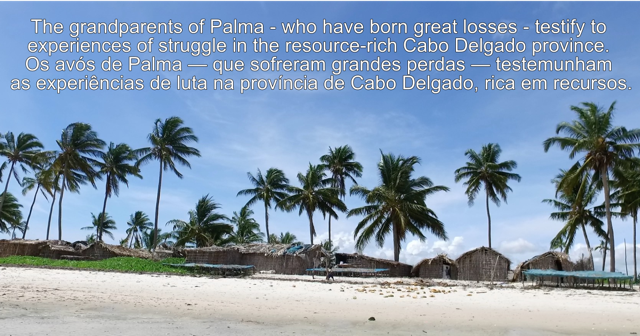
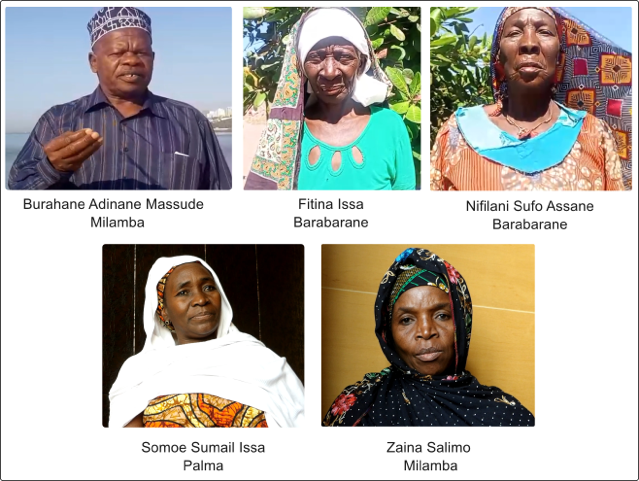
The grandparents of Palma – who have born great losses – testify to experiences of struggle
in the resource-rich Cabo Delgado province.
“Since the day we left until today, we have not received any support, not even farmland…at
my age, I can’t get food, I don’t have a farm,” explains Senhora. F, originally from
Barabarane village where she farmed, fished, and gathered firewood and medicines from the
land.
Senhora. A, who supported her family from the sale of fish brought in by local fishing boats
says: “Without fish I am lifeless…Our lives now are made up of land struggle.”
For the elderly of Palma, who have watched their communities disintegrate since the gas
companies arrived, there is now only a bleak hope that their families can live in dignity.
Commercially viable gas fields were found far offshore in the Rovuma Basin in around 2010.
Then, the grandparents of Palma were still strong, working the shore and their vast lands,
and spending long days at sea. Life was hard, and socio-economic conditions were not
idyllic, but they were surrounded by beauty, they had stable homes in thriving communities,
and their children were healthy.
When their lands were required for the gas projects, they entered into negotiations for
resettlement with hopes fed by promises of a better life for their children – promises of new
homes and farmlands to replace what they had lost, education and jobs for their children, a
hospital, a football field, and an expansion area for their children, who would soon start their
own families.The first families were relocated in 2019. Since then, they have been caught up
in negotiation processes aimed at serving the gas interests. The land and livelihoods they
hoped to leave as inheritance have become sites of struggle where their children – now
adults – are driven to protest at the company gates to demand what was promised to their
parents.
Senhor S, who lived his life and raised his children in Barabarane states, “My children left
behind land, houses, and everything they had, and to this day they have not been
compensated for their property.” He wears a kofi (a type of cloth cap) as a symbol of faith,
wisdom, and respect in the community.
Some lament their lost homes and destroyed livelihoods, and speak of poor or no
compensation, and no support. Many speak of hunger, of their children and neighbours
looking “slim”, of the daily search for food and water. In addition to lands taken, access is
now restricted to many important coastal and fishing grounds.
Senhor B, who once had a fishing business in Milamba village states, “With the arrival of the
company, I am unable to carry out fishing activities due to the resettlement they have
imposed on us…. I can’t feed my children either, as I did before Total came along.”
Losing land and access to the sea means losing the ability to survive. There are enormous
intangible losses that can never be compensated, such as the unforgettable flavor of local
food, guaranteed by the centuries-old mango trees; the shelter and food provided by the old
coconut palms; and the colorful bed mats woven from wild strawn.
Senhor S, who lost farmlands in Nsemo, explains that the limited cash compensation is not a
fair replacement for ever-providing natural resources, “If you give us money how are we
going to live as human beings? How will my children and grandchildren survive?”
French company TotalEnergies leads the resettlement work on the Afungi gas site, and is
majority owner of the Mozambique LNG project. The project shares land use rights for the
gas site with the Rovuma LNG project of Italian company ENI and American company
ExxonMobil. About 32 financial institutions have committed approximately USD 15 billion to
Mozambique LNG, including four South African banks and five African public institutions.
Collectively, the African financial institutions involved have committed around
USD 2.5 billion. All have been informed of the communities’ unresolved resettlement
grievances as well as other severe risks, including environmental and climate risks.
Over the years, tireless attempts and proposals from communities for a resolution were
largely ignored by the company, and formal complaints processes through the Mozambican
government yielded further delays. Confusion and tension were also created when fields in
some communities were taken – some without payment, some without even agreement –
and then allocated as compensation fields to resettled communities. A key flaw in the
resettlement process is that communities were not provided legal assistance, and civil
society organisations were impeded from providing support. It was only after a series of
brave protests starting in November 2024 that the gas company re-entered negotiation.
Since then, new agreements have been signed in some communities but payments have not
been made, and in other communities, negotiations are still underway.
Across Africa, similar grievances have been raised against TotalEnergies relating to lands
taken, livelihoods destroyed, inadequate or lack of compensation, and unmet compensation
promises, in addition to the severe environmental and climate risks of the company’s
projects, and links to human rights violations. In late August, affected communities and civil
society connected their struggles across the continent to call TotalEnergies and its
supporters to account. As part of the Kick Total Out of Africa week of action, the Cabo
Delgado communities spoke at an intercontinental tribunal, alongside communities in
Uganda, South African and the DRC, demanding accountability and reparations for the
socio-economic, environmental and human rights violations associated with the company.
In Palma, the gas-related displacement cannot be separated from the instability created by
the raging regional insurgency, or the responding militarisation of the region that was
accompanied by further extortion and violence against civilians. Ultimately, gas development
would deliver low economic benefits for Mozambique, and only after about another decade.
The projects make use of tax avoidance mechanisms, the gas stakes of Mozambican state
company ENH are considered to be “virtually worthess”, and the gas is already potentially
stranded.
Although there is ongoing insistence that the TotalEnergies project will resume (albeit with
shifting target dates), the risks associated with gas development remain extremely high. For
the people of Palma, the hopes of a better life from gas have become a reality of loss and
hunger. Financial institutions must take into account the real experiences of the men and
women who have witnessed the projects unfolding and experienced their impacts. They
must withdraw their support for development that offers little to Mozambique in return for the
lands and sea it takes.
 JA4change