
27 October 2025 — TotalEnergies’ decision to lift force majeure for its Mozambique
LNG project despite increasingly dangerous security conditions ignores warnings
that the security arrangements for the project jeopardises the safety of communities.
It demonstrates deep disrespect for the unresolved community grievances and
human rights, environmental and climate risks associated with Mozambique LNG. It
could strain Mozambique’s economy even further by hitting the country with a heavy
bill for delays to the project. Civil society organisations are — again — urging that
financial institutions and companies involved with the project withdraw their support.
After a four-year suspension marred by severe human rights violations scandals,
TotalEnergies informed the President of Mozambique in a letter on Friday of its decision to
lift force majeure on its USD 20 billion Mozambique LNG project. However, according to this
letter, signed by TotalEnergies’ CEO Patrick Pouyanné and seen by our organizations, the
restart is still conditional on Mozambique’s agreement on the terms and conditions set by the
French company.
The letter shows that TotalEnergies’ new development plan, updated budget and schedule
for the project still need to be approved by the Mozambican government. Patrick Pouyanné
states that “This revised budget’s approval shall cover the incremental costs incurred by the
project due to Force Majeure, which amount to 4.5 billion dollars”. However, Mozambique is
still to present its own estimate. TotalEnergies is also requesting a ten-year extension of the
development and production period of the project. This negotiation is happening in the
context of already very unfavorable conditions for Mozambique, as TotalEnergies initially
negotiated unfair contracts [1] and benefits from exploitative investor protection clauses in
international agreements [2].
Daniel Ribeiro, Justiça Ambiental: “TotalEnergies is attempting a new tour de force to
obtain ultra-favourable restart conditions. But the enormous favours requested by the
company should also be seen as the severe failure of TotalEnergies: its investment plan is a
disaster, and it needs Mozambique to keep its gas project afloat. One of the world’s richest
companies is holding one of the poorest countries hostage. The Mozambican government
has been pressured to provide public security forces to protect the TotalEnergies project —
and now is being required to pay the costs of the delays. This would weaken Mozambique’s
economy, worsen living conditions for Mozambicans, and further fuel the insurgency.”
A violent regional insurgency, ongoing since October 2017 and driven by social discontent
and worsened socio-economic conditions, has been triggered by the discovery of the gas
reserves and the development of extractive industries that local people do not believe they
will benefit from. Militarisation of the region has continuously failed to stop the insurgency [3].
Since July, insurgent activity has been increasing across the province, including in Palma
town which neighbours the gas project and the nearby port town of Mocimboa da Praia. The
new security arrangements for the gas project concentrate troops at the Afungi gas site,
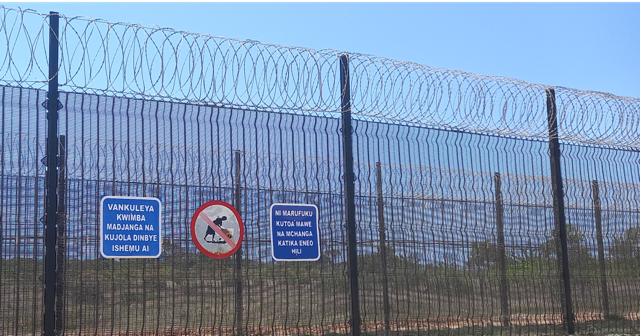
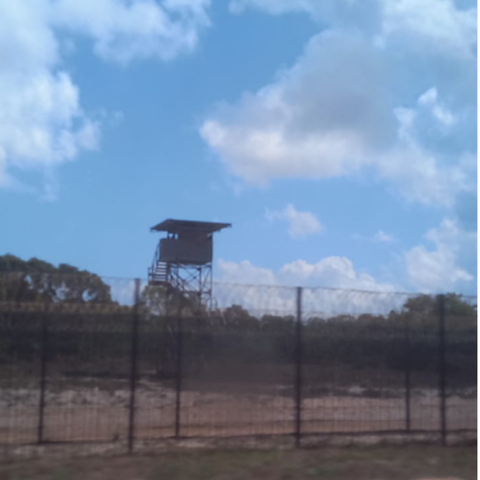
turning the project into an isolated “fortress” [4]. There are well-founded fears that this will
increase the vulnerability of local people to insurgent attacks.
Mozambique LNG was suspended in April 2021 because of a major attack on Palma town.
During the attack, at least 1,200 people were killed [5], yet the gas project remained safe
under military protection. TotalEnergies is accused of failing to ensure the safety of its
subcontractors during the attack, and is currently under judicial investigation in France for
involuntary manslaughter [6]. The company’s responsibility is also called into question in the
so-called “container massacre” reported by Politico [7].
Lorette Philippot, Friends of the Earth France: “TotalEnergies paid soldiers that, during
three months in 2021, allegedly detained and tortured dozens of civilians on its gas site [8].
Only 26 out of at least 150 people are reported to have survived. But while victims are still
calling for justice, Patrick Pouyanné simply denied their voices and suffering [9]. Not only
must these allegations of serious crimes not go unpunished for those potentially responsible,
but TotalEnergies must be prevented from applying its recipe for chaos once again : putting
its profits before communities safety, as it has been doing since 2019 in Mozambique.”
According to TotalEnergies, the lifting of the force majeure required approval by each of the
31 financial institutions which participated in the USD 14.9 billion financing to Mozambique
LNG in July 2020. [10]
Rieke Butijn, BankTrack: “Our coalition has provided financial institutions with extensive
reports, expert accounts and community testimonies showing that the project endangers
workers and communities and offers very little benefit to Mozambique. With the lifting of the
force majeure, now is the time for these institutions to show that they understand the gravity
of the situation and to make the only responsible financial decision: withdraw their support
for the Mozambique LNG project.”
Among the financial institutions involved, the UK Export Finance agency and the Dutch
government both opened investigations in 2025 into the reported “container massacre” –
with no results made public yet.
Isabelle Geuskens, Milieudefensie: “It is shocking to see TotalEnergies push the
Mozambican government and lift force majeure at a time when the security situation in the
region of the gas area is horrific. Locals are fleeing their communities again, people are
being killed and some of the aid organisations had to retreat because of the escalating
violence. The total disregard for what is happening to Mozambican citizens is appalling. The
Dutch government — which is currently re-assessing its ECA support — should act
responsibly as a public financier, and discontinue its support for this gas project. No Dutch
taxpayer money should back up this rich French company´s dirty project, which is gambling
with the rights and well-being of the people of Cabo Delgado, one of the poorest regions in
the world!”
Simone Ogno, ReCommon: “Oil and gas companies and financial institutions want to press
ahead at all costs with the exploitation of Mozambique’s natural resources, regardless of the
consequences: human rights violations that could potentially amount to war crimes, forced
displacement of people and a burden on Mozambique’s public finances. Added to this are
the potential impacts on the marine environment and climate from offshore projects.This
applies to the Mozambique LNG project as well as to Rovuma LNG (ExxonMobil and ENI) —
which share land use rights and infrastructure with the Mozambique LNG project — and
Coral North FLNG (ENI). A gamble at the expense of the Mozambican people. If the human
rights violations reported to have occurred in 2021 are confirmed, the consequences will also
fall on the project’s financial sponsors, primarily export credit agencies, including SACE.”
Sonja Meister, urgewald: “Siemens Energy holds a key to the start of the Mozambique
LNG project- a non-delivery of its gas turbines and other essential equipment would
represent a main bottleneck further delaying the project from restarting. Deutsche Bank has
already helped TotalEnergies on several occasions to raise new funds that could also be
used to finance the project. German companies and banks should immediately withdraw
their support for Mozambique LNG and TotalEnergies if they do not want to be complicit in
this disastrous project.”
Contacts :
● Daniel Ribeiro, Justiça Ambiental / daniel.ja.mz@gmail.com
● Lorette Philippot, Friends of the Earth France / +33 640188284 /
lorette.philippot@amisdelaterre.org
● Sonja Meister, urgewald / +49 176 64608515 / sonja.meister@urgewald.org
● Rieke Butijn, BankTrack / henrieke@banktrack.org
● Antoine Bouhey, Reclaim Finance / antoine@reclaimfinance.org
● Simone Ogno, ReCommon / simoneogno@recommon.org
● Isa Geuskens, Milieudefensie / isabelle.geuskens@milieudefensie.nl
Notes :
[1] https://www.e3g.org/publications/the-failure-of-gas-for-development-mozambique-case-
study
[2] https://stopmozgas.org/report/report-isds-mozambique-2024/
[3] https://issafrica.org/iss-today/cabo-delgado-insurgency-persists-amid-failed-military-
strategy
[4] https://www.zitamar.com/shut-out-of-fortress-afungi/
[5] https://www.alex-perry.com/palma-massacre/
[6] https://www.lemonde.fr/en/le-monde-africa/article/2025/03/15/french-prosecutors-launch-
manslaughter-probe-against-totalenergies-over-mozambique-attack_6739177_124.html
[7] https://www.politico.eu/article/totalenergies-mozambique-patrick-pouyanne-atrocites-
afungi-palma-cabo-delgado-al-shabab-isis/
[8] https://www.lemonde.fr/afrique/video/2025/01/28/comment-des-soldats-payes-par-
totalenergies-ont-sequestre-des-civils-au-mozambique_6520247_3212.html
[9] Statement by Patrick Pouyanné in June 2025, questioned on Mozambique LNG as part of
an Inquiry Commission in the French Parliament.
https://www.youtube.com/watch?v=tU5z9Rxq2Xw
[10] [https://www.reuters.com/business/energy/totalenergies-further-delays-20-bln-
mozambique-lng-project-ft-reports-2025-01-22/
31 financial institutions participated in the USD 14.9 billion financing to Mozambique LNG in
July 2020.
● Public financial institutions: Export Import Bank of the United States (US EXIM);
Japan Bank for International Cooperation (JBIC); UK Export Finance (UKEF); Export-
Import Bank of Thailand (Thai Exim); Servizi Assicurativi del Commercio Estero
(SACE); Nippon Export and Investment Insurance (NEXI); Export Credit Insurance
Corporation of South Africa (ECIC); Atradius Dutch State Business (ADSB); Cassa
Depositi e Prestiti; African Development Bank (AfDB); African Export Import Bank;
Development Bank of Southern Africa; Industrial Development Corporation of South
Africa; Korea Development Bank; Export Import Bank of Korea (KEXIM); US
International Development Finance Corp (DFC).
● Private financial institutions: Société Générale; Crédit Agricole; Mizuho Bank; JP
Morgan; Standard Chartered Bank; MUFG Bank; Sumitomo Mitsui Banking
Corporation; Sumitomo Mitsui Trust Bank; SBI Shinsei Bank; Nippon Life Insurance;
ABSA Bank; Nedbank; Rand Merchant Bank; Standard Bank; ICBC.
 JA4change