Category Archives: Uncategorized

Energy projects fuel hunger in Palma,

Mozambique

September 2025
Once-thriving communities on the Afungi Peninsula of Palma Bay, in the far north of
Mozambique, have become landless, “slim”, and dispossessed of peaceful futures – as a
direct result of mega liquefied natural gas (LNG) projects majority owned by TotalEnergies,
ENI, and ExxonMobil.
The resettlement process for the communities required to relocate for the gas projects has
been mangled, and it is the most vulnerable who are paying the cost for energy giants to
industrialise their lands. While the Mozambique LNG project remains suspended, and two
others remain without final investment decision, African financial institutions must take the
moment to assess if they will continue their support for a project that has directly harmed
local peoples.
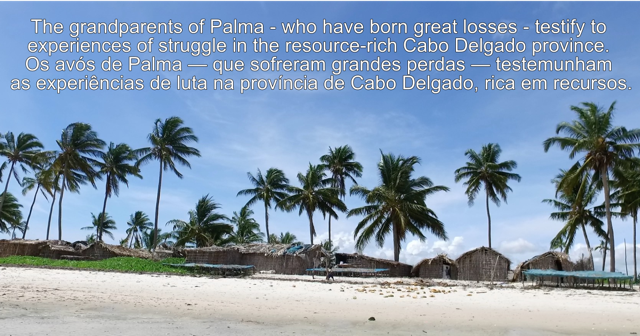
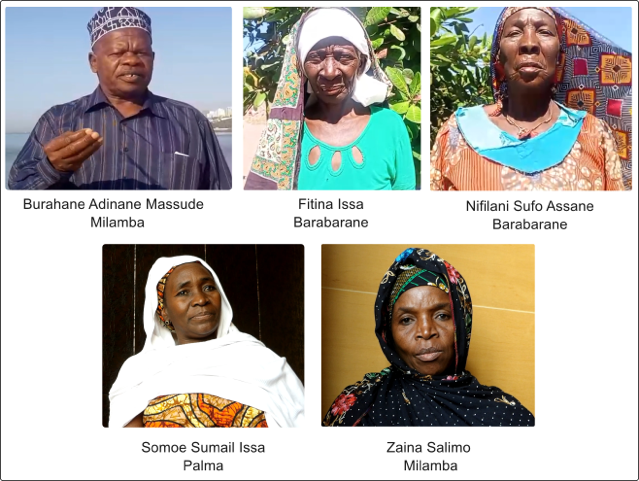
The grandparents of Palma – who have born great losses – testify to experiences of struggle
in the resource-rich Cabo Delgado province.
“Since the day we left until today, we have not received any support, not even farmland…at
my age, I can’t get food, I don’t have a farm,” explains Senhora. F, originally from
Barabarane village where she farmed, fished, and gathered firewood and medicines from the
land.
Senhora. A, who supported her family from the sale of fish brought in by local fishing boats
says: “Without fish I am lifeless…Our lives now are made up of land struggle.”

For the elderly of Palma, who have watched their communities disintegrate since the gas
companies arrived, there is now only a bleak hope that their families can live in dignity.
Commercially viable gas fields were found far offshore in the Rovuma Basin in around 2010.
Then, the grandparents of Palma were still strong, working the shore and their vast lands,
and spending long days at sea. Life was hard, and socio-economic conditions were not
idyllic, but they were surrounded by beauty, they had stable homes in thriving communities,
and their children were healthy.
When their lands were required for the gas projects, they entered into negotiations for
resettlement with hopes fed by promises of a better life for their children – promises of new
homes and farmlands to replace what they had lost, education and jobs for their children, a
hospital, a football field, and an expansion area for their children, who would soon start their
own families.The first families were relocated in 2019. Since then, they have been caught up
in negotiation processes aimed at serving the gas interests. The land and livelihoods they
hoped to leave as inheritance have become sites of struggle where their children – now
adults – are driven to protest at the company gates to demand what was promised to their
parents.
Senhor S, who lived his life and raised his children in Barabarane states, “My children left
behind land, houses, and everything they had, and to this day they have not been
compensated for their property.” He wears a kofi (a type of cloth cap) as a symbol of faith,
wisdom, and respect in the community.
Some lament their lost homes and destroyed livelihoods, and speak of poor or no
compensation, and no support. Many speak of hunger, of their children and neighbours
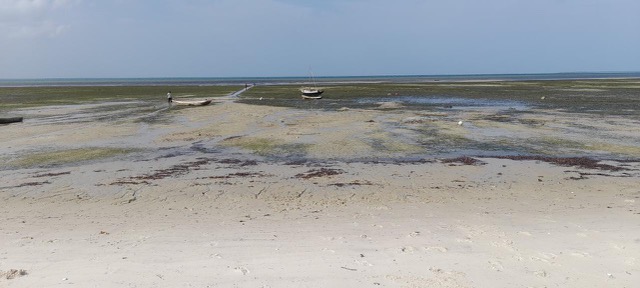
looking “slim”, of the daily search for food and water. In addition to lands taken, access is
now restricted to many important coastal and fishing grounds.
Senhor B, who once had a fishing business in Milamba village states, “With the arrival of the
company, I am unable to carry out fishing activities due to the resettlement they have
imposed on us…. I can’t feed my children either, as I did before Total came along.”
Losing land and access to the sea means losing the ability to survive. There are enormous
intangible losses that can never be compensated, such as the unforgettable flavor of local
food, guaranteed by the centuries-old mango trees; the shelter and food provided by the old
coconut palms; and the colorful bed mats woven from wild strawn.
Senhor S, who lost farmlands in Nsemo, explains that the limited cash compensation is not a
fair replacement for ever-providing natural resources, “If you give us money how are we
going to live as human beings? How will my children and grandchildren survive?”
French company TotalEnergies leads the resettlement work on the Afungi gas site, and is
majority owner of the Mozambique LNG project. The project shares land use rights for the
gas site with the Rovuma LNG project of Italian company ENI and American company
ExxonMobil. About 32 financial institutions have committed approximately USD 15 billion to
Mozambique LNG, including four South African banks and five African public institutions.
Collectively, the African financial institutions involved have committed around
USD 2.5 billion. All have been informed of the communities’ unresolved resettlement
grievances as well as other severe risks, including environmental and climate risks.
Over the years, tireless attempts and proposals from communities for a resolution were
largely ignored by the company, and formal complaints processes through the Mozambican
government yielded further delays. Confusion and tension were also created when fields in
some communities were taken – some without payment, some without even agreement –
and then allocated as compensation fields to resettled communities. A key flaw in the

resettlement process is that communities were not provided legal assistance, and civil
society organisations were impeded from providing support. It was only after a series of
brave protests starting in November 2024 that the gas company re-entered negotiation.
Since then, new agreements have been signed in some communities but payments have not
been made, and in other communities, negotiations are still underway.
Across Africa, similar grievances have been raised against TotalEnergies relating to lands
taken, livelihoods destroyed, inadequate or lack of compensation, and unmet compensation
promises, in addition to the severe environmental and climate risks of the company’s
projects, and links to human rights violations. In late August, affected communities and civil
society connected their struggles across the continent to call TotalEnergies and its
supporters to account. As part of the Kick Total Out of Africa week of action, the Cabo
Delgado communities spoke at an intercontinental tribunal, alongside communities in
Uganda, South African and the DRC, demanding accountability and reparations for the
socio-economic, environmental and human rights violations associated with the company.
In Palma, the gas-related displacement cannot be separated from the instability created by
the raging regional insurgency, or the responding militarisation of the region that was
accompanied by further extortion and violence against civilians. Ultimately, gas development
would deliver low economic benefits for Mozambique, and only after about another decade.
The projects make use of tax avoidance mechanisms, the gas stakes of Mozambican state
company ENH are considered to be “virtually worthess”, and the gas is already potentially
stranded.
Although there is ongoing insistence that the TotalEnergies project will resume (albeit with
shifting target dates), the risks associated with gas development remain extremely high. For
the people of Palma, the hopes of a better life from gas have become a reality of loss and
hunger. Financial institutions must take into account the real experiences of the men and
women who have witnessed the projects unfolding and experienced their impacts. They
must withdraw their support for development that offers little to Mozambique in return for the
lands and sea it takes.

Déclaration de Maputo de solidarité avec les peuples Palestinien et Sahraoui

Déclaration de Maputo de solidarité avec les peuples Palestinien et Sahraoui

Demande des participants au 9e atelier de Maputo sur l’impunité des entreprises et les droits humains pour la libération de la Palestine et du Sahara Occidental, Maputo, 1er août 2025

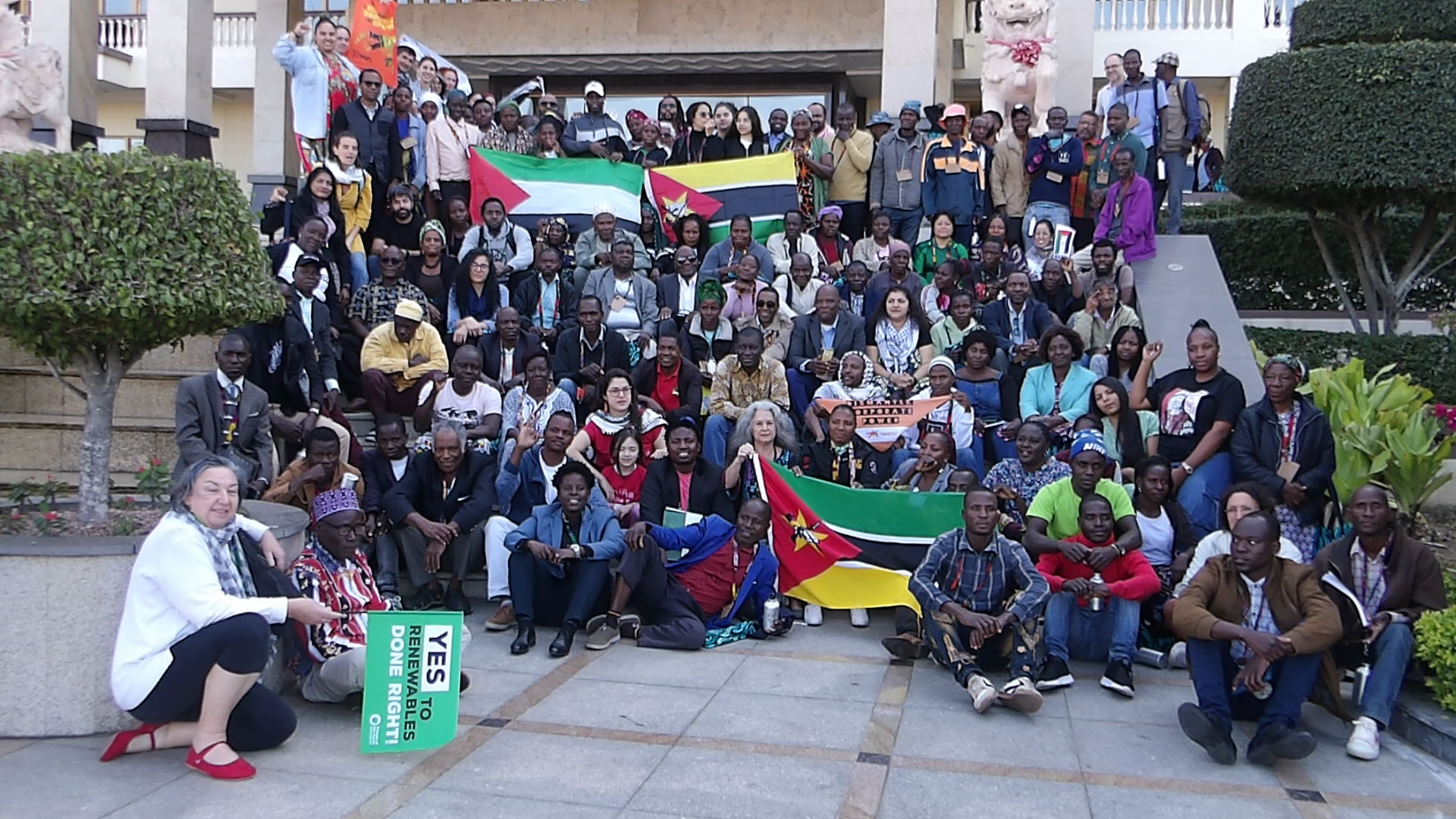
En tant que personnes et organisations venues de 30 pays à Maputo pour renforcer la solidarité internationale et élaborer une stratégie de résistance contre l’exploitation de nos terres et de nos mers par les sociétés transnationales, nous reconnaissons leur complicité dans l’occupation des territoires des peuples autochtones à travers le monde. Cela est évident tant en Palestine qu’au Sahara Occidental.

Nous sommes fermement solidaires du peuple Palestinien qui subit un génocide. La situation à Gaza s’est détériorée à des niveaux sans précédent. L’occupation israélienne utilise la famine comme arme de guerre, les civils se voient refuser l’accès à la nourriture, à l’eau et aux fournitures médicales essentielles, ce qui entraîne une malnutrition généralisée et des décès évitables. Les zones résidentielles, les hôpitaux et les écoles ont été soumis à des frappes aériennes incessantes, causant la mort de plus de soixante mille civils, en particulier des femmes et des enfants. Plus de 1,5 million de personnes ont été déplacées de force, pour ensuite subir de nouvelles attaques. Pendant ce temps, une guerre silencieuse se déroule en Cisjordanie et Israël poursuit son annexion. Comme le souligne le dernier rapport de la Rapporteuse Spéciale des Nations unies sur les territoires palestiniens occupés, Francesca Albanese, intitulé « De l’économie de l’occupation à l’économie du génocide », les entreprises ont contribué de manière significative au génocide en cours et en ont tiré profit, en fournissant à Israël les armes et les machines nécessaires pour détruire des maisons, des écoles, des hôpitaux, des lieux de loisirs et de culte, des moyens de subsistance et des actifs productifs, afin de séparer et de contrôler les communautés et de restreindre l’accès aux ressources naturelles.

En tant qu’organisations engagées en faveur des droits humains et de la justice, nous exhortons tous les gouvernements, organisations de la société civile, institutions et individus à prendre des mesures décisives contre le génocide en cours.

Le Sahara Occidental reste une colonie en Afrique, dont la majeure partie du territoire est occupée par le Maroc depuis 1975, après le départ soudain et la décolonisation non conclue du territoire par l’Espagne, l’ancienne puissance coloniale. Le peuple sahraoui poursuit sa lutte pour l’indépendance et continue d’être victime de violations des droits humains, notamment des tortures et des disparitions. Ses terres et ses ressources sont exploitées à la fois par le Maroc et par des sociétés transnationales, sans le consentement du peuple sahraoui, ce qui est contraire au droit international.

Pour la Palestine, le Sahara Occidental et les autres territoires occupés ou des territoires en proie à des conflits incessants, tels que la République Démocratique du Congo, le Soudan, Cabo Delgado au Mozambique, nous condamnons toutes les formes de colonisation et dénonçons la complicité des sociétés transnationales. Nous demandons que soit reconnu que les pays et les citoyens du monde entier qui profitent des ressources pillées dans les territoires occupés sont complices de ces occupations et des violations brutales des droits humains. Nous sommes fermement solidaires des peuples qui résistent à la spoliation et à la destruction de leurs territoires. Nous unissons nos forces pour exiger un avenir où la vie passe toujours avant le profit.

Pour la Palestine, nous demandons:

  1. Un cessez-le-feu immédiat: l’arrêt inconditionnel et permanent de toutes les opérations militaires à Gaza.
  2. Un accès humanitaire sans restriction: ouvrir les frontières et permettre aux organisations humanitaires d’acheminer des fournitures essentielles à la population de Gaza, et à la population de Gaza d’accéder à ces fournitures en toute sécurité.
  3. La responsabilité des crimes de guerre: mener des enquêtes indépendantes sur tous les crimes de guerre et toutes les violations du droit international, et tenir les auteurs responsables.
  4. La liberté et la protection des prisonniers palestiniens et la fin de leur traitement inhumain dans les prisons Israéliennes.
  5. La libre circulation des Palestiniens: reconnaître et garantir le droit des Palestiniens à la libre circulation.
  6. La fin de l’occupation et l’affirmation des droits et de la liberté des Palestiniens: nous défendons les droits humains inaliénables des Palestiniens à la liberté, à la justice, au retour et à l’autodétermination, ainsi que le retrait complet des troupes étrangères et des occupants illégaux du territoire palestinien.
  7. Boycott, désinvestissement et sanctions économiques: Appeler les gouvernements à rompre leurs relations diplomatiques, à mettre en place des embargos commerciaux et des sanctions économiques contre l’occupation israélienne. Appeler également au boycott académique et sportif ainsi qu’au désinvestissement dans les entreprises israéliennes.
  8. Les États doivent respecter leurs obligations au titre de la Convention des Nations Unies pour la prévention et la répression du crime de génocide.

De plus, nous pensons que la seule solution juste et durable consiste à établir un seul État démocratique, du fleuve à la mer, où les réfugiés palestiniens puissent retourner, où les colonies israéliennes soient démantelées et où tous les habitants jouissent de droits de citoyenneté égaux dans un pays décolonisé qui garantit la liberté et la dignité pour tous à travers un processus de vérité et de réconciliation qui traite les injustices historiques et offre des réparations pour la dépossession des Palestiniens.

Pour le Sahara Occidental, nous demandons:

  1. La fin de l’occupation illégale: Appeler à la fin de l’occupation marocaine des territoires du Sahara Occidental.
  2. Respect du droit à l’autodétermination du peuple Sahraoui, qui doit être libre de décider de son avenir politique, notamment par la reconnaissance de la République arabe sahraouie démocratique (RASD) comme gouvernement légitime du Sahara occidental.
  3. Retour des réfugiés Sahraouis, garantissant ainsi le droit des personnes vivant dans les camps de retourner dans leur patrie dans des conditions sûres et dignes.
  4. La libération des prisonniers politiques: Libérer tous les prisonniers sahraouis illégalement emprisonnés par la puissance occupante.
  5. La protection des ressources naturelles: Mettre fin au pillage des ressources naturelles du Sahara Occidental par la puissance occupante et les sociétés transnationales.
  6. La protection des droits humains: garantir la surveillance et la protection des droits humains dans les territoires occupés par des organismes internationaux indépendants.
  7. La liberté de circulation de tous les Sahraouis: garantir et assurer le droit de circulation de tout le peuple sahraoui.
  8. Les États africains doivent respecter leurs engagements régionaux et internationaux: l’Union africaine et ses États membres doivent veiller au respect des objectifs de l’Acte constitutif de l’Union en matière de respect et de protection des droits du peuple sahraoui en vertu de la Charte africaine des droits de l’homme et des peuples et des instruments pertinents relatifs aux droits des peuples.

A luta continua!

SIGNATURES

Organisations nationales

Justiça Ambiental (JA!) – Friends of the Earth Moçambique

Palestine Environmental NGOs Network (PENGON), Friends of the Earth Palestine

National Union of Sahrawi Women (UNMS) – Western Sahara

Les Amis de la Terre – Togo / Friends of the Earth – Togo

Sikkim Indigenous Lepcha Tribal Association (SILTA) – North East India

Affected citizens of Teesta (ACT) Sikkim – North East India

Climáximo – Portugal

Centre for Financial Accountability (CFA) – India

Sustainable Development Institute (SDI) – Liberia

10. Núcleo para Desenvolvimento Comunitário de Cabo Delgado (NUDEC) – Moçambique

11. Centre Congolais pour le ( Droit du ) Développement Durable (CODED) – R.D. Congo

12. Magamba Network – Zimbabwe

13. Buni Media – Kenya

14. Journal Rappe – Senegal

15. Mouvement Africain pour les Droits Environnementaux dans la région de l’Est BURKINA Faso (MADEE) – Burkina Faso

16. Natural Resource Women Platform (NRWP) – Liberia

17. Plataforma da Sociedade Civil da Província de Manica (PLASOC) – Moçambique

18. Zimbabwe Smallholder Organic Farmers Forum (ZIMSOFF) – Zimbabwe 

19. Health of Mother Earth Foundation (HOMEF) – Nigeria 

20. International Labour, Research & Information Group (ILRIG) – South Africa

21. Help Initiative For Social Justice and Humanitarian Development – Nigeria

22. Palestine Solidarity Campaign (PSC) Gauteng – South Africa

23. Landless Peoples Movement – South Africa

24. West Coast Food Sovereignty and Solidarity Forum – South Africa

25. South Durban Community Environmental Alliance (SDCEA) – South Africa

26. Environmental Defenders Network (EDEN) – Nigeria

27. Jeunes Volontaires pour l’Environnement (JVE) Côte d’Ivoire 

28. Advocacy Coalition for Sustainable Agriculture (ACSA) – Uganda

29. Friends of the Earth Japan – Japan

30. South African BDS Coalition – South Africa

31. Ondjango Feminista – Angola 

32. Associação Observatório de Políticas de Género – Angola 

33. Healthcare Workers 4 Palestine – South Africa 

34. African Water Commons Collective – South Africa

35. Women on Mining and Extractives – Sierra Leone

36. ATTAC CADTM – Togo

37. Civic Forum on Housing and Habitat – Zambia 

38. All Youth Foundation for Community Development – Yemen 

39. Centre for Social Change, University of Johannesburg – South Africa

40. Community Action Movement – Nigeria

41. Missão Tabita, Zambézia – Moçambique

42. Les Amis de la Terre – Belgique (ASBL) – Belgium

43. groundWork, Friends of the Earth South Africa

44. Participatory Action Research Coalition – India

45. Rights not Recuse Trust – Namibia

46. Amigas de la Tierra España / Friends of the Earth Spain

47. Young Women of Africa (YWOA) 

48. Amigas da Terra Brasil / Friends of the Earth Brazil

49. Center for Labour and Social Studies (CLASS) – Nepal

50. The Grail – International Women Movement – Moçambique

51. Grana Nostra – Collectif Algérien Pour la Biodiversité – Algérie

52. National Sudanese Women Association (NSWA) – Sudan 

53. Friends of the Earth Denmark (NOAH) – Denmark

54. Associação para Promoção dos Direitos de Transgéneros de Moçambique (ANTRA) – Moçambique

55. Sahabat Alam Malaysia / Friends of the Earth Malaysia (SAM) – Malaysia

56. Lawyers’ Environmental Action Team (LEAT) / Friends of the Earth Tanzania

57. Centre For Alternative Research and Studies (CARES) – Mauritius

58. Censat Agua Viva / Friends of the Earth Colombia

59. Community Development Advocacy Foundation (CODAF) – Nigeria 

60. Legal Rights and Natural Resources Center – Friends of the Earth Philippines

61. Lok Shakti Abhiyan – India

62. Centre For Studies on Climate Justice – Bhubaneswar, India

63. Centre for Citizens Conserving Environment & Management (CECIC) – Uganda

64. Afrikagrupperna – Sweden 

65. Sahrawi Organization Against Moroccan Occupation – Western Sahara

66. Association of Sahrawi Human Rights Defenders in Western Sahara

67. Association for the Protection of Sahrawi Prisoners in Moroccan prisons – Western Sahara

68. Association for the Monitoring of the Resources and for the Protection of the Environment in Western Sahara (AMRPENWS) – Western Sahara

69. Sahrawi Association of Victims of Grace Human Rights Violations Committed by the Moroccan State (ASVDH) – Western Sahara

70. Sahrawi Association for the Protection and Promotion of Sahrawi Culture and Heritage – Western Sahara

71. Union Nationale des Femmes Algériennes – Western Sahara

72. Committee for the Defense of the Self-Determination of the People of Western Sahara (CODAPSO) – Western Sahara

73. Committee for the Protection of Sahrawi Human Rights Defenders – Western Sahara

74. Sahrawi Observatory for Child Protection – Western Sahara

75. Sahrawi Committee of Arbitrarily Dismissed Employees and Workers by Moroccan State – Western Sahara

76. Committee of the Families of the Abducted – Western Sahara

77. Committee for the Protection of Natural Resources and Defense of the Settlement Plan – Western Sahara

78. Port Arthur Community Action Network (PACAN) – United States of America

79. MA’AN Development Center – Palestine

80. Arab Agronomists Association (AAA) – Palestine

81. Rural Women Development Society (RWDS) – Palestine

82. Union Nationale des Femmes Algériennes (UNFA) – Algérie

83. Friends of the Earth – Grenada (West Indies) 

84. Ramani Collective – Kenya

85. Coletivo Refúgio Humanitário Palestina Brasil

86. Sunflower Association – Palestine

87. Comitê Capixabas pela Palestina – Brasil

88. Zelena akcija / Friends of the Earth Croatia


Organisations internationales / régionales

89. La Via Campesina Southern and Eastern Africa (LVC – SEAF)

90. Convergence Globale des Luttes pour la Terre, l’Eau et  les Semences Paysannes Ouest africain (CGLTE-OA)

91. Green Advocates International (GAI)

92. Amigos da Terra África / Friends of the Earth Africa

93. Housing and Land Rights Network – Habitat International Coalition – Switzerland and Egypt

94. Global Campaign to Reclaim Peoples’ Sovereignty, Dismantle Corporate Power and Stop Impunity

95. Africa Just Transition Network (AJTN) – Africa

96. South Asian Solidarity Collective

97. Oilwatch Africa

98. No REDD in Africa Network (NRAN)

99. Oilwatch International

100. Laudato Si Movement Africa

101. Third World Network (TWN)

102. Womin African Alliance

103. Asia Peoples Movement on Debt and Development (APMDD)

104. Transnational Institute (TNI) – Netherlands / International

105. Natural Justice: Lawyers for Communities’ and the Environment – Africa

Maputo Statement of Solidarity with the Palestinian and Sahrawi Peoples

Maputo Statement of Solidarity with the Palestinian and Sahrawi Peoples

Demand of the participants of the 9th Maputo Workshop on Corporate Impunity and Human Rights for the liberation of Palestine and Western Sahara, Maputo, 01 August 2025

As people and organizations who have convened from 30 countries in Maputo to build international solidarity and strategise our resistance to the exploitation of our lands and seas by transnational corporations, we recognise their collusion in the occupation of territories of indigenous peoples across the world. This is evident in both Palestine and Western Sahara.

We stand firmly in solidarity with the Palestinian people who are experiencing genocide. The situation in Gaza has deteriorated to unprecedented levels. The Israeli occupation is using mass starvation as a weapon of war, civilians are being denied access to essential food, water and medical supplies, leading to widespread malnutrition and preventable deaths. Residential areas, hospitals, and schools have been subjected to relentless airstrikes, resulting in the deaths of more than sixty thousand civilians, particularly women and children. Over 1.5 million people have been subjected to forced displacement, only to face further attacks. While a silent war is committed in the West Bank and Israel is proceeding with annexation. As highlighted by the latest report from the UN Special Rapporteur on the Occupied Palestinian Territories, Francesca Albanese, entitled “From economy of occupation to economy of genocide”, corporations have materially contributed to and profited from the ongoing genocide, by providing Israel with the weapons and machinery required to destroy homes, schools, hospitals, places of leisure and worship, livelihoods and productive assets, to segregate and control communities and to restrict access to natural resources.

As organizations committed to human rights and justice, we urge all governments, civil society organizations, institutions, and individuals to take decisive action against the ongoing genocide.

Western Sahara remains as a colony in Africa, with the majority of its lands occupied by Morocco since 1975, after the sudden exit and unconcluded decolonization of the territory by Spain, the former colonial power. The Sahrawi people have continued their struggle for independence and continue to face human rights violations, including torture and disappearance. Their lands and resources are being carved out both by Morocco and transnational companies, without the consent of the Sahrawi people, which is against international law.

For Palestine, Western Sahara and other occupied territories or territories beset by incessant conflicts, such as the Democratic Republic of the Congo, Sudan, Cabo Delgado in Mozambique, we condemn all forms of colonisation and we denounce the complicity of transnational corporations. We call for recognition that those countries and citizens across the world who benefit from the resources plundered in occupied territories are complicit in these occupations and brutal human rights violations. We firmly stand in solidarity with the people resisting dispossession and destruction in their territories. We join forces to demand a future where life always comes before profit.

For Palestine, we call for:

  1. Immediate Ceasefire: An unconditional and permanent halt to all military operations in Gaza.
  2. Unrestricted Humanitarian Access: Open the borders and allow for aid organizations to deliver essential supplies to the Gazan people, and for Gazan people to access supplies in safety.
  3. Accountability for War Crimes: Independent investigations into all war crimes and violations of international law, with perpetrators held responsible.
  4. Freedom and Protection for the Palestinian prisoners and end to their inhuman treatment in Israeli Jails.
  5. Free movement of Palestinians: Recognise and ensure the right of Palestinians to free movement.
  6. End the Occupation and affirm Palestinian rights and freedom: We uphold the inalienable human rights of Palestinians to freedom, justice, return, and self-determination, and complete withdrawal of foreign troops and illegal occupiers from Palestinian land.
  7. Boycott, Divestment and Economic Sanctions: Call for governments to cut diplomatic ties, implement trade embargoes and economic sanctions on the Israeli Occupation. To also call for academic and sports boycotts as well as divestment in Israeli Companies.
  8. Stop the supply of Military equipment and Fuel: Call on other countries to immediately stop or cut off the supply of arms and fuel to the Israeli military.
  9. States to uphold their obligations under the UN Convention on the Prevention and Punishment of the Crime of Genocide.

Furthermore, we believe that the only just and long term solution is the establishment of a single democratic state, from the river to the sea, where Palestinian refugees return, Israeli settlements are dismantled, and all inhabitants enjoy equal citizenship rights in a decolonized country that guarantees freedom and dignity for everyone through a truth and reconciliation process that addresses historical injustices and provides reparations for Palestinian dispossession.

For Western Sahara, we call for:

  1. End the Illegal Occupation: Call for an end to the Moroccan occupation of the territories of Western Sahara.
  2. Respect for the right to self-determination of the Sahrawi people, who must be allowed to freely decide their political future, including by the recognition of the Sahrawi Arab Democratic Republic (SADR) as the legitimate government of Western Sahara.
  3. Return of the Sahrawi refugees, thus ensuring the right for those who live in camps to return to their homeland under safe and dignified conditions.
  4. Freedom of the Political Prisoners: Free all the Sahrawi prisoners unlawfully imprisoned by the occupying power.
  5. Protection of the Natural Resources: End to the plundering of Western Sahara’s natural resources by the occupation power and transnational corporations.
  6. Protection of Human Rights: Ensure the monitoring and protection of human rights in the occupied territories by international independent bodies.
  7. Freedom of Movement for all Sahrawis: Guarantee and ensure the right of movement for all the Sahrawi people.
  8. African States must comply with their regional and international commitments: the African Union and its member States must ensure compliance with the objectives of the Constitutive Act of the Union regarding respect for and protection of the rights of the Sahrawi people under the African Charter on Human and Peoples’ Rights and other relevant instruments on the rights of peoples.

A luta continua!

SIGNATURES

National Organisations

  1. Justiça Ambiental (JA!) – Friends of the Earth Moçambique
  2. Palestine Environmental NGOs Network (PENGON), Friends of the Earth Palestine
  3. National Union of Sahrawi Women (UNMS) – Western Sahara
  4. Les Amis de la Terre – Togo / Friends of the Earth – Togo
  5. Sikkim Indigenous Lepcha Tribal Association (SILTA) – North East India
  6. Affected citizens of Teesta (ACT) Sikkim – North East India
  7. Climáximo – Portugal
  8. Centre for Financial Accountability (CFA) – India
  9. Sustainable Development Institute (SDI) – Liberia
  10. Núcleo para Desenvolvimento Comunitário de Cabo Delgado (NUDEC) – Moçambique
  11. Centre Congolais pour le ( Droit du ) Développement Durable (CODED) – R.D. Congo
  12. Magamba Network – Zimbabwe
  13. Buni Media – Kenya
  14. Journal Rappe – Senegal
  15. Mouvement Africain pour les Droits Environnementaux dans la région de l’Est BURKINA Faso (MADEE) – Burkina Faso
  16. Natural Resource Women Platform (NRWP) – Liberia
  17. Plataforma da Sociedade Civil da Província de Manica (PLASOC) – Moçambique
  18. Zimbabwe Smallholder Organic Farmers Forum (ZIMSOFF) – Zimbabwe 
  19. Health of Mother Earth Foundation (HOMEF) – Nigeria 
  20. International Labour, Research & Information Group (ILRIG) – South Africa
  21. Help Initiative For Social Justice and Humanitarian Development – Nigeria
  22. Palestine Solidarity Campaign (PSC) Gauteng – South Africa
  23. Landless Peoples Movement – South Africa
  24. West Coast Food Sovereignty and Solidarity Forum – South Africa
  25. South Durban Community Environmental Alliance (SDCEA) – South Africa
  26. Environmental Defenders Network (EDEN) – Nigeria
  27. Jeunes Volontaires pour l’Environnement (JVE) Côte d’Ivoire 
  28. Advocacy Coalition for Sustainable Agriculture (ACSA) – Uganda
  29. Friends of the Earth Japan – Japan
  30. South African BDS Coalition – South Africa
  31. Ondjango Feminista – Angola 
  32. Associação Observatório de Políticas de Género – Angola 
  33. Healthcare Workers 4 Palestine – South Africa 
  34. African Water Commons Collective – South Africa
  35. Women on Mining and Extractives – Sierra Leone
  36. ATTAC CADTM – Togo
  37. Civic Forum on Housing and Habitat – Zambia 
  38. All Youth Foundation for Community Development – Yemen 
  39. Centre for Social Change, University of Johannesburg – South Africa
  40. Community Action Movement – Nigeria
  41. Missão Tabita, Zambézia – Moçambique
  42. Les Amis de la Terre – Belgique (ASBL) – Belgium
  43. groundWork, Friends of the Earth South Africa
  44. Participatory Action Research Coalition – India
  45. Rights not Recuse Trust – Namibia
  46. Amigas de la Tierra España / Friends of the Earth Spain
  47. Young Women of Africa (YWOA) 
  48. Amigas da Terra Brasil / Friends of the Earth Brazil
  49. Center for Labour and Social Studies (CLASS) – Nepal
  50. The Grail – International Women Movement – Moçambique
  51. Grana Nostra – Collectif Algérien Pour la Biodiversité – Algérie
  52. National Sudanese Women Association (NSWA) – Sudan 
  53. Friends of the Earth Denmark (NOAH) – Denmark
  54. Associação para Promoção dos Direitos de Transgéneros de Moçambique (ANTRA) – Moçambique
  55. Sahabat Alam Malaysia / Friends of the Earth Malaysia (SAM) – Malaysia
  56. Lawyers’ Environmental Action Team (LEAT) / Friends of the Earth Tanzania
  57. Centre For Alternative Research and Studies (CARES) – Mauritius
  58. Censat Agua Viva / Friends of the Earth Colombia
  59. Community Development Advocacy Foundation (CODAF) – Nigeria 
  60. Legal Rights and Natural Resources Center – Friends of the Earth Philippines
  61. Lok Shakti Abhiyan – India
  62. Centre For Studies on Climate Justice – Bhubaneswar, India
  63. Centre for Citizens Conserving Environment & Management (CECIC) – Uganda
  64. Afrikagrupperna – Sweden 
  65. Sahrawi Organization Against Moroccan Occupation – Western Sahara
  66. Association of Sahrawi Human Rights Defenders in Western Sahara
  67. Association for the Protection of Sahrawi Prisoners in Moroccan prisons – Western Sahara
  68. Association for the Monitoring of the Resources and for the Protection of the Environment in Western Sahara (AMRPENWS) – Western Sahara
  69. Sahrawi Association of Victims of Grace Human Rights Violations Committed by the Moroccan State (ASVDH) – Western Sahara
  70. Sahrawi Association for the Protection and Promotion of Sahrawi Culture and Heritage – Western Sahara
  71. Union Nationale des Femmes Algériennes – Western Sahara
  72. Committee for the Defense of the Self-Determination of the People of Western Sahara (CODAPSO) – Western Sahara
  73. Committee for the Protection of Sahrawi Human Rights Defenders – Western Sahara
  74. Sahrawi Observatory for Child Protection – Western Sahara
  75. Sahrawi Committee of Arbitrarily Dismissed Employees and Workers by Moroccan State – Western Sahara
  76. Committee of the Families of the Abducted – Western Sahara
  77. Committee for the Protection of Natural Resources and Defense of the Settlement Plan – Western Sahara
  78. Port Arthur Community Action Network (PACAN) – United States of America
  79. MA’AN Development Center – Palestine
  80. Arab Agronomists Association (AAA) – Palestine
  81. Rural Women Development Society (RWDS) – Palestine
  82. Union Nationale des Femmes Algériennes (UNFA) – Algérie
  83. Friends of the Earth – Grenada (West Indies) 
  84. Ramani Collective – Kenya
  85. Coletivo Refúgio Humanitário Palestina Brasil
  86. Sunflower Association – Palestine
  87. Comitê Capixabas pela Palestina – Brasil
  88. Zelena akcija / Friends of the Earth Croatia

International / Regional Organisations

  1. La Via Campesina Southern and Eastern Africa (LVC – SEAF)
  2. Convergence Globale des Luttes pour la Terre, l’Eau et  les Semences Paysannes Ouest africain (CGLTE-OA)
  3. Green Advocates International (GAI)
  4. Amigos da Terra África / Friends of the Earth Africa
  5. Housing and Land Rights Network – Habitat International Coalition – Switzerland and Egypt
  6. Global Campaign to Reclaim Peoples’ Sovereignty, Dismantle Corporate Power and Stop Impunity
  7. Africa Just Transition Network (AJTN) – Africa
  8. South Asian Solidarity Collective
  9. Oilwatch Africa
  10. No REDD in Africa Network (NRAN)
  11. Oilwatch International
  12. Laudato Si Movement Africa
  13. Third World Network (TWN)
  14. Womin African Alliance
  15. Asia Peoples Movement on Debt and Development (APMDD)
  16. Transnational Institute (TNI) – Netherlands / International
  17. Natural Justice: Lawyers for Communities’ and the Environment – Africa
Tagged ,

9th Maputo Workshop on Corporate Impunity and Human Rights

July 29th to August 1st 2025, Hotel Glória, Maputo – Mozambique

In 2025, amidst huge geopolitical shifts, crises, and televised as well as invisibilized genocides across the globe, the African continent remains an important site of reproduction of the brutal global fossil capitalism – but also of struggle and resistance against it. What we are witnessing is not new: from enclosures of the commons to electoral and constitutional crises to austerity to rolling back of women’s rights to intensified forms of extraction and ecocide to wars to crackdown on political and environmental activists… we are rather experiencing expanded and accelerated forms of accumulation, while being hit by a full-blown climate and ecological breakdown to which we contributed very little. These and other phenomena all have a link with capitalism, either because capitalism feeds them and benefits from them, or because they are more or less direct consequences of capitalism, or simply because they are its breeding ground.

The deep crises in the African region are rooted, among others, in how the wealth of our land and our people continue to be internationally plundered by transnational corporations, facilitated by inherited colonial structures of accumulation. In order to address the existential threat of the climate crisis, our response needs to be radically decolonial, anti-patriarchal and anti-capitalist. 

We hope that the 9th Maputo Workshop on Corporate Impunity and Human Rights serves as a space for exchanges between movements and organisations around the protection of communities rights’ and the environment. It is a call to engage truthfully about our collective commitment to change the current system. How do we reconnect with our African values in order to build a development paradigm that is peoples-centered and in line with the African vision of human dignity? What forms of solidarities (transnational, transversal, cross-movement, feminist etc) are necessary at this precise moment, and how do we deepen them? How are we plotting for our immediate needs and survival, and strengthening our movements from within, in the light of our future anticipated crises? What can we draw from the fees must fall movement in South Africa, the winds of anti-imperialism coming from the Sahel, or the youth uprises in Kenya and Mozambique?

The awakening of Panafrican politics of liberation is urgent – and might well be underway.

For additional information and to register: impunidade.corporativa@gmail.com / +258 84 3106010

Why financial institutions should politely look away from ENI’s Coral North FLNGU

Update from ReCommon and Justiça Ambiental!

In January, Italian company ENI announced it would be ready for the Final Investment
Decision for its Coral North FLNG project, but now states it is still negotiating with private
banks for financing, and seems to blame the delay on the Mozambican authorities. In the
meanwhile, one investor has been sued by a civil society organization, and four private
banks have already excluded financing for the project.
Coral North FLNG, a planned floating platform to extract and liquefy gas off the coast of
Mozambique, is still looking for backers. Although Eni declared in January that it was ready
to take the FID on the project, last week, in the context of its AGM, it admitted to
shareholders that “negotiations with private financial institutions are underway”. When
asked about the reasons for the delay in closing the deal, ENI only replied that the
development plan was approved by the Mozambican authorities in April 2025, implying
they were responsible.
ENI leads work on Coral South FLNG, the only operational project in the Rovuma Basin. It is a
floating processing plant anchored in deep ocean that has been exporting LNG since
November 2022. Coral North FLNG would be a replica, gouging its claws into the sea floor
just 10 kilometres away, compounding the impacts on the ecology of the area.
Answering to the AGM questions, ENI also confirmed that “part of the project requirements
are planned to be financed through debt” and with “support from a number of Export Credit
Agencies”, as for Coral South FLNG. However, different private finance actors are moving
towards withdrawal from unconventional upstream oil and gas in order to achieve carbon
neutrality by 2050. At least four of the banks that supported the first project – BNP Paribas,
Credit Agricole, UniCredit and ABN Amro – say they are no longer interested in financing the
replica because it is not in line with their updated climate change policy.
Just over three years since the massive vessel arrived in the Cabo Delgado region, Coral
South has seen multiple cases of excessive flaring – the burning of excess extracted gas,
which results in significant carbon emissions. As a replica, Coral North would likely be
subject to similar issues. An investigation published in April by Italian civil society
organization, ReCommon, revealed that total emissions from Coral South have been
assessed at levels seven times higher than declared in the original environmental impact
assessment (EIA). Between June and December 2022 alone, flaring emissions from the Coral
South FLNG project accounted for 11.2% of Mozambique’s annual emissions, reflecting an
11.68% increase compared to 2021.Proceeding with gas development in the Rovuma Basin ignores the International Institute for
Sustainable Development findings indicating that investment in additional gas infrastructure
is incompatible with the goal of limiting global warming to 1.5°C. International Energy
Agency analysis also reveals that, in a 1.5°C scenario, existing LNG export capacity would
already be sufficient to meet current and future demand.
With gas demand declining worldwide, Coral North carries high financial risk, prompting
South Korean civil society organisation, Solutions for Our Climate (SFOC) to attempt to stop
state investment in the project. In February, Korea Gas Corporation (KOGAS) announced a
decision to invest USD 562 million in the project through equity and a loan to its subsidiary,
KG Mozambique. In March, SFOC sued KOGAS, arguing that the investment is economically
risky for South Korea, and the project would contribute significantly to climate change
impacts and therefore violate the rights of future generations to a healthy environment.
Between 2008 and April 2024, KOGAS had already invested around USD 1 billion in
Mozambique gas development, but has refused to disclose the preliminary feasibility study
(PFS) for Coral North. SFOC also has an ongoing case against KOGAS for disclosure of the
PFS.
Two other projects in the Rovuma Basin are planning significantly larger onshore processing
facilities, intending to pipe gas from wells about 50 km offshore, Mozambique LNG and
Rovuma LNG. The environmental impacts of the four gas projects together over their entire
lifetimes could be devastating for the Rovuma Basin and the west Indian ocean. The
Environmental Impact Assessment for the Coral North Project has been criticised for failing
to meet legal and scientific standards in assessing environmental and climate risks.
The Mozambique LNG project, led by French fossil giant TotalEnergies remains under
international scrutiny. The project is under force majeure since April 2021, following a
violent insurgent attack. It is now under investigation following reported allegations of a
massacre of civilians that was allegedly committed near the Afungi gas complex in mid 2021
by public security forces. Mozambique LNG shares land-use rights and some infrastructure
with the Rovuma LNG project, which is led by ExxonMobil, with ENI and China National
Petroleum Corporation as major partners. The project also remains without a final
investment decision.
The development of LNG projects in Mozambique also presents severe concerns about
erosion of sovereignty, due to the legal agreements that limit the government’s ability to
regulate these projects and capture fair revenues. Since gas exploitation began around 2010,
the industry has been linked to significant corruption-driven debt, and the government
supports its national oil company’s participation in LNG projects, creating fiscal risk without
guaranteed returns. Local communities have already lost agricultural lands and access to thesea because of the infrastructure development, and hundreds of families were required to
relocate.
Gas revenues so far amount to just over USD 200 million, of which 40% is intended for the
Sovereign Wealth Fund, which was established for stability and savings for future
generations. Last week the Mozambique Administrative Court reported numerous
irregularities in the Financial State Account for 2023 that represent an alleged
“embezzlement” of USD 33 million from Rovuma Gas revenues. In addition, Mozambican
civil society is raising concerns about the funds being allocated to social and economic
projects as provided for in the State Budget.
Developing Mozambique’s LNG industry promises only more harm – ecological destruction
and climate change impact, the destruction of people’s livelihoods, and increased
disenfranchisement and inequality. This is risky business for public and private financial
investors.
Ends

Tagged , , , , , , ,

March 19 – 5 months without Elvino and Paulo and another month of bloodshed

Crédito da foto: Getty images

In the early hours of 19 October, 2024, Elvino Dias and Paulo Guambe were brutally murdered, their bodies riddled with bullets, at the behest of someone who believed that this would silence the VOICE of the people that these two citizens made a point to defend! Five months ago today. In the last five months, the murderers have not been identified, nor have the masterminds, nor is there any effort to solve this and other heinous crimes that have been committed in our country. There is no justice! Since then, many more Mozambican citizens have been silenced in the same brutal way, many others have simply disappeared, and even more remain lost in the meanders of our prison system… deliberately forgotten and mistreated in our police stations and prisons, in a deliberate strategy to stifle and repress our constitutional right to protest. While this and other unsolved crimes remain like a gangrene in our social fabric, our Attorney General’s Office is carrying out investigations that are exposing their politicised and partisan nature.

It is with great anger and sadness that we remember our comrade Elvino, who was always ready to defend the rights of the poorest, most forgotten and most vulnerable people in our country… it is with even greater anger that we continue to witness the total devaluation of the lives of Mozambicans, we are killed for demonstrating, killed for passing near a gathering, killed for thinking differently, killed for no longer agreeing to stand by and watch our country being squandered, killed for pointing out the serious violations of the law, the rampant corruption that everyone swears to fight only to show that it is possible to loot even more… killed for denouncing the constant and endless plunder of the state coffers, the abuse of power, the arrogance and incompetence that is paraded in our public institutions.

Never before in the history of independent Mozambique has our ethical and moral compass pointed to such a deep abyss. From electoral fraud, which Elvino decided to fight “to the end”, to corruption at the highest levels, to the partisanship of the state, to the serious and constant violations of human rights, to the open incitement to hatred and violence by those who misrule our country, we have never sunk so low. However, despite the evidence and the current state of our country, the support of the Global North remains… just so that they can continue to exploit and profit, their greed to exploit our wealth is so superior and “makes impossible” the countless hollow commitments to freedom, democracy, justice and human rights! But we don’t even need to go that far, even African governments, our own brothers and sisters, also pretend not to see while the Mozambican government violates all the precepts of freedom of expression, of demonstration and the most basic human rights, the right to life, perhaps in the hope that the awakening of the people will not spread to their own dynasties.

Today, 18 March, we write these lines and remember Elvino Dias, to the sound of gunfire, because today the People have decided to honor and celebrate their heroes by decreeing a People’s holiday. 18 March marks 2 years since our beloved rapper-activist Azagaia died and the police attacked the mourners as we mourned our fallen hero at his funeral. The police have decided to maintain “order” and “tranquility” in the way they do best, by arresting and killing! As dead, we certainly won’t be able to protest! As dead, we certainly won’t be able to shut down roads or display our posters with our heroes! How many more will have to die before they realize that the more of us they kill, the more revolt they create? How many more have to die before the country comes to a standstill? What do they think, that guns will guarantee peace? We can’t all be silenced!

As dissenting voices are silenced one by one, or two by two with bullets in their cars, we are not just witnessing political crimes, but the crumbling of the very moral fabric that should unite us as a nation. To all those who stubbornly continue to raise their voices, who stubbornly continue to demand justice, freedom and rights for all… the struggle continues!

Enough of state terrorism!

Enough of impunity!

Tagged , ,

PRESS RELEASE: Justiça Ambiental wins legal battle against the Mphanda Nkuwa dam implementation office: the government is now obliged to provide information about the project

The Maputo City Administrative Court (TACM in its Portuguese abbreviation) has just ordered the Mphanda Nkuwa Hydroelectric Project Implementation Office (GMNK) and the Ministry of Mineral Resources and Energy (MIREME) to provide the information requested by Mozambican organisation Justiça Ambiental (JA!). In case no. 63/2024, JA! had appealed to the Court requesting that the GMNK and MIREME be ordered to provide information on safeguarding the fundamental rights of local communities affected by the implementation of the controversial Mphanda Nkuwa dam, proposed to be built on the Zambezi River in Tete province.

Background

The battle for access to information relating to the latest stage of the Mphanda Nkuwa project has been going on since 2019. Since then, JA! has made numerous and successive attempts to obtain information from the GMNK, through letters and even meetings, about the studies that will be carried out and their respective terms of reference, how new components will be integrated into the studies (bearing in mind that issues such as climate change, for example, have never been covered in previous studies), how the project will ensure that the voices and rights of local communities will be respected, among many other questions. Despite an apparent openness to dialogue with JA!, the GMNK has always limited itself to evasive, superficial answers, without providing any of the documents requested.

On March 6th 2024, JA! once again formally requested information on measures to protect the fundamental rights of local communities. However, the GMNK’s response was once again superficial, limiting itself to saying that the process of updating the technical studies was underway (an excuse that has been served up to us since April 2021). MIREME, for its part, didn’t even respond to the request, completely ignoring the letter sent by JA!

This stance by both GMNK and MIREME denotes a disastrous attempt to shirk their responsibility to provide information that is essential to the process of implementing the project. The information requested should be available, as it would serve to guarantee transparency, legality and preventive monitoring of the impacts on the rights of the affected communities. The secrecy and obscurantism that have permeated this project from the outset (including in stages long prior to 2018), in addition to the serious risks and impacts already identified by numerous experts and organisations, raise serious doubts about the alleged benefits touted by the government. At the same time, local communities have been reporting situations of intimidation, threats and even arbitrary arrests against those who question the development of the project. How can Mphanda Nkuwa really contribute to the country’s development if it needs to hide the steps it is taking and repress those most affected?

On 2 April 2024, JA! decided to escalate the issue to the Court (TACM), and submitted a request for it to order the government to make the requested information available.

The arguments used by the government

After being notified by the court, GMNK claimed that local communities had been actively involved, and that it holds meetings with local leaders, civil society and the media to share information about the project. The GMNK also tried to justify the lack of information by claiming that the studies had not yet reached the public participation stage. However, GMNK’s claim that community participation is restricted to the ‘public hearing’ process – the stage at which the environmental and social feasibility studies will actually be presented – does not reflect a real commitment to consulting communities, nor does it comply with the Administrative Procedures Act, a fact that the court did not hesitate to clarify. Law 07/2014 is clear: administrative authorities must guarantee public consultation and provide the information requested, except in the case of documents classified as secret or confidential, which is not the case here.

As for MIREME, it merely reproduced GMNK’s arguments and asked for the subpoena request to be rejected, claiming that our request was false, hasty and presumptuous. Apparently, MIREME thinks it’s ‘presumptuous’ for us to request public information about a project financed with public money, but it doesn’t think it’s presumptuous to decide the fate of entire communities without consulting them. Interesting definition of presumption!

A historical decision

The Maputo City Administrative Court then ruled in favour of JA!, determining that GMNK and MIREME must provide the requested information, regardless of the stage the studies are at, within 10 days. Failure to comply with this decision could result in the offence of qualified disobedience, as well as civil and disciplinary liability, according to article 110, no. 2 of the same law.

This historic decision by the TACM represents a decisive moment for the defence of the rights of local communities that are being threatened by the Mphanda Nkuwa dam project, and for the fight for the right to information in our country. The ruling reaffirms the constitutional right of access to information on projects that directly affect the environment and communities. By ordering the GMNK and MIREME to provide the information requested, the court establishes that transparency cannot be delayed or conditioned on arbitrary government timetables.

This decision also creates a legal tool that other civil society organisations and/or communities affected by megaprojects can use in similar cases, invoking this precedent to demand greater transparency.

“JA! welcomes this decision, and we reiterate that no so-called development project should go ahead without making available all the information needed and required by local communities and other social actors, so that this information can be properly evaluated, debated, and so that we can make better development decisions. This decision is also a big step towards materialising the right to say NO to megaprojects that cannot prove their alleged benefits, or that are already implicated in human rights violations, as is the case with Mphanda Nkuwa. Nothing about us without us!”

– Anabela Lemos, director of  Justiça Ambiental JA!

Ruling No 65/2024

Read more about the environmental, social, climate and economic risks associated with the Mphanda Nkuwa dam

Tagged , , ,

Post-Election Crisis in Mozambique and Protests at Multinationals

The electoral crisis unfolding in Mozambique since the October 2024 elections stems from a long-standing period of widespread discontent and dissatisfaction. This dissatisfaction is driven by precarious living conditions, social and gender inequality, youth unemployment, rising crime rates in urban centres, extreme vulnerability to climate events, continuous dependency on foreign economic aid, and political violence. Many promises were made that the exploitation of Mozambique’s natural resources would meet the needs of over 30 million citizens. These promises accompanied the licensing and concessions granted to foreign multinationals and their megaprojects. However, after 20 years of operation for some of these projects, young Mozambicans and others see their expectations unfulfilled.

Additionally, various social, professional, and community groups have begun showing fearless courage, taking to the streets to express their frustration after nearly 50 years of oppression. Communities affected by the extractive industry have found an opportunity to voice their demands for the promised benefits. However, these benefits exist only on paper. Misery, suffering, and hopelessness remain the tangible impacts felt daily by Mozambicans in rural areas directly affected by extractive industries.

In the district of Larde, specifically in the locality of Topuito, heavy sands are extracted by the Irish company Kenmare. After 20 years of exploitation, unjust resettlements, and the destruction of livelihoods in surrounding communities, no plausible or significant benefits have been delivered to these people. They are treated as mere chess pieces, displaced to make way for extraction. The invasion of Kenmare’s camp on 6 December, amid post-election protests, was a clear demonstration of the dissatisfaction felt by the Topuito and Larde communities. They cannot understand how or why they lost their lands to a company that has brought no positive change to their lives.

The breaking point for these communities lies in the worst of all the false promises made by the government and Kenmare: the construction of a bridge connecting Topuito to the district capital of Larde. This dates back to 2016 when Kenmare decided to expand its heavy sands extraction area to include the community’s sacred forest, which housed Mount Felipe. According to local belief, this forest was home to protective spirits and rain-bringers, as well as a source of healing waters symbolised by a giant serpent residing on the mountain.

The community initially resisted Kenmare’s activities in the sacred area, believing that the destruction of Mount Felipe would bring misfortune and that local leaders would not survive such sacrilege. However, with unconditional support from the provincial government, a meeting was held with traditional leaders, culminating in the surrender of the sacred site to Kenmare. Interestingly, the local chief died immediately after signing the documents. Was it the wrath of the spirits or another cause? No one knows.

In truth, the exchange for the sacred site, Kenmare had promised to construct a bridge connecting Topuito to the district capital. Beyond its sacred cultural and traditional significance, the site also served as a landmark for fishermen navigating their return home. The consensus sought was to expand the extraction area while preserving a minimum space respecting community values and beliefs at Mount Felipe. But, as always, community interests were neglected, and today nothing remains of Mount Felipe except white, barren sand, stripped of all its properties by the unrestrained capitalist greed of the machinery.

This, among other reasons, led to the camp’s invasion, the pursuit of an aircraft, vehicles forcibly taken to join protests in Moma, and Kenmare being compelled to sign an agreement to begin construction of the promised bridge in 2016. Just as Kenmare had coerced traditional leaders to surrender the sacred mountain with government support, it was now forced to honour its word, delivering at least the minimum after years of extracting heavy sands and reaping millions in profits.

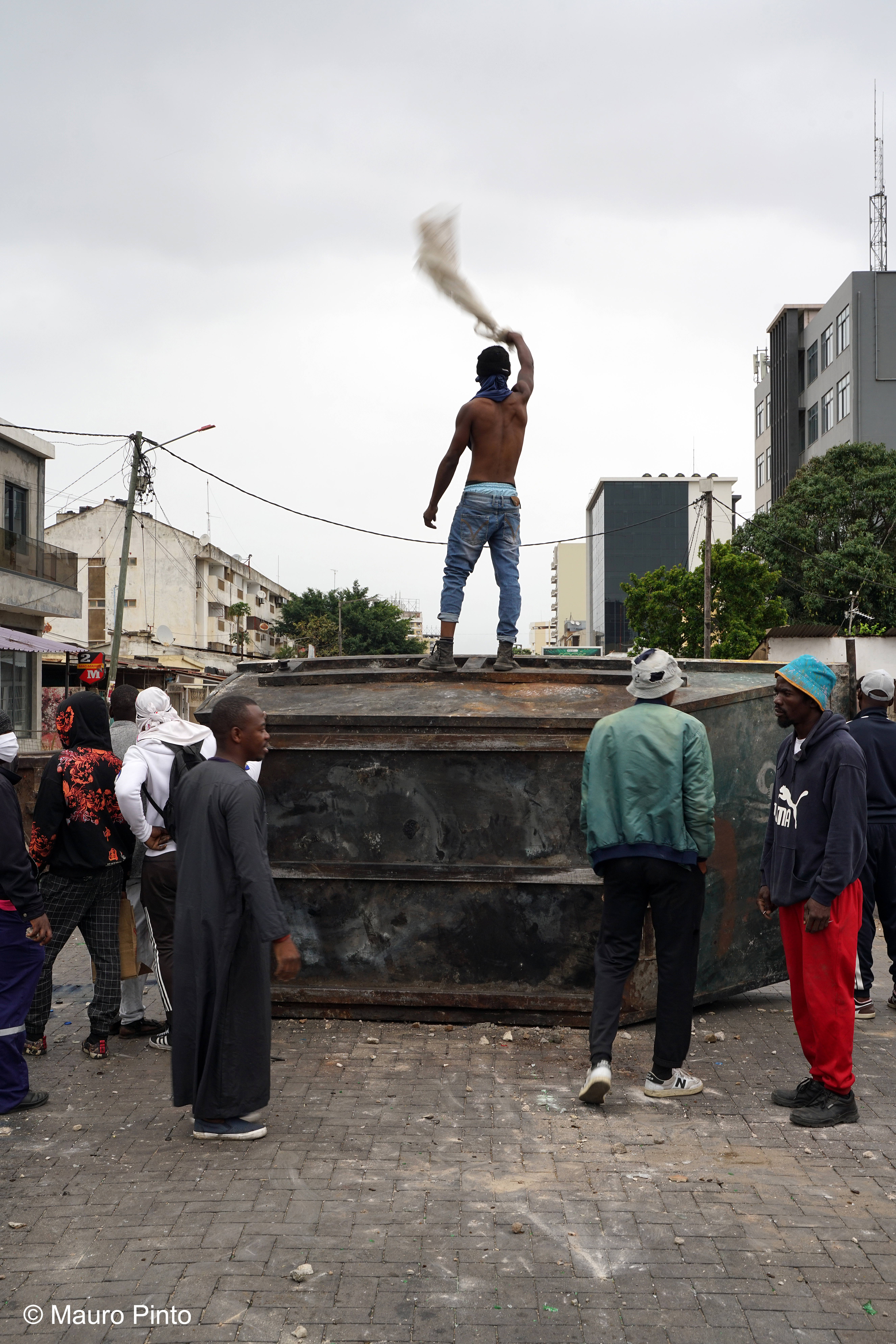
On Monday, 9 December, the day another supposed groundbreaking ceremony for the bridge was to take place, the community was met with a heavy military contingent. Without hesitation, they opened fire on demonstrators. The company later told the press the situation was “under control.”

Many wonder where the anger and fury visible on the faces of the protesters come from. It stems from years of exploitation without return, false promises, and blatant corruption. Similar situations have occurred in Palma, in the Afungi Peninsula, where communities like Macala and Mangala had to block TotalEnergies’ gates for two weeks to finally have their concerns addressed after waiting months for compensation. Their complaints had been ignored since the previous year.

Some might question what foreign investments have to do with electoral issues, arguing that they only bring jobs and revenue to the country. However, they are deeply intertwined, symbolising power and exploitation of the most disadvantaged social groups. These investments represent exclusion from job opportunities for local youth, flouting laws while being shielded by the government. They act in partnership to destroy community livelihoods and spread false promises.

Tagged , , , ,

2 Months of Mourning, 2 Months of Struggle

(Posted in Portuguese on the 19th)

Today, 19 December 2024, we remember with great pain and outrage the brutal assassination of Elvino Dias and Paulo Guambe, which occurred two months ago. We are still waiting for answers and justice regarding Elvino Dias and Paulo Guambe! Who ordered the killings? Who pulled the trigger? We will not forget, and we will not stop demanding justice, even knowing that our justice system is deficient, partisan, and shamefully slow.

Our anguish and outrage have only grown, as has the number of Mozambicans killed (at least 130 people), injured, arrested, and tortured by the State Defence and Security Forces. So many Mozambicans have been murdered for demanding electoral justice and standing up for their rights that they have now become numbers — 130 people. But who are these Mozambicans? The deaths have become so great we cannot name them, they have been reduced to numbers. Yet they are not just numbers; they are Mozambican citizens who had families, dreams, and aspirations. They went out to protest for those dreams, for their rights, for our rights and freedoms… Therefore, this is not merely about 130 mourning families; we are all in mourning and stand, not only with these families, but also with those who risk their lives everyday.

No words can ease the pain of those who have lost their loved ones in such a manner. It wasn’t an accident, an illness, or old age; they were barbarically murdered by the very police who swore to protect them.

We demand justice. We demand that all these cases be thoroughly investigated and that all those involved — from the shooters to those who gave the orders from their offices, and even those who had the power to stop this massacre but failed to act, making them accomplices — be held accountable. Today, these words take on a new dimension. When we demand justice, we usually direct our demands at a specific entity. But today, we are unsure who that entity is. To whom do we demand this justice? The State? But it was the State Defence and Security Forces that killed, arrested, and persecuted demonstrators. The Attorney General’s Office (PGR), which remains silent and acts only in defence of the corrupt and against opposition parties? We have never seen justice come from the PGR, making it hard to believe it ever will.

The current situation only confirms what we and so many others have been denouncing for years: the State and its institutions are completely co-opted and partisan, serving only the ruling party, which clings to power through these very State institutions. This includes the State Defence and Security Forces, which follow illegal orders and murder citizens protesting against grave and evident rights violations and abuses of power.

The actions of the Constitutional Council (CC) are merely the latest act in this orchestrated circus. Today, we see judges behaving like soap opera actors, arrogantly and pompously presenting themselves as the ultimate arbiters of truth while we all wait anxiously for their decision about our fate.

If we recall the process of validating the highly contested and irregular 2023 municipal elections, which this same body approved, it becomes clear that expecting truth and justice from the CC is as likely as expecting well-known corrupt individuals to voluntarily turn themselves in and return all they have stolen from our country. In other words, highly improbable.

Our greatest hope at this moment is for the CC to surprise us and show that they truly stand for truth and justice so that we can rebuild our country based on the people’s rights, centred on justice and equality for all.

Until then, we will continue to remember and honour all those who, believing in a fairer country for all of us, were barbarically murdered. From mourning, we rise to struggle for the country we believe we can build together.

Forever in our hearts, Dear Elvino.

Forever in our hearts, Dear Paulo.

Activists across the globe call on banks and investors to stop financing TotalEnergies

[New York/Frankfurt/Paris, 2nd October 2024] – On Wednesday 2nd October, climate activists are protesting in New York, where TotalEnergies is hosting its main investors. Actions are also taking place this week at the headquarters of TotalEnergies’ investors and banks in Frankfurt and Paris. Activists are calling on investors and banks to make an immediate commitment to stop issuing or buying new bonds from TotalEnergies, as well as to stop all support for companies developing new oil and gas projects.

Bonds represented more than two-thirds of TotalEnergies’ external financing in recent years (1). In 2024, TotalEnergies raised $7.25 billion through bonds, which the company will fully reimburse over decades (2). 

Earlier this year some 60 NGOs called on banks and investors to stop lending to TotalEnergies, due to the energy giant’s ‘climate-wrecking strategy’ (3). Following the letter, French banks BNP Paribas and Crédit Agricole announced that they would no longer participate in conventional bond issuances for companies in the oil and gas sector (4). 

Climate justice movements, organizations and activist –  including 350.org Justiça Ambiental, Liveable Arlington, MilieuDefensie, Stop Total France, the Toxic Bonds Network and urgewald – are urging other financial institutions to follow suit and stop support – including participating in the issuance and purchase of new bonds – for TotalEnergies and other companies developing new oil and gas projects.

While TotalEnergies’ investors will be shaking hands at its Investor Day in New York over financial support that will fund the company’s oil expansion 40 years into the future, activists will remind them of what this means for the climate. They will in particular denounce the EACOP project, which TotalEnergies continues to promote despite the heavy repression faced by communities and activists opposing it (5). So far 27 commercial banks have publicly committed not to support the EACOP project (6). The project has so far been financed by equity capital from its shareholders, including TotalEnergies (7). Bonds are likely to be significant to the development of such projects, as they allow the company to raise large amounts of money without conditions regarding their use (8). 

Molly Ornati from 350Brooklyn.org : “In Uganda, community members and activists are constantly intimidated, arrested and prosecuted for defending their basic rights. Demonstrations which simply demand fair compensation, an end to displacement, and a halt to environmental destruction are met with police violence and arrests. While international banks across the globe have turned their backs on the EACOP project, they continue allowing the company to go ahead with its oil and gas projects through other financing methods such as bonds. Financiers should immediately stop distributing blank cheques to TotalEnergies.”

Protesters will also denounce the Mozambique LNG project, which has been suspended for 3 years and was recently under criticism due to reports of alleged atrocities committed by Mozambican armed forces near the project’s premises (9) and TotalEnergies’ shale gas projects in Texas (10).

Ranjana Bhandari, director of Liveable Arlington in Arlington, Texas and home to 400,000 residents exposed to Total’s ongoing urban fracking operations stated:  “The ongoing fracking operations of the French energy giant TotalEnergies’ are placing thousands of families and children at risk in the city of Arlington, around Texas, and other locations across the nation and worldwide. It’s time consumers and investors demand American banks such as Citi, JP Morgan, and Bank of America stop funding these long-term bonds that are harming the very residents in the cities where these banks are operating.” 

Anabela Lemos, from Justiça Ambiental, Mozambique: “The TotalEnergies gas project in Cabo Delgado is associated with land grabbing, lost livelihoods and human rights violations, alongside a violent conflict. TotalEnergies is now planning to co-develop the controversial Mphanda Nkuwa mega dam in the Zambezi river. Even before construction has started, local communities are reporting intimidations and human rights violations to force them to accept the project. If the dam goes ahead, this biodiversity hotspot might suffer irreversible damage and thousands of families will lose their lands, livelihoods and futures.  Financiers are ethically bound to refuse support for TotalEnergies trail of destruction across the world.

END

**********************

Press contacts : 

Anabela Lemos, Justiça Ambiental, anabela.ja.mz@gmail.com

Ranjana Bandhari, Liveable Arlington, liveablearlington@gmail.com 

Melanie Smith, 350.org US melanie.smith@350.org 

About the actions:

  • New York City : the action is taking place at 8:00AM at the headquarters of Citibank. Press is welcome]. Citi is the most important underwriter of TotalEnergies’s ongoing bonds (11), top bank in the US between 2021 and 2023 (12) and participated in underwriting TotalEnergies’ $3 billion bonds issue on September 10th 2024. 
  • Frankfurt: onThursday 26 October, a protest took place in front of Deutsche Bank’s Headquarters in Frankfurt. Pictures are available here Deutsche Bank is the third most important underwriter of TotalEnergies’s ongoing bonds (11), top bank in Germany between 2021 and 2023 (12) and participated in underwriting TotalEnergies’ $4.25 billion bonds issue on April 5th 2024. DWS, Deutsche Bank’s asset management subsidiary, is the first investor of TotalEnergies in Germany (12). 

Pictures are available upon request to the press contacts. 

Notes : 

(1) Between 2016 and 2023, 69.8% of TotalEnergies’ financing came from bonds, according to data from Banking On Climate Chaos, 2024

(2) The average maturity (date on which the bond matures and must be repaid by the issuing company) of bonds issued by TotalEnergies between 2020 and 2024 was 22 years compared to 6 years for those issued between 2000 and 2004, according to a recent study by AFII, 2024.

(3) The Brussels Times, Nearly 60 NGOs call on banks and investors to stop lending to TotalEnergies, 2024

(4) Reclaim Finance, BNP Paribas and Crédit Agricole Say No to Bonds for the Oil and Gas Sector, 2024

(5) #STOPEACOP, Uganda Silences EACOP Critics: Activists and Affected Communities Detained, 2024

(6)  #STOPEACOP Who’s Behind EACOP?, 2024

(7) The project’s shareholders are TotalEnergies, China National Offshore Corporation, Uganda National Oil Company and Tanzanian Petroleum Development Corporation.

(8)  Reclaim Finance, TotalEnergies and financial markets: Financial institutions engaged for decades of pollution, 2024

(9) Politico, All must be beheaded”: Allegations of atrocities at French energy giant’s African stronghold, 2024

and Say No to Gas ! in Mozambique, Call for investigation into reports of atrocities committed near TotalEnergies’ Mozambique LNG premises, 2024

(10) Liveable Arlington

(11) For a more global view on TotalEnergies’ most significant underwriters and facilitators since 2016, refer to the Banking on Climate Chaos report

(12) Defund TotalEnergies, Who is financing TotalEnergies? 

Tagged , , , ,