Category Archives: Uncategorized

PRESS RELEASE:

Global South states and civil society keep up momentum to regulate transnational corporations under international human rights law

2 November 2021, Geneva

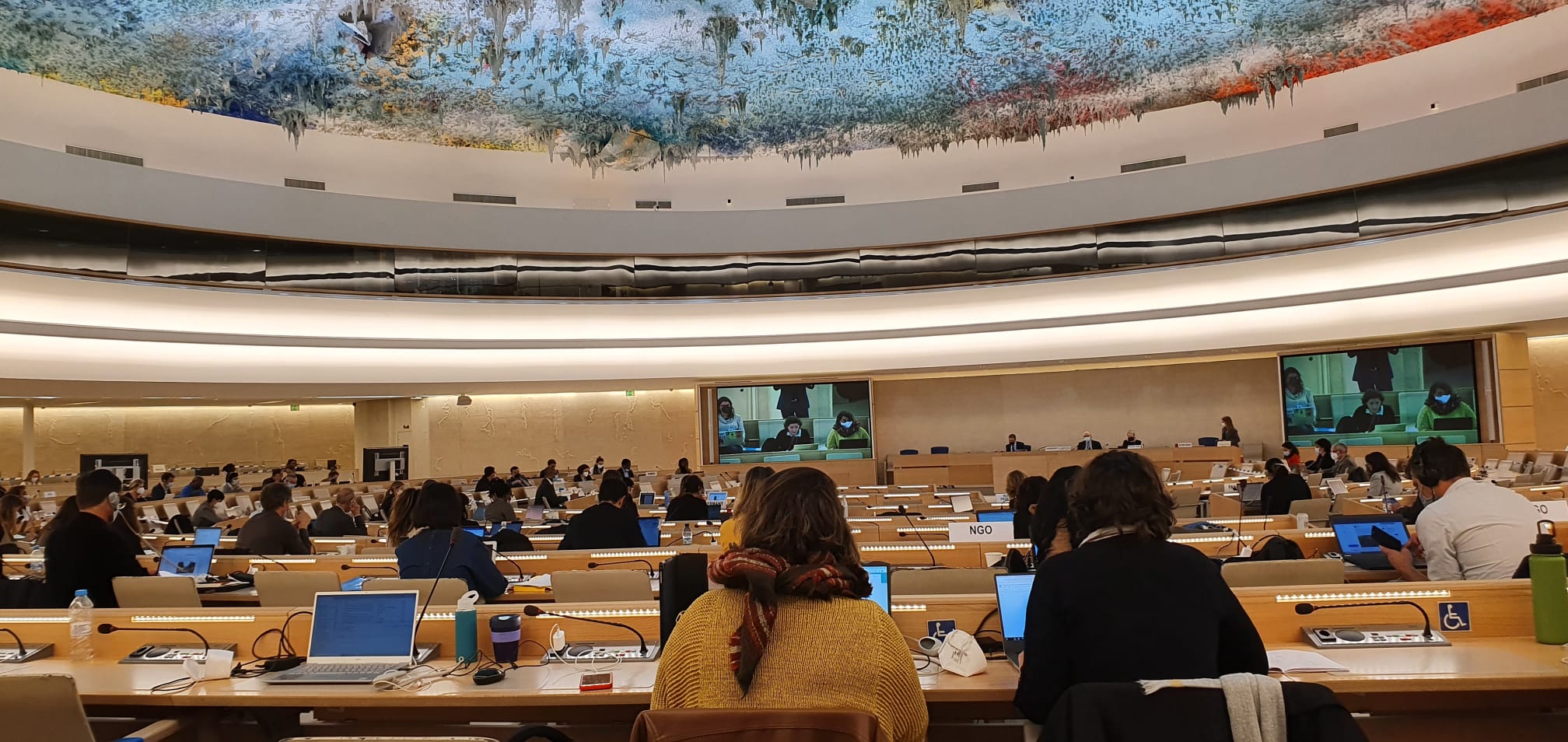
From 25 to 29 October United Nations member states continued the negotiations to elaborate an international Legally Binding Instrument (LBI) to regulate, in international human rights law, the activities of transnational corporations (TNCs) including all entities in their global production chains. This historic process celebrated its seventh session of the Open-Ended Intergovernmental Working Group (OEIGWG) hosted by the Human Rights Council in the Palais des Nations in Geneva.

The UN High Commissioner for Human Rights, Ms Michelle Bachelet, opened the session remarking that the world is witnessing a “growing consensus on the need of binding regulations on business and human rights.”

The UN Binding Treaty – as it is commonly known – negotiations have taken a qualitative leap forward with a new methodology adopted during this session, bringing transparency and encouraging States to take a position on concrete language of the draft treaty. A total of 69 States participated during the week. Most importantly, some major and indispensable content was reintroduced and defended by some States, in accordance with the mandate of Resolution 26/9, to close the gaps in international human rights law that enable the impunity of transnational corporations. Of note was the constructive participation of South Africa, Egypt, Palestine, Cameroon, Namibia, Panama and Cuba, among others.

Julia Garcia, from the Movement of People Affected by Dams (MAB) and coordinator of the Global Campaign said “We welcome the fact that many states are discussing direct and clear obligations for transnational corporations and other transnationally active entities, overcoming normative national limitations that contribute to impunity. We wish to highlight the importance of proposals that advocate the expressed inclusion of the primacy of human rights over corporate rights throughout the global production chain.”

As with every year, civil society played an essential role, defending the need for this process, driving its continuity and nurturing it with detailed analyses, strong arguments and concrete content proposals. The Global Campaign to Reclaim Peoples Sovereignty, Dismantle Corporate Power and Stop Impunity (Global Campaign), representing 260 million people globally affected by Transnational Corporations, participated directly in the negotiations, partially resuming the physical presence that last year was not possible due to the COVID-19 pandemic.

“Access to remedy and justice has become a generational struggle rife with obstacles,” stated Joseph Purugganan, from Focus on the Global South and the Asian Task Force on the Binding Treaty. He continued saying that “in the face of the asymmetries of power that pervade in most countries, the protection of affected individuals and communities through the establishment of strong mechanisms of access to justice and reparation must be a priority of this process”.

Hugo Barretto, Trade Unions Confederation of Americas (TUCA) advisor, reiterated that the Global Campaign is aiming for “an ambitious and effective Treaty with binding rules for transnational corporations and the entities along the global production chains, which play a major role in the climate and biodiversity crises, labour exploitation and historic levels of inequality. Their reprehensible behaviour puts the future of humanity and the planet at risk.”

Raffaele Morgantini, from CETIM and coordinator of the Global Campaign at the UN, explained how, “Some western states and business-representatives repeatedly defend the relevance of the existing voluntary frameworks and even made unsuccessful attempts to suggest alternatives to the Binding Treaty, as part of a strategy, led by the US, to water down the process and foster the adoption of new futile frameworks. Nevertheless, the need to take a significant step forward and find innovative ways to close the legal loopholes that still exist at the international level was overwhelmingly felt during the whole week. It is also worth underlining that several states acknowledged the importance of civil society participation and the value of our proposals.”
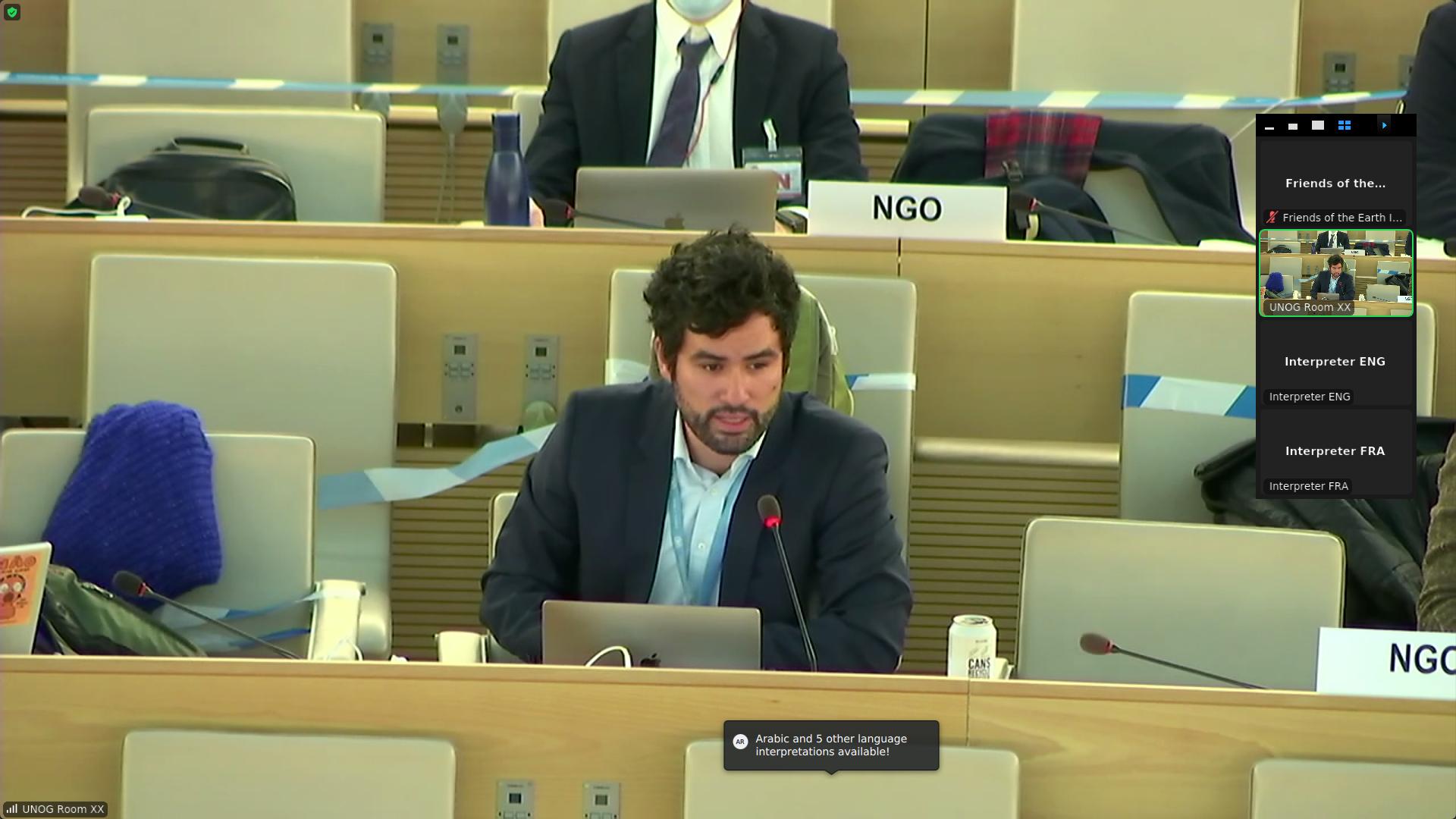
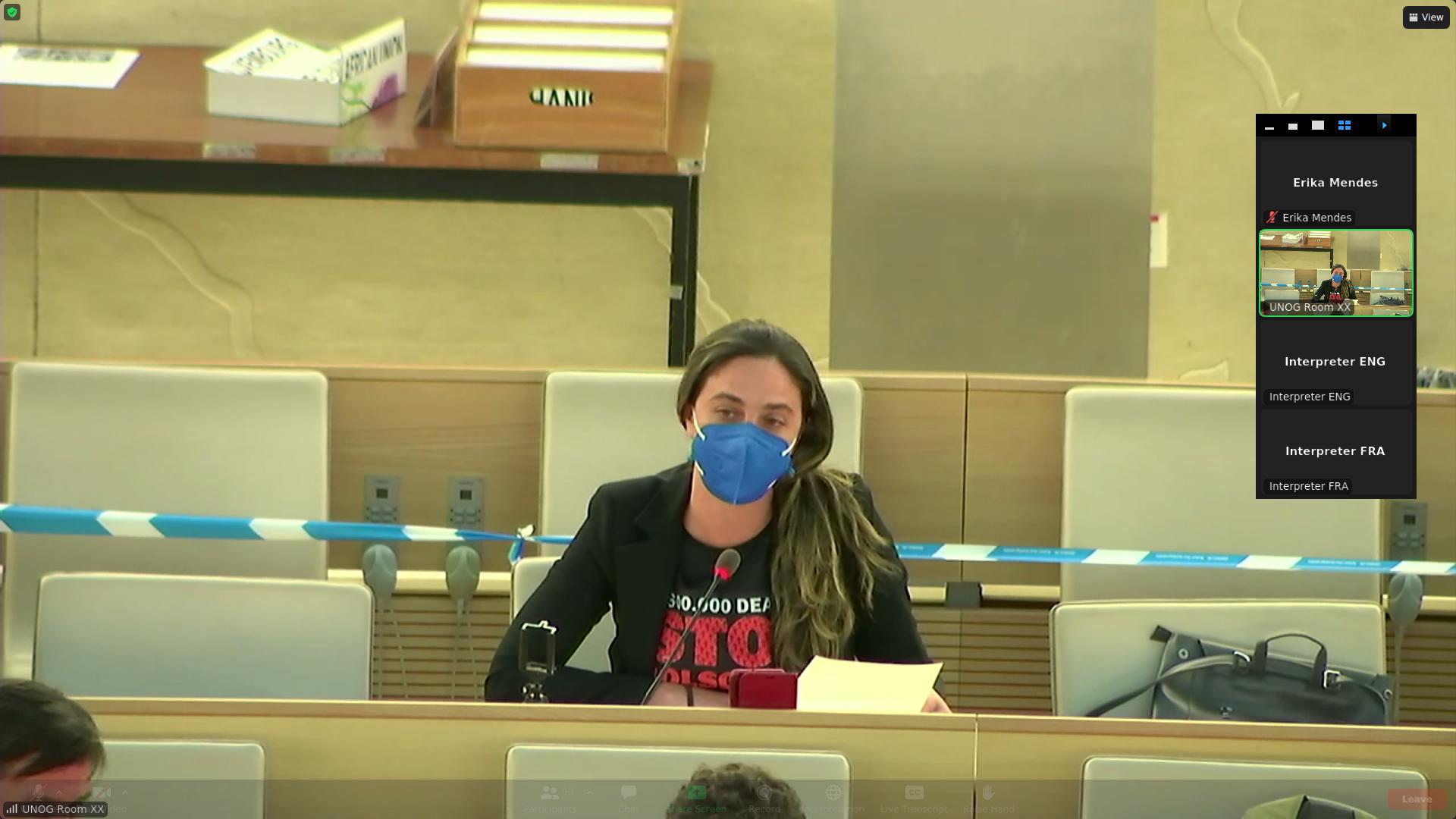
However, there are concerns about the risk of a loss of transparency in the process, as Erika Mendes, from Justiça Ambiental/Friends of the Earth Mozambique explains, particularly in relation to, “ the immediate future of the negotiations as it continues through the so-called “Group of Friends of the Chair” during the inter-sessional period. The new inter-state negotiation methodology must ensure social participation, so that the voice of affected communities is heard and considered. We urge the Chair and States to protect the process from undue influence from powerful corporate actors who, instead of upholding human rights, lobby for the protection of their own economic interests.”
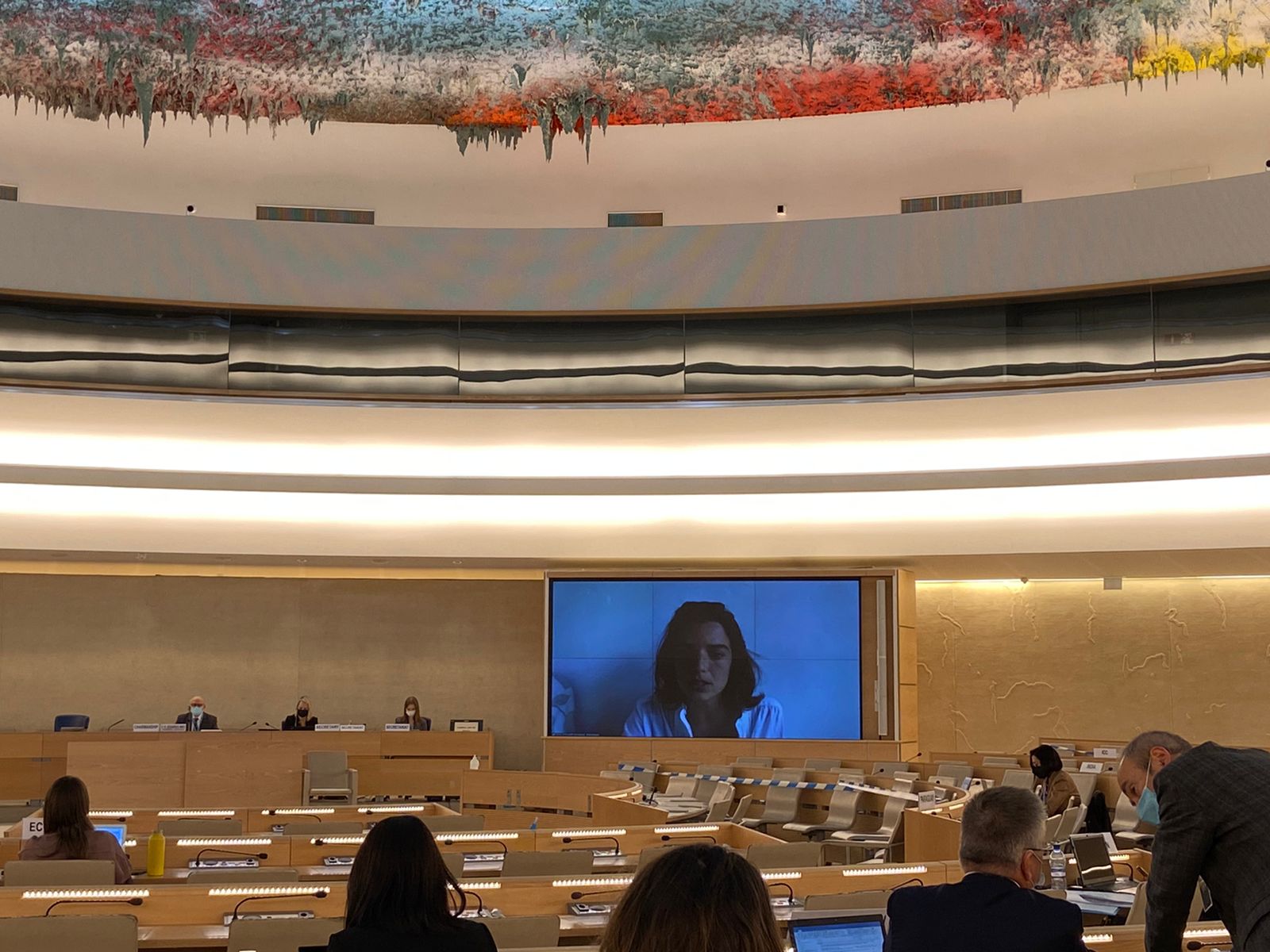
Fernanda Melchionna, federal deputy of the Brazilian National Congress and part for the Global Interparliamentarian Network (GIN) in support of the Binding Treaty declared, “The struggle for a UN Binding Treaty to regulate the power of transnational corporations and place human and environmental rights above the corporate power of transnational corporations is a strategic and fundamental struggle for the world. The Global Campaign’s role in not allowing countries to remove the essence of the text demonstrates that civil society, affected populations and social movements have a fundamental role to play in the process.”
The Global Campaign continues its commitment to ensure that the UN Binding Treaty process retains the spirit and ambition of Resolution 26/9. To this end, the Global Campaign will continue to mobilise at the national level to ensure that our governments actively participate in these negotiations, representing the needs and aspirations of the social majorities and the peoples of each country.

NOTE TO EDITORS

For further information or to arrange interviews you can contact:

Sol Trumbo Vila, Email: soltrumbovila@tni.org

Julia García, +55 71 9246-2696 Email: facilitation@stopcorporateimpunity.org

Erika Mendes, Email: erikasmendes@gmail.com

The Global Campaign to Reclaim Peoples Sovereignty, Dismantle Corporate Power and Stop Impunity (Global Campaign) – a network of over 250 social movements, civil society organisations (CSOs), trade unions and communities affected by the activities of transnational corporations (TNCs), representing 260 million people globally. https://www.stopcorporateimpunity.org

This round of negotiations is revising the third draft of the binding treaty, published on August 17, 2021, which fits in the negotiation process started in 2014 with the adoption, by the Human Rights Council, of Resolution 26/9. UN information on the Mandate of the OEIGWG.

The global campaign published this statement in September 2021 in response to the release of the third revised draft.

The Global Interparliamentary network in support of the Binding Treaty is a global network of members of National Parliaments and the European Parliament supporting the UN Binding Treaty. https://bindingtreaty.org/
Tagged , , ,

Press Release: States resume historic UN negotiations amidst growing consensus on the need for binding regulations on transnational corporations and human rights

25 October 2021, Geneva

Today, United Nations member states resume negotiations in the seventh session of the Open-ended intergovernmental working group (OEIGWG) mandated to elaborate an international legally binding instrument to regulate, in international human rights law, the activities of transnational corporations. The UN High Commissioner for Human Rights, Ms Michele Bachelet, opened the session remarking that the world is witnessing a “growing consensus on the need of binding regulations on business and human rights”.

Global South countries intervened in strong support of the Binding Treaty process – South Africa, Namibia, India, Indonesia, Pakistan, Philippines, Bolivia, Venezuela, Cuba and Palestine among others. For the first time delegates from all major global economies shared their views on the Binding Treaty process and content. All of which goes to show that after seven rounds of negotiations states cannot ignore the urgent need for an effective instrument such as the UN Binding Treaty.

The Ecuadorian Chair of the OEIGWG opened the seventh session by affirming that the negotiations must be “State-led”, which raises concerns about how civil society´s contributions will be included.

The continuous broad participation of communities affected by transnational corporations’ activities, civil-society organisations, trade unions and social movements makes it one of the most strongly supported processes in the history of UN OEIGWGs. The Global Campaign to Reclaim Peoples Sovereignty, Dismantle Corporate Power and Stop Impunity (Global Campaign)1, representing 260 million people globally affected by Transnational Corporations has, once again, a strong presence in Geneva providing vital recommendations and critical analysis.

Tchenna Maso, from the Movement of Peoples Affected by Dams (MAB), La Via Campesina and the Global Campaign, remarked during the opening session, “Let me remind you of the basic problem that brings us together here. At the heart of the matter is the fact that, although the human rights violations committed by transnational corporations through their chains are obvious, States are usually unable to punish the culprits or to make reparations to the victims.”

Ubrei-Joe Mariere, from Friends of the Earth Africa spoke on behalf of the Global Campaign, “The climate, biodiversity and Covid crises are results of a socio-economic model that favours corporate profit over the protection of human rights and the environment. Travel restrictions due to the pandemic, unequal access to vaccines, financial barriers, digital connectivity and differing time zones limit the participation of the Global South, including States and affected peoples. For the Binding Treaty negotiations to be inclusive and fair, we must ensure that civil society – especially those most affected by the impunity of transnational corporations – are able to follow, intervene and influence the direction of the negotiations.”

Mary Ann Bayang, from the Indigenous Peoples Rights International in the Philippines, declared that, “The peoples, citizens, affected communities and social movements place great hope in the success of the process initiated in this OEIGWG to bring transnational corporations under the law. States also have an interest in the adoption of such a treaty that will allow them to recover their lost sovereignty. It is in this spirit that the Global Campaign has been engaged in the process of negotiating this Binding Treaty. We note with great regret that the current draft treaty falls far short of the OEIGWG’’s mandate. It is essential that this situation be rectified and the process put back on track.”

Participants in the negotiations emphasized the urgent need for binding regulations for Transnational Corporations in light of the Covid19 pandemic.

The Brazilian AIDS Interdisciplinary Association, member of the Global Campaign said, “Adopting a Binding Treaty is urgently needed to bring justice to people denied access to health technologies, and whose lives have been taken away by corporate greed. The treaty must include the primacy of Human Rights as a fundamental principle. Thus, interests included in trade and investment agreements must be subordinated and subjected to mandatory respect for Human Rights.”

A broad coalition of elected representatives, the Global Interparliamentary Network (GIN) supporting the UN Binding Treaty, also advocates for an ambitious and effective legally binding instrument.

Miguel Urbán, Member of the European Parliament for The Left and member of the Global Parliamentarian Network in support of the Binding Treaty added, “The absence of clear and binding international norms for the respect of human rights feeds the impunity and abuse of global corporate power.”

The Global Campaign will be in Geneva all week working to ensure that its proposals for the UN BInding Treaty are taken into account and included in the current drafting process.

NOTE TO EDITORS

For further information or to arrange interviews you can contact:

Sol Trumbo Vila, Email: soltrumbovila@tni.org

Julia García, +55 71 9246-2696 Email: facilitation@stopcorporateimpunity.org

Erika Mendes, +258 847713099 Email: erikasmendes@gmail.com

The Global Campaign to Reclaim Peoples Sovereignty, Dismantle Corporate Power and Stop Impunity (Global Campaign) – a network of over 250 social movements, civil society organisations (CSOs), trade unions and communities affected by the activities of transnational corporations (TNCs), representing 260 million people globally.

This round of negotiations is revising the third draft of the binding treaty, published on August 17, 2021, which fits in the negotiation process started in 2014 with the adoption, by the Human Rights Council, of Resolution 26/9. UN information on the Mandate of the OEIGWG

The global campaign published this statement in September 2021 in response to the release of the third revised draft.

The Global Interparliamentary network in support of the Binding Treaty is a global network of National Parliaments and the European Parliament members supporting the UN Binding Treaty.

Tagged , ,

France, Rwanda and Total:

a lethal threesome around Mozambique’s gas

For four years, the people of the province of Cabo Delgado, Mozambique, have been devastated by gas and violent conflict between insurgents, military and mercenaries. Eight hundred thousand people have become refugees from the violence, and thousands have lost their livelihoods and been displaced by the gas industry. To make things worse, they are now in the hands of the Rwandan army, which is notorious for horrific torture of Congolese and Rwandan alleged dissidents in military detention centres. And they have gone rogue.

According to Mozambican President Felipe Nyusi, the 1000-strong Rwandan army’s mandate since July has been to “restore peace and stability”.

But since the Rwandan state became involved, things have gone even further awry than they already were. Already, on 14 September, Rwandan businessman and chairman of the Rwandan Refugee Association in Mozambique, Révocat Karemangingo, who was exiled from Rwanda in 1994, was assassinated in Maputo.

Three months before, Rwandan journalist Ntamuhanga Cassien who had applied for asylum in Mozambique, was arrested by Mozambican police, and has not been seen since.

If experts and activists who have linked the murders to the Rwandan state are correct, even though the government has repeatedly denied it, this should not come as a surprise. The Rwandan government is known for killings of political opponents and journalists both inside and outside of the country, including South Africa and Kenya.

In July this year, Amnesty International and a consortium of journalists exposed that Rwanda was one of the countries using the Israeli surveillance company NSO Group’s Pegasus software. Since 2016, the Rwandan government has used the software to unlawfully surveil the phones of 3500 activists, politicians and journalists.

The Rwandan army itself has a terrible human rights record – in 2014 Human Rights Watch reported they had been fighting alongside the Rwanda- backed M23 rebels in the Democratic Republic of Congo (DRC). Over three days in 2016, M23 soldiers killed 62 people in anti-government protests.

Even though locals around Palma have highlighted the more professional conduct of Rwandan solders in comparison to the Mozambican soldiers, the Rwandan operation relies on local intelligence and information in order to be effective. But they are not doing the dirty work of actually acquiring this intelligence themselves. It has been the Mozambican soldiers that have carried out the interrogations, arrests and intimidations to obtain information. This has been one of the causes in the increase of disappearances, unlawful arrests and torture, sometimes targeting outspoken and critical civilians within the gas affected communities.

So if the Rwandan government doesn’t care about its own citizens and civilians in the DRC, why would it put its money and army on the line for foreign nationals? And who else has an interest in them being in Mozambique?

One of the factors that can’t be ignored is Rwanda’s dynamic relationship with France, and that French company Total is one of the leaders of Cabo Delgado’s $50 billion gas industry. Total owns 26% of the Mozambique Liquid Natural Gas (LNG) Project.

It is in the process of constructing the massive Afungi LNG Park, which will house the offices and support facilities for its project as well as ExxonMobil’s Rovuma LNG project and their contractors. The gas giants are building an industry that is pushing the debt-ridden country further into poverty and not benefiting the people. Until now, it has only brought destruction.

The French government has over $520 million invested in the Mozambique gas industry through a loan from the French export credit agency (BpiFrance) for the third project, Eni’s Coral South LNG. The four largest French banks, Crédit Agricole, Société Génerale, BNP Paribas and Natixis are also involved in the industry as financiers or financial advisors.

It is the construction of the Afungi Park that has forced thousands of local people out of their homes, and away from their farmland and fishing grounds creating an angry and further disenfranchised population.

And now that the insurgency has ruined Total’s plans, it has just closed shop and stopped compensation payments to communities. After a brutal attack on Palma town on 24 March, Total decided to claim ‘force majeure’ and pull its staff out of the area, pausing the project indefinitely and saying they would return only once the area was safe.

Even then it was clear that the military had Total’s best interests at heart, not the people’s. On the day of that attack, there were 800 soldiers defending the Afungi Park while civilians have said there were only a handful of soldiers protecting Palma village. Currently, Rwandan soldiers have been using the Afungi Park as their base.

It certainly won’t be the first time that French interests, politics and violent conflict have gone hand in hand with a Total project. Some examples that come to mind include Myanmar, where the military junta is known for ethnic cleansing of the Rohingya population, and mass human rights violations including rape, sexual abuse, torture and disappearances of protestors. Since the coup of February 2021, Total has been directing revenues from its Yadana gas project in Myanmar to the junta, its biggest source of income.

Total has also been active in the Taoudeni basin of Mali in the Sahel since 1998. Since 2013, over 3000 French troops have been in Mali, and 4 other Sahel countries, with France using the same rhetoric as they and Rwanda have done in Mozambique: to rid the area of ‘jihadists’.

In Yemen, the Balhaf LNG site of which Total owns 39% was exposed for housing the base for the Shabwani Elite, an UAE-backed tribal militia since 2016. Officially a counter-terrorism group, they have unofficially become known as a group created to protect fossil fuel interests. The site also has also been exposed to house UAE notorious ‘secret prisons’ holding Yemeni detainees.

So, Cabo Delgado, where the gas region sits nearly on the border between Mozambique and Tanzania, fits neatly in Total’s mixture of politics, gas and conflict.

So back to Rwanda – Out of all potential pawns, or proxies, for France, why pick them?

France has been embarrassed, but not enough for a full apology, about the exposure of the severity of its role in the Rwandan genocide, after a March 2021 report claimed France bears ‘overwhelming responsibilities’ for the horrors that killed over 800 000 people in the Tutsi minority. However, in 2005 complaints laid by human rights groups pushed French prosecutors to open an investigation into French soldiers’ actual complicity in the genocide, which seemed like it was going to be dropped in May this year. No former French soldiers have faced trial.

While Rwanda claims this military mission to Mozambique is self-funded, others say it is Mozambique footing the bill, and yet others, say that this might be one of France’s covert means of reparations, or an olive branch trying to fix bad Franco-Rwandan relations, by offering Rwanda a crucial job: protecting French gas assets. When asked by a journalist, the French Minister for Europe and Foreign Affairs, Jean-Yves Le Drian, neither confirmed nor denied whether it is financing the troops, although financing does not always come in the form of cash. It could be through aid or other means that are harder to track.

It’s part of a pattern of Rwanda becoming France’s new darling: in 2019, the Rwanda Development Board (RDB) signed a reported $11.6 million a year contract with French football club Paris St. Germain as its official tourism partner. ‘Visit Rwanda’ is boasted on the the back of the men’s training and pre-game warm up kits, in the club’s stadium and on the sleeves of the womens’ team kits, with the club having renewed its contract in 2019, also reported to be $11 million a year. A point to consider is that hospitality company Accor is paying PSG $58 million a year to be its official hotel partner.

There is the possibility that these teams are giving the RDB a friendly discount. What is more likely is that the sponsorships are being subsidized by a third party.

It is clear that there are a few parties getting something out of Rwandan troops being on the ground in the gas region – Total, Mozambique and Rwanda. But certainly the one gaining the most is France – its financial assets are being well protected on the ground and it is able to maintain the international ‘non-complicit’ image it wants to regarding the genocide while still nurturing a relationship with Rwanda. It would also be a way of having military protection of its assets while not being visible. This is definitely in their interests following France’s recognition of its disastrous mission in Mali by cutting the number of troops in June this year, and now, after the death of the 52nd French soldier in eight years, French President Emmanuel Macron has said they will have no more soldiers in the Sahel by the beginning of 2022. The deployment of Rwandan soldiers would mean they will have another army in public view and decrease the political risk of failed military interventions, especially ones linked to human rights violations.

But one group that is not benefiting, are the people of Mozambique, most of all – the communities of Cabo Delgado, who are pawns, dying and devastated so that local and international elites can save political face and defend their gas assets and bonuses by any means necessary.

I

Tagged , , , , , , , , ,

Public letter of the International Meeting

“How to Resist Monoculture Plantations”

21 September, 2021 – International Day of Struggle against Industrial Tree Plantations

We, about 60 members of rural communities facing industrial tree monocultures on their land, coming from the provinces of Manica, Sofala, Zambézia and Nampula in Mozambique and from the province of Iringa in Tanzania; together with allies who support these communities; met – due to the pandemic only in small groups and interconnected by computers and mobile phones – during the 21st and 22nd of September 2021 at the international event “How to Resist Monoculture Plantations”.

For years, these communities have resisted the eucalyptus monoculture plantations of the Green Resources company in Mozambique and Tanzania, and those of Portucel and Investimentos Florestais de Moçambique (IFM) in Mozambique, as well as the rubber tree monoculture plantations of Mozambique Holdings in Mozambique.

The members of the communities present decided to break the silence imposed by the pandemic and denounce once again that the eucalyptus and rubber tree companies arrived on their land – in some cases many years ago – with promises of development, a future with schools, hospitals, energy and bridges. However, they denounce that none of these promises were fulfilled. Worse still, eucalyptus and rubber trees occupied and destroyed the fertile farmland, and today families no longer have food and some have nowhere to live. If eucalyptus were food, it would be much better, but it is not. In addition, companies destroy native trees and use chemicals that contaminate the soil and water. Wells and rivers have dried up and drinking water has become scarce. Instead of building bridges, companies destroyed bridges with their heavy machinery, without concern they should repair them. Communities are afraid to cross plantation areas. Even already occupying large areas, companies want to take over even more land.

We see and analyse that this whole situation is causing a lot of suffering, a lot of hunger in the communities, and affects women in a particular way. The Government opened the door to foreign companies and investors, and closed it to the people. What is happening is a new form of colonialism where the company is the new colonizer of lands where communities have lived for many generations.

Even though the companies justify that they consulted with the communities, there was no consultation where they could accept or refuse the company; there was a lot of manipulation of information and broken promises. The promised jobs do not exist, just a few, but mostly seasonal and poorly paid. Compensation payments have been absolutely negligible, insufficient to acquire another farm outside the community.

When someone decides to farm on land that the company claims is theirs, the person is intimidated and threatened. This also occurs when someone lodges a complaint with their local leaders or officials. In this case, nothing is done because these authorities usually receive something from the companies or are equally intimidated and disrespected by the company. To make matters worse, in some cases it is not just the police and the company, but the community leaders themselves that intimidate and threaten members of their own community if they file a complaint. Nor are organizations that support communities spared from intimidation. Recently, the Suhode Foundation team in Tanzania was illegally detained by the police for 19 days. All their equipment was confiscated and remains in police possession to this day. Certainly, Green Resources is behind this, in an attempt not only to divide communities, but also to prevent civil society organizations from continuing to support them.

We demand that communities and organizations that support the communities have their rights – ensured in various national and international legal instruments – fully guaranteed; that our governments defend the people and not the companies; that intimidation and threats from companies and authorities as well as community leaders stop; that our governments, instead of protecting companies, order that they be investigated for the multiple violations they are committing; that officials discuss the future with communities, so that communities can actually participate in the planning that aims to guarantee their permanence on the land, today and in the future, and improve their living conditions going forward.

Even if companies do not stop expanding, even if they try to intimidate and threaten us, we are committed to continue to unite in the fight against monocultures and the destruction and encroachment of land; even if companies and governments insult us, we will continue to look for ways for communities to retake their territories – some communities in Tanzania have already done so; even if they threaten us, we will continue to raise our voices more and more, and together we will continue to expose the situation of communities and denounce the actions of companies; even if they won’t listen to us, we won’t give up calling on our governments to join with their communities, communities that they should defend and protect above all.

We believe that together we will be stronger to resist monocultures and all kinds of usurpation of our lands, especially on this 21st of September, the International Day of Struggle against Industrial Tree Monocultures.

September 21, 2021 – Plantations are not Forests!

Membros das comunidades Rurais

Ação Académica para o Desenvolvimento das Comunidades Rurais – Adecru

Associação de Jovens Combatentes Montes Errego – AJOCME

Fórum Carajás – Brasil

Fundação Suhode Tanzânia

Justiça Ambiental – JA! – Amigos da Terra Moçambique

Missão Tabita

Movimento Interestadual das Quebradeiras de Coco Babaçu (MIQCB) – Brasil

Movimento Mundial pelas Florestas Tropicais (WRM)

Tagged , ,

Reports of police violence in Primeiro de Maio, used to disperse peasants and brickmakers waiting for a meeting with VALE and the government – and the lessons we should have already learned as a country.

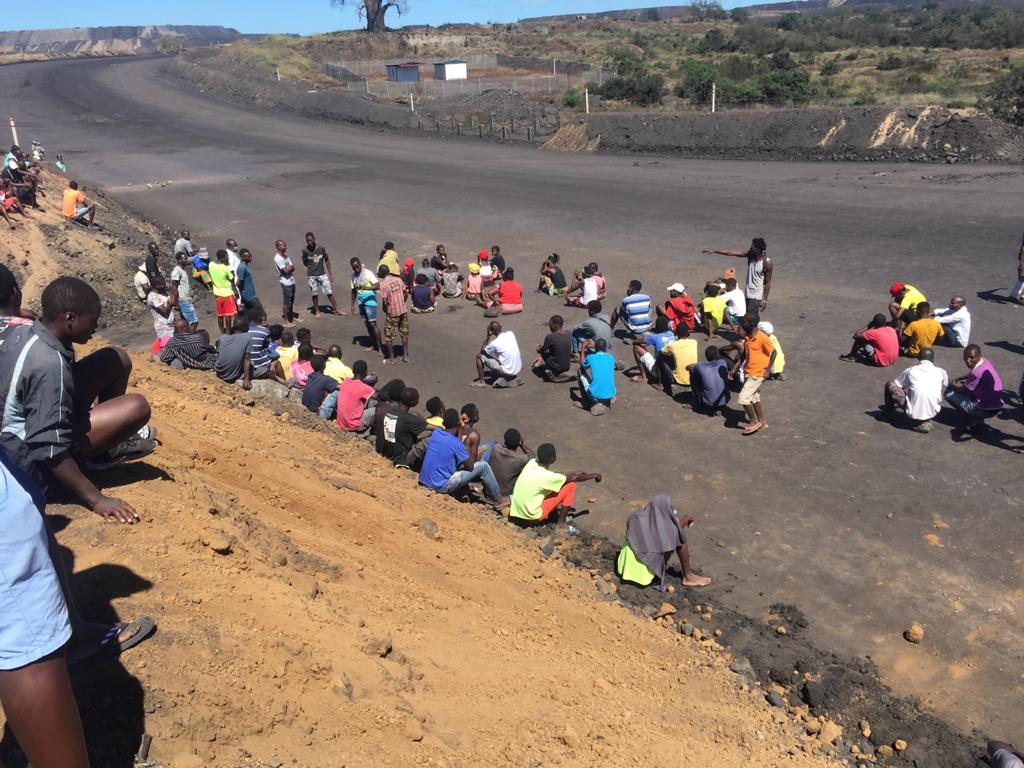
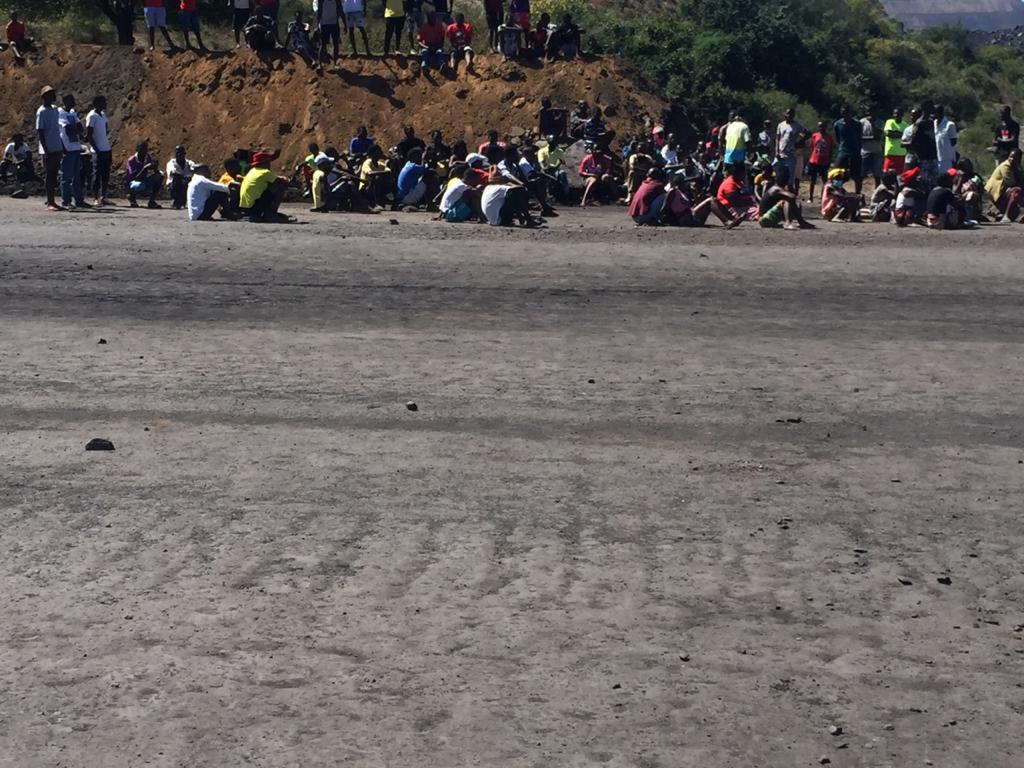
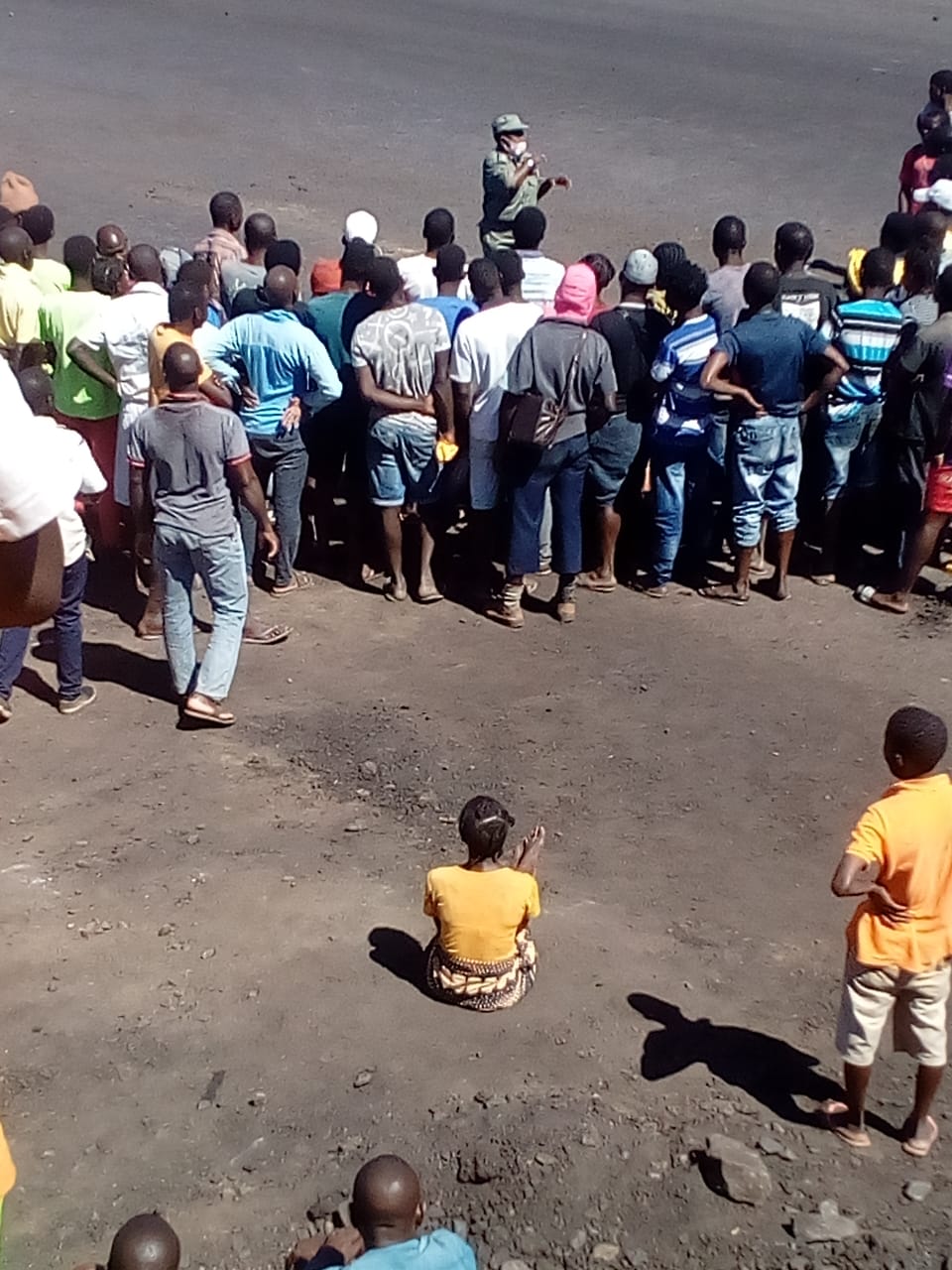
Peasants and brickmakers from the neighbourhoods of Primeiro de Maio and Catete have been demanding a fair compensation from both VALE and the government for the loss of their land, loss of access to water and ultimately their means of subsistence. They lost access to River Moatize due to the expansion of the VALE mine – Moatize III – in 2019. VALE claimed in March of this year that it owed nothing to these groups. Since then, it has come to recognize that it will have to pay some form of compensation. However, this process has been dragging. On the 6th of May of 2021, the brickmakers and peasants occupied Section 6 of the mine and blocked the mining road. This event was reported by JA! in a recent article. What happened on this day and, even more importantly, on the day after, invite from us a profound reflexion about the way in which VALE and our government are dealing with this situation. To this effect we have brought to bearing a first-person account of one of the members of the peasant commission of Nhantoto: Sr. Fernando Botão.

“We started telling the drivers to go stow away the vehicles and the machines, and not to circulate on that road, so that VALE would have to, at least, come give us a clarification with respect to our demands. That’s because ever since we were paralysed in our activities we haven’t been assisted [in general] nor have we even received any nutritional assistance” – says Sr. Fernando explaining what happened on the 6th of May when peasants and potters paralysed VALE’s mining road.

The paralysation lasted for a large part of the day and, according to the brickmakers, it only came to a close when they were assured by representatives of the company and the government that in the following day they would have a meeting together with VALE and the government of the district of Moatize in the neighbourhood of Primeiro de Maio.

This paralysation and the demands coming from the groups affected by VALE arise within a context of fatigue and frustration for many reasons, among which are:

– the detereoration of the life conditions of many of these families, formerly sustained by the production of bricks and by subsistence farming;

– the difficulties in the correspondence with VALE, wherein VALE insisted for some time that the group of brickmakers here in question was included in a group that was previously compensated by the company in 2018; the brickmakers and peasants of the neighbourhoods of Primeiro de Maio and Catete have attempted to explain that they are in fact a distinct group that was only affected in 2019 by the recentmost expansion of the mine Moatize III;

– the dragging of meetings between the commissions of brickmakers and peasants, the government and VALE over the past 2 years without there ever being a concrete solution to the problem;
– the uncertainty and lack of information with respect to the disinvestment of VALE in Mozambique leading to concerns regarding the numerous pendencies which the company still has with the communities affected by the mine;

– the rise in conflicts between the members of the commissions of brickmakers and peasants and the respective communities; members of the commissions are acused of not being able to resolve the issues of the community, as well as of negotiaing for their own private benefit, as communities cannot deduce any productive outcomes from these negotiations.

These are just some of the reasons why the community made their demand in conjunction with the commissions of brickmakers and peasants incredibly simple, clear and legitimate: VALE and the government should meet them in their neighbourhood and speak to the entire community without any intermediaries or representatives of the commissions.

In Sr. Fernando’s testimony, we can hear with some detail how the occupation on the 6th of May was, as well as what happened on the next day – 7th of May – when the brickmakers, peasants and residents of the neighbourhoods Primeiro de Maio and Catete assembled to wait for the meeting arranged on the previous day to take place in the big square in front of the old CARBOMOC police office at Primeiro de Maio.

It was the Police who came

“The manner in which they surrounded us (the police), we didn’t expect it, we assumed that maybe they had come to garrison the terrain so that when the Administrator arrived she would see that the site was protected.” – said Sr. Fernando describing the moment when the police arrived at the location where the meeting was planned.

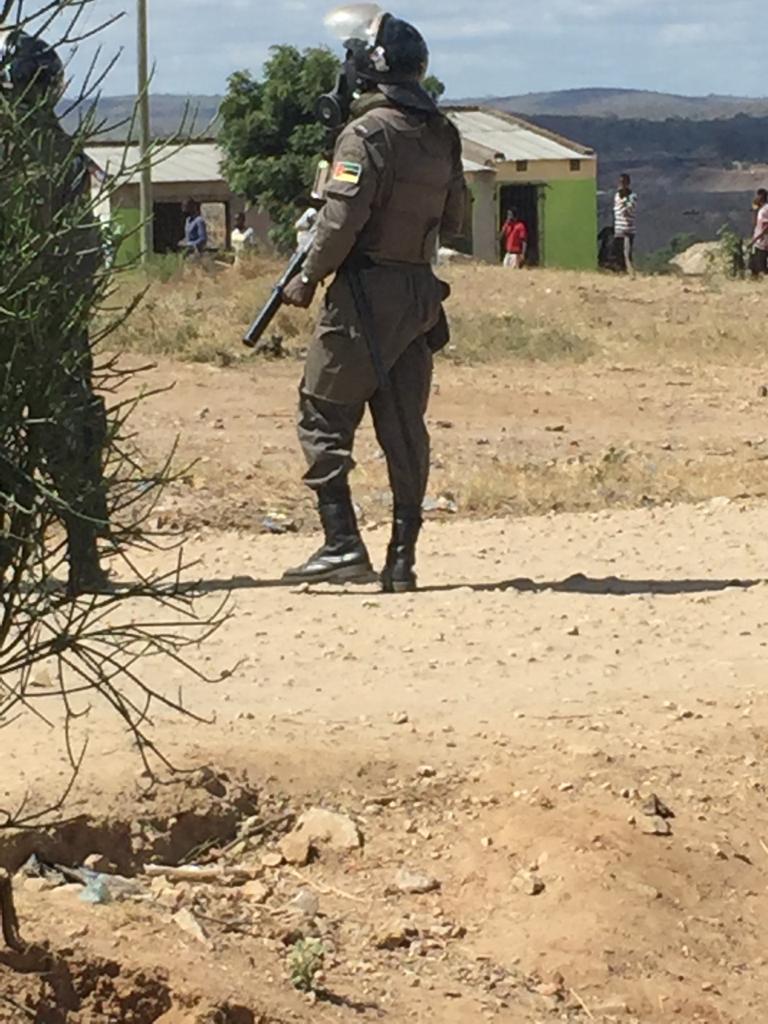
But the police hadn’t come to escort anyone. Neither VALE nor the government of the district showed up to the meeting on the 7th of May. The various vehicles employed by the protection police and the Unit of Rapid Intervention (UIR), which Sr. Fernando had judged to be there for security purposes, surrounded the residents and soon after, according to several reports from the community, UIR agents started approaching the people and ordering them in an intimidating manner to disperse or else – in Fernando’s own words – they would “change colours”.

“I said.. Sir (policeman), you can’t intimidate this lady, because here we are not in Cabo Delgado, we don’t have any weaponry” – retells Sr Fernando as he describes an exchange he had with a security agent who was threatening a resident.

It was then when the UIR agents decided to use tear gas and shoot rubber bullets to disperse the agglomeration. There are dozens of reports of people fainting or developing respiratory problems, including children and newborn babies. According to witnesses, the police even fired tear gas bombs inside the houses to which the people had escaped. One citizen was shot with a rubber bullet and had to be hospitalised for many days; furthermore, at least 6 citizens were taken to the police station without any accusation against them, 2 of them being detained until the following day. Some people also reported to JA the use of fire weapons, itself implied by some fires in the neighbourhood provoked by the gunshots of the police. The children who were studying in the Primary School Primeiro de Maio at that moment had to abandon the lessons, and many were lost from their families for several hours.

What can justify this violence from the police? What interests are the police and the UIR defending? The use of force to repress peaceful manifestations – a right that’s safeguarded in our constitution and fundamental to a functioning democracy – is unacceptable.

When asked about the events of the 7th of May, the Moatize District Administrator declared to JA that she did not know about them – not even about the actions of the police – until 2 or 3 days later. Moreover, she added that she was in her office during the whole day expecting the meeting with the commissions of brickmakers and peasants of Primeiro de Maio. This demonstrates, at best, a great lack of concern or competence, especially if we take into consideration the fact that even the President of the Municipal Council of Moatize was in the neighbourhood Primeiro de Maio as the events unfolded. And why, we ask, did VALE’s representatives not only not show up that day but didn’t even justify their absence to the population – especially taking into account that there have already been numerous times when police forces intervened in Moatize in alignment with the interests of the mining company.

VALE is known for conducting prolonged and non-inclusive processes as way of weakening the demands of the affected communities

It’s important to highlight here that the strategy of lengthening processes, exhausting affected groups and prolonging negotiations while excluding a big portion of the affected persons is common practice of VALE S.A. in many of the territories where it operates. This is all part of a broader strategy VALE uses to evade its responsibilities and try to delegate its commitments to the society and nature to the state, using the loopholes and institutional weaknesses existing in fragile and co-optable democracies such as ours in Mozambique. Needless to say, – for it is so widely documented and analysed – in addition to all the unjust resettlements and the environmental destruction, VALE Mozambique can also be regarded as having amounted no less than a terrible contribution in economic aspects such as fiscal income, employment generation, reduction of poverty, and inequality, which had been some of the great expectations to have been heralded when the contract for exploration was signed.

Well, taking into account the fact that VALE is preparing to sell its mines in Moatize and the Corredor de Nacala project – precisely at a time when its period of bonanza with respect to benefits and fiscal concessions comes to a close – these pending problems should be cause for concern and for sounding alarms in Mozambique as a country, but it seems for now that only the groups most directly affected by the company are recognizing the urgency of the situation. At any moment, VALE could find a buyer who is willing to invest in an obsolete deal in coal – and if it does so it will certainly do all it can to minimize any pending issues it has with the local communities or the country. On the other hand, such an investor will not to be concerned for the resettlement houses which will remain pending rehabilitation, with families still wanting for land to cultivate, or with brickmakers awaiting the conclusion of the interminable negotiations. We are not merely speculating – this is exactly what VALE did with its project in Baía de Sepetiba, in Brazil, when it sold to the company Ternium. The residents were caught by surprise with the sudden sale of the project, and today neither VALE nor Ternium are taking responsibility for the huge damage left behind.

A radically different path is necessary – and urgent

It’s urgent for us, above all else, to find ambitious and systemic ways to resolve, as a country, the problems facing most of the Mozambican people. We need to find another way that does not employ violence and repression as means to deal with discontented and frustrated citizens that decide to protest – for whatever the motive, and independently of whether it is convenient or not. We need to be able to collect heavy taxes on any large or mega-corporations operating in Mozambique so that we can invest in public services of quality for all and reduce the typical social tensions associated with a population pushed to the limit. And to guarantee the participation and protagonism of the people who are on the frontline of the impacts brought to bear by coal mines, big industries, industrial plantations, and mega-dams, so that they be the ones to define what is a just compensation for their land and territory. We cannot accept that our laws or ratified international treaties on human rights serve merely to fulfil the simple function of polishing our discourse toward financial donors or the UN – these rights need to be skin-felt, on a day to day basis, by all Mozambicans. It’s urgent for us to condemn and vehemently refuse any form of governing which oppresses and represses citizens that are against the current model of the country, in favour of the maintenance of ostentatious privileges of an elite that is becoming increasingly richer, unchallenged and criminal.

Above all, we need to rethink our pathways to the future whilst anticipating the mistakes that we have made before. We can learn a lot from the sale of the Rio Tinto mine to ICVL, from all the problems that persist in Capanga, Benga and in the resettlement of Mualadzi up to today, and refuse to allow VALE to do the same. We can learn from all that coal promised to be and wasn’t, and refuse to allow gas to do the same to us. Let us remember that VALE estimated a lifespan of about 35 years when it signed its mining contract with the government of Mozambique in 2007 – which means that, according to its calculations, there would be an international market or demand for coal until 2042. Today, a mere 14 years later, many can see the ridiculousness of this projection. When are we going to understand that to believe in the projections made by fossil fuel companies, or by research organisations funded by them, is a trap for any nation state? Are we going to continue to believe that gas is – for some special reason – going to succeed in developing Mozambique?

The stories of megaprojects that we hear all through Mozambique are not stories of employment, empowerment, or quality of life: they are in fact stories of impoverishment, despair, and social conflict. Nor are the stories that we hear about neoliberal capitalism throughout the world stories of solidarity or independence. The climate crisis, the rise in inequality, the systemic violations of human rights or the rising authoritarianism are inevitable results of a socio-economic system that rewards entrepreneurial actors for their absolute commitment to profit, independently of what the ensuing consequences might be. It is a model that is ever more shamelessly showing us what purpose it serves: the enrichment of global capital elites, with the complicity of our national elites.

In order to confront the times and crises that are coming we need a new paradigm: one which puts an end to the devastation of nature by man and re-establishes the control of the earth by local communities while prioritizing the conscious and collective use of resources that is inclusive of future generations. A paradigm which contributes to the formation of citizens motivated to act in defence of the next one by means of a competent State which is oriented to serve the people with the aim of valuing and strengthening our diversity.

We do need radical changes. And we cannot continue to allow the current socio-economic model to limit even our capacity to imagine a different model. In many places of the world, and even in Mozambique, this is already happening, in micro manifestations of resistance and social transformation that are largely repressed or not duly valued. We need space for these new paradigms to proliferate.

“Politics in our times should depart from the imperative to reconstruct the common world”, defends the Cameroonian philosopher and intellectual Achille Mbembe. It’s urgent that we start to chart this path, because we are already late and things are not getting better.


Watch here the complete testimony of Sr. Fernando Botão
https://www.youtube.com/watch?v=ydHsahOStHc

Tagged ,

15 year old minor marries an adult to escape hunger in Nampula

By: Melvin Arthur, Activist and partner of JA/ Nampula Province

A 15 year old girl, whose identity we’ve omitted, from the district of Palma in Cabo Delgado province, was forced by her progenitors to marry an adult of approximately 45 years of age as a way to alleviate herself from hunger within her family.

The minor, to whom we have attributed the name of Angela, arrived in the neighbourhood of Carrupeia, in the city of Nampula in May last year, when alongside 19 members of her family, she chose this capital of the north of Mozambique as a safe place of refuge against the terrorist attacks in the district of Palma.

Lacking any support, including food and shelter, from both governmental authorities and humanitarian organizations, young Angela’s parents decided (according to her) to force her to marry a 45-year-old adult, who was married already to another woman, as a way to ensure that he’d continue assisting her, especially with food, in order to guarantee the survival of the remaining members of her family.

After the marriage was negotiated, Angela began living with her first husband in a house rented by him, located still in the neighbourhood of Carrupeia, within the municipal administrative post of Napinine.

“My parents advised me to marry that man, firstly, to make things easier at home because we had no capacity to accommodate a lot of people, and secondly due to the lack of food. It was a decision made by my parents which I couldn’t refuse”, said Angela.

Angela’s marriage, though it didn’t even last a year, led to a pregnancy which resulted in a stillbirth. “After loosing the baby, I abandoned the house, against the will of my parents” she said, adding that she does not regret it, despite the difficulties she is currently going through to find food and shelter.

In Nampula, early marriages and child prostitution have been increasing lately and those displaced from the districts affected by the terrorist attacks in Cabo Delgado are the main protagonists of this reality*.

Many families of the war-displaced peoples living in the city of Nampula have been complaining because of their exclusion from the support of organizations. Some of the displaced people are begging for some coins in mosques, roads, and commercial establishments just to survive.

It should be noted that the province of Nampula has seen the arrival of a bit less than 70 thousand people displaced by terrorist attacks in Cabo Delgado, the majority of which have been living with relatives or in rented houses.

Tagged

Brickmakers and peasants from “Primeiro de Maio” neighbourhood in Moatize-Tete, paralysed the activities of the mining company Vale, to demand the reinstatement of their rights

Yesterday, the 6th of May of 2021, more than a hundred brickmakers and peasants from “Primeiro de Maio” neighborhood in Moatize-Tete, invaded and paralysed the activities for several hours in section 6 of the Vale Company’s mine, as a protest for the loss of their access to the Moatize River, which is essential for the livelihoods and survival activities that they have been carrying out since 1994. These brickmakers and peasants saw recently their access to the river get cut by the mining company Vale, as part of the process of expanding the company’s activities to the Moatize III mine.

These issues were first raised in a letter, addressed to the Vale Company in March 2021, with a copy to the local government and to the Frelimo’s Party headquarters. The Vale Company replied evasively to the matter, claiming that they owed no compensation to these brickmakers since they had already signed a Memorandum of Understanding with other groups of brickmakers. In the face of threats that the work on the mine would be paralysed by the brickmakers, Vale has therefore been calling numerous meetings to try to solve the topic with the affected families. However, the brickmakers report that these meetings have been repeated week after week without having a solution for these issues, and that they already feel worn out by the company’s strategy in prolonging the processes without giving the right details as to how, when and how much the brickmakers and peasants will be compensated for the loss of their livelihoods. This strategy of the company is already known, taking into account its pending issues with groups of brickmakers and peasants previously affected by the Moatize mine, which until today have not been fully and properly compensated, as well as the pending issues with families resettled by Vale who are today still waiting for the company to pay compensation for the loss of their farmlands and to rehabilitate their houses, which are in poor condition.

That is why this Thursday, the 6th of May, the brickmakers and peasants got tired of the company’s delays and decided to block the mine since 7am in the morning, having abandoned the location only at 4.45pm, when a team from Vale called a meeting for today, the 7th of May, where supposedly the issues will be negotiated and solved for the brickmakers and peasants, that have no means to sustain their families.

Despite Vale’s announcement of divestment of the Moatize mine and its intention to sell the mine, in January 2021, the company continues to expand its activities and impact the families living in the vicinity of the mine, without compensating them properly for their losses. It is unacceptable that Vale continues with this hostile stance in Tete and that once again has sealed the access to a river that is fundamental for the livelihoods of families that live in the vicinity, without negotiating properly with the families for a fair compensation. As everything suggests, Vale intends to drag these processes on, until the sale of its project in Moatize and the Nacala Corridor, leaving countless liabilities and destruction behind.

Justiça Ambiental is in solidarity with the cause of the “Primeiro de Maio” neighbourhood’s brickmakers and peasants, as well as all other brickmakers and peasants that have been affected by Vale Mining company for more than 10 years. And once again we ask: Who benefits from coal mining? Who pays for the economic, environmental, social, climatic impacts from mining? When will we embark on a development path that benefits most Mozambicans, rather than just a small elite and international capital?

#CorporateImpunity #CriminalVale

Portucel – intimidation will never keep us quiet

Once again, our visit to the Hapala community had repercussions on the members of the community with whom we spoke. Once again, we denounce the visible discontent of these people and the systematic abuse to which they have been subjected by some Portucel employees in the Ile District, and the question remains whether they do so at the behest of someone or independently. At the time we complained to the Head of the Socone Administrative Post, we explained that the communities continue to claim their land back, as they lost everything in exchange for promises that only served to convince them to give up their land, as these have not yet been fulfilled. These communities never knew that they could refuse to give up their land. We also publicly denounced it through our article “Portucel – The long wait for the much-promised better life”, and, as soon as we left the field, we received information that at least two of the members of the community with whom we were talking had unexpected and unwanted visits to their own homes, by three (3) identified Portucel employees. According to the community members that received the visits, these Portucel employees insistently asked what JA! intended, what they talked about and why they have met with them. One of these people is the leader of the Hapala Community, with whom we had no conversation. We did a brief courtesy visit to him, and according to our last article on this subject, we immediately realised that he was apprehensive to speak to us, due to the presence of another person, which happened to be the one who secretly took a photograph of us. Either way, the Hapala leader had to justify himself to the Portucel employees, to clarify that it was indeed a courtesy visit, as if a citizen had to answer these questions in his own home. This is clearly an intimidation, and we will not let it go, we will always denounce it!

These same three (3) employees were not satisfied with the little information they were able to extract from the leader and knowing that we did have a meeting with members of the community, they then went to the house of an elderly widow who participated in our closed meeting, to pose the same questions to her in her own house. They even snatched from her hands the brochure we had shared with her, returning it only when she protested and after having taken another photo. This peasant woman was present at our closed meeting and had shared with us her frustration for having been deceived, her despair for not having enough land to produce as she did before, and her sadness because, according to her, she has lost everything that was of most valuable to her: her land, her peaceful life. This woman told us how she feels, she told us that she just wants her land back. This woman also told us that she wants respect, she repeated countless times “we are also people, we want respect”. She also told us about the abuses which company employees have been subjecting the people to, the lack of respect with which they are treated, which also includes insults, such as “Namukwaneba”, crazy in the local language.

These acts of intimidation and even threats to members of the community who protest the most, have been recurrent. In the past, these acts have been reported to the offices of Portucel Mozambique in Maputo that has denied and ignored them. The acts have even been reported to the Office of the Ombudsman and they did get some attention, but impunity remains…

The acts of intimidation and threats have worsened. Earlier, they were visited by only 1 employee, now there are 3. Some members of the community received threats that if they continue to mention the names of the employees involved, they will be judicially sued for defamation. Others have already been called upon to respond to the District Police Command for holding open meetings with the JA! team.

We do not work in secret, our meetings are held in open spaces in the community, and local structures have our credentials, and everybody knows our work. In regard to local structures, we have already sent all the information shared here to the Head of the Socone Administrative Post and we request his urgent intervention. He thanked us for the information and assured us that he will soon go to the field with his team to meet with the members of that community to investigate the situation. He even considered the possibility of including JA! in the team that will monitor the process.

We take this moment to send a message to these intimidators in reference: if they want to know what we were doing in the community, they should come and ask us directly – not in the houses, but in our office! However, they still act like cowards, they wait for us to leave and then question the elderly widow, in her own house… who do they think they are? Are they going to intimidate a community leader because he is on the side of his community? Will they pay off everyone they can to act as spies in exchange for what? Maybe just for a phone … or for those social responsibility activities that only people who remain silent are those who will receive!!! Shameful!

JA! is not the only organisation to denounce these abuses, nor to denounce that these communities are not only not better off in life, but in fact have lost the little they had.

Intimidation will not be able to silence all voices! They will not shut us up! The more intimidation, the more threats and acts of intimidation, the louder we are going to scream, the further we are going to seek justice for all these people.

Stop the impunity!

Total Runs from its Responsibilities with its ‘Force Majeure’ Announcement on Mozambique Gas

This image has an empty alt attribute; its file name is igp6290.jpg

29 April 2021

On 26 April, 2021, French transnational corporation (TNC) Total announced, “Considering the evolution of the security situation in the north of the Cabo Delgado province in Mozambique, Total confirms the withdrawal of all Mozambique LNG project personnel from the Afungi site. This situation leads Total, as operator of Mozambique LNG project, to declare force majeure.”

Our analysis of the “force majeure” phrase is that Total is trying hard to absolve itself of its commitments and slip out of its contracts with its sub-contractors, many of whom are local. With the “force majeure” announcement, it can claim that it is not responsible for complying with the terms of its contracts, but that it continues to hold the benefits of being the project concessionaire.

A press statement from the Mozambican National Petroleum Institute confirmed the situation of Total’s contracts and obligations, stating: “With the temporary interruption of operations, Total will not be able, during this time, to comply with the contractually assumed obligations and may also suspend or terminate more contracts with other providers of goods and / or services, depending on the time the interruption lasts… we clarify that Total did not abandon the Project, they remain as Concessionaire and Operator, with all the rights, duties and obligations…” (translated from Portuguese).

Sadly, both Total and the authorities fail to mention what will happen to the farming communities that have already been displaced and dispossessed to build the onshore Afungi LNG Park, who have still not been given land promised to them and remain without livelihoods. They cannot wait any longer especially given that it is projected the site will likely be dormant for over a year. Survival is at stake. Neither Total nor the government seem to have made any plan for them.

Total and the other TNCs involved in gas exploitation have already created havoc in Cabo Delgado. The people of the province have suffered immensely. Total has caused loss of livelihoods of local communities, due to land grabs for the gas project and all its secondary industries, and has blocked access to the ocean for fisherfolk who have been dumped inland and left without livelihoods. They were promised jobs in the industry which did not materialise. The area has faced a huge increase in militarisation, conflict and insecurity; the ‘resource curse’ theory has repeatedly shown how these link to fossil fuel development, especially in Africa. All warnings of these risks by JA! and civil society for years went ignored. It is sad to see this scenario play out again.

Cabo Delgado has been in flames. People already living in poverty, facing continued injustice and neglect, are under brutal attack. Palma was attacked by armed and organised insurgents on 24 March 2021 and the siege lasted for 10 days. This and previous attacks, starting in 2017, did not come out of nowhere, and the simplistic narrative of Islamic terrorism hides the social hardship that has given traction to extremist narratives. While the roots of the conflict are complex, the gas industry is fuelling social tensions as local communities feel frustrated, disrespected and desperate, seeing their province’s wealth being plundered by national political, and international economic elites and extractive companies, while the government continues to ignore their complaints and disregard their basic human rights and needs. Mercenaries, who have been indiscriminately killing civilians, are fighting this faceless insurgency alongside heavy-handed military and the conflict has left over 700,000 refugees in Cabo Delgado. When the lion and the elephant fight, it is the grass that suffers, as an African proverb reminds us.

Since the attacks in Palma, thousands of people are unaccounted for, missing or dead. Total evacuated its own staff and contractors, and only days later did some of the local population have a chance to be rescued to safety. Many others met a different fate. Of course the TNCs want more security for themselves, but what about the people? Joseph Hanlon writes in the Mail and Guardian that when Palma was attacked, “there was no security protecting the town, although 800 soldiers were inside the walls at Afungi protecting Total workers”.

Now, after creating havoc, Total wants to maintain itself as the lead gas operator but refuses to comply with its commitments, the most basic commitments to some of the poorest people on earth, like food security for gas-affected communities. The Mozambique gas project has already created deep social and economic issues. These will not go away overnight. Total must stop the gas exploitation entirely, but it cannot slink away from the mess it has already made. It must take responsibility and provide reparations for all the lives destroyed, all the lands grabbed, and the livelihoods lost. Total and the gas exploitation must stop, but that by itself does not erase years of abuse and dispossession overnight! The TNCs must be held accountable for the impacts and human rights violations faced by affected communities and be obliged to fully compensate the communities and remediate the damage caused.

JA! has always asserted and shown that our country should not be going down the dirty and unjust development pathway of fossil fuels, since it worsens the climate crisis, causes displacement and land grabbing, pollutes the air, water, soils, has terrible health impacts on local people and destroys the local ecology and livelihoods, and overall only serves the elites. Rather we need community-owned renewable energy for our millions currently without energy, and we need peoples’ centred development. More Mozambicans are now saying that we need to reflect as a country whether or not it is worthwhile to continue with this gas project.

But one also wonders why Total declared the “force majeure” position. Total is a TNC which secretly prides itself in being able to handle fossil fuel extraction in difficult situations. As Le Monde reported, the Total LNG site in Yemen has been used as a military base and secret prison by UAE militias after activities were suspended because of the war. Total also declared ‘force majeure’ in the Yemen site in 2015. What guarantees will be given by Total and the Mozambican government that the Mozambique Afungi site will not become like the Yemen site?

There is speculation in Mozambique about possible reasons for the ‘Force Majeure’ announcement:

  • It plays on the government’s fears of the project failing or being delayed, which could be used by Total to force the Mozambican government to renegotiate the contracts, already so favourable to Total, to give an even worse deal to the Mozambican people, while corporate elites and Mozambican elites make off with millions.
  • It also allows Total to demand more control over security of the gas region that prioritises their investment, that could come at the cost of broader national security and sovereignty.
  • It could help Total assert power over the Mozambican state and even a threat to use trade and investment agreements and their notorious Investor State Dispute Settlement (ISDS) system to demand compensation of millions for their losses.

What we do know for sure is this is a way for Total to indefinitely suspend its operations and not incur costs. Foreign contractors/ banks will likely file claims with Export Credit Agencies (ECAs) to be paid back. But Mozambican contractors do not have this option – they will be hit badly while citizens of global north countries will subsidise the fossil fuel TNCs, leaving Mozambique with an even larger debt, which is ironic since the gas revenues were the false panacea meant to solve the debt problem. We denounce these systems that threaten the future and well-being of the poorest peoples while benefiting the wealthiest.

Demand to the transnational corporations, banks and investors:

  • We demand that Total and all transnational corporations, all purchasers and all investors involved in gas extraction in Mozambique cease all activities related to the gas projects right now and we demand an end to fossil fuel finance.
  • We demand Total and the TNCs and all involved provide fair and just reparations to those who have already been affected.

Demands to the Mozambican government:

  • We demand that the Mozambican government stops gas and fossil fuels exploitation in Mozambique, awarding no more concessions and choosing a path of peoples-based renewable energy instead, since the current energy path is destroying the peoples’ livelihoods, the environment and exacerbating the climate crisis.
  • We demand that the Mozambican government ceases putting transnational corporations and foreign investors ahead of the well-being of the Mozambican people and takes urgent measures to effectively regulate big companies operating in the country.
  • We demand that the Mozambican government focus on the socio-economic drivers of the violence and deal with the loss of livelihoods, loss of community lands, oppression of the people and other injustices.
  • We demand that the Mozambican government starts providing regular and credible updates about the situation in the ground in Cabo Delgado, including information about people killed, missing and displaced.
  • We demand that the Mozambican government stops harassing, intimidating and threatening journalists and activists reporting about the situation in Cabo Delgado, and takes concrete measures to punish those who do so including an investigation about the military’s role in human rights abuses.

By JA! Justiça Ambiental/ Friends of the Earth Mozambique

Supported by:

Friends of the Earth France

Friends of the Earth International

Friends of the Earth US

Womin African Alliance

Friends of the Earth Africa

Re:common

Gastivists

Milieudefensie

Global Aktion

Groundwork

Climaximo

Friends of the Earth England, Wales and Northern Ireland

Tagged , ,

Report release: Chasing Carbon Unicorns

24 February 2020: Climate justice organisations today release a new report: Chasing Carbon Unicorns: The deception of carbon markets and “net zero”.

In the lead up to delayed COP26 climate talks in the UK, and as big polluters continue to expand fossil fuel exploitation, this report unpacks the science behind carbon offsetting and reveals how “net zero” pledges will never solve the climate crisis. 

The report is available in English, Portuguese, French, and Spanish.

Powerful actors are using “net zero” pledges to hide their climate inaction. Stopping the climate crisis requires us to stop burning fossil fuels – no magical thinking will solve this problem, just immediate action and system change. But transnational corporations and governments are hiding behind the “net” in “net zero” – claiming that they just need to pay someone else to remove carbon, through carbon offsetting, rather than taking action on their own.

This report unpacks the science behind “net zero” claims and how they are used to obscure climate inaction. It explores the new strategies to expand carbon offset markets, linked with new “net zero” demand for offsets. It also explains the roles played by various actors involved in the effort to “make offsetting great again”. These include less obvious players such as a few large mainstream conservation organisations, as well as the more obvious ones: the banks, the finance industry, and corporate interests behind maintaining the status quo of fossil fuel production and consumption.

Report published by Friends of the Earth International, La Via Campesina, Indigenous Environmental Network, Corporate Accountability, Asian Peoples’ Movement on Debt and Development, Third World Network, Grassroots Global Justice Alliance, Climate Justice Alliance and Justiça Ambiental.