
Global Campaign to Reclaim Peoples Sovereignty, Dismantle Corporate Power and Stop Impunity
September 2023
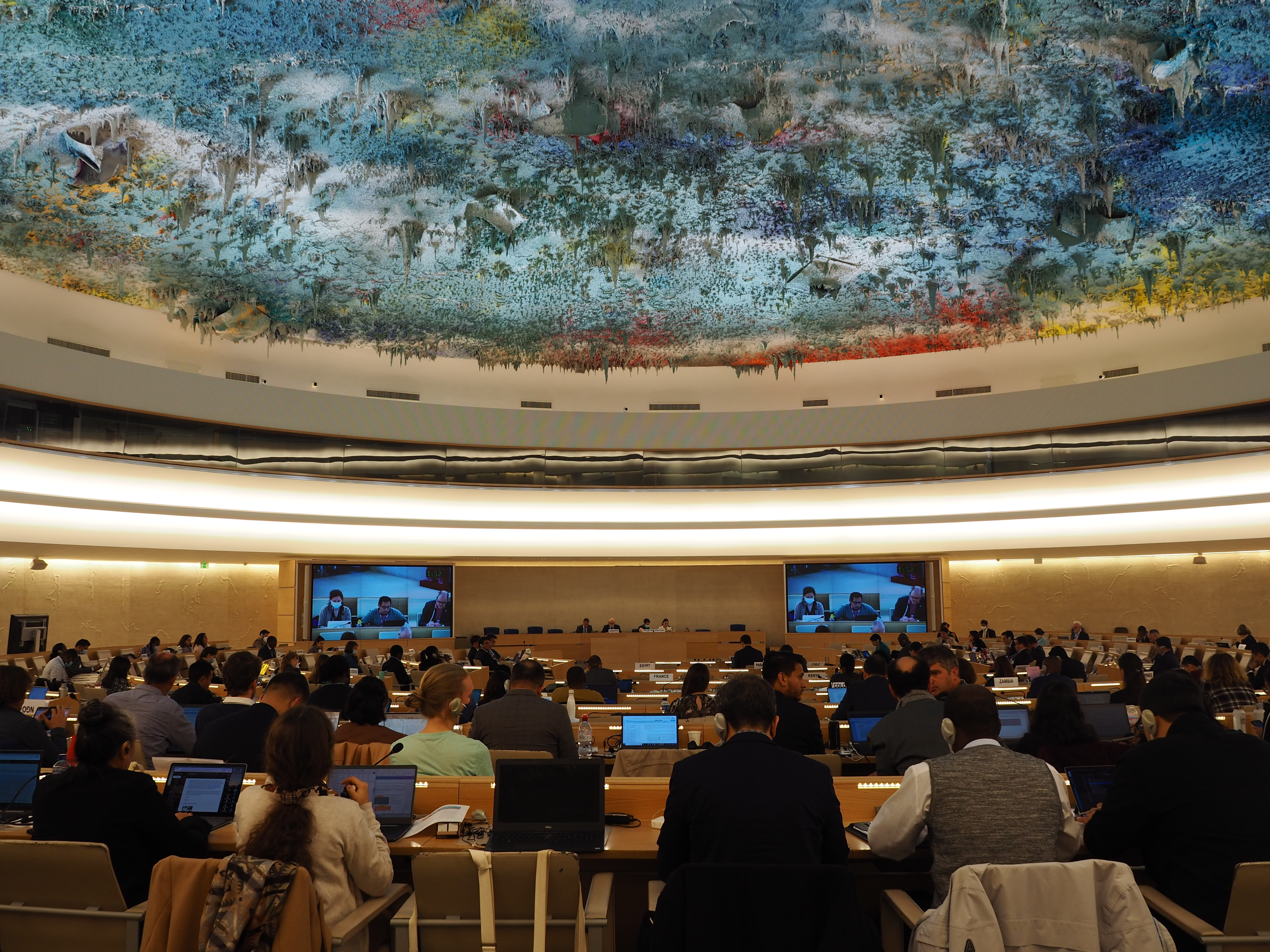
The Global Campaign to Reclaim Peoples Sovereignty, Dismantle Corporate Power and Stop Impunity (Global Campaign) is a worldwide network of over 250 social movements, civil society organisations, trade unions and communities affected by the activities of transnational corporations (TNCs). Having actively participated in the negotiations for a legally binding instrument to regulate the activities of TNCs in international human rights law, as mandated by Resolution 26/9, the Global Campaign would like to express profound concerns regarding the Updated Draft Treaty as published in July 2023 by the Chair of the Open-Ended Intergovernmental Working Group (OEIGWG), the Ambassador of the Permanent mission of the Republic of Ecuador.
It is alarming that the process in the lead up to the updated draft has been marked with an unacceptable level of arbitrariness by the Chair. For instance, the weeks leading up to the 8th session of the OEIGWG were riddled with inconsistencies that give rise to important procedural and ethical concerns. First, the Chair released a series of unsolicited and untimely “Suggested Chair proposals for select articles of the Legally Bindign Instrument”, completely unrelated to the negotiation process, which he then imposed as a parallel negotiating document. Furthermore, despite the clear wording of Resolution 26/9, which states that the future Treaty will apply to TNCs and other business enterprises of a transnational character, the Chair seeks to extend the scope to all types of enterprises, including SMEs and public companies with no transnational activity. Instead of facilitating negotiations over this matter, the Chair, through his“Guidelines for Intersessional Work”, dictated his own incoherent interpretation both of the Chair’s mandate and the UN negotiating process, and illegally arrogated upon himself the powers of a judge.
While the Chair should facilitate the course of negotiations, maintaining impartiality and relying on a comprehensive understanding of delegations’ proposals and manifestations — as laid out by the UN stipulations on the “Substantive role of the Chair” — this new text reveals the Chair has significantly overreached his mandate. It is evident that the Chair’s approach leans more towards judgment than facilitation as he cherry-picks proposals instead of consolidating the textual inputs supported by most States that have been active in the process. With this latest draft, the Chair sets us back at least three years in the negotiations, benefiting TNCs and their allies, to the detriment of social movements, workers, peasants, and affected communities.
Indeed, while the updated draft now incorporates some demands and proposals that came from some States and civil society organizationsi, an initial examination of the text reveals that its content was significantly weakened, including in Articles 6 to 9; these articles will constitute, once their wording is corrected, key pillars of the future Treaty. The Global Campaign will conduct a deep technical and legal analysis of the updated draft, article by article, which will be released before the 9th session. However, we would like to highlight here some concerning and pressing issues related to the update draft:
1) Several important proposals from committed States were excluded or weakened, even when they had been widely supported by other States and civil societyii. At the same time, proposals made by only one or a few States were retained, despite the absence of significant support from other delegationsiii.
2) Key provisions were weakened or inexplicably disappeared, even though no delegation had explicitly requested that this be doneiv.
3) Key proposals for the elaboration of a strong and effective instrument coming from social movements and affected communities were deleted, while those of the representatives of TNCs were imposedv.
Considering the above, we call on the Chair to facilitate negotiations at the 9th session in accordance with the mandate of Resolution 26/9 of the United Nations Human Rights Council, and on the basis of the updated revised draft Treaty with the track changes (the only legitimate basis for negotiations), which includes all the proposals presented by the States in the last two sessions. We also urge the States committed to the process in favor of a Binding Treaty to be vigilant and to oppose any kind of diversion strategy.
Last but not least, we also call on the Chair to convene an inclusive international consultation with all State missions and ensuring the participation of civil society organizations prior to the 9th session, to discuss the program, agenda and methodology for the 9th session.
It is time for transparency, coherence, collaboration, and, above all, it is time for justice.
i The right to information, collective claims, participation in reparations, precautionary measures, applicable law, among others.
ii Most of the constructive and important inputs given by committed States of the Global South were not retained. For more information, see the Global Campaign’s written contribution of March 2023, where we highlight these important proposals: https://www.stopcorporateimpunity.org/written-contribution-in-the-framework-of-the-inter-sessional-period/
iii For example, the word “obligations” was replaced by “responsibility”, as requested by the US (followed by some other countries). This proposal ignores the fact that TNCs already have obligations in human rights law. Furthermore, the concept of “adverse human rights impact” has been integrated in Article 1 and all along the whole Treaty, despite this concept being legally inappropriate for this kind of instrument and its objectives.
iv Essential paragraphs were inexplicably removed and/or strongly weakened, including the prohibition on the use of forum non conveniens in Articles 7 and 9, the provision on penalties in case of violations (6.7) and on the undue influence of TNCs (6.8). In Article 7, other important provisions on the reversal of burden of proof (7.5) and the application of remedies (7.6) were also weakened by new language. As for Article 8, each provision is now “Subject to the legal principles of the State…”. It is important to state that these changes substantially reduce the capacity of the future instrument to tackle corporate impunity, to ensure effective legal liability mechanisms, thus obstructing access to justice.
v For instance, the updated draft fails to establish international obligations and effective legal liability mechanisms for TNCs, turning the future Treaty into a mere set of a guidelines for States to develop their own Due Diligence Legislation. Thereafter, powerful States close to TNCs would argue that there is no longer any need for a legally binding instrument since DDL would suffice to make TNCs liable. The updated draft fails to even incorporate elements of what could be the basis of a solid national legislation, one which surely cannot rely on due diligence mechanisms alone. To consult the main proposals of the social movements and affected communities, represented here by the Global Campaign, please see: https://www.stopcorporateimpunity.org/frontiers-of-an-effective-binding-treaty/ and https://www.stopcorporateimpunity.org/written-contribution-in-the-framework-of-the-inter-sessional-period/

 JA4change