Tag Archives: mozambique

Why financial institutions should politely look away from ENI’s Coral North FLNGU

Update from ReCommon and Justiça Ambiental!

In January, Italian company ENI announced it would be ready for the Final Investment
Decision for its Coral North FLNG project, but now states it is still negotiating with private
banks for financing, and seems to blame the delay on the Mozambican authorities. In the
meanwhile, one investor has been sued by a civil society organization, and four private
banks have already excluded financing for the project.
Coral North FLNG, a planned floating platform to extract and liquefy gas off the coast of
Mozambique, is still looking for backers. Although Eni declared in January that it was ready
to take the FID on the project, last week, in the context of its AGM, it admitted to
shareholders that “negotiations with private financial institutions are underway”. When
asked about the reasons for the delay in closing the deal, ENI only replied that the
development plan was approved by the Mozambican authorities in April 2025, implying
they were responsible.
ENI leads work on Coral South FLNG, the only operational project in the Rovuma Basin. It is a
floating processing plant anchored in deep ocean that has been exporting LNG since
November 2022. Coral North FLNG would be a replica, gouging its claws into the sea floor
just 10 kilometres away, compounding the impacts on the ecology of the area.
Answering to the AGM questions, ENI also confirmed that “part of the project requirements
are planned to be financed through debt” and with “support from a number of Export Credit
Agencies”, as for Coral South FLNG. However, different private finance actors are moving
towards withdrawal from unconventional upstream oil and gas in order to achieve carbon
neutrality by 2050. At least four of the banks that supported the first project – BNP Paribas,
Credit Agricole, UniCredit and ABN Amro – say they are no longer interested in financing the
replica because it is not in line with their updated climate change policy.
Just over three years since the massive vessel arrived in the Cabo Delgado region, Coral
South has seen multiple cases of excessive flaring – the burning of excess extracted gas,
which results in significant carbon emissions. As a replica, Coral North would likely be
subject to similar issues. An investigation published in April by Italian civil society
organization, ReCommon, revealed that total emissions from Coral South have been
assessed at levels seven times higher than declared in the original environmental impact
assessment (EIA). Between June and December 2022 alone, flaring emissions from the Coral
South FLNG project accounted for 11.2% of Mozambique’s annual emissions, reflecting an
11.68% increase compared to 2021.Proceeding with gas development in the Rovuma Basin ignores the International Institute for
Sustainable Development findings indicating that investment in additional gas infrastructure
is incompatible with the goal of limiting global warming to 1.5°C. International Energy
Agency analysis also reveals that, in a 1.5°C scenario, existing LNG export capacity would
already be sufficient to meet current and future demand.
With gas demand declining worldwide, Coral North carries high financial risk, prompting
South Korean civil society organisation, Solutions for Our Climate (SFOC) to attempt to stop
state investment in the project. In February, Korea Gas Corporation (KOGAS) announced a
decision to invest USD 562 million in the project through equity and a loan to its subsidiary,
KG Mozambique. In March, SFOC sued KOGAS, arguing that the investment is economically
risky for South Korea, and the project would contribute significantly to climate change
impacts and therefore violate the rights of future generations to a healthy environment.
Between 2008 and April 2024, KOGAS had already invested around USD 1 billion in
Mozambique gas development, but has refused to disclose the preliminary feasibility study
(PFS) for Coral North. SFOC also has an ongoing case against KOGAS for disclosure of the
PFS.
Two other projects in the Rovuma Basin are planning significantly larger onshore processing
facilities, intending to pipe gas from wells about 50 km offshore, Mozambique LNG and
Rovuma LNG. The environmental impacts of the four gas projects together over their entire
lifetimes could be devastating for the Rovuma Basin and the west Indian ocean. The
Environmental Impact Assessment for the Coral North Project has been criticised for failing
to meet legal and scientific standards in assessing environmental and climate risks.
The Mozambique LNG project, led by French fossil giant TotalEnergies remains under
international scrutiny. The project is under force majeure since April 2021, following a
violent insurgent attack. It is now under investigation following reported allegations of a
massacre of civilians that was allegedly committed near the Afungi gas complex in mid 2021
by public security forces. Mozambique LNG shares land-use rights and some infrastructure
with the Rovuma LNG project, which is led by ExxonMobil, with ENI and China National
Petroleum Corporation as major partners. The project also remains without a final
investment decision.
The development of LNG projects in Mozambique also presents severe concerns about
erosion of sovereignty, due to the legal agreements that limit the government’s ability to
regulate these projects and capture fair revenues. Since gas exploitation began around 2010,
the industry has been linked to significant corruption-driven debt, and the government
supports its national oil company’s participation in LNG projects, creating fiscal risk without
guaranteed returns. Local communities have already lost agricultural lands and access to thesea because of the infrastructure development, and hundreds of families were required to
relocate.
Gas revenues so far amount to just over USD 200 million, of which 40% is intended for the
Sovereign Wealth Fund, which was established for stability and savings for future
generations. Last week the Mozambique Administrative Court reported numerous
irregularities in the Financial State Account for 2023 that represent an alleged
“embezzlement” of USD 33 million from Rovuma Gas revenues. In addition, Mozambican
civil society is raising concerns about the funds being allocated to social and economic
projects as provided for in the State Budget.
Developing Mozambique’s LNG industry promises only more harm – ecological destruction
and climate change impact, the destruction of people’s livelihoods, and increased
disenfranchisement and inequality. This is risky business for public and private financial
investors.
Ends

Tagged , , , , , , ,

March 19 – 5 months without Elvino and Paulo and another month of bloodshed

Crédito da foto: Getty images

In the early hours of 19 October, 2024, Elvino Dias and Paulo Guambe were brutally murdered, their bodies riddled with bullets, at the behest of someone who believed that this would silence the VOICE of the people that these two citizens made a point to defend! Five months ago today. In the last five months, the murderers have not been identified, nor have the masterminds, nor is there any effort to solve this and other heinous crimes that have been committed in our country. There is no justice! Since then, many more Mozambican citizens have been silenced in the same brutal way, many others have simply disappeared, and even more remain lost in the meanders of our prison system… deliberately forgotten and mistreated in our police stations and prisons, in a deliberate strategy to stifle and repress our constitutional right to protest. While this and other unsolved crimes remain like a gangrene in our social fabric, our Attorney General’s Office is carrying out investigations that are exposing their politicised and partisan nature.

It is with great anger and sadness that we remember our comrade Elvino, who was always ready to defend the rights of the poorest, most forgotten and most vulnerable people in our country… it is with even greater anger that we continue to witness the total devaluation of the lives of Mozambicans, we are killed for demonstrating, killed for passing near a gathering, killed for thinking differently, killed for no longer agreeing to stand by and watch our country being squandered, killed for pointing out the serious violations of the law, the rampant corruption that everyone swears to fight only to show that it is possible to loot even more… killed for denouncing the constant and endless plunder of the state coffers, the abuse of power, the arrogance and incompetence that is paraded in our public institutions.

Never before in the history of independent Mozambique has our ethical and moral compass pointed to such a deep abyss. From electoral fraud, which Elvino decided to fight “to the end”, to corruption at the highest levels, to the partisanship of the state, to the serious and constant violations of human rights, to the open incitement to hatred and violence by those who misrule our country, we have never sunk so low. However, despite the evidence and the current state of our country, the support of the Global North remains… just so that they can continue to exploit and profit, their greed to exploit our wealth is so superior and “makes impossible” the countless hollow commitments to freedom, democracy, justice and human rights! But we don’t even need to go that far, even African governments, our own brothers and sisters, also pretend not to see while the Mozambican government violates all the precepts of freedom of expression, of demonstration and the most basic human rights, the right to life, perhaps in the hope that the awakening of the people will not spread to their own dynasties.

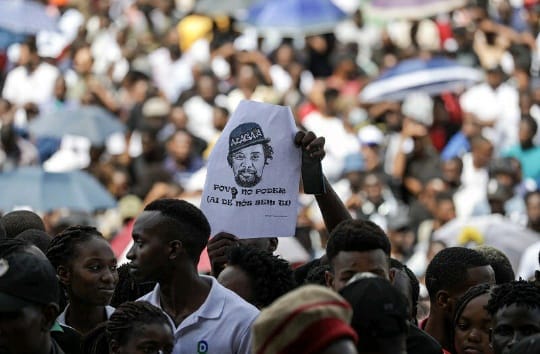
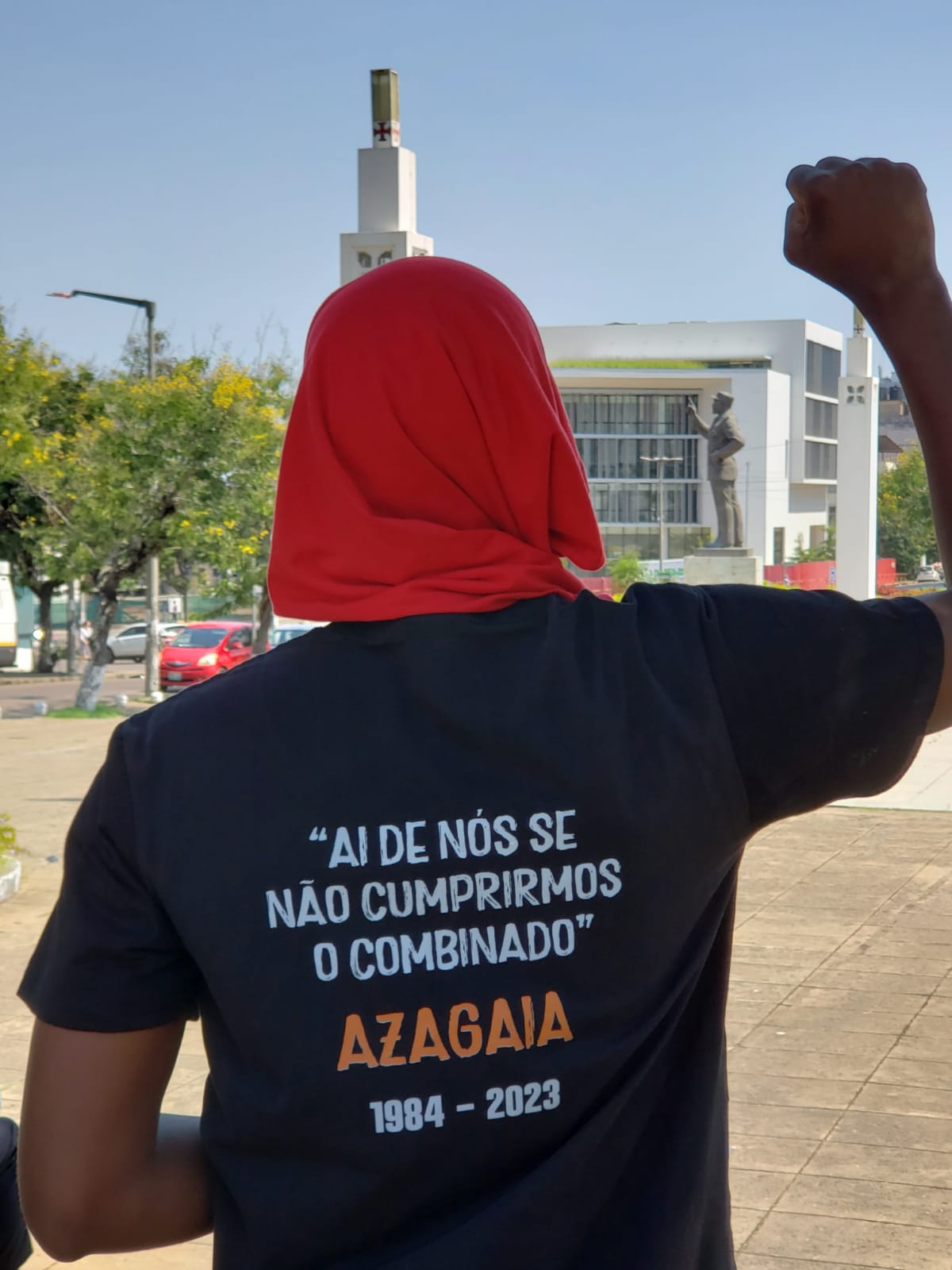
Today, 18 March, we write these lines and remember Elvino Dias, to the sound of gunfire, because today the People have decided to honor and celebrate their heroes by decreeing a People’s holiday. 18 March marks 2 years since our beloved rapper-activist Azagaia died and the police attacked the mourners as we mourned our fallen hero at his funeral. The police have decided to maintain “order” and “tranquility” in the way they do best, by arresting and killing! As dead, we certainly won’t be able to protest! As dead, we certainly won’t be able to shut down roads or display our posters with our heroes! How many more will have to die before they realize that the more of us they kill, the more revolt they create? How many more have to die before the country comes to a standstill? What do they think, that guns will guarantee peace? We can’t all be silenced!

As dissenting voices are silenced one by one, or two by two with bullets in their cars, we are not just witnessing political crimes, but the crumbling of the very moral fabric that should unite us as a nation. To all those who stubbornly continue to raise their voices, who stubbornly continue to demand justice, freedom and rights for all… the struggle continues!

Enough of state terrorism!

Enough of impunity!

Tagged , ,

Total Turmoil: Unveiling South Korea’s Stake in Mozambique’s Climate and Humanitarian Crisis

Published by Solutions For Our Climate (SFOC), January 2024.

Kim & Oh, ‘Total Turmoil: Unveiling South Korea’s Stake in Mozambique’s Climate and Humanitarian Crisis’, January 2024, Solutions For Our Climate (SFOC)

The report identifies the participation of South Korean corporations in Mozambique’s liquified natural gas (LNG) projects and lays out the risks and flaws in the project that affect the economic feasibility and ethical correctness of the project. It is published by Solutions For Our Climate (SFOC).

SFOC has identified the significant participation of South Korean corporations in Mozambique’s LNG projects, as they play pivotal roles throughout the entire value chain of the Mozambique LNG business. With a 10% stake in the Area 4 block, Korea Gas Corporation (KOGAS) has been making substantial investments in project exploration and development. Notably, major Korean shipbuilders are actively involved in Area 1 and Area 4 projects. Samsung Heavy Industries is expected to provide offshore LNG production vessels for two of the four Mozambique gas field projects. Meanwhile, three Korean shipbuilders anticipate supplying a total of 23 LNG carriers for transporting the produced LNG volume. Six LNG carriers have already been constructed and are in use to transport LNG volumes from the Area 4 Coral Sul field, while 17 fleets for the Area 1 Mozambique LNG project await the final contract to be signed. Consequently, South Korean public financiers have become involved in the Mozambique gas projects, providing a total of USD 3.22 billion financial support to Korean companies engaged in these initiatives.

The LNG projects in Mozambique face significant risks, primarily in two key areas. Firstly, flawed resettlement processes for local communities near the LNG facilities have resulted in forced relocations, inadequate compensation, and the loss of livelihoods, especially among fishing communities. Secondly, there are substantial climate concerns associated with these projects, as they are expected to contribute significantly to greenhouse gas emissions when considering the project’s entire lifecycle. An independent report by Friends of the Earth and the New Economics Foundation estimated that the Mozambique LNG project alone could generate 3.3 to 4.5 billion tonnes of CO2 equivalents, surpassing the annual emissions of all EU countries.

The involvement of South Korean stakeholders in the LNG projects raises alarming concerns. By providing financial support for the LNG projects in Mozambique, public finance institutions have failed to adequately assess human rights, climate, environmental, and security risks associated with the projects in accordance with both international and internal guidelines. Samsung Heavy Industries faces criticism for its involvement in controversial LNG projects in Mozambique, which potentially conflicts with its sustainability initiatives and ESG commitments. Additionally, the economic feasibility of new gas projects in the Mozambique Area 4 basin, where the Korea Gas Corporation holds a 10% stake, is questionable due to factors such as low profitability, regional instability, declining gas demand, and fierce market competition.

Some key recommendations to relevant stakeholders are:

1. Public financiers should withdraw their financial backing from Mozambique gas projects and join the Clean Energy Transition Partnership (CETP) to end fossil fuel investment.

2. Public financiers should establish Human Rights, Environmental Impact, and Security Assessment processes.

3. KOGAS should consider divesting its stake in Area 4.

4. The South Korean shipbuilding industry should transition away from the fossil fuel business.

To access this complete study, in the original English version, please visit the website:

https://forourclimate.org/en/sub/data/mozambique_climate_crisis

Tagged , , , , ,

Video launch:How many “no’s” does it take to build a dam? The repression of the communities who resist Mphanda Nkuwa

On December 13th, in Maputo, the Mozambican government and the companies Electricidade de Moçambique (EDM), Hidroeléctrica de Cahora Bassa (HCB), Électricité de France, TotalEnergies and Sumitomo, signed the partnership contract for the construction of the Mphanda Nkuwa hydroelectric dam on the Zambezi River.

A partnership contract that is signed before a single community consultation meeting with the people who live in the region has been carried out, only makes it even more clear that the project is not, and never has been, for the benefit of the local population. Our Constitution and Land Law guarantee customary land rights, and local communities should have their rights to public participation and fair and prior compensation respected. To add insult to injury, this unlawful contract was signed with all the pomp and circumstance, in the presence of the President of the Republic, the Ambassadors of France and Japan, among other personalities. It’s a blatant lack of respect for the People, celebrated in a luxury hotel in Maputo, and commemorated by the political elites and big international capital, who see Mphanda Nkuwa as an opportunity to play “energy transition” and trade carbon credits. But the power dynamic between those promoting the project and those who will be affected by it only underlines its neo-colonial nature: force them out of their land, because there are valuable resources to exploit – and export!

And as if this shocking obstruction of public participation was not enough, the interests behind the Mphanda Nkuwa project are also fuelling the repression of local communities. To counteract the misinformation created by the project’s promoters, Justiça Ambiental launching a video on the same day this shameful contract was being signed with first-hand accounts of what has been happening in the communities of Marara, Chiúta and Cahora Bassa to those who question the project or claim their rights.

This repression has taken place in various forms, it has been perpetrated by the local government and the Police of the Republic of Mozambique, and it includes:

– The intimidation and threats to community members who criticise the project;

– the violation of freedom of movement and community member being required ‘authorisation’ from the local government to travel;

– the violation of freedom of association and actions to prevent communities from meeting with civil society organisations such as JA!;

– the violation of freedom of expression and banning songs about the communities’ feelings about the project;

– the expulsion of community members from meetings related to the project;

– the arbitrary arrests of community members who travelled to Maputo to take part in legal trainings.

Once again, in the face of all these breaches of the law, we wonder where are the institutions that should be looking after the legality and rights of all Mozambicans. We need to think seriously about how megaprojects are being implemented in our country, about the social conflicts they are fuelling and about the impacts they are subjecting us to. How long are we to believe in this development paradigm?

Watch the video:

Nothing on our land without our free, prior and informed consent.

NO to Mphanda Nkuwa!

Tagged , , , ,

Do we still need to build more dams given their long-term effects on communities? Lessons from Kariba

Joshua Matanzima (The University of Queensland)

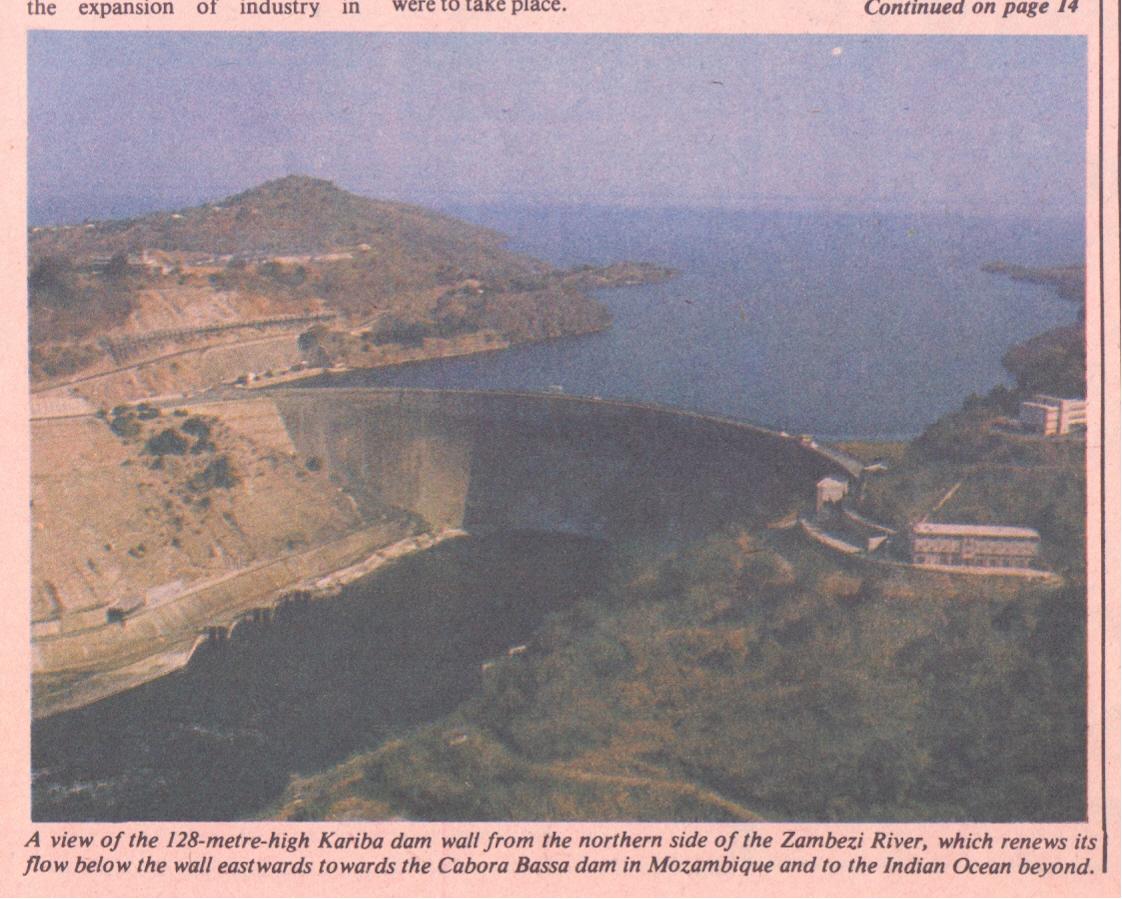
On 17 May 1960, the Kariba Dam was officially opened by the Queen Mother as part of her Royal Visit to the then Central African Federation (CAF) comprising Nyasaland, Southern and Northern Rhodesias (i.e. Malawi, Zimbabwe and Zambia respectively). Located in the north-western parts of Zimbabwe, the dam’s actual construction commenced in 1955 and was completed in 1958. It was designed by the French engineer Andre Coyne and built by an Italian construction firm, Impresit. The dam was constructed for the sole purpose of electricity generation, to provide energy to the growing industries in Southern Rhodesia and the Copperbelt mines in Northern Rhodesia during the world Post- World War Two. However, it later became a hub for many other socio-economic activities including conservation, hunting, modern exploration, tourism, recreation and fisheries. It was financed by the largest loan that the World Bank had given up until that time (Scudder 2005). The dam stands 128 metres tall and 579 metres long (as shown in Figure 1). The dam forms Lake Kariba, which extends for 280 kilometres (170mi) and holds 185 cubic kilometres (150,000,000acre⋅ft) of water.

The Kariba Dam Wall

The dam wall blocked the natural flow of the Zambezi River (at the Kariba gorge) which sustained life for many groups of people. Its construction resulted in unacceptable long- term environmental and social impacts that have been widely studied by professors Elizabeth Colson and Thayer Scudder over a course of 60 years (Colson 1971; Scudder 2005). However, findings from their studies are based on research conducted in Zambia, here a summary of such long- term effects on the Tonga, Shnagwe and Korekore speaking peoples of the Zimbabwean side are discussed. More than 57 000 people including the Tonga and Shangwe and Kore-kore speaking peoples were displaced from both sides of the Zambezi.

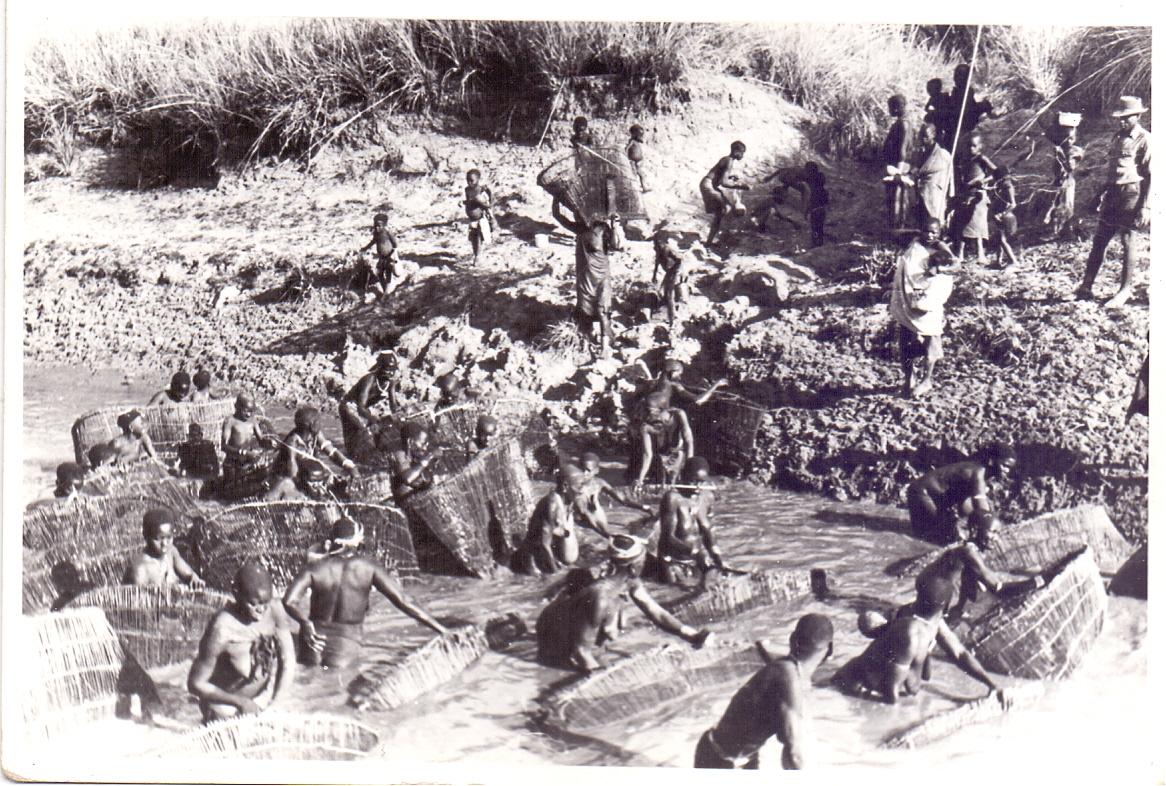
Before, the Kariba Dam construction, people’s homesteads were in the immediate vicinity of the river on both sides. Socio-cultural and economic life revolved around the river. As illustrated in Figure 2: fishing, riverine agriculture and livestock rearing formed the basis of the economy. In addition, the river had a religious significance to the Tonga, Shangwe and Korekore people. It had sacred pools, rapids and gorges (from Victoria Falls to the Kafue confluence) that were homage to their spirits including Nyaminyami the river god and ancestors (Saidi and Matanzima 2021). People had stronger attachments to the riverine landscapes. Sacred places along the river including rainmaking shrines, malende, marked by the presence of baobab trees were approached with awe and respect, and were burying grounds for the Chiefs. People from both sides of the river conducted ritual and religious ceremonies together. The river was not a barrier of communication, but it facilitated it.

Tonga women fishing with baskets in the Zambezi before Kariba Dam.

When the dam was constructed, there was permanent separation of communities. People were moved to two different countries. Also, within each country there were haphazard movements of people across chieftaincies that separated people (Matanzima and Saidi 2020). Since the late 1950s, most people never had a chance to reunite.

Cultural property (homes, religious sites) was destroyed by heavy machinery which was used to clear roads and inundation from flooding. Though, the Lake had inundated their cultural property; during the colonial period, the Tonga and Shangwe people were denied access to the waterscape for religious and economic reasons. In the postcolonial era, though they gained a certain measure of access, the Lake’s industries were dominated by major ethnic groups including the Shona and the Ndebele people. For this reason, people were not given adequate support to reunite with their spirits in the water. Riverine Identity was foreclosed. People had for a long time identified themselves with the River as they lived along it, but overnight this identity was lost. Resulting in them becoming identified through many derogatory identities including uncivilized, childish, lazy and two toed people. The attachment to the river that sustained economies, social life and culture abruptly ended.

In the long-term people were left with no natural assets to [re]construct sustainable livelihoods, resulting in long-term socio-economic impoverishment. There were also secondary displacements. In Mola, for example, growing conservation interests around the dam resulted in Tonga people being pushed further inland in the 1960s, where they conflicted with their hosts over natural resources. During the Zimbabwe’s Liberation War in the 1970s, they were displaced again. These forms of secondary displacements worsened their impoverishment.

It is essential to have such longitudinal data on the effects of dams for many reasons, including the following: a) Long-term data about the early dams to be constructed in this region including Cabora Bassa and Kariba are essential because we can draw lessons from them in our contemporary decisions to build dams; b) Longitudinal data can also be used in campaigns against the construction of dams, especially when we emphasize their intergenerational impacts on lives and livelihoods on impacted communities; c) in addition, such data can inform and reinforce the work of such civil society groups and NGOs as “International Rivers”, “RiverWatch” and “EuroNatur” whose work is to achieve social and environmental justice through raising awareness about the impacts of dam building; d) we are in a better position to assess the relevancy of dams in the long-term and coming up with decisions to decommission them. Dam decommissioning should be informed by adequate information about their advantages and disadvantages; and e) we also get to understand different shifts in the governance of dams over time and how that affect communities (including displaced people). In the case of the Kariba dam, for example, it has been governed both by colonial and postcolonial governments. Different policies are implemented in disregard of the impacted communities, which then worsen their plight. Apart from Kariba, the validity of longitudinal data has also been emphasized in studies of the resettlement impacts of the Three Gorge Dam in China by Brooke Wilmsen (Wilmsen 2016; Wilmsen and van Hulten 2017).

The ongoing long-term effects of large dams on Indigenous people raise the controversial question: do we still need to construct more dams? In recent years we have seen mega dams being decommissioned mainly in the global north because they become unnecessary in the long run. Such a turn in the relevancy of dams pushes us to [re]think our decisions to build dams.

In the contemporary haste to transition from use of fossil fuels to clean energy in order to meet the net-zero target, dams are increasingly being considered as an option for clean energy production by governments. This may entail that governments may need more dams than ever before. Which may mean minimal dam decommissioning. However, it is essential to consider other clean energy sources such as roof top solar systems that have minimized impacts on human communities and the environment. Energy transitions must be achieved through ‘just’ methods that do not harm Indigenous communities and the environment. We should consider stopping dam building especially when its unnecessary and consider other options. The unnecessary nature of dams can be calculated through cost benefit analysis and their overall long term social and environmental impacts. Research has shown that in most cases the costs of maintaining a dam exceeds their benefits (Ansar et al. 2014; Scudder 2017, 2019).

Sources:

Ansar, A., Flyvbjerg, B., Budzier, A., & Lunn, D. (2014). Should We Build More Large Dams? The Actual Costs of Hydropower Megaproject Development. Energy Policy, March 2014, 1-14. Retrieved from SSRN: https://ssrn.com/abstract=2406852

Matanzima, J., & Saidi, U. (2020). Landscape, belonging and identity in Northwest Zimbabwe: A semiotic analysis. African Identities, 18(1–2), 233–251. https://doi.org/10.1080/14725843.2020.1777839

Saidi, U., & Matanzima, J. (2021). Negotiating Territoriality in North-Western Zimbabwe: Locating The Multiple-Identities of BaTonga, Shangwe, and Karanga in History. African Journal of Inter/Multidisciplinary Studies, 3(1), 61–74. doi: 10.51415/ajims.v3i1.864

Scudder, T. (2005). The future of large dams: Dealing with social, environmental institutional and political costs. Earthscan.

Scudder, T. (2017). The good megadam: Does it exist, all things considered? In B. Flyvbjerg (Ed.), The Oxford handbook of megaproject management (pp. 428–450). Oxford University Press.

Scudder, T. (2019). Large Dams: Long-term impacts on riverine communities and free-flowing rivers. Springer Nature.

Wilmsen, B. (2016). After the Deluge: A longitudinal study of resettlement at the Three Gorge Dam. World Development, 84, 41-54.

Wilmsen, B., & van Hulten, A. (2017). Following resettled people over time: The value of longitudinal data collection for understanding the livelihood impacts of the Three Gorges Dam, China. Impact Assessment and Project Appraisal, 35(1), 94-105. DOI: 10.1080/14615517.2016.1271542

Tagged , ,

Karpowership “Just Insane”

Karpowership, a highly controversial company, is planning to develop power-generation operations off the coast of Maputo. Karpowerships will be only a few kilometres from the shore, and will have a detrimental impact on the city’s people with heavy air pollution and safety risks. Even worse, much of this energy will not even go to Mozambicans, but to South Africa.

The company is a subsidiary of Turkish company Karadeniz, which is embroiled in scandals in several countries, and has been exposed for major corruption, threatening civil society and submitting faulty impact assessments.

Karpowerships are offshore vessels, floating power plants that use gas to produce power. Karpowership has partnered up with EDM (Electricidade de Mozambique), and much of the power generated from the ship in Maputo will go to South Africa, most likely Eskom, the state power electricity provider, which is currently facing a massive corruption disaster and crisis, with rolling blackouts for South Africans. It is also unclear where this gas will be supplied from.

The Constitution of Mozambique recognises that all citizens have the right to a healthy and balanced environment under Article 90, and establishes an obligation on the Government to protect the environment and the human quality of life. The Constitution also obliges the Government, within the framework of the right to a healthy and balanced environment, to ensure a rational use of resources safeguarding the environment capacity to regenerate, ecological stability and rights of the future generations.

The Karpowership will be terrible for the environment of Mozambique, which is already suffering because of the extractive and fossil fuels industries around the country. It runs on the massively-toxic heavy fuel oil (HFO), which is the dirtiest fuel left behind from the process of refining crude oil. HFO is not meant to be used near urban areas, and has been banned by the United Nations because of the high amount of toxic fumes of sulphur dioxide, nitrous oxide and other heavy metals, as well as cancer-causing chemicals it emits into the atmosphere. This will be emitted into the air that is directly breathed by the populations of Maputo and Matola. The Karpowership will also be dumping high amounts of hot water into the Maputo Bay, raising the temperatures to a point that drives away fish and sealife, in turn lowering catches for fishermen and destroying wildlife marine reserves like Inhaca Island which brings international tourists and scientists to Mozambique. Karpowership is already supplying electricity to Mozambique from a ship in Nacala, which has been running on HFO since they began operating in 2018, and will likely do so for the rest of the 10 year period.

A number of civil society organisations in Mozambique are challenging Karpowership’s Environmental Impact Assessment (EIA) for the project. Karpowership opened a period for public consultation in November 2022, when they presented an EIA that was inadequate and with many deficiencies. They claimed, incorrectly, that their project was part of Category A activities which made its EIA requirements more lenient and with less procedures, when in fact, the proposed activity involved stockage and transformation of fossil fuels that make it are part of a Category A+, which in turn requires their EIA to be submitted for an independent peer review. As a Category A+ project, it would be subjected to a stricter control by the authorities as well as by the public.

Karpowership has been trying to operate in neighbouring South Africa for years but has been facing resistance from civil society, while also flouting regulations. Perhaps now, realising that South Africa might be too difficult, they have decided to try Mozambique, where regulations are more soft and institutions are not as independent as in South Africa.

South African civil society stood up to oppose the first round of EIAs. On 31 March 2021, organisation groundWork made a submission to Triplo4, the consultant for Karpowership SA. The submission detailed all the issues with the project, and shared them with the Department of Forestry, Fisheries and the Environment (DFFE) and the Department of Mineral Resources (DMR), which included that:

Contrary to the government’s statements, the cost of Karpowerships is not the cheapest, and the vessels are actually meant for short-term supply, while the 20-year contract will create a lock-in leading to higher tariffs and less affordable and accessible energy

The EIA Scoping and Environmental Feasibility did not refer properly to a Climate Change Impact Assessment, as required by South African and also by Mozambique EIA regulations. They did not consider basic information such as emissions from gas production, gathering, processing, initial transport, and HFO liquefication. These omissions are a major problem, considering that they would show how gas will have an equivalent, or even worse, impact on the climate as coal.

They also used figures from the Intergovernmental Panel on Climate Change (IPCC) report from 2007, when the most recent one at the time gave updated figures showing that methane had between 28-36 times the global warming impact of C02 over a 100-year period. The 2007 report says that this number is much lower, at 21. Furthermore, the mitigation measures for the impacts of GHG emissions from the ships are entirely undeveloped and inadequate

Regarding air quality, Karpowerships are not supposed to be near urban areas, but the location of these vessels so close to the coastline mean that coastal communities would be exposed to the pollution from the vessels anytime the onshore wind is blowing.

The atmospheric impact report section of the EIA was highly flawed – it does not measure toxic emissions from natural gas combustion and natural gas leaks. It also does not consider the serious risk of an explosion which will be totally disastrous for the air and people living nearby.

Half of the jobs of the project will be short-term construction while the long term positions are skilled job that will likely be filled by Turkish crew. Several communities, including different types of fishing communities may be harmed and their livelihoods affected, but the EIA does not consider this.

Public participation was totally inadequate – neither fishing communities for tribal communities were recognised and important persons or even notified about the proposed development and consultation. Many communities who were notified did not receive sufficient information, or could not afford technology to access this information online. In the case of Mozambique, the Prosecuting Authority has the mandate to defend and protect collective and environmental interest and surprisingly did not participate in the consultation.

Furthermore, in South Africa, one of the reasons the government had put out a bid was because of the need for ‘emergency energy’, and planned to sign a 20 -year contract with Karpowership SA. However, groundWork says that this so-called emergency was due to poor decision-making skewed in favour of fossil fuel development, and that “dig a yet deeper hole and put a just transition to a low carbon economy further out of reach.” They added that “Signing a 20-year contract to procure power from Karpowerships is effectively locking in gas for that time, crowding out space for ever-cheaper and more reliable clean energy, and exacerbating the climate crisis”.

These, and other issues in the comments from civil society led to the DFFE refusing Karpowerships SA’s environmental authorisation.. After they amended their EIA based on the government’s refusal, it still was not good enough. In December 2022, more comments were submitted by groundWork, the South Durban Community Environmental Alliance (SDCEA) and the Green Connection supported by legal organisations Centre for Environmental Rights, Biodiversity Law Centre and Natural Justice.

Karpowership SA’s second EIA again failed on all three sites and in 2023, the DFFE suspended a secondary EIA for yet another powership at the port of Ngqura. .

While all of this is going on, a simultaneous process was being undertaken to stop the Karpowership license from another angle. The Organisation Undoing Tax Abuse (OUTA) launched a legal challenge to review South Africa’s National Energy Regulator (NERSA)’s decision to grant Karpowership SA three Independent Power Producer (IPP) generation licences. NERSA had awarded these licenses to Karpowership SA even though the projects had not get been given environmental authorisation by the DFFE, there were no port authority permits or gas pipeline permits, and Karpowership SA had not yet reached financial close despite this being a condition of the Department of Minerals and Resources’ award of Karpowership SA as the preferred bidder in its emergency procurement. This process is still ongoing.

At the end of 2022, CER published a report about the financiers of Karpower – Standard Chartered (United Kingdom), Investec Group (South Africa), Isbank (Turkey) and MCB Group (Mauritius) – who provided Karpowership with a US$ 140 million loan. Following this report, Karpowership tried to intimidate activists by sending them a lawyer’s letter, claiming they had made ‘defamatory statements’, but their claims were unfounded.

As shown above, South Africa is perfect example of Karpowership’s corruption and how they tried to undermine the processes of a country. In an interview in February with Andre de Ruyter, the former CEO of Eskom, he said Karpower had “an extensive legacy of alleged corruption, breaches of contract and abuse”, and that “There is absolutely no justification for concluding a 20-year agreement with a company that can raise the anchor, literally, and sail away with the asset the country has paid for.” Eskom is currently in a major crisis, with the government calling the ‘loadshedding’ a state of disaster.

Now, in Mozambique, The Scoping and Environmental Feasibility Report did not consider the impacts on marine ecology, like the waste discharge and leakage, and dismissed the impact that the vessel will have on the marine environment, as well as the risk of a gas spill. Sao Sebastiao estuary, where the Karpowership will be located, is also surrounded by mangroves. Mangroves have an exceptional ability to capture carbon and serve an additional role in mitigating severe storms, and serve as a habitat for fish and crustaceans. Karpowership and Electricidade de Moçambique (EDM) claimed that the impacts on mangroves will be temporary and due to power transport lines. The EIA regulations in Mozambique do not distinguish between temporary and non-temporary impacts on mangroves and require that all activities with impacts on mangroves to A+ category which requires an independent peer review.

The Scoping and Environmental Feasibility Report also has gaps regarding the qualitative noise impact on megafauna, including the dolphin and mangrove habitats, important birds and communities living around the area and cumulative impacts as the area is closest to a coal terminal port, and many other industries, including a cement factory. In South Africa DFFE’s refusal bore socio-economic and environmental considerations including the EIA’s gaps on qualitative noise impact assessment.

Mozambique has no regulations or standards on noise quality, and this fact makes Mozambique favourable to opportunistic investors, as environmental licence does not take into consideration noise impacts. Although the EIA regulations imposed an assessment of cumulative impacts and air and water quality standards, the absence of an environmental load capacity allowed more and more projects without any consideration of the impacts on the environment and quality of life as a whole. Karpower completely ignored the impacts of one more activity in an environment already under pressure.

Bit this is not the first time that Karpowership parent company, Karadeniz Holdings, which is registered in tax-haven Malta, is embroiled in major corruption controversy. In Lebanon, in 2021, the state’s financial prosecutor ordered two Karpowerships to be impounded following slapping it with a $25 million fine for corruption, after which Karpowership punished the government by shutting down energy supply to the country, leading to power blackouts.

In Mozambique the agreement signed between Karpower and EDM and the information about the financiers are not available to the public. financiers.

In Brazil, in 2022, the courts demanded a suspension of the installation and operations of the four Karpowership plants, due to this failure to submit an EIA, and the damage it would cause to the sensitive ecological Sepetida Bay and fishing communities, as well as fined the company for not meeting deadlines.

Karpowership has behaved badly in so many other countries, and with the lax regulations in Mozambique, it will be even easier for them to create irreversible implications here, for the environment, climate and health of people. Karpowership must be stopped before they can start with this destruction!

Tagged ,

Mozambique Holdings employee attacks peasant women in Namadoe community, Lugela District

Conflicts between members of the communities affected by the Mozambique Holdings company’s plantations and its managers and employees in the Lugela district have been ongoing since the company begun its activities in the area. Until today, there is no information on how the land use title was transferred from Madal to Mozambique Holdings Lda, despite the numerous requests for information submitted to Government.

The affected communities claim that there was no community consultation process for the transfer of the land use title, and that they were allowed by Madal to use several areas under Madal’s title for food production. Since Mozambique Holdings Lda started operating, several community members lost their production areas without any compensation, as some of these areas were under Madal’s land title but always used by the communities.

JA! and the community associations have already denounced several situations of intimidation, threats, insults and even aggression against community members and the destruction of fields and stored foods. These situations were publicly denounced, and formal complaints were submitted to the relevant authorities, including the Police. The perpetrators of these acts are well known by all, they are and have been denounced and nothing has happened. Due to the increase and aggravation of conflict situations and the dissatisfaction of these communities, the District Administration intervened with the company in order to convince the company to allow the communities to use part of the lowlands for rice production and for the last two years this has been the case.

However, last Sunday, the 14th of May, two peasant women from the Namadoe community were in one of these low-lying areas planting cabbage when Mr. Binua, from Mozambique Holdings, who was driving by saw them there, he stopped his motorcycle and ran towards them. As they say, the two peasant sisters, as soon as Mr. Binua reached one of the peasant women, without saying a single word, he began to violently attack her. The sister ran away, but quickly realized that her sister was still being beaten and returned to defend her. The fear was quickly forgotten and together they defended themselves against Mr. Binua, having attacked him until he bit one of the ladies and fled on his motorbike taking with him the peasant women’s two machetes, but in the escape, he left his cell phone behind. This same man has already assaulted other members of the community, men, women and even a girl, with impunity, and continues to walk arrogantly through the communities as if he was untouchable. Last Sunday, he was not so lucky, and by all accounts he received a brave and well-deserved beating from the two sisters, acting in self-defense.

Mr. Binua, not happy with the outcome, went on to file a complaint with the Chief of Locality, who forwarded the case to the Police Station in Tacuane. We are following the situation in order to ensure protection and if needed legal assistance to these brave peasant women who are fed up of being disrespected, insulted and bullied by an outsider who believes to be above the law.

The reduction of the production areas of these communities has brought them countless challenges, these as many communities in our country depend on these lands to produce food and it is these same lands that have been granted to companies like this one, who do not respect local communities, their culture, traditions and ways of life and still think act as if they were above the law. The most recent cyclone Freddy destroyed several food production fields in these communities, and it is in this harsh context that these communities find themselves.

Due to all these issues Mozambique Holdings LDA is not welcome by the communities, it does not contribute in any way to improve the living conditions of these communities, the managers and foreign staff have a terrible relationship with the locals. Since the company begun its operations, it has only aggravated communities’ situation of poverty and vulnerability, and Government, by failing to act in the face of these crimes, is in fact supporting their criminal activity. Communities feel abandoned by the government in this situation, and impunity reigns.

Who is behind Mozambique Holdings? Who protects them? And who protects and defends the rights of these communities?

The Struggle goes on!

Enough of Impunity!

Tagged , ,

JA! suffers another cyber attack

Digital surveillance and cyber attacks are part of the modern day reality for civil society, and one that most of us in the south do not have resources or skills to manage adequately. Even though JA staff had benefitted from some basic training and we made several decisions in order to improve security and decrease virus attacks (such as changing to linux based operating system more than 15 years ago), the cyber world moves at a fast pace, making training, software and systems outdated quickly.

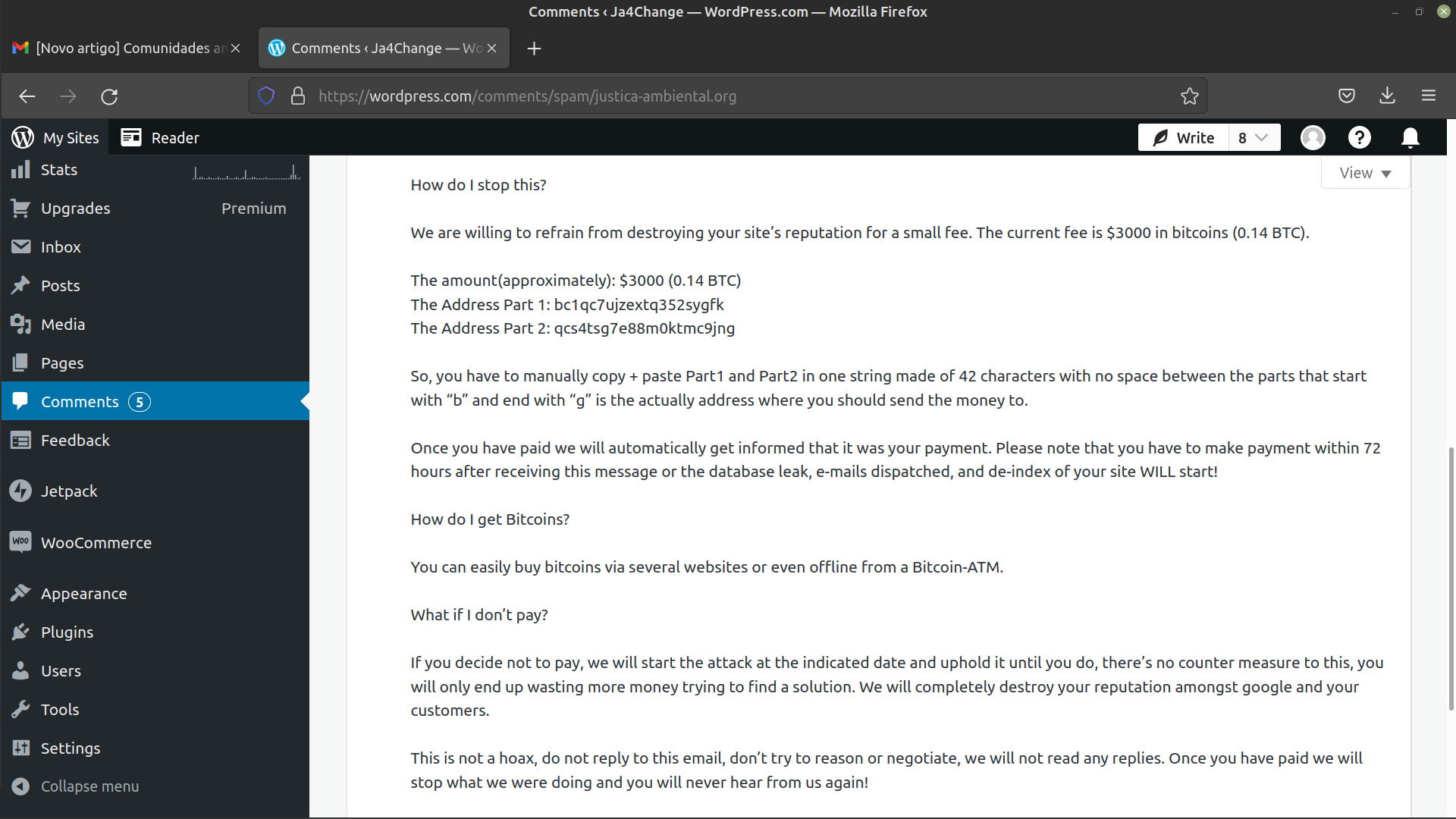
This weakness was recently exposed at JA in early January when we were hacked. Our web page was taken over and passwords changed, so we lost access to it. A ransom was demanded under the threat of deleting all the information. We first wondered if it was just a scam or bluff, but even if not, we do not entertain the option of ransom and do not reply or even attempt interacting with such threats. So we started the process of regaining access to our page. Unfortunately, while we were focused on recovering our web page, we hadn’t realize that the administrator’s laptop and JA’s main backup drive had also been hacked, only realizing this when the laptop stopped working and the backup drive deleted. This attack exceeded previous hacks or virus attacks, and exposed the effect of the smaller and regular cyber attacks in decreasing our alertness and urgency around the issue.

Luckily, we had a recent recovery drive for the laptop and we had received training on recovering deleted drives in the past. Unfortunately we didn’t manage to even get our linux based systems to identify the backup hard drive. After trying to recover the backup hard drive with other systems we gave up and had to take our backup drive to a specialist company that does data recovery at a high cost.

It took 3 weeks before we received the first batch of recovered data (almost 4TB), but the remaining data has been more complicated and we are still waiting for it, as well as the technical report from the company. However, we have been warned that the second batch of data has a lot of damaged files and is not organized in our original file system, it consists of thousands of files in dated folders that we will need to go through and reorganize.

The IT specialist also gave us some helpful information based on his findings. There was a common virus in the startup files and a concerning backdoor, similar to a well known old windows-based backdoor called “Banito”, but one that works on Linux systems. We also learnt that hackers had gained access to our accounts without needing to use passwords through the use of something called ‘session tokens’, that help you log in and out of your accounts without having to write the password. These tokens are stored on your computer cache and can be easily hacked through a redline stealer malware kit, in our case through a .scr screen saver file.

There were a few other odd/concerning threats found that were more complicated to understand, especially for us with our low IT IQ. Besides, the focus of the IT specialist was data recovery, they had not done a thorough analysis. Unfortunately, the cost to do a forensic analysis was too high and the most important part to analyse would be the hacked laptop, but by then we had already reformatted the laptop (with cycles of full hard drive rewrite and delete), and we could not hand it over for a forensic analysis due to it being in urgent use by the administrator.

Amidst such eventful weeks – with Cyclone Freddy, the flooding, the death of Mozambican rapper Azagaia and then the police violence at the march to honor him – we ended up delaying the publication of this post. Coincidentally, before we were about to post this, we found out that our Say No to Gas campaign site was also attacked by hackers, but given that the site was developed last year using more up to date software, and the developer was still doing the maintenance, he managed to block the attack.

We fear that these types of events may become more regular both from criminals and our governments, that have drastically increased investments in digital surveillance. Some countries, like Israel, have expanded their military oppression to digital surveillance and this has become a major business, with programs like Pegasus being exported to other regions such as Africa. This has contributed to African governments’ increased control and monitoring of civil society and oppression of critical voices. Digital surveillance has become central to these plans. Countries like Rwanda have shown the path forward for other African countries on how oppressive governments can control and suppress dissent, while not only getting a pat on the back from developed northern countries, but even turning their military and security sector into an economically productive sector servicing the northern countries dirty work. Digital surveillance and cyber attacks have become central to this model of oppression and human rights violations.

Tagged ,

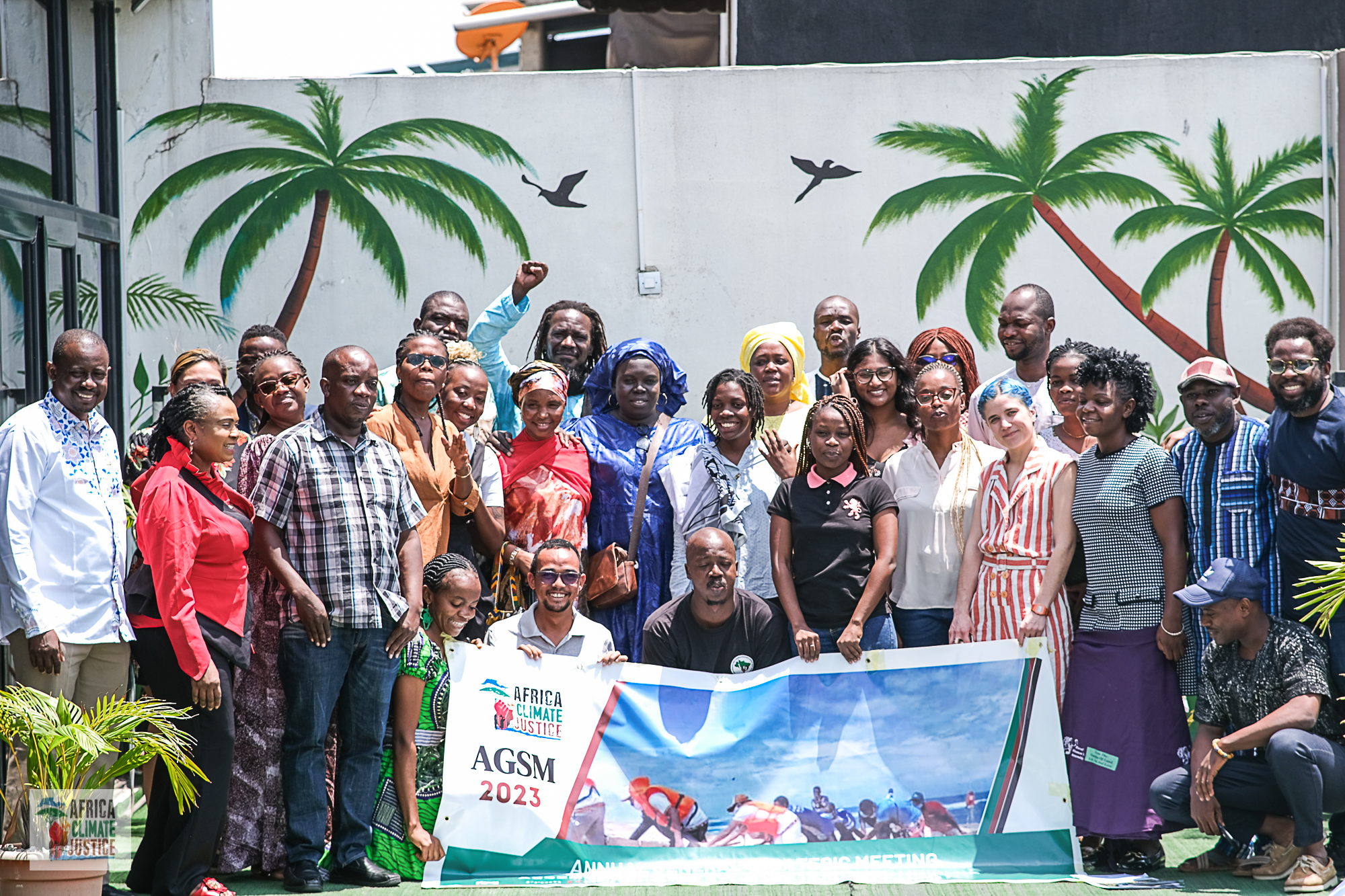
AFRICA CLIMATE JUSTICE COLLECTIVE: IN SOLIDARITY WITH THE PEOPLE OF SOUTHERN AND CENTRAL AFRICA

The Africa Climate Justice Collective is concerned about the ravaging effects of the climate crisis in Africa, especially the recent flood disasters that submerged some parts of the Southern and Central African regions of the continent.

Cyclone Freddy has wreaked havoc in Southern African countries especially Madagascar, Mozambique and Malawi since February 2023. Thousands have been displaced and hundreds have lost their lives while others are still missing. In Madagascar at least 300 000 people have been affected, 17 people have died and 3 are missing. Malawi has recorded 563771 displaced persons, 511 deaths while 533 are missing. In Zambezia province of Mozambique, 22000 people have been displaced, 10 dead and 14 injured.

In Central Africa, Buea City in southwestern Cameroon between 18 and 19 March 2023 experienced torrential rains that caused floods and landslides and resulted in casualties. The twin disasters which were both triggered by several hours of rainfall had led to the loss of lives (media reports confirmed 2 deaths) and destruction of properties. In total, nearly 300 people living at the foot of Mount Cameroon have been affected. In all these countries, houses and infrastructure have been destroyed and it will take a long time as well as require a significant stream of funds to recover. These events highlight the urgent need for effective disaster response strategies and climate change mitigation measures to protect vulnerable communities in the affected countries and beyond.

Faced by these tragic events, the African Climate Justice Collective (ACJC), which is made up of 27 movement-based and other allied civil society organizations, and individuals and partners all across Africa, is calling for concrete actions to address the ongoing Climate emergencies not only in Southern Africa but in the continent as a whole. Cyclone Freddy’s long journey began off the coast of Australia in early February 2023. After becoming an exceptionally powerful storm and crossing the Indian Ocean, Freddy first struck eastern Madagascar on February 21 and southern Mozambique a few days later.

According to Anabela Lemos, Director of Justiça Ambiental/Friends of the Earth Mozambique and a convenor of the ACJC “our people are compelled to pay the debt they never owed, they are forced to reap pain and agony from the crisis they never created while the government and multinational corporations go to the Bank with fat pockets”.

Rumbidzai Mpahlo who coordinates the ACJC stated that “As a collective, we continue to call for the activation of both climate finance and the Loss and Damage Fund without any debt- creating and repressive conditions. This is an emergency which should be treated with the urgency it deserves.

Maimoni Ubrei-Joe of Friends of the Earth Africa and Nigeria has stated that the recent IPCC report has further demonstrated the failure of world leaders to commit to addressing the global climate crisis. ““The time to act to reverse the negative impacts of climate change is now””.

This recent IPCC report has sufficiently shown how short-term climate forecasts (spans next decades) are not brilliant, and weather disasters like Cyclone Freddy, will multiply with disastrous consequences. It is therefore more than ever the moment to build a more effective and efficient disaster management that is capable of anticipating these risks and disasters, looking urgently at the case of the communities affected by Cyclone Freddy. Positive experiences of management of extreme floods and other climatic phenomena on the African continent should inspire the development and strengthening of rapid alert and response mechanisms.

The CADTM African network demands that the polluting multinationals recognize their climate debts and pay due compensations to the victims of climate change and Africa as a whole focusing on these three countries; Mozambique, Malawi, and Cameroon which are currently grappling with climate change impacts. The CADTM African network invites African leaders to restrain from refunding the debts they have contracted in repairing the climate damages.

We are hereby standing in solidarity with those affected in Malawi, Mozambique, Cameroon and Madagascar. The Global North and Governments of these nations should ensure that funds and relief materials are made available for loss and damages as agreed upon at COP 27 and these funds should be made available to those directly affected and not channeled to the nations ecological funds where they will be diverted to meet other national needs leaving out those that have been badly affected by the cyclone.

We are traversing a great moment of transition, from a system that is crumbling away, to a new one, that is not yet fully formed. At this very moment, a few and powerful blood-thirsty Africans continue to sell out our countries and our sovereignty, fomenting wars and destruction for vanity and personal gain to feed. At the same time, on the ground are showing the best of our human principles, throwing themselves into the post disaster chaos, to help victims, often reaching the areas where “no aid ever comes”, and so many others who mobilize their solidarity in their own ways to support their fellow nationals.

As much international solidarity there may be in any major disaster, African nations must muster themselves the vision, capacities, skills and resources needed to not only be prepared for disasters, but to manage its territories in harmony with Nature. The ACJC recognizes that there is great complexity in the actual implementation of this proposal, but only the Nation itself can claim its own sovereignty. African Governments MUST CHANGE COURSE. The solutions and proposals of the ACJC provide a guide for this. But there is much more to be done. Now more than ever, there is ample evidence that territories with wider biodiversity are significantly more resilient, or able to more rapidly recover from climate related shocks. Some, if not most, of the solutions are already within our grasp as a society.

Our hearts go out to all of the lost ones, and to those who are left behind in mourning, but also to all the survivors and those on the ground working to make their communities a better place for our loved ones.

A NEW AFRICA IS POSSIBLE!

CLIMATE JUSTICE NOW!

Contact: Benson Dotun Fasanya | info@africaclimatejustice.org | +2347062249235.

Contact: Judite Jofrice | judite.ja.mz@gmail.com| (+258) 84 310 6010

Tagged , , ,

March 18th and people power

Never has the shutdown of democracy in Mozambique been more evident than last March 18th, particularly in the cities of Maputo, Beira, Nampula, and Xai-Xai. It is a reality that we urgently need to resist and fight against. Since 2008 freedom of expression, demonstration, and association have been repressed, but it was in 2020 that the government and its international partners used Covid19 as an almost plausible pretext to restrict citizens’ freedoms, with the announcement of a set of measures that gave rise to restrictions on the mobility of people and goods, restrictions on public and private meetings, and limitations of the right to protest – a right that is constitutionally conferred to us through Article 51 of the Constitution of the Republic.

The last few years have been marked with threats against freedom of speech and association. Activists, journalists and community leaders that stand up against inequality, government abuse or megaprojects have been intimidated, persecuted and some are missing until this day1.

Mozambique is one of the poorest countries in the world, while at the same time owning vast natural resources. Coal, gas and oil have been exploited by transnationals, bringing riches to a few economic and political elites. Rural and peasant communities have been displaced, a violent insurgency has been ravaging the North of the country, and the government is focusing on a military strategy to deal with it. People from Cabo Delgado are being sexually assaulted, threatened and murdered by both insurgents and government military forces. On top of this, the government has been openly attacking civil society organisations accusing them of being ‘anti-government’ or ‘anti-development’, and drafting new laws aiming to restrict the freedom of association2.

On the 18th of March 2023, the Mozambican people – mostly youth – with or without party or institutional affiliation, people linked to civil society organizations or not, decided to march to celebrate the life and work of our musician and social activist, Edson da Luz, better known as Azagaia, who had passed away nine days earlier, on the 9th of March of 2023. The official announcement from his family said he died of an epilepsy attack, a disease he had long suffered from. Azagaia was a Mozambican rapper that spoke and sang boldly about what is going on in our country, sang about putting the people in power, and was fiercely attacked and intimidated by the regime in many occasions. He was boycotted by the main public media channels, but still became the hero and the voice of thousands of disempowered youth who desired change.

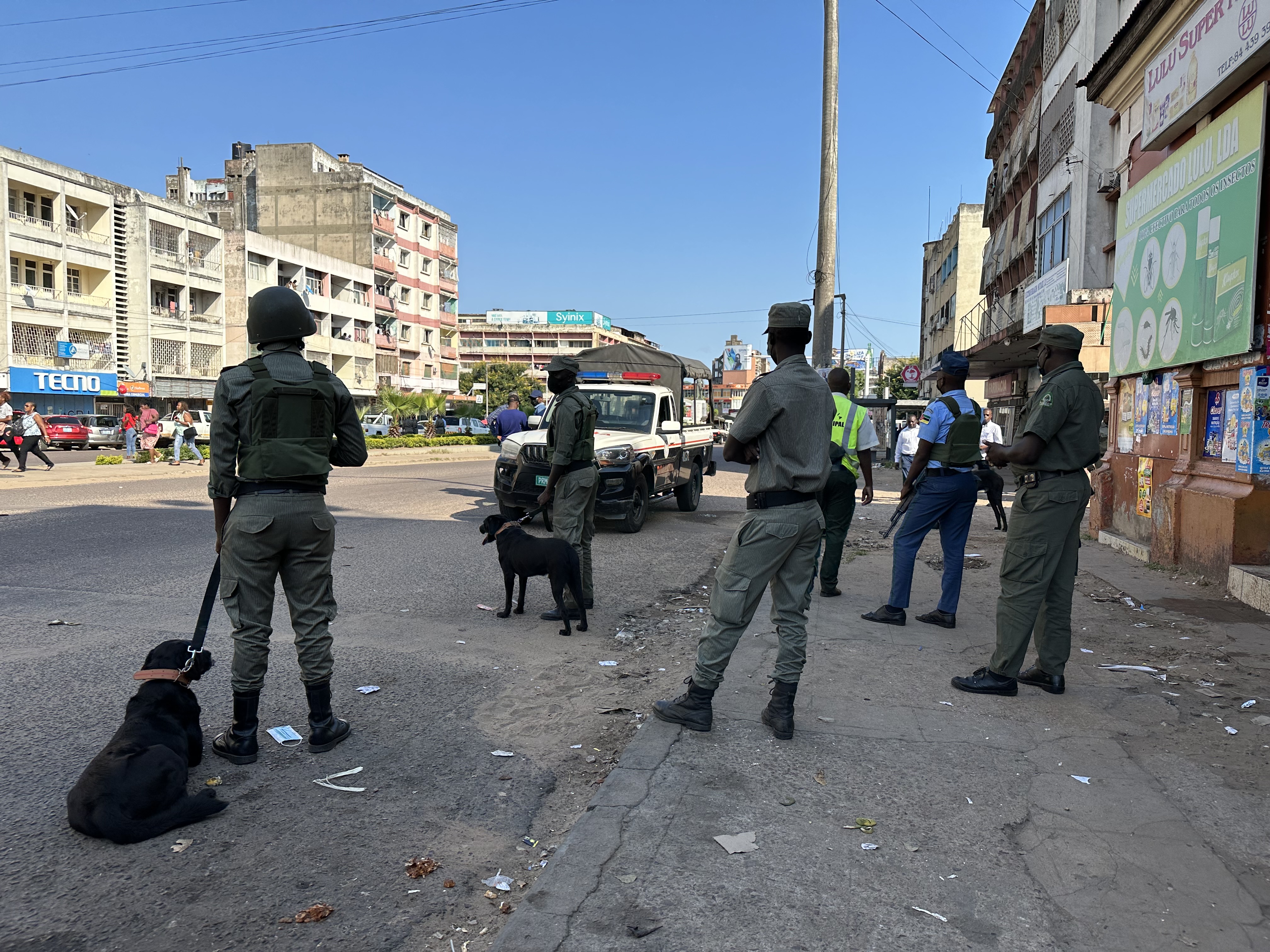
Saturday, the 18th of March, is a date that will go down in our country’s history as a day when our police forces, armed with armored cars, dogs, and tear gas weapons, used unprecedented police brutality to prevent a peaceful march. What we witnessed in the streets of Maputo revolted all of us.

All legal procedures were followed to ensure that the march in honor of Azagaia’s life and his legacy would run smoothly. According to Mozambican law, marches do not need authorization, but a letter must be submitted to the relevant authorities to inform them. This was done, and most of the municipalities gave the green light to the marches, with a well-defined itinerary. In Maputo, the starting point would be the Eduardo Mondlane statue, and we would march to Independence square, next to the Samora Machel statue – two symbols of popular power and freedom in our country.

Early that morning, messages started circulating noting the number of armored cars and heavily armed police agents positioned at various points around the city. We thought that maybe it was to ensure our safety. Naive and innocent thinking, typical of those who believe that one can still live in a democracy in Mozambique.

Dozens of police vehicles and agents were surrounding the statue of Eduardo Mondlane, the place where the march would start, and preventing groups of young people from getting there. According to ‘superior orders’, we were not allowed to gather in groups, even though we had permission to gather and march together. Suddenly, and without any warning, the police started firing tear gas everywhere. We all started running, but the desire to exercise our right to march and to pay tribute to Azagaia was strong. We needed to have this last tribute to one of the few voices, if not the only one in recent times, that represented us, that sang our pains, anguishes and revolts without fear of reprisals. The desire to march made us hide in street corners near the square, in smaller groups with our T-shirts stamped with the face of our young hero of the people, who fought for our freedom only armed with pen and paper. Our fists remained up in the air, but our screams for “people in power” were quickly swallowed up by the aggression that raged against us all.

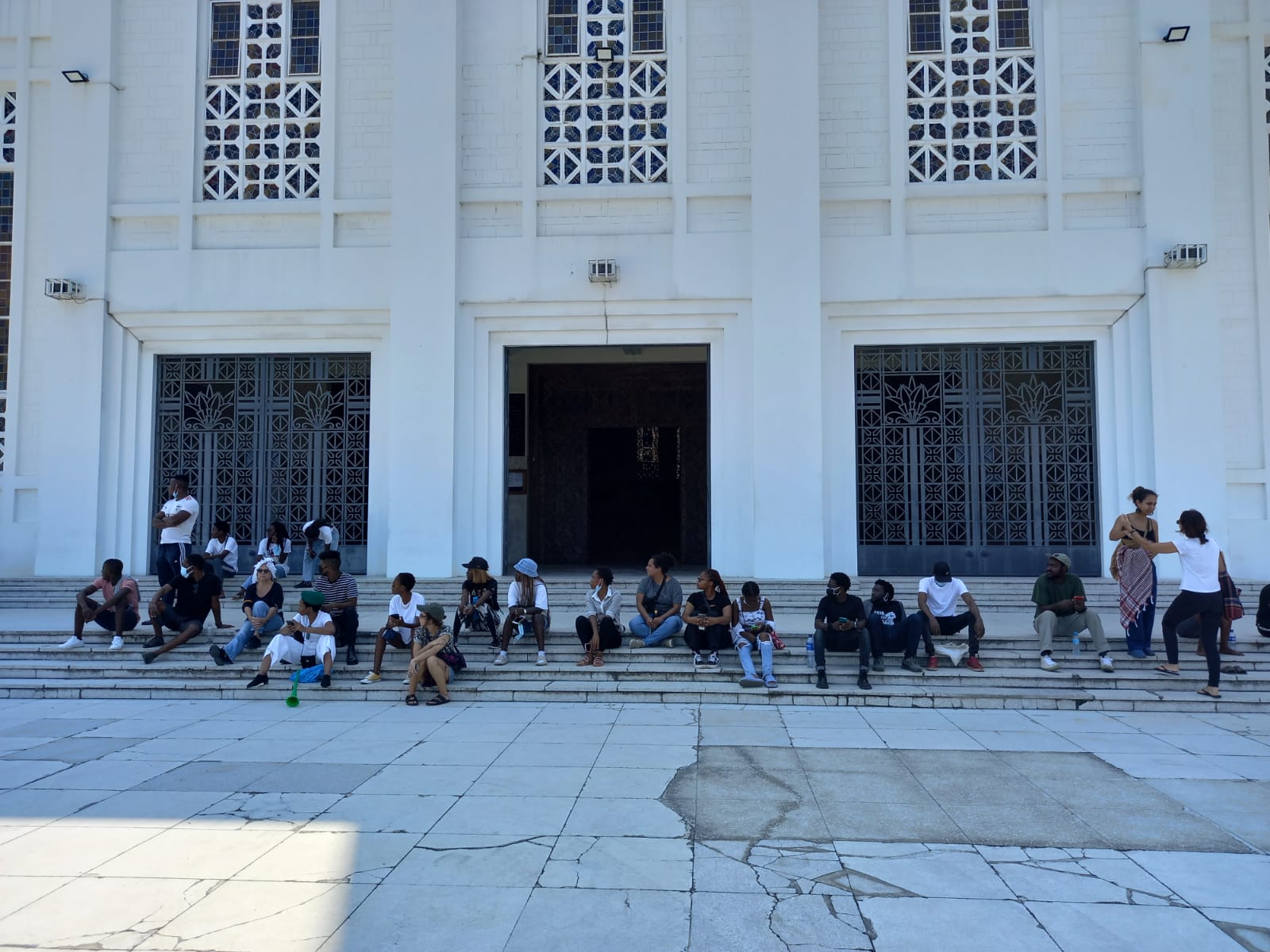
All over the world tear gas has been used as a control mechanism and to disperse protests, but even so, its use is regulated and it cannot be thrown directly at people. However, on March 18th, the PRM (Police of the Republic of Mozambique) repeatedly fired tear gas bullets directly at the participants. A member of JA! team was grazed in the back as he dodged a gas capsule that was aimed directly at his body, a young woman next to us was hit in both ankles. There was also the case of young Inocêncio who lost his left eye after being hit by one of these bullets – that supposedly do not kill. One of the capsules set a car on fire. One of the organizers of the march in Nampula said he was tortured for hours, and videos of young people being beaten up and tortured by the police as they were being detained around Maputo were circulating. At the Madgermanes Park, a place in the city that symbolizes the struggle of former workers from the defunct German Democratic Republic (GDR) who have been protesting for their rights for more than 30 years. Several young people gathered there singing Azagaia’s song that gave the march its name: “People in Power”. The young people simply crowded around chanting some of their idol Azagaia’s greatest hits peacefully, but once again the police attacks came and this time with even more brutality. A smoke screen of tear gas descended on the park and everyone fled towards Independence Square. Not even the young people who took refuge inside the Maputo Cathedral escaped the fury of the PRM agents.

The street is the only place we can go to protest when our power is taken away from us and our rights are violated, and the police responds by poisoning the air?

In addition to the brutality and violence of the police, counterintelligence and surveillance actions were carried out by some non-uniformed officers. They took pictures of people who were on the march, registered license plates and even followed some people to their homes, in a real action of intimidation that we can no longer tolerate.

Azagaia said it well in his song A Marcha (The March):

“Now that we’re together,

I’ll tell you a secret

They can’t handle us

They’re the ones afraid now

And in our just cause

they can’t infiltrate…”

In the midst of all this, we are even more surprised by the PRM press release, where they tried – in a machiavellian way – to justify their brutal action against defenseless citizens in a peaceful demonstration. The PRM claimed to have used proportionality of force against ‘protesters who were throwing blunt objects’, in an ‘attempted coup’. A complete absurdity, a gross lie, and an insult to those who were there on the day. The countless images and reports of the events prove over and over again that the PRM acted outside the law and with tremendous brutality. It is a criminal and condemnable stance at all levels, both from the agents who carried out the repressive actions in the streets of our country, and above all from the superiors who gave the orders, who should be tried and convicted.

To the police and UIR officers (Rapid Intervention Unit) who repressed and massacred citizens on the 18th – no superior order justifies your actions, because the Constitution of the Republic enshrines the right to resist illegal orders. Do your part and march also for your right to resist, for your obligation to protect the people.

As to the international community, the big donors and development partners, the supposed benchmarks of human rights and democracy, they will mumble in the corridors and look away, because it is not convenient to criticize the government on which they depend to continue exploiting our gas, heavy sands, coal or rubies.

It is important that we stand together, strong and firm in the cause of the people. This will be the real tribute to Azagaia, the man who fought to decolonize our minds.

We will continue to march and sing for freedom and justice! We need to unite and stop the repression and the attacks on Mozambicans who believe in a better country! People in power!

Povo no Poder!

1https://ja4change.org/2021/09/07/where-is-ibrahimo/

2https://www.civicus.org/index.php/media-resources/news/interviews/6268-mozambique-the-new-ngo-law-will-be-the-death-of-the-civic-movement

Tagged ,