"Only after the last tree has been cut down, Only after the last river has been poisoned, Only after the last fish has been caught, Only then will you find that money cannot be eaten." Cree Indian Prophecy
On December 13th, in Maputo, the Mozambican government and the companies Electricidade de Moçambique (EDM), Hidroeléctrica de Cahora Bassa (HCB), Électricité de France, TotalEnergies and Sumitomo, signed the partnership contract for the construction of the Mphanda Nkuwa hydroelectric dam on the Zambezi River.
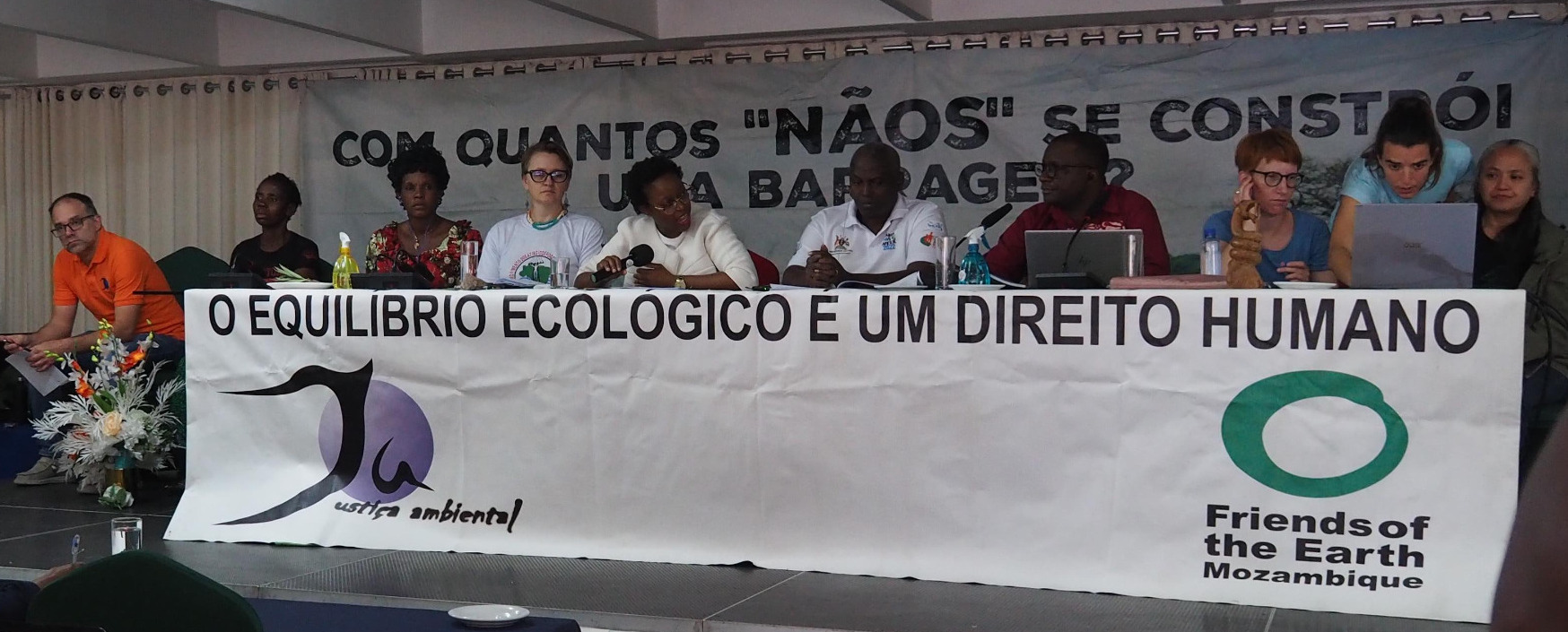
A partnership contract that is signed before a single community consultation meeting with the people who live in the region has been carried out, only makes it even more clear that the project is not, and never has been, for the benefit of the local population. Our Constitution and Land Law guarantee customary land rights, and local communities should have their rights to public participation and fair and prior compensation respected. To add insult to injury, this unlawful contract was signed with all the pomp and circumstance, in the presence of the President of the Republic, the Ambassadors of France and Japan, among other personalities. It’s a blatant lack of respect for the People, celebrated in a luxury hotel in Maputo, and commemorated by the political elites and big international capital, who see Mphanda Nkuwa as an opportunity to play “energy transition” and trade carbon credits. But the power dynamic between those promoting the project and those who will be affected by it only underlines its neo-colonial nature: force them out of their land, because there are valuable resources to exploit – and export!
And as if this shocking obstruction of public participation was not enough, the interests behind the Mphanda Nkuwa project are also fuelling the repression of local communities. To counteract the misinformation created by the project’s promoters, Justiça Ambiental launching a video on the same day this shameful contract was being signed with first-hand accounts of what has been happening in the communities of Marara, Chiúta and Cahora Bassa to those who question the project or claim their rights.
This repression has taken place in various forms, it has been perpetrated by the local government and the Police of the Republic of Mozambique, and it includes:
– The intimidation and threats to community members who criticise the project;
– the violation of freedom of movement and community member being required ‘authorisation’ from the local government to travel;
– the violation of freedom of association and actions to prevent communities from meeting with civil society organisations such as JA!;
– the violation of freedom of expression and banning songs about the communities’ feelings about the project;
– the expulsion of community members from meetings related to the project;
– the arbitrary arrests of community members who travelled to Maputo to take part in legal trainings.
Once again, in the face of all these breaches of the law, we wonder where are the institutions that should be looking after the legality and rights of all Mozambicans. We need to think seriously about how megaprojects are being implemented in our country, about the social conflicts they are fuelling and about the impacts they are subjecting us to. How long are we to believe in this development paradigm?
Watch the video:
Nothing on our land without our free, prior and informed consent.
We, the social movements, civil society organisations, grassroots communities, lawyers, academics, experts and others, from several provinces of Mozambique and also from South Africa, Zimbabwe, Zambia, Democratic Republic of Congo, Uganda, Nigeria, Cameroon, Sri Lanka, Philippines, Brazil, Cuba, France, Ireland, Switzerland and Bosnia-Herzegovina, have met at our 4th International Conference on Rivers and Dams in Maputo, Mozambique, on 6th July 2023.
We acknowledge the decades-long history of dam struggles, this declaration builds on the Manibeli declaration 1992, Curitiba 1997, Rasi Salai 2003 and Temaca 2010, and we move towards the fourth International Meeting of People Affected by Dams, to take place in the Brazilian Amazon, in 2025.
We note that we live in a capitalist, imperialist, neocolonial, patriarchal and racist system that is the main enemy of rivers and communities, that places profits above life and grabs territories and common goods. We commit ourselves to build an alternative to this system of death, violence and destruction, and to continue mobilising at all levels towards an energy model for peoples, in defence of life, peace, health, education, water, energy, food and decent work. We stand for internationalist solidarity, system change and power to the people.
We denounce the human rights violations of dam-affected communities across the world, including past injustices which have still not been redressed. We reiterate that any struggle in defence of territories and human rights is legitimate, fair and necessary. Specifically, we denounce the intimidation and persecution of local communities by the Mphanda Nkuwa dam project proponents in Mozambique for speaking up and resisting against this project and we reaffirm our solidarity with all affected peoples.
CONCERNS
We note with concern that over 200 million people globally have already been displaced due to dam projects, while millions more have lost their livelihoods. Africa, Asia and Latin America are the regions most affected by dams, with many displaced peoples. In Africa, for example, 57,000 people in Zimbabwe and Zambia were displaced by the Kariba Dam in the late 1950s; 100,000 people in Egypt and Sudan by the Aswan Dam; 80,000 people in Ghana by the Akosombo Dam and thousands in the Democratic Republic of the Congo by Inga I & II. In Asia, for example, the Sardar Sarovar Dam on the river Narmada in India displaced 200,000 people; China’s Three Gorges dam displaced 1.2 million people; Kaliwa dam in the Philippines stands to inundate 28,000 hectares of forestland in indigenous ancestral domain, and many others.
We are concerned that the human rights of dam-affected communities, particularly indigenous peoples, are systematically violated. They face harassment, intimidation, incarceration and other abuses. Compensation is usually unfair, inadequate, and delayed, if it takes place at all.
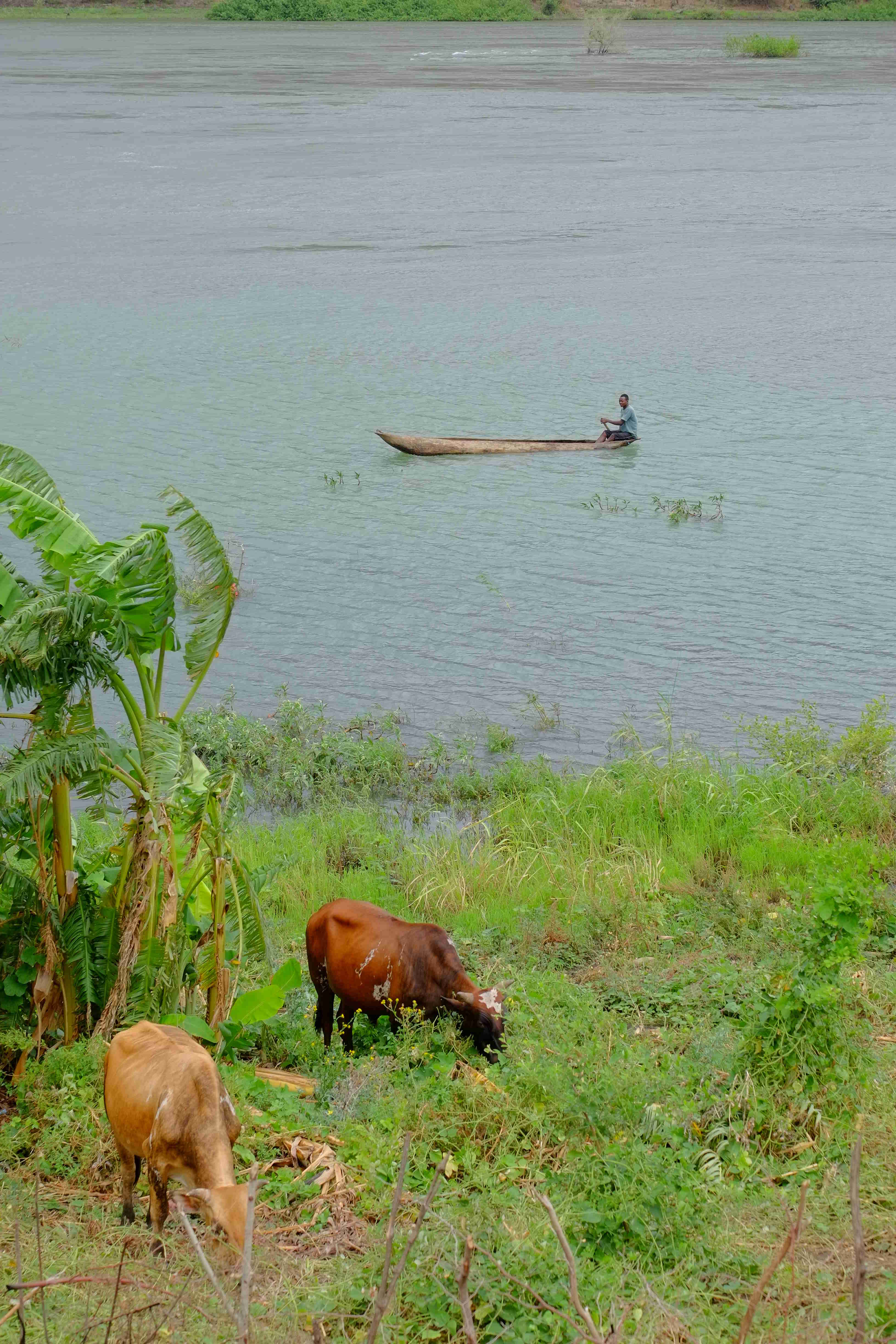
We note that as the climate crisis worsens, the hydropower industry is attempting to recast large dams as a climate-friendly energy source but nothing could be further from the truth. Dam reservoirs, particularly in the tropics, are aglobally significant source of methane, a potent greenhouse gas. Free-flowing rivers, on the other hand, playa crucial role in trapping carbon. Dams are uniquely vulnerable to floods and droughts – which are only increasing in frequency and severity with climate change – raising the risk of dam failures during floods and power outages when reservoirs run dry. Also, big dam reservoirs flood forests and agricultural land and destroy biodiversity and fisheries, while leaving downstream wetlands and forests dry. These impacts worsen the ability of ecosystems and the indigenous and rural peoples that depend on them to adapt to climate change.
We note with concern that now the hydropower industry is again trying to rebrand dams as green by promoting hydropower as a key fuel source for hydrogen. This is another false solution which carries huge risks and is not designed to provide energy for local people, but rather for export to foreign markets.
We denounce international financial institutions, banks and companies that are involved in financing and construction of dams while disregarding the negative impacts to peoples and planet.
We understand that not only mega dams but also small dams and run-of-river projects bring negative environmental and social impacts to society and ecosystems. Hydropower is presented as clean energy, but the construction and use of hydropower causes permanent damage to the environment and the destruction of river-dependent ecosystems.
We are encouraged by the World Commission on Dams (WCD) report, released by President Nelson Mandela 23 years ago, in 2000, whose key findings demonstrated that the purported benefits of large dams are regularly undermined by cost overruns and delays while most dams, particularly in the global South, under-perform, and that the social and environmental costs of dams borne by affected communities, downstream communities, taxpayers and the natural environment have been “unacceptable and often unnecessary”.
DEMANDS
We strongly call upon the governments, corporations, financiers and United Nations bodies to:
Stop construction of all dam projects on our rivers until the guidelines of the World Commission of Dams (WCD) are fully followed, and decommission all old and inefficient dams while redressing past injustices caused by these dams.
Stop international financing and public subsidies going to dam projects, from the World Bank, Belt Road/Asian Infrastructure Investment Bank, African Development Bank, and others.
Address the historical injustices perpetrated against displaced communities for the last many generations, by the Narmada, Belo Monte, Inga I and II and Kariba dams, and against many other victims of dam displacements globally.
Protect the land, forest and other rights of Indigenous Peoples and local communities, including customary rights.
Focus on energy access for almost 800 million people worldwide, 600 million of whom are in Africa. We demand community-owned, locally-appropriate renewable energy options instead of big damaging dams.
Stop the criminalisation of dam-affected communities and struggles, and the militarisation in dam-affected areas.
Ensure Free, Prior and Informed Consent (FPIC) of Indigenous Peoples and affected communities, including their right to say NO.
Adhere to the World Commission on Dams (WCD) guidelines for public participation and consultation in decision-making related to rivers and water at all stages of planning.
Ensure that existing dams have acceptable ecological flows and that biodiversity, natural species and sensitive habitats are protected, not turned into commodities, as a real solution to tackle the climate crisis.
Swiftly finalise, adopt and implement a strong and effective UN binding treaty to stop the impunity of transnational corporations, which is relevant and appropriate in responding to the struggles of peasant communities, fisherfolk, and people affected by extractivism in the global South.
Stop the export of the resources of Africa and the global South, including hydrogen, for the benefit of others.
RIVERS FOR LIFE, NOT FOR DEATH!
ADOPTED BY THE INDIVIDUALS, ORGANISATIONS AND COLLECTIVES PRESENT AT THE 4th INTERNATIONAL CONFERENCE ON RIVERS AND DAMS, JULY 6th 2023:
Organisations and collectives
Action pour les Droits, l’Environnement et la Vie ADEV (Democratic Republic of the Congo)
Alternactiva – Acção pela Emancipação Social (Mozambique)
Basilwisi Trust (Zimbabwe)
BioVision Africa (Uganda)
Centre Congolais pour le Développement Durable CODED (Democratic Republic of the Congo)
Center for Environment (Bosnia and Herzegovina)
Centre for Applied Legal Studies CALS (South Africa)
Centre pour la Justice Environnementale (Togo)
Centro de Educación y Promoción de Desarrollo Sostenible CEPRODESO (Cuba)
Centro Memorial Martin Luther King Jr. CMLK (Cuba)
Coalition pour la Réforme et le Suivi de l’Action CORAP (Democratic Republic of the Congo)
FishNet Alliance (Africa)
Friends of Lake Turkana (Kenya)
Friends of the Earth Africa (Africa)
groundWork (South Africa)
Grupo de Jovens Activistas de Moatize GJAM (Mozambique)
Health of Mother Earth Foundation HOMEF (Nigeria / Africa)
Justiça Ambiental JA! (Mozambique)
Legal Right and Natural Resources Center LRC (Phillipines)
Missão Tabita (Mozambique)
Movimento de Atingidos por Barragens MAB (Brazil)
Movimiento de Afectados por Represas MAR (Latin America)
Mulher, Género e Desenvolvimento MuGeDe (Mozambique)
Observatório das Mulheres (Mozambique)
Pro Natura / Friends of the Earth Switzerland (Switzerland)
Right to Say No Campaign (South Africa)
Solidarité des Femmes sur le Fleuve Congo SOFLECO (Democratic Republic of the Congo)
South African Waste Pickers Association SAWPA (South Africa)
South Durban Community Environmental Alliance SDCEA (South Africa)
Southern Africa Campaign to Dismantle Corporate Power (Southern Africa)
Vaal Environmental Justice Alliance VEJA (South Africa)
Women of Change (Lephalale, South Africa)
WoMin African Alliance (Pan-african network)
Individuals
Alexandre Morais (Mozambique)
Alex Chipissani (Mozambique)
Allan Basajjasubi (Jurist – South Africa)
António Morais (Mozambique)
António Vicente Sede (Mozambique)
Aparício de Nascimento (Mozambique)
Ana Brígida Novela (Mozambique)
Anabela Lemos (Mozambique)
Apollin Koagne Zouapet (Human rights lawyer – Cameroon)
Bertrand Sansonnens (Switzerland)
Carlos Mhula (Mozambique)
Celso dos Anjos Pereira Dias (Mozambique)
Charles Artur (Mozambique)
Ching Maganiso (Mozambique)
Christopher Mweembe (Zimbabwe)
Daniel Américo (Mozambique)
Daniel Ribeiro (Mozambique)
David Sthuntsha Mokoena (South Africa)
Desmond D’SA (South Africa)
Dipti Bhatnagar (Mozambique)
Eliana N’Zualo (Mozambique)
Erika Mendes (Mozambique)
Farelo dos Reis (Mozambique)
Fátima Lenade (Mozambique)
Fazbem Artur (Mozambique)
Félix Manuel (Mozambique)
Janete Eusébio Cantiga (Mozambique)
Jorge Josefa (Mozambique)
Juan Francisco Santos Estévez (Cuba)
Latifo Patreque (Mozambique)
Lenine Francisco (Mozambique)
Lídia Zacarias (Mozambique)
Lourenço Cesário (Mozambique)
Lucas Atanásio Catsossa (Mozambique)
Lucy Pitse Duba (South Africa)
Mahomed Shahid Jusob (Mozambique)
Mai Taqueban (Philippines)
Mantwa Mokoena (South Africa)
Manuel Passar Luciano (Mozambique)
Moisés Cuambe (Lawyer, Mozambique)
Neli Vicente (Mozambique)
Nino Cesário (Mozambique)
Patrick Martin Bond (Center for Social Change, University of Johannesburg, South Africa)
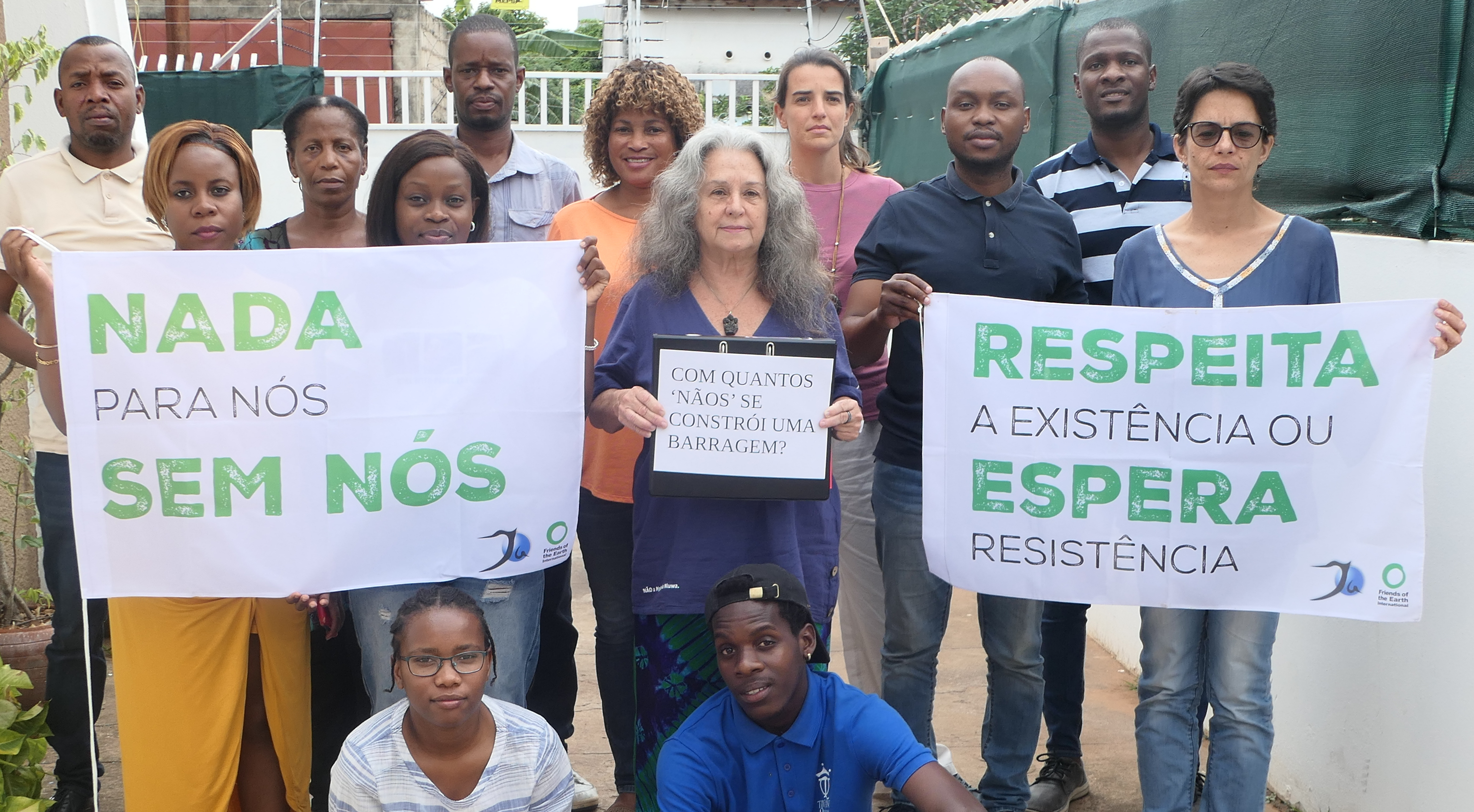
Mozambican organisation Justiça Ambiental (JA!) last Wednesday (December 21st) submitted a petition with more than 2,600 signatures from Mozambican citizens to demand that the controversial Mphanda Nkuwa dam project, proposed for the Zambezi River, cease immediately.
The terms under which the Mphanda Nkuwa hydroelectric project was conceived, and under which it is proceeding, do not comply with the fundamental objectives of the Mozambican State enshrined in Article 11 of the Constitution of the Republic, especially with regard to human rights and equitable development. Furthermore, this project entails very high environmental, ecosystem, climate, seismic, social and economic risks, which have not yet been properly assessed and studied by the Mozambican government. Despite these risks, and the numerous requests for clarification and information submitted by Justiça Ambiental to the government and to the Mphanda Nkuwa Hydroelectric Project Implementation Office (GMNK), the project has been moving forward, in this new phase, since 2018, in an accelerated manner and without due public scrutiny.
Furthermore, the project is also in violation of articles 21, 22 and 24 of the African Charter on Human and Peoples’ Rights, which establish peoples’ right to the free disposal of the use of natural resources and prevent them from being deprived of their use; the right to choose the model of economic development, social and cultural with strict respect for their freedoms and identity; and the right to a balanced environment conducive to their development.
It should be noted that, although the project has been under way for 4 (four) years in this new stage, no public consultation related to the project has yet been carried out, nor has any consultation taken place with the local communities that will be directly and indirectly affected by it. This is in clear violation of several guidelines and principles followed by Mozambique regarding the protection and promotion of the right of free, prior and informed consent (FPIC).
With this petition, the more than 2,600 undersigned Mozambican men and women demand that an open, inclusive and comprehensive dialogue is promoted and that the Mozambican government fully clarify the outlines, objectives and rationale behind this “priority” project, including:
• Where does the investment come from and what is the trade-off?
• Why is this project a priority for the country, considering our levels of poverty and inequality; that thousands of children have no place in school, and that there aren’t adequate health services for everyone?
• What is the reason for insisting on this project, which has already been abandoned so many times? What other interests exist behind a project of this dimension?
• Have other energy alternatives been considered? If yes, which ones?
• Who will be responsible for compensating the communities that have had their future mortgaged for the past 20 years, unable to invest in their community and in necessary infrastructure due to fear of losing their investments, since in 2000 they were advised by the government not to build any new infrastructure?
• What is the real purpose of the dam and what supposed gains do they believe the country would reap in the short and long term, including how do they intend to generate financial returns?
We also demand the elaboration of scientifically valid and impartial studies that respond to all the questions that have been raised since the approval of the environmental impact study in 2011, such as:
• Uncertainty about the flow regime under which the dam will operate (base-load or mid-merit);
• Lack of definition on the area chosen for resettlement of the communities directly affected by the dam;
• Poor sediment analysis elaborated with insufficient data, which does not allow for a valid scientific analysis;
• Weak seismic analysis, without concrete data and with results and conclusions that contradict other studies by renowned specialists;
• Weak analysis of the potential impacts of climate change and changes in upstream water demand, which will affect the project’s economic viability;
• The fact that the guidelines of the Worldwide Commission on Dams were not considered or followed, particularly with regard to social and environmental rights and justice, among others;
• Viable energy alternatives for the country, comparing and analyzing the respective benefits and impacts;
• How the project will ensure that the gains generated by the dam will not be appropriated by a small economic and political national elite, and by large multinational companies.
We furthermore demand that an open, inclusive and comprehensive dialogue be promoted around clean, fair and accessible energy solutions for all Mozambican men and women, so that we can embark on a sustainable development that ensures the protection of the important ecosystems that guarantee life on the planet.
Justiça Ambiental also calls for this matter to be dealt with as a matter of urgency, considering the growing and concerning scenario of intimidation and threats that we have observed in the context of our work in the District of Marara, including accusations of terrorism, demand for “authorisation to work on site”, and indication that local communities should not receive legal training on their rights or information on the impacts of dams. Several members of the communities that will have to be resettled to make room for this mega-project have also reported threats, intimidation and ‘warnings’ not to speak out against the project.
In addition to the signatures collected in the District of Marara, in Maputo City and throughout the country, more than 70 national, regional and international non-governmental organisations also signed the petition in online format, in solidarity.
It’s time to say STOP to a development model that enriches our elites and large multinational corporations, at the expense of most of the population and of nature. Let’s together demand clean, decentralised energy projects that benefit the Mozambican people!
Read the full text of the petition on the Justica Ambiental webpage:
Being labelled 'terrorists' is the latest strategy to intimidate, threaten, and arbitrarily detain people who hold anti-government positions. This is happening in various parts of the country, in Mozambique, and in particular in the district of Marara, Tete province, where the government intends to build the Mphanda Nkuwa hydroelectric dam, a highly controversial project that has never responded to the numerous environmental, social, economic and climate change questions that have been raised by civil society organizations and experts from Mozambique and other countries.

Recently, from the 22nd to the 25th of November, the Mozambican organization Justiça Ambiental (JA!) organized its 6th Maputo Workshop on Corporate Impunity and Human Rights, which brought together representatives of various civil society organizations, government representatives, academics, lawyers, activists and people affected by megaprojects from across the country. Several participants came from the district of Marara in Tete province, including the community leader from Chirodzi-Nsanangue, one of the communities at risk of being resettled if the proposed Mphanda Nkuwa dam is built.

While in Maputo, the leader received several calls from community members warning him that the local authorities were very unhappy with his trip to Maputo and were mobilizing the community to elect a new leader.

A few days after returning home, the leader received a notification to report to the District Command of Marara in order to be interrogated. Arriving at the Command, the leader was retained for 10 hours, he was denied the right to be accompanied by the lawyer who was accompanying him, he was accused of being a terrorist and was questioned about his trip to Maputo by the District Commander of Marara, an agent of the National Criminal Investigation Services (SERNIC) and a representative of the Ministry of Defense. Finally, he was asked to list the names of all the members of his community who had traveled to Maputo to participate in the Workshop. The leader was released around 6:30pm without any further clarification.

JA! members who were on the site following the events were also accused of terrorism, and informed that they should not be providing information to local communities regarding the impacts of dams, or problems caused by other megaprojects in the country. All of this seems to be a strategy to intimidate members of communities that will be affected by the Mphanda Nkuwa dam project and prevent them from defending their rights.
A few days later, all the 10 other people from Chirodzi and Chococoma who had participated in the Workshop were also notified to report to the District Command of Marara on the 8th, including JA!’s focal person in the community, in order to be interrogated too.
A big movement of solidarity with the community members being threatened emerged, from several parts of the country and even other countries. By the time the 10 community members arrived at the District Command on the 8th, the news about this were circulating widely on social media and radio stations. They were brought inside to be questionned about the Workshop, but at this point, no further threats were made apart from the intimidating presence of armed police officers. JA!’s focal point was interrogated separately, and then asked to leave the room, and the rest of our team was not allowed inside. They were all released a few hours later.
It should be noted that these situations are not isolated cases, and are part of a series of other threats and restrictions that have been made to members of JA team! working in the District of Marara. On several occasions, the District Commander of Marara and the Heads of the Administrative Post and Locality of Marara requested JA!’s credentials and authorization from the police to work on the area, something that is not required by law. In addition, several other members of the Chirodzi-Nsanangue community who have raised criticisms or questions about the dam have reported increasing intimidation and threats since August 2022, when the government, its partners and interested companies began to visit the area in this new stage of the Mphanda Nkuwa dam project.
We demand clarification from the different State actors involved in these intimidations, including the Mphanda Nkuwa Hydroelectric Project Implementation Office: is this is how the local people are forced to accept 'development' projects?

We demand a positioning from government advisors, financiers and potential investors of the Mphanda Nkuwa project, such as the African Development Bank (ADB), the International Hydroelectric Association (IHA), the Norwegian Development Agency (NORAD), the Kingdom of Norway, the Government of Switzerland, the European Union (EU): are you willing to have your name on a project that is already contributing to the violation of human rights and fundamental freedoms of local communities?


For more information, please contact: jamoz2010@gmail.com
After its ‘ghost’ phase between 2018 and 2021, when the Mphanda Nkuwa Hydroelectric Project Implementation Office (GMNK) had already been created but no one could find it (not even MIREME, the Ministry of Mineral Resources and Energy), over the past year GMNK has been effusively communicating several advances made on the project. Most of these news concerns new partners, potential investors, and calls for studies that are necessary for the different stages of the project. The Jornal Notícias on the 14th of September 2022, however, brought an unprecedented report on a topic that until then had been treated as taboo by our government: the opinion of local communities regarding the project.
Entitled ‘Communities say yes to Mphanda Nkuwa’, the article reports that the population of Chirodzi-Nsanangue, one of the villages that will be resettled to make way for the project, welcomes the construction of this dam. A great deal of information contained in this article, and in a similar television programme broadcasted by TVM (Mozambique’s public TV channel) on the 7th of the same month, raises some questions that deserve to be debated and problematized.
A doctor’s visit
The above-mentioned article and report were produced as a result of the first meeting of the GMNK (accompanied by its consultants) with the Chirodzi community since the revitalization of the project in 2018.
Coincidence or not, this GMNK visit to Chirodzi came just a few weeks after the launch of the study ‘Mphanda Nkuwa Dam: a climate change millstone around Mozambique’s neck’, which took place on 21 July; an event during which the GMNK Director was questioned by some community members as to why no meetings had been held with local communities since the project’s revitalization. On this same occasion community members also asked Director Carlos Yum about what benefits this project would bring to local communities, about maintaining their subsistence activities (fishing, livestock and agriculture) and about the land that would be made available for their resettlement. Some of the responses given by the GMNK Director were considered ‘disrespectful’ by the people who attended the event, as he stated that local populations should not only focus on individual benefits, but believe in the ‘macroeconomic’ benefits that the project will bring to the country. Most of the questions raised by the local communities were answered evasively, ambiguously or unclearly by the Director, missing an opportunity to finally clarify some of the issues that have been troubling these people.
This mention of the macroeconomic benefits of the project and the disregard for the concerns of local populations is in line with a concept that has been presented by several scholars and specialists, in which they call ‘sacrifice zones’ those regions that are buffeted by high environmental impacts and social problems due to the existence of polluting industries or other megaprojects, projects that are usually justified by an alleged ‘greater good’ that supposedly will benefit the country as a whole. Some sociologists have observed that the existence of sacrifice zones is made possible by a culture of vulnerability of the human and environmental rights of marginalized or disadvantaged populations, through which it is evident that some people have rights and privileges, and others suffer the impacts.
Returning to the meeting on the 7th, it is important to mention that it took place during Victory Day, a public holiday, and a day of celebration in the community, which in itself is quite unusual. JA! was present at the meeting that lasted no more than 15 minutes, and consisted of only one person speaking, the representative from GMNK. Of the various communities that will be affected by the project, only the community of Chirodzi-Nsanangue (main neighbourhood) was present, and other communities were not invited (nor their leaders), such as Bairros 1 to 6 of Chirodzi, Chococoma, and Luzinga, among others. No time was given for questions, comments or concerns that the community might have, nor were their concerns documented: no one had the right to speak apart from the GMNK. As we observed on the ground, and according to reports we received from various community members, this first GMNK visit to Chirodzi seemed to have only two purposes: to inform the community that the project is moving forward at full speed; and to produce reports to let the rest of the country know that the communities support the project.
The siege on civil society
Both the Notícias article and the TVM report, media outlets known for being aligned with our government’s interests and agenda, also stated that there are some NGOs that have been instrumentalizing communities so that they do not accept Mphanda Nkuwa’s dam project.
However, Justiça Ambiental has been working with communities in the region for 22 years, with regular visits and activities during the ‘dormant’ phases of the project, and we have never known or come across such organizations. It is really deplorable that some civil society organizations tend to treat local communities as if they were their property, speaking on their behalf and controlling their opinions, but we were not aware that this could be happening in Chirodzi.
However, this persecution of organizations that criticize so-called development projects is already well known. They are referred to as anti-patriotic, anti-development, or even terrorist organizations. Now, the government is preparing to tighten its grip on civil society even further, seeking to pass a highly controversial law that gives the government excessive powers, including to extinguish non-profit organizations for failing to report on their activities. It is easy to imagine what kind of organizations would be the first to suffer such reprisals.
The fact is that certain truths about these megaprojects – their impacts on the environment, the appalling conditions in which local communities are usually resettled, or how promises of employment never materialize – when said out loud do not please the government. What if people discover that the words spoken during community consultations only serve to convince them to accept the project? Worse, what if they decide to organize themselves so that the project progresses only according to their requirements, respecting their wishes, and ensuring that they truly benefit from it?
Communities accuse manipulation of information
Having been present in the region since 2000, and having cultivated a relationship of friendship and solidarity with these communities that was maintained even when the project seemed to have been shelved, JA! has received numerous requests for support, legal training and advice from people who fear the loss of their land with the arrival of the dam. JA!’s activities in this and other communities threatened or affected by megaprojects has been based on sharing information and exchanging experiences on the environmental and social impacts of this type of project, on empowerment and legal capacity building actions so that communities are able to defend their rights and negotiate the terms on which they agree (or not) to give up their land, and in activities that seek to raise the voice and raise awareness of the concerns of local communities through interviews, videos and articles.
When the Jornal Notícias of 14 of September reached Chirodzi and the surrounding area, it caused a lot of indignation within the community. The JA! team began to receive phone calls, SMS and videos from various community members expressing their displeasure with the information portrayed there, and accusing Notícias of manipulating the information, spreading lies and not having asked community members what they think of the project. Several families from two of the neighbourhoods’ threatened by the dam wrote petitions where they ask for some honest, independent and impartial media agency to go to Chirodzi and neighbouring communities in order to listen to the real opinions of the communities. This avalanche of outrage seems to confirm what JA! observed in the field: that there was no interest on the part of the GMNK to hear and make known the real opinion of the local communities regarding this project.
Rights, justice and paths to peace
We will not mention here the numerous risks and potential impacts that we have been pointing out over the last 22 years, and which have been neglected at all stages of the project. It’s not even up to JA! to clarify whether the community is for or against the project. It is up to us, as a civil society organization, to present our position, justify it and bring it up for debate in the public space, with the government, with the actors involved, with the local communities, pressing for responses and policies that deal with the problems we face as a society.
The question that arises at the moment is another: why does the government insist on not listening to the local communities which will be affected by the Mphanda Nkuwa project? Why does it insist on belittling their concerns, and masking them with a large media apparatus, to make it appear that the project is moving forward with local support? If local communities put their needs and demands forward for the advancement of the project, will these be respected and fulfilled? And if communities say they are opposed to the project as it stands, and claim their right to say no, will the government be willing to listen to them?
We believe that dialogue, and the broad participation of civil society in these types of issues, can help us start to embark on a development model that meets the needs and desires of the majority of the population, consequently reducing the social tensions and wars that we have in our country which are also caused by the exclusion of the majority of the population from decision-making processes.
The path we have been following, as a country, neither serves nor benefits the people. The attack on civil society organizations and any critical voice reflects our government’s lack of commitment to democracy and broad public participation. It is urgent that we chart new paths that lead us to peace and to a model of a country that we can be proud of – something radically different from what we are experiencing today.
*This article was originally published in Jornal Savana in Portuguese on 30th September, 2022


 JA4change