
After more than a year without full compliance with the court ruling, Justiça Ambiental JA! filed a criminal complaint alleging the offence of aggravated disobedience against the Director of the GMNK and the Minister for Mineral Resources and Energy.
When a court orders a public body to disclose information and that order is ignored, this is not merely a conflict between a civil society organisation and the State. A much deeper issue is at stake: whether, in Mozambique, court decisions are meant to be obeyed, or only obeyed when it suits.
It was precisely this that led Justiça Ambiental (JA!) to file, in early July, a criminal complaint with the Maputo City Public Prosecutor’s Office against the Director of the Mphanda Nkuwa Hydroelectric Project Implementation Office (GMNK) and the Minister of Mineral Resources and Energy.
The proceedings stem from a failure to comply with a ruling handed down by the Maputo City Administrative Court, which ordered the disclosure of public information relating to the Mphanda Nkuwa hydroelectric project.
A battle that has been going on for several years
Since 2019, Justiça Ambiental has been requesting key documentation relating to the Mphanda Nkuwa project. Among other things, it has asked for access to technical studies, terms of reference, information on the anticipated social and environmental impacts, and documentation regarding measures designed to protect the rights of potentially affected communities.
This information is essential to enable local communities to understand the project, participate in decisions that affect them and demand that their rights be respected.
However, for several years, the responses were inadequate or simply non-existent. Whilst the GMNK provided only partial and evasive information, the Ministry of Mineral Resources and Energy repeatedly refused to respond to the organisation’s requests.
In light of this situation, Justiça Ambiental brought the case before the Maputo City Administrative Court.
In February 2025, the Court ruled in favour of the organisation and ordered the public bodies to provide the requested information within ten days – a significant victory for the right to information in the country. In its ruling, the Court was clear: the State cannot refuse access to public information on grounds not provided for by law, nor can it withhold documents that are essential to ensuring the informed participation of communities.
A court ruling is not optional
Despite the court ruling, the court’s order has still not been fully complied with.
In view of this failure to comply, and after exhausting all available avenues to secure voluntary compliance with the judgement, Justiça Ambiental lodged a criminal complaint.
It did not do so because it regards criminal proceedings as an end in themselves. It did so because, in a state governed by the rule of law, a court ruling ceases to serve any purpose if public authorities can simply ignore it without consequence.
The law specifically provides for this possibility, classifying the refusal by public authorities to comply with certain judicial decisions as a criminal offence (Article 110(2) of Law No. 7/2014 of 28 February – Law on Contentious Administrative Proceedings). The complaint lodged therefore aims to enable the Public Prosecutor’s Office to investigate whether the events that took place constitute this offence.
Much more than just a process
This case goes far beyond the issue of access to a few documents.
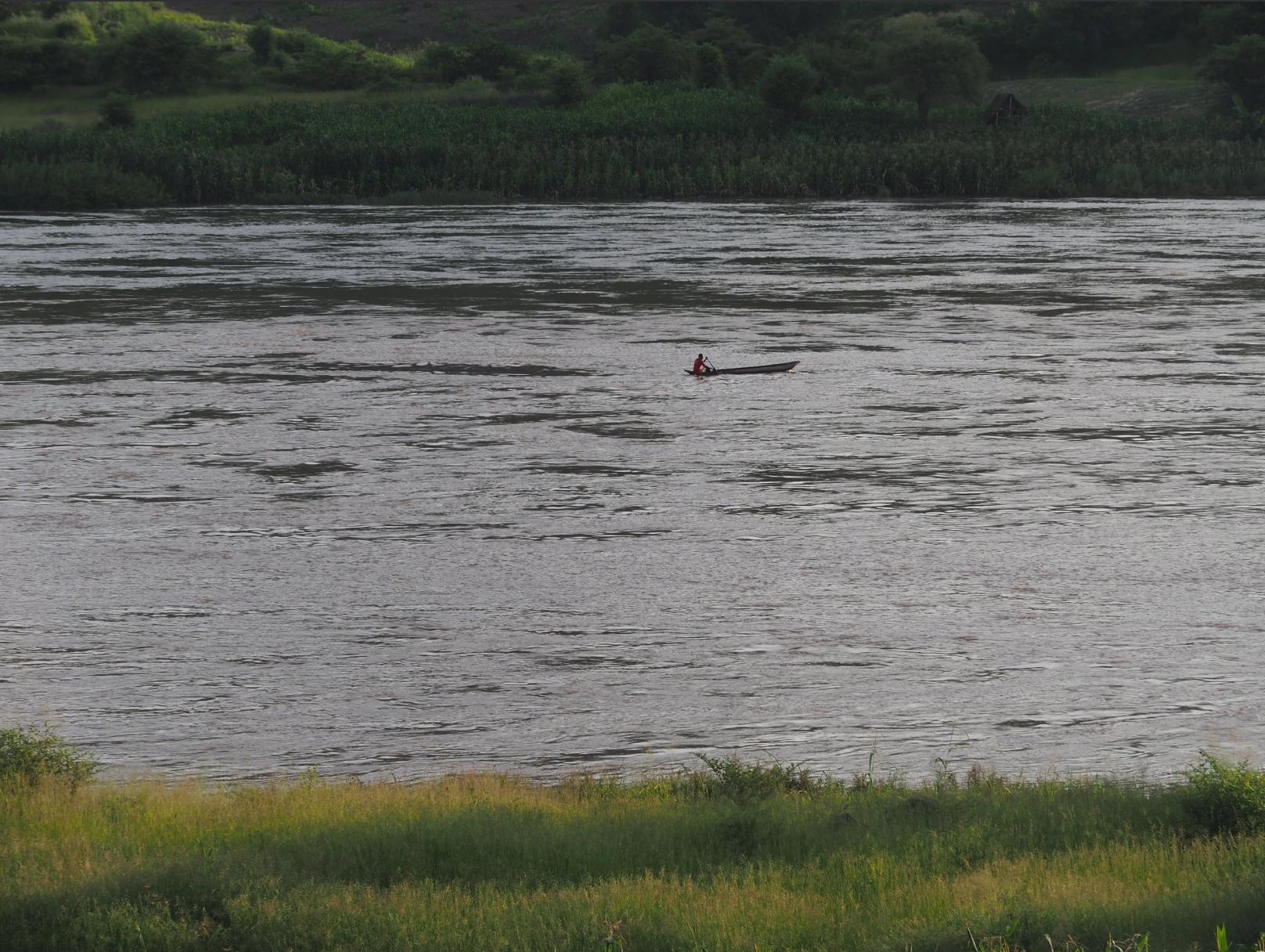
Mphanda Nkuwa is one of the largest infrastructure projects planned for Mozambique. If this mega-dam is built, its impacts could affect thousands of people, profoundly alter the lives of communities living along the Zambezi River, and have environmental, economic and social consequences that will last for generations.
The greater the impact of a project, the greater the transparency required in its planning.
Without public information, there can be no effective participation. Without participation, communities are unable to defend their rights or influence decisions that will affect their land, their livelihoods and their future.
This is precisely why the Administrative Court ruled that the information requested should be disclosed.
What is really at stake
For several years, Justiça Ambiental has been denouncing the lack of transparency that has characterised the development of the Mphanda Nkuwa project. At the same time, various communities have reported restrictions on the exercise of fundamental rights, intimidation directed at those who express concerns about the project, and negative impacts on activities such as agriculture and fishing.
The criminal complaint now filed aims to reaffirm a simple yet essential principle: no public authority may choose which judicial decisions it wishes to comply with.
In a state governed by the rule of law, court decisions are binding on everyone, including state bodies.
When this ceases to be the case, it is not merely a judgement that remains unfulfilled. It is the very trust that citizens place in the justice system that is undermined.
That is why transparency, access to information and respect for judicial decisions are not mere legal formalities. They are indispensable conditions for protecting the rights of communities, ensuring effective public participation and guaranteeing that major decisions on the country’s future are taken openly, responsibly and subject to public scrutiny.
Without this scrutiny, and without respecting the law and the rights of the affected communities, the proposed Mphanda Nkuwa mega-dam – and any other so-called development project – will continue to be illegitimate and a source of social instability.

