Category Archives: Energy and Society

A Socially-Dangerous, Environmentally-Careless, Unclear and Far-from-Transparent Development Path

Is this what you call development?

A few weeks ago, in a meeting held in Maputo about the controversial Anadarko and Empresa Nacional de Hidrocarbonetos natural gas project in Palma, Cabo Delgado, we heard the ENH representative say in a pleading tone that we all have a part to play in Palma, since we all have in common the desire to see the country develop and grow.

Well, right… and wrong.

Right, because we truly do want to see the country develop and we are perfectly aware that for the sake of that development sacrifices must be made, but if the idea is to sacrifice the local communities’ right to a good standard of living, then definitely wrong.

What if, as a result of that sacrifice, Mozambique and Mozambicans in general get huge benefits?
Image

Photo: Communities that will be affected by the proposed destructive Mphanda Nkuwa dam on the Zambezi river.

Well, if the investment is really going to bring benefits to Mozambique and all Mozambicans, we believe that those directly affected by the project should be the first to be properly rewarded by it, rather than just compensated. They have to be the project’s main beneficiaries. If that is not possible and, like some of the megaprojects which have been implemented in our country in recent years, it turns out that that questionable development only helps the poor get even poorer, then the answer to the question above must be “thanks, but no thanks”. We are not going to throw someone into a volcano so that the rest can have prosperity.

Public consultation? What for?

The blatant proof of how dangerous is the development path we are being dragged into (and we say path and not plan because we do not believe there is any plan at all) is the way the purpose of public consultations has been wickedly subverted by the system. Public consultation processes, as they exist today, are nothing but sheer formalities; bureaucratic exercises for the sake of appearances that despite having been created to safeguard the rights and interests of the people, are nothing but propagandist meetings where the government officials place themselves on the side of the project proponents. These meetings are of an informative nature and only exist to validate the idea that the communities have been consulted and agreed on the project, when most of the times they do not understand its possible consequences and repercussions, nor the potential gains they could or should demand in return. Oblivious of their rights and made vulnerable due to the lack of reliable support and advice from a government that, truth be said, seems to be more worried about making money than defending the future and the interests of the Mozambican people, some communities end up becoming easy prey.

“What are we supposed to do then? Sit on top of our wealth and keep starving?”

Well, we would be lying if we said that it would not please us to see the country change its investment policies: stop investing in extractive industries and mining, abandon the idea of building dams and thermoelectric centrals to feed those industries, support agricultural projects for peasants – no agribusiness, no monocultures and no agrichemicals, stop allowing the wood industry to destroy our forests, etc.

Basically, as we have stated in previous occasions, our notion of progress and development is completely different to our government’s, but we are not as naïve or as radical as we are often conveniently portrayed, and, as we have mentioned earlier, we understand perfectly that sometimes sacrifices must be made for the common good. Nevertheless, in our humble opinion, justifying those sacrifices with a vague “fight against absolute poverty” speech, without explaining how, is, in the best of chances, an insult to our intelligence. That, we believe, is one of the biggest flaws of our actual government.

Image

Photo: Coal-mining affected communities learn about their Constitution and rights in Tete province

What is the plan?

If our government promised us an honest answer to a single question only, that question would be: What is the long-term plan you have for the country? We honestly cannot figure it out.

In 35-40 years time, when the coal, the natural gas, the oil and the wood are finished, when the agribusiness and its tools have severely debilitated the fertility of our soils and our biodiversity has been depleted by all these actors, what use will we have for an infrastructure build to attend the needs of today’s companies and their labour? What are we doing to guarantee that in the future, cities like Tete and Nacala will not become white elephants? Ghost towns deserted and abandoned like many that exist today in the world. Orphans of yesterday’s development… Are we thinking about it? What are we doing for the future of national tourism? For the thousands of tourist operators in the country who today, due to the political and military tension we are going through, have barely any costumers and are faced with the possibility or having to close their businesses? Are we giving them tax exemptions and incentives so that they can survive? Other than the gigantic parcels of land we are giving to foreign corporations (always at the expense of coercively moving thousands of Mozambicans) so that they can grow corn, soya beans and rice for export, what are we doing to significantly increase Mozambique’s food production?

NEW REPORT ON INTERNATIONAL HUMAN RIGHTS DAY EXPOSES HUMAN RIGHTS VIOLATIONS IN MOZAMBIQUE; BUT THE UN RAPPORTEUR REFUSES TO ANSWER US

On the 10th of December, on the occasion of International Human Rights Day, a new report was released titled Dirty Profits 2: Report on Companies and Financial Institutions Benefiting from Violations of Human Rights.

Image

The report was released by the Facing Finance campaign, which “calls on investors not to invest in companies profiting from violations of human rights, environmental pollution, corruption or the production of controversial weapons.” Justiça Ambiental (JA, Friends of the Earth Mozambique) is also a part of the campaign, along with Urgewald, Earthlink, SODI, etc.

The report puts a spotlight of shame on almost 40 companies and financial institutions that are building profits on the backs of human rights violations and environmental destruction all over the globe, from Mozambique to Indonesia, Nigeria to Colombia, Chile, India and West Virginia (USA).

JA provided information to expose the human rights violations being caused by dirty energy companies, Vale SA and Jindal Steel & Power, both of which are mining coal in Mozambique’s Tete province.

Image

This report confirms human rights violations in coal mining in Mozambique, just as 7 months have passed since JA wrote to the United Nations Special Rapporteur on adequate housing, Professor Raquel Rolnik, who is Brazilian and is based in São Paulo. In April 2013, JA submitted to her office a Letter of Allegation regarding Human Rights Abuses in Cateme, Mozambique. Cateme is where the Brazilian company, Vale has resettled some of its mining-displaced families. We requested confirmation that her office had received the complaint, and they confirmed so. However, despite 7 months having passed, and despite many reminders, we are still yet to hear back about Ms. Rolnik’s process of verification, responses from Vale or the Mozambican government. We have received no information till date, no indication that she intends to do anything at all with the complaint. Her silence is shocking.

WATER FINANCIALIZATION EXPOSED IN NEW REPORT ON EVE OF WTO MEETING; INCLUDES CRITIQUE OF PROPOSED MPHANDA NKUWA DAM IN MOZAMBIQUE

Tomorrow, December 3, the World Trade Organisation (WTO) talks are to begin in Bali. More information about the WTO talks in Bali can be found here. Today, on the eve of these talks, Friends of the Earth International (FoEI) launched a new report exposing how trade and investment strategies, including WTO negotiations, act as economic drivers of water financialization. The report is available online here.

Image

Justiça Ambiental (JA, FoE Mozambique) provided a case study, and was joined by cases from Argentina, Australia, Colombia, El Salvador, England, Mexico, Palestine, Sri Lanka, Switzerland, United States, and Uruguay.

The cases show the crimes of many corporations, financial institutions, trade agreements and cooperation strategies which are paving the way for water privatisation and financialisation.

A shocking case study in this report exposes the major water injustices faced by Palestinian people in the Occupied Palestinian Territories (West Bank and Gaza Strip). Highly unequal distribution of water and structural barriers to water was also witnessed by Daniel of JA who joined a solidarity trip to the West bank last month. Most water resources are concentrated in the hands of Israel and this is leading to structural environmental racism.

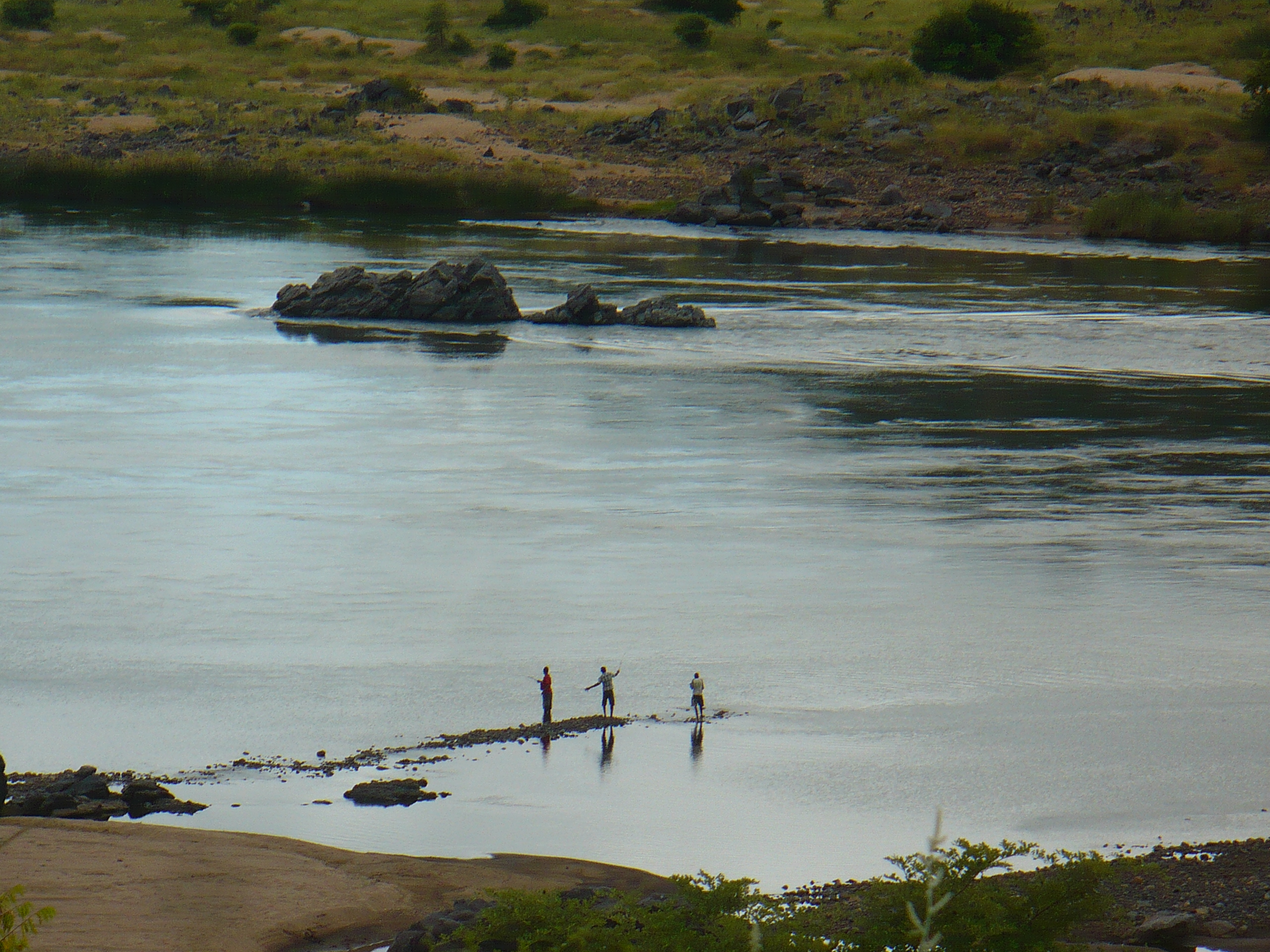
JA’s case study called “Do not damage our life” exposes how the proposed Mphanda Nkuwa dam will further devastate the Zambezi valley. The beautiful Zambezi River, one of Africa’s most important rivers, has been dammed in 2 places already: the Kariba dam in Zimbabwe/ Zambia and the colonial day Cahora Bassa dam in Mozambique. Now the Mozambican government wants to build a new dam just 70kms downstream from Cahora Bassa. This dam will further devastate the Zambezi delta ecology and will displace communities from their homes, villages and livelihoods. JA has been opposing this dam for over 12 years now.

Image

Senhor Morais and his family, which will be affected by the proposed dam. Photo credit: Anabela Lemos

But yet this destructive dam continues to be planned. Recently it was revealed that there are significant conflicts of interest and involvement at the highest levels: with the Presidents of South Africa (Zuma) and Mozambique (Guebuza). A recent article by Oxford scholar and JA member, James Morrissey in the Mail and Guardian exposes how personal self-interest and corporate interest are outweighing lives and livelihoods in the Zambezi valley.

Image

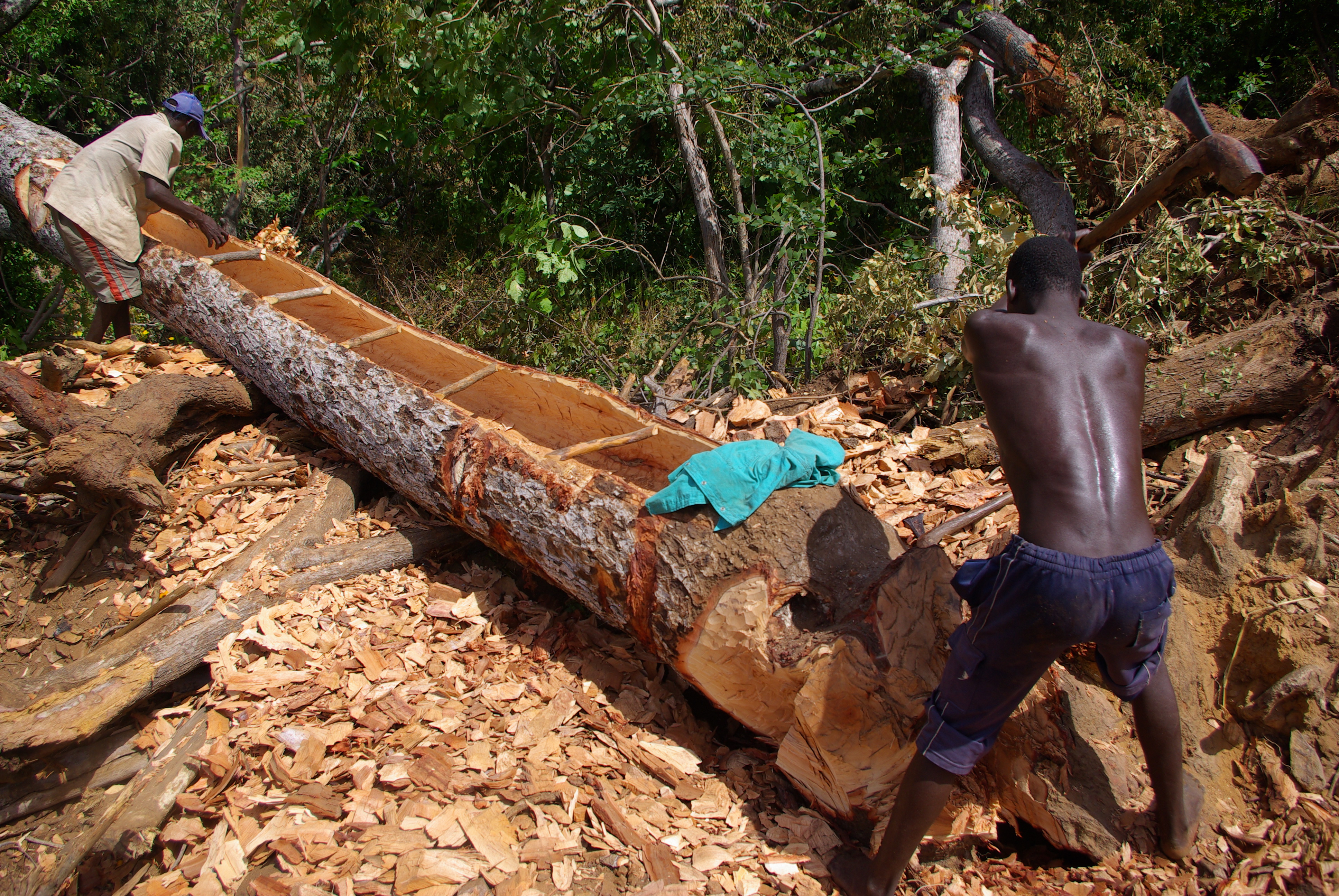
Traditional boat-making in the Zambezi valley. Photo credit: Daniel Ribeiro

CIVIL SOCIETY WALKS OUT OF WARSAW CLIMATE TALKS, SAYS HOPE LIES WITH BUILDING PEOPLES’ POWER

Yesterday was a fantastic day in Warsaw, where the Friends of the Earth International delegation including Justiça Ambiental (JA!, FoE Mozambique), joined 800 people from social movements, NGOs and Trade Unions in a massive walk-out of the COP19 climate talks.

Image

Photo credit: Luka Tomac

Following an ad-hoc press conference with representatives of some of the groups who were joining the walk-out, we filled the corridors of the conference centre walking in a calm and dignified way. Our T-shirts carried the message “polluters talk, we walk” and #volveremos – which means “we will be back” in Spanish, as we build up to COP20 in Peru next year.

“Developed nations governments have been hijacked by corporate polluters and their positions prevented even a minimal progress of the talks. Developed country governments actions in Warsaw demonstrate that they are listening to polluters such as Shell and ArcelorMittal instead of their own people, said Dipti Bhatnagar, Climate Justice and Energy coordinator of Friends of the Earth International and JA!

After the walkout, at the convergence space managed by Polish youth across the river from the COP venue, we gathered to hear moving, empowering and challenging reflections from some of the people who had organsied and participated in the walk-out. We will be meeting again today afternoon with some of these groups to discuss some next steps in building a movement for climate justice.

Warsaw COP19 is one of the most corporate-captured COPs ever, where the Polish hosts officially listed their corporate partners at the COP, including corporations pushing destructive dirty energy across the globe. It is in this context that several southern movements called for ‘redlines’: to cut emissionsprovide real finance and help impacted people. These are absolute basics that we need to get out of COP19. Now the moment has come that it is clear these ‘redlines’ are very far away from being realised by the COP presidency and the world leaders.

We agreed with the movements and NGOs to leave this COP and call for governments to prepare a serious just and binding agreement in the next couple of years. We didn’t walk out of the UNFCCC process. At least, the UN is a supposedly democratic international space for getting a desperately-needed legally-binding, equitable and ambitious treaty. But it has been captured and hence has not been delivering much-needed ambition and finance.

The support we have felt has been fantastic. FoE groups around the world have been taking action together, on social media and on the streets.

Here are some of the media statements produced:

FoEI press release:
http://www.foei.org/en/latest-news

FoEE press release:
http://www.foeeurope.org/sites/default/files/news/media_statement_on_ngos_walk_out_from_cop19.pdf

YFoEE press release:
https://www.foeeurope.org/yfoee/press-release-polluters-talk-we-walk-21112013

Images:
Polluters talk album: http://www.flickr.com/photos/foeeurope/sets/72157637908817256
Full COP19 album: http://www.flickr.com/photos/foeeurope/sets/72157637776415645
Young FoEE album:  http://www.flickr.com/photos/youngfoee/sets/72157637906549166/

Social media:
https://www.facebook.com/FoEEurope
https://www.facebook.com/hashtag/volveremos
https://www.facebook.com/YoungFoEE

Twitter:
https://twitter.com/foeeurope
https://twitter.com/youngfoee

#volveremos
#COP19

REDD Alert

JA & NRAN Film Screening

Recently, JA and the No REDD in Africa Network (NRAN) held an event on REDD. The event was to commemorate the Week of Action Against False Solutions which was within the Reclaim Power: Global Month of Action on Energy. The Month of Action ended on Monday, with the opening day of COP19 in Warsaw, Poland, where once again world leaders will get together to postpone urgent action on climate and ignore the fact that we’re hurtling towards climate disaster.

For our REDD event, we gathered together in the Museum of Natural History in Maputo with a small but spirited group. Samuel Mondlane moderated the meeting. JA’s Director, Anabela Lemos introduced the debate around REDD (Reducing Emissions from Deforestation and forest Degradation), calling it a false solution for the climate crisis.

We showed a few films criticising carbon trading, offsetting and REDD, calling them dangerous distractions that were avoiding the real solutions from being applied to stop catastrophic climate change, such as reducing fossil fuel use.

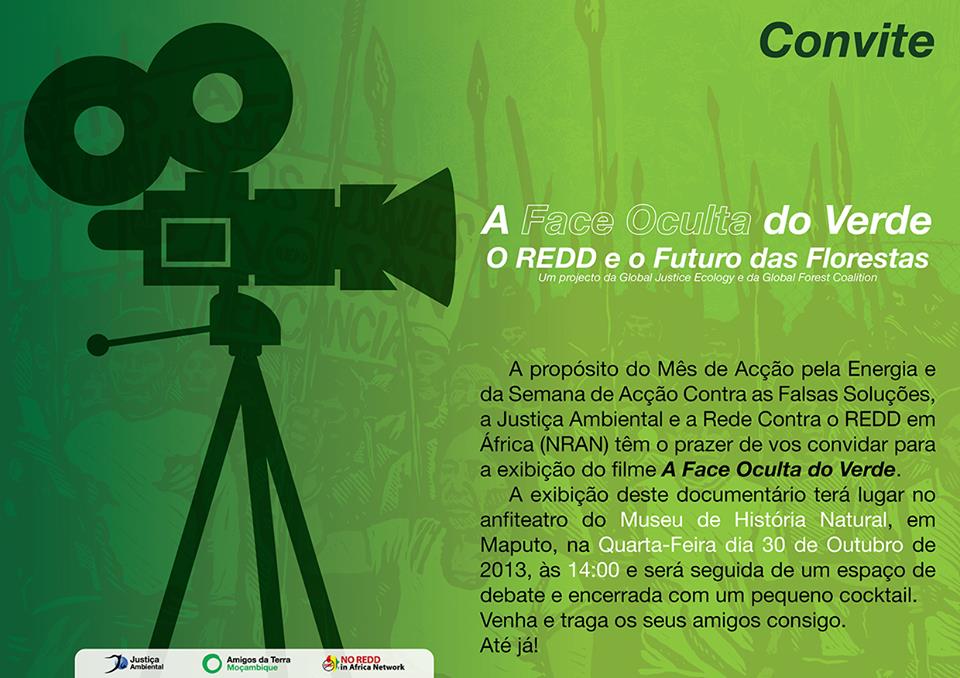
After the films, we opened up for a discussion on what people had seen in the films. This discussion is very important, because, in Mozambique, the debate of whether or not REDD is good for the country, had not taken place. It was only assumed that since money was coming in, Mozambique should take it, without any discussion of the dangers and perverse incentives behind it. See below our flyer for the event.

Image

JA had sparked these discussions a few months ago, with the REDD workshop that we held in Maputo in August 2013. We were able to bring some key international people to Maputo, and facilitate their connections and information-sharing with Mozambican community people and NGOs.

The international key people that came together for the meeting were:

  • Tom Goldtooth, Indigenous Environmental Network
  • Nnimmo Bassey, Environmental Rights Action & Health of Mother Earth Foundation, Nigeria
  • Isaac Rojas, Coordinator, Forests & Biodiversity program, Friends of the Earth International
  • Winnie Overbeek, World Rainforest Movement
  • Cassandra Smithies, fierce anti-REDDs activist from the US
  • Blessing Karumbidza, Timberwatch, South Africa
  • Odey Oyama, Rainforest Resource and Development Centre, Cross River state, Nigeria
  • Jonas Aparecido, Landless Peoples’ Movement and community person, Brazil
  • Augusto Juncal, Landless Peoples’ Movement & Via Campesina Brazil
  • Diwirgui Anastacio Martinez Jimenez, community person from Kuna tribe, Panama
  • Makoma Lekalakala, earthlife Africa Johannesburg
  • Blessol Wambui, The Rules, Nairobi
  • Khadija Sharife, Center for Civil Society, South Africa
  • Abdullah Vawda, Forum of African Investigative Reporters, South Africa

It was also very important for JA to invite community people and farmers. We managed to bring farmers from 8 out of 10 provinces of Mozambique, including Niassa, Cabo Delgado, Nampula, Zambezia, Tete, Sofala, Gaza, and Maputo. There were multiple community people from some of these provinces. JA’s close partner, União Nacional de Camponeses (UNAC, National Farmers Union) allied with this process and sent many of their community members.

This was important because we felt it was crucial to open up a dialogue not just with people in Maputo, but people in the provinces who will be directly confronted and affected by REDD or REDD-type projects. The involvement of community people in decision-making is crucial to good governance structures and justice. We also invited NGOs and government people from Maputo, so that there could be a good, healthy discussion, which had not happened before.

The 1st day of the workshop – lots of information sharing and debate

The first day of the workshop provided a lot of information on REDD. Isaac and Winnie introduced REDD. Tom gave an emotive presentation about REDD in North America. Cassandra spoke about the opposition to REDD in many parts of Latin America, and explained the connections between the California Climate Change Bill trying to offset emissions by pushing REDD in Chiapas, Mexico and Acre, Brazil. Diwirgui and Jonas talked about the REDD opposition in their communities.

After this global perspective, we then starting talking about REDD in Africa. Odey of Nigeria and Blessing of South Africa provided perspectives of fierce REDD opposition in their contexts. The final case was presented by Boaventura of Via Campesina Mozambique, talking about a problematic REDD project right here in the country.

Main themes from the 1st day

The first day’s presentations and discussions were incredibly rich and detailed. We heard about climate change and what it means for our people. It increases droughts and floods; it increases temperatures especially here in Africa. It affects our lands, water and, more importantly, the farmers. Climate change impacts rivers and rain and weather patterns, that’s how it affects farmers. The crops start to fail, the land starts to get drier and more barren.

We heard from Tom about the links between dirty energy burning in the northern countries and these REDD projects in the south. We heard that those who created the climate problem to begin with, are continuing to make it worse. They are continuing to burn dirtier forms of coal, oil and gas, such as the tar sands.

Then they come to the southern countries, trying to ‘offset’ their emissions from burning the dirty energy. As JA Director Anabela Lemos explained, the carbon credits come from the Kyoto Protocol, it is abstract, and it doesn’t exist. So they come to the southern countries to ‘offset’ their emissions. In Africa, Asia, Latin America, where we still have forests left, they engage in large land grabs under the excuse that they will save the forests. We heard from Blessing regarding REDD in Tanzania. We heard from Odey regarding REDD in Nigeria and from Diwirgui about the struggle of the Kuna people against REDD in Panama. The story is the same everywhere in the world.

We heard some strong phrases about REDD and land grab and what it’s doing to this continent of Africa. We heard the phrase ‘green-grabbing’. We also heard the phrase ‘second colonialism’. Many countries in the south went through colonialism. They want the land, the resources under our land, and this is why people are calling it a ‘second colonialism’. Will we fight it again or not? We also heard the phrase ‘green masks’ that the big international conservation organisations are wearing and pretending as if REDD can save the forests. In reality, REDD is about buying the forests, cutting them down and turning them into plantations which are just green deserts.

The 2nd day of the workshop

For the 2nd day, we heard from Jonas and from Manito Lopes, a community member from Zambezia province, Mozambique, about community forest management providing much better options than REDD to safeguard forests.

The REDD workshop was a huge success. We had great participation from international, Mozambican community members as well as Maputo-based NGOs. We raised awareness about the very real dangers of REDD. We together released a Maputo Declaration on REDD, available here.

The 3rd day’s meeting was a closed NRAN strategy meeting. JA is committed to continuing the No REDD struggles in Mozambique, Africa and beyond.

Life Compromised for Coal: Mozambique & the Importance of the IPCC report

Yesterday, JA celebrated the opening of our photo exhibition called “O Amanhã Comprometido: A Vida Por Carvão” which translates to ‘Tomorrow Jeopardized: Life for Coal’. This exhibition will run in the Associação Moçambicana de Fotografia in Maputo for a week until 1 October 2013. The exhibition features photos by Daniel Ribeiro, Mauro Pinto and Peter Steudtner.

(See the exhibition poster below)

 Image

This hard-hitting photo exhibition comes as the Intergovernmental Panel on Climate Change (IPCC) will release tomorrow yet another report about the dismal state of our atmosphere. The IPCC was constituted by the United Nations to study in depth the scientific, technical and socio-economic aspects of climate change. They release their assessment reports every 5 years; this week world leaders are meeting in Stockholm, Sweden, to release the Fifth Assessment Report (AR5) of Working Group 1 of the IPCC. Other chapters of AR5 will be released at different times next year, and we will keep you all posted about it.

Image

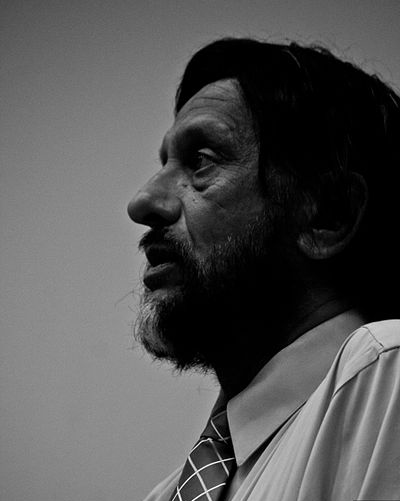
(Photo of the IPCC Chair Rajendra Pachauri by Marshall Niles)

Due to of the very technical nature of the process and the scientists involved, the AR5 report is likely to be conservative in its conclusions. But still, the verdict from the report is so clear. Parts of the report have been leaked beforehand. The report will conclude that climate change is definitely happening and it is driven by increased emissions from humans. The report will stress that each of the last three decades have been warmer than all of the preceding decades going back to 1850 and the decade from 2000-2010 has been the warmest. The report will conclude that an average temperature increase of 4 degrees Celsius is “as likely as not likely” by 2100. But this is just talking about global averages. The report is quite confident that the temperature increases over big land masses, including Africa and Asia, will be higher than the averages! Not just this, but the impacts faced by people will be worse that they originally predicted.

Already Mozambique is seeing elevated temperatures and huge variability in rainfall and river flows. In January 2013, over 150,000 people in Gaza district of Mozambique were temporarily forced out of their homes because of devastating floods. JA travelled to Chokwe to meet with communities and wrote about this in our February newsletter in Portuguese, available here: http://justicaambiental.org/index.php/en/resources/newsletter/2013

So what is the world doing about these dangerous scenarios? Dangerously little! The biggest and best way to reduce emissions today is to reduce the use of fossil fuels right now. Yet the world continues mining coal, drilling oil, fracking; all driving us closer to catastrophic climate change.

But what is worse, in spite of overwhelming scientific evidence of human caused climate change due to emissions, the Northern governments and big business find all possible ways to develop and push false solutions such as carbon trading, CDM, REDD, offsets, geo-engineering, etc., instead of reducing emissions.

Actually these constantly emerging and totally flawed false solutions are not a mistake but are very intentional; they are meant to give a free pass to polluters to carry on polluting. We are now heading towards the 19th meeting of the Conference of the Parties (COP) and in 19 years of trying to stop climate crisis, emissions have only gone up and false solutions are threatening more lives and livelihoods than ever before.

Of course, Mozambique has historically had a very small contribution to climate emissions. However, today Mozambique is aiming to be a major coal exporter, which is affecting communities locally and will put more carbon in the atmosphere than the world can bear. At this IPCC report’s release, we strongly say: Leave the coal in the hole! In Mozambique and everywhere in the world.

 For more information, see:

A GOVERNMENT WITHOUT SHAME, A PEOPLE WITHOUT HOPE

THE PROTEST NO ONE TALKED ABOUT

Late last month, on the 22nd and 23rd of July, a protest took place in Chirodzi area, Tete province, in central inland Mozambique.  The local communities had gathered there to protest in the concession area grated to Jindal, an Indian mining company. Jindal is extracting coal from an open pit mine in Tete province, without an environmental impact study and without ensuring the safety of the local communities. Till date the communities have not been resettled, but continue to live in the concession area.

The communities have been raising their voices, asking for their rights. On this day, the frustration and desperation of the communities mounted, and the protest turned violent. The communities attacked four Indian Jindal employees. Of the four Jindal people attacked, one was attacked in his office and the other three in their homes, all within the concession mining area. There was a security company, who usually secures the gates and the whole perimeter of the concession area, were also attacked, and with no place to hide from the public anger, they ran away. The police were also present, but were outnumbered by the irate people.

The protest involved four communities: Chirodzi / Cahora Bassa, Chirodzi / Changara, Cassoca and Nyantsanga. These last two communities are located within the concession area of ​​the mine, while the first two are on the periphery. But it is very important to note all these communities have communal lands which have now been taken by the company.

According to community testimonies, the protest erupted because of Jindal’s failure to fulfil the promises they made to the communities when their settled here in 2008.

  • They promised they would not extract coal before resettlement of the communities, yet they have been doing exactly that for over eight months;
  • They promised not to occupy lands, specifically the fields of local communities, without first negotiating with their legitimate owners;
  • They assured the communities that there would provide a water supply;
  • They also promised jobs for community members.

The communities and Cassoca and Nyantsanga stated that in December Jindal usurped part of their farms with standing crops, without any warning, thereby seriously undermining their food sovereignty. As for resettlement, it is not happening but the coal is being mined. On 9th of May 2013, Macauhub news reported that a ship left from Beira port, heading for India, carrying 36,000 tons of coal mined by Jindal Mozambique Minerals.

Image

The communities constantly face respiratory and other serious problems, from being so close to the open pit mining. Air pollution resulting from mining activity is visibly hanging in the air; the black dust settles on everything. How will the lungs of people cope with this? How much longer will children continue to have their classes in this atmosphere?

Their frustration is what led to this protest. The communities also promised that if their rights continue to be ignored and trampled, and if the company does not fulfil the promises made to them, there will be more protests. This protest revealed how bad the relationship is between Jindal and these four surrounding communities.

The relationship between employees and employers in Jindal is also bad. According to company officials who agreed to talk to us, there are many quarrels about alleged discrepancies in pay and subsidies to employees. Even the workers who operate the mine say they do not have the protective equipment that is required.

But Jindal reportedly seems to have a excellent relationship with the government. This is substantiated by the fact that some people even said that the government collects “taxes” from the company.

At the end of the day, according to the laws in force in the Republic of Mozambique and international conventions, Jindal is in the wrong, but the government is partly responsible for this, because of their passivity and permissiveness (or should we say say collusion).

Jindal declined to provide any information to us, but they summoned a meeting with community leaders and “informed” them not to provide any information to civil society organisations, and they threatened not to renew contracts with those who did communicate.

The silence of the media is also shocking. It is extremely sad that, even though we know that there were several teams of national media in the middle of all this circus in Chirodzi, but other than the Diário de Moçambique, nobody published this story.

Less than a month after this transpired in Chirodzi, the communities still continue to wait for their rights to be recognised. But meanwhile, the complicity of the government was proved. While the communities were protesting the way this company is operating and protesting against unfulfilled promises, the Mozambican President, Armando Guebuza, visited Chirodzi to officially inaugurate the project, and doing so, legitimized what Jindal is doing. Basically, he gave his approval to what was happening, to mining being carried out without an Environmental Impact Study, to mining being carried out while communities are still living there, with about 563 families still waiting to be resettled. Adults and children. All living in an environment extremely dangerous and harmful to their health, not to mention that their livelihoods and futures are being silently trampled on. They have been forgotten and made invisible by those who should protect them. A shameless government leading a hopeless people. This is our Mozambique.

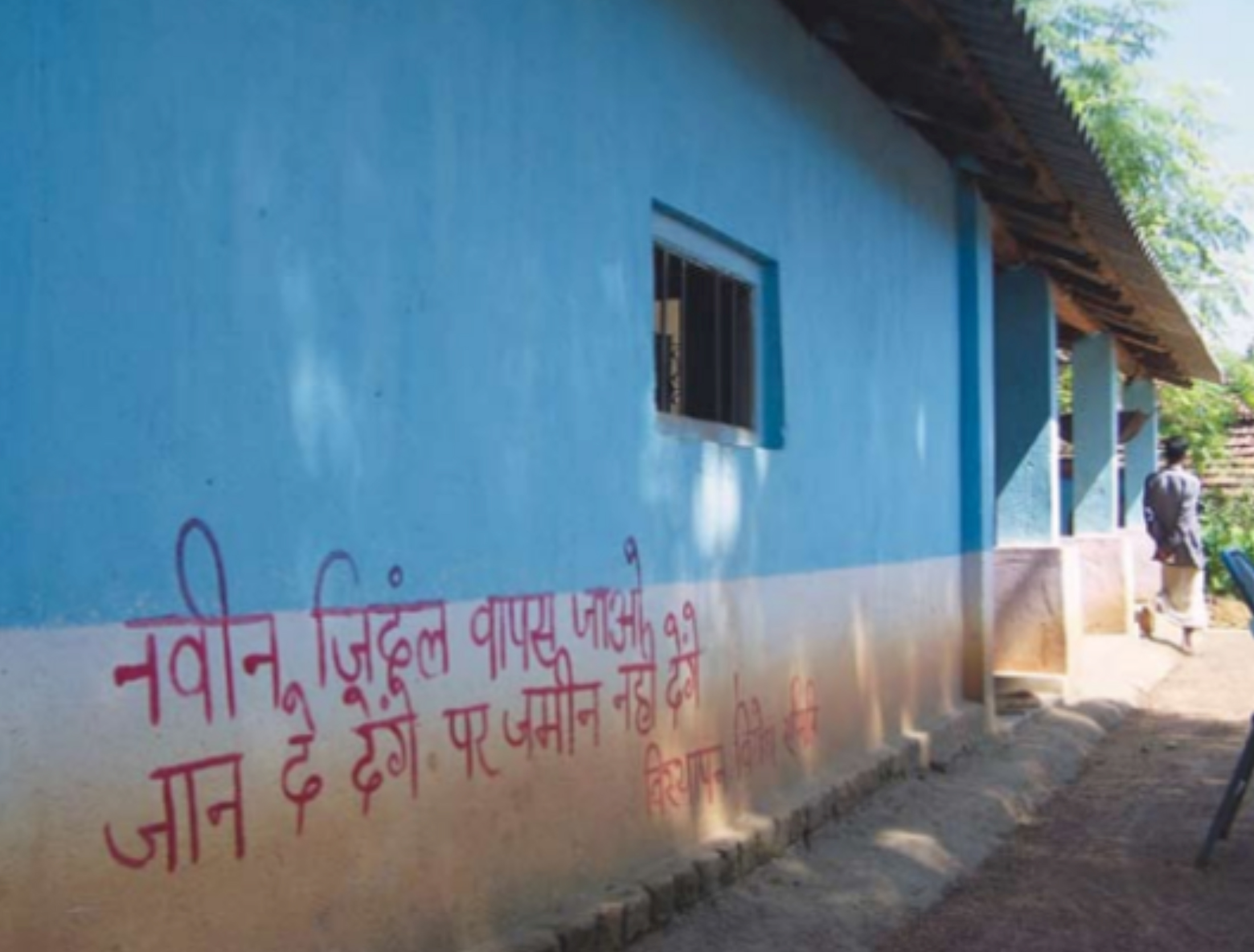
Meanwhile, protests against Jindal are not new. In their home country of India too, Jindal has been exploiting local communities with impunity. In the Indian states of Odisha, Jharkhand and Chattisgarh, which are states with large populations of tribal people, Jindal has been devastating farms, villages and lives for many years now. But, same as in Mozambique, the communities have not been silent. In Asanbani village in Jharkhand, the houses are marked with signs in Hindi such as “Naveen Jindal go back! We will give our lives but we will not give our lands” (see photo below). This is the Visthapan Virodhi Samiti (Committee against Displacement).

Image

Photo credit: Panos South Asia, Alchemy of Iniquity: Resistance and Repression in India’s Mines. A Photographic enquiry.

We are moving towards building bridges between these communities fighting again a common enemy, Jindal, across India and Mozambique.

A recent book called ‘A New Scramble For Africa?: Imperialism, Investment And Development’, carried a great quote of Gandhi to help us contextualise why the presence of Indian company Jindal in Africa is so problematic.

Gandhi said, “The commerce between India and Africa will be the commerce of ideas, not manufactured goods against raw materials after the fashion of western exploiters.”

Africa is Sovereign and WILL NOT ACCEPT being Re-colonized

In response to Denmark’s Minister for Development Cooperation Christian Friis Bach recent controversial interview, Friends of the Earth Africa elaborated an Open Letter to be handed over to every Embassy of Denmark in African countries where FoEA is present. Based on that Open Letter and with the purpose of empowering it by allowing all of us, concerned citizens of the world to sign it,  we are now starting a petition with the same motto.  You can read the Open Letter bellow and if you share our concern, please sign our petition and add your voice to the struggle against the development models of capitalist neocolonialism.

Open Letter from the African Civil Society To The Representatives of Denmark in Africa

Subject: Africa is Sovereign and WILL NOT ACCEPT being Re-colonized

In light of the interview given by your Minister for Development Cooperation, Christian Friis Bach, on the 9th of this month to the Danish newspaper Politiken, and taking into account that the presence of Danish cooperations on the African continent dates long before the independence of most countries where they still operate today through various organizations that develop various projects and activities in various spheres of the political system, civil society and the business sector, we cannot refrain from expressing our deepest distaste for the disrespectful and peculiar ideological content of the above-mentioned interview.

Truth be told, Minister Christian Friis Bach said exactly what many politicians and leaders of developed countries think but cleverly would never dare say. Frankly, we prefer Christian Friis Bach to those other dodgy individuals. Petulant or reckless, your Minister of Development Cooperation said just what he thinks, giving us a chance to rebut, to contest and tell him that his notion of development is obsolete, that what he says he is willing to do is ethically despicable and offensive, that those who he claims would be the main beneficiaries of the policies he intends to impose will for sure become its main victims, and that even though unfortunately he may have the power to influence the decisions taken by the state apparatuses of some African countries, he definitely does not have the right to do so. We believe that he ought to know it. We Africans assure Christian Friis Bach and all who think like him, that even though we are already being pillaged, we will never allow Africa to be economically recolonized. Never.

It is instructive to remember that contrary to what Minister Friis Bach said in his interview, we Africans do have capacity to feed and sustain our people. African agriculture and food needs have been met over time through sustainable and multi-dimensional approaches, keeping to a minimum such externalities as artificial fertilizers, imported pesticides and herbicides, as well as practices that are alien to the socio-cultural settings of our people.

The support Africa needs right now is a decisive stand to maintain seed as well as cultural diversities and defend staple crops which are targeted by biotech even when there is no need for their engineered varieties or GM crops.

To you, as the highest representative of the Danish people in our territory, we would like to ask if you share the opinions of your Minister for Development Cooperation. If you do, please be kind enough to answer the following questions:

Do you think it is fair that the African continent should be held accountable “today” for the bad decisions rich countries such as yours made “yesterday”, and which led to over-exploitation of nature, animals and human beings by introducing unhealthy and destructive diets as well as excess energy consumption?

Do you consider it acceptable that countries like yours should impose their failed development models on Africa as if they were models of success and the only guaranteed path towards development?

Would you imagine a world in which Africa adopts your ideas of production, consumption, development and progress?

Do you think it right that we Africans must accept without question the responsibility of using our resources to support those who were obviously unable to manage theirs?

It honours us greatly that the world is turning to Africa and its leaders say they are counting on us. We Africans are hospitable and supportive and for long we have been wanting to contribute more and better to a development path that supports sustainable livelihoods. However, we do not have to sacrifice ourselves to accommodate the whims of those who think it is a mark of progress to destroy the planet. We want to rely on the support of all who are well intended, but such support must not trample on our sovereignty and dignity.

In this context, we, African organizations, movements and associations who hereby signed this letter, reiterate that we continue to consider much welcome the support of those who wish to walk with us towards a development path:

  1. That adequately serves our needs and those of our future generations;
  2. That is fair and just and not predicated on exploitation, resource grabs and denigration;
  3. That is logical and thoughtful and does not necessarily have to be traversed in pursuit of anything or anyone;
  4. In which we may not be sole beneficiaries, but we must not be denied our due;
  5. That not only respects the sovereignty of each African country, but also our diversity as a people, as well as the diversity of our cultures and traditions;
  6. That is guided by principles of honesty, transparency and inclusion, fundamental to the democratic exercise of any territory.
  7. That respects our Food sovereignty, which is built upon the inalienable rights of peoples to maintain their cultural as well as seed diversities. Cultural diversity permits peoples to maintain and enlarge their stock of local knowledge; produce, save and use their seeds and have control over farming practices developed over centuries of experimentation and experience. Food sovereignty ensures that farmers stay in business and that peoples are not forced to alter their diets.Naturally, we consider that any development project that ignores or disregards any of these principles is not in the best interest of Africa or Africans, and we reject and denounce the position taken by your government through your Minister of Development Cooperation.

For the sake of the good relations we wish to maintain with you, we would appreciate you would be so kind as to respond to this letter.

Signed by

African Organizations,

Friends of the Earth Africa

Justiça Ambiental/FOE Mozambique

ATPNE / Friends of the Earth Tunisia

Centre pour l’Environnement et le Développement / Friends of the Earth Cameroon

Environmental Rights Action / Friends of the Earth Nigeria

Friends of the Earth Ghana

Friends of the Earth Sierra Leone

GroundWork / Friends of the Earth South Africa

Guamina / Friends of the Earth Mali

Lawyers’ Environmental Action Team / Friends of the Earth Tanzania

Les Amis de la Terre / Friends of the Earth Togo

Maudesco / Friends of the Earth Mauritius

National Association of Professional Environmentalists / Friends of the Earth Uganda

Sustainable Development Institute (SDI) / Friends of the Earth Liberia

Yonge Nawe Environmental Action Group / Friends of the Earth Swaziland

Alliance For Food Sovereignty  In Africa (AFSA)

African Biodiversity Network (ABN)

Coalition for the Protection of African Genetic Heritage (COPAGEN)

Comparing and Supporting Endogenous Development (COMPAS) Africa

Indigenous Peoples of Africa Coordinating Committee (IPACC)

Participatory Ecological Land Use Management (PELUM) Association

Eastern and Southern African Small Scale Farmers Forum (ESSAFF)

La Via Campesina Africa

FAHAMU, World Neighbours

Network of Farmers’ and Agricultural Producers’ Organizations of West Africa (ROPPA)

Community Knowledge Systems (CKS)

Plateforme Sous Régionale des Organisations Paysannes d’Afrique Centrale (PROPAC)

Laurent Alex Badji COPAGEN Senegal

The Green Belt Movement Kenya

Health of Mother Earth Foundation, ((HOMEF) Nigeria

Committee on Vital Environmental Resources (COVER) Nigeria

The Young Environment Network (TYEN) Nigeria

Institute for Research and Promotion of Alternatives in Development (IRPAD/Afrque)

Mali Coalition pour la Protection du Patrimoine Génétique Africain Mali (COPAGEN-Mali)

Actions Pour le Développement Durable, Republic of Benin

Kenya Debt Relief Network(KENDREN) Kenya

African Centre for Biosafety (ACB) South Africa

The Rescope Programme Malawi

Host Communities Network Of Nigeria (HoCoN, Nation Wide) Nigeria

Students Environment Assembly Nigeria (SEAN Nation Wide) Nigeria

Community Forest Watch Group Nigeria

Green Alliance Nigeria (Nation wide) Nigeria

Abibiman Foundation Ghana

Oilwatch Ghana

Oilwatch Nigeria

Improving Livelihoods Through Agriculture (ILTA) Ghana

Acção Académica para o Desenvolvimento das Comunidades Rurais (ADECRU), Mozambique

Associação de Apoio e Assistência Jurídica às Comunidades (AAAJC), Mozambique

Fórum Mulher, Mozambique

Liga Moçambicana dos Direitos Humanos (LDH), Mozambique

Kulima, Mozambique

Non African Organizations:

Amigos da Terra América Latina e Caribas TALC

Amigu di Tera (FoE Curaçao), Curação

NOAH Denmark, Dinamarca

COECOCEIBA / FoE Costa Rica

Community Alliance for Global Justice Denmark, Dinamarca

Amigos de la Tierra México, México

Red Mexicana de Afectados por la Minería (REMA) México

Movimiento Mesoamericano contra el Modelo Extractivo Minero (M4) México

The Rescope Programme

Community Alliance for Global Justice

PLANT (Partners for the Land & Agricultural Needs of Traditional Peoples)

Various African Organizations and Movements are still signing in and several Non African movements and organizations are also subscribing to this letter.

A Positive Example

During a trip to Nampula for a meeting with AGIR (Action Programme for a Responsible and Inclusive Governance) and its partners, we were told that we would visit the community of Nacoma in the village of Mele, Meconta district, about 83 km from the city of Nampula, where, with the support of the National Association of Rural Extension (AENA), the community formed an association composed of 20 members (13 women and 7 men) to improve their crops. This association would be presented to us as a good example of a farming, savings and literacy project (for the community even created a school in the farm area itself).

 Image

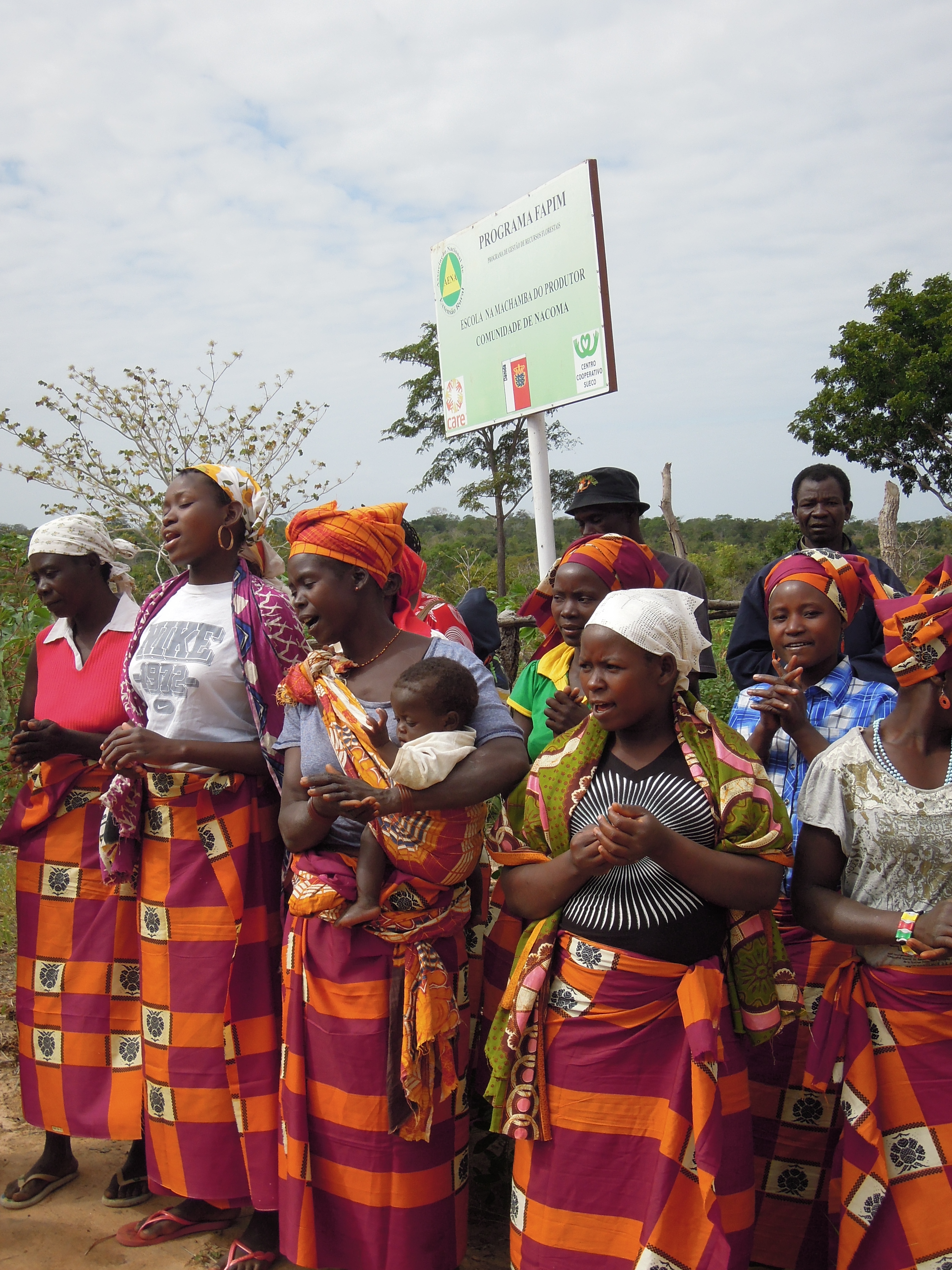
After an almost two hours journey, we finally arrived to the place. Several women with colourful scarves and capulanas, clapping and singing welcoming songs for us, greeted us at our arrival. There were barely any men, only three were present.

From there, always singing and clapping, they led us to a small plot of land next to a dirt road where they showed us an example of the good practices and crop improvements they had learned for a more efficient agriculture on poor soils. These women, with the help of a partner of AGIR in Nampula who shared its knowledge with them, improved the soil of the area, which was not the best for agriculture, through the practice of techniques such as the use of dry grass to conserve soil moisture and thus retain its nutrients. From AGIR’s partner, they mentioned they also learned that setting fire to a plot before using it, a widely used method in the area to prepare the soil, when done systematically ends up reducing the nutrients and weakening the soil. They further demonstrated, using only water grass and sand, rudimentary examples of other methods used to enhance and improve their harvests, and showed us how they had arranged between them to monetize the goods they produce (cassava, pigeon pea, sweet potato, peanut, etc… ) and thus increased their income allowing it to improved their lives and their families. Finally, they showed us a peanut dryer made by the association, made with simple poles and grass where it was protected from rain, insects and other animals.

 Image

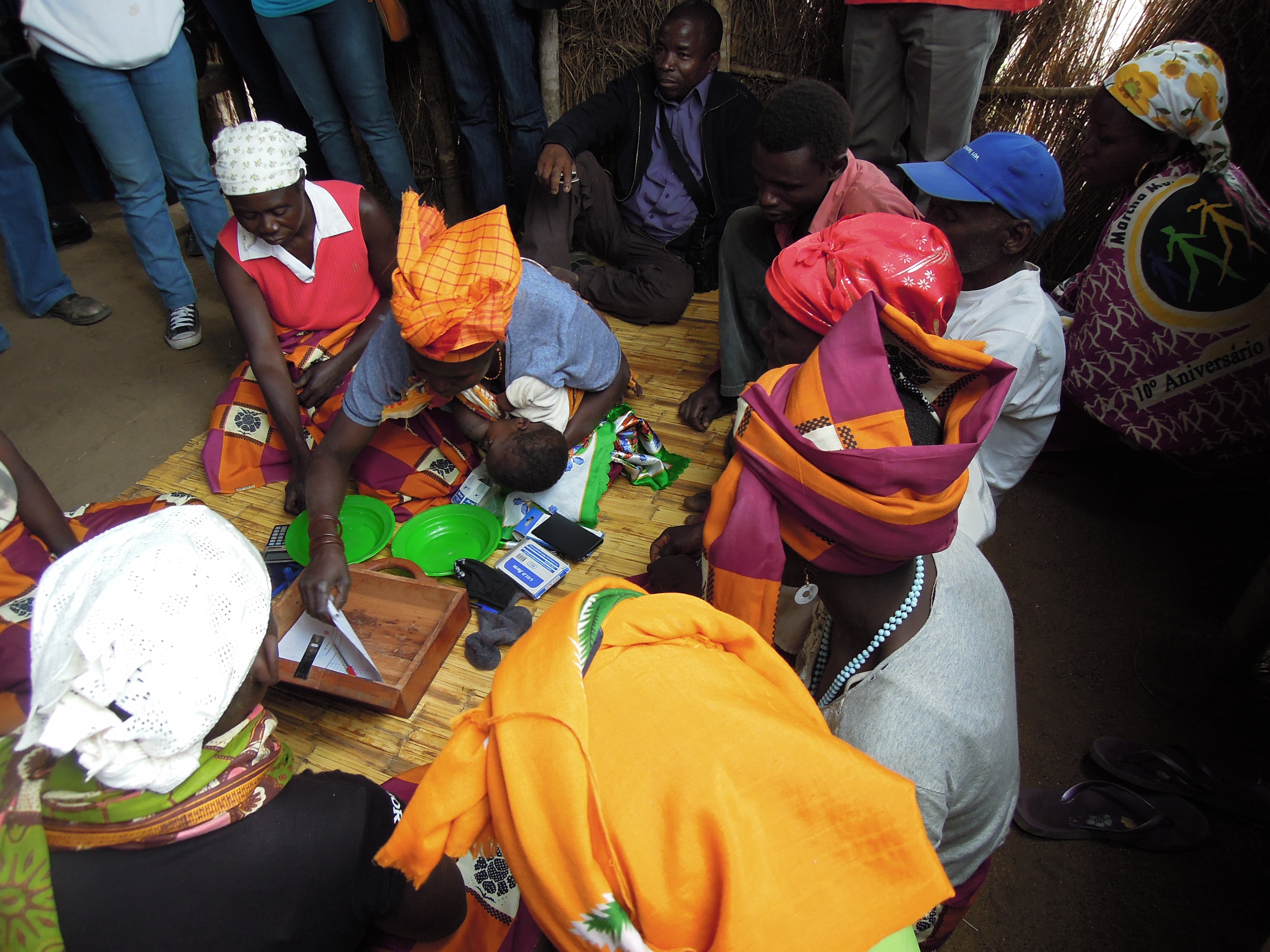
After visiting the peanut dryer, our group informed that visitors would also like to see and know the method of collecting income from all who were part of the association. Then showed us a wooden suitcase, where not only they deposited their earnings, but where they also kept the register of their loans, as well as their savings, each amount in its place (in three man socks of different colors). They explained to us that the suitcase had two keys and that they were never in the same place or with the same person. The keys were handed over to two different people in the group and when the suitcase was opened everyone should be present to count the money together, a measure of security for all.

We were impressed by the organization, methodology and capacity of a group so small yet so effective in managing their own interests. A good example of community empowerment, with which all present were astonished. However, for us it was more than that. It was once again a confirmation of the power of the people of Mozambique and Mozambican women in particular, their ability, courage and perseverance in trying to resolve their difficulties and strive for a better future. For us it was a true life lesson!

To finish, we would like to leave you with some food for thought: What will happen to these women in the community of Nacoma when the giant and controversial ProSavana is implemented? We know that Meconta is one of the areas covered by it… Will it be the “early death” of another good example in Mozambique? Or will it survive?

Ills and illogics of Coal

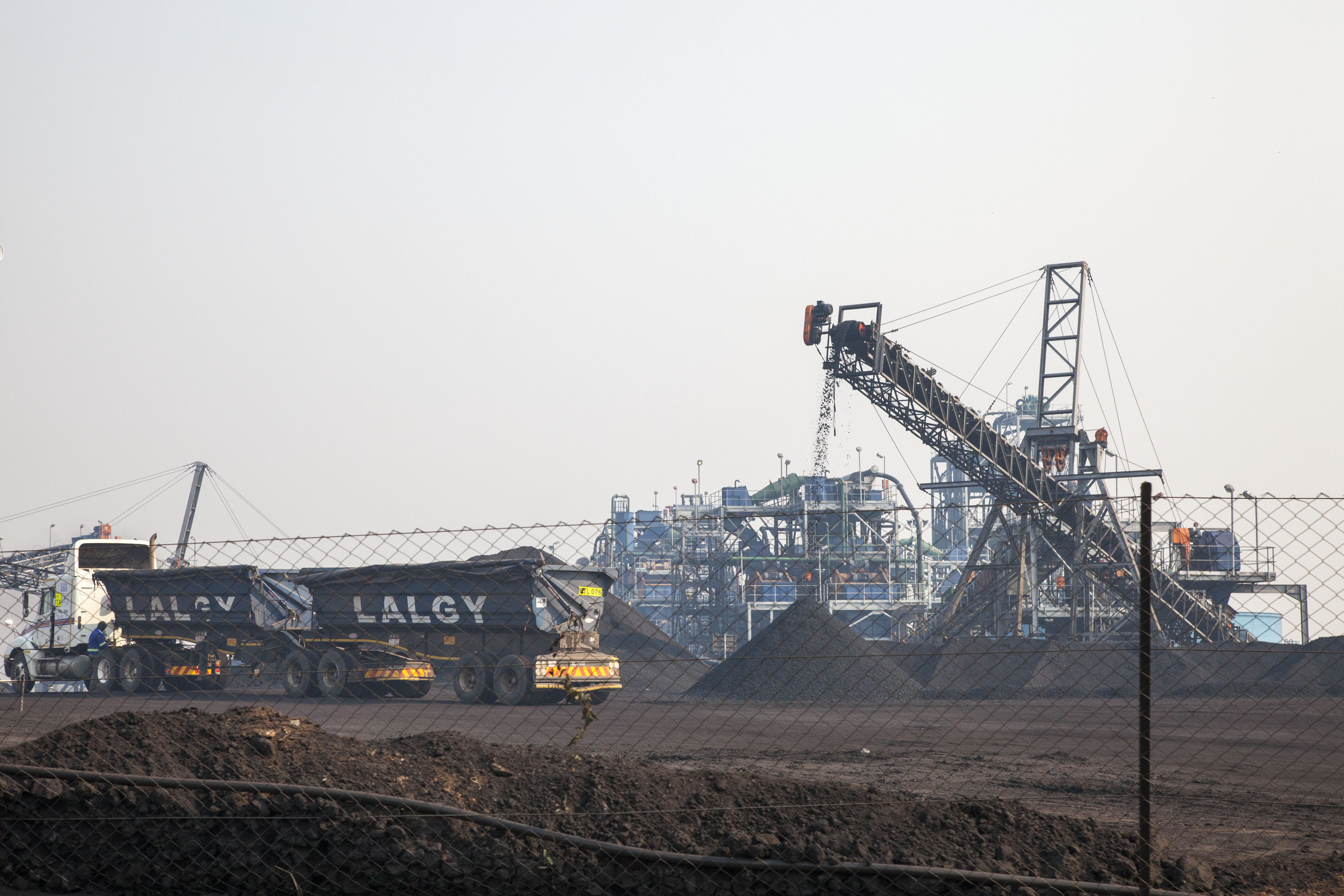
The coal monster is finally starting to show signs of illness and decline. The campaign against coal in the US has had some major victories and has sent coal into the sidelines in future energy planning, with even President Obama publicly mentioning the phasing out of coal in his speech on Tuesday at Georgetown University. With numerous coal power stations reaching the end of their lifespan, US coal consumption is on the decease and has placed the US in a situation where it can become a major global coal exporter instead of a user.

In China the first signs of change are already visible. In 2010 in China, coal was overtaken by renewables in newly-installed energy capacity, and China’s strategies and long-term planning are starting to reflect this move away from coal to a more diversified energy capacity. When even China starts to prioritize moving away from coal, then we know the tides are changing. These changes even though early and relatively small are starting to bear fruit. For example Mongolia’s future development path was set to be heavily based on exploration of their vast coal reserves to supply China’s coal needs, and Mongolia borrowed heavily on the usual assumption of revenues associated with coal. However, coals prices have been crashing and China’s increase in coal consumption has been slower than projected, while increase in using cleaner alternatives has been higher than projected. This has caused havoc to Mongolia’s debt and, in turn, its development future.

ImagemIn our own country, Mozambique, these risks are being felt. Both Vale and Rio Tinto (who according to our sources has already put their business in the country for sale) are feeling the impact of the infrastructural bottlenecks, with extensive delays and cost overruns affecting their profit margins. Coupled with decreasing coal prices, uncertain economic projects and over optimistic assessments of the quality and size of the Mozambican reserves have resulted in billions of dollars of losses. These losses are despite a very favourable, secret contract that the companies negotiated with the Mozambican government, which is unfair to Mozambique, in that it gives little benefits for Mozambique, but high negative impacts.

At a broader technical level, one starts to realise the difficulties that coal is facing. The construction cost for coal power stations have sky-rocketed and the extensive infrastructure and logical requirements (railways, ports, terminals, etc.) are facing bottlenecks around the world that further increases the overall costs. At an economical level, the risks are constantly increasing. A recent commodities report by Deutsch Bank showed dismal projections and further decreases in the possible returns from coal.

On the other hand, the cost of clean alternatives are steadily decreasing and options like wind are already cheaper at a dollar per Kilowatt produced rate, and within the next few years even solar will become cheaper. The investment world is also starting to understand and benefit from the positive components that alternative energy present. For example both wind and solar have very short periods between investment to profitability and are highly modular. Wind turbines can be installed and placed on grid in a very short time period and gradually increased in successive phases in direct correlation with demand. In contrast coal power stations are very large point investments with very long construction periods, often extended by delays. They depend more on long-term demand projects that are regularly over-optimistic or completely incorrect. Due to the long life span the production capacity is usually much higher than initial demand in order to cope with future projected demand increases, which makes the investment larger than required. Whereas alternatives start returning profits in a modular manner, as each phase is complete, traditional coal-based production has no returns until the full project has been completed and then it causes a huge peak in energy availability which can cause a decrease in energy prices due to over-supply. The need for forward planning and the regular energy peaks inherent in coal-based energy production has also been given as one of the reasons for the low priority of the energy sector for not focussing on energy efficiency.

Coal also developed as a sector during a time when economics were more open to subsidies and had a narrow notion of costs and responsibilities, if it were starting today it would be considered crazy. Unfortunatly, many of these issues are still part of common practices in the coal sector. Subsidies include direct spending, tax breaks or exemptions, low-interest loans, loan guarantees, loan forgiveness, grants, subsidised railways and ports, and much more. In terms of global subsidies in 2010 fossil fuels received almost 7 times more subsidies than renewables, and this value is based a narrow definition of subsidies. Then their is the external cost from coal. For example a Harvard medical study calculated that the additional heath and environmental cost from burning coal has cost the US $500 billion a year. Governments also lose extensive revenues from discounted royalty fees from lands, water and many others. It is common practice for mines and coal power station not to pay at all, or pay insignificant amounts for environmental services such as water (which they consume and pollute in copious amounts), nor do they restore the damage they cause. In fact just the indirect subsidies of fossil fuel, such as favorable access  to land, water and other breaks is valued to be equivilate to the total amout of subsidies received by the renewables sector. The Greenpeace South Africa report “The True Cost of Coal” highlights this absurdity of coal. Actually more than 200 different form of subsidies have been identified.

On top of this, coal is one of the main drivers of climate change, making it one of the main targets for the climate change debates. It is not a matter of “if”, but a matter of “when” serious carbon restrictions and limits start being imposed, at that time coal will be one of the most affected. However, even now with no true restrictions from the international climate change negotiations, the environmental and social problems associated with coal are so devastating and well-known that it is leading to an ever-increasing opposition to coal worldwide. It is getting ever more difficult to obtain public consent, which is becoming a growing requirement in democratic countries around the world.

In addition to competing with ever-improving clean alternatives, coal is also competing with other extractives. Most mining companies cover a host of extractive activities, but have limited resources to invest in new projects; therefore decisions have to be made between the different mining proposals. Given the increasing risks of coal it has fallen down the list of profitable investments.

Unfortunately, monsters like coal do not go down quietly. Whenever the illness of coal is exposed, a number of sector “specialists” proclaim its heath through hyper-positive projections and possible profits in the attempt to continue the investments into coal. As the industry starts realising the limited future in developed countries it turns to Africa and can always count on the short sightedness and corruption of our unaccountable leaders to allow for bad decisions. Let’s stop being the dumping ground of dying technologies.

At present coal is living through the latency associated with change and is still viable for already developed coal sectors in the near future, but dangerous for countries that are just starting to develop their coal development. Africa, and Mozambique in specific, doesn’t need to follow this destructive path to development, and the associated devastating impacts, that was used by the current powers. We can skip the potholes of development like we did with communication. Most of Africa did not have a wired line phone system, so we skipped this resource and time-extensive method, and went straight to the cleaner, more efficient wireless cellular communications route. Let’s do the same for our energy and revenue development path.