Joshua Matanzima (The University of Queensland)
On 17 May 1960, the Kariba Dam was officially opened by the Queen Mother as part of her Royal Visit to the then Central African Federation (CAF) comprising Nyasaland, Southern and Northern Rhodesias (i.e. Malawi, Zimbabwe and Zambia respectively). Located in the north-western parts of Zimbabwe, the dam’s actual construction commenced in 1955 and was completed in 1958. It was designed by the French engineer Andre Coyne and built by an Italian construction firm, Impresit. The dam was constructed for the sole purpose of electricity generation, to provide energy to the growing industries in Southern Rhodesia and the Copperbelt mines in Northern Rhodesia during the world Post- World War Two. However, it later became a hub for many other socio-economic activities including conservation, hunting, modern exploration, tourism, recreation and fisheries. It was financed by the largest loan that the World Bank had given up until that time (Scudder 2005). The dam stands 128 metres tall and 579 metres long (as shown in Figure 1). The dam forms Lake Kariba, which extends for 280 kilometres (170mi) and holds 185 cubic kilometres (150,000,000acre⋅ft) of water.
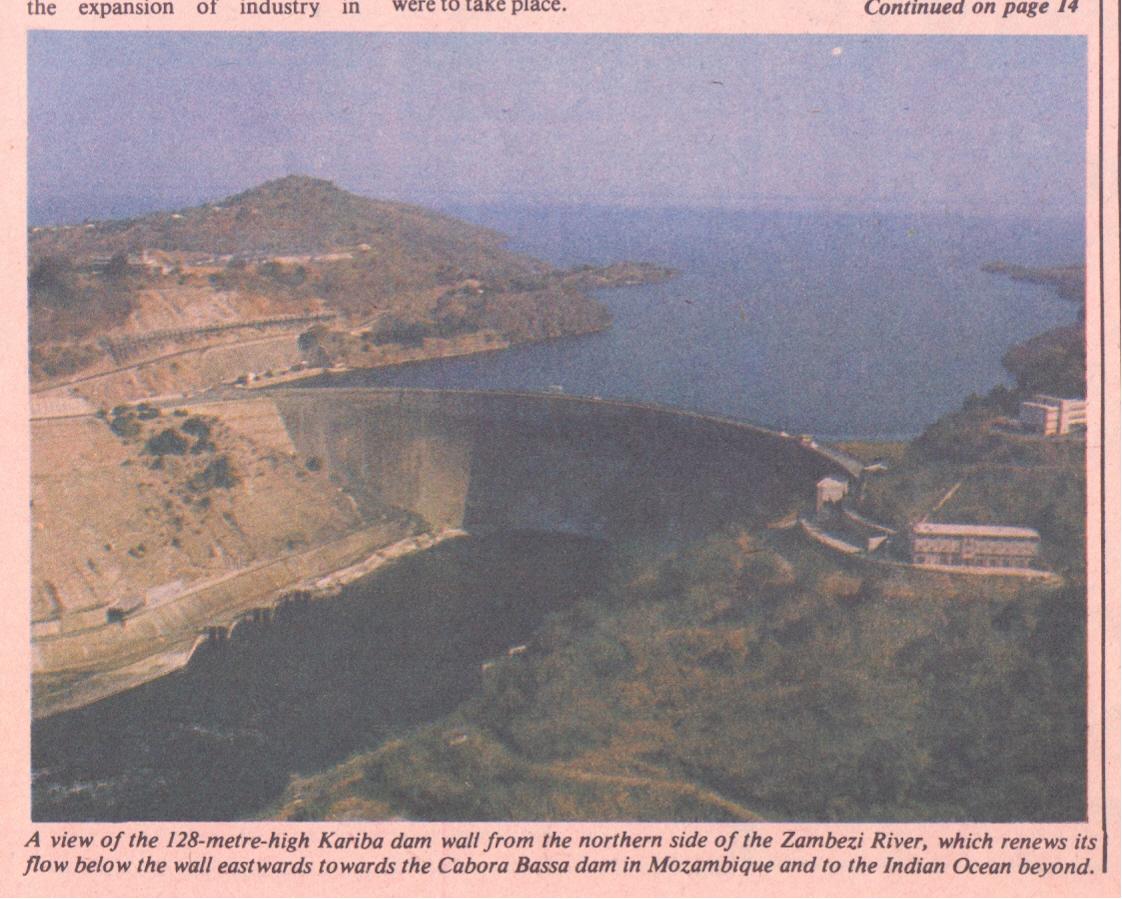
The Kariba Dam Wall
The dam wall blocked the natural flow of the Zambezi River (at the Kariba gorge) which sustained life for many groups of people. Its construction resulted in unacceptable long- term environmental and social impacts that have been widely studied by professors Elizabeth Colson and Thayer Scudder over a course of 60 years (Colson 1971; Scudder 2005). However, findings from their studies are based on research conducted in Zambia, here a summary of such long- term effects on the Tonga, Shnagwe and Korekore speaking peoples of the Zimbabwean side are discussed. More than 57 000 people including the Tonga and Shangwe and Kore-kore speaking peoples were displaced from both sides of the Zambezi.
Before, the Kariba Dam construction, people’s homesteads were in the immediate vicinity of the river on both sides. Socio-cultural and economic life revolved around the river. As illustrated in Figure 2: fishing, riverine agriculture and livestock rearing formed the basis of the economy. In addition, the river had a religious significance to the Tonga, Shangwe and Korekore people. It had sacred pools, rapids and gorges (from Victoria Falls to the Kafue confluence) that were homage to their spirits including Nyaminyami the river god and ancestors (Saidi and Matanzima 2021). People had stronger attachments to the riverine landscapes. Sacred places along the river including rainmaking shrines, malende, marked by the presence of baobab trees were approached with awe and respect, and were burying grounds for the Chiefs. People from both sides of the river conducted ritual and religious ceremonies together. The river was not a barrier of communication, but it facilitated it.
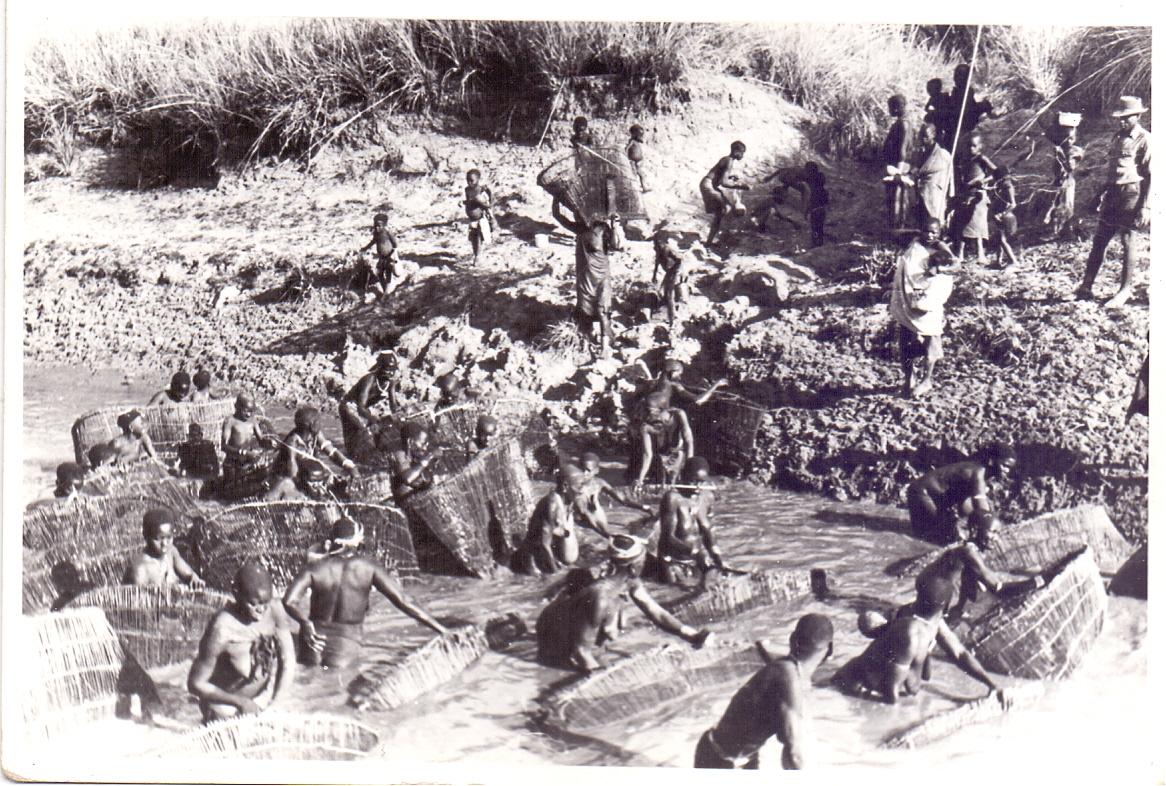
Tonga women fishing with baskets in the Zambezi before Kariba Dam.
When the dam was constructed, there was permanent separation of communities. People were moved to two different countries. Also, within each country there were haphazard movements of people across chieftaincies that separated people (Matanzima and Saidi 2020). Since the late 1950s, most people never had a chance to reunite.
Cultural property (homes, religious sites) was destroyed by heavy machinery which was used to clear roads and inundation from flooding. Though, the Lake had inundated their cultural property; during the colonial period, the Tonga and Shangwe people were denied access to the waterscape for religious and economic reasons. In the postcolonial era, though they gained a certain measure of access, the Lake’s industries were dominated by major ethnic groups including the Shona and the Ndebele people. For this reason, people were not given adequate support to reunite with their spirits in the water. Riverine Identity was foreclosed. People had for a long time identified themselves with the River as they lived along it, but overnight this identity was lost. Resulting in them becoming identified through many derogatory identities including uncivilized, childish, lazy and two toed people. The attachment to the river that sustained economies, social life and culture abruptly ended.
In the long-term people were left with no natural assets to [re]construct sustainable livelihoods, resulting in long-term socio-economic impoverishment. There were also secondary displacements. In Mola, for example, growing conservation interests around the dam resulted in Tonga people being pushed further inland in the 1960s, where they conflicted with their hosts over natural resources. During the Zimbabwe’s Liberation War in the 1970s, they were displaced again. These forms of secondary displacements worsened their impoverishment.
It is essential to have such longitudinal data on the effects of dams for many reasons, including the following: a) Long-term data about the early dams to be constructed in this region including Cabora Bassa and Kariba are essential because we can draw lessons from them in our contemporary decisions to build dams; b) Longitudinal data can also be used in campaigns against the construction of dams, especially when we emphasize their intergenerational impacts on lives and livelihoods on impacted communities; c) in addition, such data can inform and reinforce the work of such civil society groups and NGOs as “International Rivers”, “RiverWatch” and “EuroNatur” whose work is to achieve social and environmental justice through raising awareness about the impacts of dam building; d) we are in a better position to assess the relevancy of dams in the long-term and coming up with decisions to decommission them. Dam decommissioning should be informed by adequate information about their advantages and disadvantages; and e) we also get to understand different shifts in the governance of dams over time and how that affect communities (including displaced people). In the case of the Kariba dam, for example, it has been governed both by colonial and postcolonial governments. Different policies are implemented in disregard of the impacted communities, which then worsen their plight. Apart from Kariba, the validity of longitudinal data has also been emphasized in studies of the resettlement impacts of the Three Gorge Dam in China by Brooke Wilmsen (Wilmsen 2016; Wilmsen and van Hulten 2017).
The ongoing long-term effects of large dams on Indigenous people raise the controversial question: do we still need to construct more dams? In recent years we have seen mega dams being decommissioned mainly in the global north because they become unnecessary in the long run. Such a turn in the relevancy of dams pushes us to [re]think our decisions to build dams.
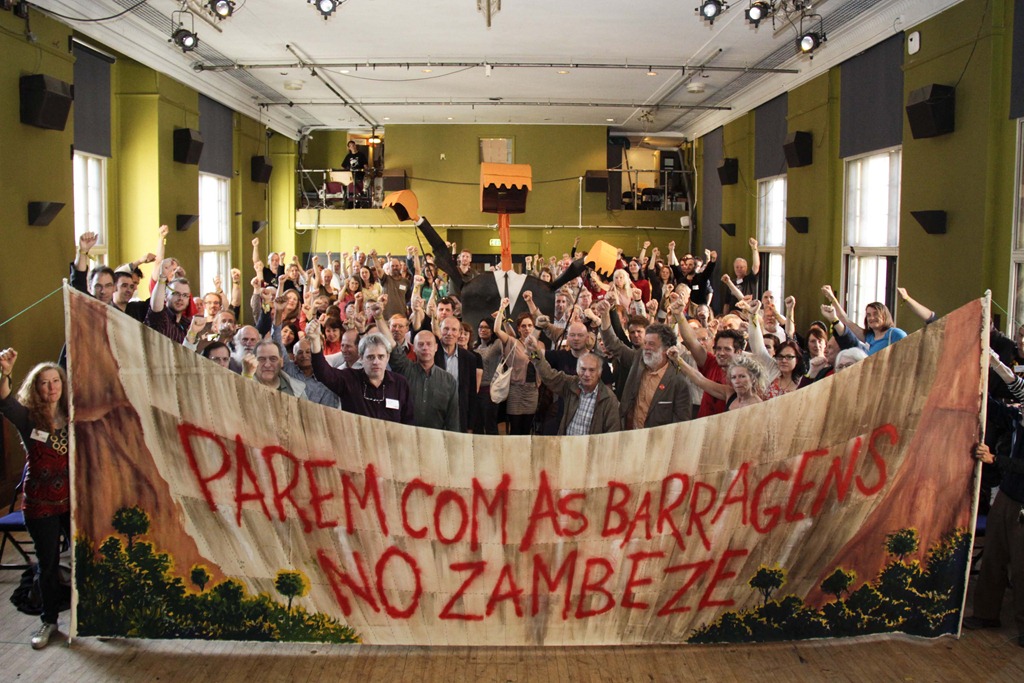
In the contemporary haste to transition from use of fossil fuels to clean energy in order to meet the net-zero target, dams are increasingly being considered as an option for clean energy production by governments. This may entail that governments may need more dams than ever before. Which may mean minimal dam decommissioning. However, it is essential to consider other clean energy sources such as roof top solar systems that have minimized impacts on human communities and the environment. Energy transitions must be achieved through ‘just’ methods that do not harm Indigenous communities and the environment. We should consider stopping dam building especially when its unnecessary and consider other options. The unnecessary nature of dams can be calculated through cost benefit analysis and their overall long term social and environmental impacts. Research has shown that in most cases the costs of maintaining a dam exceeds their benefits (Ansar et al. 2014; Scudder 2017, 2019).
Sources:
Ansar, A., Flyvbjerg, B., Budzier, A., & Lunn, D. (2014). Should We Build More Large Dams? The Actual Costs of Hydropower Megaproject Development. Energy Policy, March 2014, 1-14. Retrieved from SSRN: https://ssrn.com/abstract=2406852
Matanzima, J., & Saidi, U. (2020). Landscape, belonging and identity in Northwest Zimbabwe: A semiotic analysis. African Identities, 18(1–2), 233–251. https://doi.org/10.1080/14725843.2020.1777839
Saidi, U., & Matanzima, J. (2021). Negotiating Territoriality in North-Western Zimbabwe: Locating The Multiple-Identities of BaTonga, Shangwe, and Karanga in History. African Journal of Inter/Multidisciplinary Studies, 3(1), 61–74. doi: 10.51415/ajims.v3i1.864
Scudder, T. (2005). The future of large dams: Dealing with social, environmental institutional and political costs. Earthscan.
Scudder, T. (2017). The good megadam: Does it exist, all things considered? In B. Flyvbjerg (Ed.), The Oxford handbook of megaproject management (pp. 428–450). Oxford University Press.
Scudder, T. (2019). Large Dams: Long-term impacts on riverine communities and free-flowing rivers. Springer Nature.
Wilmsen, B. (2016). After the Deluge: A longitudinal study of resettlement at the Three Gorge Dam. World Development, 84, 41-54.
Wilmsen, B., & van Hulten, A. (2017). Following resettled people over time: The value of longitudinal data collection for understanding the livelihood impacts of the Three Gorges Dam, China. Impact Assessment and Project Appraisal, 35(1), 94-105. DOI: 10.1080/14615517.2016.1271542




 JA4change