Category Archives: Climatic Change and Resilience

Life Compromised for Coal: Mozambique & the Importance of the IPCC report

Yesterday, JA celebrated the opening of our photo exhibition called “O Amanhã Comprometido: A Vida Por Carvão” which translates to ‘Tomorrow Jeopardized: Life for Coal’. This exhibition will run in the Associação Moçambicana de Fotografia in Maputo for a week until 1 October 2013. The exhibition features photos by Daniel Ribeiro, Mauro Pinto and Peter Steudtner.

(See the exhibition poster below)

 Image

This hard-hitting photo exhibition comes as the Intergovernmental Panel on Climate Change (IPCC) will release tomorrow yet another report about the dismal state of our atmosphere. The IPCC was constituted by the United Nations to study in depth the scientific, technical and socio-economic aspects of climate change. They release their assessment reports every 5 years; this week world leaders are meeting in Stockholm, Sweden, to release the Fifth Assessment Report (AR5) of Working Group 1 of the IPCC. Other chapters of AR5 will be released at different times next year, and we will keep you all posted about it.
Image

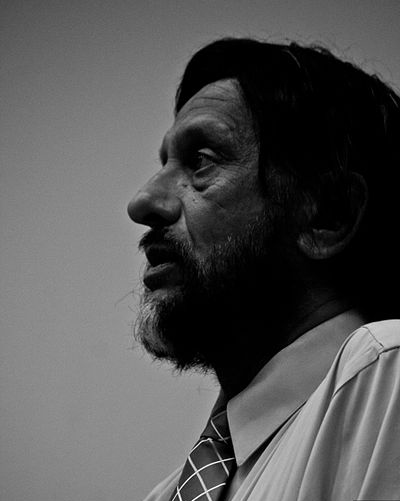
(Photo of the IPCC Chair Rajendra Pachauri by Marshall Niles)

Due to of the very technical nature of the process and the scientists involved, the AR5 report is likely to be conservative in its conclusions. But still, the verdict from the report is so clear. Parts of the report have been leaked beforehand. The report will conclude that climate change is definitely happening and it is driven by increased emissions from humans. The report will stress that each of the last three decades have been warmer than all of the preceding decades going back to 1850 and the decade from 2000-2010 has been the warmest. The report will conclude that an average temperature increase of 4 degrees Celsius is “as likely as not likely” by 2100. But this is just talking about global averages. The report is quite confident that the temperature increases over big land masses, including Africa and Asia, will be higher than the averages! Not just this, but the impacts faced by people will be worse that they originally predicted.

Already Mozambique is seeing elevated temperatures and huge variability in rainfall and river flows. In January 2013, over 150,000 people in Gaza district of Mozambique were temporarily forced out of their homes because of devastating floods. JA travelled to Chokwe to meet with communities and wrote about this in our February newsletter in Portuguese, available here: http://justicaambiental.org/index.php/en/resources/newsletter/2013

So what is the world doing about these dangerous scenarios? Dangerously little! The biggest and best way to reduce emissions today is to reduce the use of fossil fuels right now. Yet the world continues mining coal, drilling oil, fracking; all driving us closer to catastrophic climate change.

But what is worse, in spite of overwhelming scientific evidence of human caused climate change due to emissions, the Northern governments and big business find all possible ways to develop and push false solutions such as carbon trading, CDM, REDD, offsets, geo-engineering, etc., instead of reducing emissions.

Actually these constantly emerging and totally flawed false solutions are not a mistake but are very intentional; they are meant to give a free pass to polluters to carry on polluting. We are now heading towards the 19th meeting of the Conference of the Parties (COP) and in 19 years of trying to stop climate crisis, emissions have only gone up and false solutions are threatening more lives and livelihoods than ever before.

Of course, Mozambique has historically had a very small contribution to climate emissions. However, today Mozambique is aiming to be a major coal exporter, which is affecting communities locally and will put more carbon in the atmosphere than the world can bear. At this IPCC report’s release, we strongly say: Leave the coal in the hole! In Mozambique and everywhere in the world.

 For more information, see:

A GOVERNMENT WITHOUT SHAME, A PEOPLE WITHOUT HOPE

THE PROTEST NO ONE TALKED ABOUT

Late last month, on the 22nd and 23rd of July, a protest took place in Chirodzi area, Tete province, in central inland Mozambique.  The local communities had gathered there to protest in the concession area grated to Jindal, an Indian mining company. Jindal is extracting coal from an open pit mine in Tete province, without an environmental impact study and without ensuring the safety of the local communities. Till date the communities have not been resettled, but continue to live in the concession area.

The communities have been raising their voices, asking for their rights. On this day, the frustration and desperation of the communities mounted, and the protest turned violent. The communities attacked four Indian Jindal employees. Of the four Jindal people attacked, one was attacked in his office and the other three in their homes, all within the concession mining area. There was a security company, who usually secures the gates and the whole perimeter of the concession area, were also attacked, and with no place to hide from the public anger, they ran away. The police were also present, but were outnumbered by the irate people.

The protest involved four communities: Chirodzi / Cahora Bassa, Chirodzi / Changara, Cassoca and Nyantsanga. These last two communities are located within the concession area of ​​the mine, while the first two are on the periphery. But it is very important to note all these communities have communal lands which have now been taken by the company.

According to community testimonies, the protest erupted because of Jindal’s failure to fulfil the promises they made to the communities when their settled here in 2008.

  • They promised they would not extract coal before resettlement of the communities, yet they have been doing exactly that for over eight months;
  • They promised not to occupy lands, specifically the fields of local communities, without first negotiating with their legitimate owners;
  • They assured the communities that there would provide a water supply;
  • They also promised jobs for community members.

The communities and Cassoca and Nyantsanga stated that in December Jindal usurped part of their farms with standing crops, without any warning, thereby seriously undermining their food sovereignty. As for resettlement, it is not happening but the coal is being mined. On 9th of May 2013, Macauhub news reported that a ship left from Beira port, heading for India, carrying 36,000 tons of coal mined by Jindal Mozambique Minerals.

Image

The communities constantly face respiratory and other serious problems, from being so close to the open pit mining. Air pollution resulting from mining activity is visibly hanging in the air; the black dust settles on everything. How will the lungs of people cope with this? How much longer will children continue to have their classes in this atmosphere?

Their frustration is what led to this protest. The communities also promised that if their rights continue to be ignored and trampled, and if the company does not fulfil the promises made to them, there will be more protests. This protest revealed how bad the relationship is between Jindal and these four surrounding communities.

The relationship between employees and employers in Jindal is also bad. According to company officials who agreed to talk to us, there are many quarrels about alleged discrepancies in pay and subsidies to employees. Even the workers who operate the mine say they do not have the protective equipment that is required.

But Jindal reportedly seems to have a excellent relationship with the government. This is substantiated by the fact that some people even said that the government collects “taxes” from the company.

At the end of the day, according to the laws in force in the Republic of Mozambique and international conventions, Jindal is in the wrong, but the government is partly responsible for this, because of their passivity and permissiveness (or should we say say collusion).

Jindal declined to provide any information to us, but they summoned a meeting with community leaders and “informed” them not to provide any information to civil society organisations, and they threatened not to renew contracts with those who did communicate.

The silence of the media is also shocking. It is extremely sad that, even though we know that there were several teams of national media in the middle of all this circus in Chirodzi, but other than the Diário de Moçambique, nobody published this story.

Less than a month after this transpired in Chirodzi, the communities still continue to wait for their rights to be recognised. But meanwhile, the complicity of the government was proved. While the communities were protesting the way this company is operating and protesting against unfulfilled promises, the Mozambican President, Armando Guebuza, visited Chirodzi to officially inaugurate the project, and doing so, legitimized what Jindal is doing. Basically, he gave his approval to what was happening, to mining being carried out without an Environmental Impact Study, to mining being carried out while communities are still living there, with about 563 families still waiting to be resettled. Adults and children. All living in an environment extremely dangerous and harmful to their health, not to mention that their livelihoods and futures are being silently trampled on. They have been forgotten and made invisible by those who should protect them. A shameless government leading a hopeless people. This is our Mozambique.

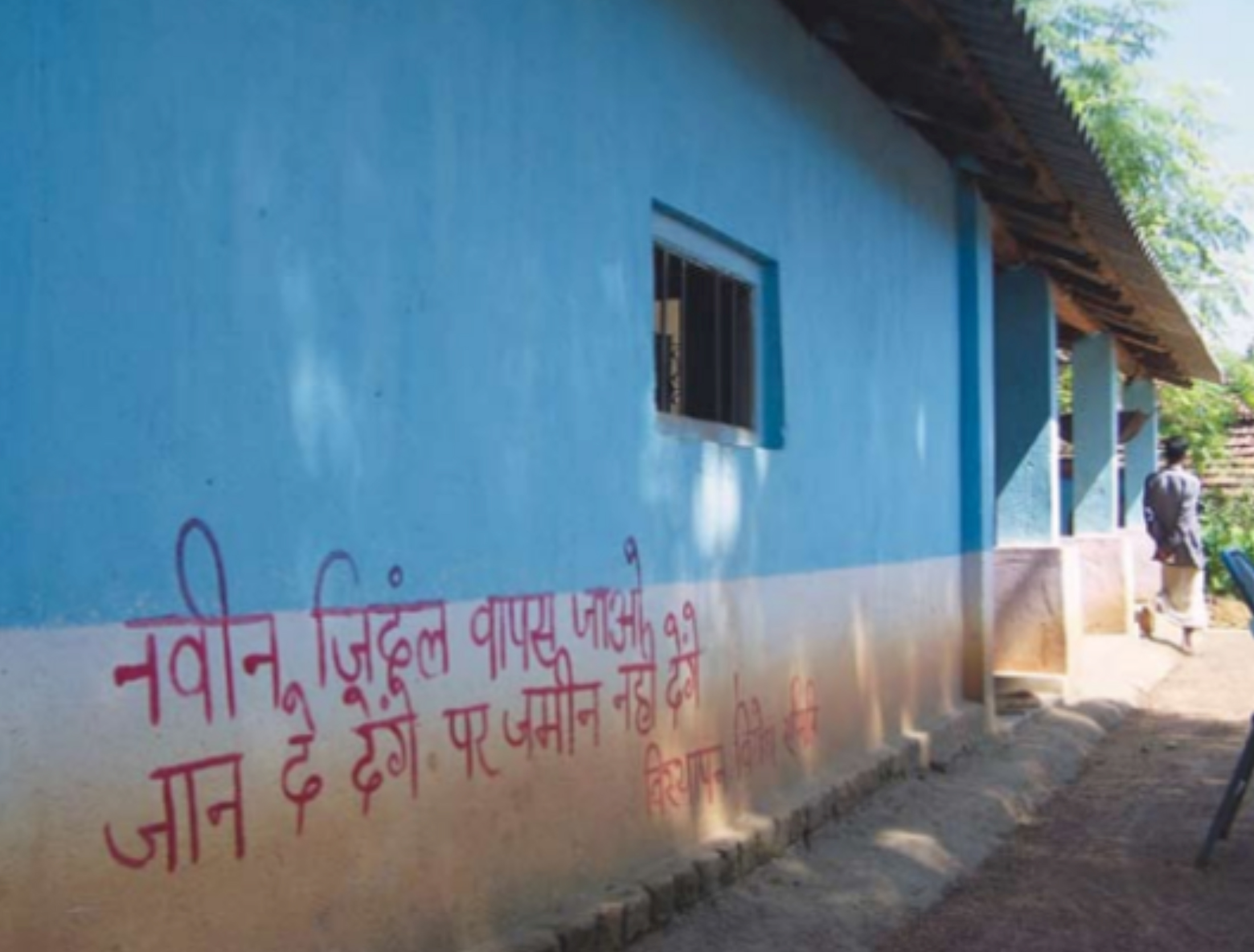
Meanwhile, protests against Jindal are not new. In their home country of India too, Jindal has been exploiting local communities with impunity. In the Indian states of Odisha, Jharkhand and Chattisgarh, which are states with large populations of tribal people, Jindal has been devastating farms, villages and lives for many years now. But, same as in Mozambique, the communities have not been silent. In Asanbani village in Jharkhand, the houses are marked with signs in Hindi such as “Naveen Jindal go back! We will give our lives but we will not give our lands” (see photo below). This is the Visthapan Virodhi Samiti (Committee against Displacement).

Image

Photo credit: Panos South Asia, Alchemy of Iniquity: Resistance and Repression in India’s Mines. A Photographic enquiry.

We are moving towards building bridges between these communities fighting again a common enemy, Jindal, across India and Mozambique.

A recent book called ‘A New Scramble For Africa?: Imperialism, Investment And Development’, carried a great quote of Gandhi to help us contextualise why the presence of Indian company Jindal in Africa is so problematic.

Gandhi said, “The commerce between India and Africa will be the commerce of ideas, not manufactured goods against raw materials after the fashion of western exploiters.”

Africa is Sovereign and WILL NOT ACCEPT being Re-colonized

In response to Denmark’s Minister for Development Cooperation Christian Friis Bach recent controversial interview, Friends of the Earth Africa elaborated an Open Letter to be handed over to every Embassy of Denmark in African countries where FoEA is present. Based on that Open Letter and with the purpose of empowering it by allowing all of us, concerned citizens of the world to sign it,  we are now starting a petition with the same motto.  You can read the Open Letter bellow and if you share our concern, please sign our petition and add your voice to the struggle against the development models of capitalist neocolonialism.

Open Letter from the African Civil Society To The Representatives of Denmark in Africa

Subject: Africa is Sovereign and WILL NOT ACCEPT being Re-colonized

In light of the interview given by your Minister for Development Cooperation, Christian Friis Bach, on the 9th of this month to the Danish newspaper Politiken, and taking into account that the presence of Danish cooperations on the African continent dates long before the independence of most countries where they still operate today through various organizations that develop various projects and activities in various spheres of the political system, civil society and the business sector, we cannot refrain from expressing our deepest distaste for the disrespectful and peculiar ideological content of the above-mentioned interview.

Truth be told, Minister Christian Friis Bach said exactly what many politicians and leaders of developed countries think but cleverly would never dare say. Frankly, we prefer Christian Friis Bach to those other dodgy individuals. Petulant or reckless, your Minister of Development Cooperation said just what he thinks, giving us a chance to rebut, to contest and tell him that his notion of development is obsolete, that what he says he is willing to do is ethically despicable and offensive, that those who he claims would be the main beneficiaries of the policies he intends to impose will for sure become its main victims, and that even though unfortunately he may have the power to influence the decisions taken by the state apparatuses of some African countries, he definitely does not have the right to do so. We believe that he ought to know it. We Africans assure Christian Friis Bach and all who think like him, that even though we are already being pillaged, we will never allow Africa to be economically recolonized. Never.

It is instructive to remember that contrary to what Minister Friis Bach said in his interview, we Africans do have capacity to feed and sustain our people. African agriculture and food needs have been met over time through sustainable and multi-dimensional approaches, keeping to a minimum such externalities as artificial fertilizers, imported pesticides and herbicides, as well as practices that are alien to the socio-cultural settings of our people.

The support Africa needs right now is a decisive stand to maintain seed as well as cultural diversities and defend staple crops which are targeted by biotech even when there is no need for their engineered varieties or GM crops.

To you, as the highest representative of the Danish people in our territory, we would like to ask if you share the opinions of your Minister for Development Cooperation. If you do, please be kind enough to answer the following questions:

Do you think it is fair that the African continent should be held accountable “today” for the bad decisions rich countries such as yours made “yesterday”, and which led to over-exploitation of nature, animals and human beings by introducing unhealthy and destructive diets as well as excess energy consumption?

Do you consider it acceptable that countries like yours should impose their failed development models on Africa as if they were models of success and the only guaranteed path towards development?

Would you imagine a world in which Africa adopts your ideas of production, consumption, development and progress?

Do you think it right that we Africans must accept without question the responsibility of using our resources to support those who were obviously unable to manage theirs?

It honours us greatly that the world is turning to Africa and its leaders say they are counting on us. We Africans are hospitable and supportive and for long we have been wanting to contribute more and better to a development path that supports sustainable livelihoods. However, we do not have to sacrifice ourselves to accommodate the whims of those who think it is a mark of progress to destroy the planet. We want to rely on the support of all who are well intended, but such support must not trample on our sovereignty and dignity.

In this context, we, African organizations, movements and associations who hereby signed this letter, reiterate that we continue to consider much welcome the support of those who wish to walk with us towards a development path:

  1. That adequately serves our needs and those of our future generations;
  2. That is fair and just and not predicated on exploitation, resource grabs and denigration;
  3. That is logical and thoughtful and does not necessarily have to be traversed in pursuit of anything or anyone;
  4. In which we may not be sole beneficiaries, but we must not be denied our due;
  5. That not only respects the sovereignty of each African country, but also our diversity as a people, as well as the diversity of our cultures and traditions;
  6. That is guided by principles of honesty, transparency and inclusion, fundamental to the democratic exercise of any territory.
  7. That respects our Food sovereignty, which is built upon the inalienable rights of peoples to maintain their cultural as well as seed diversities. Cultural diversity permits peoples to maintain and enlarge their stock of local knowledge; produce, save and use their seeds and have control over farming practices developed over centuries of experimentation and experience. Food sovereignty ensures that farmers stay in business and that peoples are not forced to alter their diets.Naturally, we consider that any development project that ignores or disregards any of these principles is not in the best interest of Africa or Africans, and we reject and denounce the position taken by your government through your Minister of Development Cooperation.

For the sake of the good relations we wish to maintain with you, we would appreciate you would be so kind as to respond to this letter.

Signed by

African Organizations,

Friends of the Earth Africa

Justiça Ambiental/FOE Mozambique

ATPNE / Friends of the Earth Tunisia

Centre pour l’Environnement et le Développement / Friends of the Earth Cameroon

Environmental Rights Action / Friends of the Earth Nigeria

Friends of the Earth Ghana

Friends of the Earth Sierra Leone

GroundWork / Friends of the Earth South Africa

Guamina / Friends of the Earth Mali

Lawyers’ Environmental Action Team / Friends of the Earth Tanzania

Les Amis de la Terre / Friends of the Earth Togo

Maudesco / Friends of the Earth Mauritius

National Association of Professional Environmentalists / Friends of the Earth Uganda

Sustainable Development Institute (SDI) / Friends of the Earth Liberia

Yonge Nawe Environmental Action Group / Friends of the Earth Swaziland

Alliance For Food Sovereignty  In Africa (AFSA)

African Biodiversity Network (ABN)

Coalition for the Protection of African Genetic Heritage (COPAGEN)

Comparing and Supporting Endogenous Development (COMPAS) Africa

Indigenous Peoples of Africa Coordinating Committee (IPACC)

Participatory Ecological Land Use Management (PELUM) Association

Eastern and Southern African Small Scale Farmers Forum (ESSAFF)

La Via Campesina Africa

FAHAMU, World Neighbours

Network of Farmers’ and Agricultural Producers’ Organizations of West Africa (ROPPA)

Community Knowledge Systems (CKS)

Plateforme Sous Régionale des Organisations Paysannes d’Afrique Centrale (PROPAC)

Laurent Alex Badji COPAGEN Senegal

The Green Belt Movement Kenya

Health of Mother Earth Foundation, ((HOMEF) Nigeria

Committee on Vital Environmental Resources (COVER) Nigeria

The Young Environment Network (TYEN) Nigeria

Institute for Research and Promotion of Alternatives in Development (IRPAD/Afrque)

Mali Coalition pour la Protection du Patrimoine Génétique Africain Mali (COPAGEN-Mali)

Actions Pour le Développement Durable, Republic of Benin

Kenya Debt Relief Network(KENDREN) Kenya

African Centre for Biosafety (ACB) South Africa

The Rescope Programme Malawi

Host Communities Network Of Nigeria (HoCoN, Nation Wide) Nigeria

Students Environment Assembly Nigeria (SEAN Nation Wide) Nigeria

Community Forest Watch Group Nigeria

Green Alliance Nigeria (Nation wide) Nigeria

Abibiman Foundation Ghana

Oilwatch Ghana

Oilwatch Nigeria

Improving Livelihoods Through Agriculture (ILTA) Ghana

Acção Académica para o Desenvolvimento das Comunidades Rurais (ADECRU), Mozambique

Associação de Apoio e Assistência Jurídica às Comunidades (AAAJC), Mozambique

Fórum Mulher, Mozambique

Liga Moçambicana dos Direitos Humanos (LDH), Mozambique

Kulima, Mozambique

Non African Organizations:

Amigos da Terra América Latina e Caribas TALC

Amigu di Tera (FoE Curaçao), Curação

NOAH Denmark, Dinamarca

COECOCEIBA / FoE Costa Rica

Community Alliance for Global Justice Denmark, Dinamarca

Amigos de la Tierra México, México

Red Mexicana de Afectados por la Minería (REMA) México

Movimiento Mesoamericano contra el Modelo Extractivo Minero (M4) México

The Rescope Programme

Community Alliance for Global Justice

PLANT (Partners for the Land & Agricultural Needs of Traditional Peoples)

Various African Organizations and Movements are still signing in and several Non African movements and organizations are also subscribing to this letter.

JA! celebrates the International Day of Rivers

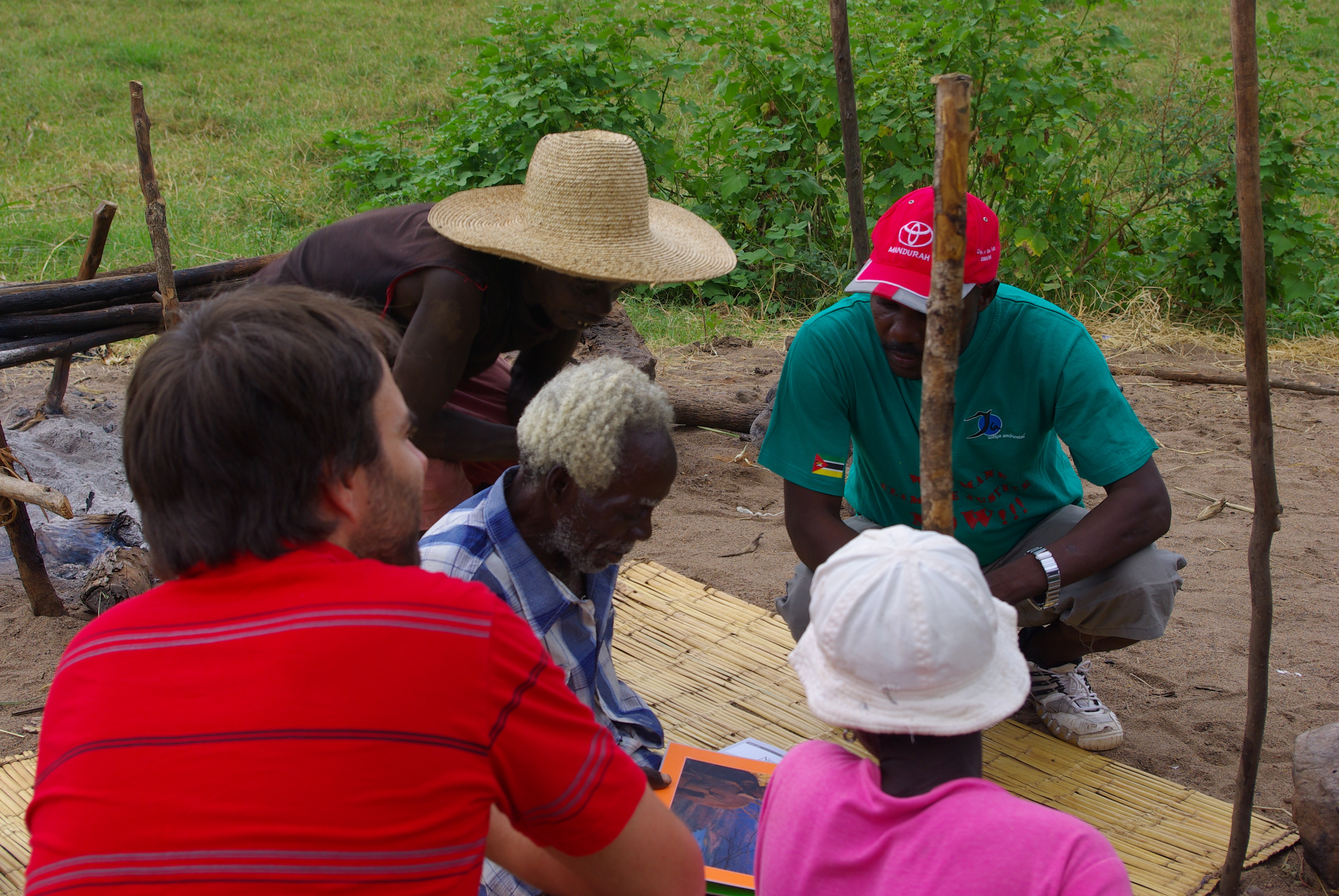
March 14th Meeting

March 14th Meeting

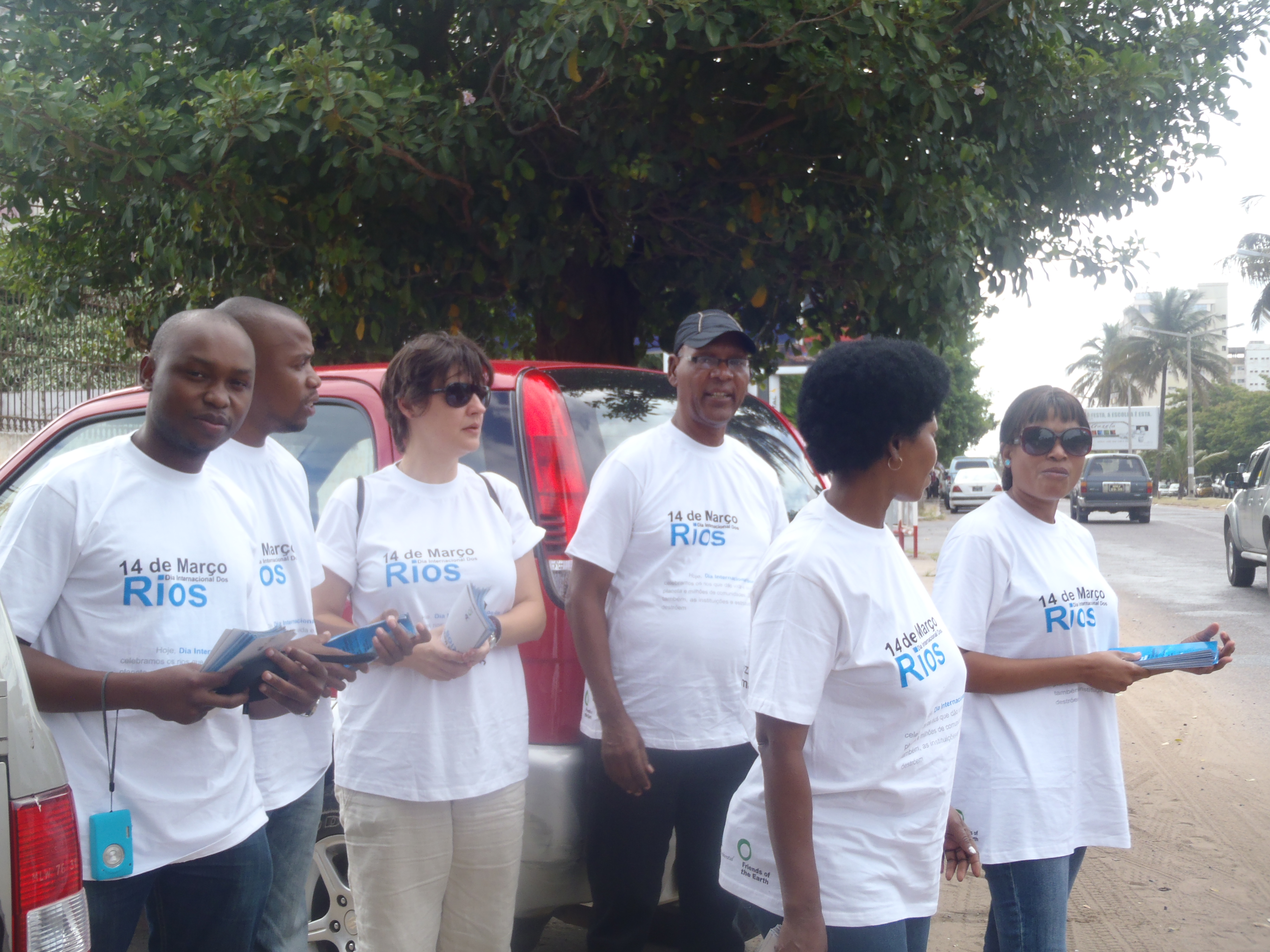
On Thursday, 14 March, Justiça Ambiental (JA!) marked the occasion of the ‘International Day of Rivers’ by holding simultaneous events in Tete and in the capital Maputo.

In Tete, over 50 community people came together on the banks of the Zambezi River. These included communities that will be displaced

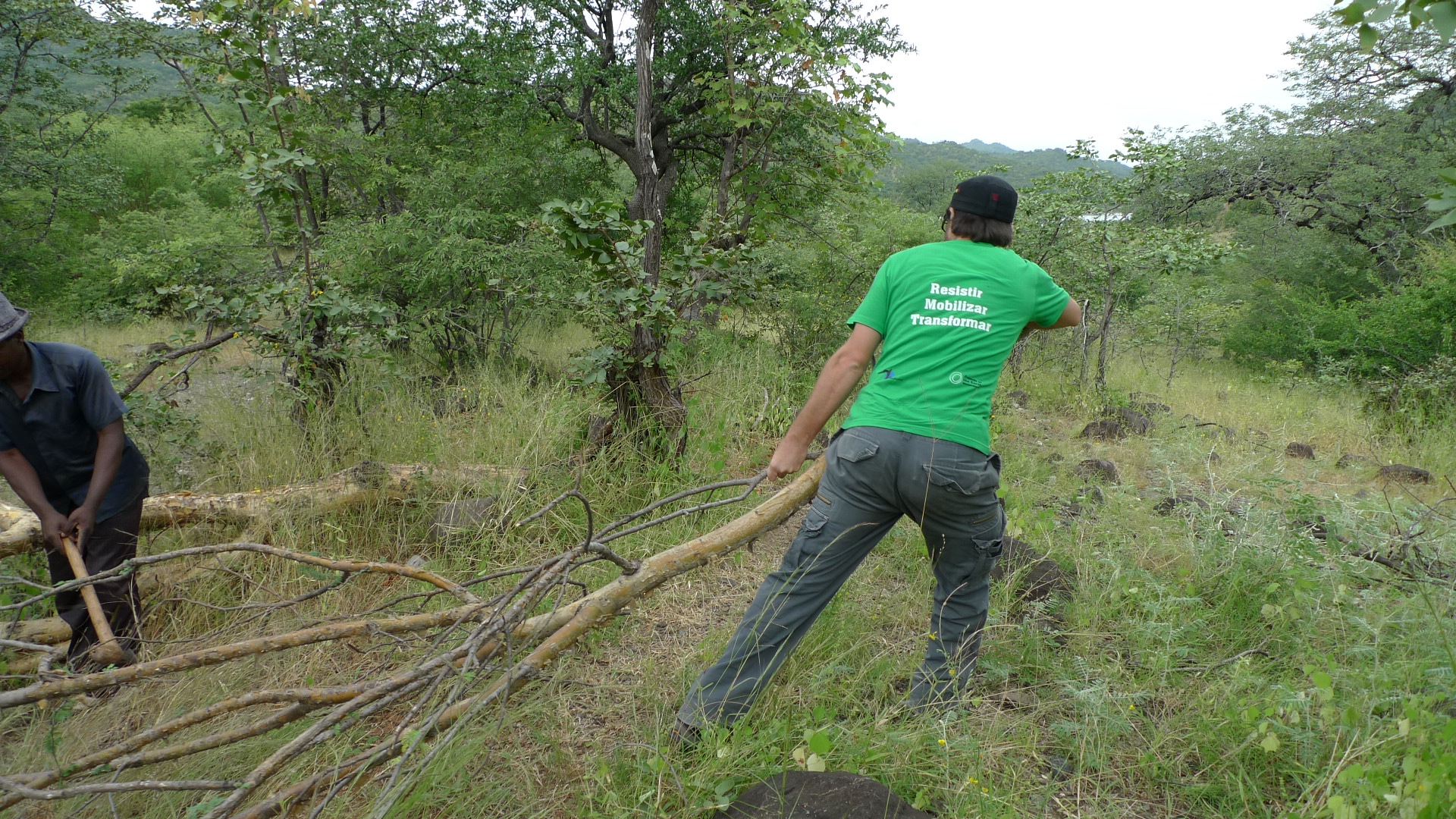
Removing a fallen tree on the way to Mphanda

Removing a fallen tree on the way to Mphanda

from their lands and homes if the Mphanda Nkuwa Dam is built across the Zambezi River. We were also joined by communities affected by Vale, Rio Tinto and Jindal, all carving out the earth to extract coal from their villages.

The meeting was organised by JA!, along with our partners Liga dos Direitos Humanos (Human Rights League), AAAJC (Association for Support and Legal Assistance for Communities), UNAC (National Farmers Union, Tete provincial chapter).

The all-day meeting was held at the Tete Provincial Centre of Agricultural Formation. JA supported the community members to come in the night before, since their homes are far and the transportation systems in Mozambique are very poor. The communities affected by Vale, for instance, used to live in Moatize, 19kms from Tete. Now they have been moved to

Sr. Morais lived his entire life near the river, if the dam is built he will have to move far from the river. What about his rights!

Sr. Morais lived his entire life near the river, if the dam is built he will have to move far from the river. What about his rights!

Cateme, 56kms away from Tete, and transport could easily cost 150 Meticais (US$ 5) each way! The Mphanda Nkuwa communities live over 70kms from Tete. The area is very remote and roads are almost non-existent.


The meeting on 14 March brought together these community people and organisations to talk about communities that live and thrive on rivers and other natural resources. When such communities are displaced from their resources, they usually lose their subsistence base and with that, their self-reliance. There were presentations on:

  • Human rights,
  • Dams and the context of Mphanda Nkuwa
  • Challenges with the Land Law relative to the Mines Law
  • Mega-projects and false promises
  • Fight against dams: a case from India’s Narmada Valley
  • Climate Risks for the Zambezi River

But in the most important part of the meeting, the community people were talking to each other and sharing their own experiences. The people that will be displaced by Mphanda Nkuwa heard directly from communities still struggling to

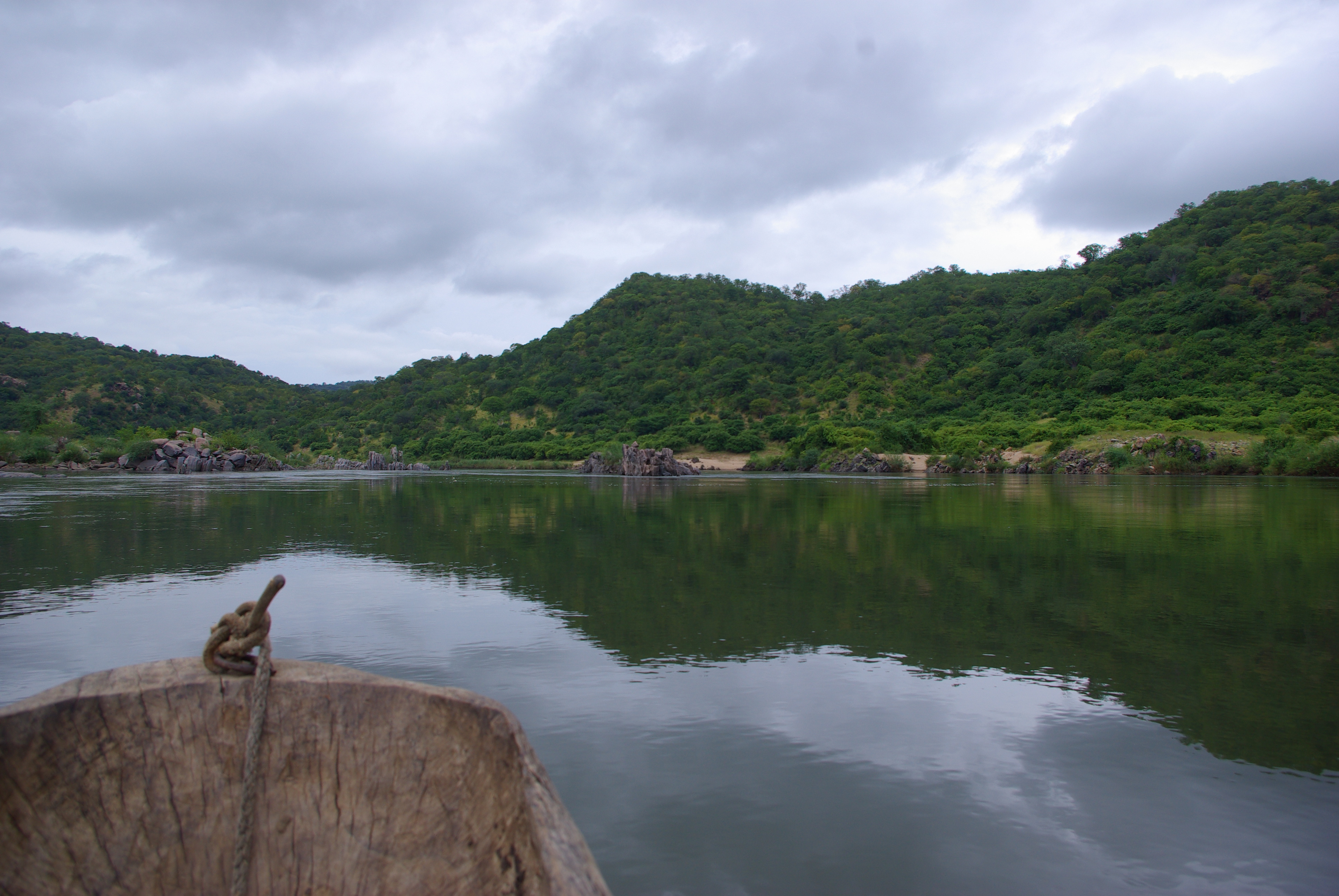
View from the proposed dam site

View from the proposed dam site

get their rights after being displaced by Brazilian mining giant, Vale. The ruthless Indian company, Jindal, has also started mining coal in the village of Mualadzi. However, they haven’t removed anyone yet, so people continue to live among the coal dust while the mining continues.

The stories shared by people were heart-breaking. They reveal the cruelty of the extractive model where self-reliant communities are robbed of their natural resources which are increasingly being commodified by the corporate-driven development model.

After the meeting the JA team took the communities back to their villages by the river. We went to visit Sr. Morais, an outspoken elder of the fisherfolk community, who was lived by the river his whole life. The secretary of the bairro (village) prevented him from joining our meeting, even though JA specifically asked for him to participate. If he is forced to move inland, far from the river, his livelihood and, with it, his culture and traditions will

Zambezi

Zambezi

be threatened. We believe this is a crime and a violation of his rights, as well as of all the fishermen whose livelihoods depend on the river.

Along with the meeting in Tete, JA also held an event in Maputo, where we challenged another actor who is actively pushing this damaging extractive model: the World Bank. In Maputo, we invited friends and colleagues to take to the streets. We congregated near the World Bank headquarters in Mozambique, on Kenneth Kaunda Avenue, where we distributed flyers and spoke with passers-by, even Bank workers, students from the neighbouring Faculty of Law of Eduardo Mondlane University and other interested citizens. The Bank was targeted to raise awareness about their role in pushing destructive large dams. The Bank’s stated goal is to reduce poverty but for most of its existence it has actively pushed projects that have

increased poverty especially of the most vulnerable communities.

Action on World Bank in Maputo

Action on World Bank in Maputo


Tagged , ,

Stop Damming the Zambezi

conference2012_1129

This past week saw the release of a significant study that has deep repercussions for energy planning and water solutions in Mozambique.

International Rivers released this in-depth study by renowned hydrologist, Dr Richard Beilfuss, detailing the major risks of hydropower dams on the Zambezi River. The report, titled: ‘A Risky Climate for South African Hydro’ warns that southern Africa’s over-reliance on dams could spell doom as the climate worsens.

The Zambezi River, which is Africa’s fourth-largest river, will experience more conference2012_1130extreme floods as well as droughts. The report warns that;

“Dams being proposed and built now will be negatively affected, yet energy planning in the basin is not taking serious steps to address these huge hydrological uncertainties. The result could be dams that are uneconomic, disruptive to the energy sector, and possibly even dangerous.”

Even in the face of such damning information, the Mozambican government persists with its ill-conceived idea of building conference2012_1131yet another gigantic dam on the Zambezi, called the Mphanda Nkuwa dam, planned to be built about 60kms downstream from the existing Cahora Bassa dam.

JA has been challenging the Mphanda Nkuwa dam for over 10 years now, by constantly exposing the risks, injustices and inadequacies, such as the weak EIAs (Environmental Impact Assessments), inadequate rehabilitation plans, and lack of transparency and participation. But the government continues to ignore the glaring problems and keeps pushing it ahead.

As Dr. Beilfuss’ study reveals, dams conference2012_1132are not climate resilient, actually they are very climate prone. Mozambique is already 80% dependent on hydropower and will be negatively affected by climate change. In this time of a rapidly-changing climate, it is shocking that large dams are being pushed as a solution, whereas they are a damaging false solution instead.

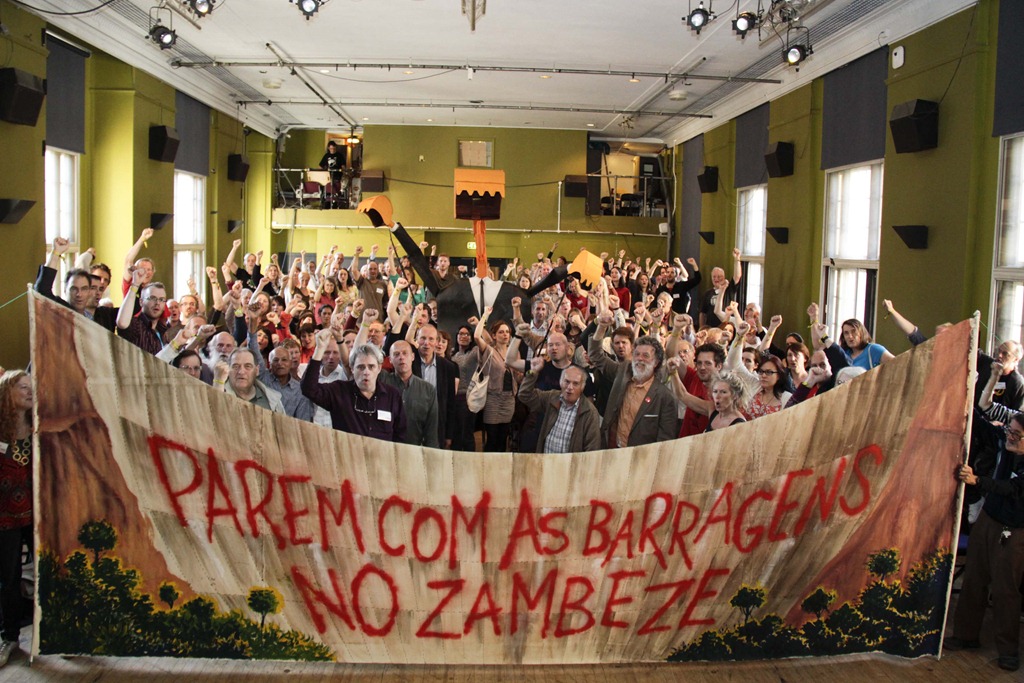
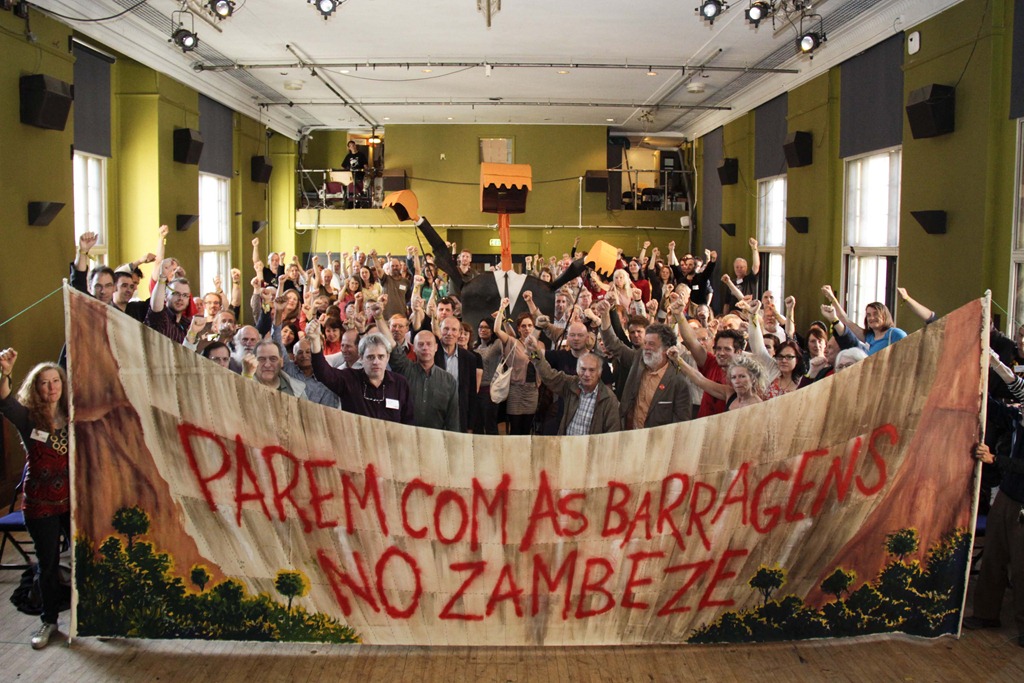
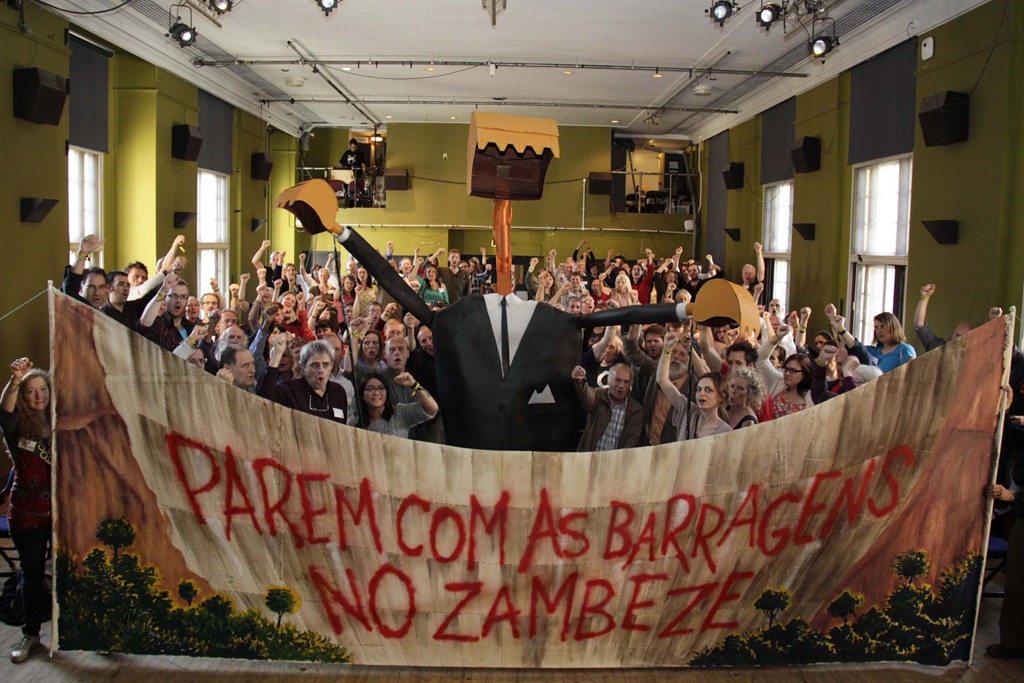
Earlier this month, JA’s opposition of more dams on the Zambezi was supported by Friends of the Earth England, Wales and Northern Ireland (EWNI), which consists of 230 local groups including 100,000 individual activist members across Britain!conference2012_1136

EWNI invited JA to speak at their annual conference, held in London from 14th to 16th September, 2012. Sadly, JA’s Program and Research Officer was unable to travel to the UK since the authorities took an unreasonable 3 weeks to let him know whether or not they were going to give him a visa. JA is enraged with this and we plan to take up this matter with both the Mozambican and British authorities along with EWNI and challenge the difficulties in travel faced by southern activists who are critical of their government’s incorrect policies.

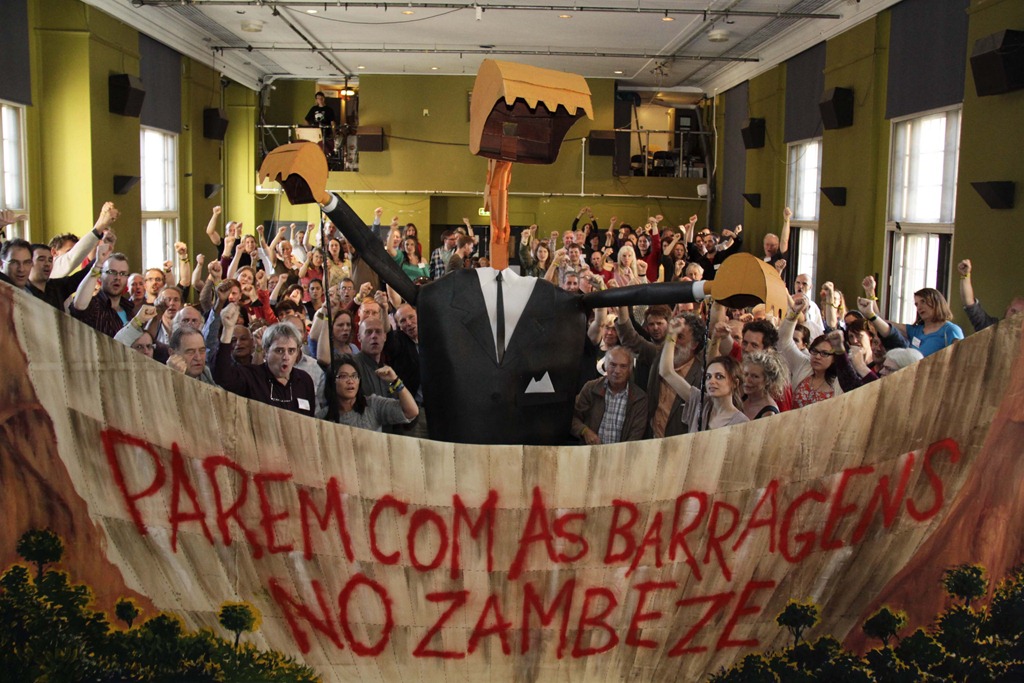
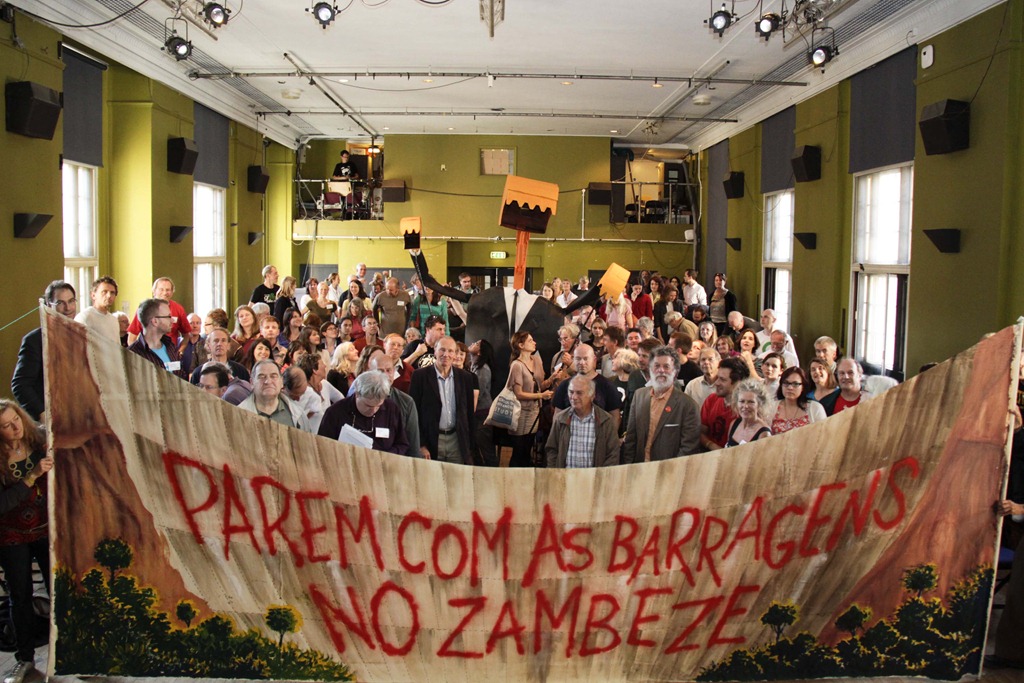
EWNI held a solidarity action in conference2012_1137support of JA’s campaign against the Mphanda Nkuwa dam. They joined their voices with ours to demand, “No more dams on the Zambezi. We want renewable energy options for Mozambique instead!”

Mozambican people need energy, but they need true solutions, not false ones like dams. JA commissioned an independent expert report in 2009 on the renewables potential in Mozambique. The results are very positive but of course there are huge political barriers to that but this is what we are supporting.

Read our Alternative Energy report here: http://www.internationalrivers.org/africa/zambezi-river/mphanda-nkuwa-dam-mozambique/building-mozambique%E2%80%99s-power-sector-through-investm

To read the International Rivers report on the Zambezi, see this link: http://www.internationalrivers.org/resources/a-risky-climate-for-southern-african-hydro-7673

Tagged , , , , , , , , , , ,