
Monoculture forest plantations are fast increasing in developing countries and although this growth is fuelled by low production a nd labour costs, carbon sequestration for the developed, and government incentives, these plantations have serious social and environmental impacts. Mozambique is no exception, here plantations are springing up rapidly and the government is keen to attract investment into these plantations for paper production.
On the 6th of August 2012 JA! participated in a seminar on ‘Forest Plantations and Industry in Niassa’. The seminar took place at the VIP Hotel, Maputo and included the presence of a large number of individuals of the Forestry and Agriculture sectors. The seminar was organised by the Niassa Forest Association together with the State Department of Land and Forestry and presided over by the Minister of Agriculture. Mozambique is being transformed into a major global producer and the successful examples of South Africa, Uruguay, and Chile were mentioned.
The first presentation of the seminar was the “Evaluation of the Forest Plantations in Niassa Province 2005-2012” wherein it was mentioned that prior to 2005 there was no investment in tree plantations and after 2005 investment into these plantations surged leading to the current occupation of 165.772.80 hectares of land by plantations of which 32.409.00 hectares constitutes Pine and Eucalyptus plantations. Some social and environmental problems experienced due to this type of investment were recognised as being caused by the enormous demand for land, waves of investment, poorly conducted community consults, and land grabbing cases. All these problems were treated as if they had either been resolved or were in the process of being resolved, however with every passing day more and more serious incidents of land grabbing continue to be reported here.
In other meetings the government’s desperate and blind desire to attract more and more investment into monoculture tree plantations has been clear. This is evidenced by the speed with which the Regulation of Forest Plantations was proposed and approved while other legal instruments await years and years for approval such as the Law of Popular Action and the Law of Conservation Areas to name only those related to the environment. The land for these 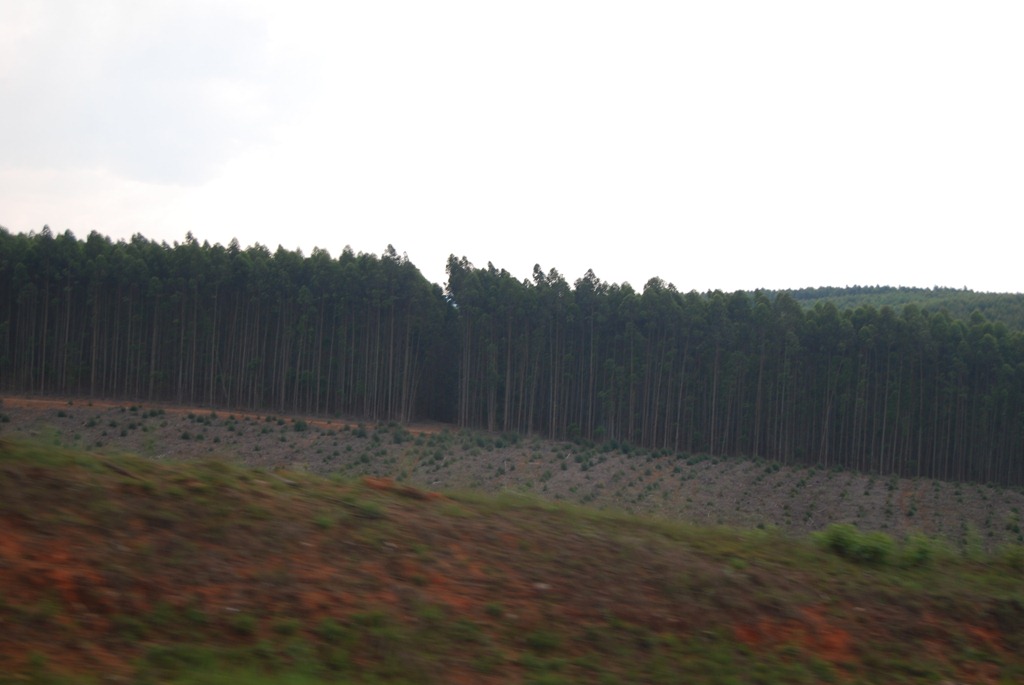 plantations which is often described as ‘degraded’ is not degraded in the eyes of local populations who leave tracts of land fallow for revitalisation and future use nor is it degraded in the eyes of conservationists who see great importance in conserving the natural bush for biodiversity. However others, interested in the implantation of these fake forests, are quick to regard this land as degraded.
The seminar left us with more questions than answers. Who do the processes of community consult actually serve? The community does not have the right to veto any project, they could be against it, they could protest, but the state has the final word and the state has decided. What is the purpose of the Environmental Impact Assessment (EIA) study when the mitigation measures set out to address the impacts of a project are only in some cases possible or realistic? This kind of situation leaves countries like Mozambique in a very difficult position as they have no way of rectifying a situation made difficult by the plantations and the effect their implantation has on rural farming communities and their environment. The state gives the go ahead to projects that do not even have completed EIAs required by law.
At the end of the day, the issue is that there is no clear admittance of the distinction between a natural forest and a monoculture tree plantation or ‘forest plantation’. This is a serious problem because many would point to the idea that a tree plantation contributes to conservation but the impacts of monoculture tree plantations on the biodiversity of an ecosystem are large. Consider for a moment what a tree plantation looks like; it is densely planted with only one (or a couple) tree variety. This impacts the pollinators and other animals dependant on the natural vegetation for their survival (to read more about this research on Nature.com) and the sustainability of the natural forest. The diversity of tree species in natural forests aids this survival whereas monoculture tree plantations leave no room for it. It is also important to note that many of the tree monocultures like Pine and Eucalyptus are not indigenous to Mozambique and their impact on local species and water must be taken into consideration. In Mpumalanga, South Africa, Philip Owen founder of Geasphere describes how the Pine and Eucalyptus plantations have dried up the groundwater, streams and rivers there.
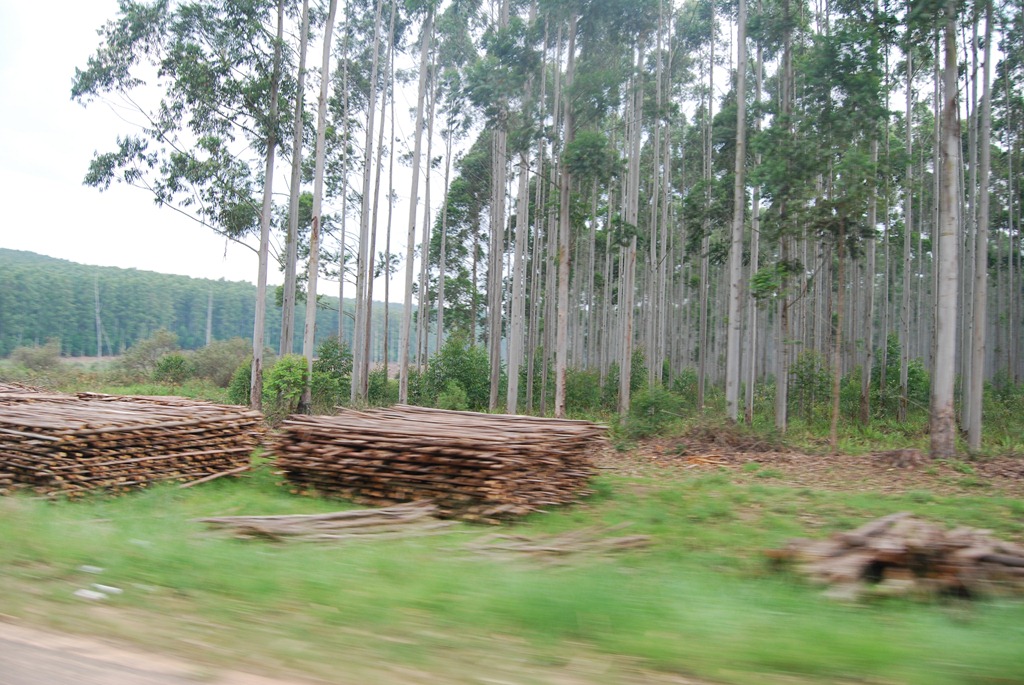 Tree plantations are a form of agriculture, they are not forests in any way as they have been shamefully described by companies in an attempt to take advantage of the growing concern of deforestation which is a current and ever-increasing issue. These tree plantations are food deserts, they yield nothing in terms of sustenance, and whatever species are able to survive in these plantations are eradicated as pests.
These plantations are green deserts. They offer no sustenance, they offer no reprieve from deforestation or the loss of natural forests and the species therein. They have been described as being void of life – that not one animal or bird can be heard within these fake forests. They emit the silence of lifelessness. They are quite simply wood farms of invasive tree species which dry up water sources and are implanted on community lands labelled as degraded. This cannot be regarded as a sustainable practise for our future.
For more information on plantations vs. natural forests please follow these links:
‘Green desert’ monoculture forests spreading in Africa and South America
http://www.guardian.co.uk/environment/2011/sep/26/monoculture-forests-africa-south-america
Geasphere Mozambique – Information about the Mozambican experience
http://www.geasphere.co.za/mozambique.htm
“Monoculture tree plantations are “green deserts” not forests, say activists.” http://news.mongabay.com/2008/0919-plantations_hance.html?menu=Select+a+News+Topic
Plantation vs. natural forest: Matrix quality determines pollinator abundance in crop fields (Scientific Report from Nature.com) http://www.nature.com/srep/2011/111028/srep00132/full/srep00132.html











 JA4change