Author Archives: JA

Ills and illogics of Coal

The coal monster is finally starting to show signs of illness and decline. The campaign against coal in the US has had some major victories and has sent coal into the sidelines in future energy planning, with even President Obama publicly mentioning the phasing out of coal in his speech on Tuesday at Georgetown University. With numerous coal power stations reaching the end of their lifespan, US coal consumption is on the decease and has placed the US in a situation where it can become a major global coal exporter instead of a user.

In China the first signs of change are already visible. In 2010 in China, coal was overtaken by renewables in newly-installed energy capacity, and China’s strategies and long-term planning are starting to reflect this move away from coal to a more diversified energy capacity. When even China starts to prioritize moving away from coal, then we know the tides are changing. These changes even though early and relatively small are starting to bear fruit. For example Mongolia’s future development path was set to be heavily based on exploration of their vast coal reserves to supply China’s coal needs, and Mongolia borrowed heavily on the usual assumption of revenues associated with coal. However, coals prices have been crashing and China’s increase in coal consumption has been slower than projected, while increase in using cleaner alternatives has been higher than projected. This has caused havoc to Mongolia’s debt and, in turn, its development future.

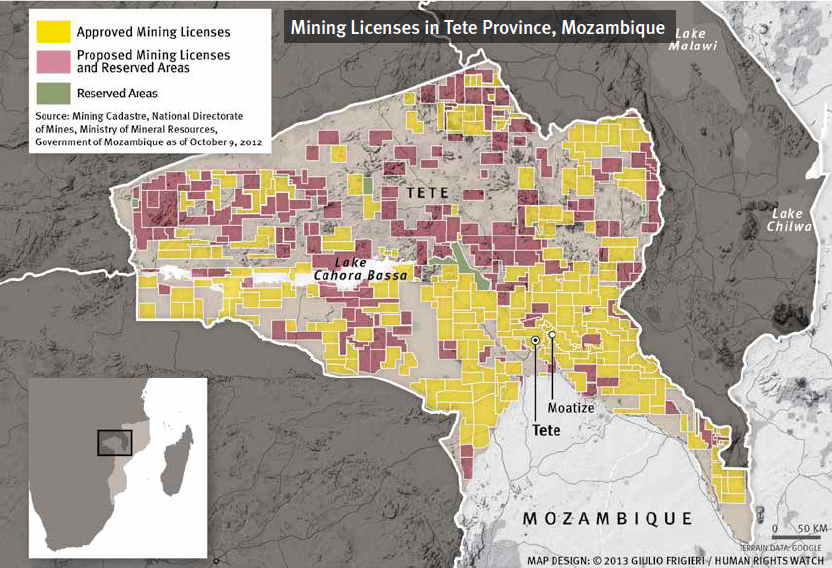
ImagemIn our own country, Mozambique, these risks are being felt. Both Vale and Rio Tinto (who according to our sources has already put their business in the country for sale) are feeling the impact of the infrastructural bottlenecks, with extensive delays and cost overruns affecting their profit margins. Coupled with decreasing coal prices, uncertain economic projects and over optimistic assessments of the quality and size of the Mozambican reserves have resulted in billions of dollars of losses. These losses are despite a very favourable, secret contract that the companies negotiated with the Mozambican government, which is unfair to Mozambique, in that it gives little benefits for Mozambique, but high negative impacts.

At a broader technical level, one starts to realise the difficulties that coal is facing. The construction cost for coal power stations have sky-rocketed and the extensive infrastructure and logical requirements (railways, ports, terminals, etc.) are facing bottlenecks around the world that further increases the overall costs. At an economical level, the risks are constantly increasing. A recent commodities report by Deutsch Bank showed dismal projections and further decreases in the possible returns from coal.

On the other hand, the cost of clean alternatives are steadily decreasing and options like wind are already cheaper at a dollar per Kilowatt produced rate, and within the next few years even solar will become cheaper. The investment world is also starting to understand and benefit from the positive components that alternative energy present. For example both wind and solar have very short periods between investment to profitability and are highly modular. Wind turbines can be installed and placed on grid in a very short time period and gradually increased in successive phases in direct correlation with demand. In contrast coal power stations are very large point investments with very long construction periods, often extended by delays. They depend more on long-term demand projects that are regularly over-optimistic or completely incorrect. Due to the long life span the production capacity is usually much higher than initial demand in order to cope with future projected demand increases, which makes the investment larger than required. Whereas alternatives start returning profits in a modular manner, as each phase is complete, traditional coal-based production has no returns until the full project has been completed and then it causes a huge peak in energy availability which can cause a decrease in energy prices due to over-supply. The need for forward planning and the regular energy peaks inherent in coal-based energy production has also been given as one of the reasons for the low priority of the energy sector for not focussing on energy efficiency.

Coal also developed as a sector during a time when economics were more open to subsidies and had a narrow notion of costs and responsibilities, if it were starting today it would be considered crazy. Unfortunatly, many of these issues are still part of common practices in the coal sector. Subsidies include direct spending, tax breaks or exemptions, low-interest loans, loan guarantees, loan forgiveness, grants, subsidised railways and ports, and much more. In terms of global subsidies in 2010 fossil fuels received almost 7 times more subsidies than renewables, and this value is based a narrow definition of subsidies. Then their is the external cost from coal. For example a Harvard medical study calculated that the additional heath and environmental cost from burning coal has cost the US $500 billion a year. Governments also lose extensive revenues from discounted royalty fees from lands, water and many others. It is common practice for mines and coal power station not to pay at all, or pay insignificant amounts for environmental services such as water (which they consume and pollute in copious amounts), nor do they restore the damage they cause. In fact just the indirect subsidies of fossil fuel, such as favorable access  to land, water and other breaks is valued to be equivilate to the total amout of subsidies received by the renewables sector. The Greenpeace South Africa report “The True Cost of Coal” highlights this absurdity of coal. Actually more than 200 different form of subsidies have been identified.

On top of this, coal is one of the main drivers of climate change, making it one of the main targets for the climate change debates. It is not a matter of “if”, but a matter of “when” serious carbon restrictions and limits start being imposed, at that time coal will be one of the most affected. However, even now with no true restrictions from the international climate change negotiations, the environmental and social problems associated with coal are so devastating and well-known that it is leading to an ever-increasing opposition to coal worldwide. It is getting ever more difficult to obtain public consent, which is becoming a growing requirement in democratic countries around the world.

In addition to competing with ever-improving clean alternatives, coal is also competing with other extractives. Most mining companies cover a host of extractive activities, but have limited resources to invest in new projects; therefore decisions have to be made between the different mining proposals. Given the increasing risks of coal it has fallen down the list of profitable investments.

Unfortunately, monsters like coal do not go down quietly. Whenever the illness of coal is exposed, a number of sector “specialists” proclaim its heath through hyper-positive projections and possible profits in the attempt to continue the investments into coal. As the industry starts realising the limited future in developed countries it turns to Africa and can always count on the short sightedness and corruption of our unaccountable leaders to allow for bad decisions. Let’s stop being the dumping ground of dying technologies.

At present coal is living through the latency associated with change and is still viable for already developed coal sectors in the near future, but dangerous for countries that are just starting to develop their coal development. Africa, and Mozambique in specific, doesn’t need to follow this destructive path to development, and the associated devastating impacts, that was used by the current powers. We can skip the potholes of development like we did with communication. Most of Africa did not have a wired line phone system, so we skipped this resource and time-extensive method, and went straight to the cleaner, more efficient wireless cellular communications route. Let’s do the same for our energy and revenue development path.

Supporting democracy and fighting dams: JA in South Korea

Image

A few weeks ago, Justiça Ambiental (JA!)  was invited to make a presentation at the Human Rights Cities Forum in Gwangju, South Korea, by the Korean Federation of Environmental Movements (KFEM)/ Friends of the Earth Korea.

Gwangju city has historically been a symbol of democracy and Korean opposition to authoritarianism. In 1980, there was a huge uprising and peoples’ movement against the coup and dictatorship of General Chun Doo-Hwan. Gwangju citizens, especially students, rose up to oppose the fascist government. What followed was unmitigated violence from the army and the police, leading to the massacre of pro-democracy activists. Official sources of the dictatorship in 1980 put the total casualties at 144 civilians but the actual number may be between 1000 and 2000 deaths.

But the May 1980 protests in Gwangju slowly spread to other places and started to turn the tide against dictatorship. For the rest of the 1980s, Koreans continued to struggle for democracy and eventually ended authoritarian rule. To commemorate the strength of this powerful city, its citizens and its past, every year Gwangju city hosts this Human Rights Forum. The mayor of the city, Kan Un-tae, himself was present at the Forum.

The conference was held at the Kim Dae-Jung Convention Centre, named after Kim Dae-Jung, a politician from the Gwangju region who was one of the people arrested in the mobilisations. It is interesting to note that this region of South Korea is rich in natural resources, hence became a target for extraction and suppression of people.

JA was invited to speak on ‘environment and human rights’ and to share stories of the brutality of natural resource extraction in Mozambique. Prakash Sharma from Friends of the Earth Nepal also attended and spoke about climate change threats to the Himalayas and the Nepali people.

We also attended a prize ceremony where young people from across the world were awarded prizes for writing essays on human rights situations in their own cities and countries. Among the prize-winners was our neighbour, a young South African student called Zama Lehlogonolo.

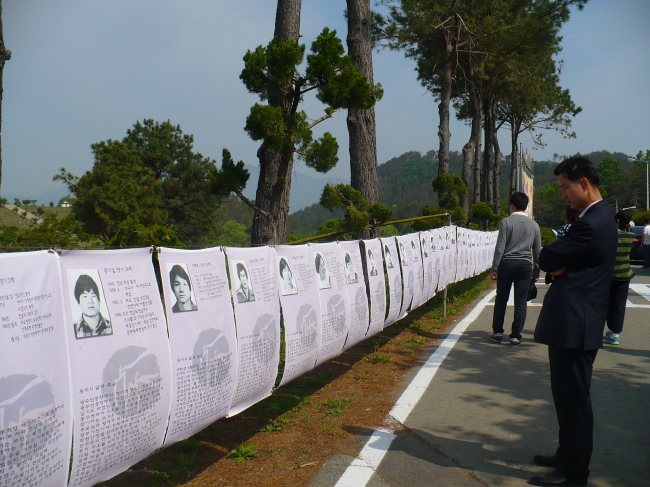
After the end of the Forum, all the participants were taken to the main street where the Gwangju massacre had taken place in 1980. Gwangju citizens commemorated the occasion with a parade, celebrating Korean culture, dances, etc. The atmosphere was so positive. People remember the massacre but they use the memory to celebrate their lives instead.

Image

The next day, we attended the May 18 ceremony at the cemetery where many of the massacred citizens were buried. There were speeches and Korean songs of protest. People lifted their fists the whole time the songs were being sung. It was very powerful.

Later that afternoon, our KFEM hosts took us back to Seoul city by train. The next day we spent a bit of time walking around and getting to know Seoul and its history. We saw Changdeok-gung Palace, quite a modest palace from the Joseon dynasty of Korea, from the time before the Japanese colonization of the Korean peninsula. We also saw a magnificent

Buddhist temple called Jogye-sa. Interestingly, about 22% of Koreans are Buddhist and 18% Christian but the biggest chunk, almost 50% are atheist.

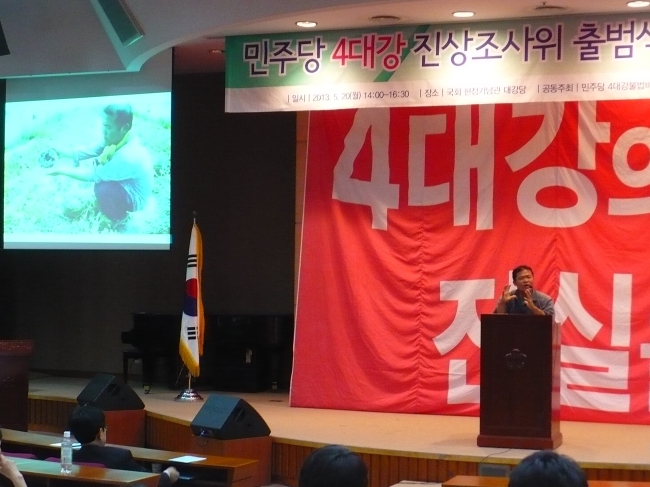
On May 20, we meet the local staff of KFEM office. Then we went to the Congress building of Seoul city, to support a hearing of farmers and community members who were impacted by the 4 Rivers project. This is a project involving about 16 dams on 4 rivers, and has already caused destruction of livelihoods and ecology, so similar to the situation in Mozambique. There was also a photo exhibition showing the destruction caused by the project. Local farmers, activists, professors and Congressmen gave testimonials, following which the Congressmen from the progressive Democracy Party, and pledged to investigate the inconsistencies with the project. JA was also interviewed by Ohmynews, Korea’s largest online newspaper, about the reality of dams in Korea and Mozambique.

Image

Later that evening, KFEM organised an open event with local citizens and students, called the ‘Glocal Talk Concert’, with an aim to raise Korean people’s international awareness. JA showed 2 short films, one on the situation of Vale-displaced communities in Cateme and the other with testimonials from Mphanda Nkuwa dam affected people.

All in all, JA’s experience in South Korea was phenomenal. It was wonderful to make international links on issues of extraction, environment and livelihoods. We were able to increase the visibility of Mozambique’s situation.

Mozambican Social Movements & Civil Society Release Open Letter on Prosavana

SAMSUNG

On the 6th of June, a press conference was held at Hotel Africa in Maputo by 23 civil society organisations in Mozambique. The press conference marked the release of an open letter from Mozambican social movements and organizations explaining their grave concerns regarding the controversial ProSavana program. The letter was addressed to the Presidents of Mozambique and Brazil, and the Prime Minister of Japan.

The open letter, dated 28 May 2013, had been handed over to the several dignitaries of the Japanese government, opposition, civil society and academics in Japan just a few days before. This took place in a recent visit to Japan by some of the signatories to discuss the ramifications this program with members of Japan’s civil society.

Coincidentally, this civil society visit had taken place just days before the Tokyo International Conference on African Development (TICAD), where heads of state of various countries of our continent gathered in Tokyo. This included Mozambican President Armando Guebuza and some of his ministers, who suddenly found themselves flooded by ​​questions about ProSavana, which thanks to this letter had gained another dimension in TICAD.

The highest point of the press conference last Thursday undoubtedly came from Augusto Mafigo, president of the National Farmers Union (UNAC). While responding to a question after the letter was read out, he gave a sharp retort to Mozambican Minister of Transport, Paulo Zucula, who in Japan crudely said that “our peasants are still illiterate to make a letter as perfect as that “, thereby no doubt trying to undermine the legitimacy of the letter. Without mentioning the Minister by name, Mafigo cleverly replied that “many of the Ministers of this country have peasants as parents.”

Although there is a relatively small coverage of ProSavana by the national Mozambican media, but on the other side of the planet in Japan, much ink has been spent on the topic. Here are some of the latest news links available online:
http://www.japantoday.com/category/politics/view/at-ticad-clumsy-diplomacy-mars-controversial-japanese-aid-project-in-mozambique

http://www.japantimes.co.jp/news/2013/05/09/national/ticad-to-redefine-japan-aid-to-africa/#.UbC2R5VptFR

http://www.globalpost.com/dispatch/news/kyodo-news-international/130603/concern-mounts-over-agriculture-development-plan-mozam

The Three Brickmakers

Last Tuesday at  5am, three brickmakers out of the hundreds of people who have been protesting for fairer compensations in Moatize for the past weeks, were arrested by the Mozambican Police while protesting peacefully at the gates of Brazilian mining giant Vale. According to the men, who we maintained contact with throughout the whole week, the police made them clear the railway they had blocked to prevent the coal from leaving the site and afterwards they were picked from the crowd, handcuffed and taken to the police station.

Thursday we got the information that they were going to be accused of disturbing the peace and making death threats to an employee of Vale.

What was happening was as obvious as ridiculous, but for legal reasons, we couldn’t say anything at the time…now we can.

According to our sources in Tete, the three men have been set free this morning after their hearing and will await for the verdict in freedom.

As expected, the death threat accusation was dropped because the alleged victim (a Brazilian citizen who works for Vale) failed to identify any of the accused as the person or people who threatened him and failed to tell the court what words those who threatened him used.

What he did tell the court, was that he could not possibly pinpoint three men as the people responsible for the threat, since there were hundreds of people protesting when it happen…

It is almost funny. How can this happen? How can these men stand accused of such a serious crime in such a frivolous way?

We, as I am sure many other Mozambicans, would love to hear an explanation from those responsible.

What is happening in Moatize is shameful.

We know it because we were there just a couple of weeks ago, because we know some of these men and we know that they are being persecuted not because they have disturbed the public peace, but because they have disturbed Vale’s peace and the peace of a government who is clearly compromised in this process and is probably the main responsible for all this mess.

We also know that they were not arrested at random, they were targeted by an overbearing system because they are outspoken men respected by their communities. They are the closest to a leader that they have. Those responsible for these coward actions thought that if they could scare them, the others would be scared too.

Shame on you!

Tagged , , ,

JA! celebrates the International Day of Rivers

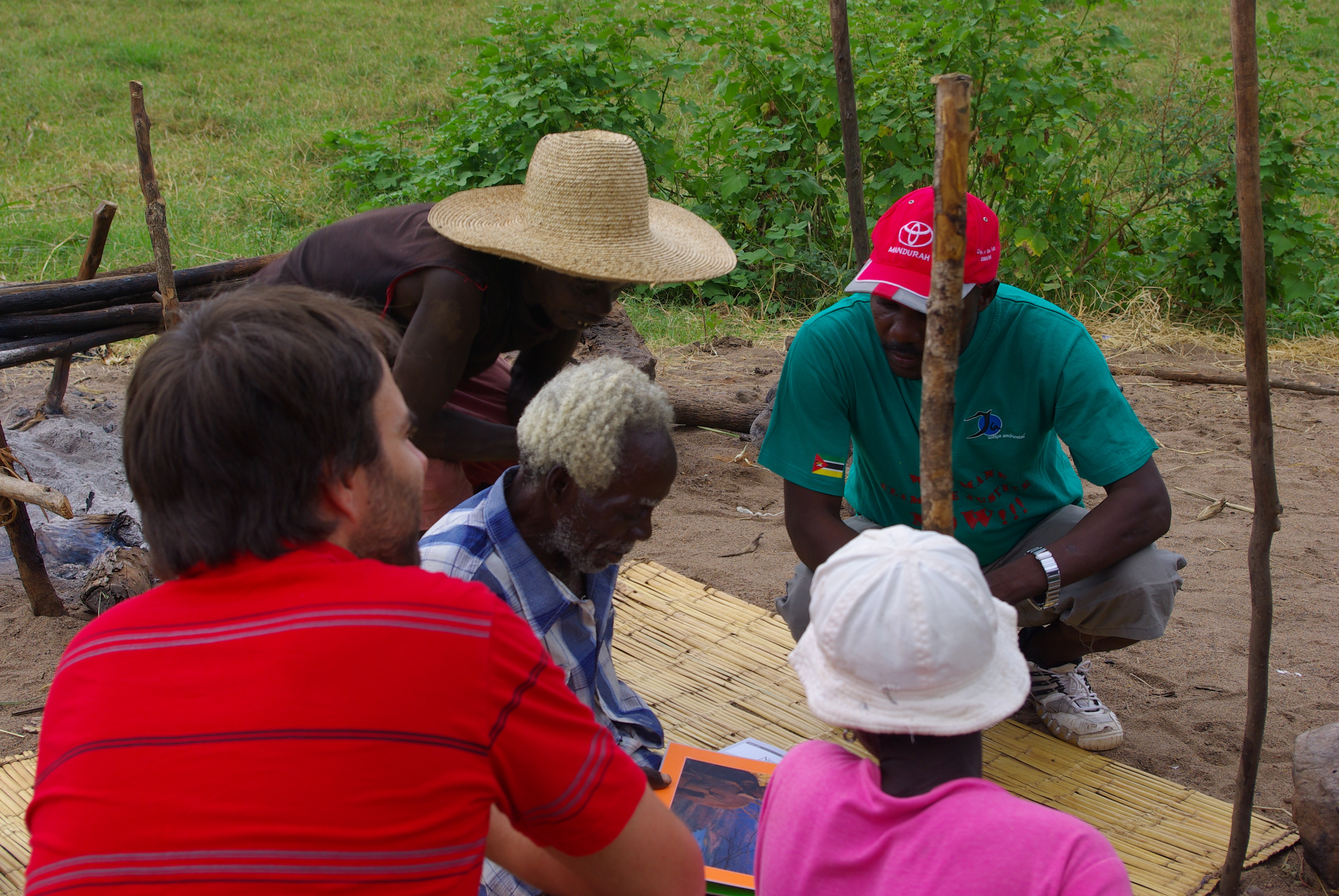
March 14th Meeting

March 14th Meeting

On Thursday, 14 March, Justiça Ambiental (JA!) marked the occasion of the ‘International Day of Rivers’ by holding simultaneous events in Tete and in the capital Maputo.

In Tete, over 50 community people came together on the banks of the Zambezi River. These included communities that will be displaced

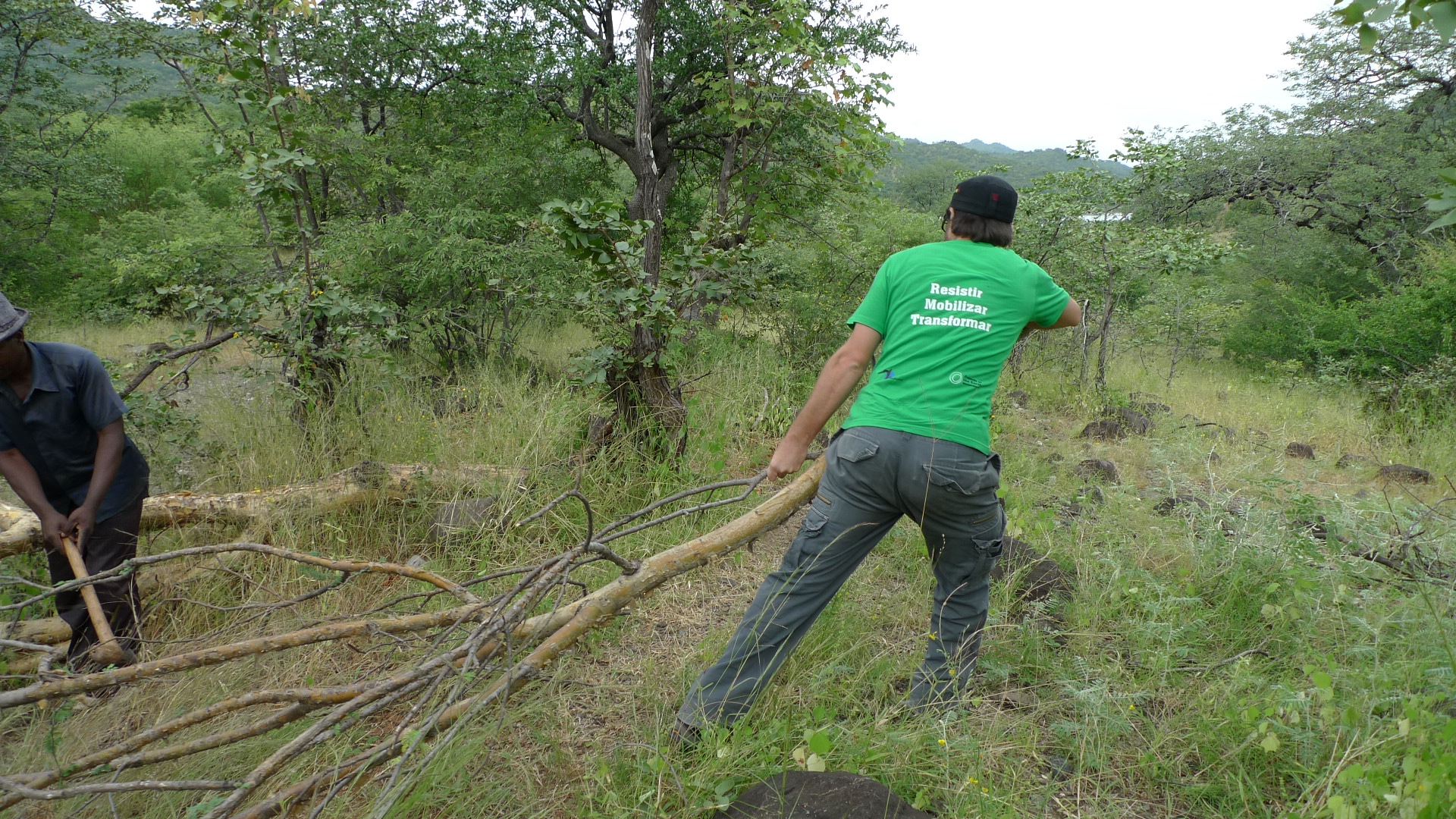
Removing a fallen tree on the way to Mphanda

Removing a fallen tree on the way to Mphanda

from their lands and homes if the Mphanda Nkuwa Dam is built across the Zambezi River. We were also joined by communities affected by Vale, Rio Tinto and Jindal, all carving out the earth to extract coal from their villages.

The meeting was organised by JA!, along with our partners Liga dos Direitos Humanos (Human Rights League), AAAJC (Association for Support and Legal Assistance for Communities), UNAC (National Farmers Union, Tete provincial chapter).

The all-day meeting was held at the Tete Provincial Centre of Agricultural Formation. JA supported the community members to come in the night before, since their homes are far and the transportation systems in Mozambique are very poor. The communities affected by Vale, for instance, used to live in Moatize, 19kms from Tete. Now they have been moved to

Sr. Morais lived his entire life near the river, if the dam is built he will have to move far from the river. What about his rights!

Sr. Morais lived his entire life near the river, if the dam is built he will have to move far from the river. What about his rights!

Cateme, 56kms away from Tete, and transport could easily cost 150 Meticais (US$ 5) each way! The Mphanda Nkuwa communities live over 70kms from Tete. The area is very remote and roads are almost non-existent.


The meeting on 14 March brought together these community people and organisations to talk about communities that live and thrive on rivers and other natural resources. When such communities are displaced from their resources, they usually lose their subsistence base and with that, their self-reliance. There were presentations on:

  • Human rights,
  • Dams and the context of Mphanda Nkuwa
  • Challenges with the Land Law relative to the Mines Law
  • Mega-projects and false promises
  • Fight against dams: a case from India’s Narmada Valley
  • Climate Risks for the Zambezi River

But in the most important part of the meeting, the community people were talking to each other and sharing their own experiences. The people that will be displaced by Mphanda Nkuwa heard directly from communities still struggling to

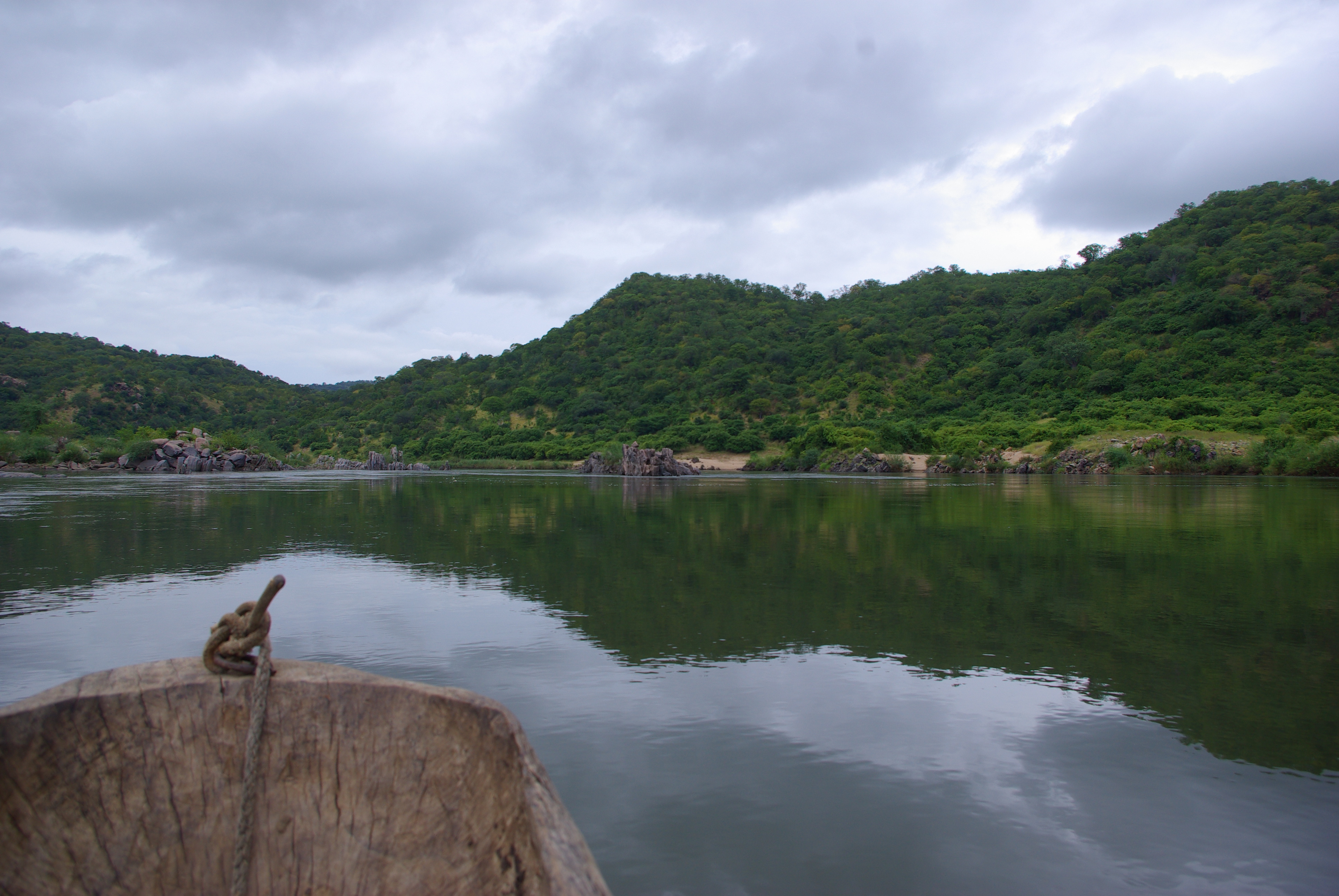
View from the proposed dam site

View from the proposed dam site

get their rights after being displaced by Brazilian mining giant, Vale. The ruthless Indian company, Jindal, has also started mining coal in the village of Mualadzi. However, they haven’t removed anyone yet, so people continue to live among the coal dust while the mining continues.

The stories shared by people were heart-breaking. They reveal the cruelty of the extractive model where self-reliant communities are robbed of their natural resources which are increasingly being commodified by the corporate-driven development model.

After the meeting the JA team took the communities back to their villages by the river. We went to visit Sr. Morais, an outspoken elder of the fisherfolk community, who was lived by the river his whole life. The secretary of the bairro (village) prevented him from joining our meeting, even though JA specifically asked for him to participate. If he is forced to move inland, far from the river, his livelihood and, with it, his culture and traditions will

Zambezi

Zambezi

be threatened. We believe this is a crime and a violation of his rights, as well as of all the fishermen whose livelihoods depend on the river.

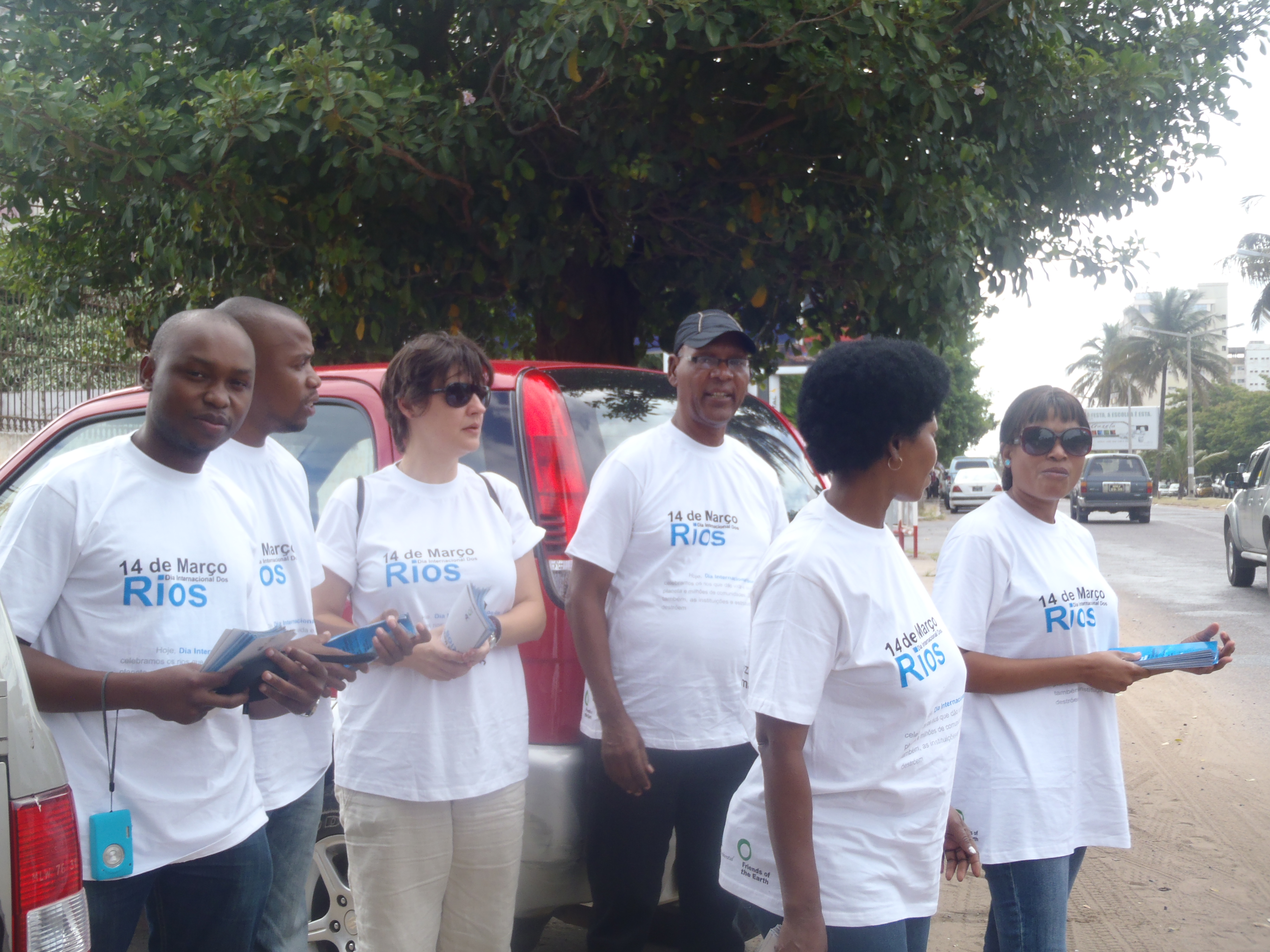
Along with the meeting in Tete, JA also held an event in Maputo, where we challenged another actor who is actively pushing this damaging extractive model: the World Bank. In Maputo, we invited friends and colleagues to take to the streets. We congregated near the World Bank headquarters in Mozambique, on Kenneth Kaunda Avenue, where we distributed flyers and spoke with passers-by, even Bank workers, students from the neighbouring Faculty of Law of Eduardo Mondlane University and other interested citizens. The Bank was targeted to raise awareness about their role in pushing destructive large dams. The Bank’s stated goal is to reduce poverty but for most of its existence it has actively pushed projects that have

increased poverty especially of the most vulnerable communities.

Action on World Bank in Maputo

Action on World Bank in Maputo


Tagged , ,

Justiça Ambiental/FOE Mozambique’s Position on the Prosavana Program

The Prosavana program is inspired by Prodecer, a Japanese-Brazilian agricultural development program developed in the Brazilian Cerrado since the 70’s.  Referred to by Brazilian, Japanese, and Mozambican governments as a success, the Prodecer program promoted the distribution and possession of land to foreigners and turned ​​Brazil into an avid promoter of land usurpation practices abroad.

By way of Prosavana, Brazil plans to export an agro-industrial development model to Mozambique that failed in Brazil where more than 65 million Brazilians are in a situation of food insecurity and millions of people struggle for access to land for food production a means of ensuring livelihood.  Experience shows that the benefits of the Brazilian model have been insignificant compared to the devastating impacts on the lives of peasants, forests, and the biodiversity of the country.

The Prosavana program was skilfully and conveniently wrapped in elegant “green” language and has been presented to Mozambicans and the international community as a program of “sustainable agricultural development”, completely leaving out its potential social and environmental impacts.  However, in a program of this size which requires the resettlement of communities, it is disturbing to realize that they know little or nothing about it.  It is another program designed and decided upon at the highest level without any involvement of farmers, local communities, or the public.

Through Prosavana Japan intends to ensure, in addition to borders, a new source of agricultural goods at low costs the purpose of which is for export to the Asian market particularly Japan and China.
Brazil sees in Prosavana an opportunity for expansion, technical cooperation, and a good investment for their producers and supply companies.
What are the benefits for Mozambique?

A major problem for the promoters of this program is that almost all of the Nacala corridor lands are occupied by peasants.  This is the most populated region of the country, whose fertile soil and abundant rain allows millions of peasants to work and produce food in abundance.  The Nacala corridor is considered the bread basket of the region providing food to the inhabitants of the Northern provinces and allowing the survival of millions of families. The rationale and purpose of Prosavana promotes the usurpation of land and the expulsion of thousands of local farmers who depend on it.  The Prosavana program has been questioned and challenged by civil society organizations among them the National Union of Peasants (UNAC).  UNAC is a peasant movement of the family sector founded in 1987 and recognized by the Government as a partner and by Mozambican peasants as its representative at a national level.  Over the past 25 years UNAC has been playing a crucial role in strengthening farmers’ organizations in the fight for their rights to land and natural resources and the discussion of public policy for the agricultural sector.  It has more than 86,000 individual members grouped into 2200 associations and cooperatives, 83 district unions, 7 unions and 4 provincial unions.  Justiça Ambiental corroborates the statement of UNAC on the Prosavana Program.

Justiça Ambiental / FOE Mozambique strongly condemn the whole process of preparing and implementing ProSavana because:

  1. It is based on the import of top-down policy and so far the circulating information is incomplete and unclear;
  2. The program is connoted as “sustainable agricultural development” and has as main targets peasant families and cooperatives of farmers, however, provides for the resettlement of communities and the expropriation of land;
  3. Promotes the influx of Brazilian farmers turning Mozambican farmers into cheap labour;
  4. Requires millions of hectares of land that is not actually available due to the system of leaving land fallow;
  5. This ignores the benefits of the program for the peasants;
  6. The program is structured to promote the expropriation of land to the peasants and local communities in general;
  7. Promotes the violation of the rights of peasants given the insecurity of land tenure, regarding DUAT (Right to Land Use);
  8. Promotes worsened corruption and conflict of interest given the enormous interests involved;
  9. Will aggravate the already precarious living conditions of many communities completely dependent on agricultural production for their livelihoods which could lead to a massive rural exodus;
  10. The program provides a high mechanization and excessive use of chemicals such as fertilizers and pesticides leading to contamination of the soil and water courses;
  11. There is a convenient lack of clarity over the use or otherwise of genetically modified organisms which given Embrapa’s connection to Monsanto is probably expected.


We demand that the Mozambican state, as stipulated by Article 11 of the Constitution of the Republic of Mozambique, assume its sovereignty and its leading role in defending the interests of its people.
We demand also that the Mozambican government reassess the ProSavana program taking into account the aspirations, concerns, and needs of Mozambicans, particularly farmers who are most affected by the program and who constitute the vast majority of the Mozambican people.  ProSavana, in terms of what it proposes, will threaten food sovereignty, access to land, water, and the entire social structure of families of thousands of Mozambicans thus crippling the nation’s future.


Tagged , , ,

March for Human Rights

IMGP9596 On Monday this week, JA staff and board again took to the streets of Maputo. After the historic and fun march in Maputo back in August, where we were joined by human rights and environmental organisations from all across southern Africa, this week Mozambican organisations continued to march to assert their rights.

The occasion was 10th of December, the International Day for Human Rights. The march to commemorate this day was organised by Liga dos Direitos Humanos (Human Rights League) in Mozambique in partnership with Justiça Ambiental, National Forum of Community Radios, and others.

The marchers gathered at 9am at the Independence Square in Maputo City, and marched up Karl Marx Avenue and thenIMGP9617 up 24th of July Avenue. The marchers were a small but vocal group. We chanted non-stop, filling the streets with loud and animated slogans in Portuguese:

  • “Respect Human Rights”,
  • “What do we want? – Human Rights!! When do we want it? – Now!
  • Viva freedom! – Viva! Viva right to information! Viva!
  • Life is not for sale, life is to be defended!
  • The Right to Health – is Ours! The Right to Education – is Ours! The Right to Land – is Ours! The Right to Information – is Ours! The Right to security – is Ours! The Right to demonstrate – is Ours!
  • Down with those who commit violence – Down!
  • Down with those who violate human rights – Down!


IMGP9924When the marchers were a block away from the Parliament building/ National Assembly, we suddenly came face-to-face with a roadblock. We had asked for and received permission to hold the march on that route, and to deliver a petition to the Parliament on human rights situation in Mozambique. Yet, it was obvious that the government of Mozambique had a different idea. We were greeted with great pomp and show by the Rapid Intervention Force. It must be remembered that, just a few months ago, it was the members of this same Rapid Intervention Force that fired on communities protesting displacement and dispossession due to Vale’s coal mining operations in Tete province, central Mozambique.

The Rapid Intervention Force stood in our path, blocking the march route. They blocked the road and even had a massive armored tank in the middle of Maputo city! Every once in a while, the soldiers from inside the tank would peer out and look at us; their weapons drawn. Please see the photos.

The police on the streets were far less subtle. They were fully dressed in riot gear, even though we were less than 70 marchers holding only a peaceful protest on a pre-approved march route chanting for peace and human rights! Yet, the police were armed with tear gas guns, rubber bullets, pistol and who knows what else. We were barred passage to even the entrance door of the building of the Parliament, and after a long wait we were only allowed to send four of our representatives to deliver the declaration. The declaration urged the government to respect human rights.IMGP9846

There is no reasonable explanation for the reaction of the government and the police. Only one explanation makes sense. It was an intimidation tactic. Civil society in Mozambique is small but is getting more and more vocal. The communities are raising their voices against oppression, and this is threatening the state’s plans for more greed and unsustainable development. But we have one message to send to the state: We will not be silenced. We will continue to speak out against injustice.


Come join us!


Tagged ,

JA! in Mesoamerica

P1110580Last week, JA staff attended the Bi-Annual General Meeting (BGM) of Friends of the Earth International (FoE I), in El Salvador, hosted by Friends of the Earth El Salvador/ CESTA (Centro Salvadoreño de Tecnología Apropiada).

El Salvador is a small and beautiful country located in Central America. This region is culturally called Mesoamerica, an area that has borne witness to centuries of life and struggle of indigenous peoples in this area.

The BGM began with a pre-conference on “Climate Change, Social Movements and Territories”, held on the 5th and 6th November at the University of El Salvador. The pre-conference was organised by FoEI, CESTA and MOVIAC, which is the Movement of the Victims and People Affected by Climate Change. Mesoamerica is one of the few places in the world where people already affected by the changing climate are getting organised and empowered to understand how they are impacted by climate change and raising their voices for change. P1110690

The meeting started with fiery presentations from Ricardo Navarro of CESTA and Dr Juan Almendares of FoE Honduras, where they talked about the climate crisis and global problems, social movements, and the struggle for territories. It went on to include many wonderful presentations, especially by people of the affected communities. For example, Maritza Hernandez from Bajo Lempa talked about how the community located at the lower Lempa River kept getting affected by floods and droughts, and how they were forced to adopt adaptation strategies for their survival. See the attached photo from the powerful closing of the pre-conference. FoEI’s Climate Justice and Energy (CJE) program recorded testimonials of many MOVIAC persons, and a 10-min video is already available at:

At the end of the pre-conference, we all marched through the streets of San Salvador together, demanding climate justice P1110640and food justice for all. This was followed by a cultural program featuring local Salvadorian and other Mesoamerican musicians.

That night, we travelled in buses about 2 hours to the location where the BGM was to be hosted. CESTA created a beautiful ecological centre, called Ecocentro in a rural area outside San Salvador. It has been created by CESTA especially for research, investigation, and development of ecological living systems. It has been built in harmony with the environment. For example, all P1110782the toilets are composting pit toilets, which separate liquids and solids, and present a very ecological way of dealing with sewage. The housing structures are all built from local, sustainable materials. The farm at the Ecocentro produced all the lovely fruits and vegetables that almost 100 people ate for three meals every day for 5 days. See the photo of some of the fresh organic produce at the Ecocentro farm.

At the start of the BGM, FoEI Chair, Nnimmo Bassey of FoE Nigeria explained how it was so significant to hold our BGM at Ecocentro, because the place signified how we wanted to live ecologically in the world. Watch this video clip to know more about the Ecocentro:

Another significant piece of news from JA in El Salvador was that our Research and Programs Officer, Daniel, has been elected as one of the Africa representatives to the Executive Committee (ExCom) of Friends of the Earth International. He was elected unanimously with 56 out of 56 votes. See the photo of the new ExCom, including the new Chair, Jagoda Munic from Croatia.

P1110855P1110810

Tagged , , , , ,

ProSavana – who is it for?

Prosavana was presented as a Programme for the Agricultural and Rural Development of the Nacala Corridor in Mozambique and aims to improve the competitiveness of the rural sector in the region in terms of both food security and the increased productivity of family subsistence agriculture as well as the generation of exportable surpluses resulting from the technical support to agribusiness oriented agriculture.  But it is just one more megaproject, another very clear example of a Top – Down approach, negotiated at the highest level between the 3 countries involved with Mozambique supplying the land, Brazil the technical expertise and input, and Japan providing funds while at the same time securing food production for Japan.

ProSavana focuses on 14 districts in the provinces of Niassa, Nampula, and Zambezia, an area of ​​roughly 14 million hectares along the Nacala corridor.

According to the few documents and information available about the project, ProSavana is supposed to promote rural and agricultural development in an area which was initially described as having large extensions of inhabited land and as being extremely underdeveloped when in fact this area is highly habited due to its rich and fertile soils, regular rain, and abundant water.  Millions of peasants occupy most of this vast area and depend directly on the land which provides for millions of families. It is also a fact that this land can produce much more than what it currently produces and that most peasants and Mozambique as a whole would stand to gain if more adequate farming techniques, equipment, and better access to markets were the main objective of this initiative.  But what we have slowly been learning is that ProSavana is not all that.  ProSavana is agribusiness, it’s big money, it will use and abuse pesticides and fertilizers contaminating rivers and water sources, it will require moving communities away from the good land – resettlements, good examples of which we have yet to see in Mozambique.  These communities are particularly vulnerable to landgrabbing which is already happening in the area with other projects and the communities have not been participating in the design of this project – they know very little about it and how they will be a part of it.

UNAC, União Nacional de Camponeses – the National Peasants Union, has released a statement, a strong message resulting from a meeting with the peasants in Nampula.

UNAC statment can be seen at:

http://www.facebook.com/pages/Uni%C3%A3o-Nacional-de-Camponeses/351893418235290

www.unac.org.mz

Tagged , , , , ,

Is Big Brother Watching?

Steven Bongane SMS photoOn Tuesday, we received an SMS on the cell number at the JA! office in Maputo. The person called himself Steven Bongane from South Africa and said he was bringing some goods for us. JA’s Program Officer spoke to “Steven” who spoke in English. When asked what he was bringing, he mentioned “air sampler”.

Indeed, we were expecting our air sampler (called mini-vol or Air Matrix) which was to be sent by our partner organisation, groundWork in South Africa. But we had received no notification that it was on its way, so we were very surprised.

“Steven” called back half hour later, saying that he had been stopped by the Mozambican police in Moamba (60 kms from Maputo) but didn’t know why because he didn’t speak Portuguese. The JA person spoke to the police, who said that the fine was 3000 meticais, because the driver had been speeding and his car didn’t have a front license plate. But “Steven” claimed he had no money with him to pay the fine.

Then the policeman told JA person that JA could pay the money by phone by sending mcel credits (a usual way or transferring small amounts of cash in Mozambique), and that we should trust “Steven” will pay us back when he reaches Maputo. We responded that we cannot send money this way, as it is not official, but we would rather send someone to the police station in Moamba, 60 kms away, to officially pay the fine. The police were hesitant at this suggestion.

At this point, we were suspicious, so our Program Officer called groundWork in South Africa to confirm if they had indeed sent the air sampler. And they Screenshot with blurconfirmed that they had not!

Now the plot thickens.

Just the day before, the Program Officer had talked to groundWork using that same cell phone, requesting them to send us the air sampler whenever it was convenient so we could do air quality tests. groundWork responded that they would check with the team that is currently using it. The strange thing is that, Steven and Bongani are real people that are part of the team using the air sampler, but they are two different people!

This is most likely a scam. However, is it something more? How did “Steven” know that JA was waiting for the air sampler? It is a very specific instrument used for air quality control, and not something that normally people use. Furthermore, how did he know Steven and Bongani’s names? And then he mashed the names together.

JA has for long suspected that our phones are tapped and the Mozambican secret service monitors JA’s work and members. This isn’t the first time that such suspicious things have happened. Last year, our e-mail server showed highly unusual activity and suddenly started uploading over 20GB of information. We could only stop it by switching it off. Who was uploading if not us? Were they taking all our email communications? Then in December 2011 our mail servers began receiving thousands of spam mails to the point that it made the system crash. Till date we have not been able to get them functional again.

On another occasion, during a Skype conference chat from our Director, Skype sent her a warning message saying “the authorities tapped on the call”! See the screenshot photo attached.

Is Tuesday’s incident proof that they tapped our phones or emails when we corresponded with groundWork the day before? We don’t know for sure, and maybe never will, but this much is for sure- civil society space is shrinking especially in Mozambique.