Author Archives: JA

SOLIDARITY WITH THE PALESTINIAN PEOPLE

The partition of Palestine into a jewish State (55% of the territory) and a palestinian State (45% of the territory) that followed soon after the constitution of the United Nations (UN) was proposed and implemented by the the UN Special Committee for Palestine, then led by the United States of America and the USSR. This plan represented, to a great extent, the interests of the winning powers that emerged from World War II and it was justified by the genocide practiced against the jews by the nazi regime. In truth, it was a project of modern colonialism of the kind where foreign countries decide by themselves, with a ruler and set square, on the division of the territories and the future of their populations without consideration for their rights and aspirations.

In this context, in which the UN had only a weak participation from the nations of the South, the plan was approved, even though at the time the Arab states did not recognize the new State of Israel. From the war that followed, between Israel and the Arab states and Palestinian forces (1948-1949), Israel came out on top, gaining more ground, and amplifying the territory given to it by a near 20 thousand kilometres squared (75% of the surface of Palestine).

In reality, the conflicts on the ground, including the ethnic cleansing of Palestine, begun at and earlier date, in December of 1947, with a series of attacks on Palestinian villages carried out by zionist militias. 300.000 Palestinians were expelled from their lands and homes

This is the tragic sequence in which the Israeli occupation has, for seven decades, removed nearly everything from the Palestinians, let alone their dignity and just desire of being free.

The exercised oppression is systemic and the discrimination is institutional: expropriation from the land, forced change of residence, control of movements, management of water and electricity, denial of essential services. During this pandemic, even the access to vaccines has been calculatedly discretionary. In simple terms, it is pure and hard colonialism. If apartheid is recognized by the UN as a crime against humanity, why is Israel not judged for this very crime? Because ocidental values are only to be used when it is convenient for those who have power to benefit.

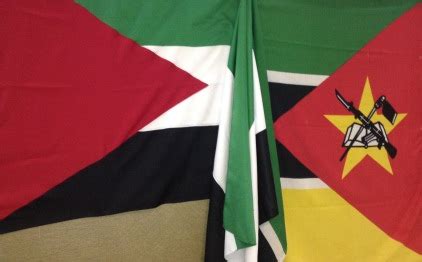
We, organizations from the mozambican civil society, manifest, through this declaration, our profound solidarity with the Palestinian people and believe that solidarity at the international level is fundamental for the advancement of our collective struggles for freedom, for human rights, and for justice. We echoe the words of Nelson Mandela and many other pan-africanists and affirm that we will not be free until all palestinians are free.

In the past month of May (2021), many organisations and civil society groups marched in the city of Maputo in solidarity with the people of Cabo Delgado and Palestine suffering the horrors of war and all types of direct, structural, and cultural violence.

We remember on this special date, the 25th of November – International Day for the Eradication of Violence Against Women – the Palestinian women that have suffered the horrors of this occupation as well as the violences that are specifically directed and practiced against them. We highlight their courage and their commitment to the fight for freedom of their people.

We renew today, with this manifesto, our solidarity toward the people of Palestine. We commit ourselves to being an active voice in the fight for the recognition of the inalienable rights of Palestinians and we reiterate our deepest desire to unite, by straightening the bonds of friendship between Mozambique and Palestine with the conviction that only the freedom of all nations, without any exception, is the guarantee of world peace and justice for all.

Maputo, 10th December 2021

Vasco Magoene Tembe Júnior

Terezinha da Silva

Alternactiva – Acção pela Emancipação Social

Associação de Amizade e Solidariedade com a Palestina (ASP)

Associação de Jovens Combatentes Montes Errego (AJOCME)

Hikone – Associação para o Empoderamento da Mulher

Justiça Ambiental (JA!)

Missão Tabita

Movimento Activista Moçambique (MaM)

Movimento Moçambicano das Mulheres Rurais (MMMR)

Mulher, Género e Desenvolvimento (MuGeDe)

Research For Mozambique (REFORMAR)

Tagged

Challenging the UK government in court: Stop financing gas in Mozambique!

Friends of the Earth England, Wales and Northern Ireland (FoE EWNI) are challenging UK Export Finance’s (UKEF) decision to fund a mega gas project in Mozambique. They will be in court on 7-9 December. Below JA! explains the reasons for supporting this court case.

The $50 billion gas industry in Mozambique has created an irreversible mess before any gas has even been extracted. People have lost their livelihoods and homes, and the climate impact just from the construction phase, which has not yet been completed, has already been significant. It is crucial for the global public to know this, because corporations, pension funds, investors and even governments around the world (with taxpayers’ money), are financing these projects.

UKEF alone has agreed to finance over $1 billion of Total’s $24 billion Mozambique Liquid Natural Gas (LNG) Project, one of three already in construction.

Evicted and betrayed

Industry players are well aware of the issues the industry has created and will create in future: JA! and our partners and friends in the UK and around the world have told them several times, in letters, in parliament, at shareholder meetings and protests and now, in court.

To make way for Total’s Afungi LNG Park, which will house the support facilities for the industry, the company has displaced thousands of people from fishing and farming communities around the site, to a relocation village far from their land, and 10km inland from the sea, leaving them without livelihoods. Since the relocation plots were so small, many people opted for inadequate compensation, following a consultation process that violated several Free, Prior and Informed Consent principles. JA! works closely with communities on the ground in the gas region, and have seen how the only jobs created for locals were menial, unskilled and temporary. Communities’ complaints to Total about irregular compensation payments were waved away.

Sparking violence and death

Cabo Delgado, the site of Total’s project, is in the midst of a deadly conflict, and the gas industry has contributed to this violence. Fighting between the armies of Mozambique and Rwanda, insurgents and mercenaries has turned Cabo Delgado into a war zone. While the government and the industry insist that the cause of the violence is religious, the reality is much more complex. For years now, social tensions have grown as already-poor local communities see their province’s wealth being plundered by national, and international economic and political elites and extractive companies. All the while their complaints and basic human rights and needs are ignored and disregarded. This violence has made 800,000 people refugees, and thousands have been killed. Many of the people displaced by the industry have had to flee to other cities or nearby provinces, and do not know if they will ever be able to return to their homes. Journalists and activists have disappeared, some never to be seen again.

After a deadly attack on Palma village in March, Total claimed ‘force majeure’, pausing its project indefinitely and pulling its staff out of the area. It has since not made any compensation payments to community members and has stated that it will not be fulfilling its payment obligations to contractors, including local businesses.

Severe damage to global climate

The climate impact of the project will be extremely high and is totally misaligned with the Paris Agreement. The environmental impact assessment shows that just the construction phase of one LNG train (liquefaction facility) will increase the greenhouse gas emissions of Mozambique by up to 14%. There are plans to construct six.

The country’s record gives little assurance that gas, or any fossil fuel for that matter, will bring any benefit to the people. Even though the country has been a fossil-fuel exporter for many years, still only about 30% of the population has electricity access, and it remains one of the poorest in the world. 95% of the gas will be exported to India, France, the UK, China and Indonesia among other countries.

The Mozambique government have demonstrated before that they will not invest profits into the wealth of their country. Historically, they have provided tax relief to fossil fuel exporters and plan to do so again – costing Mozambicans around $5.3 billion. The Mozambique government cannot be relied upon to support the communities suffering at the hands of the fossil fuel industry.

What does JA! do to fight this?

JA! works closely with communities who are affected by the gas industry. We are watchdogs – watching what Total and the gas industry is doing to local people, and working with these communities to fight the industry at the grassroots level. We support communities with making complaints, maintaining communication with the industry and educating them about their rights.

We take these voices to an international level with our close partners where people around the world can hear – activists, the public, the media, the courts and those in power.  

What is the solution?

In March 2021, the UK government announced the end of overseas fossil fuel financing, but this came too late for the Mozambique LNG project, agreeing to funding in July 2020. Though it is heartening that during COP26, several countries involved in the Mozambique gas industry committed to end overseas fossil fuel financing after 2022, however, this doesn’t get them off the hook for the destruction they are already funding – they need to cancel their current financing agreements with Total and the gas industry, and with the Mozambique LNG project on hold, this is an ideal opportunity. But Total cannot just run away from what they have done. They need to make reparations for the mess they have already created.

Countries in the Global North need to pay their climate debt to Mozambique, cancel historical debts and provide sufficient climate financing for a move to alternative energy sources, renewable energy technology without intellectual property patents, and education on these technologies.

What can the UK people do to help?

You can support the court case, by sharing it on social media and following Fo

Friends of the Earth England, Wales and Northern Ireland (FoE EWNI) are challenging UK Export Finance’s (UKEF) decision to fund a mega gas project in Mozambique. They will be in court on 7-9 December. Below JA! explains the reasons for supporting this court case.

.


.

Tagged , , , , , , , ,

Green from far, but far from green

“the hydropower certification scheme promoted by the Mphanda Nkuwa Office

In late October JA participated in a course on the new “Hydropower Sustainability Standards” (HSS), which reiterated the issues and concerns regarding certifications, guidelines, best industry practices and other non binding methods that try to address the devastating impacts of mega-dams. The benefit for the industry is that these methods are non-binding, optional and can be designed to fit the specific wants and interests of the sector. All this, while fashioning the illusion of being more “sustainable” or whatever new green-washing marketing terminology is fashionable.

The difficulties involved in attempting to regulate and improve any industry are understandable. If the standards, guidelines, and requirements are grounded in science, and honestly incorporate human and environmental needs and costs, it would pose an impossibly daunting task for corporations to even consider. If regulations were legally binding, it would impose a great risk on the corporation, knowing well they often fail to meet even the most basic standards. Groups involved in trying to improve industry standards, especially through certifications mechanisms, are left with the easy, inexpensive and inconsequential processes, that usually circumvent critical problems and impacts.

The HSS is a certification scheme that attempts to push hydropower projects to achieve the best industry standards. Herein lies the fundamental issue: In an industry where even the best industry standards can fall short of being sustainable, scientifically sound or just; achieving such goals is still something very far from adequately dealing with the real life impacts of dams. At the same time formulated goals grounded in science and true sustainability – measurably human and environmental – are continuously ignored by the hydropower industry. Despite these obvious obstacles at hand, at the very least with the HSS scheme there could be the possibility of moving the dial of hydropower projects in to a positive spectrum of the hydropower industry norms.

This article is not a comprehensive critique of the “Hydropower Sustainability Standards” (HSS) as that would result in a very long and technical document, and ultimately would only interest a very narrow audience. Instead it serves as generative feedback combining our experience with the HSS course and analyses of the information available on the HSS site, highlighting certain issues, trends and concerns with the certification, which is lacking in the current media coverage.

Transparency and access to information? Only when the client agrees.

Justiça Ambiental was invited to participate in this two-and-a-half day course, and several discussions around the Mphanda Nkuwa Dam project were included in the agenda. Given the lack of information on the latest iteration of the Mphanda Nkuwa Dam project, including lack of response to JA’s letters and emails since August this year, any information was welcomed.

While the HSS website lays out numerous claims of transparency, noticeably all project assessments required an annex where all documents used in the certification process are listed. In a country where accessing documents linked to mega development projects is a challenge, the hope was that increased access to information could be one of the positive outcomes of the scheme.

Unfortunately, the Mphanda Nkuwa Dam was not discussed nor any significant information about it was given, in neither of the first two days that we participated. Furthermore, all the documents supplied for assessments are listed, but not necessarily made available to the public. If the project proponent or government classifies any supplied document as restricted to the public, HSS respects that request and even makes claims of secure information management to instill confidence in their clients. At the end of the day, their clients are paying over $100.000 USD for the certification and so they must respect the client’s needs, and put their loyalty where the money is. There are certain documents that are required to be made publicly available for a project to achieve a pass in the “Communications and Consultation” section of the assessment, but the criteria is vague and seems to cover easily available documents that even a non-transparent country like Mozambique publicly releases anyway.

Other existing dams? Just ignore them.

During the introduction to the HSS it was positive to see the acknowledgment of the importance of the World Commission on Dams (WCD) report, but sad to realize how minimally the HSS meets some of the fundamental recommendations of the WCD. HSS certifications are structured around specific projects and have no real mechanism to deal with accumulated impacts, intersectionality and externalities. Rivers are highly interconnected systems with complex inter-linkages, requiring potential solutions to be centered around accumulated impacts, existing dams and the complex interactions of the numerous ecosystem functions, and more. The strength of the WCD was exactly the focus on this complexity, inter-connectivity and accumulated impacts. In this way, certification of dam projects is highly problematic when approached on a project to project basis; and so hard to align with WCD recommendations. To better understand just look at the WCD recommendations on “Comprehensive Options Assessments” and “Addressing Existing Dams” and then look at how HSS fails to deals with these issues.

To start, the HSS fails to prioritize needs assessments and starts the process much later than what is recommended by the WCD. Secondly, the fundamental issues raised by the WCD in “Addressing Existing Dams” such as optimizing benefits from many existing dams; addressing outstanding social issues and strengthening environmental mitigation and restoration measures are completely lacking in the HSS. This is especially concerning in relation to the Mphanda Nkuwa dam, as it has been designed to function based on the Cahora Bassa dams flow, which is a dam that doesn’t meet environmental and social flow requirements. If Cahora Bassa dam suddenly decided to meet these flow requirements, the Mphanda Nkuwa dam would have high economic risks.

Project is too bad too pass? Try again with flexible methods and VERY weak requirements.

Many of the these weaknesses of the HSS are due to the tailoring of certification schemes to fit the needs of specific projects. Not only does it have to be simple enough to be cost effective and quickly – time is money – but it is structured to the benefit of the project proponents’ scope of interest and control. So the project’s shortcomings can actually be used in deliberate and strategic ways.

Breaking down climate change assessment and how the HSS defines good and best practices: first off, it is vague and the differences between good and best industry practices are small and inadequately defined. Secondly it uses weak methods or doesn’t specify/limit the use of certain problematic methods and their deployment. Thirdly it sets low standards, limits, upper bounds, etc.

For example, when assessing greenhouse gas (GHG) emissions related to a project, rather than assessing the emissions based on their impact on the carbon cycle from both up and downstream of the dam site, it utilizes geographically limiting parameters, resulting in a lower estimate than the total measurement of emissions caused by a dam project. The HSS capitulates further, setting the GHG emissions upper bound to 100 gCO 2 e/per kWh, which is an extremely high amount and easy for most projects to achieve and report. In its own documentation, the HSS notes that the industry average is between 24-28 gCO 2 e/per kWh. Even the International Energy Agency (IEA) recommends 50 gCO 2 e/per kWh limits and notable scientists and civil society groups have demanded further reduction. The HSS’s claim to good or best practices is deceitful.

Of further concern is the reality that HSS certification facilitates climate bonds financing; opening the door for offsetting, false solutions, carbon markets and delays in mitigating emission reductions, but that is a whole other (crucial) topic of debate.

Mphanda Nkuwa: always claiming to be what it’s not.

Not all performance requirements are as weak or easy to manipulate as the climate change mitigation and resilience requirements, but it is still common to find gaps, low standards, weak methods, vague terms and missed opportunities to set true best practices or follow scientific directives. When reflecting on using the HSS to assess the Mphanda Nkuwa Dam, these weaknesses become concerning. As with many dams, Mphanda Nkuwa Dam has complex interconnected impacts that could never be accurately assessed with the approach used by HSS, which expects a two to four person consulting team to somehow possess wide ranging expertise of an ecosystem that has been barely researched and so lacks foundational scientific data. Concerns around the Mphanda Nkuwa Dam’s impact on sediments, seismic risks, amongst other issues remain unanswered. For example, the HSS sediment analyses are vague and again highlight the project specific approach, focusing more on project specific erosion, sedimentation and water quality. The HSS does not seem to restrict known problematic methods, nor recommend scientifically sound basin level sediment modeling with sampling over time or seasons. As for the seismic risks, the situations has far graver implications.

When these more complex issues were raised to the facilitators, one reply was that we have to be careful of paralysis due to analysis. Someone else in the course mentioned the goals have to be approached in small enough steps so as to encourage the industry to try improve. If the HSS were just another set of tools that project proponents could use to assess their project it would not be a bad thing. The concern is in the name of the certification and what it claims “Certified Sustainable Hydropower”. It is a large and misleading claim precluding obvious inadequacies that lay dispute to any claim of sustainability. Too much effort is expended to satisfy and legitimate the dam sector, for example the basic certification requires that “Projects have undergone an independent assessment and have met the minimum requirements of the Standard, and have received a total advanced requirement score below 30%”. It is not very ambitious, to say the least. There is the silver and gold certification, the highest of which requires the project to “meet a minimum of 60%” on all 12 criteria.

Overall we strongly feel the HSS “Certified Sustainable Hydropower” is a self-fulfilling concoction by the dams sector for the dams sector. It has very good visuals, info graphics and strong worded claims that purport benefits to projects that achieve it’s certification. In addition, it provides entry for the dam sector players to enter carbon markets, which has far reaching and dubious implications.

Refined, objectively calibrated tools that focus on impact assessment, and developing solutions to fundamental issues related to dams development, and less on marketing unattainable promises. Many of these tool are cheaper and some are even free. For example Riverscope1 from TMP systems is a free geospatial tool, which used data from 281 dams to develop its methods and is very useful in identifying risks, alternatives and solutions for dam projects. It does not provide certification, claiming a project to be sustainable, but a functional tool for those legitimately focused on even development. Riverscope is not exhaustive in analyzing myriad issues and impacts resulting of dam development nor does it claim to be, yet still delves into more detailed analyses than the HSS. At the end of the day the biggest issue with the HSS is the claim of “Certified Sustainable Hydropower” – an ambitious claim that has not come even close to realization.

The Mphanda Nkuwa dam project continues to be how it has always been: wrapped in opacity and fraught with risks that have not been adequately analyzed nor discussed by the Mozambican society. But its next move will be to claim its “sustainable hydropower certification”.

1https://riverscope.org/

Tagged

PRESS RELEASE:

Global South states and civil society keep up momentum to regulate transnational corporations under international human rights law

2 November 2021, Geneva

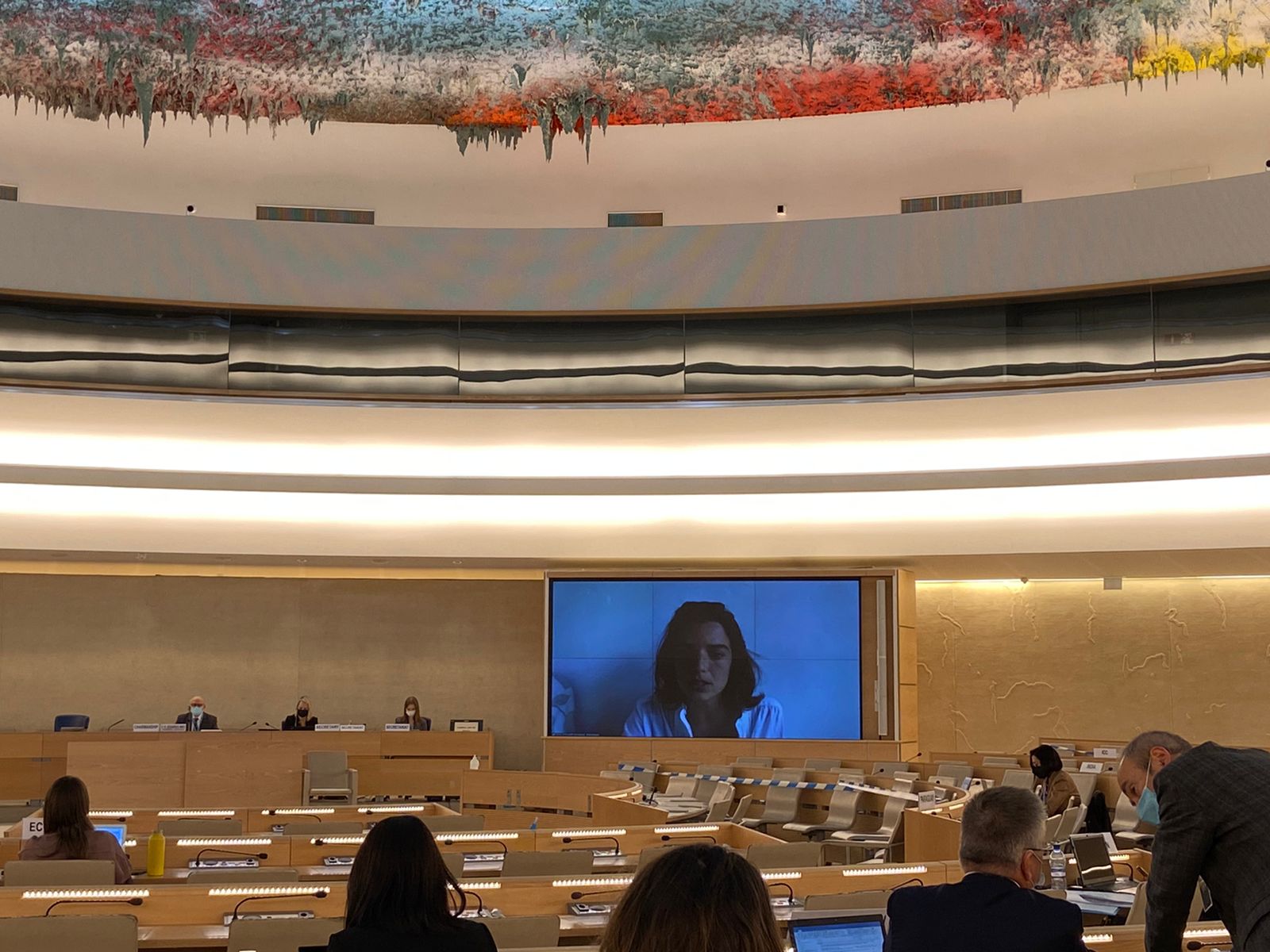
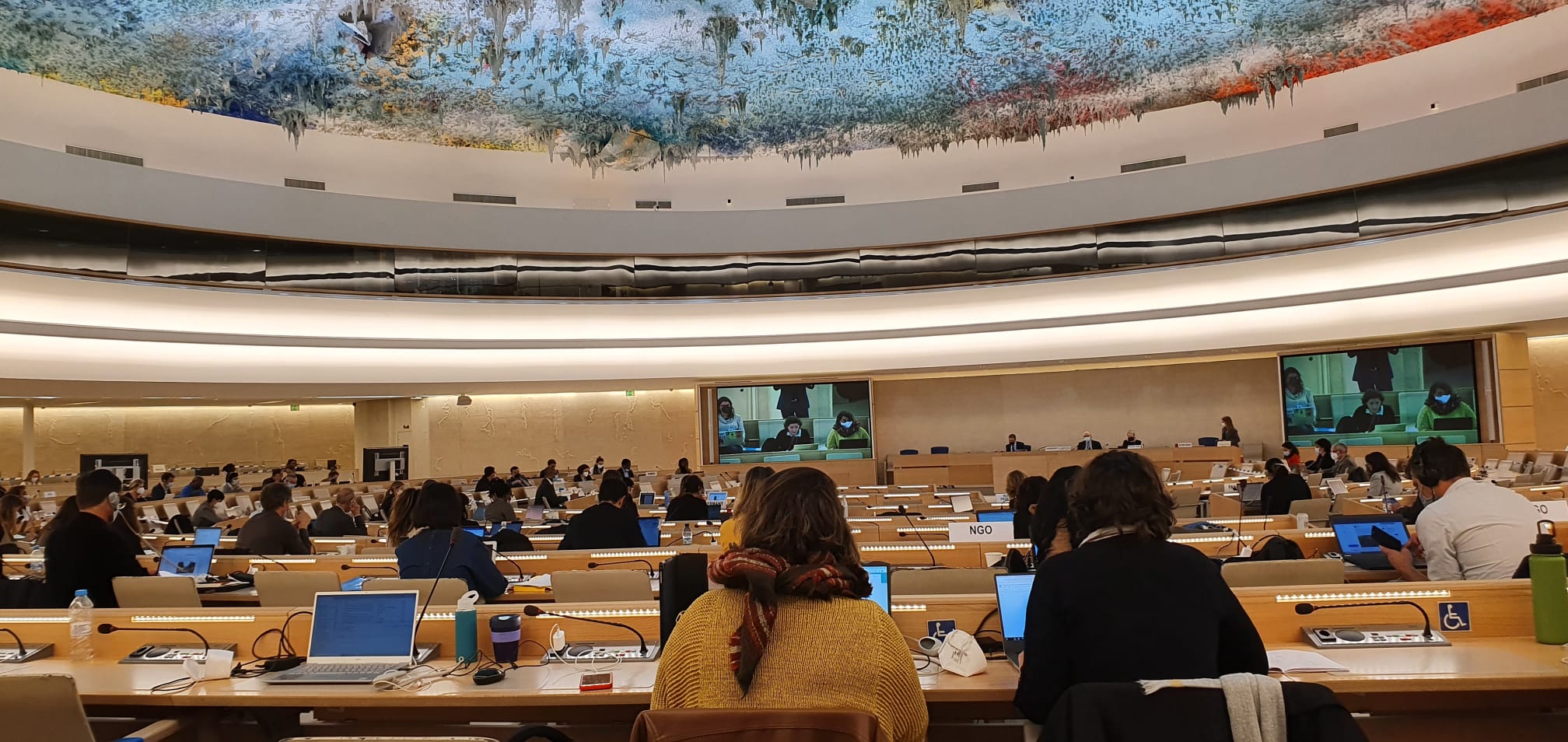
From 25 to 29 October United Nations member states continued the negotiations to elaborate an international Legally Binding Instrument (LBI) to regulate, in international human rights law, the activities of transnational corporations (TNCs) including all entities in their global production chains. This historic process celebrated its seventh session of the Open-Ended Intergovernmental Working Group (OEIGWG) hosted by the Human Rights Council in the Palais des Nations in Geneva.

The UN High Commissioner for Human Rights, Ms Michelle Bachelet, opened the session remarking that the world is witnessing a “growing consensus on the need of binding regulations on business and human rights.”

The UN Binding Treaty – as it is commonly known – negotiations have taken a qualitative leap forward with a new methodology adopted during this session, bringing transparency and encouraging States to take a position on concrete language of the draft treaty. A total of 69 States participated during the week. Most importantly, some major and indispensable content was reintroduced and defended by some States, in accordance with the mandate of Resolution 26/9, to close the gaps in international human rights law that enable the impunity of transnational corporations. Of note was the constructive participation of South Africa, Egypt, Palestine, Cameroon, Namibia, Panama and Cuba, among others.

Julia Garcia, from the Movement of People Affected by Dams (MAB) and coordinator of the Global Campaign said “We welcome the fact that many states are discussing direct and clear obligations for transnational corporations and other transnationally active entities, overcoming normative national limitations that contribute to impunity. We wish to highlight the importance of proposals that advocate the expressed inclusion of the primacy of human rights over corporate rights throughout the global production chain.”

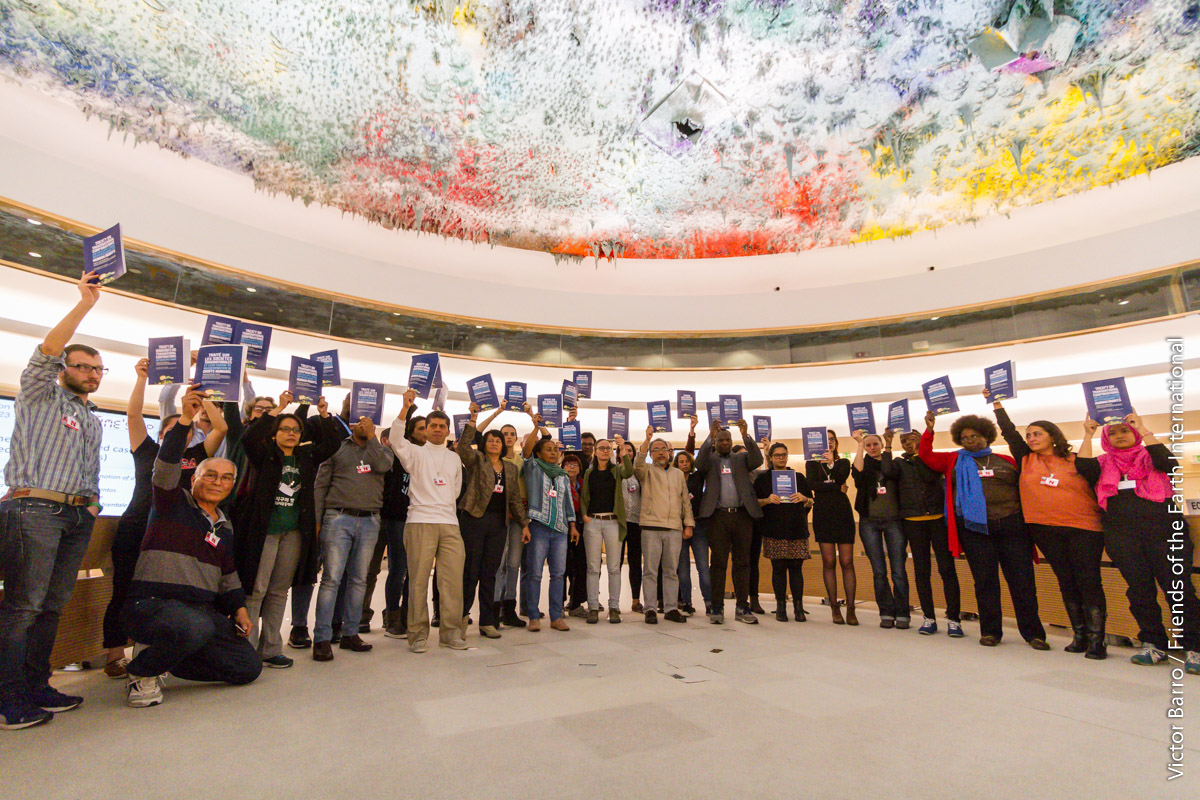
As with every year, civil society played an essential role, defending the need for this process, driving its continuity and nurturing it with detailed analyses, strong arguments and concrete content proposals. The Global Campaign to Reclaim Peoples Sovereignty, Dismantle Corporate Power and Stop Impunity (Global Campaign), representing 260 million people globally affected by Transnational Corporations, participated directly in the negotiations, partially resuming the physical presence that last year was not possible due to the COVID-19 pandemic.

“Access to remedy and justice has become a generational struggle rife with obstacles,” stated Joseph Purugganan, from Focus on the Global South and the Asian Task Force on the Binding Treaty. He continued saying that “in the face of the asymmetries of power that pervade in most countries, the protection of affected individuals and communities through the establishment of strong mechanisms of access to justice and reparation must be a priority of this process”.

Hugo Barretto, Trade Unions Confederation of Americas (TUCA) advisor, reiterated that the Global Campaign is aiming for “an ambitious and effective Treaty with binding rules for transnational corporations and the entities along the global production chains, which play a major role in the climate and biodiversity crises, labour exploitation and historic levels of inequality. Their reprehensible behaviour puts the future of humanity and the planet at risk.”

Raffaele Morgantini, from CETIM and coordinator of the Global Campaign at the UN, explained how, “Some western states and business-representatives repeatedly defend the relevance of the existing voluntary frameworks and even made unsuccessful attempts to suggest alternatives to the Binding Treaty, as part of a strategy, led by the US, to water down the process and foster the adoption of new futile frameworks. Nevertheless, the need to take a significant step forward and find innovative ways to close the legal loopholes that still exist at the international level was overwhelmingly felt during the whole week. It is also worth underlining that several states acknowledged the importance of civil society participation and the value of our proposals.”

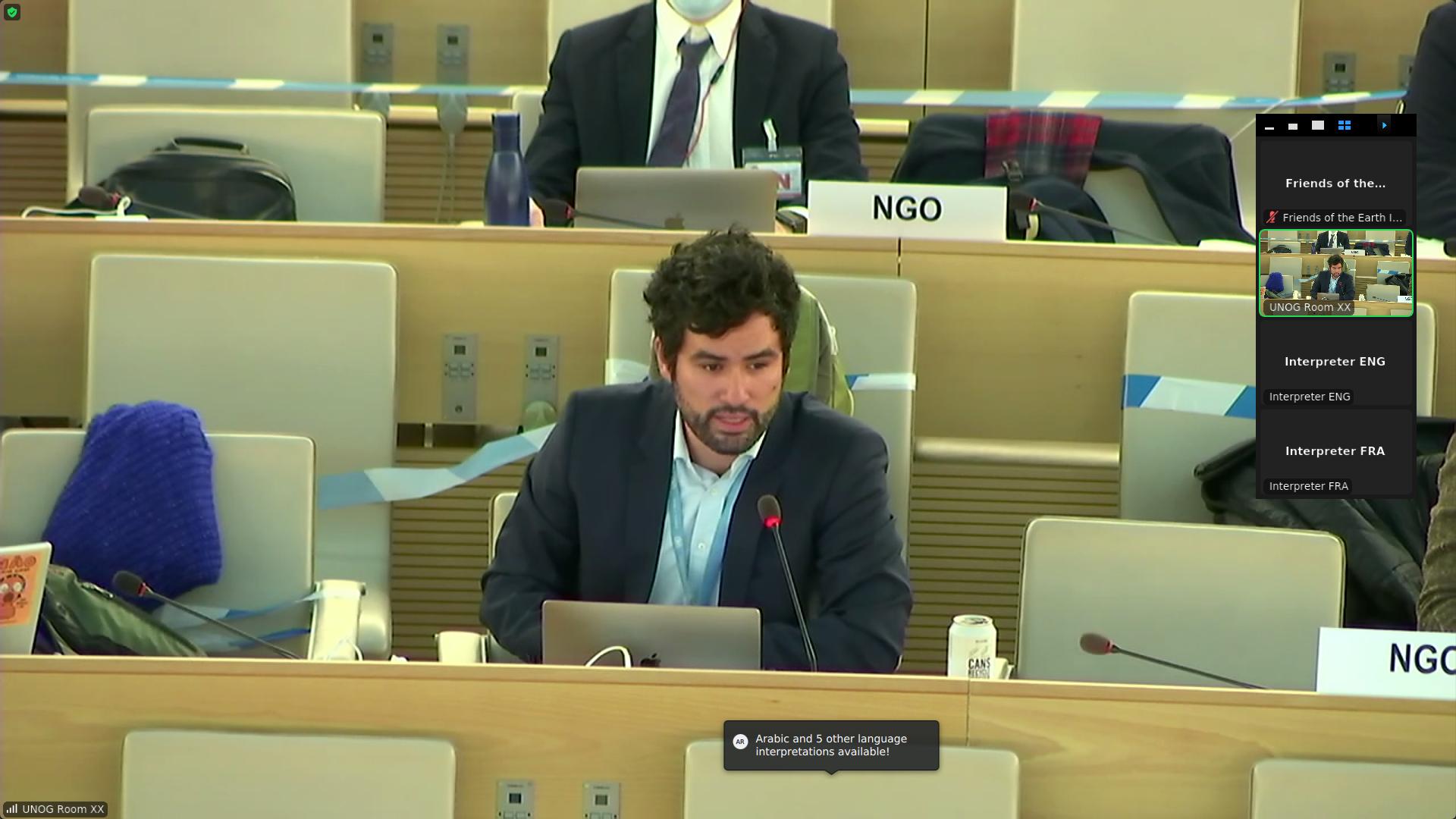
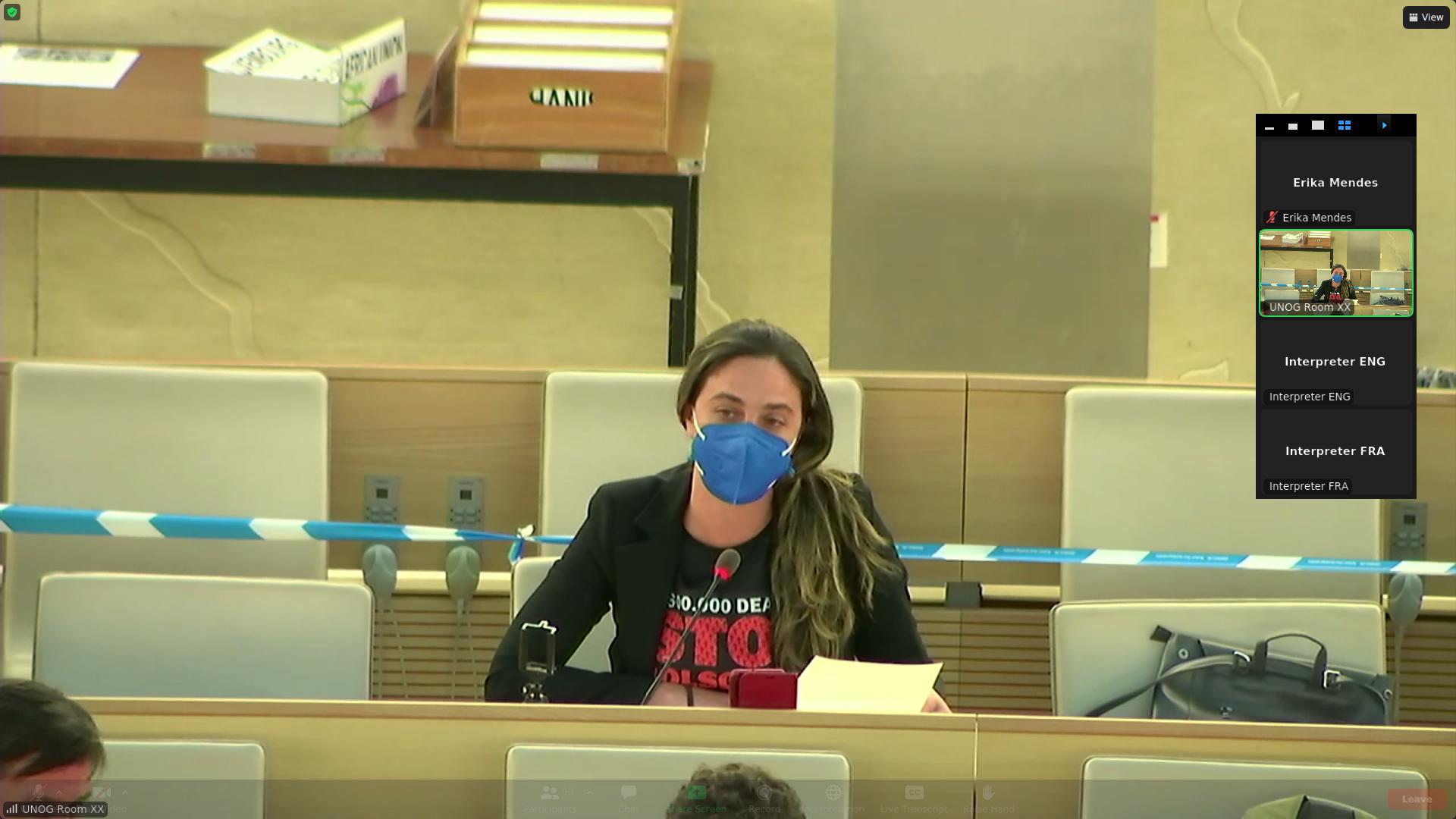
However, there are concerns about the risk of a loss of transparency in the process, as Erika Mendes, from Justiça Ambiental/Friends of the Earth Mozambique explains, particularly in relation to, “ the immediate future of the negotiations as it continues through the so-called “Group of Friends of the Chair” during the inter-sessional period. The new inter-state negotiation methodology must ensure social participation, so that the voice of affected communities is heard and considered. We urge the Chair and States to protect the process from undue influence from powerful corporate actors who, instead of upholding human rights, lobby for the protection of their own economic interests.”

Fernanda Melchionna, federal deputy of the Brazilian National Congress and part for the Global Interparliamentarian Network (GIN) in support of the Binding Treaty declared, “The struggle for a UN Binding Treaty to regulate the power of transnational corporations and place human and environmental rights above the corporate power of transnational corporations is a strategic and fundamental struggle for the world. The Global Campaign’s role in not allowing countries to remove the essence of the text demonstrates that civil society, affected populations and social movements have a fundamental role to play in the process.”

The Global Campaign continues its commitment to ensure that the UN Binding Treaty process retains the spirit and ambition of Resolution 26/9. To this end, the Global Campaign will continue to mobilise at the national level to ensure that our governments actively participate in these negotiations, representing the needs and aspirations of the social majorities and the peoples of each country.

NOTE TO EDITORS

For further information or to arrange interviews you can contact:

Sol Trumbo Vila, Email: soltrumbovila@tni.org

Julia García, +55 71 9246-2696 Email: facilitation@stopcorporateimpunity.org

Erika Mendes, Email: erikasmendes@gmail.com

The Global Campaign to Reclaim Peoples Sovereignty, Dismantle Corporate Power and Stop Impunity (Global Campaign) – a network of over 250 social movements, civil society organisations (CSOs), trade unions and communities affected by the activities of transnational corporations (TNCs), representing 260 million people globally. https://www.stopcorporateimpunity.org

This round of negotiations is revising the third draft of the binding treaty, published on August 17, 2021, which fits in the negotiation process started in 2014 with the adoption, by the Human Rights Council, of Resolution 26/9. UN information on the Mandate of the OEIGWG.

The global campaign published this statement in September 2021 in response to the release of the third revised draft.

The Global Interparliamentary network in support of the Binding Treaty is a global network of members of National Parliaments and the European Parliament supporting the UN Binding Treaty. https://bindingtreaty.org/

Tagged , , ,

Press Release: States resume historic UN negotiations amidst growing consensus on the need for binding regulations on transnational corporations and human rights

25 October 2021, Geneva

Today, United Nations member states resume negotiations in the seventh session of the Open-ended intergovernmental working group (OEIGWG) mandated to elaborate an international legally binding instrument to regulate, in international human rights law, the activities of transnational corporations. The UN High Commissioner for Human Rights, Ms Michele Bachelet, opened the session remarking that the world is witnessing a “growing consensus on the need of binding regulations on business and human rights”.

Global South countries intervened in strong support of the Binding Treaty process – South Africa, Namibia, India, Indonesia, Pakistan, Philippines, Bolivia, Venezuela, Cuba and Palestine among others. For the first time delegates from all major global economies shared their views on the Binding Treaty process and content. All of which goes to show that after seven rounds of negotiations states cannot ignore the urgent need for an effective instrument such as the UN Binding Treaty.

The Ecuadorian Chair of the OEIGWG opened the seventh session by affirming that the negotiations must be “State-led”, which raises concerns about how civil society´s contributions will be included.

The continuous broad participation of communities affected by transnational corporations’ activities, civil-society organisations, trade unions and social movements makes it one of the most strongly supported processes in the history of UN OEIGWGs. The Global Campaign to Reclaim Peoples Sovereignty, Dismantle Corporate Power and Stop Impunity (Global Campaign)1, representing 260 million people globally affected by Transnational Corporations has, once again, a strong presence in Geneva providing vital recommendations and critical analysis.

Tchenna Maso, from the Movement of Peoples Affected by Dams (MAB), La Via Campesina and the Global Campaign, remarked during the opening session, “Let me remind you of the basic problem that brings us together here. At the heart of the matter is the fact that, although the human rights violations committed by transnational corporations through their chains are obvious, States are usually unable to punish the culprits or to make reparations to the victims.”

Ubrei-Joe Mariere, from Friends of the Earth Africa spoke on behalf of the Global Campaign, “The climate, biodiversity and Covid crises are results of a socio-economic model that favours corporate profit over the protection of human rights and the environment. Travel restrictions due to the pandemic, unequal access to vaccines, financial barriers, digital connectivity and differing time zones limit the participation of the Global South, including States and affected peoples. For the Binding Treaty negotiations to be inclusive and fair, we must ensure that civil society – especially those most affected by the impunity of transnational corporations – are able to follow, intervene and influence the direction of the negotiations.”

Mary Ann Bayang, from the Indigenous Peoples Rights International in the Philippines, declared that, “The peoples, citizens, affected communities and social movements place great hope in the success of the process initiated in this OEIGWG to bring transnational corporations under the law. States also have an interest in the adoption of such a treaty that will allow them to recover their lost sovereignty. It is in this spirit that the Global Campaign has been engaged in the process of negotiating this Binding Treaty. We note with great regret that the current draft treaty falls far short of the OEIGWG’’s mandate. It is essential that this situation be rectified and the process put back on track.”

Participants in the negotiations emphasized the urgent need for binding regulations for Transnational Corporations in light of the Covid19 pandemic.

The Brazilian AIDS Interdisciplinary Association, member of the Global Campaign said, “Adopting a Binding Treaty is urgently needed to bring justice to people denied access to health technologies, and whose lives have been taken away by corporate greed. The treaty must include the primacy of Human Rights as a fundamental principle. Thus, interests included in trade and investment agreements must be subordinated and subjected to mandatory respect for Human Rights.”

A broad coalition of elected representatives, the Global Interparliamentary Network (GIN) supporting the UN Binding Treaty, also advocates for an ambitious and effective legally binding instrument.

Miguel Urbán, Member of the European Parliament for The Left and member of the Global Parliamentarian Network in support of the Binding Treaty added, “The absence of clear and binding international norms for the respect of human rights feeds the impunity and abuse of global corporate power.”

The Global Campaign will be in Geneva all week working to ensure that its proposals for the UN BInding Treaty are taken into account and included in the current drafting process.

NOTE TO EDITORS

For further information or to arrange interviews you can contact:

Sol Trumbo Vila, Email: soltrumbovila@tni.org

Julia García, +55 71 9246-2696 Email: facilitation@stopcorporateimpunity.org

Erika Mendes, +258 847713099 Email: erikasmendes@gmail.com

The Global Campaign to Reclaim Peoples Sovereignty, Dismantle Corporate Power and Stop Impunity (Global Campaign) – a network of over 250 social movements, civil society organisations (CSOs), trade unions and communities affected by the activities of transnational corporations (TNCs), representing 260 million people globally.

This round of negotiations is revising the third draft of the binding treaty, published on August 17, 2021, which fits in the negotiation process started in 2014 with the adoption, by the Human Rights Council, of Resolution 26/9. UN information on the Mandate of the OEIGWG

The global campaign published this statement in September 2021 in response to the release of the third revised draft.

The Global Interparliamentary network in support of the Binding Treaty is a global network of National Parliaments and the European Parliament members supporting the UN Binding Treaty.

Tagged , ,

France, Rwanda and Total:

a lethal threesome around Mozambique’s gas

For four years, the people of the province of Cabo Delgado, Mozambique, have been devastated by gas and violent conflict between insurgents, military and mercenaries. Eight hundred thousand people have become refugees from the violence, and thousands have lost their livelihoods and been displaced by the gas industry. To make things worse, they are now in the hands of the Rwandan army, which is notorious for horrific torture of Congolese and Rwandan alleged dissidents in military detention centres. And they have gone rogue.

According to Mozambican President Felipe Nyusi, the 1000-strong Rwandan army’s mandate since July has been to “restore peace and stability”.

But since the Rwandan state became involved, things have gone even further awry than they already were. Already, on 14 September, Rwandan businessman and chairman of the Rwandan Refugee Association in Mozambique, Révocat Karemangingo, who was exiled from Rwanda in 1994, was assassinated in Maputo.

Three months before, Rwandan journalist Ntamuhanga Cassien who had applied for asylum in Mozambique, was arrested by Mozambican police, and has not been seen since.

If experts and activists who have linked the murders to the Rwandan state are correct, even though the government has repeatedly denied it, this should not come as a surprise. The Rwandan government is known for killings of political opponents and journalists both inside and outside of the country, including South Africa and Kenya.

In July this year, Amnesty International and a consortium of journalists exposed that Rwanda was one of the countries using the Israeli surveillance company NSO Group’s Pegasus software. Since 2016, the Rwandan government has used the software to unlawfully surveil the phones of 3500 activists, politicians and journalists.

The Rwandan army itself has a terrible human rights record – in 2014 Human Rights Watch reported they had been fighting alongside the Rwanda- backed M23 rebels in the Democratic Republic of Congo (DRC). Over three days in 2016, M23 soldiers killed 62 people in anti-government protests.

Even though locals around Palma have highlighted the more professional conduct of Rwandan solders in comparison to the Mozambican soldiers, the Rwandan operation relies on local intelligence and information in order to be effective. But they are not doing the dirty work of actually acquiring this intelligence themselves. It has been the Mozambican soldiers that have carried out the interrogations, arrests and intimidations to obtain information. This has been one of the causes in the increase of disappearances, unlawful arrests and torture, sometimes targeting outspoken and critical civilians within the gas affected communities.

So if the Rwandan government doesn’t care about its own citizens and civilians in the DRC, why would it put its money and army on the line for foreign nationals? And who else has an interest in them being in Mozambique?

One of the factors that can’t be ignored is Rwanda’s dynamic relationship with France, and that French company Total is one of the leaders of Cabo Delgado’s $50 billion gas industry. Total owns 26% of the Mozambique Liquid Natural Gas (LNG) Project.

It is in the process of constructing the massive Afungi LNG Park, which will house the offices and support facilities for its project as well as ExxonMobil’s Rovuma LNG project and their contractors. The gas giants are building an industry that is pushing the debt-ridden country further into poverty and not benefiting the people. Until now, it has only brought destruction.

The French government has over $520 million invested in the Mozambique gas industry through a loan from the French export credit agency (BpiFrance) for the third project, Eni’s Coral South LNG. The four largest French banks, Crédit Agricole, Société Génerale, BNP Paribas and Natixis are also involved in the industry as financiers or financial advisors.

It is the construction of the Afungi Park that has forced thousands of local people out of their homes, and away from their farmland and fishing grounds creating an angry and further disenfranchised population.

And now that the insurgency has ruined Total’s plans, it has just closed shop and stopped compensation payments to communities. After a brutal attack on Palma town on 24 March, Total decided to claim ‘force majeure’ and pull its staff out of the area, pausing the project indefinitely and saying they would return only once the area was safe.

Even then it was clear that the military had Total’s best interests at heart, not the people’s. On the day of that attack, there were 800 soldiers defending the Afungi Park while civilians have said there were only a handful of soldiers protecting Palma village. Currently, Rwandan soldiers have been using the Afungi Park as their base.

It certainly won’t be the first time that French interests, politics and violent conflict have gone hand in hand with a Total project. Some examples that come to mind include Myanmar, where the military junta is known for ethnic cleansing of the Rohingya population, and mass human rights violations including rape, sexual abuse, torture and disappearances of protestors. Since the coup of February 2021, Total has been directing revenues from its Yadana gas project in Myanmar to the junta, its biggest source of income.

Total has also been active in the Taoudeni basin of Mali in the Sahel since 1998. Since 2013, over 3000 French troops have been in Mali, and 4 other Sahel countries, with France using the same rhetoric as they and Rwanda have done in Mozambique: to rid the area of ‘jihadists’.

In Yemen, the Balhaf LNG site of which Total owns 39% was exposed for housing the base for the Shabwani Elite, an UAE-backed tribal militia since 2016. Officially a counter-terrorism group, they have unofficially become known as a group created to protect fossil fuel interests. The site also has also been exposed to house UAE notorious ‘secret prisons’ holding Yemeni detainees.

So, Cabo Delgado, where the gas region sits nearly on the border between Mozambique and Tanzania, fits neatly in Total’s mixture of politics, gas and conflict.

So back to Rwanda – Out of all potential pawns, or proxies, for France, why pick them?

France has been embarrassed, but not enough for a full apology, about the exposure of the severity of its role in the Rwandan genocide, after a March 2021 report claimed France bears ‘overwhelming responsibilities’ for the horrors that killed over 800 000 people in the Tutsi minority. However, in 2005 complaints laid by human rights groups pushed French prosecutors to open an investigation into French soldiers’ actual complicity in the genocide, which seemed like it was going to be dropped in May this year. No former French soldiers have faced trial.

While Rwanda claims this military mission to Mozambique is self-funded, others say it is Mozambique footing the bill, and yet others, say that this might be one of France’s covert means of reparations, or an olive branch trying to fix bad Franco-Rwandan relations, by offering Rwanda a crucial job: protecting French gas assets. When asked by a journalist, the French Minister for Europe and Foreign Affairs, Jean-Yves Le Drian, neither confirmed nor denied whether it is financing the troops, although financing does not always come in the form of cash. It could be through aid or other means that are harder to track.

It’s part of a pattern of Rwanda becoming France’s new darling: in 2019, the Rwanda Development Board (RDB) signed a reported $11.6 million a year contract with French football club Paris St. Germain as its official tourism partner. ‘Visit Rwanda’ is boasted on the the back of the men’s training and pre-game warm up kits, in the club’s stadium and on the sleeves of the womens’ team kits, with the club having renewed its contract in 2019, also reported to be $11 million a year. A point to consider is that hospitality company Accor is paying PSG $58 million a year to be its official hotel partner.

There is the possibility that these teams are giving the RDB a friendly discount. What is more likely is that the sponsorships are being subsidized by a third party.

It is clear that there are a few parties getting something out of Rwandan troops being on the ground in the gas region – Total, Mozambique and Rwanda. But certainly the one gaining the most is France – its financial assets are being well protected on the ground and it is able to maintain the international ‘non-complicit’ image it wants to regarding the genocide while still nurturing a relationship with Rwanda. It would also be a way of having military protection of its assets while not being visible. This is definitely in their interests following France’s recognition of its disastrous mission in Mali by cutting the number of troops in June this year, and now, after the death of the 52nd French soldier in eight years, French President Emmanuel Macron has said they will have no more soldiers in the Sahel by the beginning of 2022. The deployment of Rwandan soldiers would mean they will have another army in public view and decrease the political risk of failed military interventions, especially ones linked to human rights violations.

But one group that is not benefiting, are the people of Mozambique, most of all – the communities of Cabo Delgado, who are pawns, dying and devastated so that local and international elites can save political face and defend their gas assets and bonuses by any means necessary.

I

Tagged , , , , , , , , ,

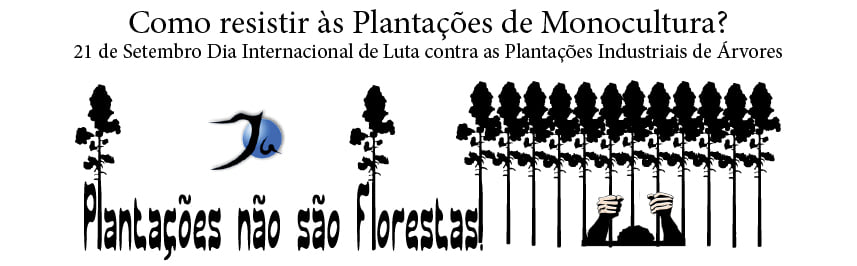
Public letter of the International Meeting

“How to Resist Monoculture Plantations”

21 September, 2021 – International Day of Struggle against Industrial Tree Plantations

We, about 60 members of rural communities facing industrial tree monocultures on their land, coming from the provinces of Manica, Sofala, Zambézia and Nampula in Mozambique and from the province of Iringa in Tanzania; together with allies who support these communities; met – due to the pandemic only in small groups and interconnected by computers and mobile phones – during the 21st and 22nd of September 2021 at the international event “How to Resist Monoculture Plantations”.

For years, these communities have resisted the eucalyptus monoculture plantations of the Green Resources company in Mozambique and Tanzania, and those of Portucel and Investimentos Florestais de Moçambique (IFM) in Mozambique, as well as the rubber tree monoculture plantations of Mozambique Holdings in Mozambique.

The members of the communities present decided to break the silence imposed by the pandemic and denounce once again that the eucalyptus and rubber tree companies arrived on their land – in some cases many years ago – with promises of development, a future with schools, hospitals, energy and bridges. However, they denounce that none of these promises were fulfilled. Worse still, eucalyptus and rubber trees occupied and destroyed the fertile farmland, and today families no longer have food and some have nowhere to live. If eucalyptus were food, it would be much better, but it is not. In addition, companies destroy native trees and use chemicals that contaminate the soil and water. Wells and rivers have dried up and drinking water has become scarce. Instead of building bridges, companies destroyed bridges with their heavy machinery, without concern they should repair them. Communities are afraid to cross plantation areas. Even already occupying large areas, companies want to take over even more land.

We see and analyse that this whole situation is causing a lot of suffering, a lot of hunger in the communities, and affects women in a particular way. The Government opened the door to foreign companies and investors, and closed it to the people. What is happening is a new form of colonialism where the company is the new colonizer of lands where communities have lived for many generations.

Even though the companies justify that they consulted with the communities, there was no consultation where they could accept or refuse the company; there was a lot of manipulation of information and broken promises. The promised jobs do not exist, just a few, but mostly seasonal and poorly paid. Compensation payments have been absolutely negligible, insufficient to acquire another farm outside the community.

When someone decides to farm on land that the company claims is theirs, the person is intimidated and threatened. This also occurs when someone lodges a complaint with their local leaders or officials. In this case, nothing is done because these authorities usually receive something from the companies or are equally intimidated and disrespected by the company. To make matters worse, in some cases it is not just the police and the company, but the community leaders themselves that intimidate and threaten members of their own community if they file a complaint. Nor are organizations that support communities spared from intimidation. Recently, the Suhode Foundation team in Tanzania was illegally detained by the police for 19 days. All their equipment was confiscated and remains in police possession to this day. Certainly, Green Resources is behind this, in an attempt not only to divide communities, but also to prevent civil society organizations from continuing to support them.

We demand that communities and organizations that support the communities have their rights – ensured in various national and international legal instruments – fully guaranteed; that our governments defend the people and not the companies; that intimidation and threats from companies and authorities as well as community leaders stop; that our governments, instead of protecting companies, order that they be investigated for the multiple violations they are committing; that officials discuss the future with communities, so that communities can actually participate in the planning that aims to guarantee their permanence on the land, today and in the future, and improve their living conditions going forward.

Even if companies do not stop expanding, even if they try to intimidate and threaten us, we are committed to continue to unite in the fight against monocultures and the destruction and encroachment of land; even if companies and governments insult us, we will continue to look for ways for communities to retake their territories – some communities in Tanzania have already done so; even if they threaten us, we will continue to raise our voices more and more, and together we will continue to expose the situation of communities and denounce the actions of companies; even if they won’t listen to us, we won’t give up calling on our governments to join with their communities, communities that they should defend and protect above all.

We believe that together we will be stronger to resist monocultures and all kinds of usurpation of our lands, especially on this 21st of September, the International Day of Struggle against Industrial Tree Monocultures.

September 21, 2021 – Plantations are not Forests!

Membros das comunidades Rurais

Ação Académica para o Desenvolvimento das Comunidades Rurais – Adecru

Associação de Jovens Combatentes Montes Errego – AJOCME

Fórum Carajás – Brasil

Fundação Suhode Tanzânia

Justiça Ambiental – JA! – Amigos da Terra Moçambique

Missão Tabita

Movimento Interestadual das Quebradeiras de Coco Babaçu (MIQCB) – Brasil

Movimento Mundial pelas Florestas Tropicais (WRM)

Tagged , ,

STATEMENT OF THE GLOBAL CAMPAIGN ON THE THIRD REVISED DRAFT OF THE BINDING TREATY ON TRANSNATIONAL CORPORATIONS AND HUMAN RIGHTS

7th of September 2021

Re: Release of the “third revised draft” during the negotiation by the Open-ended Intergovernmental Working Group on the elaboration of an international legally binding instrument to regulate the activities of transnational corporations (TNCs) and other business enterprises with regard to human rights

The Global Campaign to Reclaim Peoples’ Sovereignty, Dismantle Corporate Power and Stop Impunity (Global Campaign) notes the release of the third revised draft of the binding treaty, published on August 17, 2021. It is the result of the negotiation process started in 2014 with the adoption by the Human Rights Council of Resolution 26/9. This new draft emerges after the discussions held during the 6th negotiation session of October 2020 and the subsequent Matrix process of February 2021.

We are deeply concerned about the continuing hollowing out of key content, i.e., content that social organisations and affected communities view as critical. We hereby share our first impressions on the new draft and raise some procedural questions concerning the negotiation of successive “drafts”.

Although we note some positive changes in the third revised draft, these are mostly cosmetic, rhetorical and ineffectual. These superficial changes seek to increase the legitimacy of the proposed text, but, in reality, fail to solve the structural problems repeatedly highlighted by social movements and affected communities.


A change of direction in both content and procedure will thus be necessary to meet the objectives set out in Resolution 26/9 and to respond to communities subjected to human rights violations. It is unacceptable that the innumerable proposals for improving the draft presented throughout the negotiation sessions by representatives of the affected communities, social movements, as well as many experts and States to be omitted. The third revised draft is basically similar to the previous draft, despite the high number of concrete proposals that were made to improve it. This gives us the feeling of a lost year.


Moreover, the methodology used to revise the draft transparently considering the contributions of States and civil society organizations is a must. We appreciate the synthesis and mediation efforts of the Ecuadorian Chair Rapporteur. Nonetheless the negotiation has reached a point of maturity that requires a Member driven, open and transparent negotiation process facilitated by the Chair Rapporteur. This must ensure that the voices of civil society and affected communities are heard and taken into consideration by including the diverse text proposals in brackets during the session of negotiation. The objective of the session should be to achieve a new draft proposal of the IGWG and not just of the Chair. In short, to be true actors in the process, civil society must have both voice and influence.

In terms of content, we note once again that, following the approach presented in the previous drafts released by the Chair Rapporteur after the robust Elements Paper in 2017, and despite some positive elements, the new draft continues to present an ineffective and “toothless” instrument. We also note the use of vague, indeterminate and even non-legal concepts that may compromise the future interpretation and application of key articles.

As it stands, the draft instrument fails to meet the objectives established by Resolution 26/9, namely to regulate the activities of transnational corporations within the framework of international human rights law (in order to prevent human rights violations by TNCs and stop corporate impunity) and to ensure effective and comprehensive access to justice for affected peoples, individuals and communities. Furthermore, the current draft would not close the existing legal loopholes that allow and will allow TNCs to violate human rights with impunity and to escape liability for their actions. Without more innovative and ambitious provisions, the treaty risks becoming a new futile instrument aligned with voluntary frameworks that have already demonstrated their ineffectiveness.

Furthermore, the new text unacceptably continues a logic centered exclusively on States’ obligations, and fails to establish the direct obligations for transnational corporations, necessary to hold them directly accountable for the human rights violations they are responsible for. We are also concerned about the continued extension of the scope of the text to all business enterprises, including small and medium-sized enterprises. This dilutes the raison d’être of the binding treaty and the purpose set out in Resolution 26/9 (to address the particular obstacles to holding TNCs accountable), which clearly refers to transnational corporations and other business enterprises “with transnational character”.

Another element is the scope of prevention and legal liability of TNCs which focuses on weak provisions linked to due diligence, an inherently limiting concept. This risks a situation where TNCs escape liability as soon as they comply with due diligence processes.


We call attention to the lack of an unequivocal reaffirmation of the primacy of international human rights law over corporate, trade and investment law, the absence of a strong international enforcement and monitoring mechanisms (including an international tribunal) that would guarantee the effective implementation of the treaty, as well as the several remaining gaps in terms of inclusion and definition of global value chains, the piercing of the corporate veil, and addressing the bottom line of transnational corporate impunity.


At this stage, it seems clear that the Chair of the Working Group is steering the process towards the elaboration of a treaty emptied of its core content and focus on transnational corporations, with only generic provisions that rely on the capacity and political will of the States for their implementation and in line with corporate self-regulation. This confronts us with a text overly accommodating to the requests and interests of the corporate sector and their political allies.


This being said, the Global Campaign will continue its strong engagement in the negotiations with the unyielding intention to com up with a truly binding treaty worthy of its name and capable of becoming a bulwark against the power of transnational entities that lay claim to being the engines of our economies while they violate human rights and destroy our natural environment with impunity. In line with these commitments, the Global Campaign will, if necessary, oppose the adoption of a treaty whose content has been watered down and risks becoming a “normative trap” that closes the door on truly effective reforms in the coming years.


Contact:

Júlia García, facilitation@stopcorporateimpunity.org

Raffaele Morgantini, contact@cetim.ch

Erika Mendes, erikasmendes@gmail.com

Where is Ibrahimo?

7 September 2021

Today, the 7 September 2021 has been exactly 17 months since Mozambican journalist Ibrahimo Abu Mbaruco disappeared in Cabo Delgado. His last message was to a colleague saying that the army was coming towards him.

Ibrahimo worked for Palma Community Radio and had been reporting on the violence in the area. Since then, what effort has the government put into finding him and bringing him back to his family? Absolutely nothing.

Since 2017 Cabo Delgado has been ravaged by a fatal conflict between insurgents, the Mozambican military, Russian and South African mercenaries and now the Rwandan and South African armies as well, that has created 800 000 refugees. This violence is deeply linked to the gas industry that has exploded over the last few years. The industry is headed by Total (France), Eni (Italy) and ExxonMobil (US), and is one industry filled with a great amount of treachery in the Mozambican and other states involved, which forms part of the corruption trial currently in the Mozambican courts.

Over the last few months several media outlets have arrived in Cabo Delgado, after at least three years of the area being closed to international journalists.

It is a good thing that Mozambican and international media has finally been allowed there, since free media is a crucial part of any democracy. However, journalists who actually live in Cabo Delgado and were the first to report on the happenings since 2017, have not been allowed to work in the conflict areas, unless they are from state-owned media outlets.

In an article in O Pais 26 August, Cabo Delgado-based journalist Hizidine Acha wrote that journalists from the area are being humiliated by having to report on the topic from a distance, even though they are the ones who know the terrain and the local language. They fear that the lack of reporting in local languages might lead to disinformation among the communities. The article quotes journalist Emanuel Muthemba as saying, “Journalists from here have to be on the front line, because we have basic knowledge about the reality of the province, the people and the languages spoken by the population, which is very important,”; and journalist Assane Issa says “speculation grows that we are not capable of doing this type of coverage – that only those from the country’s capital are. But this is not true, because we are the ones who have been reporting on the daily life of the province.”

In fact, the article continues saying that recently 20 local journalists were invited to cover the conflict, but for reasons they were never told, were never actually able to leave Cabo Delgado’s capital and largest city, Pemba.

But even if they were able to report, the government has made it clear that they will not make it easy. On 11 April, on the ‘Day of the Mozambican Journalist’, even though his general rhetoric has been about free press, President Felipe Nyusi sent a document to O Pais, saying, journalists must report with “rigour, professionalism and patriotism”. He said “the Mozambican journalist should not be a reproducer of wishes contrary to our unity.” And he followed this in May saying that journalists have to be “disciplined”: “To have discipline is to report only the truth, to combat fake news and not to incite violence and hatred.”

This is not freedom. This is a threat. This is saying that journalists have the ‘freedom’ to write or to film or to record for radio, as long as this is in aligned with the state’s narrative. Or else.

The public media and many international journalists are reporting on the violence in the province as only a humanitarian issue created by violence caused by insurgents, and not on how many of these refugees were actually already displaced from their villages, and had lost everything, because of the Afungi Liquid Natural Gas (LNG) Park that Total is building to house the support facilities for the industry. Reporting in this way allows the gas industry off the hook for the part they have played in this humanitarian crisis and conflict, including how Total has left the displaced communities who were relying on them for compensation and aid with nothing as they pulled out of the country when claiming force majeure.

International journalists are protected by having foreign passports. But who is protecting local journalists from non-state outlets, like Ibrahimo, or like Amade Abubacar from the Nacedje Community Radio who was arrested, tortured and held without charge for 3 months in 2019 after interviewing a group of displaced people? Or the journalists of Canal de Moçambique whose office was bombed in 2020 after exposing corruption between the government and gas companies?

In April 2020, Reporters Without Borders and 16 other press freedom organisations wrote an open letter to President Filipe Nyusi, who ignored it, just like the military and relevant government officials did not even bother to respond, and the police treated it like a joke. On 8 June 2020, Ibrahimo’s brother contacted the local police to inform them that he had called Ibrahimo’s phone and it rang. He reported it to the public investigators responsible for finding him, the National Agency for Criminal Investigations. They promised they would look into it, but since then there has been silence.

But we must not stop fighting!

In January, the African Union (AU) launched the Digital Platform for Safety of Journalists in Africa. At the launch, South African President Cyril Ramaphosa, who was AU chairperson at the time said: Media freedom “requires that we rigorously defend the right of journalists to do their work, to write, to publish, and to also broadcast what they like, even if we disagree with some or all of it.. The digital platform for the safety of journalists in Africa is an important tool in promoting the safety of journalists and other media workers across Africa.”

Now they must put their money where their mouth is, by holding the Mozambican government accountable for its violent media oppression and pressurise it to stop, and they must recognise how part of this oppression is to protect the gas industry. The platform was supported by the United Nations, and both they and the AU have the responsibility to find out what has happened to Ibrahimo, and must use their power to do so.

It is clear that Mozambican journalists cannot rely on their state for their protection – the very people who are obliged to protect them, but sadly are reliant rather on non-governmental organisations and media groups – both international, and local, who themselves are putting their safety on the line just by speaking out. When journalists are told they need to report with “patriotism” and “discipline”, it is clear that, just as history has shown, they cannot know that they are safe. They cannot know their colleagues will not be arrested and tortured or that their offices won’t be attacked. They cannot know that they, too, will not disappear and be another Ibrahimo.

We must not stop pushing to find out, where is Ibrahimo?

Tagged , , , ,

JA! at the AGMs, 2021

Our Say No to Gas! In Mozambique Campaign has many elements, but one of the crucial ones is confronting fossil fuel criminals involved in Mozambique’s gas industry, about the destruction, violence and devastation they have caused in Cabo Delgado province.

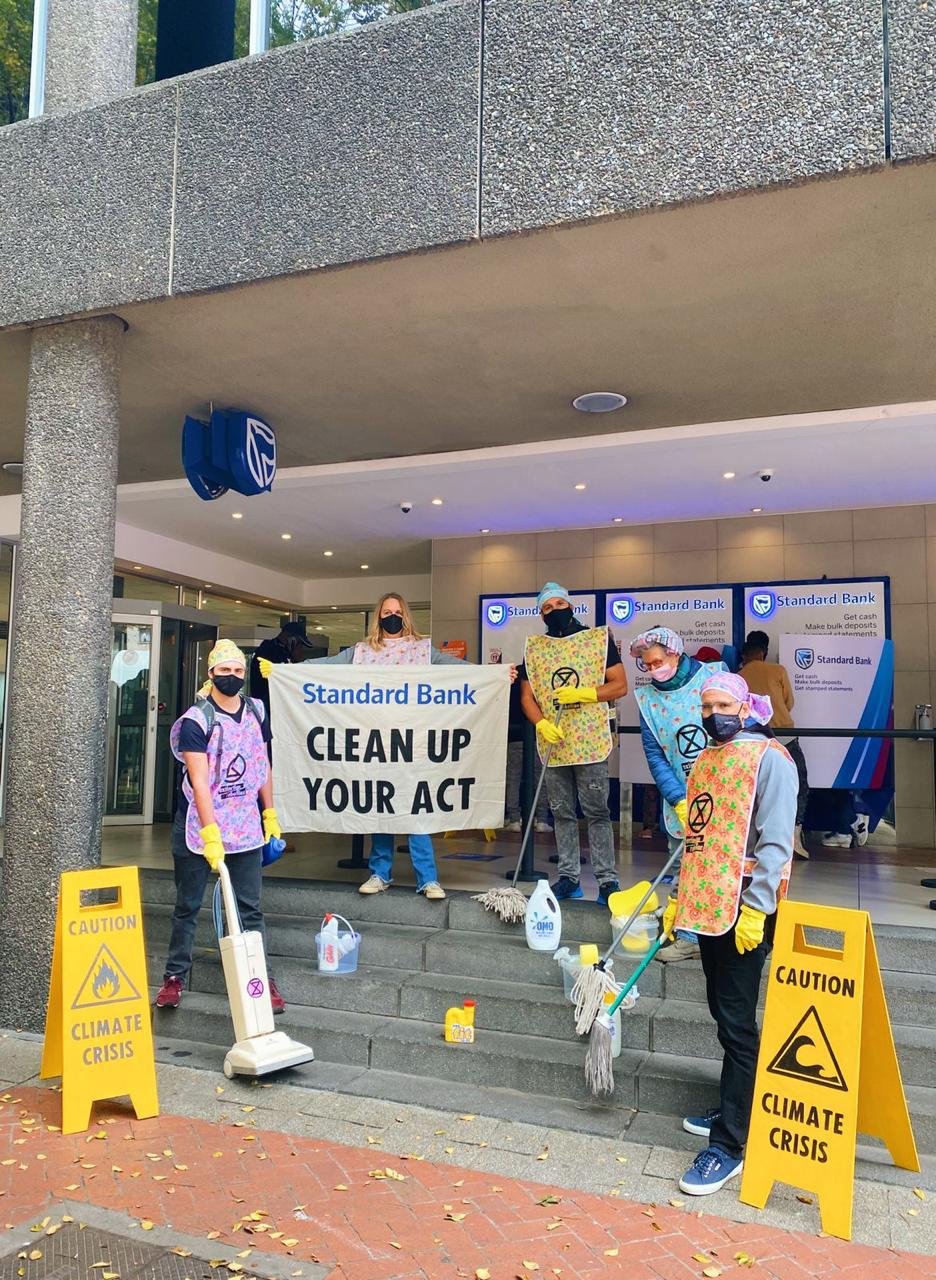
One way of challenging them and making demands for them to leave and stop their involvement in Mozambique gas, is attending Annual General Meetings (AGM) of several large international players in the Mozambique gas industry, which this year we did for the fourth year running. Attending these AGMs is a way to force the highest level decision-makers in these companies to hear our voices and the voices of the people whose lives they are devastating, to demand information and call them out on their crimes against the climate and peoples in a large public forum that includes their shareholders and employees. It is a way to prevent them from saying “we didn’t know” about the impacts – even though taking active measures to identify potential risks of human rights violations is part of their responsibilities. There is often media at the AGMs of the large companies, giving us another opportunity to bring to the international public the issue of Mozambique gas and the violence and destruction being perpetrated by those who profit from it tremendously.

With the Covid-19 pandemic still raging, most of the AGMs were held online.

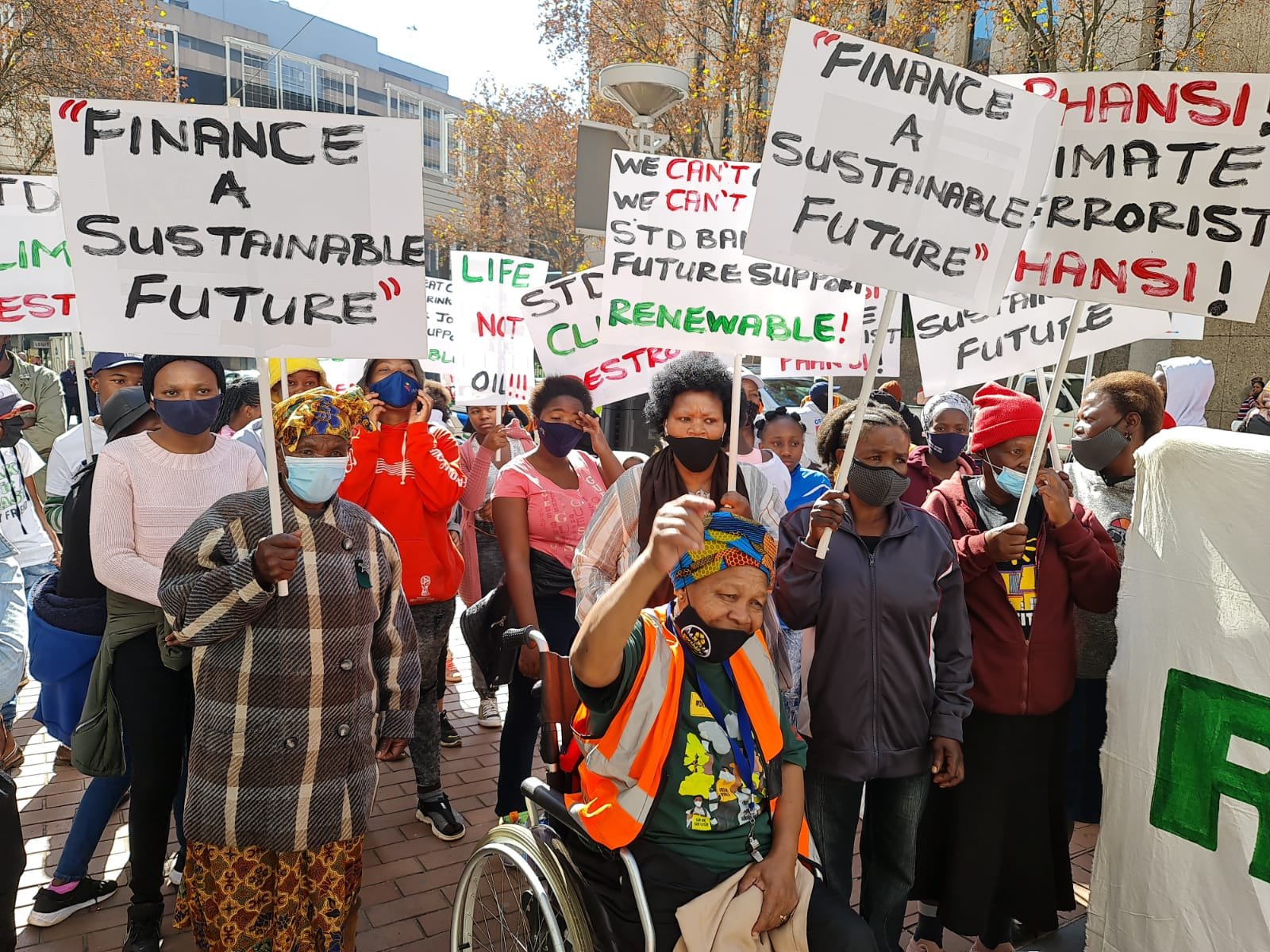
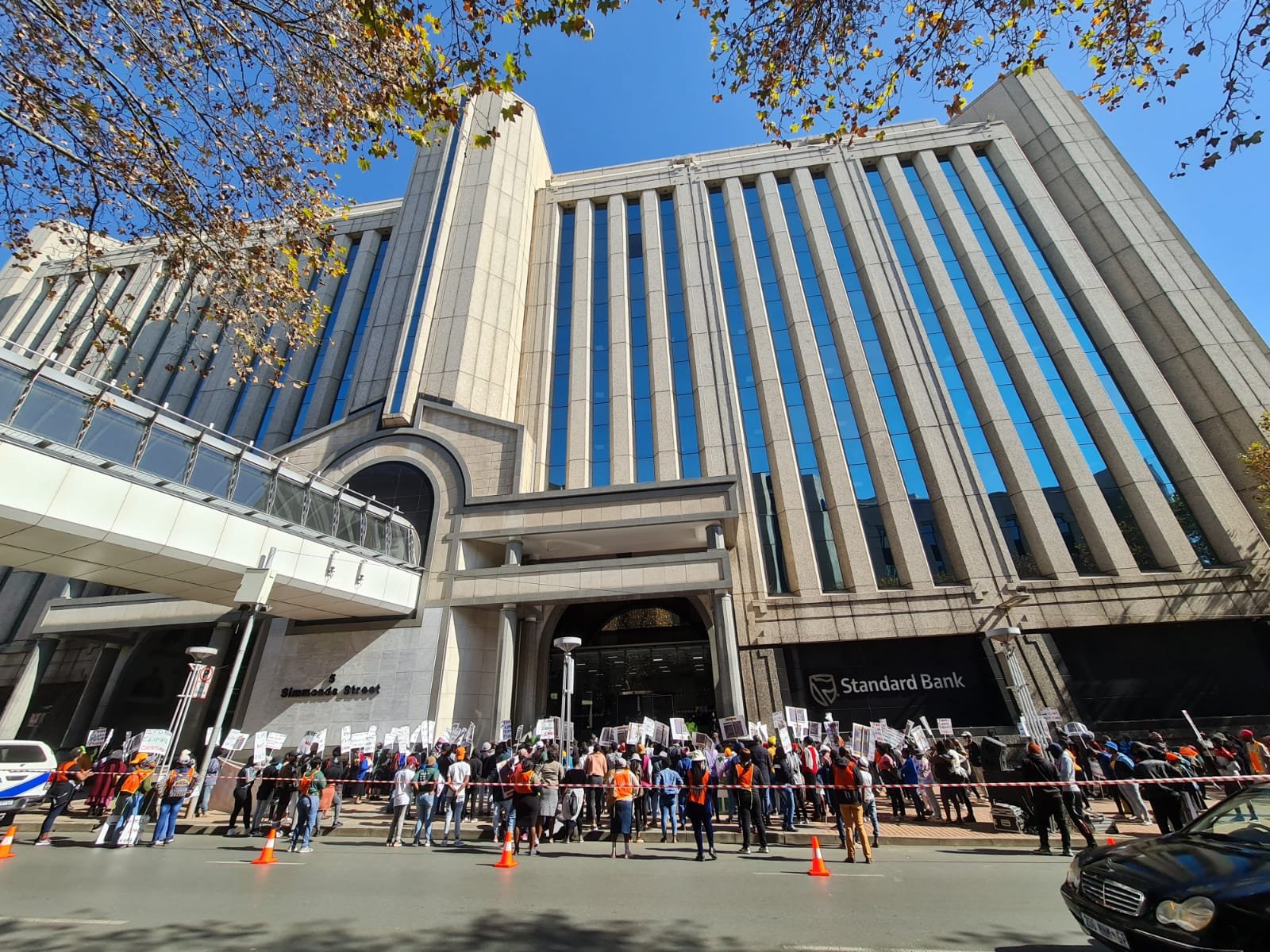
The AGMs we attended were of Eni (Italy) which is co-leading the Coral Liquid Natural gas project with ExxonMobil; Total (France) which is leading the Mozambique LNG Project; Shell (Netherlands), who was previously involved; Standard Bank (South Africa), one of the major financiers; and HSBC (UK), another massive financier. While there are some questions specific to each company, many of them are standard. This is because, while Eni, Total and ExxonMobil may be the companies leading the actual gas extraction and responsible for constructing the offshore and onshore facilities, every player involved in the Mozambique gas industry is to some degree responsible for the negative human rights, climate, environmental and socio-economic violations and impacts it has created. Companies and governments involved often try to wriggle out of their responsibilities and accountability by claiming that they are not ‘directly’ responsible for the impacts. This is utter nonsense – without financiers, contractors or confirmed purchasers, the Mozambique gas industry would not exist.

We demand to know why they continue to invest or operate in Cabo Delgado considering the horrific violence and conflict that has been taking place for years between insurgents, the military and private security companies, in which thousands of civilians have been killed and over 800 000 people displaced. We want them to recognise that they have directly created suffering and deeper impoverishment for the communities affected by the project, who have lost their homes and livelihoods, and received no decent jobs; and we ask what is their plan to make reparations. We want them to provide transparent information, something lacking in an industry which is so opaque and secretive.

Eni insists they are ‘providing support to the basic needs of local populations’, even when we tell them that the only jobs Mozambicans have received have been menial and unskilled. They say that a mere 370 permanent jobs will be available in total over the life cycle of the Coral LNG project, although they don’t say if these will actually go to Mozambicans.

All companies refuse to see a link between the gas industry and the violence, with Eni even saying they see no risk whatsoever, and denying any human rights violation by the military, even though this had been exposed in mainstream media and international human rights organisations’ reports.

Total, which claimed force majeure in April 2021 due to the violence, putting the Mozambique LNG project on hold indefinitely, made the contradictory remark that the safety and well-being of communities was a priority, but at the same time, “our mission is to protect the interests of Total’s shareholders and our partners”. These are obviously mutually exclusive, as continuing with the project will only continue the violence and dispossession that communities are facing. While they insist that the Mozambique LNG project has not been “abandoned”, they put the responsibility of the impacts on communities solely on the Mozambican government.

Standard Bank also believes that their investments are not at risk because of the violence. Even as people in Cabo Delgado are being killed every week, they carry on with business as usual, as though the militarisation and its accompanying human rights violations creating refugees and forcing displacement, do not matter to them at all. Clearly, even though they use an undisclosed “consortium” of civil society organisations in Cabo Delgado to do “monitoring”, the lives of the rural affected peoples means nothing to them.

HSBC on the other hand, just refused to answer the questions, except to say they cannot talk about private clients and very few jobs will go to Mozambicans because of the project’s “advanced technical requirements”.

Company AGMs can be very frustrating events. Directors often dodge questions or answer them insufficiently on purpose, or just pretend they didn’t hear them at all. But this year, as with most, these experiences and actions are more than confronting fossil fuel companies and financiers, they also strengthen civil society’s collective struggle against fossil fuels and the impunity of transnational corporations.

We use these as opportunities to work with other regional and international organisations and movements who are fighting against the same company or projects for crimes they are committing in the different countries. As partners, we support each other in asking questions, gaining access, publicising on social media and holding protests, and use the opportunity to exchange with each other about the different ways we are campaigning against the same culprits. When we attend as a group, our presence is powerful. As a team, we have more numbers and confidence in our actions inside and outside AGMs, more access to media and more impact if we choose to cause any disruption. If these companies do not want to take the time to talk to us and our comrades, this is a way for us to force them to listen. The strongest outcome of attending AGMs is that we are saying clearly, with a collective voice ‘we are watching you and we are not going away’, while we demand that they leave and stop their profit-mongering activities that are killing peoples and the planet.

Tagged , ,