
Two week long PROTEST CONTINUES against TotalEnergies and its. Mozambique LNG gas project for RESETTLEMENT VIOLATIONS
IN Afungi Communities, Palma District, Cabo Delgado, Mozambique
15 November 2024, 12H00 CAT
Justiça Ambiental!, Maputo
Demonstrations SHUT the gates of TotalEnergies Afungi site
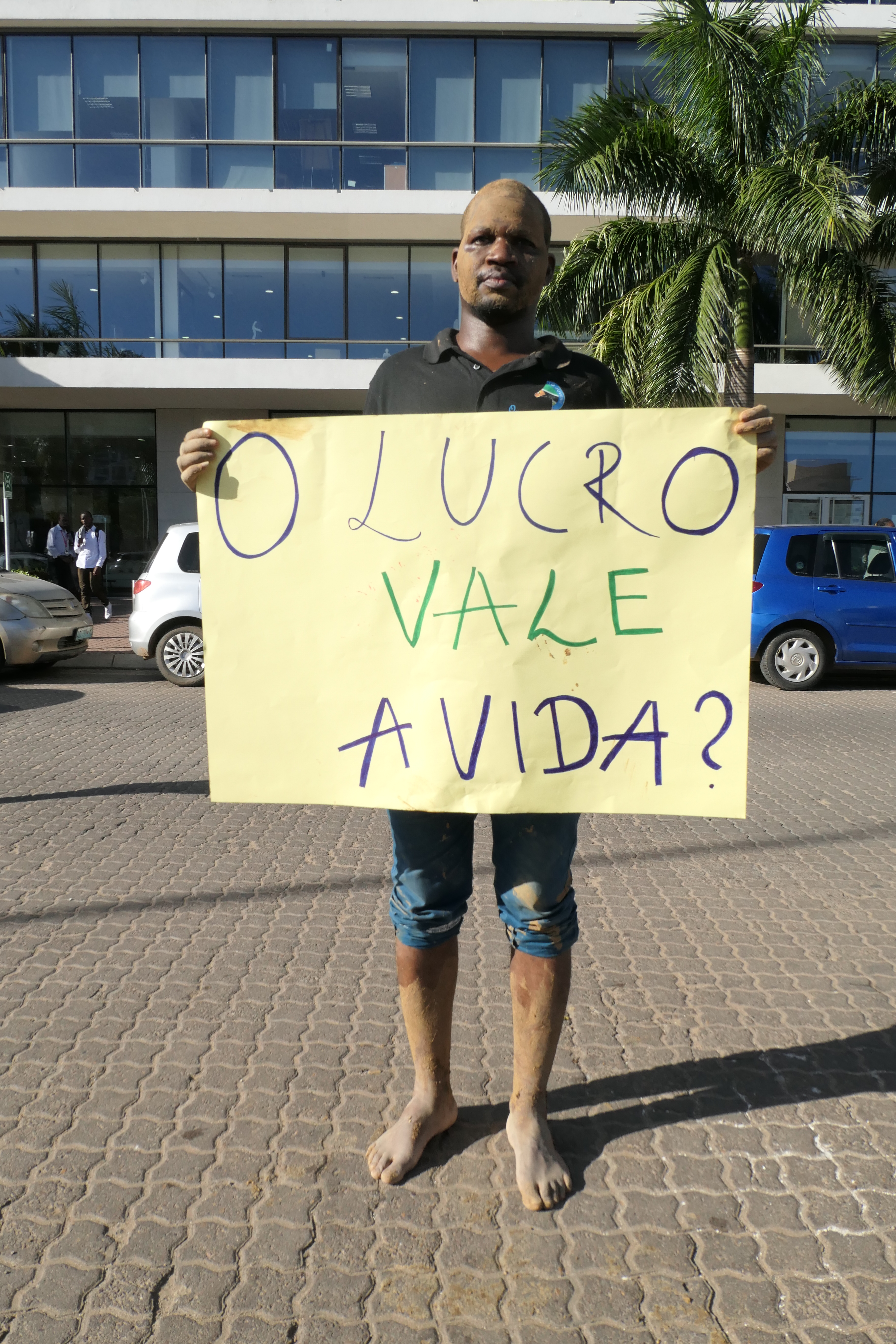
This morning, members of the Macala and Mangala Communities, have been gathering again since early light to continue their two weeks of demonstration against the violations of their land rights by Mozambique LNG gas project, operated by TotalEnergies. Yesterday’s demonstration was attended by at least 400 people. This morning, the number of demonstrators is already high and still increasing. Following yesterday’s attempts by district and provincial governments to convince them to leave the area, the situation is escalating. This morning, families from a third community, Quitunda Resettlement Village, are growing the ranks.

“tal como estamos a parar a produção de alimentos,
a empresa também deve parar as suas actividades”
“just as we are stopping food production,
the company should stop their activities as well”

In a context of national strikes and demonstrations aimed at demanding electoral justice, the Mozambican people are taking advantage of this moment to express their discontent at the social injustice to which they have been subjected for 50 years. A visibly tired and angry people are taking to the streets to express their indignation at a precarious health system, the poor or non-existent quality of education, a bad transport system, the increase in crime, the lack of access to employment for young people and adults, and to seek measures to end the hunger that hangs over Mozambican families, at a time when – for 20 years – natural resource exploitation projects have been the promise of a better Mozambique for all Mozambicans.
The scene in Afungi today: the demonstrators have split into four groups and obstructed movement at four of the gates to the TotalEnergies Afungi site.
The resettlement process in Afungi has been underway since 2019, with the initial plan to resettle 556 families, and since then many more families have been resettled, yet few of these families have received replacement land for fields that they can use. In addition, there are those who gave up their land for fields for resettled families’ but have not been compensated to date. These are the main groups who have been demanding their rights at the company gates.
Justiça Ambiental says: “The resettlement process has been characterised by a large number of irregularities which has caused the discontent that culminated in these demonstrations.”
The communities state their concerns relate to:
- Refusal to pay compensation for the agreements signed between the project and around 445 households, relating to the occupation of land intended for families resettled in Quitunda. These agreements were signed between October 2023 and February 2024. According to clause 4.5(a) of these agreements, the affected families are obliged to cede their land and all assets on it in favour of the project within 30 days of signing these agreements.
- Refusal to sign agreements for the payment of compensation for the lands that the project mapped and surveyed, belonging to 158 households in the same two communities. The mapping was carried out between October 2023 and March 2024 by the company.
The communities of Macala and Mangala have made several complaints to the project regarding these matters. In August 2024 TotalEnergies’ representatives in the resettlement area met with the affected families and informed them that the project would not pay compensation to them. This decision was made without respect or consultation with the communities, and the company did not provide a reason for the decision.
This pronouncement not only created a climate of uncertainty and despair among the members of these two communities, but has also caused major frustrations.
It is a rule established by the project in all the affected communities for the families affected to immediately suspend any activity related to agricultural production or maintenance of the affected fields. This rule aims to combat opportunism on the one hand and to ensure that the project compensates the affected properties at the time of mapping. This rule has also been complied with by the affected families.
In the Macala and Mangala communities, 445 families have signed compensation agreements and 158 affected families have not yet. All 603 families affected by the project have been banned from using their land since October 2023. This is land that the project has already used – making roads through the middle of what used to be important food fields. The demonstrators explain that the frustrations in their communities are also very much about lost time.
Community members say they consider this situation to be unfair to them and threatening to their lives, because the land occupied by the project is the only source of their survival.

In September 2024, the members of the Macala and Mangala communities wrote a letter to the Palma district government presenting these concerns and frustrations. The letter also informed the PRM (police) district command and the district administrator about the communities’ intention to hold a demonstration. The demonstrations were postponed by the district administrator, who said they were in discussion with the provincial government about the complaints.


On 2nd November 2024, Macala and Mangala community members began their demonstrations. On that day, they closed the roads that were built through their fields and put up posters explaining their discontent. This did not have a negative impact on the work and movement of the project and its contractors.


On 8th November 2024, protesters gathered at the main gate leading to the entrance to the project camp. On that day the demonstration forced the closure of the entrance and exit of the project staff and their contractors. Community members interrupted their protest only after negotiations with the District Administrator at the site.
The demonstration resumed on 11th November 2024, lasting the whole day. At the end of the day, the administrator told the demonstrators that the Governor of Cabo Delgado Province would meet them on 14 November 2024 for negotiations that could provide answers to their demands.
At the moment, 15 November 2024, the governor and the administrator are inside the TotalEnergies Afungi camp, and information about what is being discussed there will only be known when they return to the population.
There is a clear indication that the gas affected communities intend to remain at the gates. Now, we await news.
Contact: Kete Mirela Fumo / kete.ja.mz@gmail.com
Background
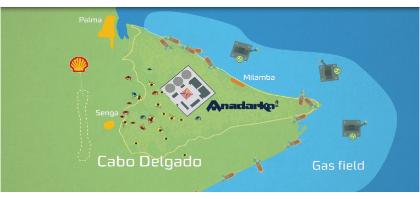
The Mozambique LNG project, operated by TotalEnergies, was allocated land rights to about 7,000 hectares of land on the Afungi Peninsula, as well as rights to coastal areas, for its infrastructure and operations, This required communities who were living and conducting their livelihoods in the area to resettle. The project is required to compensate those affected. Even though TotalEnergies declared in May 2024, that all compensations had been paid, this is evidently not the case. Testimonies from affected people can be viewed here [https://stopmozgas.org/from-the-ground/video-testimonies/]
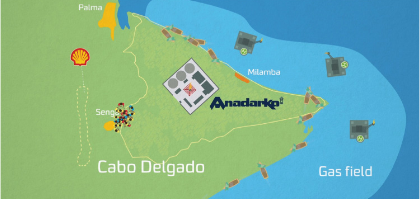
There are complaints registered in all communities affected by the project regarding the lack of housing, machambas (farmlands) and partial or lack of compensation payments. In the communities of Quitunda, Senga, Mangala, Macala, Maganja and Palma Village there are people who are yet to receive compensation or who have received part of the compensation, and others who have not signed agreements yet. Evidence is emerging of even more violations of the rights of people in relation to the project activities.
Justiça Ambiental! (JA!) / Friends of the Earth Mozambique: JA! is a civil society organisation in Mozambique that supports environmental justice at community, national and international level. JA! views the environment as an holistic concept and thus environmental justice as the act of using the environment as a vehicle for ensuring equity and equality across society. In support of sustainable development they view the concept of equality on a grand scale, and as such, values the rights of future generations to a healthy and safe environment, to the same degree that that right is valued for humanity. JA! received the Silver Rose Just Transition Award 2023 for their fight for a just transition and against fossil fuel projects and land grabs in Mozambique. In 2024, JA!’s director, Anabela Lemos is being honoured with the Right Livelihoods Award. Justiça Ambiental! (JA!) is Portuguese for Environmental Justice! and ‘ja’ means ‘now’ in Portuguese.


 JA4change