Tag Archives: climate change

CORPORATE IMPUNITY: STRATEGIES OF STRUGGLE (PART II)

As we mentioned in last month’s article, corporate impunity – the crime that does pay off – is a complicated matter. At the moment, our chests are still filled with the breath of fresh air brought to us at the end of last month by the second session of the Permanent People’s Tribunal (PPT), where a panel of 8 jurors and almost 200 participants listened attentively to the complaints of communities and activists who suffer first hand the consequences of a system that favours and protects transnational corporations. Experts noted and reiterated what is no longer news to us: the criminal behaviour of these corporations reflects the field of impunity in which they operate. In addition to providing us with a (unpublished) report of deliberations that will help to expose the behaviour of these companies, this jury also made clear that the mobilization of peoples and the opening of spaces like this court are a fundamental part of the fight for justice.

03

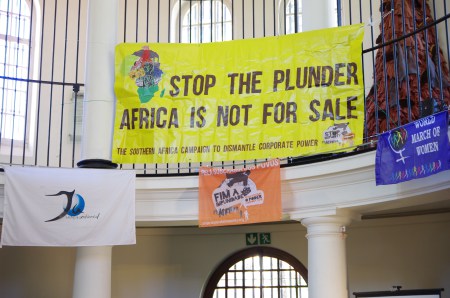
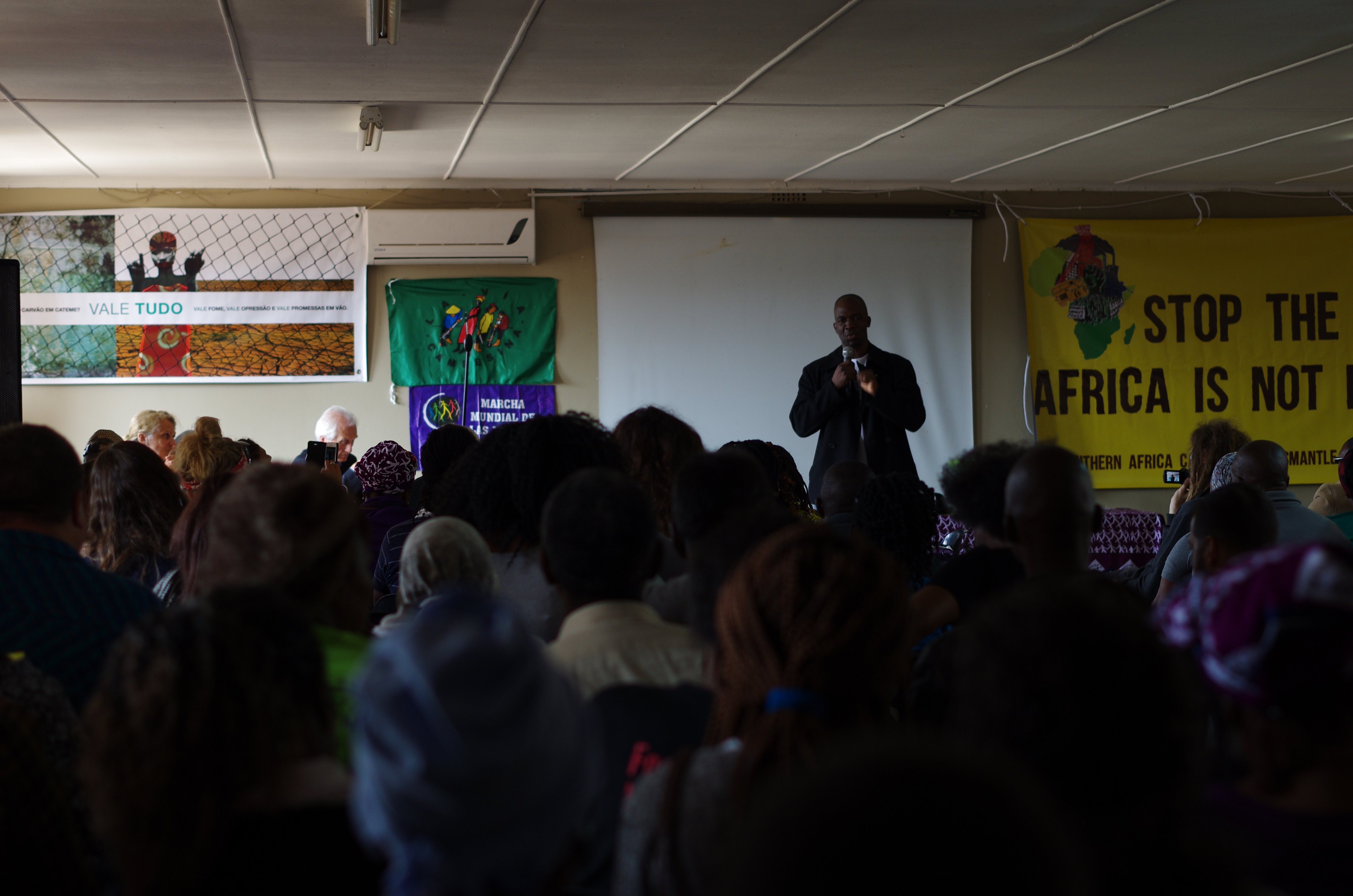
About PPT, we have little more to say right now. You can find more information on the cases presented here, or read the press release of Southern Africa’s Campaign to Dismantle Corporate Power’s (of which we are part) here. This year, the visibility given to the different cases was notorious (like this article on ProSavana in the South African press), and there was also room for an update on the cases brought to the PPT last year in Swaziland. But this is not the time to slow down – after the PPT, more important moments regarding this issue are coming up.

Nowadays, there is a great legal asymmetry between, on the one hand, the endless regulations that protect and safeguard private investments (even shielding them from political decisions that may conflict with the companies’ financial expectations), and on the other, the non-existent coercive legislation which upholds human rights. Corporations rely on a wide range of international norms that act in their defence – from free trade agreements to investor-state dispute settlement mechanisms – but none that regulates their actions in the light of their impacts. Apparently, for years now we have been hoping that, by themselves, guiding principles or corporate social responsibility (voluntary, unilateral, and non-enforceable) become enough to prevent corporate human rights abuses by the corporations, but obviously, this has not happened and will not happen.04

The national laws of countries such as ours are very weak, not to mention the very limited capacity to enforce them and supervise them. That is one of the reasons why Shell remains unpunished despite the criminal spills it is responsible for in Nigeria, or why hundreds of people are being driven from their land to make way for palm plantations in Indonesia. This is why fighting for the enforcement of existing national legislation is an important step, but it can not be the only one if we really want to stop the impunity of these powerful corporations. It is necessary to think beyond. In today’s globalized world, corporations operate in different national jurisdictions, and take advantage of this to evade accountability. For us, expanding the limits of international law and demanding legal instruments that provide a path from where victims of such violations may demand justice seems to be as urgent or even more.
01

The Intergovernmental Working Group mandated to draft a binding Treaty on Transnational Corporations and Human Rights, set up by the UN Human Rights Council in 2014, will meet for the third time in October of this year, then, the concrete terms of the text to be included in the Treaty will be discussed. This initiative, which started with the governments of Ecuador and South Africa, has been gaining strength and supporters. Numerous countries, mostly in the Global South, have already expressed their support for the Treaty, as is the case of Uruguay, which sees in this instrument an opportunity to protect its public policies that are being threatened by the interests of transnational corporations. Mozambique, unfortunately, remains completely out of this discussion and didn’t even show up at the two sessions of the Working Group in the recent years.

An alliance was formed by civil society organizations from around the world to support the drafting of this law, and has actively participated in the sessions of the Working Group to ensure that it will truly represent the needs of those affected. One of the requirements of this alliance is that this treaty contains solid provisions that prohibit corporate interference in the process of formulating and implementing laws and policies. According to Friends of the Earth International (FoEI), also part of the Treaty Alliance, it must establish the criminal and civil liability of transnational corporations in order to fill existing legal gaps in international law, and should apply also to all subsidiary companies and those that form part of its supply chain. Learn more about FoEI’s contributions to the Treaty here.
06


When existing legislation does not address all of society’s problems and needs, new legislation must be created. It was like that with the implementation of universal suffrage, with the abolition of slavery, and in so many other historical moments. We believe that we are about to reach an important milestone in the struggle for the sovereignty of peoples and against corporate impunity, and as the poet once said, there is nothing more powerful than an idea whose time has come.
Tagged , , , , , , , , ,

Corporate Impunity: Strategies of struggle (Part I)

2016 was an important year in our continent’s struggle against corporate impunity: the first session of the Southern African Peoples Permanent Tribunal (PPT) took place in Swaziland. This Court, which was founded more than 30 years ago in Italy, is an independent body that examines situations of systemic human rights violations – especially in cases where existing legislation (both national and international) is not capable of safeguarding the rights of populations. Although it does not have the power to issue an obligatory sentence for the company (which, by the way, is very important and is one of the reasons we are working for – but let’s talk about it later on), the PPT is strategically very important: On the one hand, it allows victims to be heard and advised by a panel of experts from various areas and to establish partnerships; and on the other, it is a moment of complaint and visibility for the cases, and therefore, of exposure to infringing companies. And although in our country this criminal impunity is often seen as a synonym of cleverness and of the perpetrators degree of influence, on the international level things are not quite like that. Being labelled as a human rights violator is a matter of great concern to these corporations, and therefore it can lead to a change of attitude – not because their ethical principles and values are very important to them, but simply because a bad reputation affects the only thing that truly matters to corporations: their profits.

Ten cases from Swaziland, Zimbabwe, South Africa, Zambia and Mozambique were presented in last year’s PPT, most of them related to the extractive industry. From our country, for the serious impacts that their activities have on the communities around them and for the noncompliance with the promises they made to those communities before settling in the region (to the point that one of them actually started its mining activities without resettling those living within the concession area – as we have denounced through various channels including this one), we took to the court VALE and JINDAL. A Panel of Jurors listened attentively to the communities’ grievances and to a contextualization made by invited experts, and then released its deliberations.

This year the process is repeated: in August, seven cases from the Southern Africa region will be presented by the affected communities themselves and by the civil society organizations who work with them. This time, the general theme of the cases is Land, Food and Agriculture. In addition to cases presented by Zambia, Malawi, Tanzania, Madagascar and Mauritius – who will denounce large corporations such as Parmalat and Monsanto – this session of the PPT will also hear the denunciation of two Mozambican cases: the proposed Mphanda Nkuwa dam on the already strangled Zambezi River; and ProSavana, the Mozambican, Brazilian and Japanese governments’ triangular partnership program that aims to develop agribusiness in the Nacala Corridor. These two Mozambican cases have the same particularity: they are not yet implemented. However, and this is what made us chose these two cases for this year’s PPT (because, let’s face it, what we are not lacking in our country are examples of human rights violations by private initiatives), despite not being implemented yet, its impacts are not less significant.

In Mphanda Nkuwa, for example, local communities were visited for the first time in 2000 by representatives of the companies responsible for the construction of the dam. They ere warned that they could not build new houses in that region because they would not be compensated for them. Since then, these people live in total uncertainty and can no longer make any long-term plans, at the risk of losing their assets when they start construction. ProSavana, on the other hand, has been characterized by the secrecy, manipulation and misrepresentation of information with the aim of promoting a false idea that the project will promote agricultural development in the northern region of the country, while in fact it is an initiative that will serve to facilitate large scale encroachment of peasant lands. This program will also destroy the livelihoods of local populations and exacerbate their already grave poverty. There are already reports of manipulation and intimidation of leaders of local peasant organizations.

The mobilization of civil society (Mozambican, Japanese and Brazilian) in opposition to ProSavana was fundamental to halt to the initial plans of this program and postpone the conclusion of its Master Plan. The purpose of taking these two cases to the PPT is to bring together even more elements that may help stop these projects.

Spaces such as the PPT are also crucial for perceiving trends, identifying development models, and analyzing common practices of transnational corporations – as well as their strategies to escape responsibility. Thus, by moving these experiences to a more global scale, it is easy to see that these violations of fundamental human rights are not perpetrated by one or another transnational corporation in isolation. That is, these are not a couple of rotten apples in a sack full of beautiful apples. Rather, it is a generalized behavior that is enabled by an architecture of impunity, characteristic of our extractive capitalist development system. This architecture of impunity puts corporate rights above human rights, and makes way for an abundant number of examples of very lucrative corporate crimes.

The architecture of impunity consists of several elements and actors:

We have the economic power of corporations – on the basis of which these establish their relations with one another and with states – and of international financial institutions;

We have political power, which in turn is responsible for capturing policies and politicians that fail to regulate the collective interests of society to serve private interests;

Trade architecture, embodied by numerous trade and investment agreements, facilitates profit and allows corporations to file lawsuits against governments should they make decisions that affect their anticipated profits;

Legal power is represented by the financial capacity to hire and dispose of influential lawyers who defend corporations in endless processes, as well as by inadequate and insufficient legal instruments that regulate their actions; and finally

Social power, which is exercised in all spheres of our lives through the influence that corporations have in the media, academic spaces, civil society organizations, among others.

Discussing some of these elements and developing the cases that will be presented in the PPT next month, were the objectives that motivated the Workshop on the Architecture of Impunity, held in the context of the Southern Africa Campaign to Dismantle Corporate Power. Since it is the affected communities themselves who present the cases to the Panel of Jurors in the PPT, this enabled them to get the support of several resource people, to appeal, discuss and deepen the specificities of their denunciations and also to identify common ground with the other cases.

But the struggle to end corporate impunity is not only fought in the field of opinion sentences, nor is the important opinion of a panel of judges our only weapon to demand a different behavior from transnational corporations. Another battle is being waged to develop a legal instrument that will ultimately have the power to condemn and punish corporations – since the absence of such an instrument is currently one of the biggest gaps in international law. We are talking about the UN Intergovernmental Working Group, created in 2014 with the mandate to develop a binding treaty for transnational corporations on human rights issues, which will meet in October this year for its third session. At this time, transnational corporations simply have to follow voluntary standards and guiding principles that “advise” best practices on human rights issues. There is no doubt that this blind faith in corporate goodwill has had grave and irreparable consequences, both on people and on the planet. In next month’s article, we will look into this issue more carefully, getting deeper into the debate about the urgency of a legal mechanism that is accessible to any community affected by the operations of a transnational corporation. For now, we continue to look closely at next month’s PPT, certain that this will be another important moment regarding the convergence of struggles for a fairer, healthier and more common-good oriented world.

Tagged , , , , , , , , , , , , , , , , , , , , , , ,

The world should remember: Lima talks did nothing to stop the climate crisis

The UN climate change talks in Lima are over. Instead of finishing on Friday afternoon, they went on till 4am on Sunday. It came close to a few break-downs because developing countries were really pushing back at the way at which developed countries were trying to control the situation. But finally there was a so-called ‘consensus’. But make no mistake, what was agreed in Lima did not and will not do anything to stop climate change.

The final approved text was driven by the interests of rich developed countries and corporations. This contrasted sharply with the real leadership and inspiration demonstrated in Lima by social movements, organisations and the communities on the frontline, who are already suffering the impacts of climate change.

Rich developed countries came to Lima determined to ensure that the outcome reflected their short term economic interests, as if the climate crisis really does not matter. The outcome lacks courage, justice and solidarity with the billions of people affected by climate change.

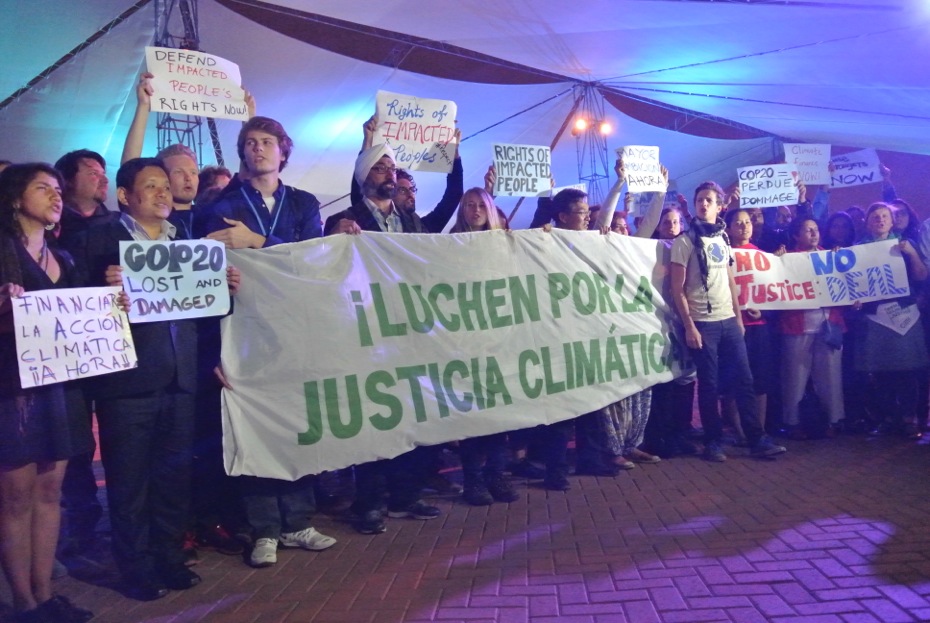
DSC_1476

Activists chanting “no justice, no deal” 2 hours before the final terrible text was approved. Photo credit: Yumi Sato
At the same time as the negotiations, again this year the Philippines endured more extreme weather and communities around the world are paying for the carbon excess of others with their lives and livelihoods. The Lima outcome failed people and the planet at a time when real solutions are needed more urgently than ever before.

The outcome says nothing about the drastic emissions reductions needed before 2020, without which we are at risk of an even greater temperature rise and climate breakdown. The outcome undermines historical responsibility. The urgent obligation of developed countries to provide climate finance is glaringly missing. This text creates an architecture that will set us up for a doomed deal in Paris. This is completely unacceptable. Governments of developed countries need to urgently find the necessary courage and political will to deal with the scale of this planetary emergency.

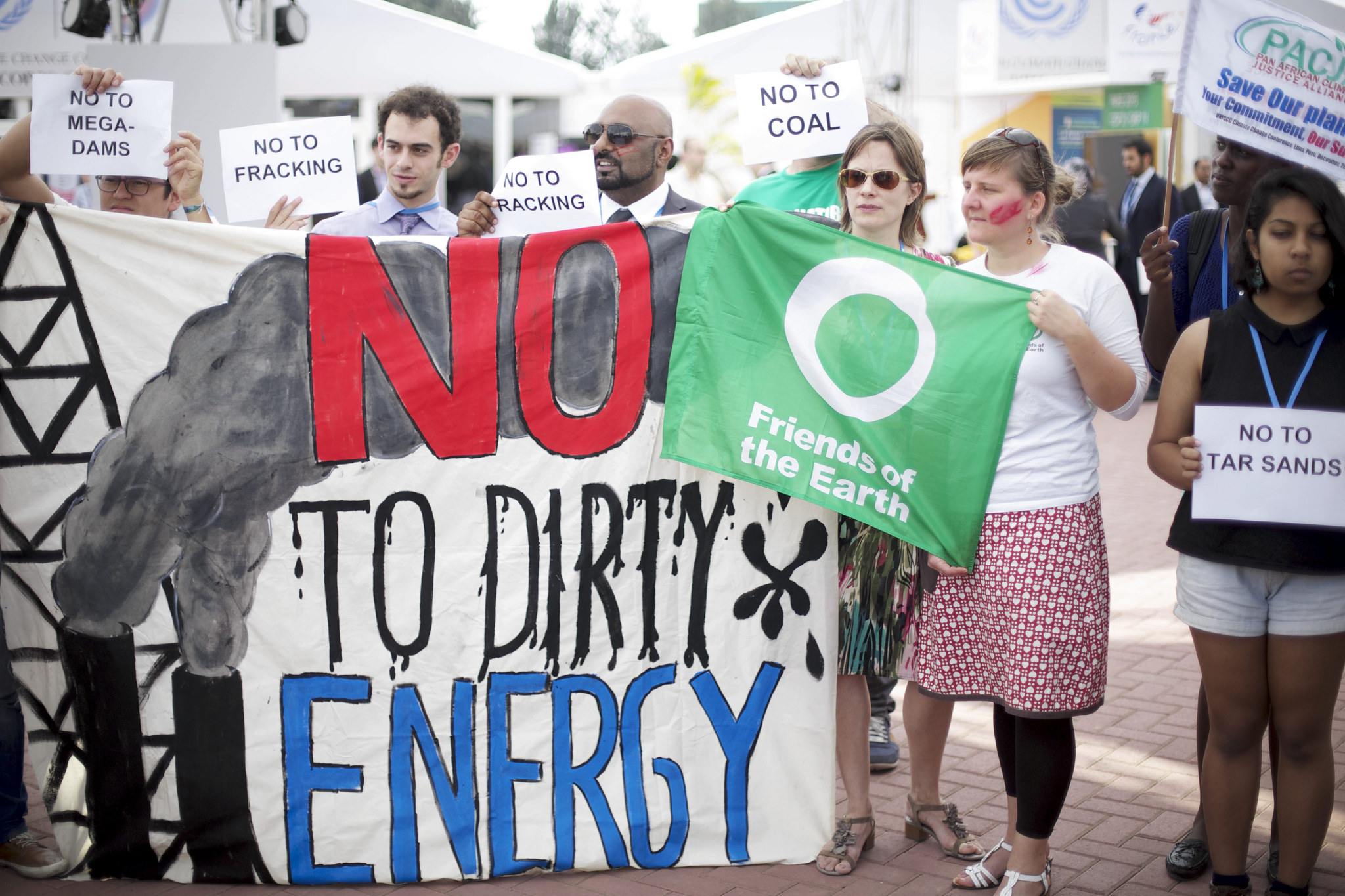
no dirty energy- luka

Protest inside COP 20 demanding an end to dirty energy. Photo credit: Luka Tomac

But away from the negotiating halls, people continue to mobilize and build an enduring movement to implement the real solutions to the climate crisis. Justiça Ambiental was there observing and building alliances with movements and organisations. The Peoples’ Summit on Climate Change (Cumbre de los Pueblos/ Cupula dos Povos) – which ran parallel to the UN talks – gathered together social movements and organisations from Peru, Latin America and all over the world. They exchanged experiences and continued to build momentum for the transformation needed to address the roots of the climate crisis and create a better, cleaner and more just world.

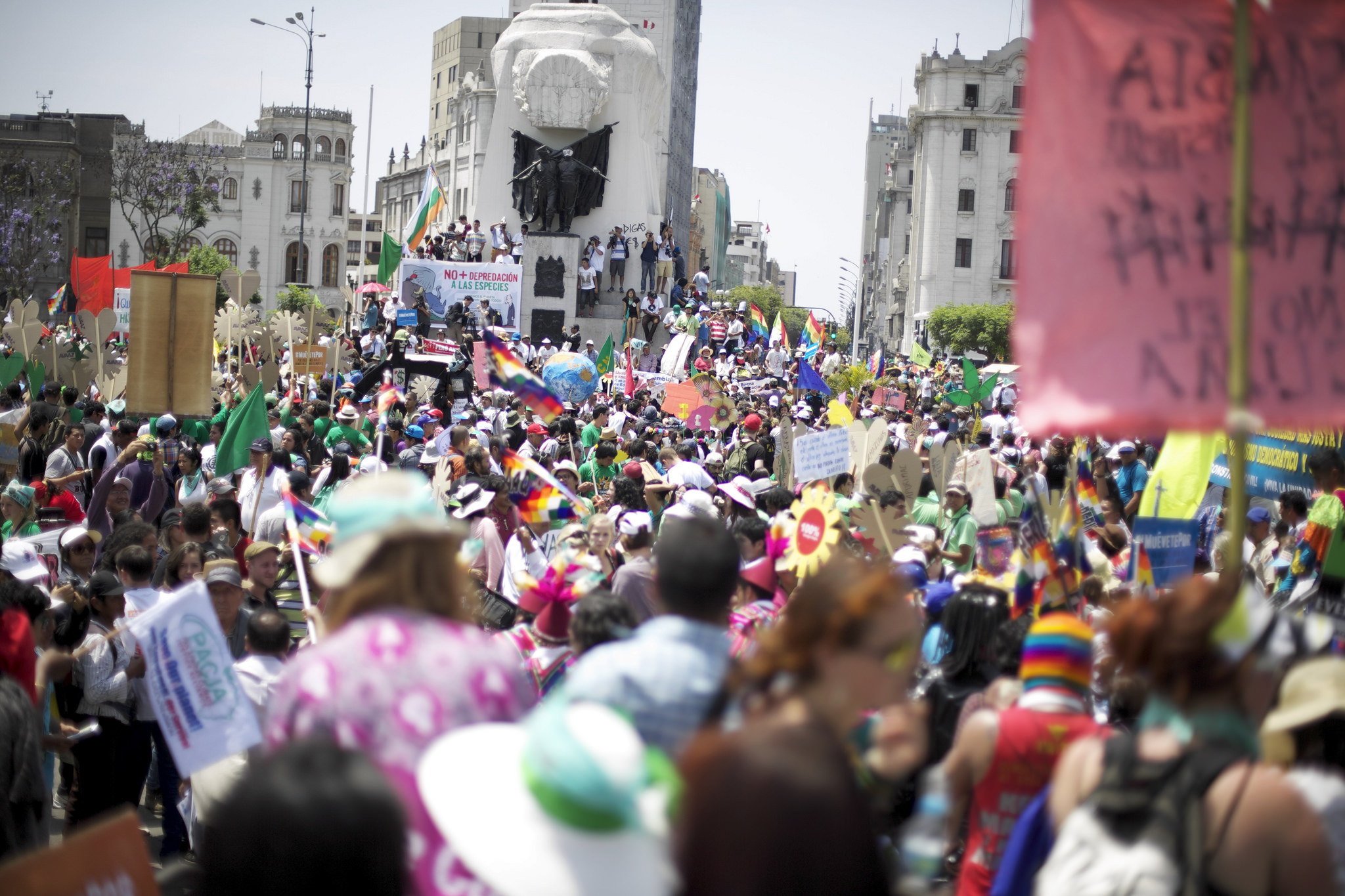
Almost 20,000 people marched in a huge protest (the March in Defense of Mother Earth) on December 10 — international human rights day.

plaza san martin- luka

Thousands marching into the historic Plaza San Martin in central Lima, demanding climate justice. Photo credit: Luka Tomac

From farmers to miners to environmentalists to students… Marchers called for justice and real solutions to the climate crisis, including steep and immediate reductions in carbon emissions, stopping fossil fuels and deforestation, building renewable community-owned energy solutions, and protecting our agroecological food sovereignty systems.

REDD not solution- babawale


No false solutions! No REDD! Demands from the Dec 10 Human Rights Day march in Lima. Photo credit: Babawale Obayanju

Tagged , ,

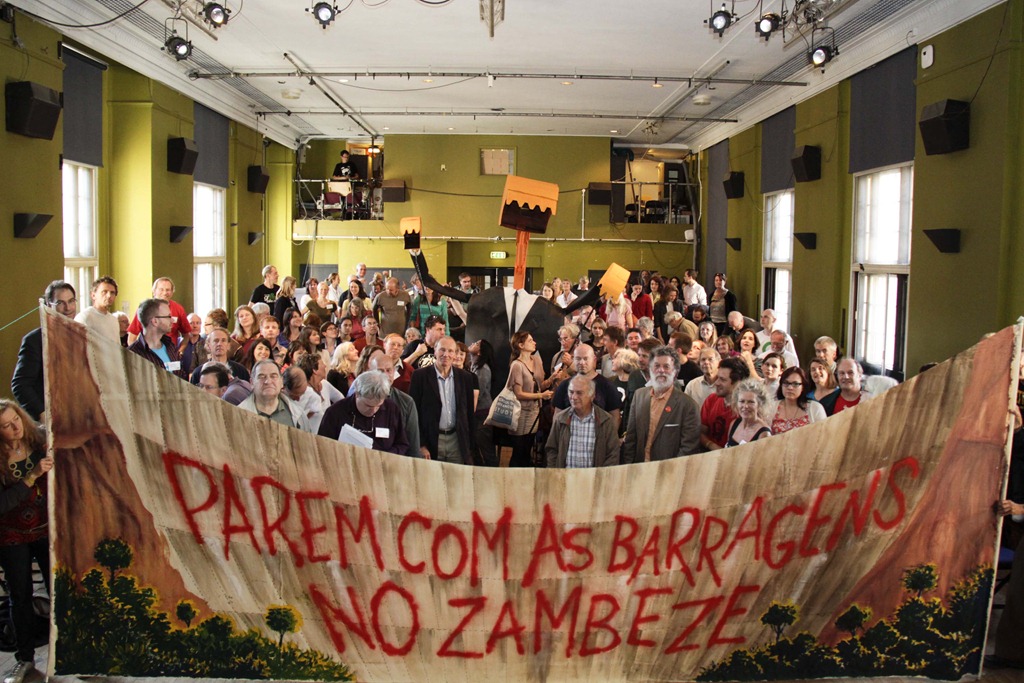
Stop Damming the Zambezi

conference2012_1129

This past week saw the release of a significant study that has deep repercussions for energy planning and water solutions in Mozambique.

International Rivers released this in-depth study by renowned hydrologist, Dr Richard Beilfuss, detailing the major risks of hydropower dams on the Zambezi River. The report, titled: ‘A Risky Climate for South African Hydro’ warns that southern Africa’s over-reliance on dams could spell doom as the climate worsens.

The Zambezi River, which is Africa’s fourth-largest river, will experience more conference2012_1130extreme floods as well as droughts. The report warns that;

“Dams being proposed and built now will be negatively affected, yet energy planning in the basin is not taking serious steps to address these huge hydrological uncertainties. The result could be dams that are uneconomic, disruptive to the energy sector, and possibly even dangerous.”

Even in the face of such damning information, the Mozambican government persists with its ill-conceived idea of building conference2012_1131yet another gigantic dam on the Zambezi, called the Mphanda Nkuwa dam, planned to be built about 60kms downstream from the existing Cahora Bassa dam.

JA has been challenging the Mphanda Nkuwa dam for over 10 years now, by constantly exposing the risks, injustices and inadequacies, such as the weak EIAs (Environmental Impact Assessments), inadequate rehabilitation plans, and lack of transparency and participation. But the government continues to ignore the glaring problems and keeps pushing it ahead.

As Dr. Beilfuss’ study reveals, dams conference2012_1132are not climate resilient, actually they are very climate prone. Mozambique is already 80% dependent on hydropower and will be negatively affected by climate change. In this time of a rapidly-changing climate, it is shocking that large dams are being pushed as a solution, whereas they are a damaging false solution instead.

Earlier this month, JA’s opposition of more dams on the Zambezi was supported by Friends of the Earth England, Wales and Northern Ireland (EWNI), which consists of 230 local groups including 100,000 individual activist members across Britain!conference2012_1136

EWNI invited JA to speak at their annual conference, held in London from 14th to 16th September, 2012. Sadly, JA’s Program and Research Officer was unable to travel to the UK since the authorities took an unreasonable 3 weeks to let him know whether or not they were going to give him a visa. JA is enraged with this and we plan to take up this matter with both the Mozambican and British authorities along with EWNI and challenge the difficulties in travel faced by southern activists who are critical of their government’s incorrect policies.

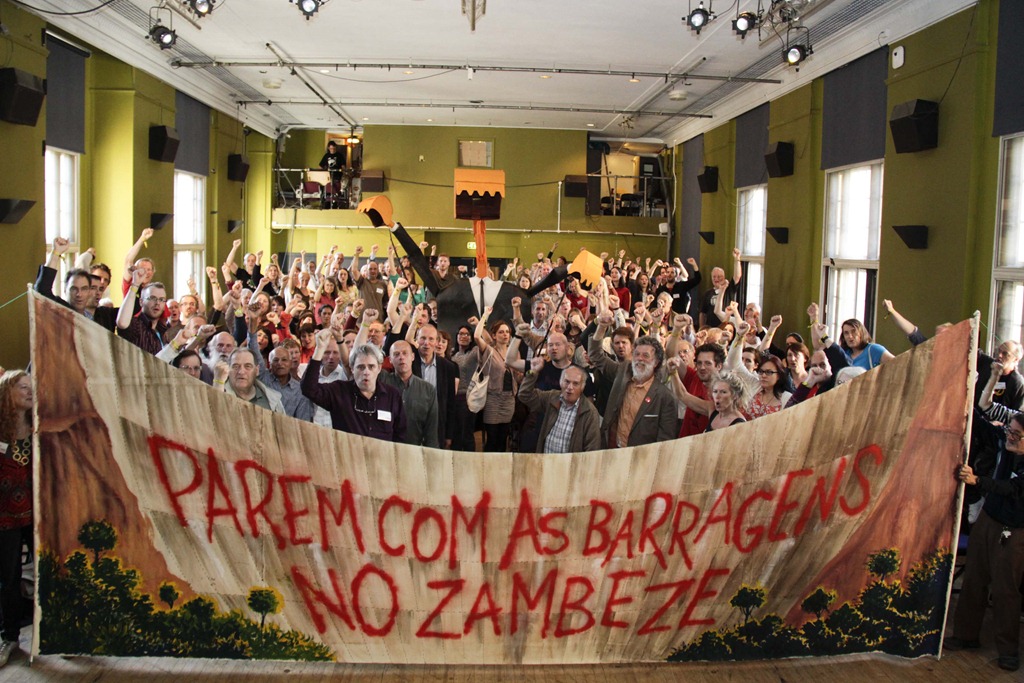
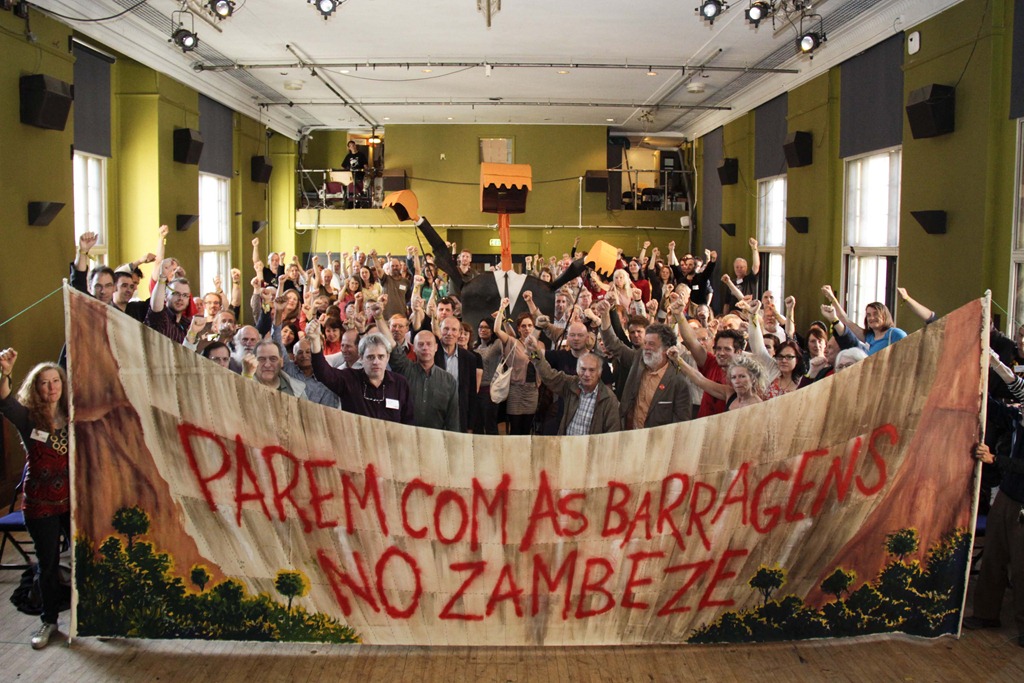
EWNI held a solidarity action in conference2012_1137support of JA’s campaign against the Mphanda Nkuwa dam. They joined their voices with ours to demand, “No more dams on the Zambezi. We want renewable energy options for Mozambique instead!”

Mozambican people need energy, but they need true solutions, not false ones like dams. JA commissioned an independent expert report in 2009 on the renewables potential in Mozambique. The results are very positive but of course there are huge political barriers to that but this is what we are supporting.

Read our Alternative Energy report here: http://www.internationalrivers.org/africa/zambezi-river/mphanda-nkuwa-dam-mozambique/building-mozambique%E2%80%99s-power-sector-through-investm

To read the International Rivers report on the Zambezi, see this link: http://www.internationalrivers.org/resources/a-risky-climate-for-southern-african-hydro-7673

Tagged , , , , , , , , , , ,