Author Archives: JA

Notes from the Field: Vale-displaced communities in Cateme

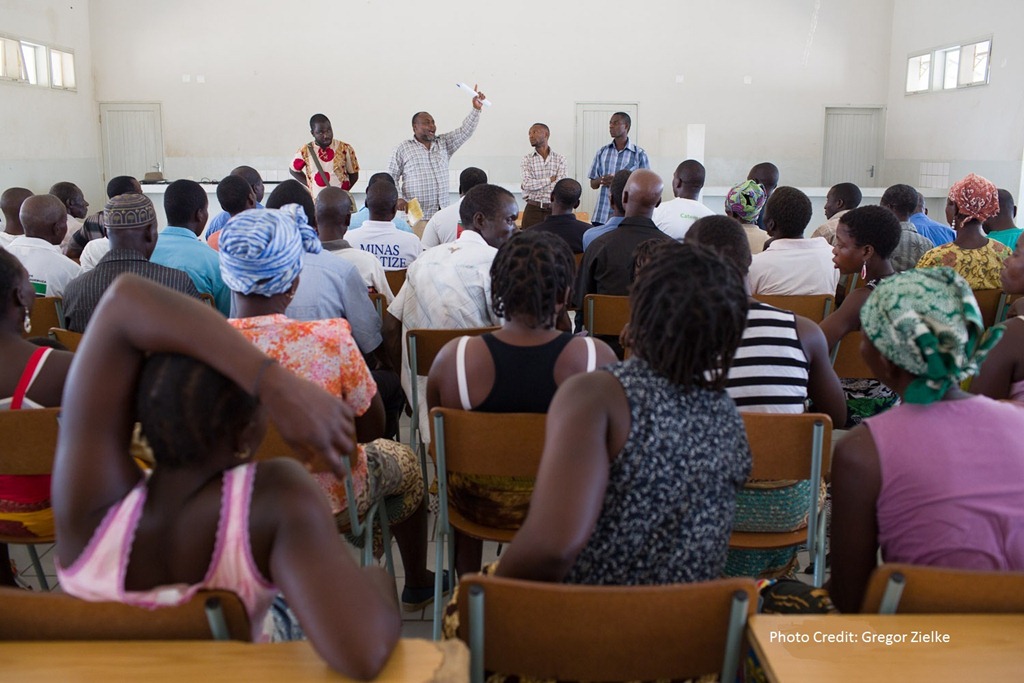
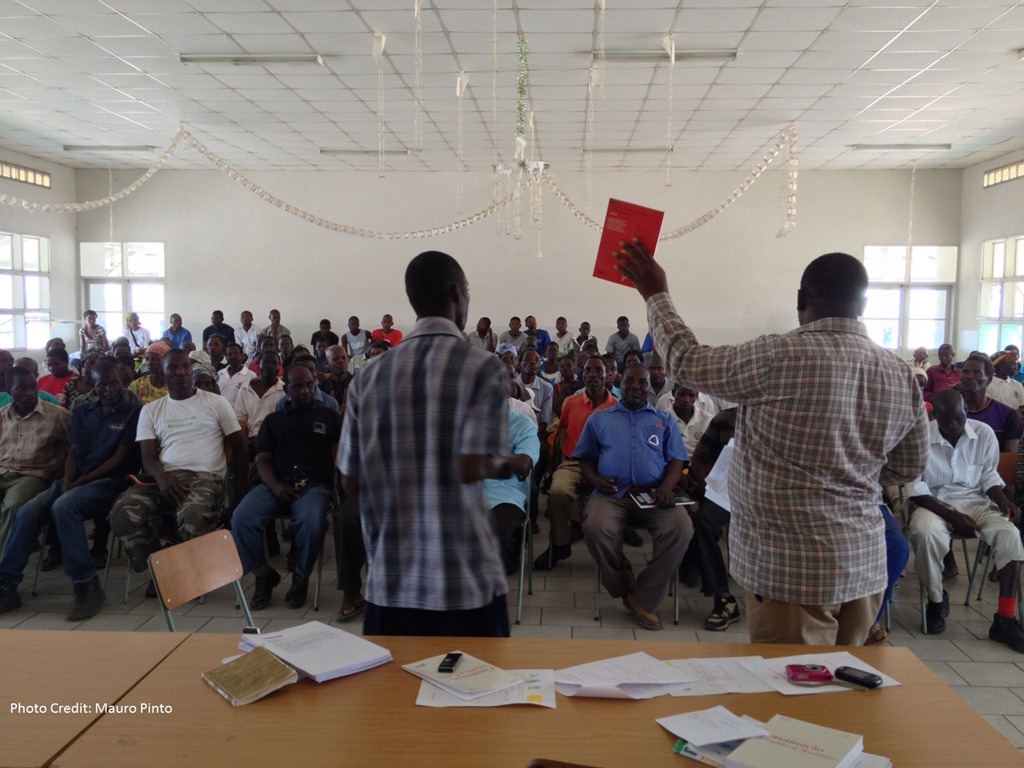
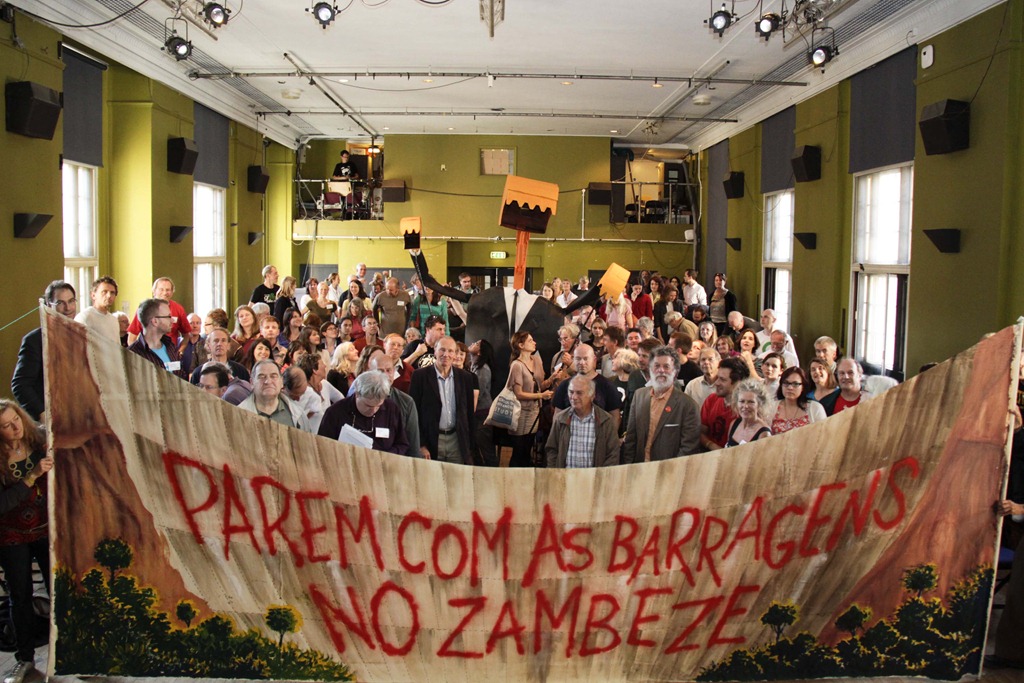
Almost 200 people filled a room at the Escola Secundária Cateme (Secondary School of Cateme) on2 foto_meeting_8octblog_photo credit Gregor Zielke Saturday, 6 October. Cateme is the region where communities displaced by Vale coal-mining in Tete province, Mozambique, have been resettled. Women, men, children, babies, the elderly, students and teachers from the communities came together this past Saturday to speak out about the problems they are facing in resettlement.

Saturday’s meeting at the Secondary School was convened by Liga dos Direitos Humanos (Human Rights League), UNAC (National Farmers Union), AAAJC (Association for Support and Legal Assistance for Communities) and Justiça Ambiental. The land law and Mozambican constitution were presented for people to understand their rights, and copies of these booklets were given to various community representatives. Following the presentations, community members spoke vociferously one after another, explaining the problems they were facing.

Vale is the second-largest mining company in the world, with revenues exceeding US$ 45 billion and profits around US$ 17 billion. But Vale is also a global leader in its devastating disregard for human rights and 3 foto_cateme_8octblog_photo credit Gregor Zielkeenvironment protections. There is even a global movement around the world called “Affected by Vale”, bringing together communities that are the victims of Vale’s greed. Every time Vale enters a new country or region, the “Affected by Vale” movement ends up with new members. Mozambique is no exception.

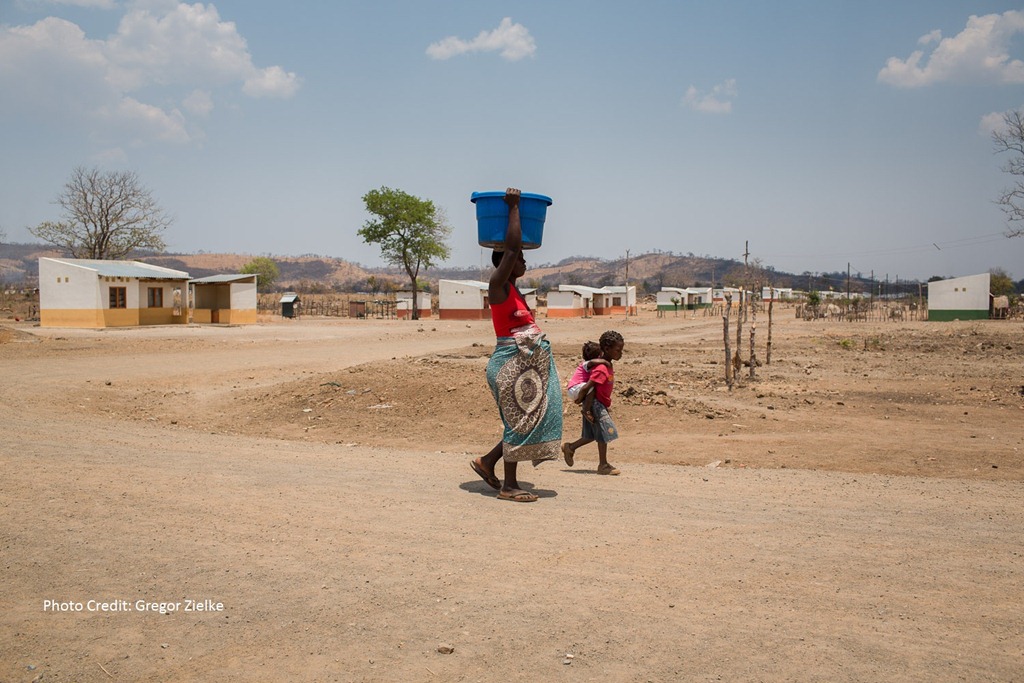
In Mozambique, Vale is mining coal at an open-cast coal mine in Moatize, Tete province. The communities living in the area were relocated to Cateme. Every time we visit Cateme and stand in the middle of the village, we understand why Vale is considered the worst company in the world. The area is dry, hot and desolate. The land produces dust instead of crops and the 40°C plus temperatures, including in this past week, turn the small zinc-roofed houses where people have been resettled into over-sized ovens, with inside temperatures exceeding 50°C! The few times it does rain, the roofs leak and even though most houses are only a few years old, they are already cracking.

Life has always been hard in Tete province in inland Mozambique, but people developed survival methods. The community relocated to Cateme because of Vale’s mining had productive lands. They were close to heath posts, schools, churches, friends, family and one of the largest markets in the province where they could sell their crops. Now they are 37 kms away from their main market of Moatize. People said they spent up to 100 Meticais (US$4) per day getting to and from Moatize.

1 foto_meeting_8oct blog_ photo credit Mauro PintoEven the secondary school where the meeting was held was supposedly for the resettled communities. Yet we discovered that out of 150 students, a paltry 20 come from resettled communities, the others are from wealthier families in Tete, Moatize, etc.

The people tried to discuss the issues with Vale and the government, and when that failed, they stood up and demanded to be heard. Earlier this year they held a peaceful protest and occupied the road and railway to make Vale take their concerns seriously. The reaction from the Mozambican government, backed by Vale, was unmitigated violence by the rapid intervention police, who used live ammunition, and shot rubber bullets directly at unarmed peaceful protesters, sending 6 to the hospital and 14 to jail. One man’s horrendous injuries were photographed in January. We photographed him again and his injuries persist almost 9 months later.

Photo Credits (from the top down):

Photos 1 & 2:  Gregor Zielke

Photo 3: Mauro Pinto

Tagged , , , , , , , , , ,

Stop Damming the Zambezi

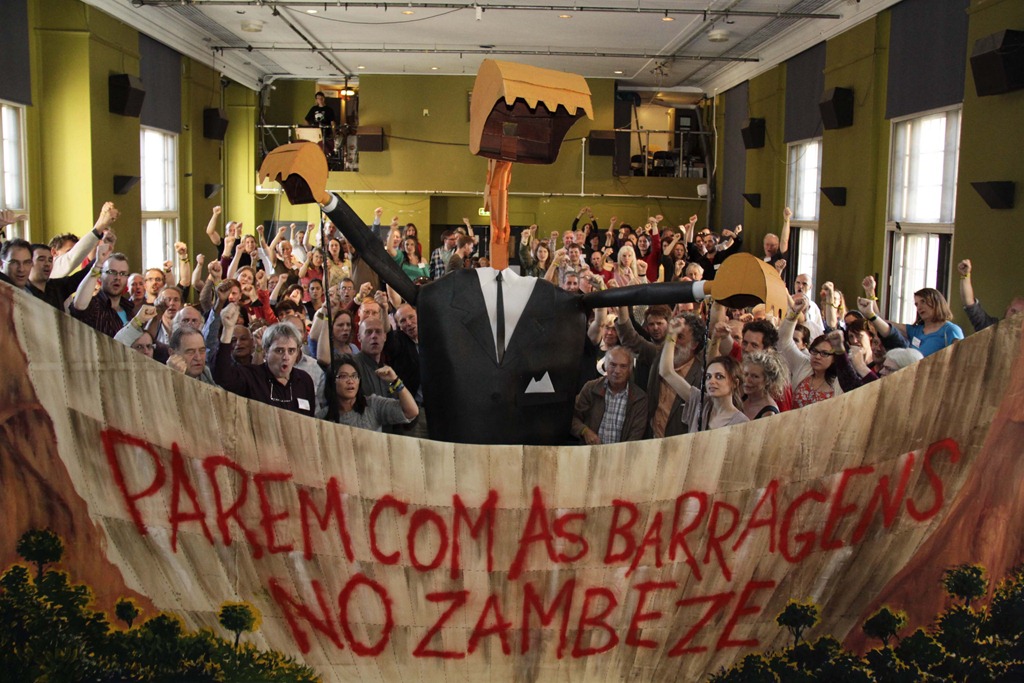
conference2012_1129

This past week saw the release of a significant study that has deep repercussions for energy planning and water solutions in Mozambique.

International Rivers released this in-depth study by renowned hydrologist, Dr Richard Beilfuss, detailing the major risks of hydropower dams on the Zambezi River. The report, titled: ‘A Risky Climate for South African Hydro’ warns that southern Africa’s over-reliance on dams could spell doom as the climate worsens.

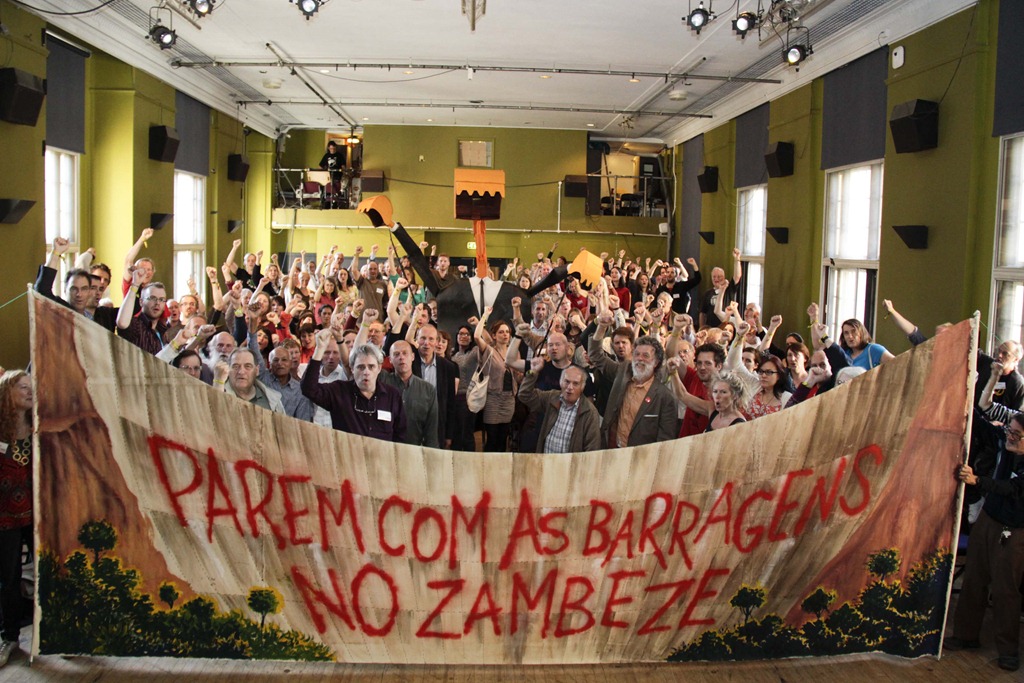
The Zambezi River, which is Africa’s fourth-largest river, will experience more conference2012_1130extreme floods as well as droughts. The report warns that;

“Dams being proposed and built now will be negatively affected, yet energy planning in the basin is not taking serious steps to address these huge hydrological uncertainties. The result could be dams that are uneconomic, disruptive to the energy sector, and possibly even dangerous.”

Even in the face of such damning information, the Mozambican government persists with its ill-conceived idea of building conference2012_1131yet another gigantic dam on the Zambezi, called the Mphanda Nkuwa dam, planned to be built about 60kms downstream from the existing Cahora Bassa dam.

JA has been challenging the Mphanda Nkuwa dam for over 10 years now, by constantly exposing the risks, injustices and inadequacies, such as the weak EIAs (Environmental Impact Assessments), inadequate rehabilitation plans, and lack of transparency and participation. But the government continues to ignore the glaring problems and keeps pushing it ahead.

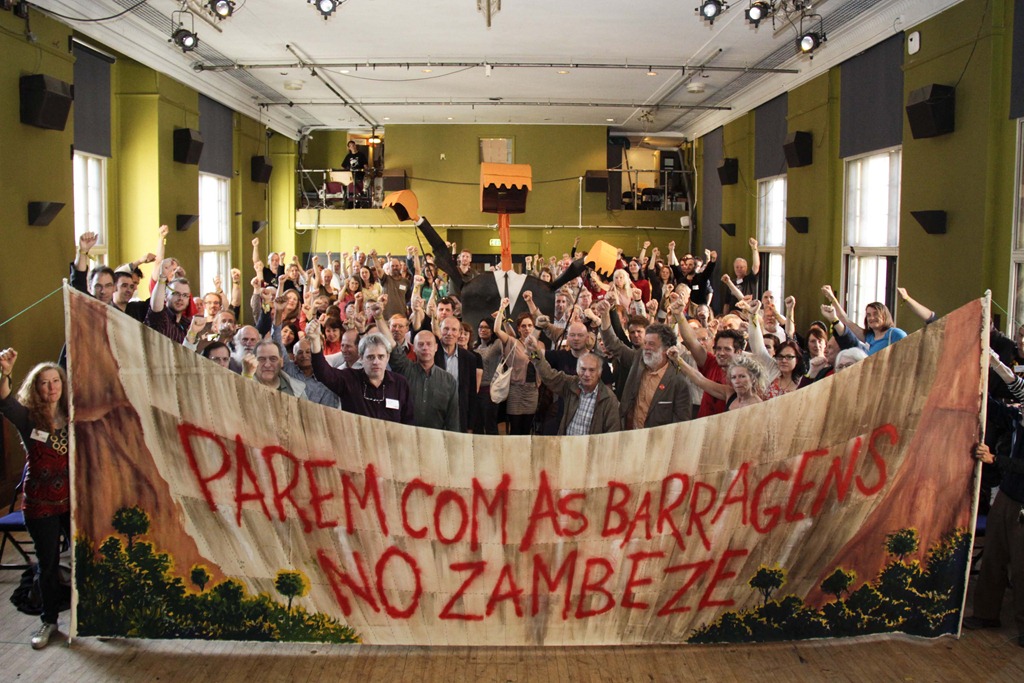
As Dr. Beilfuss’ study reveals, dams conference2012_1132are not climate resilient, actually they are very climate prone. Mozambique is already 80% dependent on hydropower and will be negatively affected by climate change. In this time of a rapidly-changing climate, it is shocking that large dams are being pushed as a solution, whereas they are a damaging false solution instead.

Earlier this month, JA’s opposition of more dams on the Zambezi was supported by Friends of the Earth England, Wales and Northern Ireland (EWNI), which consists of 230 local groups including 100,000 individual activist members across Britain!conference2012_1136

EWNI invited JA to speak at their annual conference, held in London from 14th to 16th September, 2012. Sadly, JA’s Program and Research Officer was unable to travel to the UK since the authorities took an unreasonable 3 weeks to let him know whether or not they were going to give him a visa. JA is enraged with this and we plan to take up this matter with both the Mozambican and British authorities along with EWNI and challenge the difficulties in travel faced by southern activists who are critical of their government’s incorrect policies.

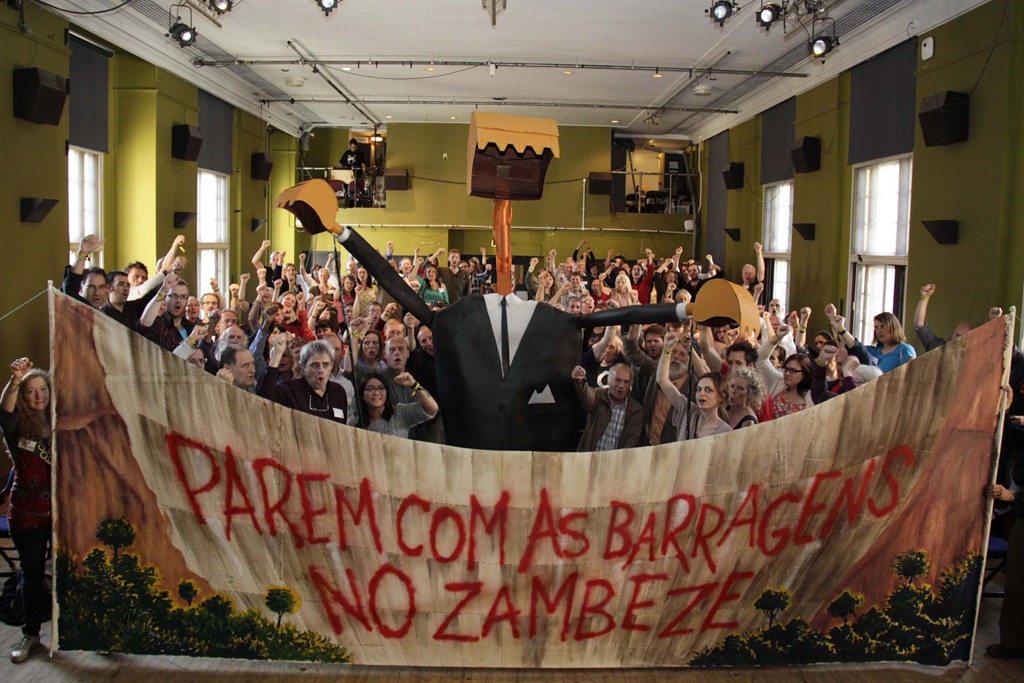
EWNI held a solidarity action in conference2012_1137support of JA’s campaign against the Mphanda Nkuwa dam. They joined their voices with ours to demand, “No more dams on the Zambezi. We want renewable energy options for Mozambique instead!”

Mozambican people need energy, but they need true solutions, not false ones like dams. JA commissioned an independent expert report in 2009 on the renewables potential in Mozambique. The results are very positive but of course there are huge political barriers to that but this is what we are supporting.

Read our Alternative Energy report here: http://www.internationalrivers.org/africa/zambezi-river/mphanda-nkuwa-dam-mozambique/building-mozambique%E2%80%99s-power-sector-through-investm

To read the International Rivers report on the Zambezi, see this link: http://www.internationalrivers.org/resources/a-risky-climate-for-southern-african-hydro-7673

Tagged , , , , , , , , , , ,

Mozambique’s Gas Master Plan

This past week Justiça Ambiental fired off comments in response to the Natural Gas Master Plan for Mozambique which was presented in a workshop on 6th September in Maputo. The World Bank and the Government of Mozambique commissioned consultants from ICF International based in the USA to write the Master Plan.

Lack of effective participation

The timeline and the participation process was a mockery. We were given only one week to read and respond to the report. We were not provided with the full report, despite having requested it, only the Executive Summary. It would be ethically incorrect if the government or the consultants claimed that a public participation process has occurred.

Hidden Truths and False Intentions

Although the Plan says its intention is to “maximize benefits to Mozambique society”, it appears like the intention is to maximise benefits to international oil companies and Mozambican elites instead.

There are many important questions the Master Plan does not address.

  1. Is this the right time for gas to be explored in Mozambique?
  2. Does the country have the necessary critical factors in place to prevent the gas resource from turning into a resource curse?
  3. Does it have the necessary well-functioning legal, regulatory, and financial systems?
  4. Does it encourage vibrant and democratic civil society institutions?
  5. Does it focus on ways to improve accountability, transparency, and participation?
  6. Does it focus on developing small and medium industries?
  7. Does it effectively ameliorate social and environmental impacts?

The lack of attention in dealing with these issues will only result in feeding the growth of the corrupt elites and place Mozambique on the long list of African countries plagued by the resource curse.

Lack of effective regulatory, legal and other systems

The Master Plan is alluding that Mozambique has some readiness to approach gas development because it has “over the past decade been steadily building a regulatory framework under which to manage the development of its gas resources.”

This is totally misleading because Mozambique has at best taken steps only on paper, and these laws and regulations have not actually been transferred into reality. Mozambicans often sceptically say that these paper laws are to show foreigners and for the powerful to ignore. Many laws recently created in Mozambique have huge loopholes.

Where is the Corruption? Missing in this Master Plan!

It is quite shocking to note that the word ‘corruption’ appears in this entire 46-page document once. But that too is in reference to Nigeria, not Mozambique.

Isn’t it strange that the Gas Master Plan doesn’t even mention corruption in Mozambique when we have the dubious distinction of being in a low 120 out of 182 position on the Corruption Perception Index.

Gas or Tourism

Tourism is one of biggest contributors to Mozambique’s economy and one of the fastest-growing sectors. With gas exploration in the Rovuma basin, the tourism potential of the region will be jeopardised. The impacts of gas exploration on the Quirimbas marine reserves will be devastating.

Mega-projects: Who benefits?

The Master Plan recommends that Mozambique should prioritise mega-projects. However, the history of mega-projects in Mozambique clearly shows that they are purely self-serving, extractive, export-oriented ventures that provide Mozambique with only a small amount of low-skilled jobs and a lot of pollution.

The contribution of mega-projects to the Mozambican state in 2010 and 2011 was insignificant. The President of Mozambique’s Tax Authority said in an interview that the 2011 contribution of megaprojects to the state was even lower than the contribution of the informal sector.

Social and Environmental Impacts Ignored

The Master Plan claims that increased employment in the country is an objective. The Mozambican government does not prioritise training and capacity-building of Mozambicans, nor supporting small and medium industries, so it is clear that foreigners and local elites will walk away with the lion’s share of benefits from the gas sector.

This Master Plan pretends as if environmental impacts are small and can be ameliorated if managed properly. This is a fallacy. These activities are highly environmentally detrimental and Mozambique does not have a good track record in conducting effective Environmental Impact Assessments (EIAs). In most cases, the EIAs just act as a ‘rubber stamp’ whereas the political decisions for projects are made before the EIAs are even conducted.

Tagged , , , , , , , ,

The Green Deserts of our Future

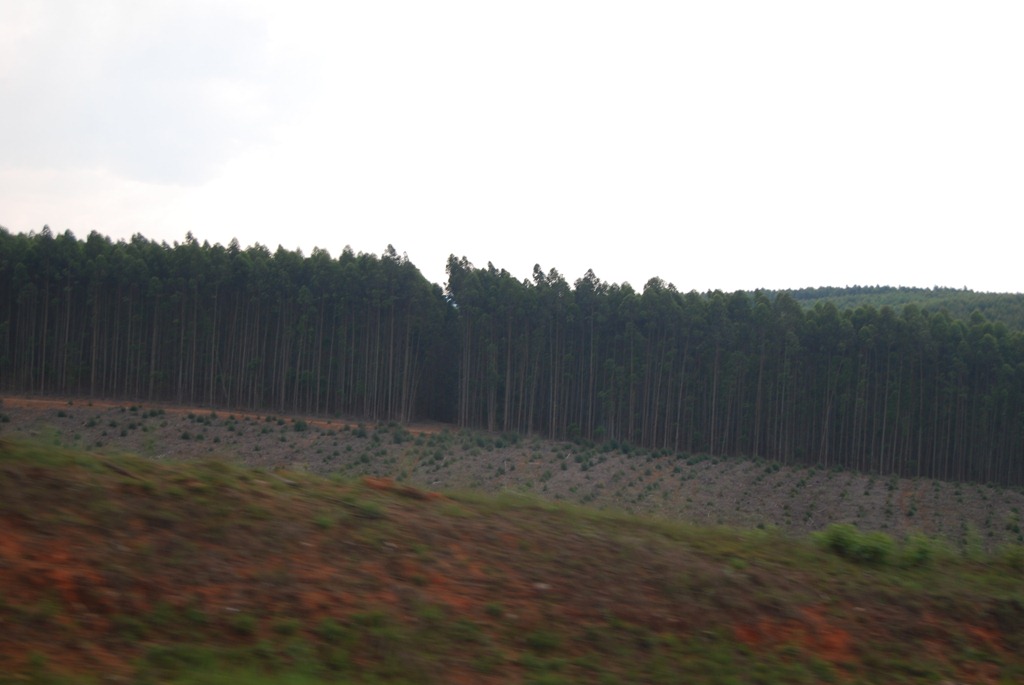
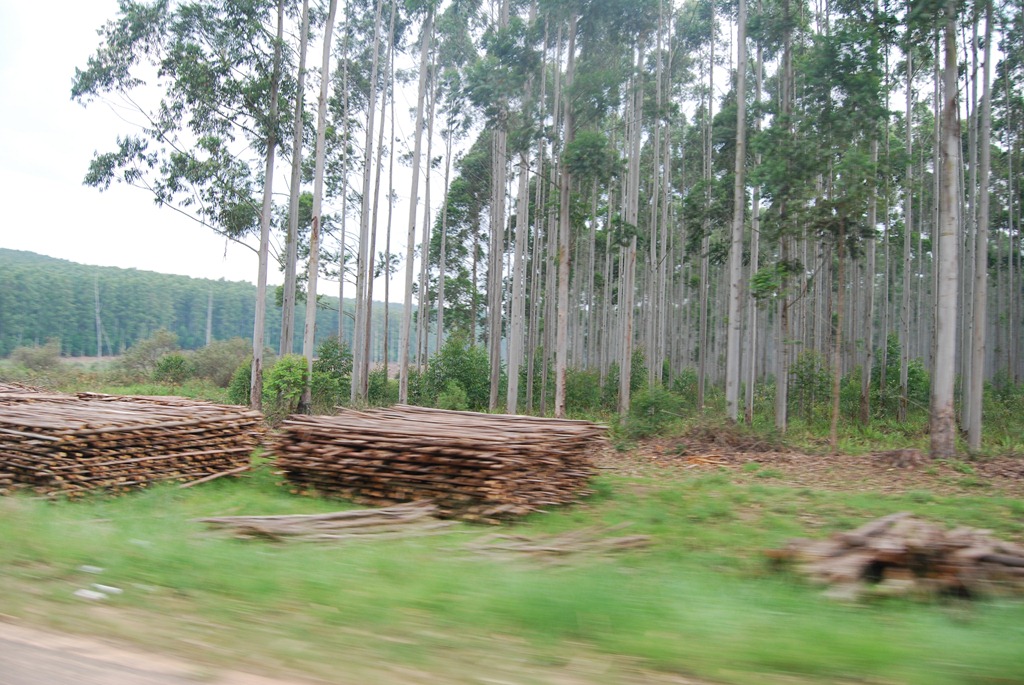
Monoculture forest plantations are fast increasing in developing countries and although this growth is fuelled by low production aDSC_0212nd labour costs, carbon sequestration for the developed, and government incentives, these plantations have serious social and environmental impacts.  Mozambique is no exception, here plantations are springing up rapidly and the government is keen to attract investment into these plantations for paper production.

On the 6th of August 2012 JA! participated in a seminar on ‘Forest Plantations and Industry in Niassa’.  The seminar took place at the VIP Hotel, Maputo and included the presence of a large number of individuals of the Forestry and Agriculture sectors.  The seminar was organised by the Niassa Forest Association together with the State Department of Land and Forestry and presided over by the Minister of Agriculture.  Mozambique is being transformed into a major global producer and the successful examples of South Africa, Uruguay, and Chile were mentioned.

The first presentation of the seminar was the “Evaluation of the Forest Plantations in Niassa Province 2005-2012” wherein it was mentioned that prior to 2005 there was no investment in tree plantations and after 2005 investment into these plantations surged leading to the current occupation of 165.772.80 hectares of land by plantations of which 32.409.00 hectares constitutes Pine and Eucalyptus plantations.  Some social and environmental problems experienced due to this type of investment were recognised as being caused by the enormous demand for land, waves of investment, poorly conducted community consults, and land grabbing cases.  All these problems were treated as if they had either been resolved or were in the process of being resolved, however with every passing day more and more serious incidents of land grabbing continue to be reported here. 

In other meetings the government’s desperate and blind desire to attract more and more investment into monoculture tree plantations has been clear.  This is evidenced by the speed with which the Regulation of Forest Plantations was proposed and approved while other legal instruments await years and years for approval such as the Law of Popular Action and the Law of Conservation Areas to name only those related to the environment.  The land for these DSC_0213plantations which is often described as ‘degraded’ is not degraded in the eyes of local populations who leave tracts of land fallow for revitalisation and future use nor is it degraded in the eyes of conservationists who see great importance in conserving the natural bush for biodiversity.  However others, interested in the implantation of these fake forests, are quick to regard this land as degraded.

The seminar left us with more questions than answers.  Who do the processes of community consult actually serve?  The community does not have the right to veto any project, they could be against it, they could protest, but the state has the final word and the state has decided.  What is the purpose of the Environmental Impact Assessment (EIA) study when the mitigation measures set out to address the impacts of a project are only in some cases possible or realistic?  This kind of situation leaves countries like Mozambique in a very difficult position as they have no way of rectifying a situation made difficult by the plantations and the effect their implantation has on rural farming communities and their environment.  The state gives the go ahead to projects that do not even have completed EIAs required by law. 

At the end of the day, the issue is that there is no clear admittance of the distinction between a natural forest and a monoculture tree plantation or ‘forest plantation’.  This is a serious problem because many would point to the idea that a tree plantation contributes to conservation but the impacts of monoculture tree plantations on the biodiversity of an ecosystem are large.  Consider for a moment what a tree plantation looks like; it is densely planted with only one (or a couple) tree variety.  This impacts the pollinators and other animals dependant on the natural vegetation for their survival (to read more about this research on Nature.com) and the sustainability of the natural forest.  The diversity of tree species in natural forests aids this survival whereas monoculture tree plantations leave no room for it.  It is also important to note that many of the tree monocultures like Pine and Eucalyptus are not indigenous to Mozambique and their impact on local species and water must be taken into consideration.  In Mpumalanga, South Africa, Philip Owen founder of Geasphere describes how the Pine and Eucalyptus plantations have dried up the groundwater, streams and rivers there. 

DSC_0218Tree plantations are a form of agriculture, they are not forests in any way as they have been shamefully described by companies in an attempt to take advantage of the growing concern of deforestation which is a current and ever-increasing issue.  These tree plantations are food deserts, they yield nothing in terms of sustenance, and whatever species are able to survive in these plantations are eradicated as pests. 

These plantations are green deserts.  They offer no sustenance, they offer no reprieve from deforestation or the loss of natural forests and the species therein.  They have been described as being void of life – that not one animal or bird can be heard within these fake forests.  They emit the silence of lifelessness.  They are quite simply wood farms of invasive tree species which dry up water sources and are implanted on community lands labelled as degraded.  This cannot be regarded as a sustainable practise for our future.


For more information on plantations vs. natural forests please follow these links:


‘Green desert’ monoculture forests spreading in Africa and South America

http://www.guardian.co.uk/environment/2011/sep/26/monoculture-forests-africa-south-america


Geasphere Mozambique – Information about the Mozambican experience

http://www.geasphere.co.za/mozambique.htm


“Monoculture tree plantations are “green deserts” not forests, say activists.”  http://news.mongabay.com/2008/0919-plantations_hance.html?menu=Select+a+News+Topic


Plantation vs. natural forest: Matrix quality determines pollinator abundance in crop fields (Scientific Report from Nature.com) http://www.nature.com/srep/2011/111028/srep00132/full/srep00132.html

Tagged , , , , , , , , ,

How much is enough?

Pemba1 040Last week we marched to deliver a declaration to our Southern African heads of state who met in Maputo for the SADC (Southern African Development Community) conference. We demanded that the SADC be reclaimed for the people of the region, for people-centred development, but as I sat in my office to read the weekly local news, I feel overwhelmed by sadness but also utter puzzlement.

Do our leaders really give a thought as to the real needs of the people?

In Mozambique, I sit and read about more multinational corporation investments being approved, unfortunately, there is very little doubt as to whom the government is catering.IMG_1499

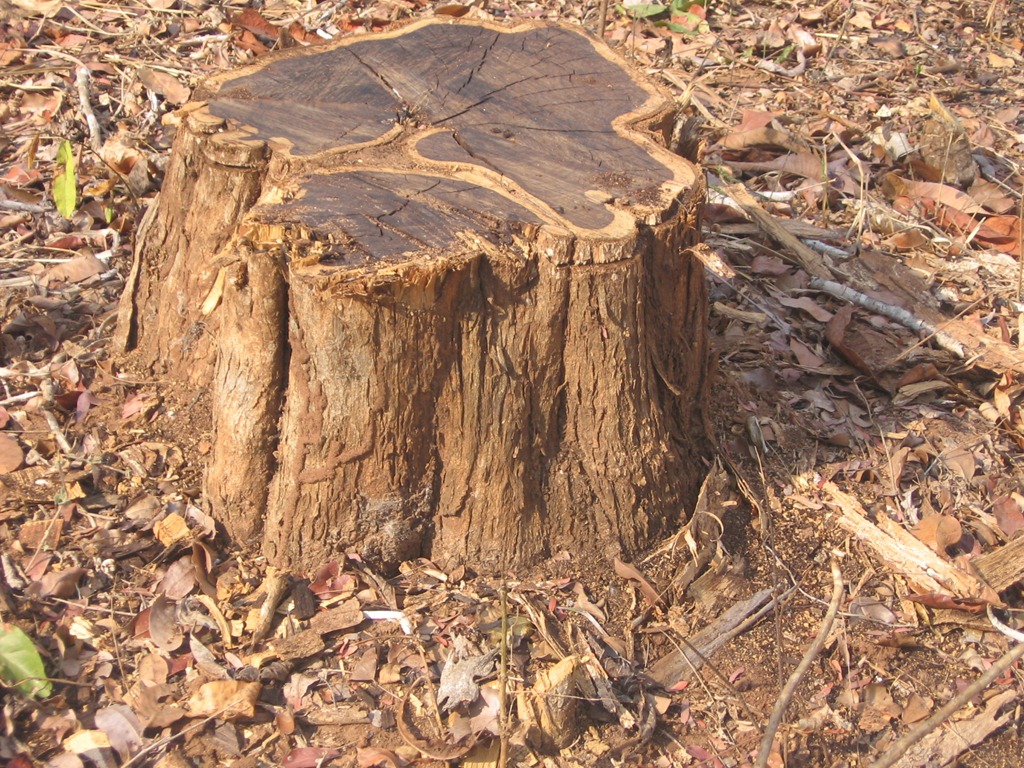
In the same week, we witnessed a shocking contradiction of news. Macauweb reported that the government had approved two more forestry concessions for a British company, Obtala Resources group, covering an area of 117,618 hectares, to be located in Cabo Delgado and Nampula provinces. From these concessions, the group expects to extract 8994 cubic meters of wood with a high retail value. The concessions even include very valuable species such as African Blackwood.

At the same time, Verdade newspaper reported that local carpenters in Maputo are struggling to survive with some workshops closing down and workers losing their jobs and livelihoods. Why? It is because they are facing more and more difficulties in purchasing wood without which their profession is impossible.

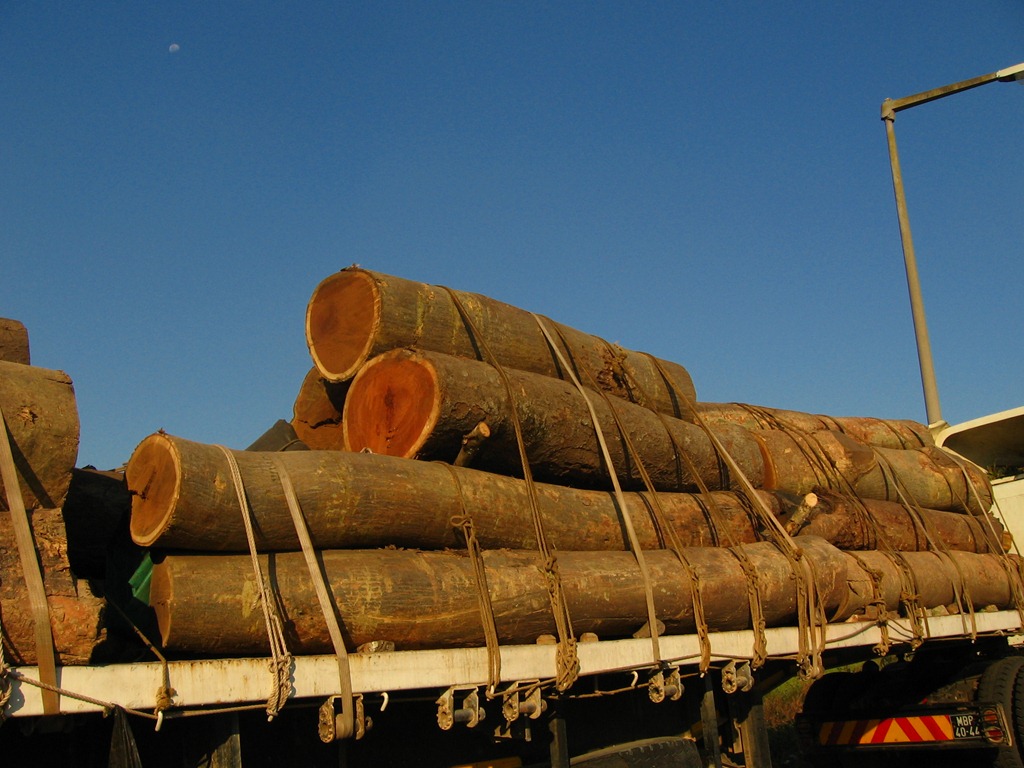
Pemba3 024While Mozambique is exporting shiploads of wood, to the extent that we are one of the biggest suppliers of wood to the European and Asian markets, the carpenters of Mozambique can’t even etch out a decent, hard-working livelihood anymore. “The wood that is not ours anymore,” they lament.

This contradiction is what is known in Mozambique as “development”! Yet this contradiction is not new to us, however sad and shameful it seems, as we have been listening for many years to the woes of the local artisans increasingly facing a lack of wood. However, whenever communities raise their voices or when they lose hope and act to demand justice and their right to a decent life, they are treated as criminals, and their voices are shut down by threats, as happened in Cateme last January where people were protesting mistreatment in Vale’s coal-mining efforts.

This is just the tip of the iceberg, as we are hurtling towards becoming the poster-child for the “resource curse”, while at the same time we are touting how great our development numbers are.

The Marikana platinum miners who were shot dead by South African police last week were just demanding better wages in an industry that mints billions of US dollars every year. Similarly, the Mozambican carpenters are just asking for the chance to continue their trade and livelihood. People are not asking for hand-outs. They are asking for a chance for survival. They are asking the government to take their side for once and enforce policies that support the struggling masses.

Tagged , , , , , , , , , ,

Together We March! Reclaiming the SADC for Peoples’ Development

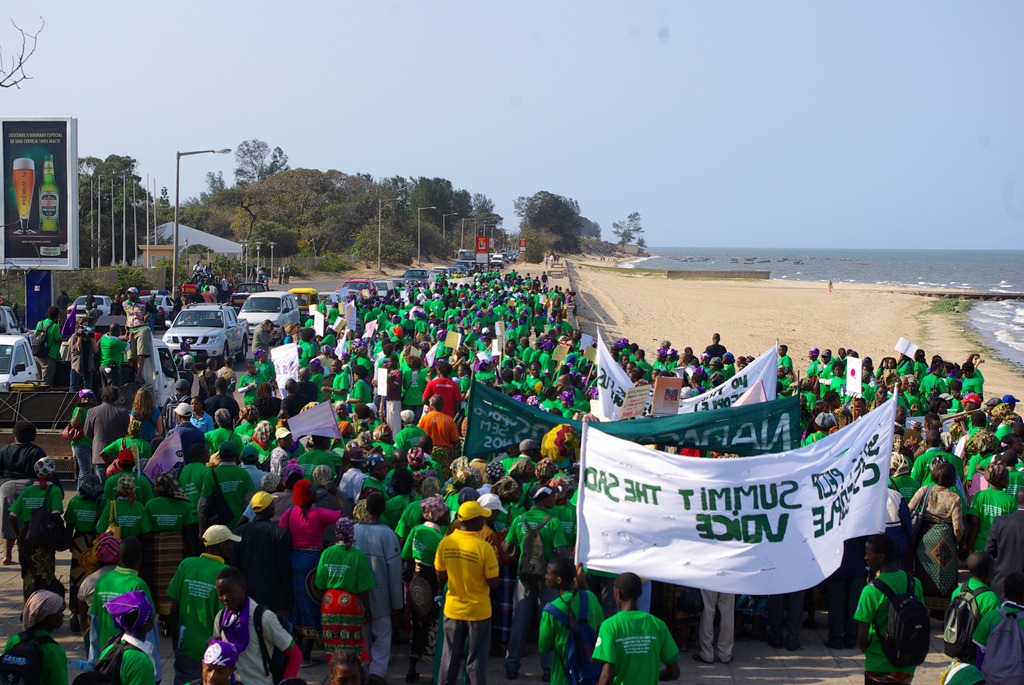
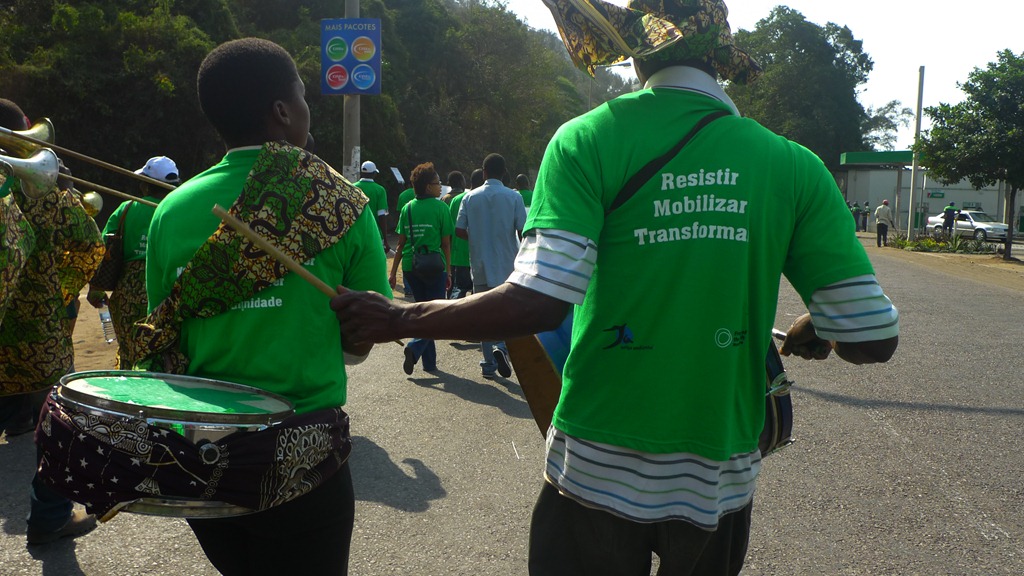
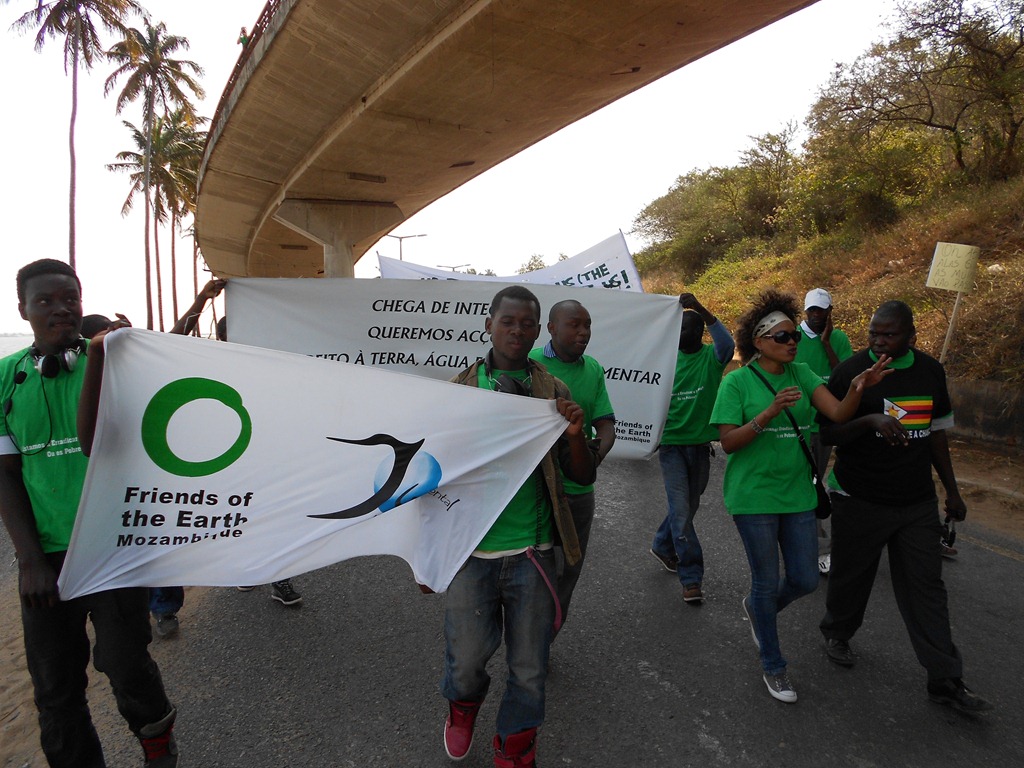
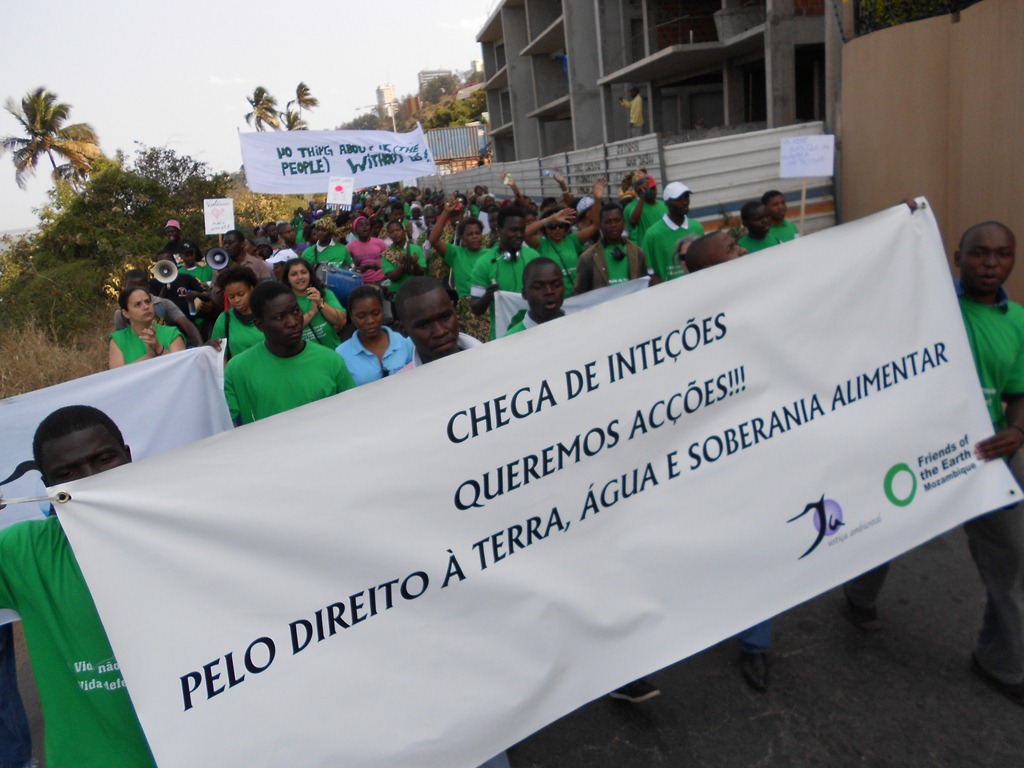
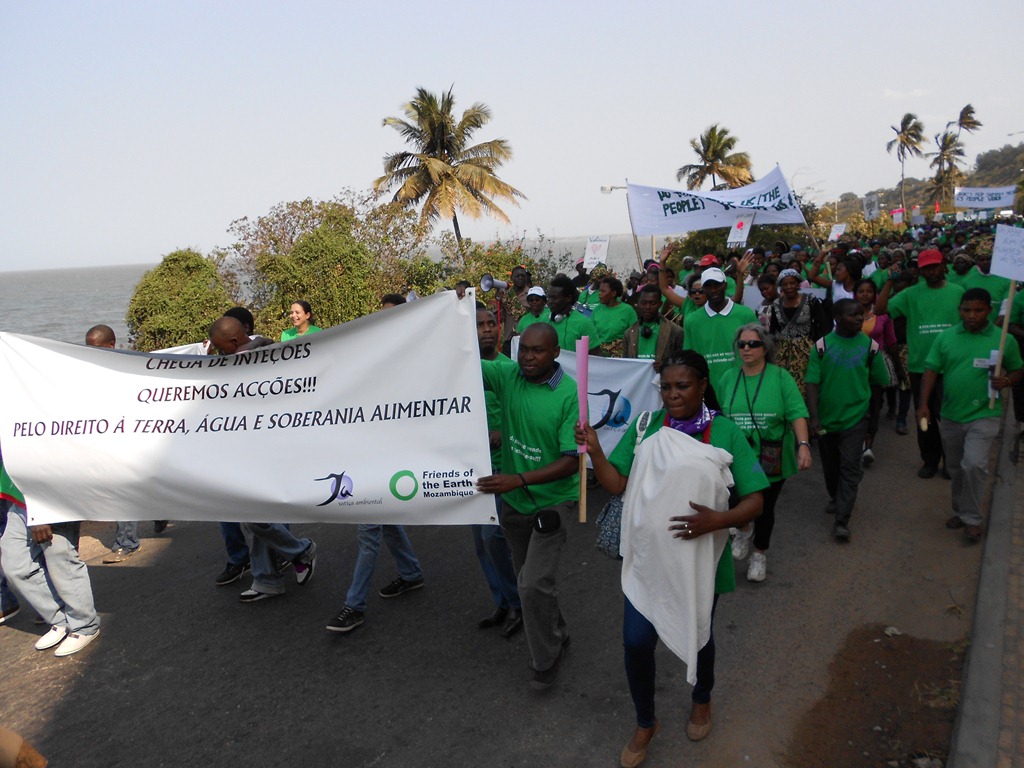
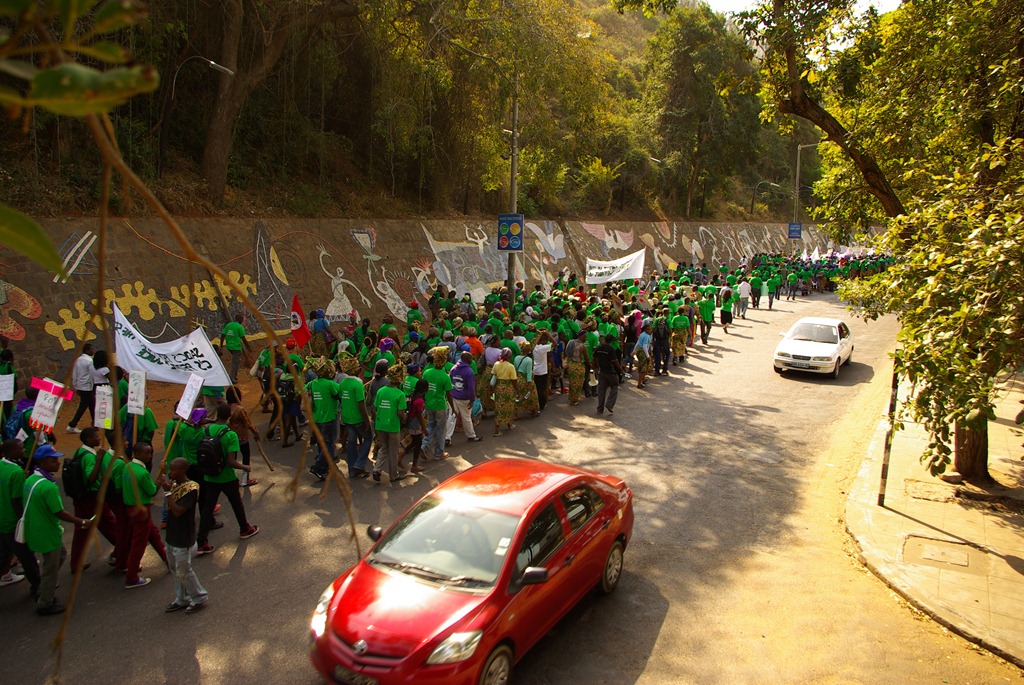
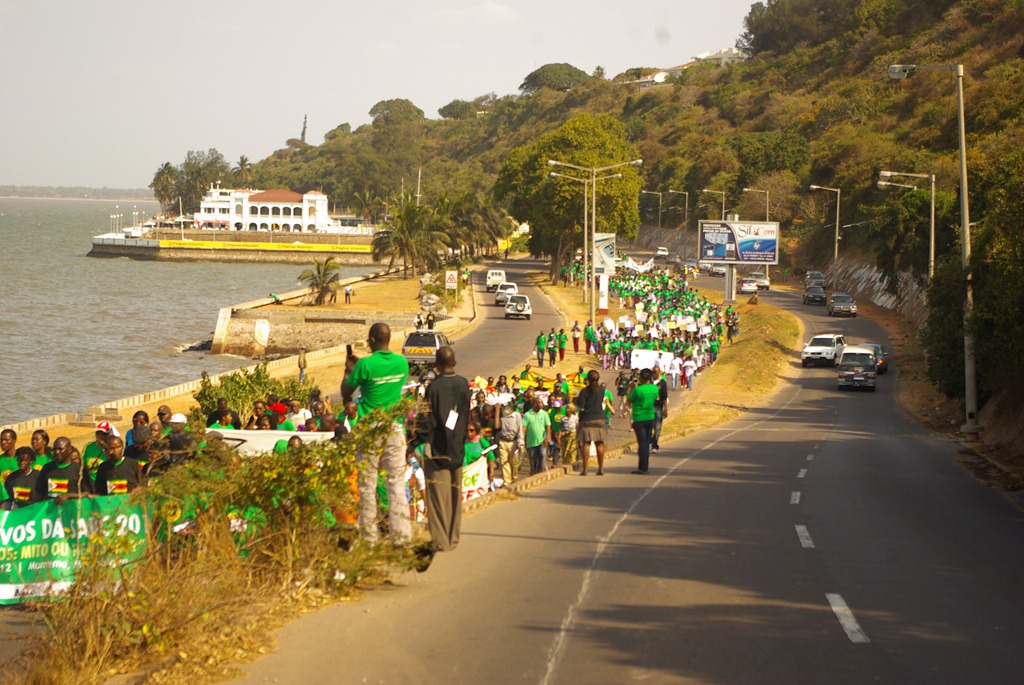
Yesterday (August 16th 2012) the beautiful coastline of Maputo was covered with a sea of green t-shirts.   As the city welcomes Southern African heads of state arriving today for the SADC (Southern African DDSCN0067evelopment Community) Summit, the people decided to respond by taking to the streets and marching for their rights.

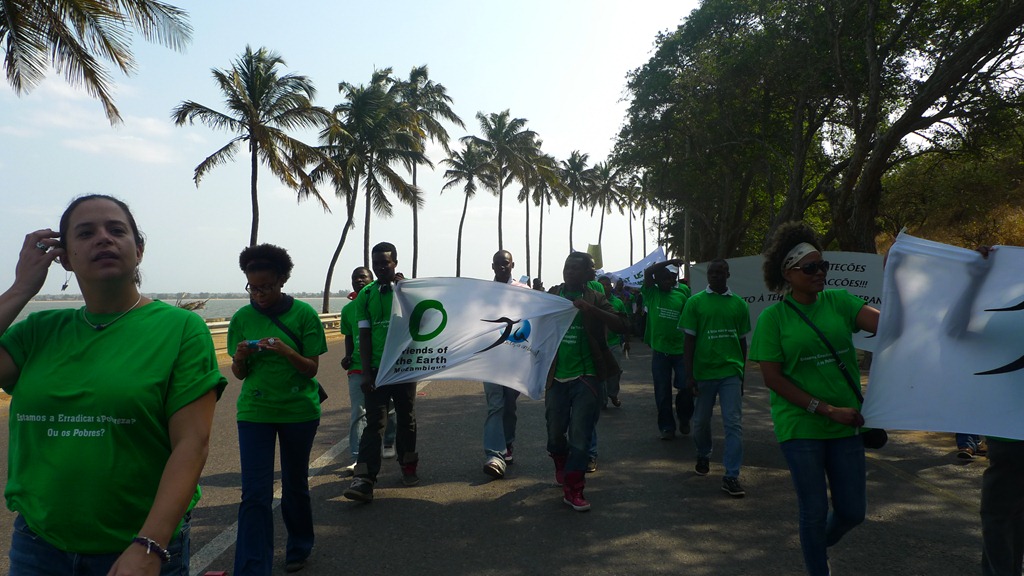
People gathered yesterday morning, most of them wearing bright green t-shirts to represent the life-sustaining gifts of the land and the environment, and marched almost 5 kilometres along Avenida Marginal to the Chissano Conference Centre where the SADC talks start today.

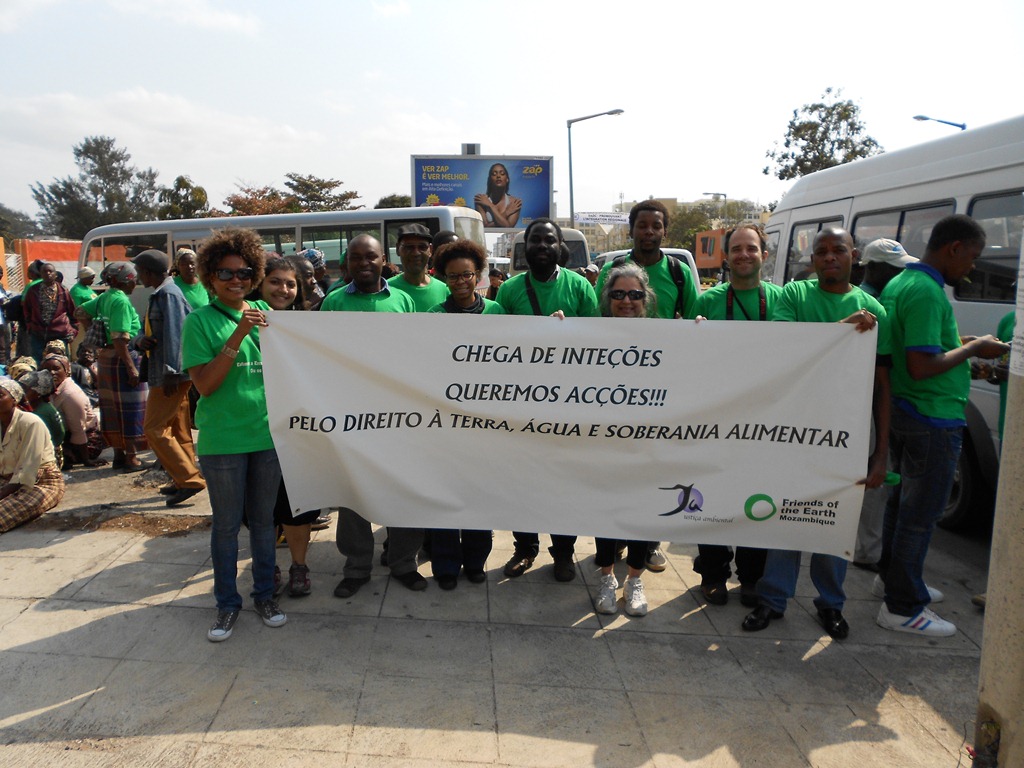
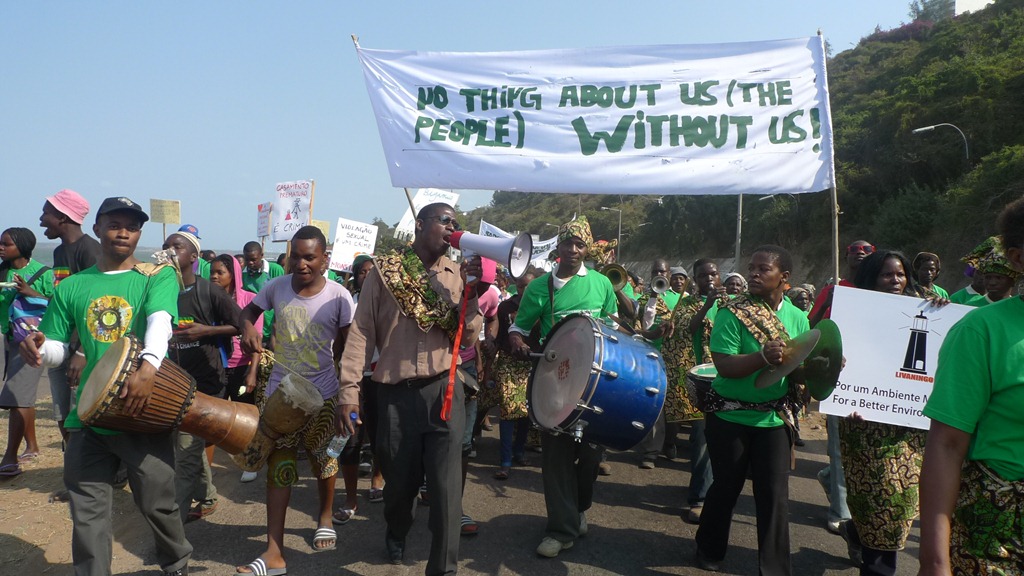
The marchers held high their placards with powerful messages such asIMGP9035 ‘Africa is not for sale’, ‘No to biofuels, stop land grabbing’, ‘Enough with intentions, we want actions, for the right to land, water and food sovereignty’, ‘Are we eradicating poverty, or the poor’, “Land-grabbing = Plantations, dams, mining’.  Another banner demanded: ‘There is nothing about us Without US’, showing the need of the people to be involved in the decision-making that affects their lives.  At the end of the march, a few representatives then went to deliver to the SADC the Peoples’ Summit declaration “Reclaiming SADC for Peoples’ Development”.

FP1160539or the past 3 days, activists from social movements and organizations from Mozambique, South Africa, Lesotho, Malawi, Namibia, Zambia, and Zimbabwe have participated in the Peoples’ Summit of the SADC 2012. The Summit brought together farmers, fishermen, landless people, rural and industrial workers, rural women, feminist movements, and social and environmental activists.

There was consensus that the immense power that multi-national corporations (MNCs) exert over government and even community P1160615leaders is a major concern.  Farmers raised their voices against land-grabbing, against GMOs, and for access to water, etc., during the Peoples’ Summit.  Participants asserted: “The people will take over if their human rights are not respected and if their resources are continuously mismanaged.”

“Cash crops divert water and key resources from sustainable development because this is where big corporations dominate sovereign states and agriculture through the selling of seeds and fertilizers”

DSCN0093Fishermen are realising that their access to the sea or rivers have been cut off and they are faced with newly-built fences – which seriously affects their livelihoods.”

The outcome of the meeting was the declaration of the concerns of the development path that the SADC is taking with undemocratic governance, impunity of corporates in extractive industries, exploitation of natural resources, dominance of corporates in the energy sector, increasing violence against women and children, displacement of communities by MNCs with active collaboration of DSCN0133SADC governments, increasing food insecurity, damage to ecosystems, wrong choices concerning energy policies such as; more fossil fuels, problems of mega-infrastructure including dams and mines, growing inequalities, and the continued violations of economic, social, cultural and environmental rights.  Mozambican organisations such as UNAC (National Farmers’ Union), Women’s Forum, Justica Ambiental, Peoples’ Dialogue, Livaningo, and others have been involved in this process.

More photos from the march:

DSCN0134DSCN0166

IMGP8975IMGP8982

P1160665P1160681

Thank you to all who participated and helped make this possible!

More information about the People’s Summit: http://sadcpeoplessummit.org/thepeoplessummit/

Tagged , , , , ,