Category Archives: Activism

Supporting democracy and fighting dams: JA in South Korea

Image

A few weeks ago, Justiça Ambiental (JA!)  was invited to make a presentation at the Human Rights Cities Forum in Gwangju, South Korea, by the Korean Federation of Environmental Movements (KFEM)/ Friends of the Earth Korea.

Gwangju city has historically been a symbol of democracy and Korean opposition to authoritarianism. In 1980, there was a huge uprising and peoples’ movement against the coup and dictatorship of General Chun Doo-Hwan. Gwangju citizens, especially students, rose up to oppose the fascist government. What followed was unmitigated violence from the army and the police, leading to the massacre of pro-democracy activists. Official sources of the dictatorship in 1980 put the total casualties at 144 civilians but the actual number may be between 1000 and 2000 deaths.

But the May 1980 protests in Gwangju slowly spread to other places and started to turn the tide against dictatorship. For the rest of the 1980s, Koreans continued to struggle for democracy and eventually ended authoritarian rule. To commemorate the strength of this powerful city, its citizens and its past, every year Gwangju city hosts this Human Rights Forum. The mayor of the city, Kan Un-tae, himself was present at the Forum.

The conference was held at the Kim Dae-Jung Convention Centre, named after Kim Dae-Jung, a politician from the Gwangju region who was one of the people arrested in the mobilisations. It is interesting to note that this region of South Korea is rich in natural resources, hence became a target for extraction and suppression of people.

JA was invited to speak on ‘environment and human rights’ and to share stories of the brutality of natural resource extraction in Mozambique. Prakash Sharma from Friends of the Earth Nepal also attended and spoke about climate change threats to the Himalayas and the Nepali people.

We also attended a prize ceremony where young people from across the world were awarded prizes for writing essays on human rights situations in their own cities and countries. Among the prize-winners was our neighbour, a young South African student called Zama Lehlogonolo.

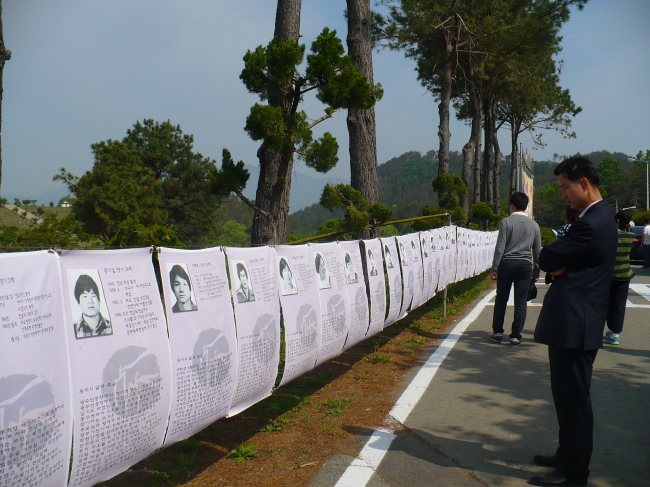
After the end of the Forum, all the participants were taken to the main street where the Gwangju massacre had taken place in 1980. Gwangju citizens commemorated the occasion with a parade, celebrating Korean culture, dances, etc. The atmosphere was so positive. People remember the massacre but they use the memory to celebrate their lives instead.
Image

The next day, we attended the May 18 ceremony at the cemetery where many of the massacred citizens were buried. There were speeches and Korean songs of protest. People lifted their fists the whole time the songs were being sung. It was very powerful.

Later that afternoon, our KFEM hosts took us back to Seoul city by train. The next day we spent a bit of time walking around and getting to know Seoul and its history. We saw Changdeok-gung Palace, quite a modest palace from the Joseon dynasty of Korea, from the time before the Japanese colonization of the Korean peninsula. We also saw a magnificent

Buddhist temple called Jogye-sa. Interestingly, about 22% of Koreans are Buddhist and 18% Christian but the biggest chunk, almost 50% are atheist.

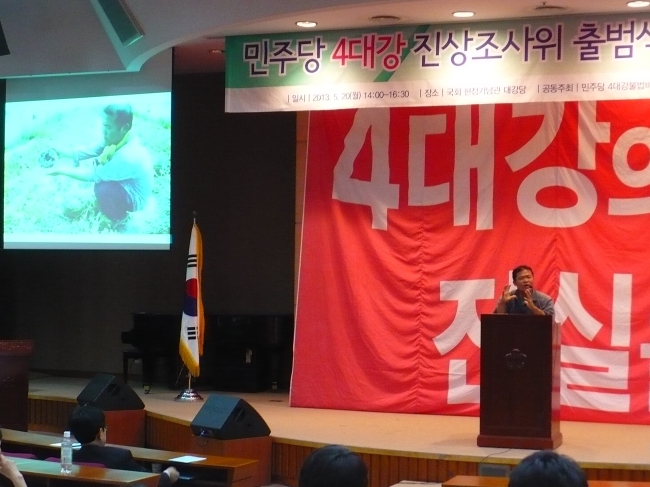
On May 20, we meet the local staff of KFEM office. Then we went to the Congress building of Seoul city, to support a hearing of farmers and community members who were impacted by the 4 Rivers project. This is a project involving about 16 dams on 4 rivers, and has already caused destruction of livelihoods and ecology, so similar to the situation in Mozambique. There was also a photo exhibition showing the destruction caused by the project. Local farmers, activists, professors and Congressmen gave testimonials, following which the Congressmen from the progressive Democracy Party, and pledged to investigate the inconsistencies with the project. JA was also interviewed by Ohmynews, Korea’s largest online newspaper, about the reality of dams in Korea and Mozambique.
Image

Later that evening, KFEM organised an open event with local citizens and students, called the ‘Glocal Talk Concert’, with an aim to raise Korean people’s international awareness. JA showed 2 short films, one on the situation of Vale-displaced communities in Cateme and the other with testimonials from Mphanda Nkuwa dam affected people.

All in all, JA’s experience in South Korea was phenomenal. It was wonderful to make international links on issues of extraction, environment and livelihoods. We were able to increase the visibility of Mozambique’s situation.

The Three Brickmakers

Last Tuesday at  5am, three brickmakers out of the hundreds of people who have been protesting for fairer compensations in Moatize for the past weeks, were arrested by the Mozambican Police while protesting peacefully at the gates of Brazilian mining giant Vale. According to the men, who we maintained contact with throughout the whole week, the police made them clear the railway they had blocked to prevent the coal from leaving the site and afterwards they were picked from the crowd, handcuffed and taken to the police station.

Thursday we got the information that they were going to be accused of disturbing the peace and making death threats to an employee of Vale.

What was happening was as obvious as ridiculous, but for legal reasons, we couldn’t say anything at the time…now we can.

According to our sources in Tete, the three men have been set free this morning after their hearing and will await for the verdict in freedom.

As expected, the death threat accusation was dropped because the alleged victim (a Brazilian citizen who works for Vale) failed to identify any of the accused as the person or people who threatened him and failed to tell the court what words those who threatened him used.

What he did tell the court, was that he could not possibly pinpoint three men as the people responsible for the threat, since there were hundreds of people protesting when it happen…

It is almost funny. How can this happen? How can these men stand accused of such a serious crime in such a frivolous way?

We, as I am sure many other Mozambicans, would love to hear an explanation from those responsible.

What is happening in Moatize is shameful.

We know it because we were there just a couple of weeks ago, because we know some of these men and we know that they are being persecuted not because they have disturbed the public peace, but because they have disturbed Vale’s peace and the peace of a government who is clearly compromised in this process and is probably the main responsible for all this mess.

We also know that they were not arrested at random, they were targeted by an overbearing system because they are outspoken men respected by their communities. They are the closest to a leader that they have. Those responsible for these coward actions thought that if they could scare them, the others would be scared too.

Shame on you!

Tagged , , ,

JA! celebrates the International Day of Rivers

March 14th Meeting

March 14th Meeting

On Thursday, 14 March, Justiça Ambiental (JA!) marked the occasion of the ‘International Day of Rivers’ by holding simultaneous events in Tete and in the capital Maputo.

In Tete, over 50 community people came together on the banks of the Zambezi River. These included communities that will be displaced

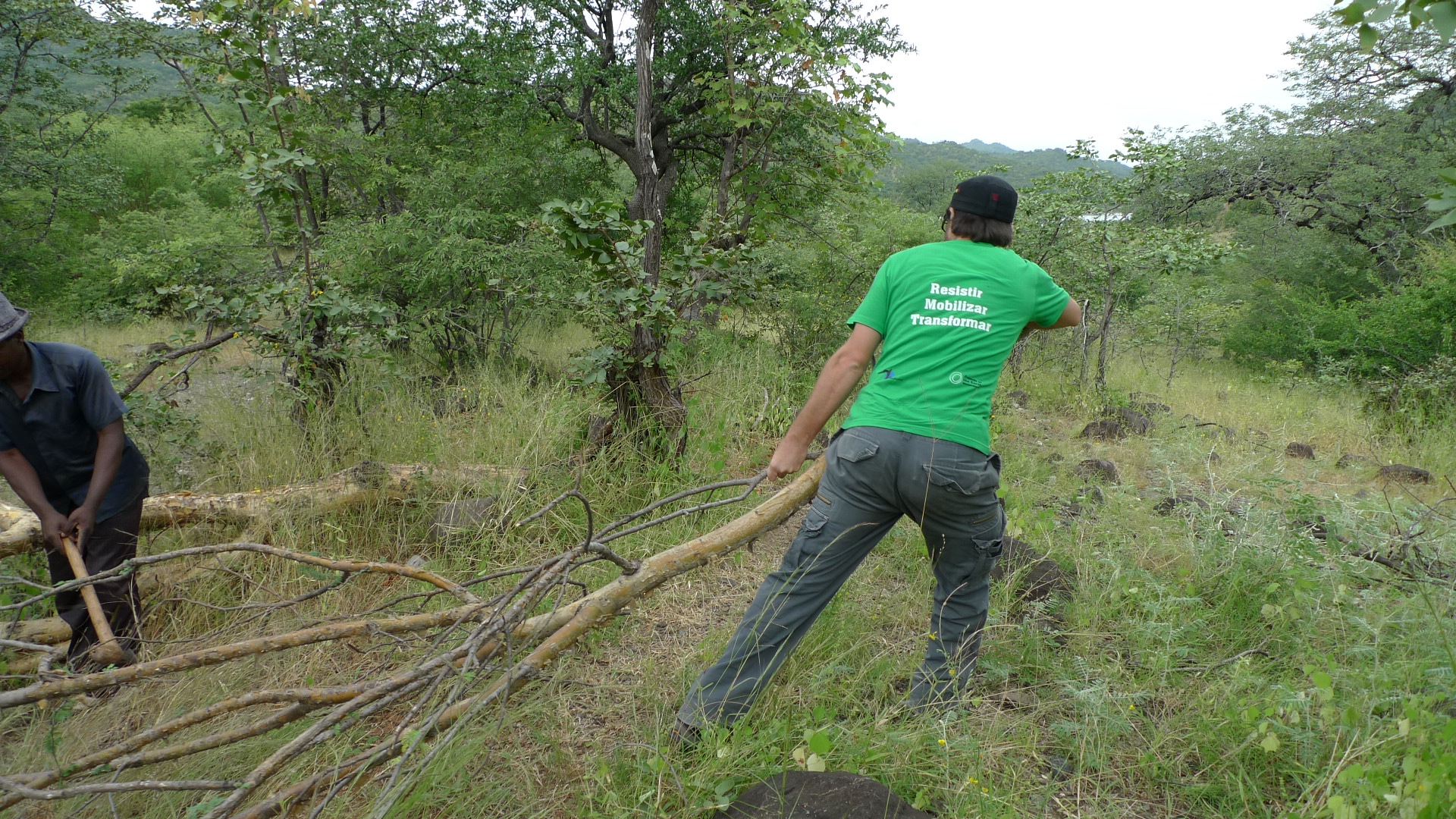
Removing a fallen tree on the way to Mphanda

Removing a fallen tree on the way to Mphanda

from their lands and homes if the Mphanda Nkuwa Dam is built across the Zambezi River. We were also joined by communities affected by Vale, Rio Tinto and Jindal, all carving out the earth to extract coal from their villages.

The meeting was organised by JA!, along with our partners Liga dos Direitos Humanos (Human Rights League), AAAJC (Association for Support and Legal Assistance for Communities), UNAC (National Farmers Union, Tete provincial chapter).

The all-day meeting was held at the Tete Provincial Centre of Agricultural Formation. JA supported the community members to come in the night before, since their homes are far and the transportation systems in Mozambique are very poor. The communities affected by Vale, for instance, used to live in Moatize, 19kms from Tete. Now they have been moved to

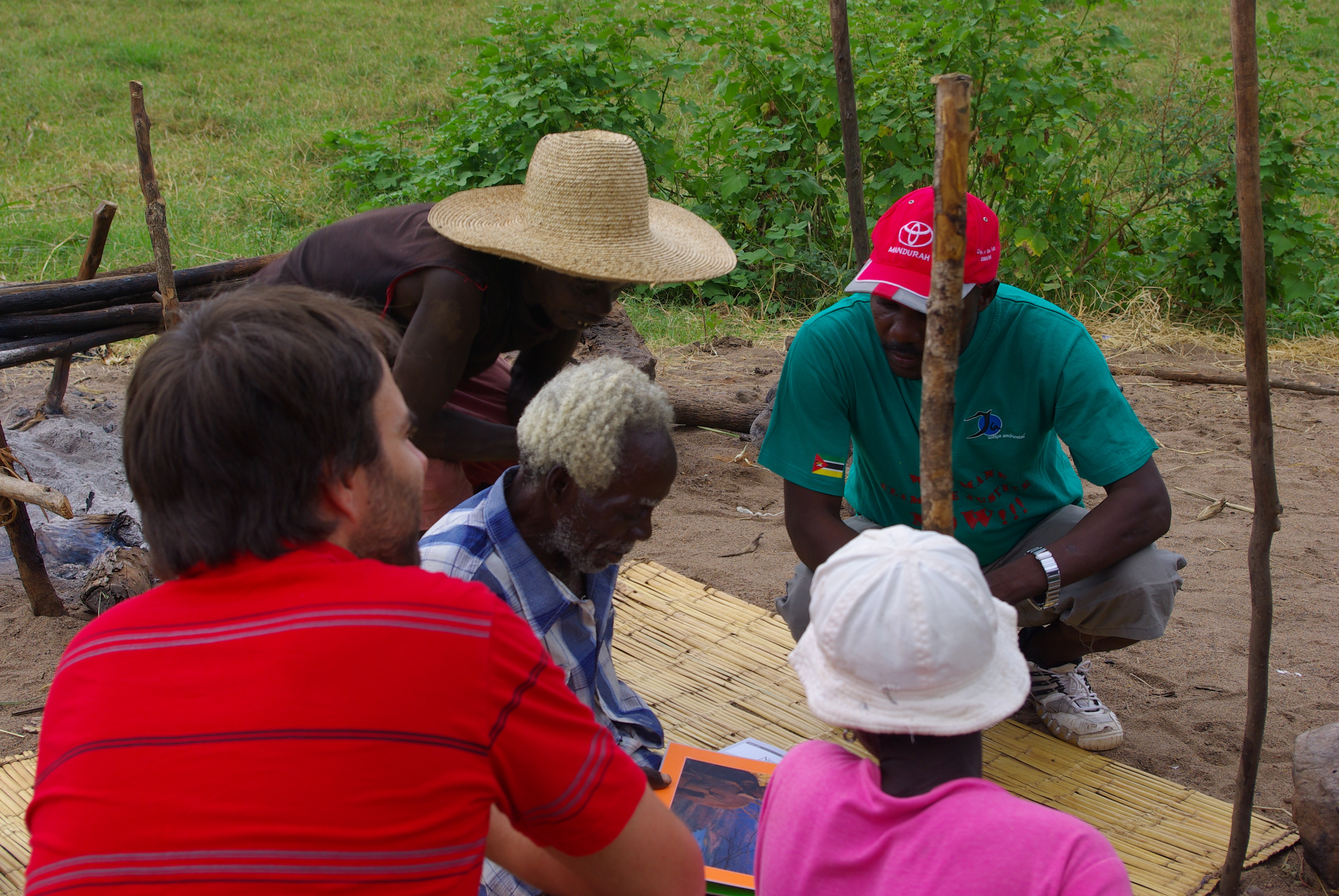
Sr. Morais lived his entire life near the river, if the dam is built he will have to move far from the river. What about his rights!

Sr. Morais lived his entire life near the river, if the dam is built he will have to move far from the river. What about his rights!

Cateme, 56kms away from Tete, and transport could easily cost 150 Meticais (US$ 5) each way! The Mphanda Nkuwa communities live over 70kms from Tete. The area is very remote and roads are almost non-existent.


The meeting on 14 March brought together these community people and organisations to talk about communities that live and thrive on rivers and other natural resources. When such communities are displaced from their resources, they usually lose their subsistence base and with that, their self-reliance. There were presentations on:

  • Human rights,
  • Dams and the context of Mphanda Nkuwa
  • Challenges with the Land Law relative to the Mines Law
  • Mega-projects and false promises
  • Fight against dams: a case from India’s Narmada Valley
  • Climate Risks for the Zambezi River

But in the most important part of the meeting, the community people were talking to each other and sharing their own experiences. The people that will be displaced by Mphanda Nkuwa heard directly from communities still struggling to

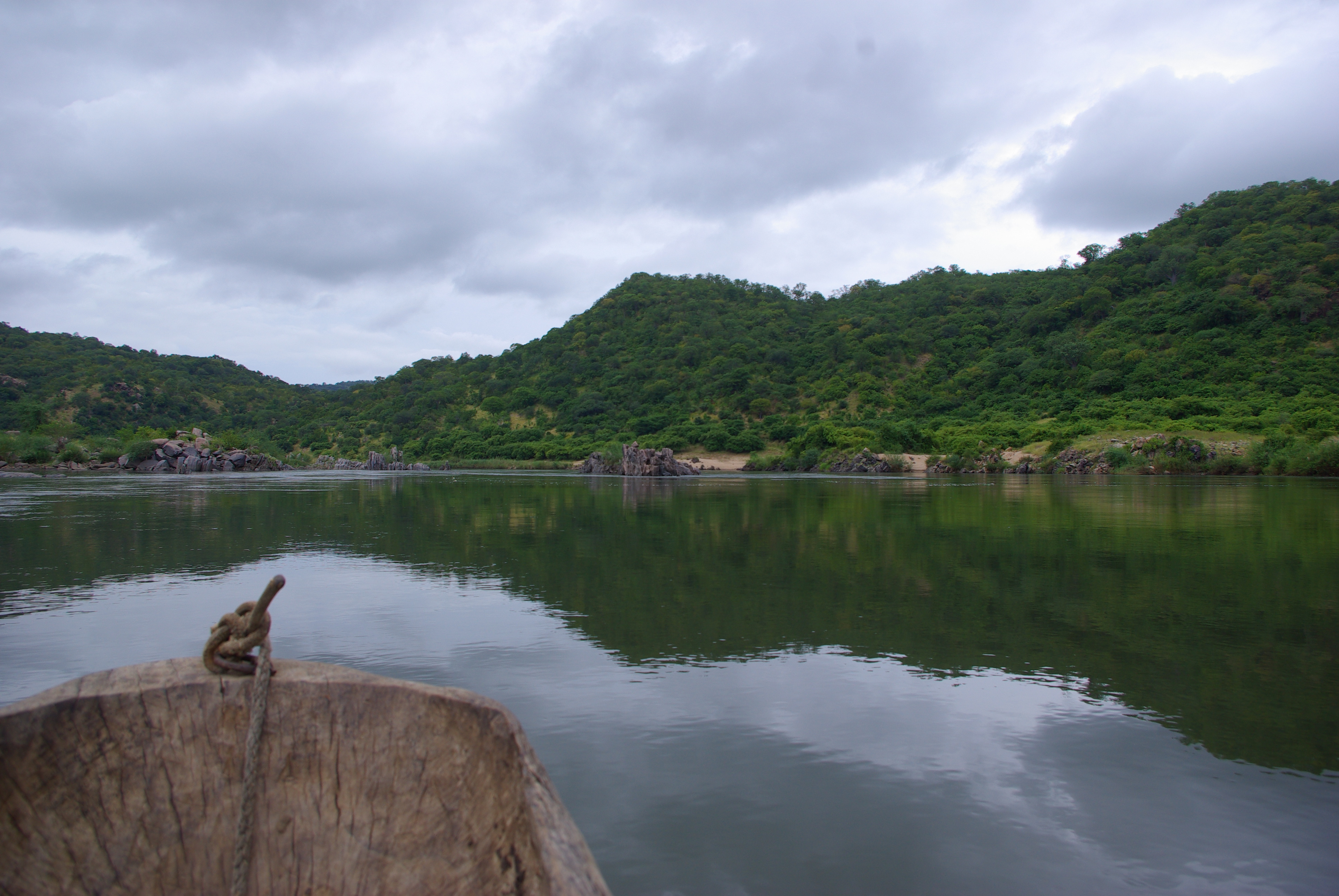
View from the proposed dam site

View from the proposed dam site

get their rights after being displaced by Brazilian mining giant, Vale. The ruthless Indian company, Jindal, has also started mining coal in the village of Mualadzi. However, they haven’t removed anyone yet, so people continue to live among the coal dust while the mining continues.

The stories shared by people were heart-breaking. They reveal the cruelty of the extractive model where self-reliant communities are robbed of their natural resources which are increasingly being commodified by the corporate-driven development model.

After the meeting the JA team took the communities back to their villages by the river. We went to visit Sr. Morais, an outspoken elder of the fisherfolk community, who was lived by the river his whole life. The secretary of the bairro (village) prevented him from joining our meeting, even though JA specifically asked for him to participate. If he is forced to move inland, far from the river, his livelihood and, with it, his culture and traditions will

Zambezi

Zambezi

be threatened. We believe this is a crime and a violation of his rights, as well as of all the fishermen whose livelihoods depend on the river.

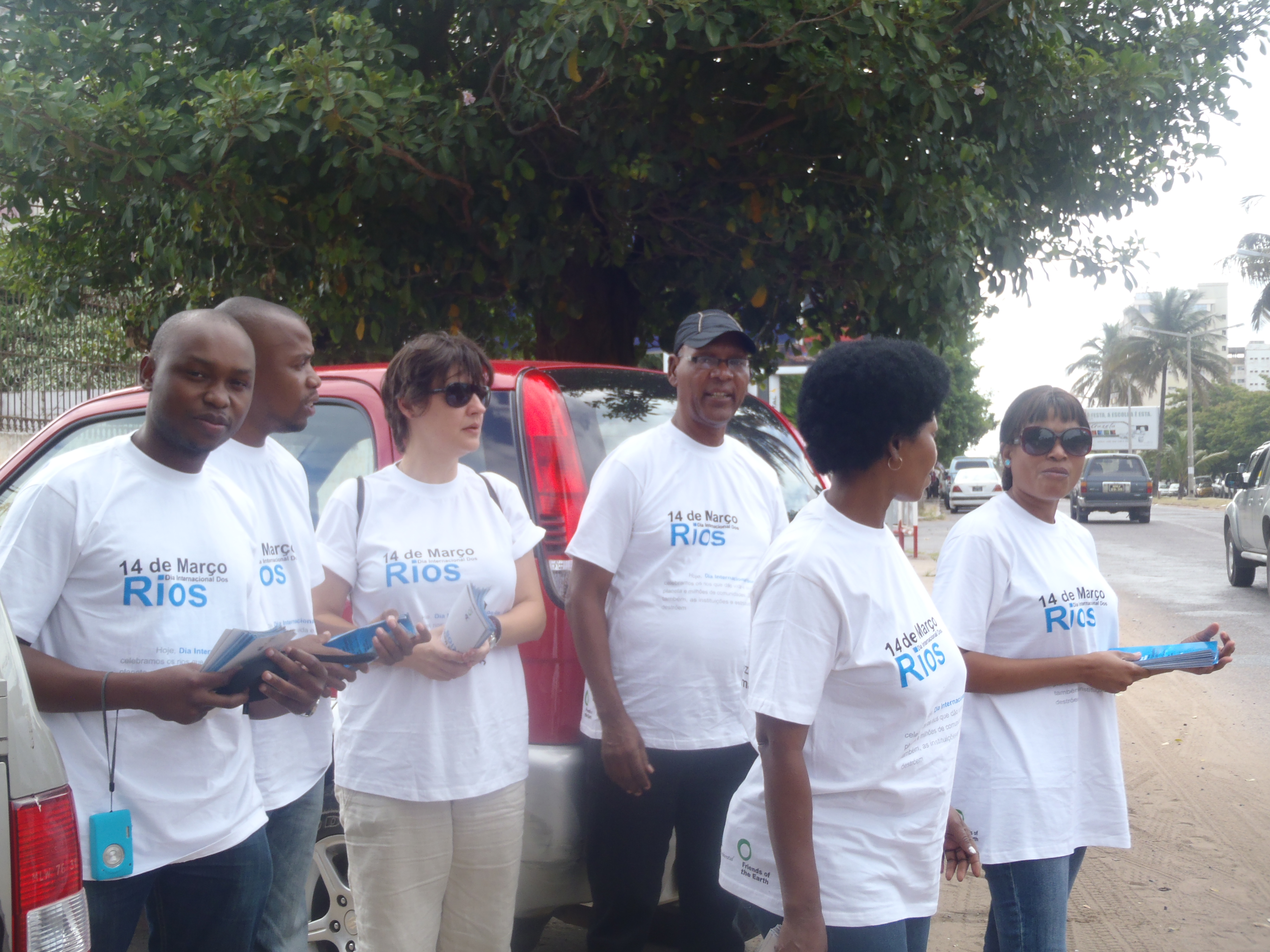
Along with the meeting in Tete, JA also held an event in Maputo, where we challenged another actor who is actively pushing this damaging extractive model: the World Bank. In Maputo, we invited friends and colleagues to take to the streets. We congregated near the World Bank headquarters in Mozambique, on Kenneth Kaunda Avenue, where we distributed flyers and spoke with passers-by, even Bank workers, students from the neighbouring Faculty of Law of Eduardo Mondlane University and other interested citizens. The Bank was targeted to raise awareness about their role in pushing destructive large dams. The Bank’s stated goal is to reduce poverty but for most of its existence it has actively pushed projects that have

increased poverty especially of the most vulnerable communities.

Action on World Bank in Maputo

Action on World Bank in Maputo


Tagged , ,

March for Human Rights

IMGP9596 On Monday this week, JA staff and board again took to the streets of Maputo. After the historic and fun march in Maputo back in August, where we were joined by human rights and environmental organisations from all across southern Africa, this week Mozambican organisations continued to march to assert their rights.

The occasion was 10th of December, the International Day for Human Rights. The march to commemorate this day was organised by Liga dos Direitos Humanos (Human Rights League) in Mozambique in partnership with Justiça Ambiental, National Forum of Community Radios, and others.

The marchers gathered at 9am at the Independence Square in Maputo City, and marched up Karl Marx Avenue and thenIMGP9617 up 24th of July Avenue. The marchers were a small but vocal group. We chanted non-stop, filling the streets with loud and animated slogans in Portuguese:

  • “Respect Human Rights”,
  • “What do we want? – Human Rights!! When do we want it? – Now!
  • Viva freedom! – Viva! Viva right to information! Viva!
  • Life is not for sale, life is to be defended!
  • The Right to Health – is Ours! The Right to Education – is Ours! The Right to Land – is Ours! The Right to Information – is Ours! The Right to security – is Ours! The Right to demonstrate – is Ours!
  • Down with those who commit violence – Down!
  • Down with those who violate human rights – Down!


IMGP9924When the marchers were a block away from the Parliament building/ National Assembly, we suddenly came face-to-face with a roadblock. We had asked for and received permission to hold the march on that route, and to deliver a petition to the Parliament on human rights situation in Mozambique. Yet, it was obvious that the government of Mozambique had a different idea. We were greeted with great pomp and show by the Rapid Intervention Force. It must be remembered that, just a few months ago, it was the members of this same Rapid Intervention Force that fired on communities protesting displacement and dispossession due to Vale’s coal mining operations in Tete province, central Mozambique.

The Rapid Intervention Force stood in our path, blocking the march route. They blocked the road and even had a massive armored tank in the middle of Maputo city! Every once in a while, the soldiers from inside the tank would peer out and look at us; their weapons drawn. Please see the photos.

The police on the streets were far less subtle. They were fully dressed in riot gear, even though we were less than 70 marchers holding only a peaceful protest on a pre-approved march route chanting for peace and human rights! Yet, the police were armed with tear gas guns, rubber bullets, pistol and who knows what else. We were barred passage to even the entrance door of the building of the Parliament, and after a long wait we were only allowed to send four of our representatives to deliver the declaration. The declaration urged the government to respect human rights.IMGP9846

There is no reasonable explanation for the reaction of the government and the police. Only one explanation makes sense. It was an intimidation tactic. Civil society in Mozambique is small but is getting more and more vocal. The communities are raising their voices against oppression, and this is threatening the state’s plans for more greed and unsustainable development. But we have one message to send to the state: We will not be silenced. We will continue to speak out against injustice.


Come join us!


Tagged ,

JA! in Mesoamerica

P1110580Last week, JA staff attended the Bi-Annual General Meeting (BGM) of Friends of the Earth International (FoE I), in El Salvador, hosted by Friends of the Earth El Salvador/ CESTA (Centro Salvadoreño de Tecnología Apropiada).

El Salvador is a small and beautiful country located in Central America. This region is culturally called Mesoamerica, an area that has borne witness to centuries of life and struggle of indigenous peoples in this area.

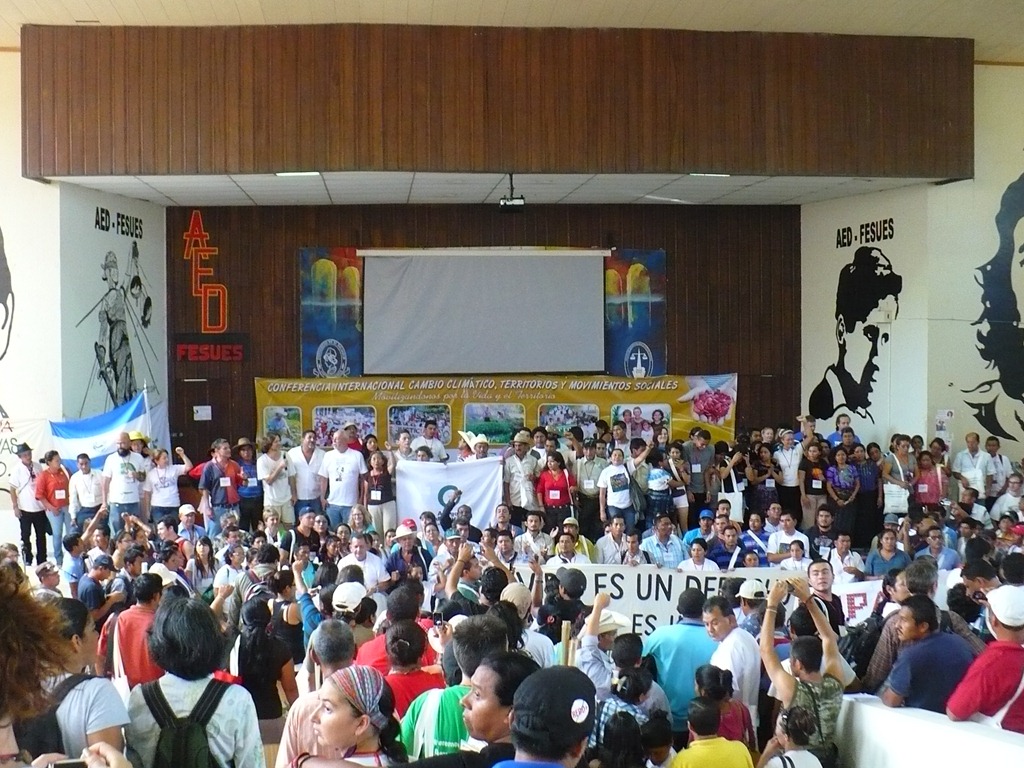
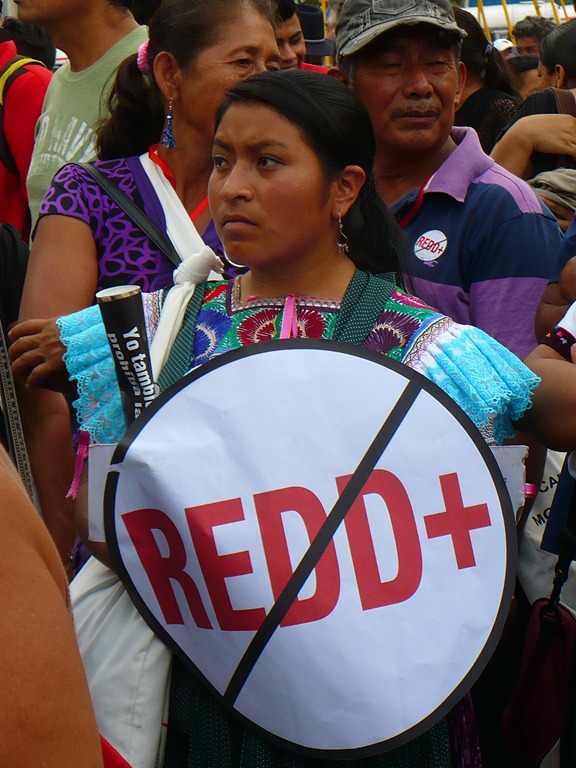
The BGM began with a pre-conference on “Climate Change, Social Movements and Territories”, held on the 5th and 6th November at the University of El Salvador. The pre-conference was organised by FoEI, CESTA and MOVIAC, which is the Movement of the Victims and People Affected by Climate Change. Mesoamerica is one of the few places in the world where people already affected by the changing climate are getting organised and empowered to understand how they are impacted by climate change and raising their voices for change. P1110690

The meeting started with fiery presentations from Ricardo Navarro of CESTA and Dr Juan Almendares of FoE Honduras, where they talked about the climate crisis and global problems, social movements, and the struggle for territories. It went on to include many wonderful presentations, especially by people of the affected communities. For example, Maritza Hernandez from Bajo Lempa talked about how the community located at the lower Lempa River kept getting affected by floods and droughts, and how they were forced to adopt adaptation strategies for their survival. See the attached photo from the powerful closing of the pre-conference. FoEI’s Climate Justice and Energy (CJE) program recorded testimonials of many MOVIAC persons, and a 10-min video is already available at:

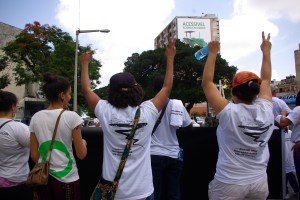
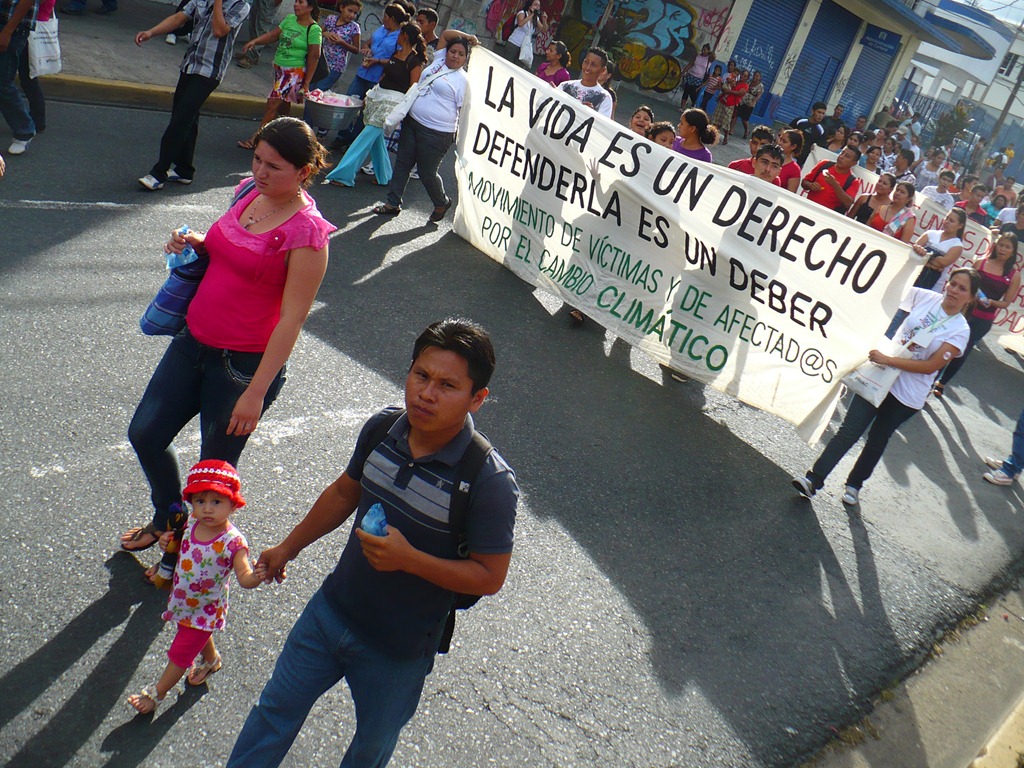
At the end of the pre-conference, we all marched through the streets of San Salvador together, demanding climate justice P1110640and food justice for all. This was followed by a cultural program featuring local Salvadorian and other Mesoamerican musicians.

That night, we travelled in buses about 2 hours to the location where the BGM was to be hosted. CESTA created a beautiful ecological centre, called Ecocentro in a rural area outside San Salvador. It has been created by CESTA especially for research, investigation, and development of ecological living systems. It has been built in harmony with the environment. For example, all P1110782the toilets are composting pit toilets, which separate liquids and solids, and present a very ecological way of dealing with sewage. The housing structures are all built from local, sustainable materials. The farm at the Ecocentro produced all the lovely fruits and vegetables that almost 100 people ate for three meals every day for 5 days. See the photo of some of the fresh organic produce at the Ecocentro farm.

At the start of the BGM, FoEI Chair, Nnimmo Bassey of FoE Nigeria explained how it was so significant to hold our BGM at Ecocentro, because the place signified how we wanted to live ecologically in the world. Watch this video clip to know more about the Ecocentro:

Another significant piece of news from JA in El Salvador was that our Research and Programs Officer, Daniel, has been elected as one of the Africa representatives to the Executive Committee (ExCom) of Friends of the Earth International. He was elected unanimously with 56 out of 56 votes. See the photo of the new ExCom, including the new Chair, Jagoda Munic from Croatia.

P1110855P1110810

Tagged , , , , ,

Is Big Brother Watching?

Steven Bongane SMS photoOn Tuesday, we received an SMS on the cell number at the JA! office in Maputo. The person called himself Steven Bongane from South Africa and said he was bringing some goods for us. JA’s Program Officer spoke to “Steven” who spoke in English. When asked what he was bringing, he mentioned “air sampler”.

Indeed, we were expecting our air sampler (called mini-vol or Air Matrix) which was to be sent by our partner organisation, groundWork in South Africa. But we had received no notification that it was on its way, so we were very surprised.

“Steven” called back half hour later, saying that he had been stopped by the Mozambican police in Moamba (60 kms from Maputo) but didn’t know why because he didn’t speak Portuguese. The JA person spoke to the police, who said that the fine was 3000 meticais, because the driver had been speeding and his car didn’t have a front license plate. But “Steven” claimed he had no money with him to pay the fine.

Then the policeman told JA person that JA could pay the money by phone by sending mcel credits (a usual way or transferring small amounts of cash in Mozambique), and that we should trust “Steven” will pay us back when he reaches Maputo. We responded that we cannot send money this way, as it is not official, but we would rather send someone to the police station in Moamba, 60 kms away, to officially pay the fine. The police were hesitant at this suggestion.

At this point, we were suspicious, so our Program Officer called groundWork in South Africa to confirm if they had indeed sent the air sampler. And they Screenshot with blurconfirmed that they had not!

Now the plot thickens.

Just the day before, the Program Officer had talked to groundWork using that same cell phone, requesting them to send us the air sampler whenever it was convenient so we could do air quality tests. groundWork responded that they would check with the team that is currently using it. The strange thing is that, Steven and Bongani are real people that are part of the team using the air sampler, but they are two different people!

This is most likely a scam. However, is it something more? How did “Steven” know that JA was waiting for the air sampler? It is a very specific instrument used for air quality control, and not something that normally people use. Furthermore, how did he know Steven and Bongani’s names? And then he mashed the names together.

JA has for long suspected that our phones are tapped and the Mozambican secret service monitors JA’s work and members. This isn’t the first time that such suspicious things have happened. Last year, our e-mail server showed highly unusual activity and suddenly started uploading over 20GB of information. We could only stop it by switching it off. Who was uploading if not us? Were they taking all our email communications? Then in December 2011 our mail servers began receiving thousands of spam mails to the point that it made the system crash. Till date we have not been able to get them functional again.

On another occasion, during a Skype conference chat from our Director, Skype sent her a warning message saying “the authorities tapped on the call”! See the screenshot photo attached.

Is Tuesday’s incident proof that they tapped our phones or emails when we corresponded with groundWork the day before? We don’t know for sure, and maybe never will, but this much is for sure- civil society space is shrinking especially in Mozambique.

Stop Damming the Zambezi

conference2012_1129

This past week saw the release of a significant study that has deep repercussions for energy planning and water solutions in Mozambique.

International Rivers released this in-depth study by renowned hydrologist, Dr Richard Beilfuss, detailing the major risks of hydropower dams on the Zambezi River. The report, titled: ‘A Risky Climate for South African Hydro’ warns that southern Africa’s over-reliance on dams could spell doom as the climate worsens.

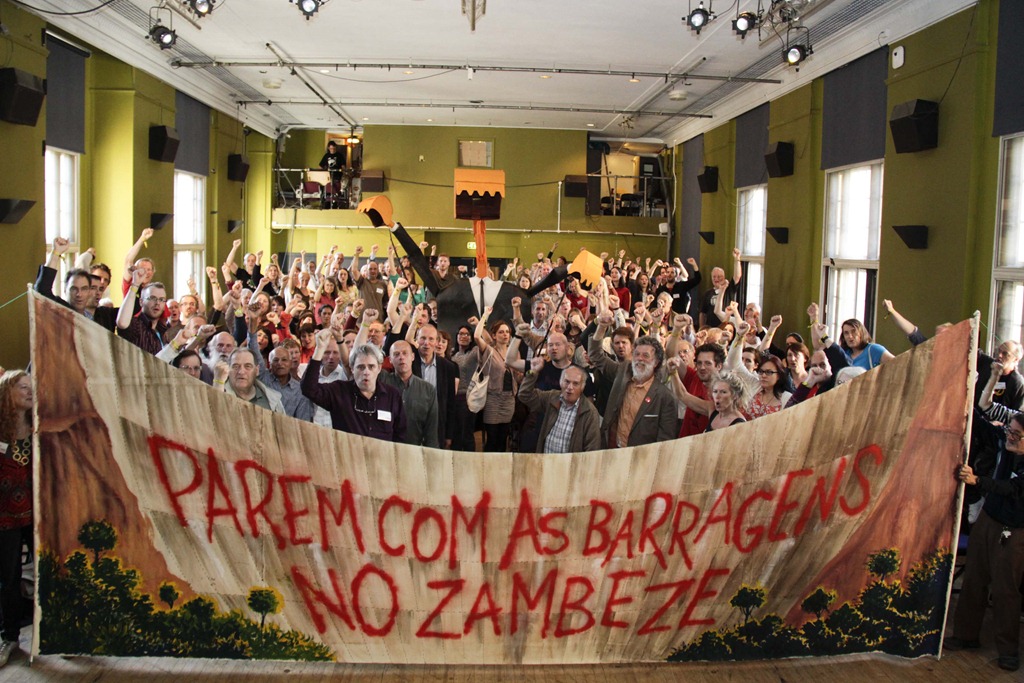
The Zambezi River, which is Africa’s fourth-largest river, will experience more conference2012_1130extreme floods as well as droughts. The report warns that;

“Dams being proposed and built now will be negatively affected, yet energy planning in the basin is not taking serious steps to address these huge hydrological uncertainties. The result could be dams that are uneconomic, disruptive to the energy sector, and possibly even dangerous.”

Even in the face of such damning information, the Mozambican government persists with its ill-conceived idea of building conference2012_1131yet another gigantic dam on the Zambezi, called the Mphanda Nkuwa dam, planned to be built about 60kms downstream from the existing Cahora Bassa dam.

JA has been challenging the Mphanda Nkuwa dam for over 10 years now, by constantly exposing the risks, injustices and inadequacies, such as the weak EIAs (Environmental Impact Assessments), inadequate rehabilitation plans, and lack of transparency and participation. But the government continues to ignore the glaring problems and keeps pushing it ahead.

As Dr. Beilfuss’ study reveals, dams conference2012_1132are not climate resilient, actually they are very climate prone. Mozambique is already 80% dependent on hydropower and will be negatively affected by climate change. In this time of a rapidly-changing climate, it is shocking that large dams are being pushed as a solution, whereas they are a damaging false solution instead.

Earlier this month, JA’s opposition of more dams on the Zambezi was supported by Friends of the Earth England, Wales and Northern Ireland (EWNI), which consists of 230 local groups including 100,000 individual activist members across Britain!conference2012_1136

EWNI invited JA to speak at their annual conference, held in London from 14th to 16th September, 2012. Sadly, JA’s Program and Research Officer was unable to travel to the UK since the authorities took an unreasonable 3 weeks to let him know whether or not they were going to give him a visa. JA is enraged with this and we plan to take up this matter with both the Mozambican and British authorities along with EWNI and challenge the difficulties in travel faced by southern activists who are critical of their government’s incorrect policies.

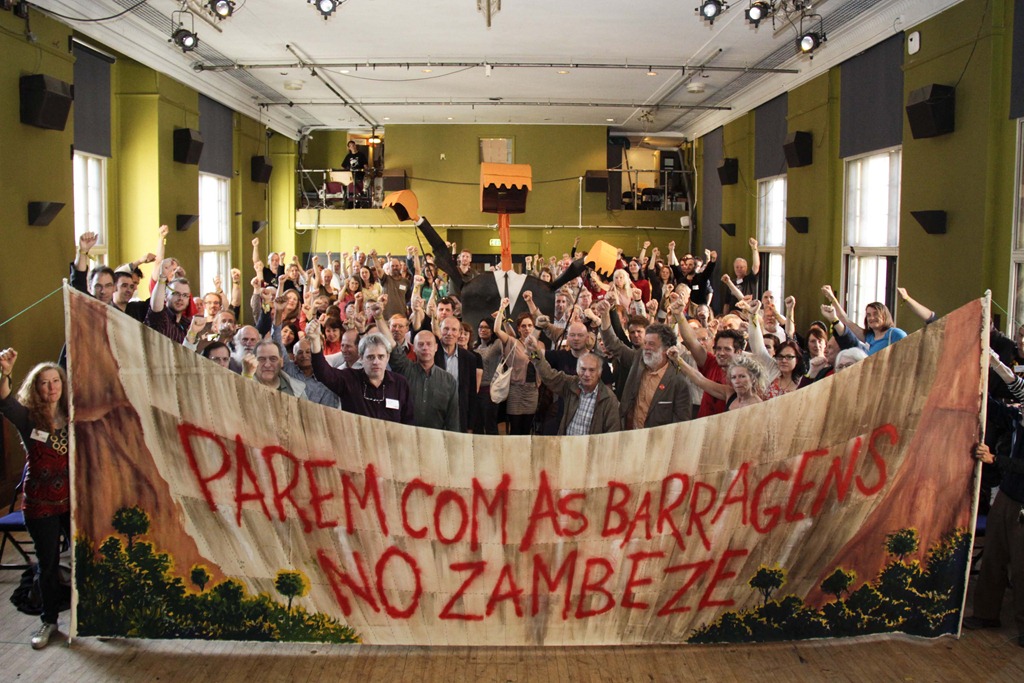
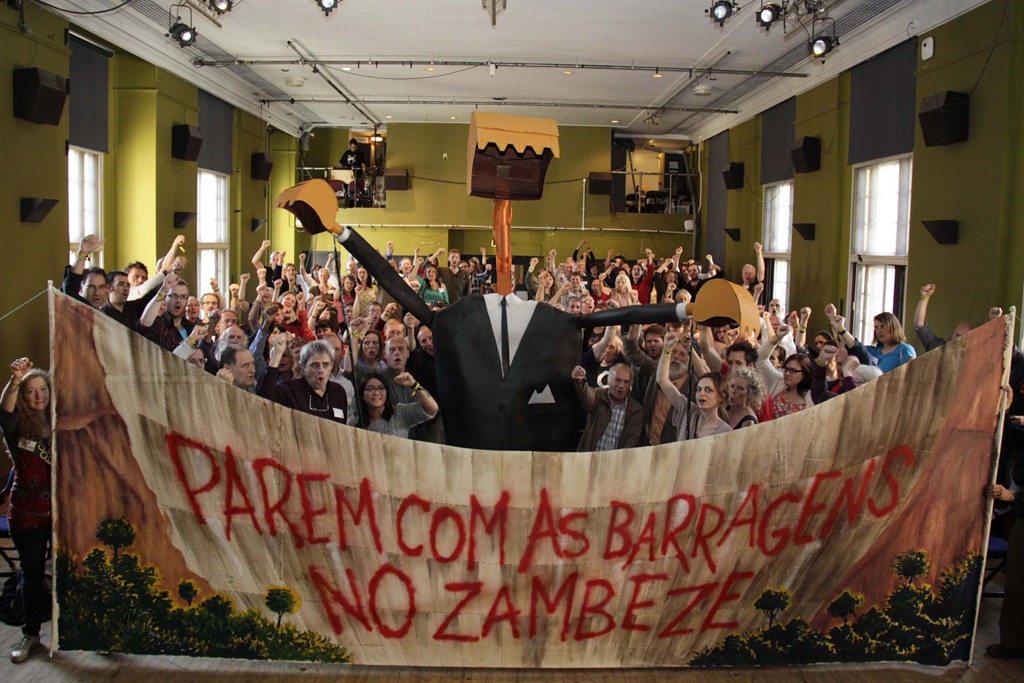
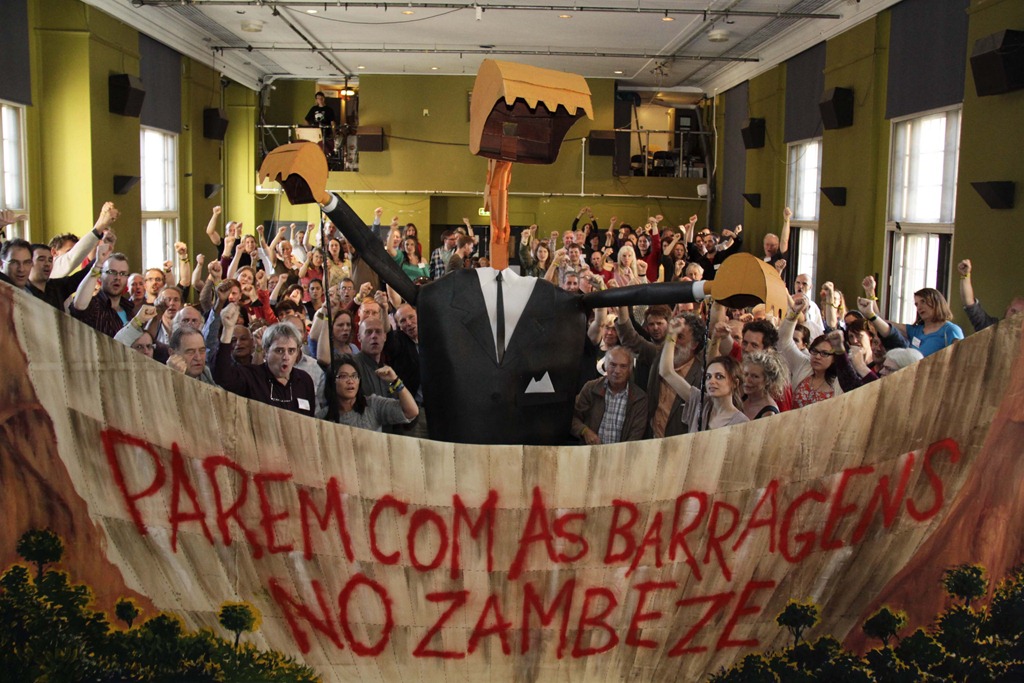
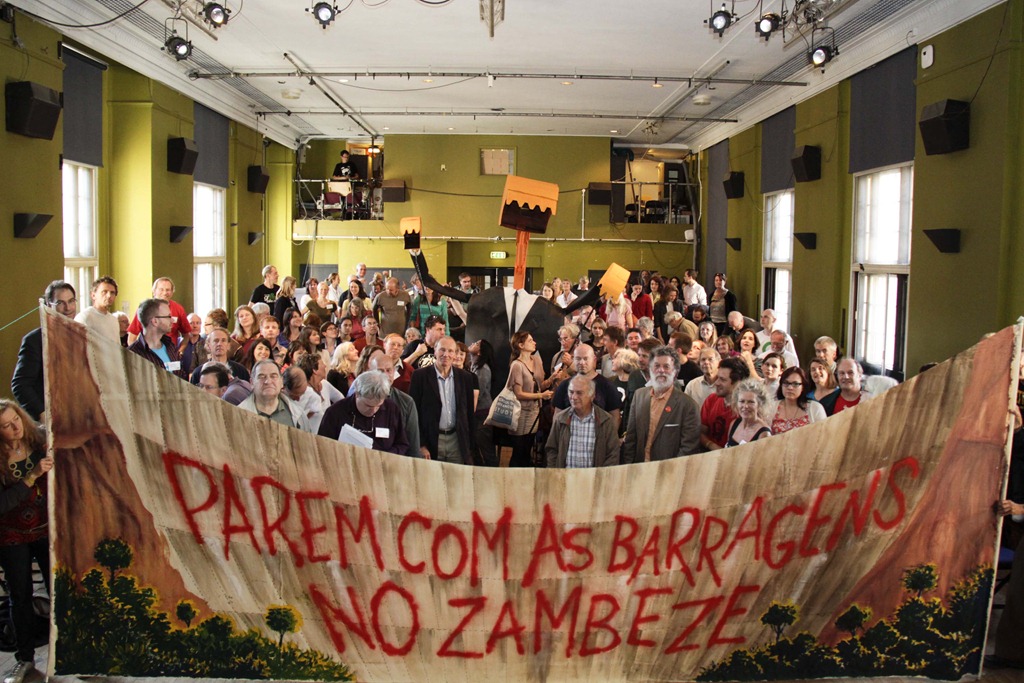
EWNI held a solidarity action in conference2012_1137support of JA’s campaign against the Mphanda Nkuwa dam. They joined their voices with ours to demand, “No more dams on the Zambezi. We want renewable energy options for Mozambique instead!”

Mozambican people need energy, but they need true solutions, not false ones like dams. JA commissioned an independent expert report in 2009 on the renewables potential in Mozambique. The results are very positive but of course there are huge political barriers to that but this is what we are supporting.

Read our Alternative Energy report here: http://www.internationalrivers.org/africa/zambezi-river/mphanda-nkuwa-dam-mozambique/building-mozambique%E2%80%99s-power-sector-through-investm

To read the International Rivers report on the Zambezi, see this link: http://www.internationalrivers.org/resources/a-risky-climate-for-southern-african-hydro-7673

Tagged , , , , , , , , , , ,