"Only after the last tree has been cut down, Only after the last river has been poisoned, Only after the last fish has been caught, Only then will you find that money cannot be eaten." Cree Indian Prophecy
Two week long PROTEST CONTINUES against TotalEnergies and its. Mozambique LNG gas project for RESETTLEMENT VIOLATIONS
IN Afungi Communities, Palma District, Cabo Delgado, Mozambique 15 November 2024, 12H00 CAT Justiça Ambiental!, Maputo
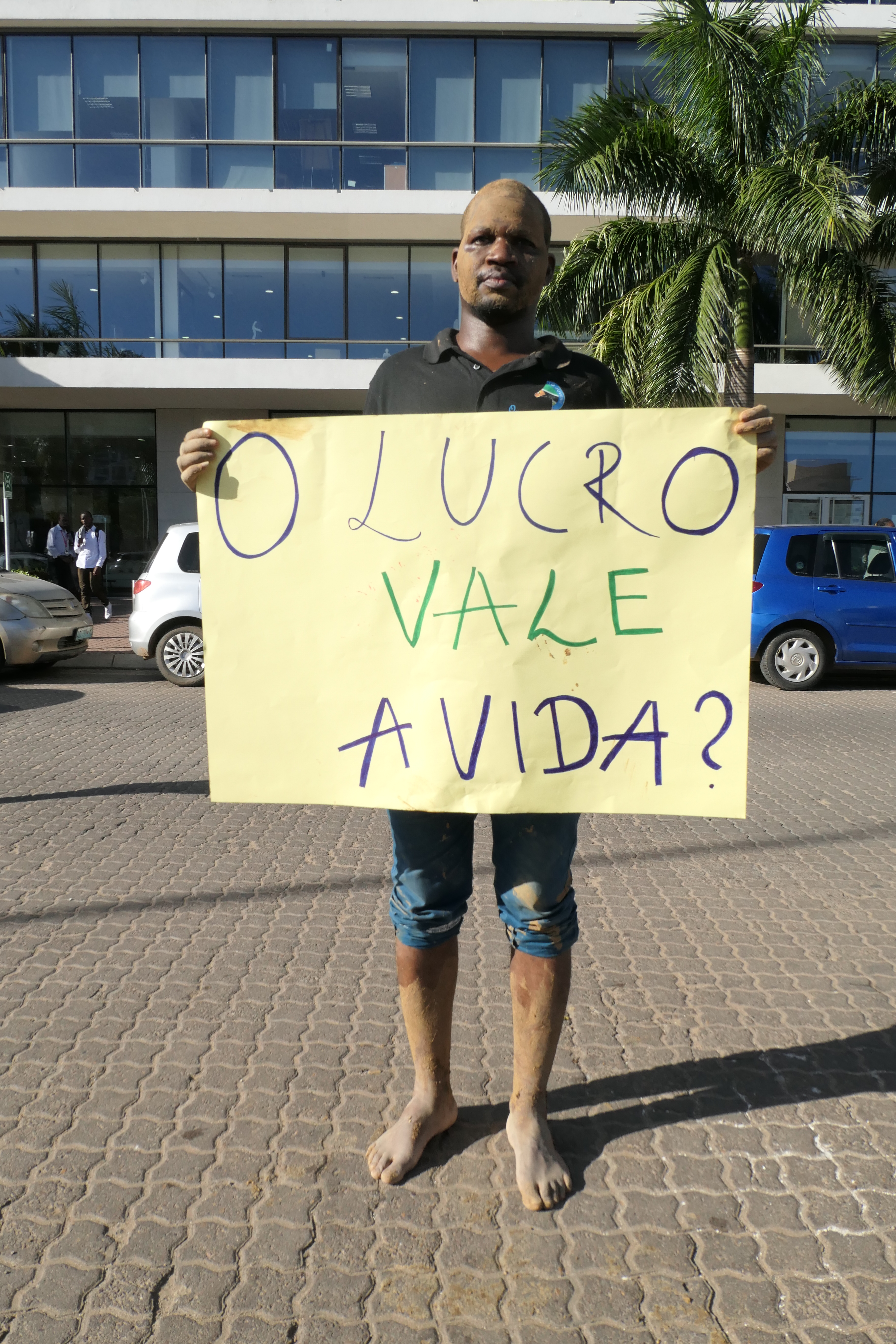
Demonstrations SHUT the gates of TotalEnergies Afungi site
This morning, members of the Macala and Mangala Communities, have been gathering again since early light to continue their two weeks of demonstration against the violations of their land rights by Mozambique LNG gas project, operated by TotalEnergies. Yesterday’s demonstration was attended by at least 400 people. This morning, the number of demonstrators is already high and still increasing. Following yesterday’s attempts by district and provincial governments to convince them to leave the area, the situation is escalating. This morning, families from a third community, Quitunda Resettlement Village, are growing the ranks.
“tal como estamos a parar a produção de alimentos, a empresa também deve parar as suas actividades”
“just as we are stopping food production, the company should stop their activities as well”
In a context of national strikes and demonstrations aimed at demanding electoral justice, the Mozambican people are taking advantage of this moment to express their discontent at the social injustice to which they have been subjected for 50 years. A visibly tired and angry people are taking to the streets to express their indignation at a precarious health system, the poor or non-existent quality of education, a bad transport system, the increase in crime, the lack of access to employment for young people and adults, and to seek measures to end the hunger that hangs over Mozambican families, at a time when – for 20 years – natural resource exploitation projects have been the promise of a better Mozambique for all Mozambicans.
The scene in Afungi today: the demonstrators have split into four groups and obstructed movement at four of the gates to the TotalEnergies Afungi site.
The resettlement process in Afungi has been underway since 2019, with the initial plan to resettle 556 families, and since then many more families have been resettled, yet few of these families have received replacement land for fields that they can use. In addition, there are those who gave up their land for fields for resettled families’ but have not been compensated to date. These are the main groups who have been demanding their rights at the company gates.
Justiça Ambiental says: “The resettlement process has been characterised by a large number of irregularities which has caused the discontent that culminated in these demonstrations.”
The communities state their concerns relate to:
Refusal to pay compensation for the agreements signed between the project and around 445 households, relating to the occupation of land intended for families resettled in Quitunda. These agreements were signed between October 2023 and February 2024. According to clause 4.5(a) of these agreements, the affected families are obliged to cede their land and all assets on it in favour of the project within 30 days of signing these agreements.
Refusal to sign agreements for the payment of compensation for the lands that the project mapped and surveyed, belonging to 158 households in the same two communities. The mapping was carried out between October 2023 and March 2024 by the company.
The communities of Macala and Mangala have made several complaints to the project regarding these matters. In August 2024 TotalEnergies’ representatives in the resettlement area met with the affected families and informed them that the project would not pay compensation to them. This decision was made without respect or consultation with the communities, and the company did not provide a reason for the decision.
This pronouncement not only created a climate of uncertainty and despair among the members of these two communities, but has also caused major frustrations.
It is a rule established by the project in all the affected communities for the families affected to immediately suspend any activity related to agricultural production or maintenance of the affected fields. This rule aims to combat opportunism on the one hand and to ensure that the project compensates the affected properties at the time of mapping. This rule has also been complied with by the affected families.
In the Macala and Mangala communities, 445 families have signed compensation agreements and 158 affected families have not yet. All 603 families affected by the project have been banned from using their land since October 2023. This is land that the project has already used – making roads through the middle of what used to be important food fields. The demonstrators explain that the frustrations in their communities are also very much about lost time.
Community members say they consider this situation to be unfair to them and threatening to their lives, because the land occupied by the project is the only source of their survival.
In September 2024, the members of the Macala and Mangala communities wrote a letter to the Palma district government presenting these concerns and frustrations. The letter also informed the PRM (police) district command and the district administrator about the communities’ intention to hold a demonstration. The demonstrations were postponed by the district administrator, who said they were in discussion with the provincial government about the complaints.
On 2nd November 2024, Macala and Mangala community members began their demonstrations. On that day, they closed the roads that were built through their fields and put up posters explaining their discontent. This did not have a negative impact on the work and movement of the project and its contractors.
On 8th November 2024, protesters gathered at the main gate leading to the entrance to the project camp. On that day the demonstration forced the closure of the entrance and exit of the project staff and their contractors. Community members interrupted their protest only after negotiations with the District Administrator at the site.
The demonstration resumed on 11th November 2024, lasting the whole day. At the end of the day, the administrator told the demonstrators that the Governor of Cabo Delgado Province would meet them on 14 November 2024 for negotiations that could provide answers to their demands.
At the moment, 15 November 2024, the governor and the administrator are inside the TotalEnergies Afungi camp, and information about what is being discussed there will only be known when they return to the population.
There is a clear indication that the gas affected communities intend to remain at the gates. Now, we await news.
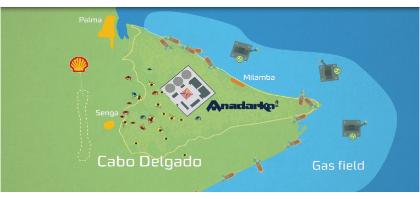
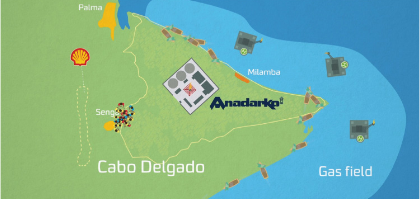
The Mozambique LNG project, operated by TotalEnergies, was allocated land rights to about 7,000 hectares of land on the Afungi Peninsula, as well as rights to coastal areas, for its infrastructure and operations, This required communities who were living and conducting their livelihoods in the area to resettle. The project is required to compensate those affected. Even though TotalEnergies declared in May 2024, that all compensations had been paid, this is evidently not the case. Testimonies from affected people can be viewed here [https://stopmozgas.org/from-the-ground/video-testimonies/]
There are complaints registered in all communities affected by the project regarding the lack of housing, machambas (farmlands) and partial or lack of compensation payments. In the communities of Quitunda, Senga, Mangala, Macala, Maganja and Palma Village there are people who are yet to receive compensation or who have received part of the compensation, and others who have not signed agreements yet. Evidence is emerging of even more violations of the rights of people in relation to the project activities.
Justiça Ambiental! (JA!) / Friends of the Earth Mozambique: JA! is a civil society organisation in Mozambique that supports environmental justice at community, national and international level. JA! views the environment as an holistic concept and thus environmental justice as the act of using the environment as a vehicle for ensuring equity and equality across society. In support of sustainable development they view the concept of equality on a grand scale, and as such, values the rights of future generations to a healthy and safe environment, to the same degree that that right is valued for humanity. JA! received the Silver Rose Just Transition Award 2023 for their fight for a just transition and against fossil fuel projects and land grabs in Mozambique. In 2024, JA!’s director, Anabela Lemos is being honoured with the Right Livelihoods Award. Justiça Ambiental! (JA!) is Portuguese for Environmental Justice! and ‘ja’ means ‘now’ in Portuguese.
Today, September 21, 2024, is the International Day of Struggle Against Tree Monocultures! On this day, we publicly denounce, once again, the numerous and serious impacts of industrial plantations on the lives of rural communities, including their livelihoods and the ecosystems on which they directly depend on.
Year after year we bring reports and complaints from affected communities… year after year we demonstrate how evident the negative impacts are on the lives of the vast majority of those affected, and that the “better life” promised by companies such as Portucel and Green Resources as well as by our Government, only served as a discourse to deceive communities into giving up their lands! The “empty” discourse of “development” that encouraged the land grabbing of community lands to make way for plantations was forgotten at that moment, all that remains is the memory and the hurt of the countless peasant families deliberately deceived! Some still believe that companies will fulfill the promises made, will build schools, bridges, hospitals and that they will eventually have jobs that will change their lives. Some don’t even realize that all these promises are actually the responsibilities of the Mozambican Government, and that these are the same promises made in all electoral campaigns, and little or nothing actually happens!
The denunciations, appeals and complaints from affected communities and social organizations and movements have been largely ignored year after year by the various State institutions responsible for looking after the interests of the People!
This year, we celebrate this day in a very different context from the previous ones, in the middle of the Election Campaign! It was exactly to escape this context that we held our International Meeting Against Monoculture Plantations, in celebration of the International Day of Struggle Against Monoculture Plantations, on the 22nd and 23rd of August.
The meeting took place in the Province of Manica, and was attended by members of communities directly affected by plantations from the companies Portucel, Green Resources and Mozambique Holdings, from the Provinces of Manica, Zambézia and Nampula, as well as members of Quilombola communities in Brazil also affected by plantations. The objective of the meeting was to promote exchanges between communities affected by industrial Plantations and to carry out visits to some affected communities, to understand their impacts on site. We didn’t see any development, we didn’t see any improvement in the living conditions, we saw eucalyptus plantations, which enrich foreign businessmen, where before we saw farms to feed the people.
At this meeting, organized in partnership by Justiça Ambiental, the World Rainforest Movement, Missão Tabita and AJOCME, we once again listened and felt the enormous negative impact that these plantations have on the lives of communities! Testimony after testimony we heard how they were deceived, how they regret having believed, we see the feelings of despair and anguish in the face of the new reality.
“Everything the company has done to date does not compensate for what we lost by giving up our land” – Affected by Portucel Moçambique plantations, Zambézia Province
“The company arrived with many promises, school, hospital, but nothing happened and now we can’t even produce well in the lowlands, because these trees are drying up our water” – Affected by Portucel Mozambique plantations, Manica Province.
“We were deceived because we didn’t know anything, they arrived with many promises, we accepted because we believed we would have a better life, they promised to fix the roads, school and hospital. Not even paying compensation for our land, others received little and others saw nothing. Now our struggle is really big, to recover our lands for agriculture, because we are peasants, that’s all we do” – Affected by Green Resources plantations, Nampula Province.
We urge the Government of Mozambique to reject all false solutions to climate change and for the people’s well-being, such as carbon credit projects, and invest effort and resources in supporting peasant agriculture, for a diversified and quality food production through agroecology in order to ensure food sovereignty; We urge the Government to promote and facilitate community-based initiatives to generate income and conserve our natural resources and important ecosystems! We also urge the Government to carry out, as a matter of urgency, a serious and impartial assessment of the social, environmental and economic impacts of the industrial plantations that it has promoted so much and continues to promote, as this will clearly demonstrate that these plantation model does not work.
Continuing to allow and promote false solutions will worsen the lack of political will and financing to implement real, decentralized solutions based on the needs, interests and will of the people.
Plantations are not forests! Plantations take away land, resources and ways of life…
We stand in solidarity, today and always, with all peoples and communities that resist the usurpation of their territories and ways of life!
The struggle goes on!
For rights, For justice, For a better world for everyone!
15 years ago, when the Mozambican government signed the contract with VALE, almost everybody in Mozambique believed that coal would develop the country. This investigation exposes part of the destruction that VALE Moçambique is preparing to leave behind now that it has announced an agreement to sell its projects to Vulcan Minerals for US $270 million.
Located in the Province of Tete, in Mozambique, the Moatize Coal Mine was officially inaugurated in May 2011. It is owned by VALE Moçambique and Mitsui Corp and it produces 11.3 million tonnes of coal per annum.
In its 2009 annual report, VALE stated that it had 1.087 million tonnes of coal resources (both proven and probable) across all its mines and projects, of which 954 million were in the Moatize mine. The report also stated that the projected depletion date of the project was 2046.
In January 2021, VALE announced plans to pull out of the project. Then, in December 2021, VALE announced it had entered into a binding agreement with Vulcan Minerals – a company that is part of the Jindal Group – to sell the Moatize coal mine and the Nacala Logistics Corridor for US$ 270 million. However, this transaction can only take place if the Government of Mozambique approves it.
But in those brown, black concession areas held by the transnational company in the hot province of Tete, we found a troubling pattern of violence, land-grabbing and death that completely contradicts VALE’s claim of “responsibly sourced” coal.
Between 2009 and 2010, VALE resettled 1,365 families – in the Cateme and 25 de Setembro resettlements areas – in order to install the Moatize mine. Along the Nacala Corridor, an additional 2,000 families were resettled. Most of the families resettled by VALE relied on subsistence agriculture and cattle raising in order to survive.
The resettlement areas were plagued by a number of problems which have already been widely documented, such as unsafe housing (e.g. faulty infrastructure and poorly installed electrical and sewage systems), andland unsuitable for subsistence agriculture (due to bad quality of soil, no access to water and being far from markets). Although these problems have long been denounced by affected communities and various organizations at national and international level, the vast majority of them are yet to be resolved.
The Mozambican Police (PRM), including its Rapid Intervention Unit (UIR), have been “used” by VALE in several occasions. They have dispersed and repressed protesters by beating them up or shooting at them with rubber bullets and even live ammunition, and they have arbitrarily detained local brickmakers (a.k.a. oleiros) – who still seek compensation for losing their livelihoods.
To make matters worse, local journalists are being intimidated and threatened by local authorities – including the Mayor of Moatize, Carlos Portimão – and told not to report on these issues.
“If you want to report about VALE, talk with its directors, not with the locals nor with the oleiros.” – local radio directors are telling their reporters.
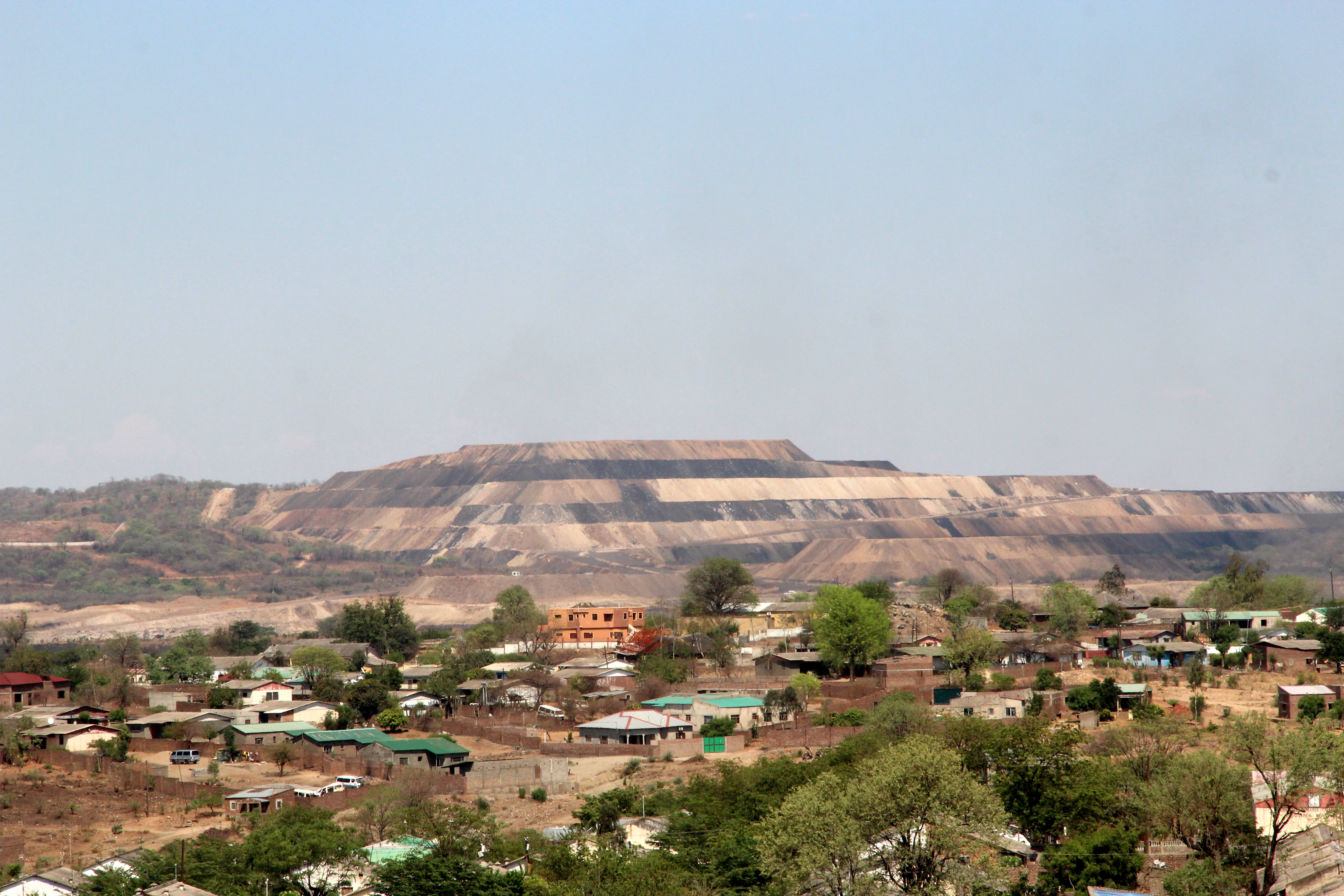
To make place for open-pit mining, the people who lived inside the concession areas were “forcefully removed” from their homes, from the small family farms that kept them fed, from the rivers that provided them with plenty of water and from the river banks where they produced clay bricks for a living. Today, “pushed” outside the fence, these people, along with tens of thousands of others who already lived in the outskirts of the mine, are facing a very harsh reality: there is no water left. The rivers that used to provide them with water for farming, cattle and other basic needs, have either been diverted to supply water to the mine, polluted or simply burried by tons of sand – a shameful and blatant violation of their human rights.
Unlike what some may think, the number of people severely affected by VALE goes way beyond those who have been resettled and the thousands of families who live in Bagamoyo, Nhantchere, Primeiro de Maio or Liberdade – the neighbourhoods that border the mine, under a permanent cloud of dust and whose inhabitants get sistematically sick from VALE’s pollution. The oleiros are a good example of a different kind of highly impacted group. Even though VALE has compensated some of those who were forced to hand over their land to the mining company, many others claim they were left out of the agreements.
In 2019, for example, when VALE started the expansion of the Moatize IIIMine, the company cut Primeiro de Maio, Liberdade and Paiol’s access to the Moatize River, affecting brickmakers and peasants from those communities. Since then, several meetings were held between the affected people, VALE and the government. More recently VALE changed the tone and started stating that no compensation is owed to any brickmakers. While this process is dragging on, more than 4,000 oleiros are having a very hard time supporting themselves and their families.
In the Province of Tete, with the abetment of the Mozambican government, roughly half a million people are currently abandoned to their fate: to live in a deadly ring of coal for (at least) 35 years.
VALE’s arrival and the communities’ downfall
Zita, a forty-some year old widow, told us she lived with her late husband Refo Agostinho – held by many as the best brickmaker in Moatize – before they were gradually forced to give their land away to VALE. Mother of four, she and her husband Refo had brick making as their main source of income. The money was used to feed their children, pay for school and cover other needs. “They all grew up supported by money from brickwork.”
In 1993, both unemployed at the time, with no one to support them and already with a daughter to raise (the eldest), Zita and Refo decided to make a life plan and thus guarantee their family’s livelihood. It was then that they began to work in pottery and brick production near the Paiol area. At first, they were generating around 30,000 Meticais (approximately US$470) per month (depending on the season). Soon, to meet demand, they had to hire workers.
“First we had five workers, then ten and then fifteen… Payment depended on the kind of work and on each worker’s results. Some workers could make 3,000 bricks a day for about 900 to 1,000 Meticais (approximately US$15). With the money from brick making we could buy curry, we were able to build our own house, we also bought a car. At home, Refo ran other businesses. With the bricks, he set up mills and he was a welder and a panel beater too. We also used our car to transport the bricks to where our clients needed them… For 20 years we developed this activity”.
Refo died of stress and grief: he had a heart attack
“Refo lost his life after things changed. VALE took everything from us. In Chipanga, where we used to make bricks, our property was large: one hectare. My machamba [farm] was elsewhere, in Canchoeiro. VALE took us out of there but they did not want to pay us compensation (for the land), nor for having us cease our activities. They would say process X had to go to position Y, but they refused to give us money, always talking but without a solution. So, they [the brickmakers] had to organise demonstrations to receive the money. When they protested, the police arrived, intimidated him and took him to jail. He stayed (in jail) for a week, then left and continued to fight until VALE compensated us. I’m not sure how much money it was, but I heard it was about 60,000 Meticais (approximately US$940).”
But the brickmaker’s life was never the same again. “After losing the land where he worked, Refo began to suffer from stomach aches and having blood pressure problems, and with that, he died. Now, I support the children and they all go to school. I depend of a single mill, which he left to us”.
Tampered community survey lists
We were in the District of Moatize when the representative of the Nhankweva brickmakers commission, Nordino Timba Chaúque, told us he was fed up with VALE’s neverending promises and unfulfilled agreements with local communities over the years. “The company is doing things the community doesn’t like.”
They started to list the brickmakers and peasants who had to be compensated in Nhankweva and other neighbourhoods in 2020, but the process is still unfinished. “A long time ago, we met with VALE to discuss these payments. The company promised us that it would pay us all – a group of 571 brickmakers – and each of us would receive 125,000 Meticais (approximately US$1960). We stopped our activities. They only paid for the trucks that took our bricks from the place they occupied to somewhere else. We were not compensated. This Wednesday, again, the company told us to come back on December 22, 2021.”
But from one Wednesday to the next, the situation remains unresolved, and now VALE says it will no longer pay any compensation to these brickmakers.
“About 500 or so people, each received 60,000 Meticais (approximately US$940) to stop their activities, but they still had to pay us 125,000 Meticais each (approximately US$1960) – the value of the compensation. At one point VALE just said that it no longer recognized us and that we are not part of the registration lists.
VALE subcontracted a company – MP – to carry out the registration. The people from that company were trained and qualified professionals. But later on – in order to stall or avoid payment – VALE told us that those lists, made by their people, had been tampered by infiltrated people from the community! VALE surveyed Chipanga in 2009. They know the job. One cannot say that there were infiltrated people from the community because there were local authorities in place: government staff, technical staff from the municipality too. So, where and how did the people infiltrate?! The entire local authorities from all the neighbourhoods followed this process” – said another brickmaker.
VALE and the government keep playing hot potato. “These are VALE’s maneuvers to avoid paying us. They are the ones who used to do the registration, but they chose MP to do this registration. So, they must have the numbers. We have 3,000 people [on our list].” – says the President of the brickmakers commission.
Former employees of MP confirm that VALE claims to have 5,000 people on its list and accuses the company’s employees of tampering with the numbers. According to them, this is but a maneuver by VALE to stall the process. “We were even expelled! They confiscated our private phones and searched them. They accused us of putting extra people on the lists in exchange for money, which is not true.”
Little to nothing has been done to address all the 2008, 2010 or 2012 pending processes and cases regarding compensations, new land allocations and social projects
Paulo Vítor Maferrano, 41 years old, from Chipanga, Moatize, claims that he too made around 30,000 Meticais (approximately US$470) per month.
“Chipanga is our area. The mining company started occupying it in 2008. In the beginning, VALE said that it would not occupy Chipanga, so people who were removed from other areas came to Chipanga to make their machambas. But suddenly, VALE started moving people out of Chipanga too, which meant they had to negotiate with those people too. 2021 is about to end and people have not been compensated yet.”
Paulo’s reality is no different from that of other brickmakers. He was also left without his machamba and without his brickworks – his main source of income. “We already tried to send the documents. We went to the government, and VALE really did say that it would not pay us. So we tried to turn to other forums. (…) VALE only started working on this specific area in May 2021, these are the new lands VALE is expanding to. Neither the company nor we know the extent of the mine concession. When VALE arrived, they said that first they were going to give us 60,000 Meticais (approximately US$940) so we would leave our fields and stop our activities immediately, and then they would give us 125,000 Meticais (approximately US$1960) in compensation. But so far, they have not given us anything.”
Police violence against brickmakers and local communities
Cases of police violence – carried out by State forces to protect the interests of the mining company – date back to the beginning of the project. People have been arrested, beaten, shot with rubber bullets and sometimes real bullets and tear gas has also been used on citizens, including on pregnant women and children.
On the 20th of November 2021, four members of the Nhantchere community, who had been representing families whose homes have cracks on the walls caused by the mine explosions, were unjustly detained and remained in prison for 3 days. Shortly afterwards, on December 23rd, two brickmakers were detained for five days during a meeting where they were debating with their community what to do about VALE’s refusal to pay compensation to the expropriated brickmakers and peasants. Community members who play leading roles in the negotiation processes with VALE tend to suffer increasing reprisals and intimidation, including arbitrary and illegal detentions.
Vasco was shot inside his own home
On the 6th of May 2021, tired of VALE’s lack of interest in resolving the compensations and payments owed to people from the Primeiro de Maio neighbourhood who lost land and access to the river, a group of brickmakers and peasants occupied Section 6 of the mine and blocked the road that grants access to it, demanding answers from the company. This demonstration ended peacefully, when brickmakers reached an agreement with representatives of VALE and the government – who went to the site – and agreed that the matter would be debated the following day with the entire community, in the neighbourhood square.
But the agreed meeting on the 7th of May 2021, in Primeiro de Maio’s square, was a ‘ambush’ set up by VALE and the local government. Representatives of VALE and the local government did not come to the site. Instead, the Police – including agents of the Rapid Intervention Unit (UIR) – showed up at the square and decided to intervene by repressing the community that was lawfully demanding its rights.
Vasco was at home. At the square, just outside his door, the population was gathering, eager to hear what the company and the government would have to say about their destroyed farms and lost lands. Neighbourhood leaderships insisted on summoning all the people in the community to await the arrival of government and VALE representatives.
“Suddenly, we realised UIR and the people were moving from one place to another. There were gunshots. They threw tear gas. People were running around, so I decided to pick up my 6 year old son from school immediately. When I got back home, we got inside the house and I shut the door. But everytime they have a meeting here at the headquarters, they come to borrow my chairs, and that day I had lent the chairs to my neighbour. So, amidst the havoc, the neighbour came to return the chairs. He knocked on the door, I peeked out the window and only saw him. I didn’t know he was accompanied by a UIR agent. I opened the door and he shot me in the stomach. No questions asked. Nothing. He just said ‘these are the agitators’ and fired the gun at me.”
Vasco was abandoned and left to die
“I was in pain. My 6-year-old son managed to take my phone out of my pocket and called his mother to inform her of the situation. His mother called a taxi driver and they managed to take me to the local hospital, but due to the serious situation I had to be urgently transferred to the city hospital [in Tete], where a doctor helped me promptly. If it hadn’t been quick, I don’t know what would have happened. I arrived unconscious and only woke up after the operation. I had a bandage around my belly, when I tried to find out I was informed that they had operated on my belly and that I had ‘dirt’ inside. They had to operate to remove it, I was in hospital for 7 days.”
Vasco had black particles inside his body – ‘dirt’. “Yes, the doctor informed me. It was because of the bullet I got in my stomach. It could even be because of the dust we inhale every day.”
Unemployed at the time, Vasco was applying for a job opening. “They called me and I was still in the hospital, but because I was in no condition to go, I asked them to give me another week, and they accepted.” Still weak from both being shot and the surgery, he was called in for the interview. At the time, with no choice, and after a long time looking for a job, he decided that, weak or not, he was going to show up at the interview. “It was sad. I was called in, and I needed to find a way to earn some money while my wound was healing. I went there but I was still unwell.”
While Vasco was in hospital, his wife sustained the family by selling cookies and other casual work from home. But since he was shot, Vasco’s health is not the same. He can’t do tasks like weeding or carrying water, and at work he has to maneuver the car using the seat belt.
“When I put on the seat belt, it goes through my belly here, and I still have stitches. I have been feeling pain whenever there are changes in temperature or when it is about to rain. The people who did this to me were not held responsible and I did not have any support. I would like to point out that the government was aware of what happened to me, and nobody came here to, at least, see how I was doing these days. So far, I have no information or response from them”.
Prosecuting VALE
At least two cases were brought up against the mining company VALE Moçambique regarding access to public interest information: one by the non-governmental organization Justiça Ambiental (JA!), and the other by the Mozambican Bar Association (OAM).
JA! demanded that “VALE’s environmental monitoring reports between 2013 and 2020 be made available, as they are public documents that should be widely known, especially by the communities that have to live with VALE’s operations on a daily basis.”
VALE claims to be a “transparent company” but denies access to documents of public interest, trying to argue in different ways against court decisions that, more than once, went Justiça Ambiental’s and OAM’s way. In the appeal filed by the mining company, VALE argues that “there is no doubt that the reports that contain the information requested by the applicant […] are of a confidential nature”.
This argument was refuted by Justiça Ambiental, who stood its ground.
Regarding case No. 26/2020, the Administrative Court – through Ruling No. 130/2020, of December 30th 2020 – gave reason to the civil society organization, concluding that “the intended information cannot be classified as confidential” since “it has to do with mining operations, namely, whether or not they are harmful to the environment” and reiterated that “the Constitution of the Republic defines the environment as a citizen’s right and determines everyone’s duties regarding this right”. Yet again, VALE appealed this decision.
OAM, in turn, asked the court to subpoena the mining company VALE Moçambique, S.A., to make available various information of public interest, including the Memorandums of Understanding and other agreements signed between the Government, VALE Moçambique and the affected communities; information regarding the total amount of taxes paid by VALE to the Mozambican State; information on ongoing resettlement processes; among others.
The Administrative Court of the City of Maputo agreed with the OAM and mandated VALE to provide the information in question. Not satisfied with this decision, VALE filed an appeal. Once the process was filed and the allegations and counter-claims presented were analyzed, the Counselor Judges of the First Chamber of the Administrative Court – through Ruling No. 119/2020, of December 15, 2020, referring to case No. 131/2020 – decided to dismiss the appeal filed by the mining company, for lack of legal basis to reverse the appealed decision, and agreed with the previous decision that condemned VALE for violating the right to information of public interest.
VALE S.A.’s posture (and VALE Moçambique is no exception) in regards to providing any relevant information of their impacts is renowned. Publicly, and in meetings, they will tell you they are keen to share any information requested by citizens and/or civil society organizations, but they never do.
In April 2021, during the General Shareholders’ Meeting of VALE S.A. in Rio de Janeiro, Brazil, some company’s shareholders voted not to approve the management report, as it omitted important information about the project in Mozambique. These shareholders also requested numerous documents of public interest, including documents requested by Mozambican civil society organizations regarding VALE Moçambique’s activities in Moatize. Senior executives of the company pledged to send the requested documents, but these promises, too, were not kept.
Despite so much reluctance to inform the general public about the real impacts of its activities, VALE strives to greenwash its image and constantly claims to be a transparent, ethical and honest company.
Continuous and systematic Human Rights violations
In Moatize, thick black clouds blanket the skies every time dynamite is blasted in the mine. The air is polluted, the surfaces are always covered with black dust, and maize flour can no longer be left to dry in the open air. The roads, used by VALE’s trucks, are a source of dust too.
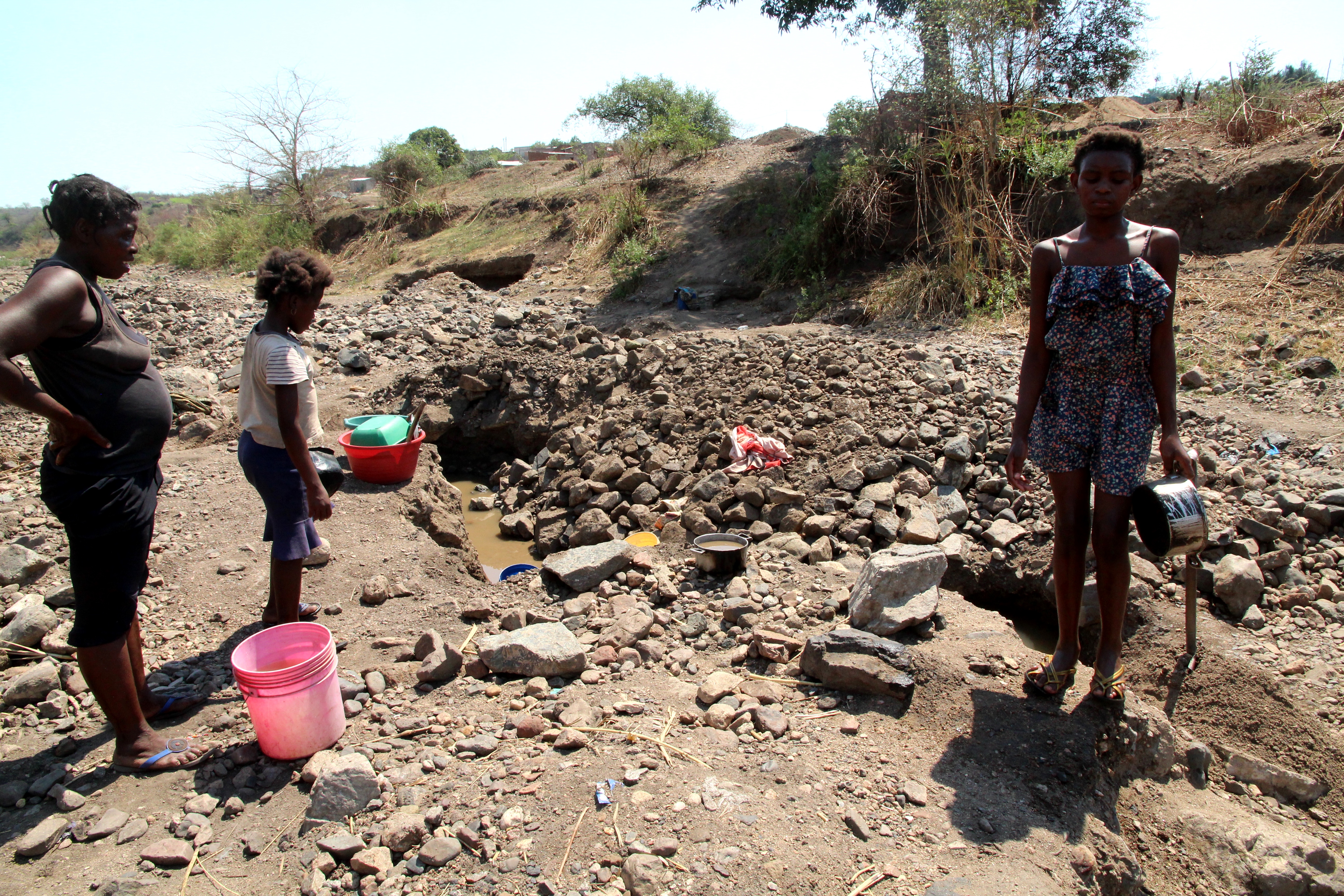
There is a great lack of water, and the water that comes out of the tap is black like coal. The company closed, diverted, or polluted the rivers that fed thousands of people. Animals and plants are struggling too. The cattle were left without pasture and are surviving on garbage dumps scattered throughout the city of Moatize. Walking through the city, you may even get confused, and think that dogs are unusually large in the area, with leashes and all. But no, it’s cattle turned stray.
With the violent and almost daily explosions in the mines of Moatize, more than 1,000 houses in the neighbourhoods of Primeiro de Maio, Nhantchere, Liberdade and Bagamoyo have cracked walls, and many have already collapsed. These cracks in the houses of the mine’s neighbouring districts have become a registered trademark of the company in the area. The affected families have for years been demanding compensation for these damages and a decent resettlement in a place where they do not have to live with this situation.
The surroundings of VALE’s mine are also full of tragic stories that show the true face of their so-called “development”.
In September 2014, little Ester, from Primeiro de Maio, lost her life while playing in a hole opened by VALE. She was accidentally buried alive by a dump truck hired by the mining company. All that VALE did was to give the child’s familly 5,000 Meticais to help with the funeral expenses. In November 2020, in Cateme, a child died and four others were seriously injured while playing in their grandfather’s machamba, inside the resettlement built by VALE. The children found a buried object: an old war mine that exploded. Another tragic case concerns a group of children who were bathing in an open hole abandoned by VALE, which had been filled with water during the rainy season. Two children drowned because they didn’t know the hole was so deep. Neither the company nor the government were held responsible for any of these cases.
Open-pit mining: sky-high levels of pollution and public health endangerment
“Here, when people cough, black stuff comes out (of their throats), and the doctors say it’s mine dust. VALE, the government and a team from the hospital came to test people for a week. They saw that they had a cough, and that they were spitting out black things. Hence, the company never came here to give us an answer”, said one of the community members.
The levels of water and air pollution in Moatize put thousands of people at risk, many of them ending up in hospitals with respiratory problems, acute cough, tuberculosis. But for the mining company only profit matters. In 2021, the pollution situation in Moatize worsened.
According to laboratory analyses carried out on water (Liberdade neighbourhood) in 2021 at JA’s request, water and air pollution are three times above the national and international limits established by law. For example, Cadmium (Cd) levels of 0.009 mg/l were recorded in VALE’s concession area, while the levels considered admissible by Mozambique and the World Health Organization are 0.003 mg/l. Cadmium is a heavy metal that causes damage to the nervous system and can cause disturbances in fetal development, even in low concentrations.
According to hospital sources, most of the people treated at the Moatize Hospital are diagnosed with tuberculosis.
“Every day, here at the hospital, we receive a greater number of people who are diagnosed with tuberculosis due to the pollution caused by VALE here in Moatize. Pollution is affecting a lot of people, this company is hurting us, even I am feeling sick. I saw many people drinking dirty water from the river, the water is not coming as it used to. With Section 6, that VALE has just opened, all the dirt, chemicals that leave the mine, flow into the Moatize river, up to where the Revúboé river flows. This is just wrong.”
*This investigation was conducted in partnership with Mozambican NGO Justiça Ambiental JA!
JA!’s friends in Portugal contest the AGM of Galp Energia, part of the destructive gas industry in Cabo Delgado
Cabo Delgado, the northernmost province of Mozambique is being ripped apart by the gas industry. Companies like Galp, who are part of the industry are taking homes, land and livelihoods from people who have lived, farmed and fished there for generations. And now, the gas industry has brought the disastrous COVID-19 pandemic to Cabo Delgado province, in Mozambique, and it is the people, and surrounding communities who will suffer.
Last week, Portuguese company Galp Energia held its Annual General Meeting (AGM), and JA!’s friends in Portugal created a tremendous online direct action that brought over 400 people together. This is just the beginning of what will clearly be a fierce and powerful fight: Galp Must Fall!
JA! is part of the No to Gas campaign! in Mozambique campaign that is targeting Galp as one of the companies involved in the devastating liquid natural gas industry in Cabo Delgado in the north of Mozambique, where multinational fossil fuel giants like Eni, Exxon and Total are committing human rights and environmental violations, and irreversibly damaging the climate to extract gas. Galp owns 10% of Coral LNG, one of these projects.
The action was created by Climaximo, a Lisbon-based organisation working on climate justice, just transition and energy democracy; 2degrees artivism, a Lisbon-based artivist collective; and Greve Climática Estudantil, Portugal’s Fridays for Future hub. JA! Has been working closely with Climaximo leading up to this action.
As part of Galp Must Fall, three Climaximo activists took part in the AGM and asked questions directly to the board of executives. And while this was happening, more than 400 people were watching a live show with real-time concerts, talks and an online demonstration.
Sinan Eden, a Climaximo activist and one organiser of the action, said “Galp Must Fall is an action that had various elements. It was online and offline, inside and outside the AGM, in connection with national and international struggles, with activist and artivist elements.
We consider Galp’s AGM as a crime scene and the global fossil fuel industry as international organized crime against humanity. So our approach was to denounce the social and climate injustices of Galp in all spaces available.”
This year, like most AGM’s around the world, the COVID-19 pandemic lockdown meant that the AGM was virtual, and shareholders had to stream in. This meant that the CEO or Chairman could cut off a shareholder with a click of a button, so the activists had to ask very succinct questions. The three activists who attended had to submit questions in writing, which the board then screened before asking it to the CEO.
Sinan points out that, “In Portugal, the tactics of entering in AGMs was nonexistent so far in the social movements in general. Climáximo’s theory of change informs us that a dialogue with the industry would not produce real solutions, so our approach inside the AGM was more contesting and denouncing than debating.”
Activists inside the AGM:
The Climaximo activists asked questions (they should have been four, but Galp blocked the fourth at the last minute claiming some administrative issues). They submitted 15 questions, mostly about Mozambique, which JA! Had worked with them on. They received 5 responses from the board, which were very evasive and vague, repeating the usual rhetoric about Galp’s commitment to economic development in Mozambique, as they claim to do in every country in the global South where they have projects.
One of the activists who was part of the AGM, Manuel Araujo, described his experience at the AGM: “We asked about the ongoing climate crisis and their criminal business model of resource and social extractivism, which they answered by repeating their commitment to natural gas as a transition fuel, even though it is known to be a major source of GHG emissions. Predictably, they had no comment on the compatibility of their planned 50% increase in fossil fuel extraction over the next ten years with the emissions goals set in the Paris agreement.”
Manuel says the CEO, Carlos Gomes da Silva, made a particularly absurd argument, comparing the hypothetical emissions cuts obtained by replacing every car by an electric car (3.5%) with those obtained by replacing coal with gas in electricity generation (15%), as if these were the only two alternatives on the table.
They also asked what is usually the most uncomfortable question for executives – Why does the board and other top level executives earn absurdly high salaries and why do shareholders receive a ridiculous € 580 million, when this money could be better spent on a program of just transition for the company’s workers.
In 2019, da Silva received € 1.8 million in remuneration. The salaries to the board in total was € 6.6 million, half of which were bonuses.
Manuel says: “We got only evasive answers, but it was worth it to hear the President of the GM Board ask the Company Secretary what makes it legitimate for the CEO of Galp to earn 197 times the minimum wage.”
Ines Teles, who also asked a question, took this away from her experience: “During the AGM, the management of Galp revealed once again their profound disregard for questions related to climate and social justice. They are unable to see past the profits they reap from the sea of destruction they cause, proudly distributing their dividends amongst themselves.”
Galp Must Fall Live
While this was happening, “outside” the AGM, 400 people took part in the other component of the Galp Must Fall direct action, which included a twitter storm, live interviews with activists, including from JA!, an online demonstration, and the shareholder questions also streamed live.
Part of this action was Galp Must Fall Live – a live show, via instagram, convening emergent artists and long-standing activists from countries that Galp is co2lonizing: Mozambique, Brazil, Guinea-Bissau and Cape Verde.
The organization of this live event was made possible by 2degrees artivism, and Greve Climática Estudantil.
Diogo Silva, one of the organisers of the action from 2degrees artivism, and believes that art is crucial for revolution says: “This event marked a lot of firsts in Portugal: the first time Portuguese activists stormed Galp shareholder meeting; the first direct action involving mostly online means; the first fully-online live artivist action; and the first online demonstration.”
From here on, our goal as an artivist community based in Portugal is to build stronger links, to empower each-other and to mobilize a new generation of artivism for climate justice. Another world is possible and it’s not our revolution if art is not involved”.
This action and this year’s AGM was the first that the No to Gas! Campaign and JA! Has confronted Galp and built awareness specifically about this company. The amount of attention and support that Galp Must Fall received was very inspiring, the social media following was great, this was is a strong beginning to what is clearly going to be a powerful collective campaign. Next year will be even stronger.
We will certainly be updating all of you, our friends on what comes next in the Galp Must Fall campaign.
Sinan says: “I’d like to be clear about one thing: We must dismantle Galp, because if it instead collapses, we all will be underneath its ruins. Galp must be dismantled by a democratic, planned and deliberate process. A rapid and just transition and climate justice based on global solidarity are only possible through a publicly owned, democratically controlled, 100% renewable energy sector.”
And lastly, some words from Daniel Ribeiro, of JA!:
“Galp is planning to make millions in Mozambique, at the cost of grabbing land from peasant communities and sea access of fisherfolk, loss of their livelihoods, human rights abuses and conflict. Galp’s investment is also serving as an amplifier of the country’s corruption, injustices and even assassinations of activists and journalists. Galp must stop, Galp must fall, if they do not want the blood of those crimes on their hands. They must start putting people before profits.”






 JA4change