Category Archives: Uncategorized

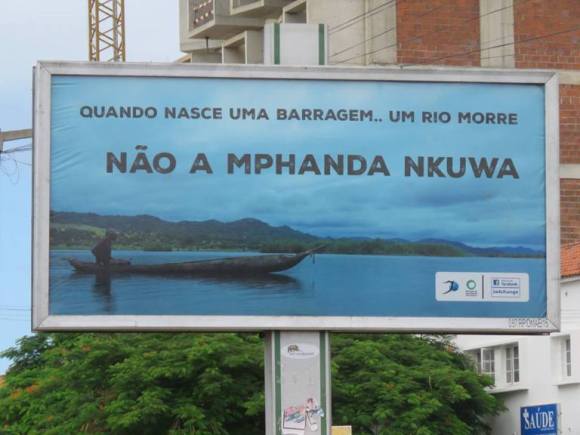
LETTER to the Mozambican Government about Mphanda Nkuwa

mn

Please note: This letter is addressed to the Implementation Office of the Mphanda Nkuwa Dam Project, which according to local news, was created by Ministerial Decree in February 2019 and would be functioning under the Ministry of Mineral Resources and Energy (MIREME). However, we could not find any information about who or where to deliver this letter, not even in MIREME. Due to this, JA! delivered this letter only to MIREME and MITADER (Ministry of Land, Environment and Rural Development).

TO THE IMPLEMENTATION OFFICE OF THE MPHANDA NKUWA DAM PROJECT

cc:   Ministry of Land, Environment and Rural Development
Ministry of Mineral Resources and Energy

Maputo, 14th of March 2019

JUSTIÇA AMBIENTAL (JA), a Mozambican civil society organization committed to the defense of environmental and land rights of local communities, hereby expresses its total repudiation for the Mozambican government’s persistence on seeking to make feasible and implement the controversial Mphanda Nkuwa hydroelectric project, proposed for the Zambezi River, in the Tete province. Here are some of our concerns about the project, highlighting some of its potential environmental, climatic, social and economic impacts.

Brief history of the Mphanda Nkuwa project

In the 90’s, the UTIP (Hydroelectric Projects Implementation Unit) was created with the mandate to implement the Mphanda Nkuwa project proposal. Thousands of dollars were spent on feasibility studies and on the environmental impact assessment, among several other studies, most of which of poor scientific quality. Years later and after thousands of dollars were spent, UTIP was extinct. However, this did not mean the Mozambican people were any closer to reaching a viable and sustainable energy solution.

In the 2000s, the Mphanda Nkuwa consortium was established, with EDM holding 20%, Insitec 40% and Camargo Corrêa 40%. At this stage, more studies were elaborated and thousands of dollars more were wasted. The Environmental Impact Assessment (EIA) was approved in 2011, with huge and serious flaws, leaving many of the issues and concerns we rose at the time unanswered. This consortium was equally extinct before the project got to move forward.

In the past two years, this project started being mentioned as a government priority again. Hence, in February 2019, the Implementation Office of the Mphanda Nkwua Dam Project was created by Ministerial Diploma. In March, an international open tender was launched for the selection of the consulting firm that will assist the Executive in designing the legal and financial structuring strategy of the Mphanda Nkuwa Dam Project. The consultancy includes the energy transport system and associated infrastructures. Everything indicates that we are going to witness, yet another waste of thousands of dollars in endless consultancies and studies that will, most likely, remain in the secret of the gods.

What we would like to know from our government is how much money has been invested in this project so far – since the UTIP, through the controversial and incomplete EIA, up to the present day? What are the concrete results of the thousands of dollars that have been invested over the past 19 years?

Regarding the environmental, climatic, social and economic impacts of mega-dams, in particular on the Zambezi River

The project establishes that the Mphanda Nkuwa Dam will be built just 70km downstream from the Cahora Bassa Dam, which could aggravate the already serious negative impacts of existing dams along the Zambezi River.

This project will have very serious social and environmental impacts (in particular for local communities), and there is no chance it will bring the country the economic benefits claimed by its proponents. The EIA approved in 2011 did not contemplate the risk of induced seismicity, it did not contemplate the impact of climate change on river flow (and the consequent reduction in estimated energy production), nor did it  contemplate the financial risk that the project represents. Why does our government continue to ignore all these facts and flaws?

The Zambezi River is the 4th largest river in Africa and an estimated 32 million people live on its banks, 80% of whom depend directly on the river for subsistence through agriculture and fishing. In the specific case of the Mphanda Nkuwa project, the environmental unfeasibility of which we speak is not only justified by the fundamental perspective of ecological preservation, since it also translates into a blatant and unquestionable economic unfeasibility. Taking into account the reports of the United Nations Framework Convention on Climate Change and International Rivers, even without the dam in Mphanda Nkuwa, the Zambezi is already one of the rivers in Africa that will most suffer the impacts of climate change (partially because of the greenhouse gas emissions caused by mega-dams) due to intense droughts and floods that are projected to the continent in the medium and long term. Such climatic events will certainly jeopardize the energy production of its various dams – especially Mozambique’s dams, which stand at the end of the line. Specifically regarding the flow of the Zambezi River, studies predict that by 2050 there will be a considerable reduction of 26-40% of its flow. This data is not being considered, nor is it even being debated. Will we have to wait until 2050 to see this scenario materialize along with all the negative impacts on the local communities and on the rich ecosystem of the Zambezi Delta to believe in it?

Countless studies and concrete examples demonstrate that it is a mistake to continue to insist on the construction of large and mega-dams for energy production. An Oxford study looked at all the dams built between 1934 and 2007 and concluded that large and mega-dams end up 96% more expensive than the initial project, and take 44% longer than estimated to get built. There is also sufficient evidence that there is an urgent need to make an energy transition and diversification, by abandoning traditional and obsolete sources of energy and adopting clean and renewable energy sources. There are currently countless countries that have distanced themselves from this type of solutions, in the last 100 years, in the US alone, about 1150 dams have been demolished!

The recent floods on the Revuboé River, which are affecting the centre of the country and all the communities living along the banks of the this river and of the Zambezi River, are yet another prove that dams (especially those of this size) are not suitable to mitigate the impacts of floods and droughts. On the contrary, large and mega-dams exacerbate these impacts, since their main (and, in most cases, only) purpose is the generation of hydropower. To reach their maximum production capacity, the reservoirs must accumulate as much water as possible. In case of floods, the dam is forced to release the stored water, causing even more destruction in the existing communities and infrastructures along the river bank.

Without a doubt, energy is a fundamental and indispensable asset for the development of a nation, however, there is enough scientific evidence that large dams do not bring the desired benefits, specially for those who need them the most. The truth is that the energy produced in mega-dams does not benefit the local populations and serves mostly for export and supply of energy-intensive industries, as the Cahora Bassa Dam exemplifies. The successive and unannounced high increases in the price of energy that Mozambicans have faced over the past five years, clearly show that our government has not been able to properly manage the energy it already produces, nor has it been able to plan properly and seek solutions that take into consideration the present shameful and sad situation of crisis in which the country is immersed.

In conclusion:

Given the information presented above, and in numerous studies and scientific analysis that we can make available if you are interested, we must ask you: Why are we rowing against the tide? We demand the government explain to us clearly and comprehensively the contours, objectives and the rational behind this project, including:
• Where does the investment come from and in exchange for what?
• Why is this project a priority for the country (taking into account the current socio-economic situation)?
• Have other alternatives been considered? If so, which ones?
• Who will be responsible for compensating the communities that, for over 19 years, have had their future on hold, unable to invest in their community and to build any infrastructure, for fear of losing their investments? These communities heard about the Mphanda Nkuwa dam project for the first time in 2000 and were warned not to build new infrastructures because they would not be compensated at the time of resettlement. To date they have received no other information from the government.
• What is the real purpose of the dam and what hypothetical benefits do you think it would bring the country in the short, medium and long term, including how do you plan to monetize it? Considering that Eskom (our main customer) is the electricity company that buys energy at the lowest price in the world, from us… and also remembering that, at present, Mozambicans are paying one of the highest rates of energy consumption in Africa, behind only 3 countries.

If the Government’s priority is really development, there are a number of other energy options that need to be duly studied and widely debated, such as clean renewable energy sources, so that the decision that needs to be made is the most correct and fair socially, environmentally and economically. Once again, Justiça Ambiental is available to help find alternatives that are in line with a truly inclusive and sustainable development, suitable for the majority of Mozambicans. Or do we have to make the same mistakes again? Or do you wish to tell us then that you did not see it coming?

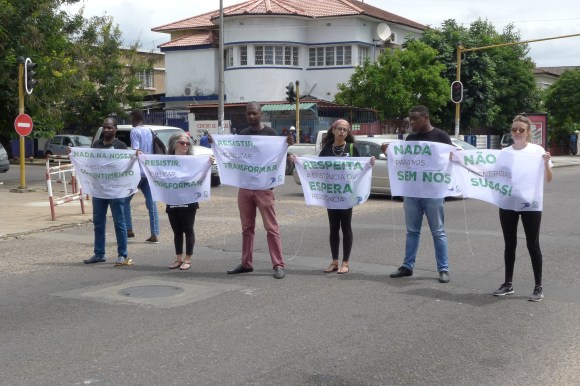
P1320318

Photograph taken in Maputo, in an action to raise awareness about the impacts of the proposed Mphanda Nkuwa dam, on March 14th 2019, International Day of Action for Rivers.

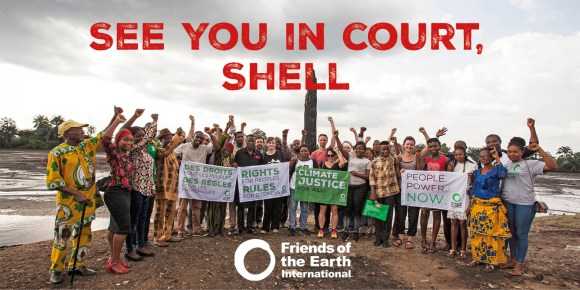
See you in court!

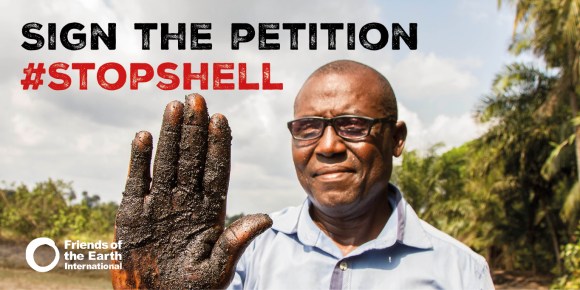
Shell_SM_EN2

Friends of the Earth Netherlands is suing Shell in a historic climate case!

Today, Friends of the Earth Netherlands has delivered a court summons to the headquarters of Shell, one of the companies responsible for ruining lives, landgrabbing and destroying the environment of many countries, including Mozambique.

The court papers for this groundbreaking climate litigation demand that Shell ceases its destruction of the climate, on behalf of more than 30,000 people from 70 countries.

This court case is especially relevant for JA! Not just because we are fighting for climate justice, but also because Shell is a very significant player in the gas industry in Cabo Delgado. In fact, Shell has committed to be one of the biggest buyers of gas from the projects. Shell has signed a contract with American company Anadarko to buy two million tonnes of liquid natural gas per year for 13 years from its Mozambique LNG Project. This agreement was a crucial step – now that Anadarko has guaranteed buyers, it can go ahead with extraction. In other words, Shell gave the Mozambique LNG project the green-light to go ahead.

This makes are one of the companies responsible for mass displacement of people from their homes and farmland, landgrabbing, destroying livelihoods and environmental devastation, that will be caused by the liquid natural gas industry.

The 236 page complaint will be delivered to Shell’s International Headquarters in the Hague this afternoon by Friends of the Earth Netherlands, ActionAid NL, Both ENDS, Fossielvrij NL, Greenpeace NL, Young Friends of the Earth NL, Waddenvereniging and a group of 500 co-plaintiffs.

Donald Pols, Director of Friends of the Earth Netherlands said, “Shell’s directors still do not want to say goodbye to oil and gas. They would pull the world into the abyss. The judge can prevent this from happening”

In the court summons, Friends of the Earth Netherlands outlines why it is bringing this groundbreaking climate litigation case against Shell, highlighting the company’s early knowledge of climate change and its own role in causing it. Despite acknowledging that the fossil fuel industry has a responsibility to act on climate change, and claiming to “strongly support” the Paris Agreement, Shell continues to lobby against climate policy and to invest billions in further oil and gas extraction. This is incompatible with global climate goals.

The 2018 Intergovernmental Panel on Climate Change report, a key piece of evidence in this case, underlines the importance of limiting global warming to 1.5 degrees for the protection of ecosystems and human lives, and outlines the devastating and potentially irreversible impacts of any “extra bit of warming”.

The court summons proves that Shell’s current climate ambitions do not guarantee any emissions reductions, but would in fact contribute to a huge overshoot of 1.5 degrees of global warming. The plaintiffs argue that Shell is violating its duty of care and threatening human rights by knowingly undermining the world’s chances to stay below 1.5C.

In addition, the plaintiffs argue that Shell is violating Articles 2 and 8 of the European Convention on Human Rights: the right to life and the right to family life. In the historic Urgenda case against the Dutch state, the Dutch Appeals court created a precedent by ruling that a failure to achieve climate goals leads to human rights violations. The court ordered the Dutch state to cut its greenhouse gas emissions by at least 25% by the end of 2020.

Roger Cox, who initially represented Urgenda, is now leading Friends of the Earth’s case against Shell. Roger said, “If successful, the uniqueness of the case would be that Shell, as one of the largest multinational corporations in the world would be legally obligated to change its business operations. We also expect that this would have an effect on other fossil fuel companies, raising the pressure on them to change.”

If successful the court case would rule that Shell must reduce its CO2 emissions by 45% by 2030 compared to 2010 levels and to zero by 2050, in line with Climate Paris Accord. This would have major implications, requiring Shell to move away from fossil fuels.

Friends of the Earth International Climate Justice and Energy campaigner Sara Shaw said, “In leaked company documents from the 1990s Shell predicted that environmental organizations would start suing the company for causing climate change if it did not listen to the warnings of its own scientists. Well, that day has come. This rising tide of climate litigation will finally call climate wrecking corporations like Shell to account and stop them in their tracks.”

Several lawsuits holding polluting companies to account for contributing to climate change exist globally. In 2016 a Peruvian farmer filed a lawsuit suing German coal company RWE for its contribution to glacier melt. In 2017 several American cities and states started climate cases against Shell, BP, ExxonMobil and Chevron.

Link to sign the petition: https://www.foei.org/?page=CiviCRM&q=civicrm%2Fpetition%2Fsign&sid=19&reset=1

Shell_SM_EN4

7 Questions to Anabela Lemos, the Director of Justiça Ambiental

Ticha

First of all, how was 2018 for Justiça Ambiental? Tell us what were the positive and the negative highlights of your year.

On the negative, I highlight the frustrating development decisions of our government; the shrinking space of civil society; the constant threats we suffer due to the positions we take; the antagonism between some civil society organizations; the government’s posture – who insists in treating as enemies all those who question or disagree with its decisions, instead of treating us as partners with different ideas; the return of the Mphanda Nkuwa dam project; and the capture of our forests by the World Bank; among others.

On the positive, I would like to highlight our Environmental Justice school in Nampula and the Agroforestry school on Mount Mabu, in Zambézia, mainly for the satisfaction of seeing the interest and involvement of all participants. I would also like to highlight the fact that our Tribunals have finally ordered Jindal to relocate the communities that still live inside the mine and decided that Mozal must disclose its environmental plans and emissions – even though, so far, we have not received any information and despite the fact that Mozal has decided to appeal. I would also like to highlight the launch of our short documentary on gas and the progress made by the international campaign of which we are part, whose aim is the elaboration of a treaty to end corporate impunity.
Briefly, I think this year we were able to consolidate our positions, consolidate our campaigns and stand firm in this struggle to secure the future of this planet and a just and sovereign Mozambique for our children, grandchildren, great-grandchildren and all future generations – which, given the adversities we face and the context in which we work, is undoubtedly a victory.


And how was 2018 for the country? What was good and what was bad?

The good: the Bar Association’s decision to defend the rights of communities; anadarko’s illegal DUAT case; the continuation of the ban on the exploitation of Pau-Ferro, Mondzo, Nkula, Inhamarre and Mbuti timber.

The bad: increases in energy price, fuel prices… in the cost of living in general; the impunity granted to those responsible for our “hidden debts”, the impunity granted to perpetrators of violations of the basic rights of rural communities; the impunity granted to international companies due to economic interests; the increasing poverty; the conflicts in Cabo Delgado; the tax exemptions and other benefits granted to the companies that will invest in our gas; the irresponsible “tweaks” to our legislation to better accommodate foreign investment; the municipal elections.


What does Justiça Ambiental think of the government’s intention to leverage the national economy with the Rovuma basin’s gas projects (including its intention to use any dividends to pay off the country’s debts)?

A wrong decision – like coal, the plantations of exotic monocultures in detriment of our forests or the illegal debts – among many others. The contracts made with the companies will not result in dividends in the first 30 years, and after that you know what will happen … It is an illusion to believe that the dividends will pay the debt. The environmental and social impacts of gas exploration will be irreversible, and what we lose will be forever: I speak of unique ecosystems that maintain environmental balance. There is no business or money that can pay for that loss.

In social terms, the loss or theft of fishing and peasant communities’ land is synonymous to loss of livelihood and rights of these communities, to an increase of their poverty, to a decrease of their level of education, to an even worse access to health and to an attack on their basic rights.

On the other hand, we continue to focus almost exclusively on extractive industry as a development path rather than diversifying our economy. Like many other African countries and other countries of the so-called Global South, we continue to follow the path of the curse of resources. Shouldn’t we be learning from others and be wiser? If we made the right choices – such as investing in education, health, renewable and decentralized energies, supporting peasant agroecology, decentralizing production processes, conserving our forests and water resources – we could be an example in Africa. But we choose not to. We are not interested in energy, food, economic and political sovereignty.


One of JA’s most recurring criticisms in your opinion articles is the apathy of Mozambican civil society. Do you think this criticism is having any effect? Do you think Mozambicans are “waking up”?

I hope so, because only by questioning our government and its decisions will we be able to live in a free and transparent country, where the “development” decisions are not imposed by a minority, and are totally unrelated to what the Mozambican people really wants. As the old saying goes: “Nothing for us, without us.”

For those who are part of our privileged elite, everything is okay. After all, they are the ones responsible for the current situation in the country.

Below them, our petty bourgeois do everything to maintain their privileges, and as such, could not care less. They do not care about change. Like the three wise monkeys, they do not see, they do not hear and they do not speak. They are not interested in solving any problem or injustice. I do not believe they can stop living in apathy.

About the others, I can say I am well aware that there is too much fear of speaking about certain subjects. Fear that something might happen, or fear that standing for something may simply seem wrong. For me, this fear is simple cowardice. Every citizen should speak up when faced with an injustice, because silence means assent. I think the same about activists who, for fear of reprisals, avoid interviews, or signing petitions, even when they agree with its terms. Giving in to fear only makes things worse.

But the light at the end of the tunnel continues to shine. Today I see many young people more open, more interested in environmental and social problems, more lucid in terms of values. An example of this was the reaction and solidarity of many of them when they heard the news about the arrest of journalist Estacio Valoi and others in Palma.

We cannot be silent when faced by injustices; otherwise we cannot put an end to them.


There are those who theorize that the slowdown of the economy in recent years, also slowed the race to our land. What do you think of this theory and what is the status of cases like ProSavana, Portucel or Green Resources?

The race to our land continues because our land is given away carelessly to foreign investors. Few countries “donate” land like ours: usurping it from their rightful owners – whether by false promises or simply by force. Prosavana illustrates precisely this, for despite the fact that the vast majority of the affected are against the program, the government is unable to act in accordance with the will of the people. The same happens in multiple sites throughout the country, where forest plantations have only brought conflict and more poverty to the peasantry, while our rulers continue to ignore them and give more land to companies that are constantly violating their rights.


Transnational corporations and foreign direct investment are often seen by countries like Mozambique as “economic messiahs.” What is your opinion on this development policy?

An illusion. The transnational corporations do not help any country. What they do is make themselves even richer at the expense of our resources, and along the way help enrich our already too privileged elite even more. And when our resources run out – because oil, gas, coal, and others are not renewable resources – we’re going to be left with an even poorer, polluted country, full of destroyed ecosystems and landless people. Furthermore, during their exploitation, they will constantly violate human rights and our common property and destroy our environment. As long as transnational corporations continue to act with impunity and take profit as a priority rather than the well being of human beings and their common goods, there will be no “development” for Mozambique or any other country.


You are often labelled radical or anti-development. Do you think that your posture can be undermining your relationship with the State and depriving you of a more collaborative and productive relationship with it?

By way of clarification, we are labelled “radicals” purely and simply because we are faithful to what we believe. If we think something is wrong, we do not just stand by and accept it. This is not being radical, it is being ethical. Furthermore, we believe that the positions we take regarding the various issues with which we work are not radical at all; on the contrary, because they are for the life and survival of the planet, our positions should be seen as absolutely consensual. Radical is treating these principles as secondary.

We live in a time of crises, such as the climate crisis, which despite being a scientifically unchallengeable threat to the survival of the planet and future generations, continues to be ignored by most countries – that prefer to continue to engage in false solutions and distractions to the real problem, when the solution to the problem is simple: stop with fossil fuels. And they call us “radicals” …

On the other hand, the first to raise their voices against slavery, racial discrimination or equal rights for women, were also considered radical. Maybe being radical is not that bad. Time will judge us.

In our country, despite our warnings and the worldwide examples that point to the abandonment of fossil energies – which are becoming increasingly more obsolete – as the sensible option to take, after coal now comes gas…

Development? Look at Tete. Look at “everything” that coal brought to Tete. In 2004/5, we, “the anti-development radicals”, gave the warning and few believed. Today, most people are already beginning to grasp the sad impending outcome.

Where is the “development” they spoke so much about?

Worse than that, apparently we have not learned anything, and the gas in Cabo Delgado is the proof of that.

Answering your question, we are aware that our posture bothers a lot of people. And unfortunately, in most cases, it is indeed very difficult to have a collaborative and productive relationship with our government because our differences – for example regarding climate issues, exotic monoculture plantations, and energy resource choices, among many others – are irreconcilable. Our government’s choices in these areas are, in our view, fundamentally wrong and will only aggravate the climate crisis; as such, sitting at the same table to discuss adjustments does not make any sense. Honestly, this saddens us; but in other specific cases we manage to collaborate.

In summary, we cannot say that we are developing, when poverty increases, education worsens and health support is minimal. What is happening in Mozambique is not development, because when a country develops, the lives of its citizens improves, and that is not what is happening.

JA! and other civil society confront SASOL at their AGM

In November, South African oil and gas company, SASOL, held its annual general meeting (AGM) at the Sandton Convention Centre in Johannesburg. JA, along with a few other organisations, attended the AGM to raise issues about SASOL’s operations. This was the first time ever that civil society was present at a SASOL AGM, and was made up of the Centre for Environmental Rights – a legal organisation based in Cape Town, the South Durban Community Environmental Alliance (SDCEA) and Women in Mining (WoMin).

JA was the only organisation raising an issue outside of South Africa, and in particular the Temane gas fields operations, SASOL Petroleum Temane’s Central Processing Facility, in Inhambane province, in the south of Mozambique.

The questions raised referred specifically to a 2017 report written by Mozambican organisation the Centre for Public Integrity (CIP), entitled SASOL Continues to Milk Mozambique.

The substance of the report centered on two issues:

  1. SASOL purchases gas from its own entity, SASOL Petroleum Temane, which extracts the gas, at very low prices, which it has set itself.
  2. It then sells it in South Africa, at a much higher price, making massive profits.

This is straightforward transfer pricing.

The project is managed by SASOL Petroleum Temane Limitada (SPT), by the Companhia Moçambicana de Hidrocabonetos (Mozambican Hydrocarbons Company or CMH) and by the International Finance Corporation (IFC).

SASOL responded to the report on their website, and JA opted to raise two questions in particular: One on employment of locals, and one on tax.

SASOL has not made any of their annual tax statements and details public, instead it has only provided an overall statement, and we had planned to demand access to the annual statements. However, we were refused the opportunity to ask the question about tax, and could only focus on jobs, as they insisted that we were only allowed one question each.

One of the issues raised in the report was that SASOL has not provided many jobs to local communities. SASOL’s response to the allegation on its website says:

“To date, over 300 permanent jobs have been sustained since inception across our various businesses in Mozambique, the majority being in Inhambane Province. SASOL and its partners established a Community Liaison Forum (CLF), in Maimelane in Inhassoro district, Inhambane Province, which helps with jobs opportunities for the 22 surrounding areas of the Central Processing Facility (CPF). Approximately 600 jobs have been allocated to members of these communities to date.”

We asked what the difference was between ‘permanent’ and ‘allocated’ jobs, and how it was possible that in 16 years of operating the project, they have only created this tiny number of jobs across the country.

Their initial response was to ‘put in context’ for the attendees the work that SASOL is doing in Mozambique, where they explained that they are the largest taxpayer, that they have built clinics and schools and brought Mozambicans into management positions.

It was only after JA’s member stood up and shouted in order to be heard, – insisting that the board provided a proper response to the questions – that they finally answered with the explanation that the 300 permanent jobs were employees who worked directly at the plant, and whose salaries were paid by SASOL. However, the 600 allocated jobs were people who worked at the clinics and schools that SASOL had built for the communities, but they were not on SASOL’s payroll, but rather were paid by the Mozambican government.

They then said that the reason only 300 jobs had been created at the plant was because ‘the plant only needs 300 workers at a time’.

SASOL created a major obstacle for us – while we had legitimately arranged for proxies to be given to members of SDCEA and WoMin, the company did not recognise them as shareholders, claiming that we required a letter from SASOL, which we were not told beforehand, and were therefore not given an opportunity to ask a question.

SDCEA is leading the fight against SASOL in the coastal province of Kwazulu Natal. SASOL is responsible for 2 massive oil spills here, and along with Italian company Eni, is now again exploring for oil offshore. SDCEA previusly tried to engage directly with SASOL but was met with hostility. They have totally undermined community input, have created extremely toxic air pollution, and the oil spills have led to massive distruction of the ecosystem and coastal flora and fauna.

WoMin has been fighting SASOL’s operations in Secunda and Sasolburg for many years, with the company being the greatest polluter in the country, and those regions bearing the largest brunt.

Overall, the AGM was successful for a few reasons – we had taken the executive board by surprise as this was the first time they had been directly confronted by civil society at a shareholder meeting. They were forced to answer questions on the spot, and even though their answers were vague, and even somewhat patronising, it was clear that they were unsure and on the back foot. They were certainly not expecting to be faced with a question about Mozambique, and were clearly confused as to how to answer. It was only when they forced into answering that they answered with technical information which still did not explain how, as the largest taxpayer, the country remained one of the poorest in the world and they had barely made a slight dent in the problem of unemployment, even in the communities where they operate.

The lesson learnt, however, was that it is important to have community members present to ask questions from personal experience. While civil society’s input was imperative, personal experience will be invaluable.

Who benefits from gene drives as a modern biotechnology?

Article presented At CBD COP14 in Egypt 18.11.2018
by Kwami D. Kpondzo Campaigns officer / Les Amis de la Terre-Togo
Africa Regional Focal Point of Global Forest Coalition

The world is suffering because biodiversity is poorly protected and poorly preserved. The question remains, how do we plan to conserve biodiversity for a better life on earth? is it by traditional knowledge or by modern technology? Indeed, today, modern biotechnology is put forward as the solution to improve the life of human beings on earth. This technology invades the field of agriculture, forestry and the fishery with the aim of improving productivity. It is at the root of the destruction of biodiversity and the imbalance in the harmony of nature. In addition, the introduction of biotechnologies like genetically modified organisms (GMOs), synthetic biology and gene drives (digital sequence information technologies) have an impact on the livelihoods of communities. The GMOs were originally promoted with the claim that they would benefit people and biodiversity as well; but this is not the case. The example of failed BT cotton in India and Burkina are examples why we do not need this risky and failed technologies.

In India, the Andhra Pradesh Coalition, in its report titled “Did BT cotton still fail in Andhra Pradesh in 2003-2004?”, investigated the cases of 164 small-scale farmers in three districts of Andhra Pradesh between 2003 and 2004. The report states that BT cotton increased yields insignificantly and that overall profits of farmers growing BT cotton were reduced by 9%. In Africa, a COPAGEN report titled “BT Cotton and us – The Truth of Our Fields!”, published in April 29, 2017, draws a damning conclusion. It describes the consequences, in Burkina Faso, of genetically modified cotton cultivation developed by Monsanto. The peasant field research over a period of three years involving 203 cotton producers clearly showed that in the 2014-2015 and 2015-2016 cotton seasons, yields were lower than those of conventional cotton. These examples show the danger of the use of these modern biotechnologies in agriculture.

There is clearly a conflict of interest between the conservation of biodiversity and the use of genetically modified organisms and other forms of modern biotechnology like gene drives. These gene drives could have a serious impact on human health, environment and biodiversity.

In the light of various findings regarding the use of modern biotechnology in agriculture, there is every reason to believe that the promoters of modern biotechnology are benefiting from it.

We say NO to gene drives and all false solutions to the biodiversity crisis.

TOKYO DECLARATION: “We reiterate the rejection of ProSAVANA and MATOPIBA and defend the food sovereignty of the peoples”

nao ao prosavana

We, peasants’ movements and civil society organizations from Mozambique, Brazil and Japan, met in Tokyo, Japan, between the 20th and the 22nd of November 2018 for the 4th Triangular Peoples’ Conference against ProSAVANA.

In the days leading up to the conference, we visited the farms of Japanese peasants, whom with we exchanged valuable experiences on peasant agriculture and strengthened solidarity bonds built over the last few years.

With Japanese civil society, and amongst a wider audience, we exposed the agribusiness capital agenda of eliminating peasant agriculture in our territories, exemplified by programs such as ProSAVANA in Mozambique or MATOPIBA in Brazil, which are promoted by the Japanese International Cooperation Agency (JICA), in alliance with the financial capital and governments of these countries. Both ProSAVANA and MATOPIBA are agrarian programs designed for the large-scale production of commodities for the sake of capital. Nevertheless, documents of both programs contain distorted claims regarding its rural development and granting food security intentions.

Our conference also allowed us to share cases of resistance to this type of imposed agricultural programs and to showcase concrete experiences of agroecology in Mozambique, Brazil and Japan.

By the end of these days of meetings and deliberations – and after meeting with the representatives of JICA, the Japanese Ministry of Foreign Affairs (MOFA), the Japanese Ministry of Finance and the Japanese Bank for International Cooperation (JBIC) – we reiterate our rejection of ProSAVANA in Mozambique and of MATOPIBA in Brazil. We demand from the government of Japan and JICA their urgent withdrawal from these programs.

Almost 40 years after its inception, JICA continues praising Brazil’s PRODECER agricultural program. Although in its recent statements they mention the need to avoid replicating PRODECER in Mozambique, JICA continues to use the disastrous experience of Brazil as a case of agricultural success, even though it has caused the extermination, expulsion and subordination of several indigenous and sertanejo peoples who lived there and whose knowledge has constituted over the centuries the agrobiodiversity of the Cerrados. The agriculture promoted by JICA in Brazil is made of extensive monocultures – mainly of transgenic soybeans, causes the reduction of biodiversity and the depletion of soil and water, contaminating the waters with pesticides – some of which are even banned in Japan. In fact, Japan needs to import large quantities of soybeans (corn and wheat) to meet the food needs of its dense population.

Brazilian Cerrado’s most recent front, MATOPIBA, is currently the object of serious conflicts due to the persistence of its vision. Once again, JICA and the Japanese government prefer to ignore public criticism and socio-environmental disasters stemming from decades of predatory occupation by joining the program.

During the last United Nations General Assembly in November (2018), Japan did not vote in favour of the UN Declaration on the Rights of Peasants and Other People Working in Rural Areas. By choosing to abstain, Japan sent us a clear message. It would be illogical to believe that the most important Japanese State cooperation agency intends to support the Mozambican peasants if this country regards peasantry as not worthy of rights.

ProSAVANA and MATOPIBA represent a clear attack on the peasant class. As a result of the way these processes have been conducted so far, peasants in the regions of implementation are being denied the right to decide on their own food systems. They continue to be treated as passive objects and to see denied their key role and accumulated knowledge and values ​​linked to peasant agriculture, as well as the importance of their cooperation and solidarity with each other. Imposing agricultural practices and options that are foreign to its conception, not only jeopardizes the food sovereignty of peoples, but also hampers the social, cultural, economic and environmental organization of peasants in these regions.

We call on Japanese civil society and general public to stand in solidarity with the peoples of Mozambique and Brazil, especially the people of the Nacala Corridor in Mozambique and of the Brazilian Cerrado, rejecting the use of Japanese people’s public resources to finance cooperation programs – such as ProSAVANA and MATOPIBA – that violate the human rights of peoples and devastate the environment of foreign lands.

While reiterating our unconditional rejection of ProSAVANA and MATOPIBA, we demand:

  • That the Governments of Mozambique and Brazil, together with peasant and civil society organizations, draw up genuine, locally-conceived national peasant agriculture plans, with each country’s food sovereignty in mind;

  • That all programs and investments that promote a predatory occupation of territories, compromise the integrity of peoples and systematically violate the human rights of peoples are stopped;

  • That the Japanese International Cooperation Agency abandons ProSAVANA and MATOPIBA;

  • That the Government of Japan, through its Ministries of Foreign Affairs and Finance, responsibly examine the complaints and denunciations made by peasants and civil society;

  • That the State of Japan hold Japanese companies responsible for human rights violations committed in Mozambique and Brazil;

  • That the Government of Mozambique disclose all information regarding ongoing programs and investments in the Nacala corridor, as it is bound do in the case of ProSAVANA, following a decision of the Mozambican court in favour of the Mozambican Bar Association.

We, the peasants and civil society organizations of the Triangular People’s Conference, declare that we will continue to articulate ourselves as the No to ProSAVANA Campaign and that our actions of resistance will carry on, while at the same time we will also continue to practice peasant agriculture in accordance with our customs and our culture, taking care of the land, the water, native seeds and biodiversity as a whole, hence respecting the knowledge of our ancestors and passing it on to future generations, as a guarantee of the food sovereignty of our peoples.

No to ProSAVANA!

Yes to peasant agriculture and Food Sovereignty!

Tokyo, 22nd of November 2018


‘Outrageous’ Mozambique debt deal could make 270% profit for speculators

by Tim Jones on 7 Nov 2018

Close up of roll of $100 bills.

People of Mozambique to pay $1.7 billion to $2.2 billion on original loan of $760 million, which was not agreed by Mozambique parliament, and which has been of no benefit

The government of Mozambique has announced it has reached an agreement on a new debt payment plan to holders of some of the illegitimate debts which have plunged the country into a debt crisis.

Whatever way the deal is looked at, it is outrageous for the people of Mozambique. It leaves the Mozambique people paying between $1.7 billion and $2.2 billion for a $760 million loan which they have not received any benefit from. Meanwhile, companies who now own the debts are set to make large and potentially huge profits.

We estimate that the deal means that a company who bought the debt in 2016 could make a 50% profit if they sell the debt now, or up to 270% profit if Mozambique does repay as has offered over the next 15 years.

Background
The debt comes from a loan of $760 million in 2014 to a Mozambique state owned company, Ematum. Campaigners in Mozambique say the loans were illegal because they were given without parliamentary approval. The loan was supposedly built to invest in a tuna fishing fleet, but $500 million has never been accounted for. The Mozambique government says it was spent on military equipment, but no evidence of this has ever been presented. The tuna fishing fleet sits unused in Maputo harbour.

The face value of the initial loan was $850 million, but $90 million of this was spent on “fees” to the banks which arranged the loan – London based branches of Credit Suisse and VTB Capital. This was a way to make it look like the loan had a lower interest rate than the reality. Of the $760 million that was actually lent, an independent audit found it had all gone to the fishing boat contractor in Abu Dhabi, none had ever entered Mozambique.

Unlike two other loans totaling $1.4 billion given by Credit Suisse and VTB, the loan to Ematum was publicly known about after it was given, with Credit Suisse and VTB selling the debt on financial markets as a bond. However, the government of Mozambique guaranteed to pay the debts if Ematum could not, without getting parliamentary approval, which makes the loan illegal under Mozambique law.

guebuza hand shake pambazuka

Photo: Pambazuka

In 2016, shortly before the $1.4 billion of other debt became publicly known about, the Mozambique government agreed a restructuring of the loan, which reduced payments between 2016 and 2020, but increased them over the lifetime of the loan. Moreover, they brought the debt onto the government’s books, despite its illegality.

After the other debts became known about, Mozambique defaulted on all the loans between 2016 and 2017, including the debt which originally came from the loan to Ematum. Neither Ematum or Mozambique have made any payments since.

The default caused the price of the debt to fall on international markets. In late 2016 and early 2017, the restructured Ematum debt could be bought for between 55% and 65% of its face value.

The debt agreement
The agreement announced yesterday says that the Mozambique government will agree to repay all of the debt, plus the interest payments missed over the last two years. Moreover, it will pay 5.875% interest on both the principal and missed interest payments. And in a final kick in the teeth to the people of Mozambique, 5% of future gas revenues will be paid on top of the interest, up to a maximum of $500 million. The interest payments will begin from 2019, with the principal being paid between 2029 and 2033.

We have calculated that this leaves the Mozambique people paying at least $1.7 billion in total for the debt, rising to $2.2 billion depending on how much in gas revenue is also lost.
In contrast total payments under the original terms of the loan would have been $1.1 billion between 2014 and 2020, and under the first restructuring $1.4 billion between 2014 and 2023. Each time Mozambique restructures this debt, it agrees to pay more, albeit further into the future.

For a company which bought the debt when it was first lent they stand to make almost 200% more than they originally lent, or 65% more than if they had lent to the US government instead.
However, many of the holders of the debt did not buy the debt in 2014. For those who bought when Mozambique defaulted in 2016, they could make 270% more than if they had lent that money to the US government instead. Since the deal was announced the value of the Mozambique debt on financial markets has increased. Even if a 2016 buyer of the debt sells now, they will still make a profit of 50%.

What happens next
The deal the Mozambique government has announced is with four companies who own around 60% of the debt: Farallon Capital Europe, Greylock Capital Management, Mangart Capital Advisors and Pharo Management. If 75% of the holders agree to the deal, the rest will have to abide by it.

The deal has to be agreed by the Mozambique parliament, so it could still be stopped, if Mozambique parliamentarians are willing to stand up against such a bad deal for the people of Mozambique.

Negotiations over the other $1.4 billion of secret debt are still ongoing, but this deal is not a good sign of how much more the people of Mozambique may end up paying across all the illegitimate, unaccountable loans which were of no benefit to them.

The final question is why the Mozambique government would agree to such a bad deal? I have no answer. It is simply appalling.

atum ascendente

Summary figures

Original loan
Amount originally lent: $760 million (face value $850 million, but $90 million of this ‘fees’ which were invented to reduce the headline interest rate)
Interest and principal to be repaid between 2014 and 2020: $1.1 billion

First restructuring in 2016
Interest and principal to be repaid between 2014 and 2023: $1.4 billion

Deal agreed in November 2018
Interest and principal to be repaid between 2014 and 2033: $1.7 billion + 5% of future gas revenues, capped at $500 million. So maximum of $2.2 billion in total

Potential profit:
In late 2016 and early 2017, $100 million of the Mozambique debt could be bought for $60 million. If the deal is implemented, this $60 million will return up $220 million. If it had been lent to the US government it would return $82 million over the same timescale. This is therefore a profit of 270%.

by Tim Jones

When strategy trumps ideology

Who pays the price ?

All struggles that seek to fight the immoral plagues of our societies and take humanity to a higher moral ground, are rooted in a ideology, often structured around justice, equity, solidarity, love and other beautiful values. All of us deep down know that these values are central to the existence of humanity. To be together, live along side each other and develop any sense of community, these values have to be present in some form or another, and the more central and prevalent these values are to one’s society, the more peaceful, happy and sustainable such society can become.

Many amazing justice movements are constantly fighting for this, but there is a growing trend of professionalization of movements and non profit organisations, while pushing them towards a more corporate model that better fits the zombie-like belief of free markets. The pressure to show good annual value for donor funds is reshaping how we fight these social issues and forcing the focus on short term gains at the cost of real long-term change. A large part of what is considered to be civil society is fighting these battles primarily in a strategic manner and not centering them around a moral ideology that takes society as a whole to a better place.

This is clear when we look at how we dealing with the climate crisis. The main solutions pushed by our governments are strategically centered around greed for money, in other words through markets. All over the place one hears comments that societies will not do anything unless there is a economic benefit. That you need to be able to sell it to save it, etc, etc, etc… We have seemed to accept this narrative, and by accepting this narrative we are basically saying the present day societies are not driven by moral values, but by economic incentives. That is a scary thought if you just stop and think about it for a moment. And lets no forget that victories then reinforce the values that guided the campaign and shifts society even further in that direction.

But that’s why our victories against slavery, colonialism, racism, gender inequity, and more were really important. They not only showed that these systems were wrong, but they reinforced the values of equality, equity, solidarity, etc that guided these movements and shifted our societies further in that direction. Its not easy and its always a big balancing act between ideology and strategy. Even in the biggest victories of civil society we can see the cost of strategy on ideology, and there are people that end up paying this cost, even in movements with the highest ideological values. A good example of a movement that had strong guiding ideologies and carefully considered strategies was the US civil rights movement that fought for equality and against racial segregation in the US, but even in such an amazing movement, one can find the cost of strategy and its consequences on the ideology. We can learn a lot from them…

Brown vs the Board of Education

we wont go to school with negroes

A protest in the 1950s in favour of segregation! Photo courtesy: Thurgood Marshall Center Trust


The case of Brown vs the Board of Education in the 1950s is a good example to illustrate the complexity of the issue. Even though equal rights for all races had been recently achieved on paper, most southern states in the 1950s had segregated public schools, with white students going to nearby neighborhood schools, while students of colour went to a different system of schools that were sparsely spread throughout the city. These non-white schools had their own teachers, principals, headmasters and management that were also of colour.

The Brown family, who the case is named for, had a 7 year daughter called Linda who had to walk 7 blocks, often in bad weather, then cross a busy street, to get a bus across the city to be able to go to her non-white school, while a white-only school was just 4 blocks away. In light of this unjust segregation, one of the leading civil rights groups, the National Association for the Advancement of Colored People (NAACP), instructed the Brown family and 12 other black families to try to enroll in their local neighborhood white schools. As we can imagine, they were denied admission due to their race, and this served as the start of a case that finally reached the US Supreme Court and become the famous landmark victory “Brown vs the Board of Education (1954)”.

Now, if one looks into the case information, one notices a trend of setting up a notion of the inferiority of colored schools, it is even highlighted within the actually ruling:

“Segregation of white and colored children in public schools has a detrimental effect upon the colored children”;

policy of separating the races is usually interpreted as denoting the inferiority of the negro group”;

Segregation with the sanction of law, therefore, has a tendency to [retard] the educational and mental development of negro children”.

These are all excerpts from the ruling and all reinforce the notion that white schools were superior, that the segregation of schools was having severe negative effects, even retardation of colored children. This was not what the civil rights movements were saying, they were saying that segregation and racial discrimination was unjust and unconstitutional. That all should have the right to choose which school is best for them. In summary it was based on fundamental legal and moral principles, even if the quality of both white and black schools were the same.

In case you are wondering, no the colored schools were actually not inferior and were actually often better. One of the reasons for this is that highly educated people of color were forbidden to work in certain sectors and overall were discriminated by all sectors to the point that becoming a teacher in the colored school system was one of the few respectable job options, hence there were a very high number of very highly gifted, intelligent and education teachers of colour. Furthermore, the civil rights movement valued the importance of education and many gifted individuals became teachers to contribute to the education of people of colour and their political enlightenment.

school segregation banned

A newspaper announcing the ban on school segregation, May 1954. Photo courtesy: Thurgood Marshall Center Trust


Why is all this important? The fight was to achieve equal rights for all races, and ending segregation of the education system was an important step in this process. The existing racial basis of the system (including the Court) instinctively believed that people of colour and the education systems they were running were inferior to those run by whites. This is clearly reflected in the ruling that centered around this notion and in the process reinforced these racial, immoral and incorrect views. Even after the ruling, the case was seen as a milestone, a great victory for all and is used as a example for other struggles. And it is all that, but we must not forget the cost of this strategy to allow the framing and at times even use the existing basis to increase the likelihood of victory. The notion that the colored school system were deterimental to colored students was a strategically useful notion to get white people to accept that segregation was unjust, as well as unconstitutional.

Naomi Brooks et al., Appellants, v. School District of City of Moberly, Missouri, Etc., et al

moberley photo

The Moberley case book cover. Photo courtesy: snapdeal.com


The feeding, use of or even letting these incorrect and immoral social views prevail has serious long term consequences. In the case of the Brown vs the Board of Education ruling, it set the stage for how the desegregation process was to play out. As white and colored schools started integrating, there were decisions to be made on which schools should be closed, which were the best teachers to work in these new integrated schools and of course the parents could now choose the closest and best neighborhood school for their kids. Logically, choosing the best of both systems would have produced a great new schooling system, but the ruling had already biasly defined which were the best schools, which were the best teachers and that was incorrectly deemed to be the white schools and white teachers. So almost all the black schools were closed and almost all the teachers that were fired in the process were black teachers, often with higher levels of education then their white counterparts, often with clearly better experience, teaching records and results.

Basically, in any logical, fair and measurable manner their were better qualified black teachers that were let go in favor of less qualified white teachers. What is also sad is that the best qualified black teachers were purposely let go because they were seen as a threat and challenged the notion that was the foundation of the integration process. Across the southern states their were over 82,000 teachers at the time of the Brown ruling and during the integration process almost half (40,000 teachers) were fired, and it would have been more if there were enough white teachers to deal with the larger unified schooling system.

As you can imagine, the civil rights movement didn’t let this injustice towards coloured teachers happen without a fight and in 1959 the case Naomi Brooks et al., Appellants, v. School District of City of Moberly, Missouri, Etc., et al. reached the Supreme Court’s docket, but was denied and the reasoning behind this decision is embedded with racism and prejudice. The case had such clear evidence that the judge had to find odd ways to overcome the facts, stating about one teacher that “she gave the impression that she considered herself superior to other teachers”. She was way superior in all measurable terms to the teacher that was selected in her place and no hard evidence was given to back up this statement. Another statement tries to explain the hiring patterns saying that human abilities can’t be “reduced to a mathematical formula” and with that he set the foundation for ignoring all the hard facts, data and evidence proving that the coloured teachers in question were better qualified than the white counterparts that were selected. Not to go too much into the details, but I think we all understand the patterns.

These two cases are strongly linked and highlight the difficult balance between ideology and strategy. Was the Brown case too strategic in letting the racial biases of the time help guide the ruling to victory? The cost of which the coloured teachers paid the consequences. Was the Moberly case naively ideological and not strategic enough, resulting in the loss? In truth I do not know, and I don’t have the right to criticize the amazing work done by the civil rights movement. However, I do believe that we should know and acknowledge who paid the cost of these battles. The people that paid the price of integration, for example. In this case one of the most affected and under-appreciated of them all were the amazing coloured teaches that were so central to the enlightenment of the colored youth. And let us not forget that even the teachers that did manage to keep their jobs still faced the reality of all coloured people of the time, in their case being constantly harrassed, not allowed to use the whites-only teachers room or even toilets, and much more…

To be clear, Brown vs Board of Education was really important and the US would be far more unjust today without it. But it reminds us that we must always consider and know who pays the price of some of our strategies.

I guess some of you are saying “interesting, but whats the link to us in Mozambique?”

Mozambique’s Context

moz flag

Mozambique’s flag


Well, Mozambique’s civil social is very “service provider” with a strong trend towards professionalization and donor-orientated agendas. Even the few movements we have are heading in the same direction, with the technical staffs having more and more influence over the political leadership of the movements. Most groups strategies and works shift to match funding trends, with the objectives and activities heavily focused on satisfying donor systems and interests, not the long term well-being of the people they claim to represent.

The few ideology-based organizations in Mozambique are often referred to as ‘radical’, ‘unrealistic’ “extreme’, etc…in some cases even ‘against development’, ‘unpatriotic’, foreign agents etc… The problems is that subconsciously our civil society believes that they have no power and never will, so they focus on trying to get the best out of a bad situation. Basically they are fighting for the crumbs that fall off the masters table. A good example of this has been in the Prosavana campaign. At the beginning there were more than 20 groups involved, and given the facts of the project, it was clear that the project was going to be devastating to the subsistence-based farmers in the area. Given this, the campaign “No to Prosavana” developed, but within a short time groups started stepping out of the campaign. Some because large funds were available to do work within the Prosavana process, which were clear attempts to show investors that social and environmental components were taken into consideration (green washing). Other groups started to feel the political pressure and power of the elites. Finally, some groups realized the magnitude of the project, and powers involved, causing them to believe that the project was a reality and the only aspect left was to make the best of the a bad situation and fight for the crumbs.

Of all the groups that started out in the Campaign, no one believed that the project was going to be of any good to the people. All agreed that in a ideal world the only answer to such project would be “NO!”, instead the message from many groups is ‘we must sit at the table, we must negotiate, we can humanize the Prosavana campaign’. None of those NGOs has anything to lose by this so-called ‘strategic approach’. They get paid by funders to sit at the table and be strategic. Not only are they not defending the interests of affected people who would lose their lands and livelihoods, but they are creating a false notion that Prosavana could be beneficial, with just a few tweaks.

We refused to be strategic in this case because as we know sitting at the table is to be complicit with the loss of livelihoods of thousands of subsistence farmers. One can only be strategic within a ideological framing. Being strategic without a ideological foundation makes one prone to drift and lose the long term vision that is required for any significant change. The focus on small winnable activities allows for discontent in one’s objectives, like independent bubbles that pop and leave no lasting impact. Pretty and fun, but substance none.

Even in its early phase of the “No to Prosavana” campaign one can see the benefits of a ideological approach. Originally Mozambique was seen as a country that was favorable for large scale land investment due to its corporate supportive governments and weak civil society that are very willing to sit down and green wash their investments. The “No to Prosavana” (run by just 8 groups) has managed to change this perception of landgrab investors. Mozambique is now seen as a country with risks for investors, where civil society and affected communities can cause major headaches, delays and problems for investors. Where the landgrab situation is starting to cause broad public concern and even mentioned as a possible future trigger for public uproar if not managed. One academic has even speculated that numerous investors have moved away from investing in large landgrab projects in Mozambique due to the “No to Prosavana” and its ability to expose the impacts, develop public perceptions, etc… So even if the project goes ahead the campaign has contributed to a growing vision on land rights and strengthen civil societies confidence, and its right to say NO!

prosavana press conf

2014 press conference from the ‘No to Prosavana’ campaign


Climate change campaigning tells a similar story in Mozambique at the moment. Civil society is too happy to jump on the Paris Agreement bandwagon, celebrating it, even though it doesn’t come close to meeting what science says is needed, even though it doesn’t promote the solutions that the people have shown to be the best, even though its not legally binding and there are little to no serious consequences if countries don’t meet the targets that they set themselves with little regard for science and facts. The Paris Agreement will burn the planet and Mozambique will be one of the countries to be affected quite severely early on. Defending the Paris Agreement is a strategic approach at best (and completely delusional at worst). After emissions stabilized for last few years, they are now set to rise again (research from late 2017). The leaders are not keeping their part of the deal. Even the terribly weak deal they set themselves. Nevertheless, Mozambique civil society is happy to feed on the scraps and work in sync with donor priorities because there are significant amounts of funds; because there are winnable goals; and because that is what they believe is possible and realistic….in short, it is the strategic thing to do…

Its simple, our civil society no longer fights its struggles grounded on ideology, but is over-focused on strategy and short term gains that they try to over-inflate into victories. The Brown case shows how even small strategic actions have long term consequences, but at least they won the battle. So imagine the long term impacts of Mozambique’s current approach, and I doubt even that change can be achieved through this approach. We, civil society, have seem to accept defeat and are focusing on the crumbs. Have we even tried to understand who is going to pay the cost of all this? All struggles need to be centered around an ideology, and its on this foundation that we can be strategic. We can’t let strategy over ride the values of our ideology, even if it implies a longer path to our goals, because when we win our struggle we also bring this foundation of values into our society and not just the specific issue that sparked the struggle. Life is a struggle, and true change takes time and courage.

The monsters of today’s injustices are not going away quietly into the night. They have no morals, heart or conscious, so can’t be guided or convinced based on logic, science or basic humanity. They have an endless hunger for capital and will starve if they stop doing what they do best. They will continue to do so till they consume themselves or cause a planetary collapse. Its not the monsters fault, its the nature of the beast. How long can we live off its crumbs before all we know crumbles. Its time to end capitalism…lets kills this monster!

The Selfish…

My brother died.

He died because he grew up in a rural area where there were no schools, therefore he did not study. And because he did not study, when the local administrator appeared with some gentlemen who offered him money and a job in exchange for his land, he believed their word and signed some papers unaware of what he was doing. When he realized he was conned, he complained but no one helped him out.

He died because when the miserable six-month contract and the money they paid him ran out, he had to go live in the city to escape starvation. He ended up starving in the city.

He died because he could not afford the minibus taxis and, in the city, there are not enough buses, so on his way to work he jumped on the back of a truck full of people that rolled over in a tight turn because it was too full. The tire blew up. The accident happened shortly after the truck was stopped by the police to pay their “toll”.

He died because the only running ambulance in the district was on its way to another place, so they took too long to get him to the nearest health centre.

He died because in the health centre they did not have the means to save his life.

I wish I could invite the heads of our government to the funeral. It seems fitting to me that one of them should bang the last nail in my brother’s coffin, since, directly or indirectly, it was them who hammered all the others.

In most Mozambican schools, there are not enough tables, chairs, manuals, notebooks, pencils, pens and even teachers. There are schools without a roof, schools without windows and even schools without walls.

In most hospitals and health centres in Mozambique, a lot is needed and lacking. For example, Maputo’s Hospital Central, due to lack of equipment, refers critically ill patients to private hospitals that very few can afford, thus condemning those who cannot to their fate.

On Mozambique’s modest roads, twice a day, millions of men, women, and children commute in crammed up minibuses or in the back of trucks that do not even meet the minimum safety requirements to transport cattle.

Mozambique lacks A LOT of basic stuff.

However, the selfish do not mind. They do not hide. They could not care less. They have no shame.

gbbb

Shamelessly, they use the public treasury to lead palatial lives, totally out of step with our humble reality, robbing the people of their right to live with a minimum of dignity.

And as if that was not enough, without any decorum, – as if asking: “What are you going to do about it?”– they rub their shameless opulence in the face of the insulted. In the face of parents whose children study sitting on the floor. In the face of the elderly who have to endure standing for hours, crammed in the back of crowded trucks, in the rain or in the blazing sun. In the face of the helpless mothers, whose children die everyday in the corridors of our hospitals.

Regrettably, in a country that is growing increasingly devoid of values ​​and examples, it is only natural that the deplorable behavior of the selfish can easily find fertile soil in the most manured heads. Their dishonesty and the example of impunity that they set, has repercussions at all levels of our society. From top to bottom, their totally unethical and immoral posture, – which they ironically call “wise and didactic leadership” – spreads like a social plague and becomes a code of conduct. “Every man for himself and screw the rest” is the rule. Everything else is bogus. Social justice is a mirage.

And it’s mostly our fault. Not only because of what we let the selfish do, but also because of what we allow them not to.

We are so used to not relying on the State, that we bypass it. We ignore it. We replace it taking on its obligations. Those who can, in addition to their taxes, pay for security, for sanitation, for health, for energy, for education. The State says thank you and leans on us. Hangs on to us. Washes its hands of the responsibility and buys another Mercedes.

Once again, those who have no one and nowhere to turn to, are the ones who get “screwed”. The rest continues to live quietly in their bubble. Until the day the bubble bursts…

The “ A, B , C “ of Large and Mega Dams

 What is a Dam, large and Mega?

img

It is a big cement hall, that stop the course of the river. The word seems to be related to the Greek word taphos, meaning “grave” or “grave hill”, in reality it is a tombstone for the river.

By the International Commission of Large Dams (ICOLD), a large dam is higher than 15m while a Mega dam is over 100m. Most Mega dams worldwide are used for energy production.

Mega dams have been the center of many debates, research and studies for the last decade.

Between 1930 and 1970, the boom of Mega dams was seen to be synonymous with “economic development” and a symbol of human ability to assert control over nature. But then the truth of their negative impacts started to arise, and it become the center of many debates and arguments around costs-versus-benefits, ecological impacts, social impacts, etc.

From one side the proponents claim dams as a source of energy and as such a tool for development, from another side the opponents state that those benefits are far outweighed by disadvantages such as loss of communities livelihoods and rivers ecosystems to name just some.

The late 1980s and 1990s era, were marked by large protests, and controversial debates about mega dams. Pressure and huge campaigns from civil society, social movements and communities affected by dams to stop financing mega-dams. Same financed institutions, with the pressure and information about crimes against human rights, by mega dams financed by the world bank, funds were decrease to the world Bank Dams projects. Due to such an outcry, an independent commission under the chairmanship of Kader Asmal, the South African water minister, was created in April 1997, the “World Commission on Dams (WCD)”, to research the environmental, social and economic impacts of mega Dams globally. The WCD was composed of members of civil society, academia, private sector, professional associations and government representatives. The report findings and recommendations were launched under the patronage of Nelson Mandela in November 2000. The WCD found that while “ dams have made an important and significant contribution to human development, and benefits derived from them have been considerable… in too many cases an unacceptable and often unnecessary price has been paid to secure those benefits, especially in social and environmental terms, by people displaced, by communities downstream, by taxpayers and by the natural environment.” The study also made recommendations and provided guidelines which all dam projects should follow, including five core values and seven priorities detailed below:

Values

Equity,

Sustainability,

Efficiency,

Participatory decision-making and

Accountability.

Priorities

Gaining public acceptance,
comprehensive options assessment,

Addressing existing dams,

Sustaining Rivers and Livelihoods
Recognising entitlements and sharing benefits,
Ensuring compliance and

Sharing rivers for peace, development and security.

For a while, the understanding of the large costs of Mega dams started to become a reality, but suddenly with the climate crises, they came back with the tag of “Solution for Climate change”. But it is not a solution. It is riddled with problems and earns our tag of “false solution”.

At JA’s last year climate justice meeting “Seeding Climate justice II”, held in Maputo, JA invited Rudo Sanyanga, Africa Director of International Rivers (IR), who presented the impacts of dams on the climate, and debunked the myth that mega dams are one of the energy sources to address our climate crises. Without going into the known social and environmental impacts, the presenter began her presentation by asking “Hydro dams, do they provide CLEAN energy? NO, THEY DON’T, ITS NOT TRUE! They exacerbate climate change instead”. Dams especially tropical dams can often produce a huge amount of methane and carbon dioxide from rotting biomass in the reservoir. Then there are huge impacts of droughts and floods on the energy production, and dependency of hydroelectric on a changing climate is questionable.

Rudo spoke about the breakthrough research done in 2012, “ A Risky Climate for Southern African Hydro”, there was a lot of opposition, attacked by politicians, statements that IR ‘’was scaring people, and that was not going to happen’’. But it is real, 4 years after, we see that is happen, this year, Lake Kariba never went above 20% capacity, Lesotho Katse dam was 63%, Zambia that was 80% dependent of Hydro, due to a 2 years drought is turning into solar. This is real , Zambezi Basin countries will have a decrease in stream flow, as many studies estimate and a decrease of run-off to be between 26% to 40% by 2050. No one is trying to scare people, but it is already happen and is going to only become worse.

We recall back in 2012, when Rudo come to Maputo to present the finding of this study, we were attacked by most of the government participants at the launch meeting, to the point of becoming quite an ugly and unproductive meeting.

We raised the question again, how can Mozambique build a dam as risky as it is Mphanda Nkuwa is to the environmental and communities, seismic risk, and now adding the economic and climate change risk? Those risks exist, due to extreme climate changes, and they must be included in any evaluation and decision to build or not a dam.

But as the researcher stated on their study, that government, dam builders and decisions makers, are not taking into consideration the economic risks associated to climate change, in his wordsThere is been a neglect of climate risks in hydropower planning – in an approach that might be called either ‘wait and see’ or ‘head in the sand’ ”.

But it still amazes me how difficult is for people to understand and see mega dams for what they really are: a monstrosity that destroys lives, livelihoods and rivers ecosystem, to say some. In a way I can understand if you look into a coal power station, you see ugliness, you see smoke, pollution and a landscape that no one wants to live there if they have a choose. At the other end, a mega dam is an huge infrastructure that makes any engineers proud of it, a lake, and an enormous hall that splits water in amazing speed, and a sound that make you feel small in this world… for sure looks much better then a coal power station. But it is just that, a facade. Because it is not synonymous with development, just ask the 40-80 million people displaced by dams, how their lives and livelihoods have been destroyed. Neither is it a solution for climate change as it often emits methane (more in tropical areas), destroys forests for the reservoir. Neither it is good for the environmental as it block rivers and inundates forests and agricultural land , and deny downstream enough water for wetlands to operate accordingly. Neither they protect us, from flood if they are not build to do so, or a way to keep water during drought.

Why they do not protect us from floods…. Well, if they are build just for that, yes, but you do not need a Mega dam for that, a mega dam is either for energy production, irrigation or water supply. To produce energy, you need to keep as much water as possible, and then when a big flood comes, there is no space to keep all the water in, same for irrigation, and to protect us from floods we do not need mega dams, small dams are the ideal, and system that can divert water when is too much, same for drought.

JA released in 2009 a study about renewable energy sources for Mozambique, another study that was attacked by the government participants in such a way that the author had difficulties to do his presentation without being constantly interrupted, simply because that study showed that we do not need Mphanda Nkuwa, and there are other ways forward to have energy for everyone with less impacts. The magic potion is not that difficult, we need to start with decentralized energy systems, clean energy, solar, wind, even mini to small hydro dams, a mix of energy sources, which must be affordable by all people.

We can do, and we should think more on solutions to tackle and minimize climate change impacts, instead to follow a path that put us where we are…. In a crises, can we be more smart and take decisions that are smarter, at least we live in a era that we have many options, and we know what mistakes where made, that we can avoid them.

So why build mega dams, to destroy rivers systems, communities livelihoods, increase climate impacts adding the economic risk , is really a mega dam worthwhile? It is not a solution for the climate crises we are hurtling towards. Climate change will affect rivers flow, and worsen extreme and intense floods and droughts that will put a risk on the economic benefit, so why ????

For whom and what. That’s the million dollar question. Because is not for us the people, is not a solution for our climate crises, is not for the environment…. who is it for? And what is it for?

Some info on dams, from the article of 12 dams that change the world from: https://www.internationalrivers.org/blogs/227-3

Chixoy: the grave on the Rio Negro

Dam-affected communities have often suffered repression and human rights abuses. In 1982, more than 400 indigenous men, women and children were massacred to make way for the World Bank’s Chixoy Dam in Guatemala. In a historic breakthrough, the country’s government in 2014 signed a $154m reparations agreement with the affected communities.

Banqiao: the dam that washed away

When dams are not properly built or maintained, they can break. In the world’s biggest dam disaster, the failure of China’s Banqiao Dam killed an estimated 171,000 people in 1975. In more than 100 cases, scientists have also linked dam building to earthquakes. Strong evidence suggests that China’s Sichuan earthquake, which killed 80,000 people in 2008, may have been triggered by the Zipingpu Dam.

Yacyretá: the monument to corruption

Large dams are often pet projects of dictators. Lacking accountability leads to massive corruption and cost overruns. On average, large dams experience cost overruns of 96% and are not economic. The cost of Argentina’s Yacyretá Dam has mushroomed from $2.5bn to $15bn. A former president called Yacyretá “a monument to corruption”.

Merowe: when Chinese dam builders went global

In 2003, the Chinese government decided to fund the Merowe Dam in Sudan as its first big overseas hydropower project. The dam displaced more than 50,000 people and caused serious human rights violations. Chinese banks and companies are by now involved in some 330 dams in 74 countries, leading an unprecedented global dam building boom.

Glines Canyon: the dam that came down

Dams have serious environmental impacts, and their benefits dwindle as they age. Since the 1930s, the United States has removed more than 1,150 dams to restore river ecosystems and particularly fish habitats. In 2014, the 64 meters high Glines Canyon Dam on the Elwha River in the Pacific northwest was breached in the world’s biggest dam removal so far.

Patagonia: the dams that were never built

Recent years, solar and wind energy have seen their commercial breakthrough. These renewable energy sources are cleaner than coal or hydropower and can be built were people need electricity, even far away from the electric grid. In 2014, Chile cancelled five dams in the Patagonia region under strong public pressure and approved 700 megawatts of new solar and wind farms.

Kariba: the dam that ended poverty in Southern Africa (or did it?)

The Kariba Dam on the Zambezi was built in the 1950s to power Zambia’s copper belt, as the first large dam funded by the World Bank. Kariba was considered the symbol of a “brave new world”, in which controlling nature would bring quick economic development. Yet the 57,000 people who were displaced by the dam suffered famine and are still impoverished

climate_graphic2

References on WCD and more info:

https://en.wikipedia.org/wiki/World_Commission_on_Dams

https://energypedia.info/wiki/World_Commission_on_Dams_(WCD)_Report

http://www.unep.org/dams/documents/Default.asp?DocumentID=663

https://www.internationalrivers.org/campaigns/the-world-commission-on-dams

http://www.unep.org/dams/WCD/report/WCD_DAMS%20report.pdf

more https://www.internationalrivers.org/questions-and-answers-about-large-dams

Tagged , , , , , , , , ,