Tag Archives: climate change

Why financial institutions should politely look away from ENI’s Coral North FLNGU

Update from ReCommon and Justiça Ambiental!

In January, Italian company ENI announced it would be ready for the Final Investment
Decision for its Coral North FLNG project, but now states it is still negotiating with private
banks for financing, and seems to blame the delay on the Mozambican authorities. In the
meanwhile, one investor has been sued by a civil society organization, and four private
banks have already excluded financing for the project.
Coral North FLNG, a planned floating platform to extract and liquefy gas off the coast of
Mozambique, is still looking for backers. Although Eni declared in January that it was ready
to take the FID on the project, last week, in the context of its AGM, it admitted to
shareholders that “negotiations with private financial institutions are underway”. When
asked about the reasons for the delay in closing the deal, ENI only replied that the
development plan was approved by the Mozambican authorities in April 2025, implying
they were responsible.
ENI leads work on Coral South FLNG, the only operational project in the Rovuma Basin. It is a
floating processing plant anchored in deep ocean that has been exporting LNG since
November 2022. Coral North FLNG would be a replica, gouging its claws into the sea floor
just 10 kilometres away, compounding the impacts on the ecology of the area.
Answering to the AGM questions, ENI also confirmed that “part of the project requirements
are planned to be financed through debt” and with “support from a number of Export Credit
Agencies”, as for Coral South FLNG. However, different private finance actors are moving
towards withdrawal from unconventional upstream oil and gas in order to achieve carbon
neutrality by 2050. At least four of the banks that supported the first project – BNP Paribas,
Credit Agricole, UniCredit and ABN Amro – say they are no longer interested in financing the
replica because it is not in line with their updated climate change policy.
Just over three years since the massive vessel arrived in the Cabo Delgado region, Coral
South has seen multiple cases of excessive flaring – the burning of excess extracted gas,
which results in significant carbon emissions. As a replica, Coral North would likely be
subject to similar issues. An investigation published in April by Italian civil society
organization, ReCommon, revealed that total emissions from Coral South have been
assessed at levels seven times higher than declared in the original environmental impact
assessment (EIA). Between June and December 2022 alone, flaring emissions from the Coral
South FLNG project accounted for 11.2% of Mozambique’s annual emissions, reflecting an
11.68% increase compared to 2021.Proceeding with gas development in the Rovuma Basin ignores the International Institute for
Sustainable Development findings indicating that investment in additional gas infrastructure
is incompatible with the goal of limiting global warming to 1.5°C. International Energy
Agency analysis also reveals that, in a 1.5°C scenario, existing LNG export capacity would
already be sufficient to meet current and future demand.
With gas demand declining worldwide, Coral North carries high financial risk, prompting
South Korean civil society organisation, Solutions for Our Climate (SFOC) to attempt to stop
state investment in the project. In February, Korea Gas Corporation (KOGAS) announced a
decision to invest USD 562 million in the project through equity and a loan to its subsidiary,
KG Mozambique. In March, SFOC sued KOGAS, arguing that the investment is economically
risky for South Korea, and the project would contribute significantly to climate change
impacts and therefore violate the rights of future generations to a healthy environment.
Between 2008 and April 2024, KOGAS had already invested around USD 1 billion in
Mozambique gas development, but has refused to disclose the preliminary feasibility study
(PFS) for Coral North. SFOC also has an ongoing case against KOGAS for disclosure of the
PFS.
Two other projects in the Rovuma Basin are planning significantly larger onshore processing
facilities, intending to pipe gas from wells about 50 km offshore, Mozambique LNG and
Rovuma LNG. The environmental impacts of the four gas projects together over their entire
lifetimes could be devastating for the Rovuma Basin and the west Indian ocean. The
Environmental Impact Assessment for the Coral North Project has been criticised for failing
to meet legal and scientific standards in assessing environmental and climate risks.
The Mozambique LNG project, led by French fossil giant TotalEnergies remains under
international scrutiny. The project is under force majeure since April 2021, following a
violent insurgent attack. It is now under investigation following reported allegations of a
massacre of civilians that was allegedly committed near the Afungi gas complex in mid 2021
by public security forces. Mozambique LNG shares land-use rights and some infrastructure
with the Rovuma LNG project, which is led by ExxonMobil, with ENI and China National
Petroleum Corporation as major partners. The project also remains without a final
investment decision.
The development of LNG projects in Mozambique also presents severe concerns about
erosion of sovereignty, due to the legal agreements that limit the government’s ability to
regulate these projects and capture fair revenues. Since gas exploitation began around 2010,
the industry has been linked to significant corruption-driven debt, and the government
supports its national oil company’s participation in LNG projects, creating fiscal risk without
guaranteed returns. Local communities have already lost agricultural lands and access to thesea because of the infrastructure development, and hundreds of families were required to
relocate.
Gas revenues so far amount to just over USD 200 million, of which 40% is intended for the
Sovereign Wealth Fund, which was established for stability and savings for future
generations. Last week the Mozambique Administrative Court reported numerous
irregularities in the Financial State Account for 2023 that represent an alleged
“embezzlement” of USD 33 million from Rovuma Gas revenues. In addition, Mozambican
civil society is raising concerns about the funds being allocated to social and economic
projects as provided for in the State Budget.
Developing Mozambique’s LNG industry promises only more harm – ecological destruction
and climate change impact, the destruction of people’s livelihoods, and increased
disenfranchisement and inequality. This is risky business for public and private financial
investors.
Ends

Tagged , , , , , , ,

“A  terra é dos moçambicanos, não é da França” ‘The land belongs to Mozambicans, not to France’

Two week long PROTEST CONTINUES against TotalEnergies and its. Mozambique LNG gas project for RESETTLEMENT VIOLATIONS

IN Afungi Communities, Palma District, Cabo Delgado, Mozambique
15 November 2024, 12H00 CAT
Justiça Ambiental!, Maputo

Demonstrations SHUT the gates of TotalEnergies Afungi site

This morning, members of the Macala and Mangala Communities, have been gathering again since early light to continue their two weeks of demonstration against the violations of their land rights by Mozambique LNG gas project, operated by TotalEnergies. Yesterday’s demonstration was attended by at least 400 people. This morning, the number of demonstrators is already high and still increasing. Following yesterday’s attempts by district and provincial governments to convince them to leave the area, the situation is escalating. This morning, families from a third community, Quitunda Resettlement Village, are growing the ranks. 

“tal como  estamos a parar a produção de alimentos, 
a empresa  também deve parar as suas actividades”

“just as we are stopping food production, 
the company should stop their activities as well”

In a context of national strikes and demonstrations aimed at demanding electoral justice, the Mozambican people are taking advantage of this moment to express their discontent at the social injustice to which they have been subjected for 50 years. A visibly tired and angry people are taking to the streets to express their indignation at a precarious health system, the poor or non-existent quality of education, a bad transport system, the increase in crime, the lack of access to employment for young people and adults, and to seek measures to end the hunger that hangs over Mozambican families, at a time when – for 20 years – natural resource exploitation projects have been the promise of a better Mozambique for all Mozambicans. 

The scene in Afungi today: the demonstrators have split into four groups and obstructed movement at four of the gates to the TotalEnergies Afungi site. 

The resettlement process in Afungi has been underway since 2019, with the initial plan to resettle 556 families, and since then many more families have been resettled, yet few of these families have received replacement land for fields that they can use. In addition, there are those who gave up their land for fields for resettled families’ but have not been compensated to date. These are the main groups who have been demanding their rights at the company gates.

Justiça Ambiental says: “The resettlement process has been characterised by a large number of irregularities which has caused the discontent that culminated in these demonstrations.”

The communities state their concerns relate to: 

  • Refusal to pay compensation for the agreements signed between the project and around 445 households, relating to the occupation of land intended for families resettled in Quitunda. These agreements were signed between October 2023 and February 2024. According to clause 4.5(a) of these agreements, the affected families are obliged to cede their land and all assets on it in favour of the project within 30 days of signing these agreements.
  • Refusal to sign agreements for the payment of compensation for the lands that the project mapped and surveyed, belonging to 158 households in the same two communities. The mapping was carried out between October 2023 and March 2024 by the company.

The communities of Macala and Mangala have made several complaints to the project regarding these matters. In August 2024 TotalEnergies’ representatives in the resettlement area met with the affected families and informed them that the project would not pay compensation to them. This decision was made without respect or consultation with the communities, and the company did not provide a reason for the decision. 

This pronouncement not only created a climate of uncertainty and despair among the members of these two communities, but has also caused major frustrations. 

It is a rule established by the project in all the affected communities for the families affected to immediately suspend any activity related to agricultural production or maintenance of the affected fields. This rule aims to combat opportunism on the one hand and to ensure that the project compensates the affected properties at the time of mapping. This rule has also been complied with by the affected families.

In the Macala and Mangala communities, 445 families have signed compensation agreements and 158 affected families have not yet. All 603 families affected by the project have been banned from using their land since October 2023. This is land that the project has already used –  making roads through the middle of what used to be important food fields. The demonstrators explain that the frustrations in their communities are also very much about lost time. 

Community members say they consider this situation to be unfair to them and threatening to their lives, because the land occupied by the project is the only source of their survival. 

In September 2024, the members of the Macala and Mangala communities wrote a letter to the Palma district government presenting these concerns and frustrations. The letter also informed the PRM (police) district command and the district administrator about the communities’ intention to hold a demonstration. The demonstrations were postponed by the district administrator, who said they were in discussion with the provincial government about the complaints.


On 2nd November 2024, Macala and Mangala community members began their demonstrations. On that day, they closed the roads that were built through their fields and put up posters explaining their discontent. This did not have a negative impact on the work and movement of the project and its contractors. 

On 8th November 2024, protesters gathered at the main gate leading to the entrance to the project camp. On that day the demonstration forced the closure of the entrance and exit of the project staff and their contractors. Community members interrupted their protest only after negotiations with the District Administrator at the site. 

The demonstration resumed on 11th November 2024, lasting the whole day. At the end of the day, the administrator told the demonstrators that the Governor of Cabo Delgado Province would meet them on 14 November 2024 for negotiations that could provide answers to their demands. 

At the moment, 15 November 2024, the governor and the administrator are inside the TotalEnergies Afungi camp, and information about what is being discussed there will only be known when they return to the population.

There is a clear indication that the gas affected communities intend to remain at the gates. Now, we await news. 

Contact: Kete Mirela Fumo / kete.ja.mz@gmail.com 

Background

The Mozambique LNG project, operated by TotalEnergies, was allocated land rights to about 7,000 hectares of land on the Afungi Peninsula, as well as rights to coastal areas, for its infrastructure and operations, This required communities who were living and conducting their livelihoods in the area to resettle. The project is required to compensate those affected. Even though TotalEnergies declared in May 2024, that all compensations had been paid, this is evidently not the case. Testimonies from affected people can be viewed here [https://stopmozgas.org/from-the-ground/video-testimonies/]

There are complaints registered in all communities affected by the project regarding the lack of housing, machambas (farmlands) and partial or lack of compensation payments. In the communities of Quitunda, Senga, Mangala, Macala, Maganja and Palma Village there are people who are yet to receive compensation or who have received part of the compensation, and others who have not signed agreements yet. Evidence is emerging of even more violations of the rights of people in relation to the project activities. 

Justiça Ambiental! (JA!) / Friends of the Earth Mozambique: JA! is a civil society organisation in Mozambique that supports environmental justice at community, national and international level. JA! views the environment as an holistic concept and thus environmental justice as the act of using the environment as a vehicle for ensuring equity and equality across society. In support of sustainable development they view the concept of equality on a grand scale, and as such, values the rights of future generations to a healthy and safe environment, to the same degree that that right is valued for humanity. JA! received the Silver Rose Just Transition Award 2023 for their fight for a just transition and against fossil fuel projects and land grabs in Mozambique. In 2024, JA!’s director, Anabela Lemos is being honoured with the Right Livelihoods Award. Justiça Ambiental! (JA!) is Portuguese for Environmental Justice! and ‘ja’ means ‘now’ in Portuguese. 

Tagged , , , ,

Activists across the globe call on banks and investors to stop financing TotalEnergies

[New York/Frankfurt/Paris, 2nd October 2024] – On Wednesday 2nd October, climate activists are protesting in New York, where TotalEnergies is hosting its main investors. Actions are also taking place this week at the headquarters of TotalEnergies’ investors and banks in Frankfurt and Paris. Activists are calling on investors and banks to make an immediate commitment to stop issuing or buying new bonds from TotalEnergies, as well as to stop all support for companies developing new oil and gas projects.

Bonds represented more than two-thirds of TotalEnergies’ external financing in recent years (1). In 2024, TotalEnergies raised $7.25 billion through bonds, which the company will fully reimburse over decades (2). 

Earlier this year some 60 NGOs called on banks and investors to stop lending to TotalEnergies, due to the energy giant’s ‘climate-wrecking strategy’ (3). Following the letter, French banks BNP Paribas and Crédit Agricole announced that they would no longer participate in conventional bond issuances for companies in the oil and gas sector (4). 

Climate justice movements, organizations and activist –  including 350.org Justiça Ambiental, Liveable Arlington, MilieuDefensie, Stop Total France, the Toxic Bonds Network and urgewald – are urging other financial institutions to follow suit and stop support – including participating in the issuance and purchase of new bonds – for TotalEnergies and other companies developing new oil and gas projects.

While TotalEnergies’ investors will be shaking hands at its Investor Day in New York over financial support that will fund the company’s oil expansion 40 years into the future, activists will remind them of what this means for the climate. They will in particular denounce the EACOP project, which TotalEnergies continues to promote despite the heavy repression faced by communities and activists opposing it (5). So far 27 commercial banks have publicly committed not to support the EACOP project (6). The project has so far been financed by equity capital from its shareholders, including TotalEnergies (7). Bonds are likely to be significant to the development of such projects, as they allow the company to raise large amounts of money without conditions regarding their use (8). 

Molly Ornati from 350Brooklyn.org : “In Uganda, community members and activists are constantly intimidated, arrested and prosecuted for defending their basic rights. Demonstrations which simply demand fair compensation, an end to displacement, and a halt to environmental destruction are met with police violence and arrests. While international banks across the globe have turned their backs on the EACOP project, they continue allowing the company to go ahead with its oil and gas projects through other financing methods such as bonds. Financiers should immediately stop distributing blank cheques to TotalEnergies.”

Protesters will also denounce the Mozambique LNG project, which has been suspended for 3 years and was recently under criticism due to reports of alleged atrocities committed by Mozambican armed forces near the project’s premises (9) and TotalEnergies’ shale gas projects in Texas (10).

Ranjana Bhandari, director of Liveable Arlington in Arlington, Texas and home to 400,000 residents exposed to Total’s ongoing urban fracking operations stated:  “The ongoing fracking operations of the French energy giant TotalEnergies’ are placing thousands of families and children at risk in the city of Arlington, around Texas, and other locations across the nation and worldwide. It’s time consumers and investors demand American banks such as Citi, JP Morgan, and Bank of America stop funding these long-term bonds that are harming the very residents in the cities where these banks are operating.” 

Anabela Lemos, from Justiça Ambiental, Mozambique: “The TotalEnergies gas project in Cabo Delgado is associated with land grabbing, lost livelihoods and human rights violations, alongside a violent conflict. TotalEnergies is now planning to co-develop the controversial Mphanda Nkuwa mega dam in the Zambezi river. Even before construction has started, local communities are reporting intimidations and human rights violations to force them to accept the project. If the dam goes ahead, this biodiversity hotspot might suffer irreversible damage and thousands of families will lose their lands, livelihoods and futures.  Financiers are ethically bound to refuse support for TotalEnergies trail of destruction across the world.

END

**********************

Press contacts : 

Anabela Lemos, Justiça Ambiental, anabela.ja.mz@gmail.com

Ranjana Bandhari, Liveable Arlington, liveablearlington@gmail.com 

Melanie Smith, 350.org US melanie.smith@350.org 

About the actions:

  • New York City : the action is taking place at 8:00AM at the headquarters of Citibank. Press is welcome]. Citi is the most important underwriter of TotalEnergies’s ongoing bonds (11), top bank in the US between 2021 and 2023 (12) and participated in underwriting TotalEnergies’ $3 billion bonds issue on September 10th 2024. 
  • Frankfurt: onThursday 26 October, a protest took place in front of Deutsche Bank’s Headquarters in Frankfurt. Pictures are available here Deutsche Bank is the third most important underwriter of TotalEnergies’s ongoing bonds (11), top bank in Germany between 2021 and 2023 (12) and participated in underwriting TotalEnergies’ $4.25 billion bonds issue on April 5th 2024. DWS, Deutsche Bank’s asset management subsidiary, is the first investor of TotalEnergies in Germany (12). 

Pictures are available upon request to the press contacts. 

Notes : 

(1) Between 2016 and 2023, 69.8% of TotalEnergies’ financing came from bonds, according to data from Banking On Climate Chaos, 2024

(2) The average maturity (date on which the bond matures and must be repaid by the issuing company) of bonds issued by TotalEnergies between 2020 and 2024 was 22 years compared to 6 years for those issued between 2000 and 2004, according to a recent study by AFII, 2024.

(3) The Brussels Times, Nearly 60 NGOs call on banks and investors to stop lending to TotalEnergies, 2024

(4) Reclaim Finance, BNP Paribas and Crédit Agricole Say No to Bonds for the Oil and Gas Sector, 2024

(5) #STOPEACOP, Uganda Silences EACOP Critics: Activists and Affected Communities Detained, 2024

(6)  #STOPEACOP Who’s Behind EACOP?, 2024

(7) The project’s shareholders are TotalEnergies, China National Offshore Corporation, Uganda National Oil Company and Tanzanian Petroleum Development Corporation.

(8)  Reclaim Finance, TotalEnergies and financial markets: Financial institutions engaged for decades of pollution, 2024

(9) Politico, All must be beheaded”: Allegations of atrocities at French energy giant’s African stronghold, 2024

and Say No to Gas ! in Mozambique, Call for investigation into reports of atrocities committed near TotalEnergies’ Mozambique LNG premises, 2024

(10) Liveable Arlington

(11) For a more global view on TotalEnergies’ most significant underwriters and facilitators since 2016, refer to the Banking on Climate Chaos report

(12) Defund TotalEnergies, Who is financing TotalEnergies? 

Tagged , , , ,

September 21st : International Day of Struggle Against Tree Monocultures

Today, September 21, 2024, is the International Day of Struggle Against Tree Monocultures! On this day, we publicly denounce, once again, the numerous and serious impacts of industrial plantations on the lives of rural communities, including their livelihoods and the ecosystems on which they directly depend on.

Year after year we bring reports and complaints from affected communities… year after year we demonstrate how evident the negative impacts are on the lives of the vast majority of those affected, and that the “better life” promised by companies such as Portucel and Green Resources as well as by our Government, only served as a discourse to deceive communities into giving up their lands! The “empty” discourse of “development” that encouraged the land grabbing of community lands to make way for plantations was forgotten at that moment, all that remains is the memory and the hurt of the countless peasant families deliberately deceived! Some still believe that companies will fulfill the promises made, will build schools, bridges, hospitals and that they will eventually have jobs that will change their lives. Some don’t even realize that all these promises are actually the responsibilities of the Mozambican Government, and that these are the same promises made in all electoral campaigns, and little or nothing actually happens!

The denunciations, appeals and complaints from affected communities and social organizations and movements have been largely ignored year after year by the various State institutions responsible for looking after the interests of the People! 

This year, we celebrate this day in a very different context from the previous ones, in the middle of the Election Campaign! It was exactly to escape this context that we held our International Meeting Against Monoculture Plantations, in celebration of the International Day of Struggle Against Monoculture Plantations, on the 22nd and 23rd of August.

The meeting took place in the Province of Manica, and was attended by members of communities directly affected by plantations from the companies Portucel, Green Resources and Mozambique Holdings, from the Provinces of Manica, Zambézia and Nampula, as well as members of Quilombola communities in Brazil also affected by plantations. The objective of the meeting was to promote exchanges between communities affected by industrial Plantations and to carry out visits to some affected communities, to understand their impacts on site. We didn’t see any development, we didn’t see any improvement in the living conditions, we saw eucalyptus plantations, which enrich foreign businessmen, where before we saw farms to feed the people.

At this meeting, organized in partnership by Justiça Ambiental, the World Rainforest Movement, Missão Tabita and AJOCME, we once again listened and felt the enormous negative impact that these plantations have on the lives of communities! Testimony after testimony we heard how they were deceived, how they regret having believed, we see the feelings of despair and anguish in the face of the new reality.

“Everything the company has done to date does not compensate for what we lost by giving up our land” – Affected by Portucel Moçambique plantations, Zambézia Province

“The company arrived with many promises, school, hospital, but nothing happened and now we can’t even produce well in the lowlands, because these trees are drying up our water” – Affected by Portucel Mozambique plantations, Manica Province. 

“We were deceived because we didn’t know anything, they arrived with many promises, we accepted because we believed we would have a better life, they promised to fix the roads, school and hospital. Not even paying compensation for our land, others received little and others saw nothing. Now our struggle is really big, to recover our lands for agriculture, because we are peasants, that’s all we do” – Affected by Green Resources plantations, Nampula Province.

We urge the Government of Mozambique to reject all false solutions to climate change and for the people’s well-being, such as carbon credit projects, and invest effort and resources in supporting peasant agriculture, for a diversified and quality food production through agroecology in order to ensure food sovereignty; We urge the Government to promote and facilitate community-based initiatives to generate income and conserve our natural resources and important ecosystems! We also urge the Government to carry out, as a matter of urgency, a serious and impartial assessment of the social, environmental and economic impacts of the industrial plantations that it has promoted so much and continues to promote, as this will clearly demonstrate that these plantation model does not work.

Continuing to allow and promote false solutions will worsen the lack of political will and financing to implement real, decentralized solutions based on the needs, interests and will of the people.

Plantations are not forests! Plantations take away land, resources and ways of life…

We stand in solidarity, today and always, with all peoples and communities that resist the usurpation of their territories and ways of life!

The struggle goes on!

For rights, For justice, For a better world for everyone!

Tagged , , , ,

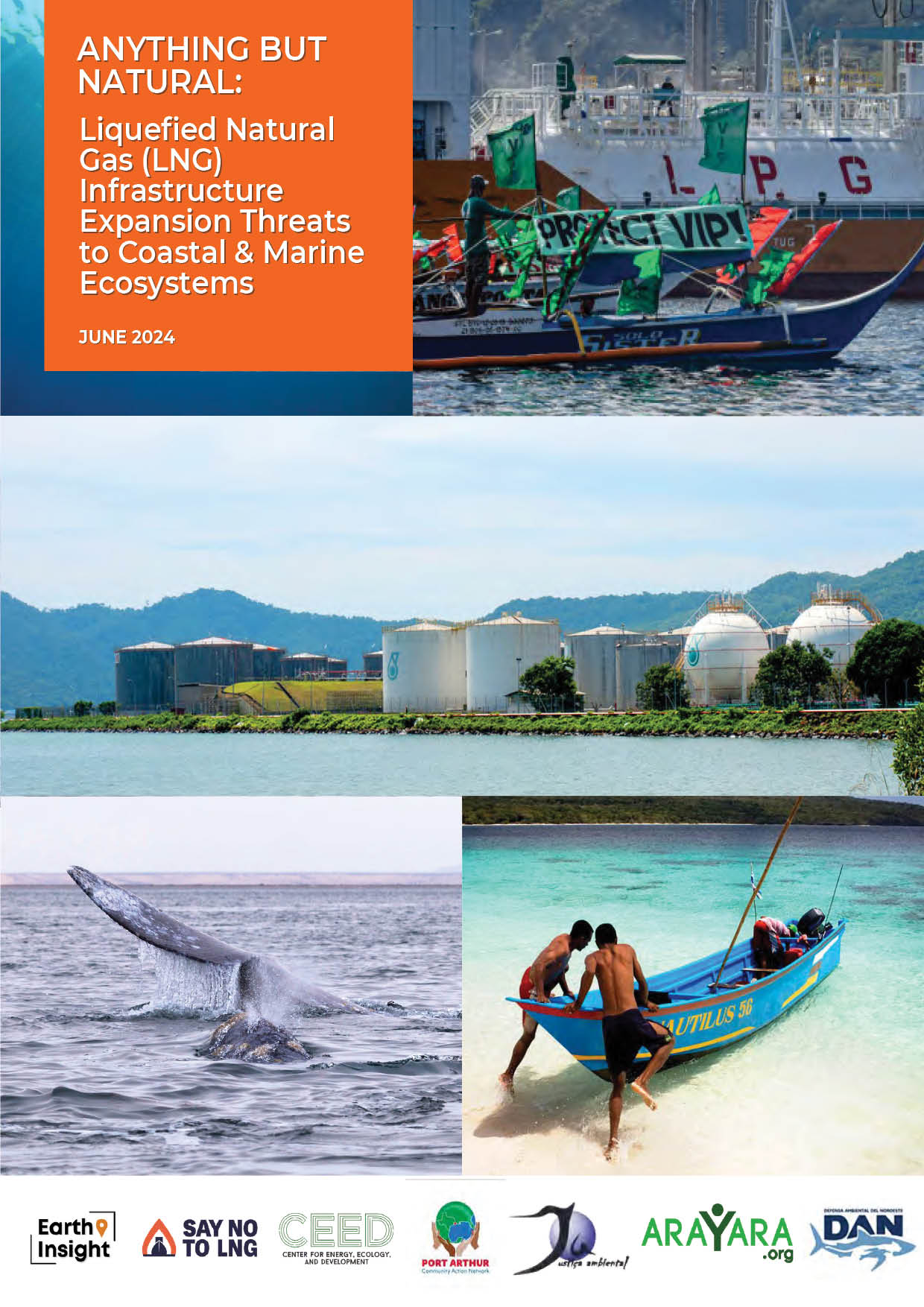
New LNG developments lock in fossil fuels and threaten fisheries, human health, ecosystems, and the global climate

Report: Heatmap shows Liquefied Natural Gas

(LNG) expansion in globally-important marine biodiversity hotspots

Sacramento, USA (June 6, 2024) — New maps and analysis from research organization Earth Insight and partners — released ahead of World Oceans Day on June 8, 2024 — paint a sobering picture of current plans to expand Liquefied Natural Gas (LNG) infrastructure worldwide, posing threats to the global climate as well as significant hubs for biodiversity.

READ THE REPORT — Anything But Natural: Liquified Natural Gas (LNG) Infrastructure Expansion Threats to Coastal & Marine Ecosystems

LNG is mostly composed of methane gas. If cooled, the gas becomes liquid and can be stored and transported by sea using special tankers. When methane is burned to obtain energy, it produces less carbon dioxide than other fossil fuels, such as oil or gas. However, methane itself

🌐

 page1image1383992000

is in itself a potent greenhouse gas, responsible for almost a third of all global warming we are experiencing today. The cost of developing planned natural gas infrastructure exceeds one trillion dollars, and will increase by threefold the world’s export capacity, and by two-thirds its import capacity. United States, Russia, China, Mexico, and Canada are leading the pack in planned LNG infrastructure expansion, while countries like the Philippines, Mozambique, and Brazil also feature in the top 20.

Case studies and regional maps in the report show:

  • ●  In the United States, developments along the Gulf Coast will disproportionately impact communities of color in some of the poorer states of the country. These communities already experience poor air quality from operating LNG facilities and regularly suffer downpours and floods caused by climate change-fueled hurricanes and storms;
  • ●  In Mexico’s Baja California state, new LNG infrastructure threatens “the world’s aquarium,” home to 40% of all marine mammals in the world and many endangered species. If current plans go ahead, eight new terminals will be built in a region that is a whale sanctuary and is listed as a UNESCO World heritage site;
  • ●  In the Philippines, building new LNG terminals will add more pressure to the Verde Island Passage, one of the world’s most biodiverse marine places. The region, often called “the Amazon of the Oceans,” is already one of the world’s busiest marine routes and was hit by an oil spill in 2023 with devastating consequences;
  • ●  In Mozambique and East Africa, gas developments have already caused the forced displacement of local communities and new plans threaten several critically endangered marine species. The offshore expansion will take place along a coastline full of mangroves and coral reefs;
  • ●  and, in Brazil, there are plans to build new LNG terminals along the Atlantic coast, a region that is already cluttered with oil and gas infrastructure. Whale populations will be particularly affected, as the new developments overlap with their breeding grounds and migration routes.The last 10 years have been the ocean’s warmest since at least the 1800s, with 2023 being the hottest ever recorded. Destructive marine heatwaves are becoming more frequent and intense across the world. Massive coral bleaching episodes are destroying reefs and all the natural life they support. And species are being displaced from their habitats, moving to cooler and deeper waters, disrupting ecological chains and impacting fisheries.New LNG facilities will increase shipping intensity and noise pollution in marine migration corridors, mating and nursery areas for species like whales and dolphins, and important fishing grounds.The report, launched just before World Oceans Day 2024, follows the 2024 United Nations Ocean Decade Conference in Barcelona, Spain (April 8-12, 2024) and the 9th Our Ocean Conference in Athens, Greece (April 16-17, 2024), a series of events first launched under the initiative of then-U.S. Department of State and the Secretary of State John Kerry in 2014. It also

follows an historic May 2024 ruling by the International Tribunal for the Law of the Sea dictating that emissions from fossil fuels — and other planet-warming gasses that are absorbed by the oceans — count as marine pollution; a first climate-related ruling from that body.

Maps

Look at the interactive heatmap here.
Download static maps from the report here.
Supplied underwater images of marine life (credit Lynsey Grosfield/Earth Insight) here.

Quotes and Interview Opportunities

“Investing in LNG infrastructure — especially in some of the world’s most important nurseries of marine life — just doesn’t make any sense. At this point in the energy transition and nature crisis, it’s a one way ticket to stranded assets and won’t help us solve the climate crisis.”

Tyson Miller, Executive Director, Earth Insight: +1 (828) 279-2343,

tyson@earth-insight.org

“The new report ‘’Anything But Natural: Liquefied Natural Gas (LNG) Infrastructure Expansion Threats to Coastal & Marine Ecosystems’ reveals the stark reality that LNG — often touted as a cleaner marine fuel — is far from the panacea it’s made out to be. Through strategic maps and data, we expose how LNG’s lifecycle — from extraction on land to combustion at sea — inflicts severe damage on our planet’s most vulnerable ecosystems and communities. By championing a lifecycle approach, we shed light on false solutions that cultivate crises on land and amplify environmental and social injustices. It’s time to navigate away from the illusion of LNG as a benign alternative and steer towards genuine marine solutions that do not compromise the health of our planet and its people.”

Elissama Menezes, Global Director, Say No to LNG director@saynotolng.org

“Maps can be powerful tools for understanding landscapes where there are a lot of competing needs. Our work in this report combines LNG data and biodiversity data, and it’s clear to see that for many of these projects, the risks to people and nature cross an unacceptable threshold. As a scientist I believe we need to really consider all the data and risks before investing in long-term fossil infrastructure in biodiversity hotspots that sustain all our lives. Creating transparency in the threats these developments pose is critical.”

Bart Wickel, Research Director, Earth Insight, bart@earth-insight.org

Mozambique“It is obvious that the impacts of gas projects are not neatly contained within the formal project boundaries. The damage to seagrass beds, mangroves and coral reefs will impact on the success of many valuable species, including whales and dolphins, turtles, dugongs, and marine species that are important food sources for coastal communities. These systems are also valuable protection against severe weather events, which are noticeably more

frequent and destructive. Already, land grabs and forced displacement of communities for gas development have worsened local socio-economic conditions, contributed to disenfranchisement of the youth, and thus contributed to fuelling the violent insurgency in the region.”

Anabela Lemos, Justiça Ambiental! / Friends of the Earth Mozambique, anabela.ja.mz@gmail.com stopmozgas@gmail.com

Brazil: The report provides important data for managing the just energy transition in Brazil, highlighting areas where the LNG sector is rapidly developing. Additionally, this growth near the Abrolhos Land and Sea Territory, one of the main hotspots in the country for the preservation of the Atlantic Forest and the biggest coral reef bank in Brazil, is a cause for concern.”

Vinicius Nora, Gerente de Oceanos e Clima, vinicius.nora@arayara.org

Philippines: LNG expansion is a major threat for the climate, biodiversity, and communities. In the Philippines, a buildout of LNG terminals and power plants threatens the Verde Island Passage – one of the most biodiverse marine ecosystems in the world. For a country that has so much renewable energy it could instead be developing, LNG is an unnecessary and detrimental distraction that only exacerbates our climate vulnerabilities. We need to be advancing real climate solutions and biodiversity protection, and not locking in more fossil fuel expansion.

Gerry Arances, Executive Director of the Center for Energy, Ecology, and Development (CEED) and Co-Convenor of Protect Verde Island Passage. media@ceedphilippines.com http://www.protectvip.org

US Gulf South: (Available for Interviews) John Beard Jr, CEO, Port Arthur Community Action Network (PACAN), pacanportarthur@gmail.com

Additional Resources

  • ●  Losing Ground: Fossil Fuel Extraction Threatens Protected Areas Around the World (Earth Insight, LINGO, and the IUCN-WCPA)
  • ●  LNG, Shipping, and the Amazon of the Oceans: Scoping Key Issues and Potential Impacts of the Massive Expansion of LNG in the Verde Island Passage (CEED Philippines)
  • ●  Amazon Fossil-Free Monitor (Arayara & Climate Observatory)
  • ●  [Infographic] From land to sea: LNG impacts people, nature and the economy (Say No toLNG)
  • ●  [Press Release] The International Maritime Organization (IMO) and the Gaslight ofLiquefied Natural Gas (LNG) (Say no to LNG)
  • ●  [Podcast] ship.energy podcast on the the health connection of LNG shipping (Say No toLNG and the Canadian Association of Physicians for the Environment (CAPE))
  • ●  [Infographic] LNG does not belong in green corridors

● LNG WEBSERIES (Arayara & Say No To LNG)

https://youtube.com/playlist?list=PLjP_vdypoljZfG_CINpmMvRCyKJ6rJACM&si=9Oo0Cj zdSW94qypU

Press and media contact

Lynsey Grosfield, Head of Communications, Earth Insight +1 514 430-5203, lynsey@earth-insight.org

About Earth Insight

Earth Insight is a research and capacity building initiative that is a sponsored project of the Resources Legacy Fund, based in Sacramento, California. Staff and partners span the globe and represent a unique grouping of individuals and organizations with diverse backgrounds in mapping and spatial analysis, communications, and policy. Earth Insight is committed to advancing new tools, awareness, and momentum for protecting critical places and supporting civil society and indigenous and local communities in this effort.

http://www.earth-insight.org

About Say No to LNG

Say No To LNG is a global shipping campaign debunking the myth that Liquefied Natural Gas (LNG) is a “climate friendly” marine fuel alternative and mobilizing stakeholders towards a fossil fuel-free shipping industry. We are a collective of subject matter experts and environmental advocates from across the world who collaborate to push back on the adoption of LNG as a marine fuel and educate key actors on its role in worsening global warming, financial losses, human rights issues, and public health.

http://www.saynotolng.org

Tagged , , , ,

International Day of Action against Dams, for Rivers, Water and Life

Today, 14th of March 2024, the international day of action against dams, for rivers, water and life, Justiça Ambiental joins the communities living along the Zambezi River to celebrate rivers, water and life!

Did you know that the 14th of March was celebrated for the first time in 1997 in Curitiba, Brazil, during the first international meeting of people affected by dams? Since then, it has been celebrated every year on every continent by thousands of people defending rivers and life on the planet.

Did you know that rivers are essential to the survival of species and the maintenance of ecosystems? Rivers are the biological engines of the planet, and also the livelihoods of millions of people who live on riverbanks.Fishing and farming on the riverbanks are the livelihoods of many rural families around the world, using techniques and traditions passed down from generation to generation.

Did you know that rivers are habitats rich in biodiversity? They harbour an impressive variety of aquatic plant and animal species, many of which are found nowhere else.

Did you know that rivers are one of the main sources of fresh water on the planet? They provide drinking water for billions of people around the world.But water is a vulnerable and finite resource that must be protected.

Did you know that rivers play a critical role in flood control, helping to regulate the flow of water during periods of heavy rainfall? Contrary to what some people think, hydroelectric dams don’t help control floods or droughts; on the contrary, they tend to exacerbate them, as we’ve seen for years downstream of the Cahora Bassa Hydroelectric Power Station on the Zambezi River. Every year, riverside populations lose their crops and goods, not because of the river’s natural rhythm, which includes periods of drought and flood, but because of the dam’s discharges and the artificial flow it causes.

Did you know that rivers have a huge influence on the local climate? They help moderate temperature and humidity along their banks, not only in wild and rural areas, but also in urban areas.Rivers are also a key element in mitigating the effects of climate change.

Did you know that rivers promote human well-being, culture and quality of life? Rivers are where people and civilisations have always settled, where we celebrate our rituals and traditional practices, socialise and relax.They cross borders, languages and cultures.Rivers connect us, dams divide us!

Did you know that rivers are one of the most threatened natural habitats on the planet? Rivers are fragile ecosystems that must be protected.One third of freshwater species are at risk of disappearing forever.Pollution and dams are two of the main factors contributing to this decline.

Did you know that preserving rivers is fundamental to keeping alive the history and culture of many peoples? One of these riverside peoples is the Nyungwe, who live on the banks of the Zambezi in Mozambique.

Did you know that hydroelectric dams are not clean energy? Contrary to what is promoted by the dam industry, these infrastructures emit large quantities of methane (a potent greenhouse gas) due to the accumulation of organic matter in their reservoirs, which ends up decomposing.Without the dam, this organic matter would flow freely into the delta, contributing to its fertility.In addition to emissions, dams are also a means of progressive expansion of invasive species (such as toxic algae and parasites), altering the ecosystem balance of the river.

Did you know that some of the countries that have built the most dams are currently demolishing them? A total of 2,119 dams have already been removed in the United States of America since 1912, of which 80 were removed in 2023 alone! This initiative aims to restore the natural flow of rivers and protect their ecosystem.Unfortunately, many of the countries that are committed to demolishing dams on their territories promote their construction in other countries, as is the case of France.

Did you know that rivers are a common good? Rivers are part of humanity’s heritage.They don’t belong to anyone or any state – states are just the guardians of this heritage.At the same time, rivers belong to all of us!

Today and always, we reiterate our fight in defence of healthy, free-flowing rivers: NO to the Mphanda Nkuwa dam! For the survival of the Zambezi River, its ecosystems and its people!

Tagged , , ,

Total Turmoil: Unveiling South Korea’s Stake in Mozambique’s Climate and Humanitarian Crisis

Published by Solutions For Our Climate (SFOC), January 2024.

Kim & Oh, ‘Total Turmoil: Unveiling South Korea’s Stake in Mozambique’s Climate and Humanitarian Crisis’, January 2024, Solutions For Our Climate (SFOC)

The report identifies the participation of South Korean corporations in Mozambique’s liquified natural gas (LNG) projects and lays out the risks and flaws in the project that affect the economic feasibility and ethical correctness of the project. It is published by Solutions For Our Climate (SFOC).

SFOC has identified the significant participation of South Korean corporations in Mozambique’s LNG projects, as they play pivotal roles throughout the entire value chain of the Mozambique LNG business. With a 10% stake in the Area 4 block, Korea Gas Corporation (KOGAS) has been making substantial investments in project exploration and development. Notably, major Korean shipbuilders are actively involved in Area 1 and Area 4 projects. Samsung Heavy Industries is expected to provide offshore LNG production vessels for two of the four Mozambique gas field projects. Meanwhile, three Korean shipbuilders anticipate supplying a total of 23 LNG carriers for transporting the produced LNG volume. Six LNG carriers have already been constructed and are in use to transport LNG volumes from the Area 4 Coral Sul field, while 17 fleets for the Area 1 Mozambique LNG project await the final contract to be signed. Consequently, South Korean public financiers have become involved in the Mozambique gas projects, providing a total of USD 3.22 billion financial support to Korean companies engaged in these initiatives.

The LNG projects in Mozambique face significant risks, primarily in two key areas. Firstly, flawed resettlement processes for local communities near the LNG facilities have resulted in forced relocations, inadequate compensation, and the loss of livelihoods, especially among fishing communities. Secondly, there are substantial climate concerns associated with these projects, as they are expected to contribute significantly to greenhouse gas emissions when considering the project’s entire lifecycle. An independent report by Friends of the Earth and the New Economics Foundation estimated that the Mozambique LNG project alone could generate 3.3 to 4.5 billion tonnes of CO2 equivalents, surpassing the annual emissions of all EU countries.

The involvement of South Korean stakeholders in the LNG projects raises alarming concerns. By providing financial support for the LNG projects in Mozambique, public finance institutions have failed to adequately assess human rights, climate, environmental, and security risks associated with the projects in accordance with both international and internal guidelines. Samsung Heavy Industries faces criticism for its involvement in controversial LNG projects in Mozambique, which potentially conflicts with its sustainability initiatives and ESG commitments. Additionally, the economic feasibility of new gas projects in the Mozambique Area 4 basin, where the Korea Gas Corporation holds a 10% stake, is questionable due to factors such as low profitability, regional instability, declining gas demand, and fierce market competition.

Some key recommendations to relevant stakeholders are:

1. Public financiers should withdraw their financial backing from Mozambique gas projects and join the Clean Energy Transition Partnership (CETP) to end fossil fuel investment.

2. Public financiers should establish Human Rights, Environmental Impact, and Security Assessment processes.

3. KOGAS should consider divesting its stake in Area 4.

4. The South Korean shipbuilding industry should transition away from the fossil fuel business.

To access this complete study, in the original English version, please visit the website:

https://forourclimate.org/en/sub/data/mozambique_climate_crisis

Tagged , , , , ,

EDF, TotalEnergies and Mphanda Nkuwa: How strategic is this partnership really? And for whom?

At a time when the power and influence that TotalEnergies has in our country is becoming increasingly evident and frightening – to the point of interfering in decisions that we should be making in a sovereign manner, linked to the security and defense of the state – little did the news surprise us that the consortium of EDF, TotalEnergies, Sumitomo Corporation and Kansai had been selected as a strategic partner for the Mphanda Nkuwa mega dam project.

Although expected, this news should concern and outrage us. After all, this consortium that the Mphanda Nkuwa Hydropower Project Implementation Office (GMNK) presents to us as robust and experienced, is composed of a number of transnational companies whose conduct in terms of respecting Human Rights and preserving the environment is highly reprehensible, and this should serve as a red alert.

Who’s who in the Franco-Japanese consortium

France’s largest energy company, EDF, whose majority shareholder is the French state, in addition to owning a number of nuclear power projects, was in charge of a project to build wind farms in the Oaxaca region of Mexico. EDF and its local partners have violated the Mexican law, which requires that any decision regarding land use in that region occupied by indigenous peoples must be taken by a community assembly. Quite the contrary: large contracts have been signed and concluded between the Eólica de Oaxaca company (a subsidiary of EDF) with individuals from the community, who have acted as if they were private landlords. Energy supply contracts and a memorandum of understanding with the Oaxaca state government for the construction of the Gunaa Sicarú wind farm were entered into without any prior proper consultation with members of the local community of Unión Hidalgo. When the community began to challenge the legality of the wind farm project using domestic legal procedures, arguing on the basis of their right to free, prior and informed consent, they began to suffer increasing attacks and were subjected to violence and threats due to their opposition to EDF’s project. After 5 long years of struggle in defense of their rights to land, territory and natural resources by the Zapotec community of Unión Hidalgo, together with the Mexican organization ProDESC, the Federal Electricity Commission of Mexico definitively canceled the contracts with EDF.

About Total, now renamed TotalEnergies, unfortunately the cases in which this French transnational is involved in human rights violations and environmental destruction abound.

The numerous legal cases that currently exist against the company explain this scenario. The cases range from allowing its gas plant to be used as a prison in Yemen, where serious human rights violations are taking place and there are accusations of torture; impacting over 100,000 people with its EACOP project in Uganda, with testimonies of numerous cases of intimidation and repression associated with the project, loss of livelihoods, and failure to meet its obligations to compensate Ugandan families who lost their land. The impacts of TotalEnergies in Cabo Delgado are already better known in our country, and Justiça Ambiental and other researchers and organizations have been publishing numerous reports on the subject, whether about its criminal contribution to the climate crisis, the human rights violations of local communities, the destruction of ecosystems and the environment, and its links to the violent insurgency. When these flagrant violations are denounced, TotalEnergies evades its responsibilities, either stating that the problems related to the resettlement process are the responsibility of the previous company Anadarko, or using international experts to pass on the responsibility for the conflict in Cabo Delgado entirely to the government of Mozambique.

The Japanese companies – Sumitomo Corporation and Kansai – also have a very tarnished image, especially in environmental and labor issues. Sumitomo Corporation, in particular, is accused of “repeated human rights violations” and of violating its own internal policies at its Miami office. The labor union accuses the company of threats, retaliation and other forms of intimidation to several of its members regarding their union organizing efforts.

What do all these companies have in common? Their destructive and inconsequential behavior towards the planet, the climate and the people directly affected by their activities, and their commitment to profit at any cost.

The meandering path we already know

The proposed Mphanda Nkuwa Dam on the Zambezi River is perhaps the most controversial mega-dam project on the African continent, and certainly the one that has faced local, national, and international resistance for the longest time. For more than 22 years, civil society organizations, experts, scientists, and academics have been warning the government about the risks of this project and its likely impacts, and numerous studies have denounced the impacts already caused even before the first stone had been laid. With some make-up in recent years, the project continues to remain silent about fundamental questions that have already been asked by Justiça Ambiental and various other stakeholders, such as:

  • Why have local populations been excluded from the decision-making process regarding this project, and they are only beginning to be visited 4 years after the GMNK was created?
  • Where and under what conditions are local populations to be resettled, given the serious levels of land conflict already existing in Marara District?
  • Why are the Terms of Reference of the studies being developed not shared, and why does GMNK evade due public scrutiny, while claiming to follow international best practices and procedures?
  • What other lower impact energy alternatives have been considered, and why is there no public debate about them?
  • Why have local community members, traditional leaders, and civil society organizations raising concerns about this project been intimidated, repressed, and even called terrorists?

What do we expect then from a project already with clear indications of being environmentally destructive, socially unjust, and exacerbating social tensions, when it is placed in the hands of transnational companies of greater economic power than our state, and who insistently evade responsibility whenever their activities contribute to the violation of human rights and the destruction of the environment?

And because we cannot afford more failed megaprojects in our country, Justiça Ambiental remains committed to stopping this project until these and other questions are properly answered, to contributing to studies and analyses that will shed light on the dark side of this project, and to working with local communities and national and international partners to safeguard peoples’ right to self-determination and sustainable and inclusive development. Until the benefits of this megaproject to the people and to Mozambique are properly and adequately proven, we reiterate: NO to Mphanda Nkuwa.

This article was originally published in the local newspaper Savana on June 09, 2023.

Tagged , ,

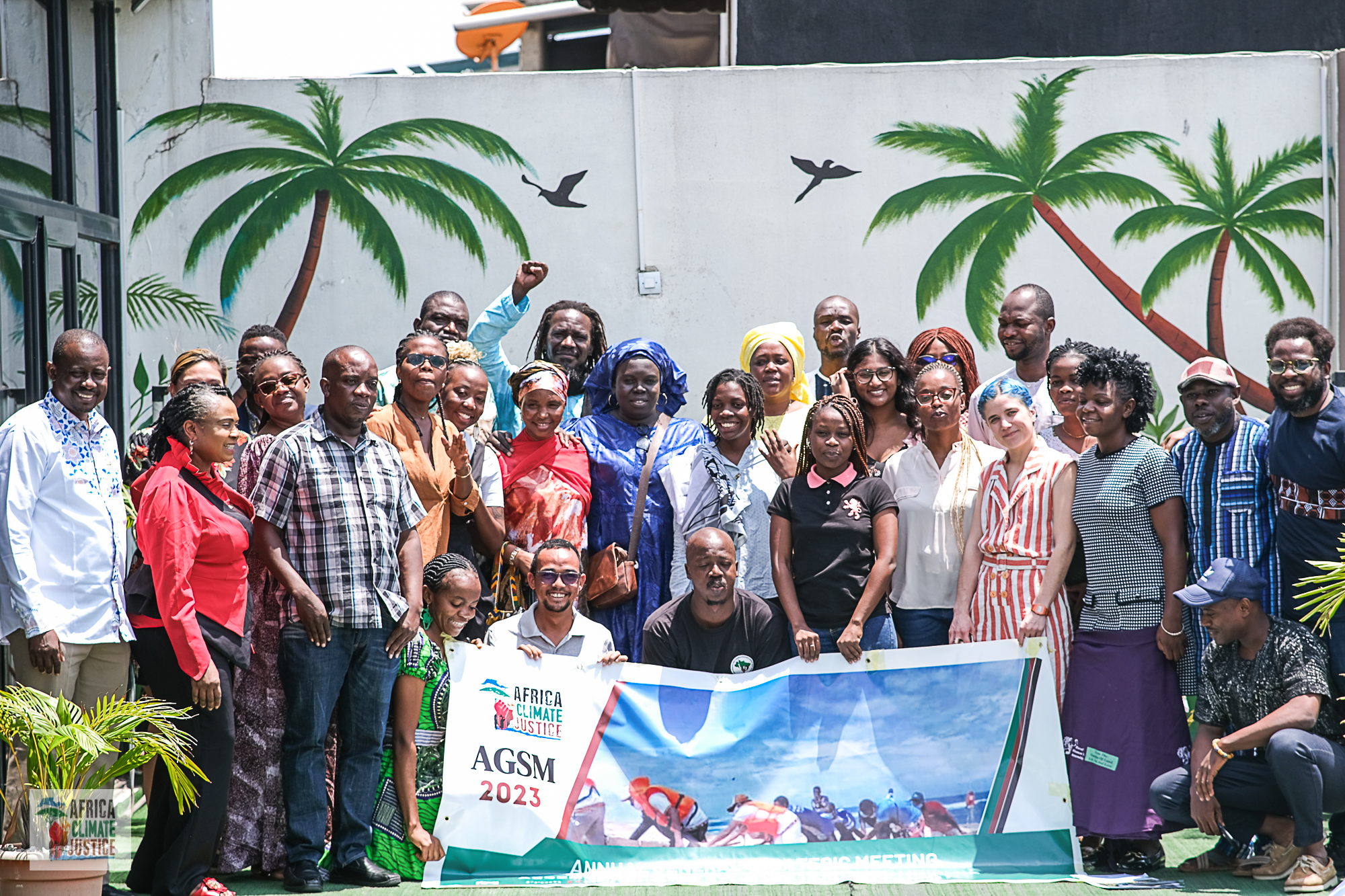
AFRICA CLIMATE JUSTICE COLLECTIVE: IN SOLIDARITY WITH THE PEOPLE OF SOUTHERN AND CENTRAL AFRICA

The Africa Climate Justice Collective is concerned about the ravaging effects of the climate crisis in Africa, especially the recent flood disasters that submerged some parts of the Southern and Central African regions of the continent.

Cyclone Freddy has wreaked havoc in Southern African countries especially Madagascar, Mozambique and Malawi since February 2023. Thousands have been displaced and hundreds have lost their lives while others are still missing. In Madagascar at least 300 000 people have been affected, 17 people have died and 3 are missing. Malawi has recorded 563771 displaced persons, 511 deaths while 533 are missing. In Zambezia province of Mozambique, 22000 people have been displaced, 10 dead and 14 injured.

In Central Africa, Buea City in southwestern Cameroon between 18 and 19 March 2023 experienced torrential rains that caused floods and landslides and resulted in casualties. The twin disasters which were both triggered by several hours of rainfall had led to the loss of lives (media reports confirmed 2 deaths) and destruction of properties. In total, nearly 300 people living at the foot of Mount Cameroon have been affected. In all these countries, houses and infrastructure have been destroyed and it will take a long time as well as require a significant stream of funds to recover. These events highlight the urgent need for effective disaster response strategies and climate change mitigation measures to protect vulnerable communities in the affected countries and beyond.

Faced by these tragic events, the African Climate Justice Collective (ACJC), which is made up of 27 movement-based and other allied civil society organizations, and individuals and partners all across Africa, is calling for concrete actions to address the ongoing Climate emergencies not only in Southern Africa but in the continent as a whole. Cyclone Freddy’s long journey began off the coast of Australia in early February 2023. After becoming an exceptionally powerful storm and crossing the Indian Ocean, Freddy first struck eastern Madagascar on February 21 and southern Mozambique a few days later.

According to Anabela Lemos, Director of Justiça Ambiental/Friends of the Earth Mozambique and a convenor of the ACJC “our people are compelled to pay the debt they never owed, they are forced to reap pain and agony from the crisis they never created while the government and multinational corporations go to the Bank with fat pockets”.

Rumbidzai Mpahlo who coordinates the ACJC stated that “As a collective, we continue to call for the activation of both climate finance and the Loss and Damage Fund without any debt- creating and repressive conditions. This is an emergency which should be treated with the urgency it deserves.

Maimoni Ubrei-Joe of Friends of the Earth Africa and Nigeria has stated that the recent IPCC report has further demonstrated the failure of world leaders to commit to addressing the global climate crisis. ““The time to act to reverse the negative impacts of climate change is now””.

This recent IPCC report has sufficiently shown how short-term climate forecasts (spans next decades) are not brilliant, and weather disasters like Cyclone Freddy, will multiply with disastrous consequences. It is therefore more than ever the moment to build a more effective and efficient disaster management that is capable of anticipating these risks and disasters, looking urgently at the case of the communities affected by Cyclone Freddy. Positive experiences of management of extreme floods and other climatic phenomena on the African continent should inspire the development and strengthening of rapid alert and response mechanisms.

The CADTM African network demands that the polluting multinationals recognize their climate debts and pay due compensations to the victims of climate change and Africa as a whole focusing on these three countries; Mozambique, Malawi, and Cameroon which are currently grappling with climate change impacts. The CADTM African network invites African leaders to restrain from refunding the debts they have contracted in repairing the climate damages.

We are hereby standing in solidarity with those affected in Malawi, Mozambique, Cameroon and Madagascar. The Global North and Governments of these nations should ensure that funds and relief materials are made available for loss and damages as agreed upon at COP 27 and these funds should be made available to those directly affected and not channeled to the nations ecological funds where they will be diverted to meet other national needs leaving out those that have been badly affected by the cyclone.

We are traversing a great moment of transition, from a system that is crumbling away, to a new one, that is not yet fully formed. At this very moment, a few and powerful blood-thirsty Africans continue to sell out our countries and our sovereignty, fomenting wars and destruction for vanity and personal gain to feed. At the same time, on the ground are showing the best of our human principles, throwing themselves into the post disaster chaos, to help victims, often reaching the areas where “no aid ever comes”, and so many others who mobilize their solidarity in their own ways to support their fellow nationals.

As much international solidarity there may be in any major disaster, African nations must muster themselves the vision, capacities, skills and resources needed to not only be prepared for disasters, but to manage its territories in harmony with Nature. The ACJC recognizes that there is great complexity in the actual implementation of this proposal, but only the Nation itself can claim its own sovereignty. African Governments MUST CHANGE COURSE. The solutions and proposals of the ACJC provide a guide for this. But there is much more to be done. Now more than ever, there is ample evidence that territories with wider biodiversity are significantly more resilient, or able to more rapidly recover from climate related shocks. Some, if not most, of the solutions are already within our grasp as a society.

Our hearts go out to all of the lost ones, and to those who are left behind in mourning, but also to all the survivors and those on the ground working to make their communities a better place for our loved ones.

A NEW AFRICA IS POSSIBLE!

CLIMATE JUSTICE NOW!

Contact: Benson Dotun Fasanya | info@africaclimatejustice.org | +2347062249235.

Contact: Judite Jofrice | judite.ja.mz@gmail.com| (+258) 84 310 6010

Tagged , , ,

Trapped – How to break a community that resists?

The case of Quitupo

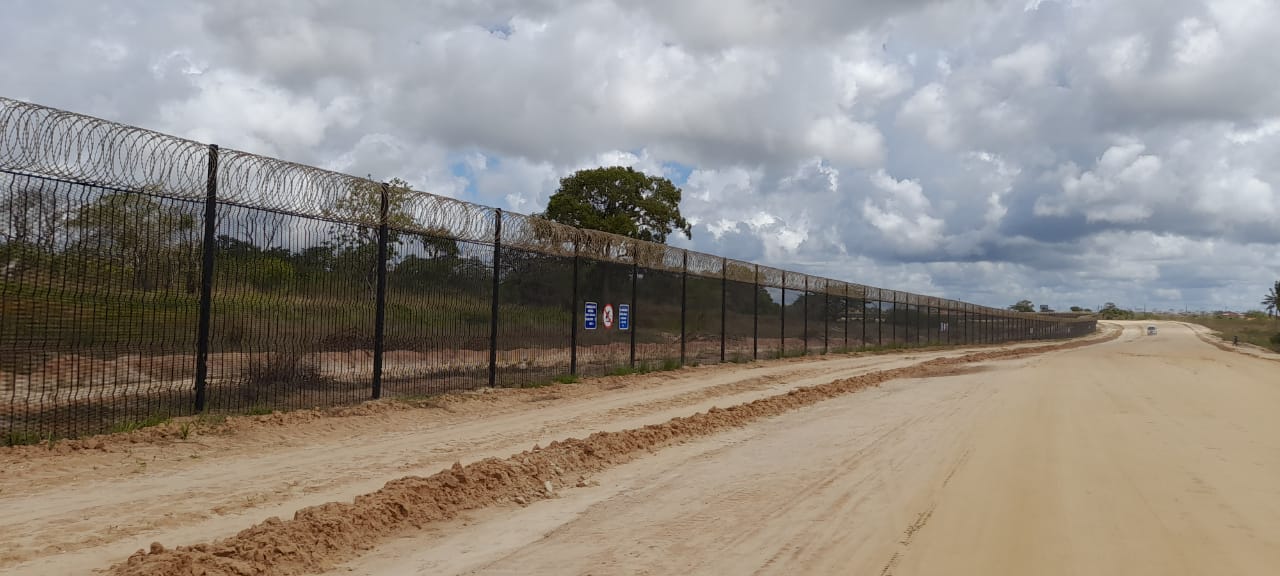
Located in the district of Palma, in the northern province of Cabo Delgado, the village of Quitupo is one of the district’s 63 villages1. In 2010, with the discovery of marketable quantities of natural gas in the Rovuma Basin, Quitupo joined the list of communities affected by the liquefied natural gas (LNG) production plant project, to be developed by TotalEnergies (formerly Total) in Palma. In the initial phase of the project, public consultation meetings in Quitupo were some of the most intense ever to be seen in the history of megaprojects in Mozambique. Indeed, the community of Quitupo hasn’t made life easy for gas investors. At the time, back in 2013, the process was led by Anadarko. The company came across a population that was, to some extent, informed about its rights, which resulted in local residents often walking out on meetings when the company failed to provide them with answers that satisfied their concerns. The community challenged the company – and the government – on the authenticity of the minutes of the public consultation meetings that paved the way for Anadarko’s acquisition of its land use title (DUAT) totaling 7,000 hectares (about 17,300 acres). The community of Quitupo even had to request emergency technical support and legal advice from civil society organizations such as Centro Terra Viva (CTV) and the Iniciativa para Terras Comunitárias (ITC), both of which already supported the community to build its capacity on legal issues. The village chiefs did not verify the signatures on the alleged minutes of the community consultation meetings2, instead claiming to have signed an attendance sheet of a meeting they were summoned to with the sole purpose of informing them there were investors who were interested in working in the district, offering employment and developing communities. Around 7,000 hectares (some 17,300 acres) were alocated to the project without the communities’ knowledge and consent. Clearly, the process was riddled with glaring irregularities and illegalities which the government has gone to great lengths to prevent from coming to light – irregularities that should put the government to shame. In a clear attempt to discredit and belittle the excellent work that was done on behalf of the communities, it was claimed that those civil society organizations involved in the process were against development, among other unflattering adjectives3. In a desperate attempt to prove that the process complied with legal requirements, the then Ministry for the Coordination of Environmental Action (MICOA), through the National Directorate for Environmental Impact Assessment (DNAIA) – the entity responsible for issuing environmental licenses –, even took part in a meeting which was most likely organized following a suggestion from the environmental consultants responsible for carrying out the environmental impact assessment study. Civil society organizations and other interested parties were invited to take part in the meeting, which was held at one of Maputo’s luxurious hotels. In a clear attempt to corroborate the transparency of the project, CSOs were summoned so that all the issues they raised could be addressed. Even so, it was not possible to clarify how the land use title was assigned before the environmental license process was completed. Through this meeting, it became clear that the process did not comply with legally defined steps. At one point in the meeting, it was impossible to distinguish who belonged to the government and who belonged to the company, given the need for both parties to justify and substantiate violations of laws approved and recognized by the government itself. During the consultations in Quitupo, the maps presented by Total were completely rejected by the communities. People said that the maps didn’t matter to them because they didn’t know how to read them, they would rather be shown the project’s boundaries on the ground4. The population did not feel intimidated by Anadarko’s technical teams boots and dark glasses, nor by the speeches of the then district administrator and not even by the elaborate speeches of the provincial directors for environment and mineral resources. The latter ones had to participate in the meetings to try to appease the feelings of the communities. None of these actions managed to convince the Quitupo community that they had to transfer their burial grounds and give up their fishing and farming areas in order to prioritize the exploration of natural gas. This process showed the strength of a community that was united and aware of its rights, and demanded to negotiate on its own terms. Regrettably, our communities are never given the opportunity to say NO; from an early age they are taught that what the government wants, the government gets – and if the government is our father, then we owe it respect even if that means overriding the respect that we are also owed. On the other hand, the communities are expected to pay eternal tribute to the ones who freed us from colonialism, which is why no decision should be challenged, only accepted. However, the reason why this whole situation was sorted out was when it was cleverly decided to create the famous ”resettlement committees” – groups that would represent the interests of the communities in the meetings with the project, and thereby avoid the “hassles” that were present in the initial meetings. These committees were initially made up of influential people who were respected by the communities and who played the role of mediators in the process of signing the agreements between community members and the company. The truth is that the idea of setting up these committees included the subtle courtesy of paying the members of said committees a monthly fee, the humble amount (for people living on the poverty line) of 7 thousand meticais, paid for by Anadarko. Many of the concerns expressed by the communities in the initial meetings quickly ceased to be of concern, without ever having been properly addressed. After receiving some of the fees paid for by the company, the committees started to no longer truly represent the interests of the communities. One of the first steps that were taken was to expel the members of the committees who insisted on raising questions considered to be from the past, especially questions relating to the submission of minutes from the community consultation meetings regarding the acquisition of the land use title, new fishing areas and transfer of graveyards. In addition to the exclusion of members who refused to be manipulated, complaints began to emerge about the committees’ inability to deal with the numerous complaints made by those who felt economically or physically impacted. Especially in cases where there were internal squabbles typical of small villages, people would not even bother going to the committees because they felt that, if one has personal issues with a committee member, your matter would not even reach the company, where the appropriate channels could be used to submit complaints and restitute rights as was often necessary. Stunned by the number of complaints that our focal point received, Justiça Ambiental actually tried, in August 2019, to contact the committee to better understand what was going on. We were surprised by the fact that, in order to see a civil society organization, the committee requested a government credential and that we be accompanied by a government official. At that moment, we realized that these committees no longer served the interests of the people who appointed them to represent them, which – unfortunately for the people of Mozambique – is nothing new. In a fuzzy way, and in Mozambican style, the comments regarding the legality of the minutes of the community consultation meetings that cleared the way for the attribution of land to the American multinational were muffled. The project kicked off and all the measures foreseen in the resettlement process were initiated so that the transfer of families could proceed according to plan. Then, in 2016, the Mozambican Bar Association (OAM) requested that the Administrative Court5 nullify the document, which was issued after project activities began. However, once again the government and the institutions that represent it came to the project’s defense6. Without apparently analyzing the essence of the application, the Administrative Court simply argued that the communities were satisfied with the resettlement process and the financial compensations; however, no reference was made to the illegality of the land use title. Anadarko’s original project, which is now owned by Total, provided for the resettlement of around 733 families from Quitupo. The community resettlement process started in July 2019 with the residents of Milamba village being the first to be resettled. The village’s 33 families were the first to receive the houses built by Anadarko. The resettlement process in Quitupo began in March 2020, but only 161 families from the community were resettled, with the majority remaining in the village awaiting their turn. While the resettlement process was under way, a fence began to be erected around the supposed limits of the production plant, leaving the Quitupo community trapped and without permission to develop farming and fishing activities within the fenced area. Currently, the community is forced to leave the fenced area to look for alternatives to their survival in areas where they are allowed to farm or fish in Senga, Maganja, Monjane, Macala and Palma Sede.

When questioned about the need to support the communities that remain in Quitupo without any means of subsistence and without support from the company while they wait for their resettlement, Total’s team replied there wasn’t much that could be done. They said that they don’t provide support and do not allow the land inside the fence to be used to avoid future conflicts with the communities as they fear that activities may resume at any time; if that happens, families which have crops in the fields will demand compensation for the loss, whereas Quitupo has already gone through the compensation process and people already received compensation up for their losses. They even expressed willingness to receive proposals to solve the problem that they recognize the community is facing due to the construction of this fence. Construction of this fence raised great concern on the part of the communities, and their greatest fear gradually materialized: the total loss of their land. However, after the attack in Palma on March 24, 2021, Total – which heads the Mozambique LNG consortium – suspended its activities by issuing a declaration of force majeure, thus also suspending the ongoing resettlement process. This interruption left at least 572 families from the community of Quitupo fenced in and trapped within their own village. In addition to losing their land, these families have not yet received the lands they were promised as compensation. In fact, it is clear that farming land compensations are the great Achilles heel of megaprojects in Mozambique and the giant Total doesn’t have much room to guarantee land to the resettled communities. Those few who managed to secure land compensations in Senga and Macala are engaged in conflict with the host communities who complain about irregularities in the compensation process. Families who remain in Quitupo are living in total uncertainty, without even knowing if they will receive a house given that some of the houses are still under construction; they also feel restricted about making improvements to the houses they currently live in since a moratorium was declared in 2017. Following the attacks that took place in Palma on March 24, 2021, Total declared force majeure7, which covers the occurrence of unforeseen events. However, considering the area has been under attack for the past five years and one of the attacks in 2019 took place about 7km from Total’s camp, it seems a bit simplistic to regard the attack on the village of Palma as unpredictable. The reality is that, once force majeure was declared, activities in Palma, including the resettlement process, were suspended. While Total decides whether or not it is safe to return to Afungi, families from Quitupo and other families already resettled in Vila de Quitunda who find themselves in a similar situation – with no land, no compensation (especially due to complaints) and no support – have no option but to look for other ways to survive and to guarantee adequate food for their families, not to mention the situation of constant insecurity they live in. More than two years after they lost their land, and more than a year since they started living in a fenced area, the families of the community of Quitupo have not yet seen and do not see the alleged benefits of gas exploration projects in Cabo Delgado. Their suspicions and resistance proved right. Despite their union and courage, they are still trapped by a development model that disregards the rights and wishes of the people, and leaves the door wide open for large multinational companies.

  References:

Mário, T.V e Bila, I.M (2015), Indústria Extractiva e Comunidade: Questões sobre comunicação, Consultas Públicas, e impactos económicos, sociais e ambientais sobre comunidades rurais em Tete e Cabo Delgado - sekelekani.org.mz

Salomão, A. (2021), Governação Participativa de Terras em Moçambique: Breve Revisão do Quadro Legal e Desafios de Implementação, Revista Ambiente & Sociedade, São Paulo. Vol. 24.

Oliveira, L.T (2018), “Na República de Moçambique temos a lei” Política de terras, sentidos da terra e conflito no litoral norte de Moçambique, Universidade de Brasília, Centro de Estudos Avançados Multidisciplinares.

Tagged , ,