Category Archives: fossil fuels

“A  terra é dos moçambicanos, não é da França” ‘The land belongs to Mozambicans, not to France’

Two week long PROTEST CONTINUES against TotalEnergies and its. Mozambique LNG gas project for RESETTLEMENT VIOLATIONS

IN Afungi Communities, Palma District, Cabo Delgado, Mozambique
15 November 2024, 12H00 CAT
Justiça Ambiental!, Maputo

Demonstrations SHUT the gates of TotalEnergies Afungi site

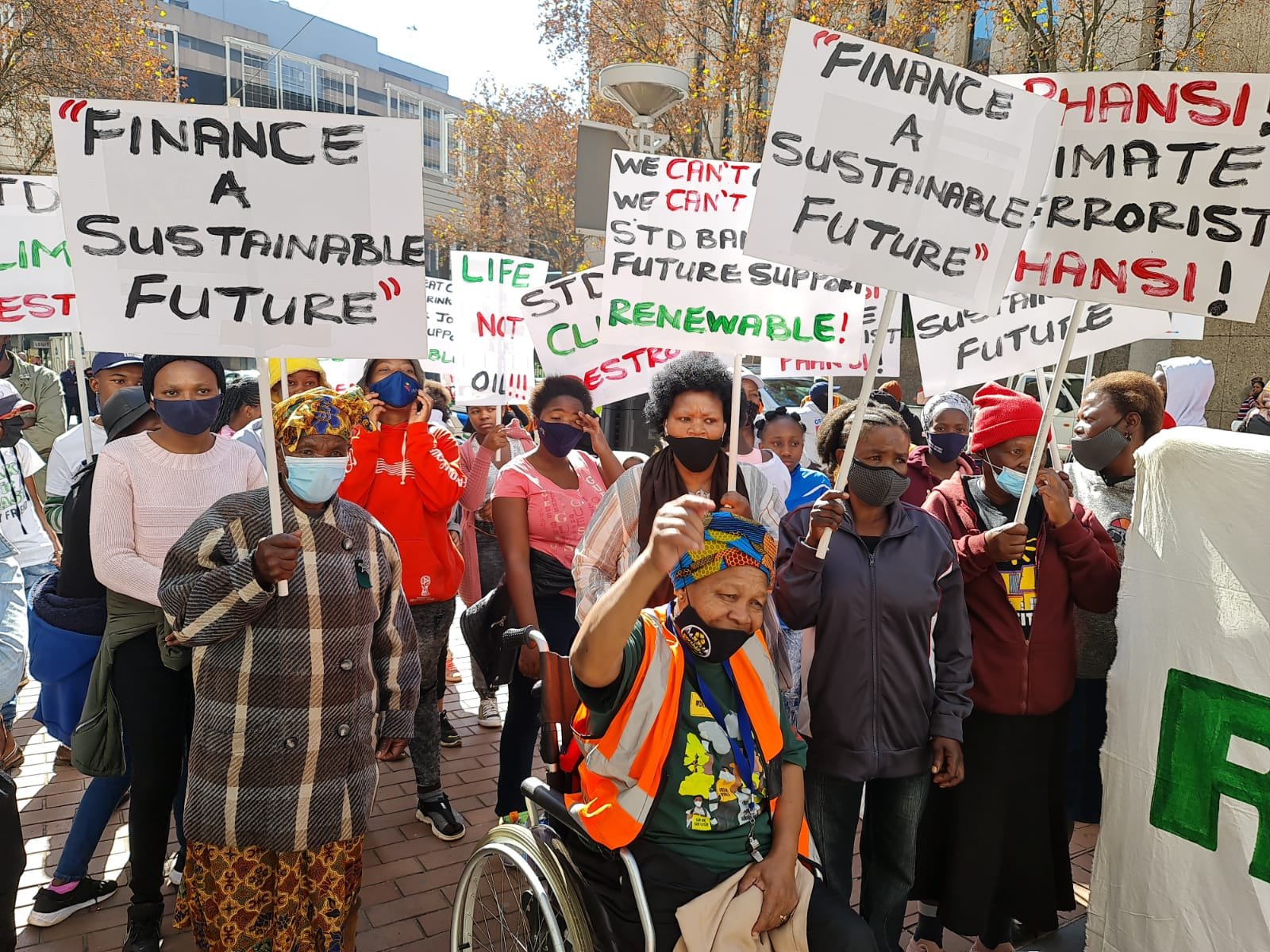
This morning, members of the Macala and Mangala Communities, have been gathering again since early light to continue their two weeks of demonstration against the violations of their land rights by Mozambique LNG gas project, operated by TotalEnergies. Yesterday’s demonstration was attended by at least 400 people. This morning, the number of demonstrators is already high and still increasing. Following yesterday’s attempts by district and provincial governments to convince them to leave the area, the situation is escalating. This morning, families from a third community, Quitunda Resettlement Village, are growing the ranks. 

“tal como  estamos a parar a produção de alimentos, 
a empresa  também deve parar as suas actividades”

“just as we are stopping food production, 
the company should stop their activities as well”

In a context of national strikes and demonstrations aimed at demanding electoral justice, the Mozambican people are taking advantage of this moment to express their discontent at the social injustice to which they have been subjected for 50 years. A visibly tired and angry people are taking to the streets to express their indignation at a precarious health system, the poor or non-existent quality of education, a bad transport system, the increase in crime, the lack of access to employment for young people and adults, and to seek measures to end the hunger that hangs over Mozambican families, at a time when – for 20 years – natural resource exploitation projects have been the promise of a better Mozambique for all Mozambicans. 

The scene in Afungi today: the demonstrators have split into four groups and obstructed movement at four of the gates to the TotalEnergies Afungi site. 

The resettlement process in Afungi has been underway since 2019, with the initial plan to resettle 556 families, and since then many more families have been resettled, yet few of these families have received replacement land for fields that they can use. In addition, there are those who gave up their land for fields for resettled families’ but have not been compensated to date. These are the main groups who have been demanding their rights at the company gates.

Justiça Ambiental says: “The resettlement process has been characterised by a large number of irregularities which has caused the discontent that culminated in these demonstrations.”

The communities state their concerns relate to: 

  • Refusal to pay compensation for the agreements signed between the project and around 445 households, relating to the occupation of land intended for families resettled in Quitunda. These agreements were signed between October 2023 and February 2024. According to clause 4.5(a) of these agreements, the affected families are obliged to cede their land and all assets on it in favour of the project within 30 days of signing these agreements.
  • Refusal to sign agreements for the payment of compensation for the lands that the project mapped and surveyed, belonging to 158 households in the same two communities. The mapping was carried out between October 2023 and March 2024 by the company.

The communities of Macala and Mangala have made several complaints to the project regarding these matters. In August 2024 TotalEnergies’ representatives in the resettlement area met with the affected families and informed them that the project would not pay compensation to them. This decision was made without respect or consultation with the communities, and the company did not provide a reason for the decision. 

This pronouncement not only created a climate of uncertainty and despair among the members of these two communities, but has also caused major frustrations. 

It is a rule established by the project in all the affected communities for the families affected to immediately suspend any activity related to agricultural production or maintenance of the affected fields. This rule aims to combat opportunism on the one hand and to ensure that the project compensates the affected properties at the time of mapping. This rule has also been complied with by the affected families.

In the Macala and Mangala communities, 445 families have signed compensation agreements and 158 affected families have not yet. All 603 families affected by the project have been banned from using their land since October 2023. This is land that the project has already used –  making roads through the middle of what used to be important food fields. The demonstrators explain that the frustrations in their communities are also very much about lost time. 

Community members say they consider this situation to be unfair to them and threatening to their lives, because the land occupied by the project is the only source of their survival. 

In September 2024, the members of the Macala and Mangala communities wrote a letter to the Palma district government presenting these concerns and frustrations. The letter also informed the PRM (police) district command and the district administrator about the communities’ intention to hold a demonstration. The demonstrations were postponed by the district administrator, who said they were in discussion with the provincial government about the complaints.


On 2nd November 2024, Macala and Mangala community members began their demonstrations. On that day, they closed the roads that were built through their fields and put up posters explaining their discontent. This did not have a negative impact on the work and movement of the project and its contractors. 

On 8th November 2024, protesters gathered at the main gate leading to the entrance to the project camp. On that day the demonstration forced the closure of the entrance and exit of the project staff and their contractors. Community members interrupted their protest only after negotiations with the District Administrator at the site. 

The demonstration resumed on 11th November 2024, lasting the whole day. At the end of the day, the administrator told the demonstrators that the Governor of Cabo Delgado Province would meet them on 14 November 2024 for negotiations that could provide answers to their demands. 

At the moment, 15 November 2024, the governor and the administrator are inside the TotalEnergies Afungi camp, and information about what is being discussed there will only be known when they return to the population.

There is a clear indication that the gas affected communities intend to remain at the gates. Now, we await news. 

Contact: Kete Mirela Fumo / kete.ja.mz@gmail.com 

Background

The Mozambique LNG project, operated by TotalEnergies, was allocated land rights to about 7,000 hectares of land on the Afungi Peninsula, as well as rights to coastal areas, for its infrastructure and operations, This required communities who were living and conducting their livelihoods in the area to resettle. The project is required to compensate those affected. Even though TotalEnergies declared in May 2024, that all compensations had been paid, this is evidently not the case. Testimonies from affected people can be viewed here [https://stopmozgas.org/from-the-ground/video-testimonies/]

There are complaints registered in all communities affected by the project regarding the lack of housing, machambas (farmlands) and partial or lack of compensation payments. In the communities of Quitunda, Senga, Mangala, Macala, Maganja and Palma Village there are people who are yet to receive compensation or who have received part of the compensation, and others who have not signed agreements yet. Evidence is emerging of even more violations of the rights of people in relation to the project activities. 

Justiça Ambiental! (JA!) / Friends of the Earth Mozambique: JA! is a civil society organisation in Mozambique that supports environmental justice at community, national and international level. JA! views the environment as an holistic concept and thus environmental justice as the act of using the environment as a vehicle for ensuring equity and equality across society. In support of sustainable development they view the concept of equality on a grand scale, and as such, values the rights of future generations to a healthy and safe environment, to the same degree that that right is valued for humanity. JA! received the Silver Rose Just Transition Award 2023 for their fight for a just transition and against fossil fuel projects and land grabs in Mozambique. In 2024, JA!’s director, Anabela Lemos is being honoured with the Right Livelihoods Award. Justiça Ambiental! (JA!) is Portuguese for Environmental Justice! and ‘ja’ means ‘now’ in Portuguese. 
Tagged , , , ,

Where is Ibrahimo?

7 September 2021

Today, the 7 September 2021 has been exactly 17 months since Mozambican journalist Ibrahimo Abu Mbaruco disappeared in Cabo Delgado. His last message was to a colleague saying that the army was coming towards him.

Ibrahimo worked for Palma Community Radio and had been reporting on the violence in the area. Since then, what effort has the government put into finding him and bringing him back to his family? Absolutely nothing.

Since 2017 Cabo Delgado has been ravaged by a fatal conflict between insurgents, the Mozambican military, Russian and South African mercenaries and now the Rwandan and South African armies as well, that has created 800 000 refugees. This violence is deeply linked to the gas industry that has exploded over the last few years. The industry is headed by Total (France), Eni (Italy) and ExxonMobil (US), and is one industry filled with a great amount of treachery in the Mozambican and other states involved, which forms part of the corruption trial currently in the Mozambican courts.

Over the last few months several media outlets have arrived in Cabo Delgado, after at least three years of the area being closed to international journalists.

It is a good thing that Mozambican and international media has finally been allowed there, since free media is a crucial part of any democracy. However, journalists who actually live in Cabo Delgado and were the first to report on the happenings since 2017, have not been allowed to work in the conflict areas, unless they are from state-owned media outlets.

In an article in O Pais 26 August, Cabo Delgado-based journalist Hizidine Acha wrote that journalists from the area are being humiliated by having to report on the topic from a distance, even though they are the ones who know the terrain and the local language. They fear that the lack of reporting in local languages might lead to disinformation among the communities. The article quotes journalist Emanuel Muthemba as saying, “Journalists from here have to be on the front line, because we have basic knowledge about the reality of the province, the people and the languages spoken by the population, which is very important,”; and journalist Assane Issa says “speculation grows that we are not capable of doing this type of coverage – that only those from the country’s capital are. But this is not true, because we are the ones who have been reporting on the daily life of the province.”

In fact, the article continues saying that recently 20 local journalists were invited to cover the conflict, but for reasons they were never told, were never actually able to leave Cabo Delgado’s capital and largest city, Pemba.

But even if they were able to report, the government has made it clear that they will not make it easy. On 11 April, on the ‘Day of the Mozambican Journalist’, even though his general rhetoric has been about free press, President Felipe Nyusi sent a document to O Pais, saying, journalists must report with “rigour, professionalism and patriotism”. He said “the Mozambican journalist should not be a reproducer of wishes contrary to our unity.” And he followed this in May saying that journalists have to be “disciplined”: “To have discipline is to report only the truth, to combat fake news and not to incite violence and hatred.”

This is not freedom. This is a threat. This is saying that journalists have the ‘freedom’ to write or to film or to record for radio, as long as this is in aligned with the state’s narrative. Or else.

The public media and many international journalists are reporting on the violence in the province as only a humanitarian issue created by violence caused by insurgents, and not on how many of these refugees were actually already displaced from their villages, and had lost everything, because of the Afungi Liquid Natural Gas (LNG) Park that Total is building to house the support facilities for the industry. Reporting in this way allows the gas industry off the hook for the part they have played in this humanitarian crisis and conflict, including how Total has left the displaced communities who were relying on them for compensation and aid with nothing as they pulled out of the country when claiming force majeure.

International journalists are protected by having foreign passports. But who is protecting local journalists from non-state outlets, like Ibrahimo, or like Amade Abubacar from the Nacedje Community Radio who was arrested, tortured and held without charge for 3 months in 2019 after interviewing a group of displaced people? Or the journalists of Canal de Moçambique whose office was bombed in 2020 after exposing corruption between the government and gas companies?

In April 2020, Reporters Without Borders and 16 other press freedom organisations wrote an open letter to President Filipe Nyusi, who ignored it, just like the military and relevant government officials did not even bother to respond, and the police treated it like a joke. On 8 June 2020, Ibrahimo’s brother contacted the local police to inform them that he had called Ibrahimo’s phone and it rang. He reported it to the public investigators responsible for finding him, the National Agency for Criminal Investigations. They promised they would look into it, but since then there has been silence.

But we must not stop fighting!

In January, the African Union (AU) launched the Digital Platform for Safety of Journalists in Africa. At the launch, South African President Cyril Ramaphosa, who was AU chairperson at the time said: Media freedom “requires that we rigorously defend the right of journalists to do their work, to write, to publish, and to also broadcast what they like, even if we disagree with some or all of it.. The digital platform for the safety of journalists in Africa is an important tool in promoting the safety of journalists and other media workers across Africa.”

Now they must put their money where their mouth is, by holding the Mozambican government accountable for its violent media oppression and pressurise it to stop, and they must recognise how part of this oppression is to protect the gas industry. The platform was supported by the United Nations, and both they and the AU have the responsibility to find out what has happened to Ibrahimo, and must use their power to do so.

It is clear that Mozambican journalists cannot rely on their state for their protection – the very people who are obliged to protect them, but sadly are reliant rather on non-governmental organisations and media groups – both international, and local, who themselves are putting their safety on the line just by speaking out. When journalists are told they need to report with “patriotism” and “discipline”, it is clear that, just as history has shown, they cannot know that they are safe. They cannot know their colleagues will not be arrested and tortured or that their offices won’t be attacked. They cannot know that they, too, will not disappear and be another Ibrahimo.

We must not stop pushing to find out, where is Ibrahimo?

Tagged , , , ,

JA! at the AGMs, 2021

Our Say No to Gas! In Mozambique Campaign has many elements, but one of the crucial ones is confronting fossil fuel criminals involved in Mozambique’s gas industry, about the destruction, violence and devastation they have caused in Cabo Delgado province.

One way of challenging them and making demands for them to leave and stop their involvement in Mozambique gas, is attending Annual General Meetings (AGM) of several large international players in the Mozambique gas industry, which this year we did for the fourth year running. Attending these AGMs is a way to force the highest level decision-makers in these companies to hear our voices and the voices of the people whose lives they are devastating, to demand information and call them out on their crimes against the climate and peoples in a large public forum that includes their shareholders and employees. It is a way to prevent them from saying “we didn’t know” about the impacts – even though taking active measures to identify potential risks of human rights violations is part of their responsibilities. There is often media at the AGMs of the large companies, giving us another opportunity to bring to the international public the issue of Mozambique gas and the violence and destruction being perpetrated by those who profit from it tremendously.

With the Covid-19 pandemic still raging, most of the AGMs were held online.

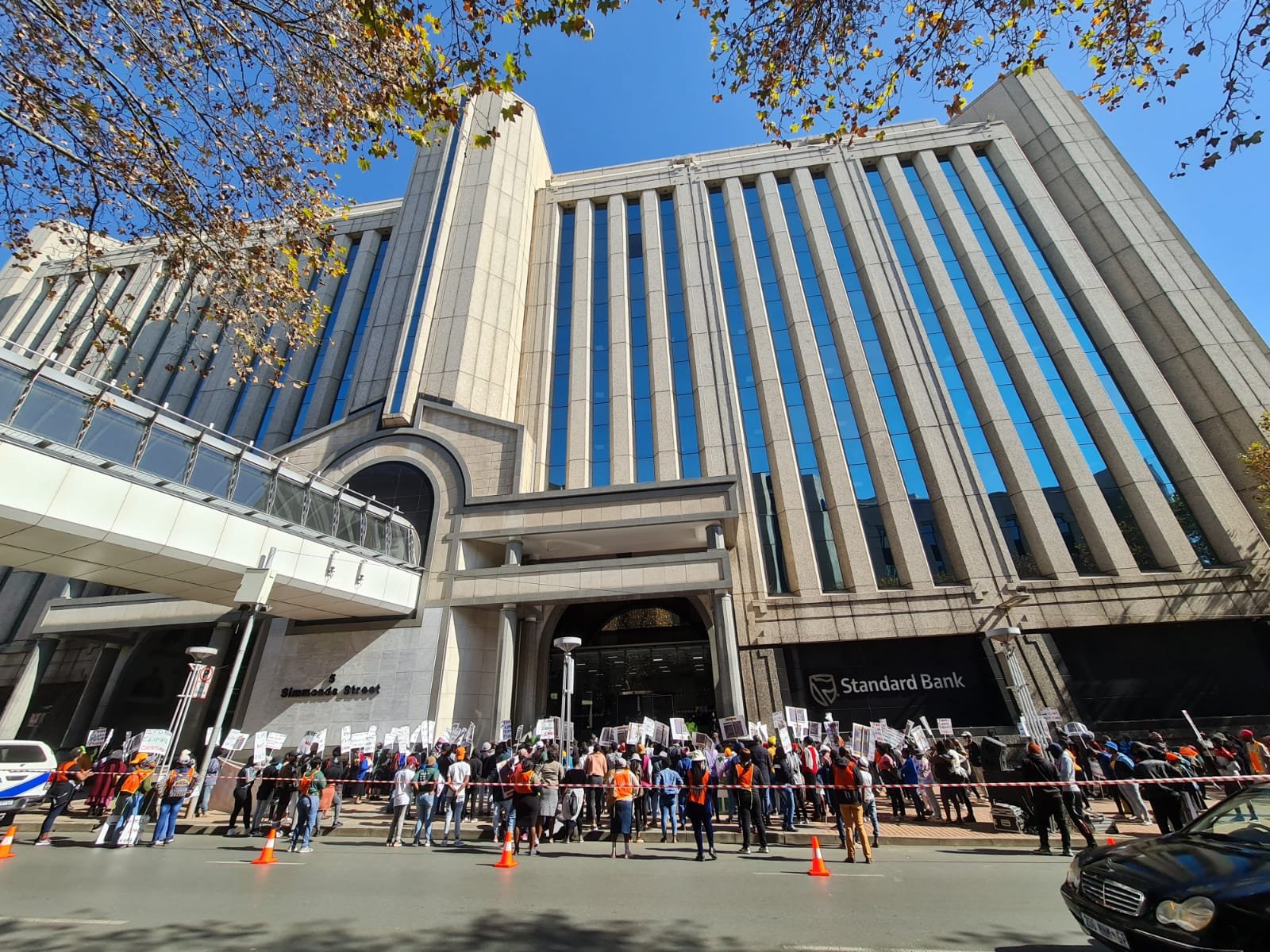
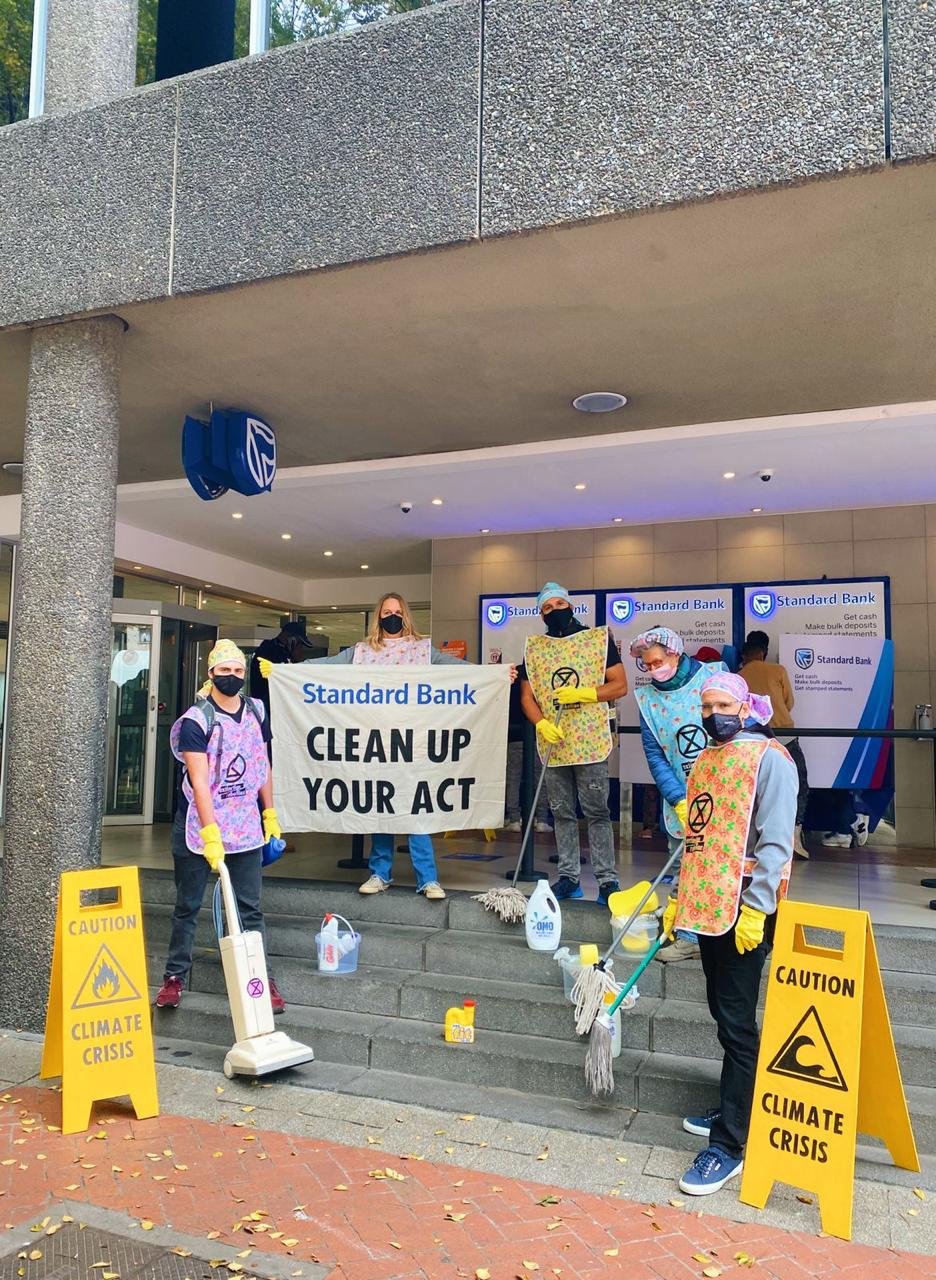
The AGMs we attended were of Eni (Italy) which is co-leading the Coral Liquid Natural gas project with ExxonMobil; Total (France) which is leading the Mozambique LNG Project; Shell (Netherlands), who was previously involved; Standard Bank (South Africa), one of the major financiers; and HSBC (UK), another massive financier. While there are some questions specific to each company, many of them are standard. This is because, while Eni, Total and ExxonMobil may be the companies leading the actual gas extraction and responsible for constructing the offshore and onshore facilities, every player involved in the Mozambique gas industry is to some degree responsible for the negative human rights, climate, environmental and socio-economic violations and impacts it has created. Companies and governments involved often try to wriggle out of their responsibilities and accountability by claiming that they are not ‘directly’ responsible for the impacts. This is utter nonsense – without financiers, contractors or confirmed purchasers, the Mozambique gas industry would not exist.

We demand to know why they continue to invest or operate in Cabo Delgado considering the horrific violence and conflict that has been taking place for years between insurgents, the military and private security companies, in which thousands of civilians have been killed and over 800 000 people displaced. We want them to recognise that they have directly created suffering and deeper impoverishment for the communities affected by the project, who have lost their homes and livelihoods, and received no decent jobs; and we ask what is their plan to make reparations. We want them to provide transparent information, something lacking in an industry which is so opaque and secretive.

Eni insists they are ‘providing support to the basic needs of local populations’, even when we tell them that the only jobs Mozambicans have received have been menial and unskilled. They say that a mere 370 permanent jobs will be available in total over the life cycle of the Coral LNG project, although they don’t say if these will actually go to Mozambicans.

All companies refuse to see a link between the gas industry and the violence, with Eni even saying they see no risk whatsoever, and denying any human rights violation by the military, even though this had been exposed in mainstream media and international human rights organisations’ reports.

Total, which claimed force majeure in April 2021 due to the violence, putting the Mozambique LNG project on hold indefinitely, made the contradictory remark that the safety and well-being of communities was a priority, but at the same time, “our mission is to protect the interests of Total’s shareholders and our partners”. These are obviously mutually exclusive, as continuing with the project will only continue the violence and dispossession that communities are facing. While they insist that the Mozambique LNG project has not been “abandoned”, they put the responsibility of the impacts on communities solely on the Mozambican government.

Standard Bank also believes that their investments are not at risk because of the violence. Even as people in Cabo Delgado are being killed every week, they carry on with business as usual, as though the militarisation and its accompanying human rights violations creating refugees and forcing displacement, do not matter to them at all. Clearly, even though they use an undisclosed “consortium” of civil society organisations in Cabo Delgado to do “monitoring”, the lives of the rural affected peoples means nothing to them.

HSBC on the other hand, just refused to answer the questions, except to say they cannot talk about private clients and very few jobs will go to Mozambicans because of the project’s “advanced technical requirements”.

Company AGMs can be very frustrating events. Directors often dodge questions or answer them insufficiently on purpose, or just pretend they didn’t hear them at all. But this year, as with most, these experiences and actions are more than confronting fossil fuel companies and financiers, they also strengthen civil society’s collective struggle against fossil fuels and the impunity of transnational corporations.

We use these as opportunities to work with other regional and international organisations and movements who are fighting against the same company or projects for crimes they are committing in the different countries. As partners, we support each other in asking questions, gaining access, publicising on social media and holding protests, and use the opportunity to exchange with each other about the different ways we are campaigning against the same culprits. When we attend as a group, our presence is powerful. As a team, we have more numbers and confidence in our actions inside and outside AGMs, more access to media and more impact if we choose to cause any disruption. If these companies do not want to take the time to talk to us and our comrades, this is a way for us to force them to listen. The strongest outcome of attending AGMs is that we are saying clearly, with a collective voice ‘we are watching you and we are not going away’, while we demand that they leave and stop their profit-mongering activities that are killing peoples and the planet.

Tagged , ,

The Despair of the people of Cabo Delgado

A week after the insurgents attacked the district headquarters of Palma, the people of that district continue to arrive in Pemba city, with faces full of fear, sadness and, above all, uncertainty. Although about 9000 displaced people have been accounted for so far, there is information coming from those same displaced people, and also confirmed by the Ministry of National Defense, that there are still people hiding in the fields.

The displaced persons tell how it was on 24 March, a date that will never be erased from their memories. Reports say that rumours had been circulating since the morning of that Wednesday that the Al-Shabaab were going to attack the district. But it was not taken into account because of previous rumours circulating in that district two weeks before the attack, which said that the insurgents were in the fields near the village preparing for an attack. The frequent shootings that already characterised the daily life in the village of Palma, also contributed to these rumours falling into disregard on the part of some people. On the other hand, people placed trust in the Defense and Security Forces (FDS) of Mozambique that seemed to have a heavy presence in Palma.

However, according to reports from the displaced people who actually experienced the attack, at around 4pm the attack began in the village of Maʼguna, 800 meters from the village of Palma, when most of the population of that village fleeing the armed confrontation in Ma’guna, came into Palma. Two shoot-outs started simultaneously in the Quibuidi neighborhood, via Nhica do Rovuma and at the Aerodrome of Palma. At that time, everyone abandoned their homes and possessions and ran for their lives in an uncontrolled way. The insurgents appeared from different parts, and since they use a uniform identical to that worn by our Defense and Security Forces, the only thing that differentiates them are the scarves tied to their heads and their bare feet. It was clearly noted that their initial intention was to destroy the government infrastructure. The only safe area to escape was to the sides of Palma beach but at some point, certain points on the beach also became unsafe.

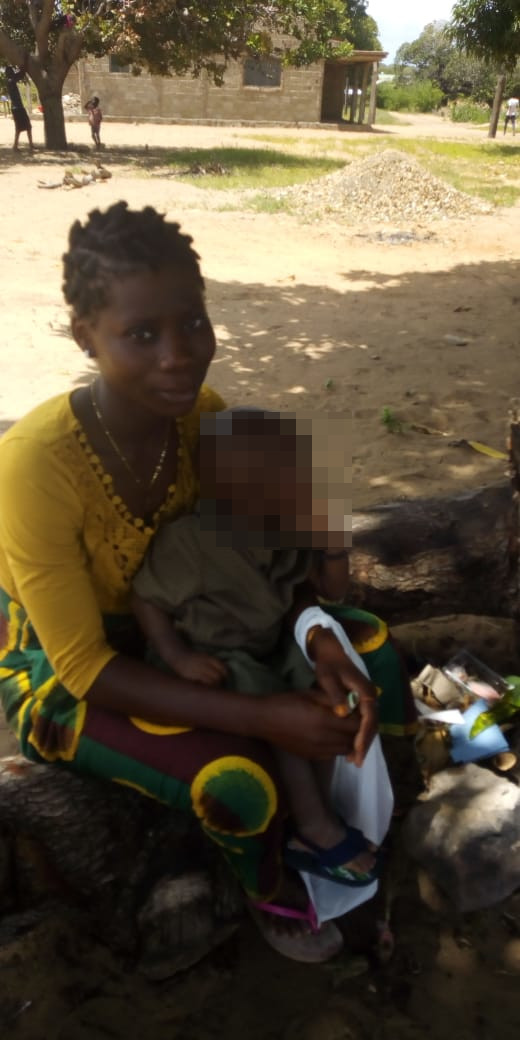
We heard moving and frightening stories from those who lived that Wednesday under fire and the days that followed. There were several kilometres walked on foot and under fire, with fear, hunger and thirst. Mothers ran carrying their young children on their backs. One of these children was hit by a stray bullet, but luckily it entered the buttock and lodged in the leg. That is the little one, Cadir Fazil, 1 year and 2 months old, born on February 21, 2020.

On Monday, 29 March, due to the fact that the baby was wounded, his mother and aunt were given priority on one of UNHCR’s humanitarian flights and were treated urgently at the provincial hospital in Pemba. There have been situations of despair of men refusing to board humanitarian flights and ships because they were unable to locate their wives and children or any other member of their family; children begging for their parents’ lives and yet, being forced to witness their cruel murders. In spite of all this climate of terror, the class difference did not cease to prevail among the victims of Palma. At the Amarula hotel, where government officials and some foreigners took refuge, a helicopter landed twice, the first time to evacuate the district administrator and the second time to evacuate the owner of the Hotel, leaving behind the various people who only had the option of joining the caravan, which was unfortunately ambushed along the way.

The Quiwia and Quirinde forests are still home to people who struggle for their lives because of hunger and thirst. Every day we received unclear information about events in Palma, as the total break in communications remains in that district still, and it may remain so until the crossfire between insurgents and the military ceases.

After several complaints about the silence of the President of the Republic, he took the opportunity to comment on the matter, at the launch of one of the headquarters of the National Social Security Institute (INSS) in the southern district of Matutuíne, Maputo province, where he made a brief mention of what happened in Palma in a simplistic way, and minimised what happened. From the speech made by His Excellency, the President of the Republic, two questions arose. Firstly, for having stated that there have been worse attacks to Palma and that it was not even very intense, the following two questions remain:

– What was the worst attack that has occurred from 2017 until today?

– Why after the worst attack took place, were there not measures taken to prevent a new attack from occurring?

Another statement by the President that drew attention was when he said that we should not lose focus, that Mozambicans should not be “disturbed”. However, it is revolting to hear this when, in one week, about 9000 people were evacuated from Palma by land, air and sea, many of whom do not know how they will survive, since they have abandoned everything they had in their village of Palma.

– What should these people now be focusing on?

– Is it wrong for these displaced people to be disturbed, after having to focus only on surviving?

We must not forget that there are already about 300,000 displaced people living in transition reception centres and resettlement centres so far.

The first displaced persons of this war are being resettled practically permanently in the surrounding districts of the city of Pemba and now with the attack on Vila de Palma, many more arrive, although proper conditions are still not created for the displaced people of Macomia, Quissanga, Mocimboa da Praia and Muidumbe. Should we not be disturbed when we have no answers for the hundreds of people who arrive in Pemba and other parts of the country, coming from the attacked districts without even knowing if they will ever be able to return?

Should we be undaunted and serene in the face of the massacres that we have been experiencing since 2017?

So, Mr. President, since 2017, we have been ‘disturbed’, since 2017 we have howled and called for an end to the attacks and demanded that concrete measures must be taken, but because perhaps Mr. president has a different focus than ours, so tell us, in desperate situations like this, what should we do to not lose focus?

Tagged , , ,

Report release: Chasing Carbon Unicorns

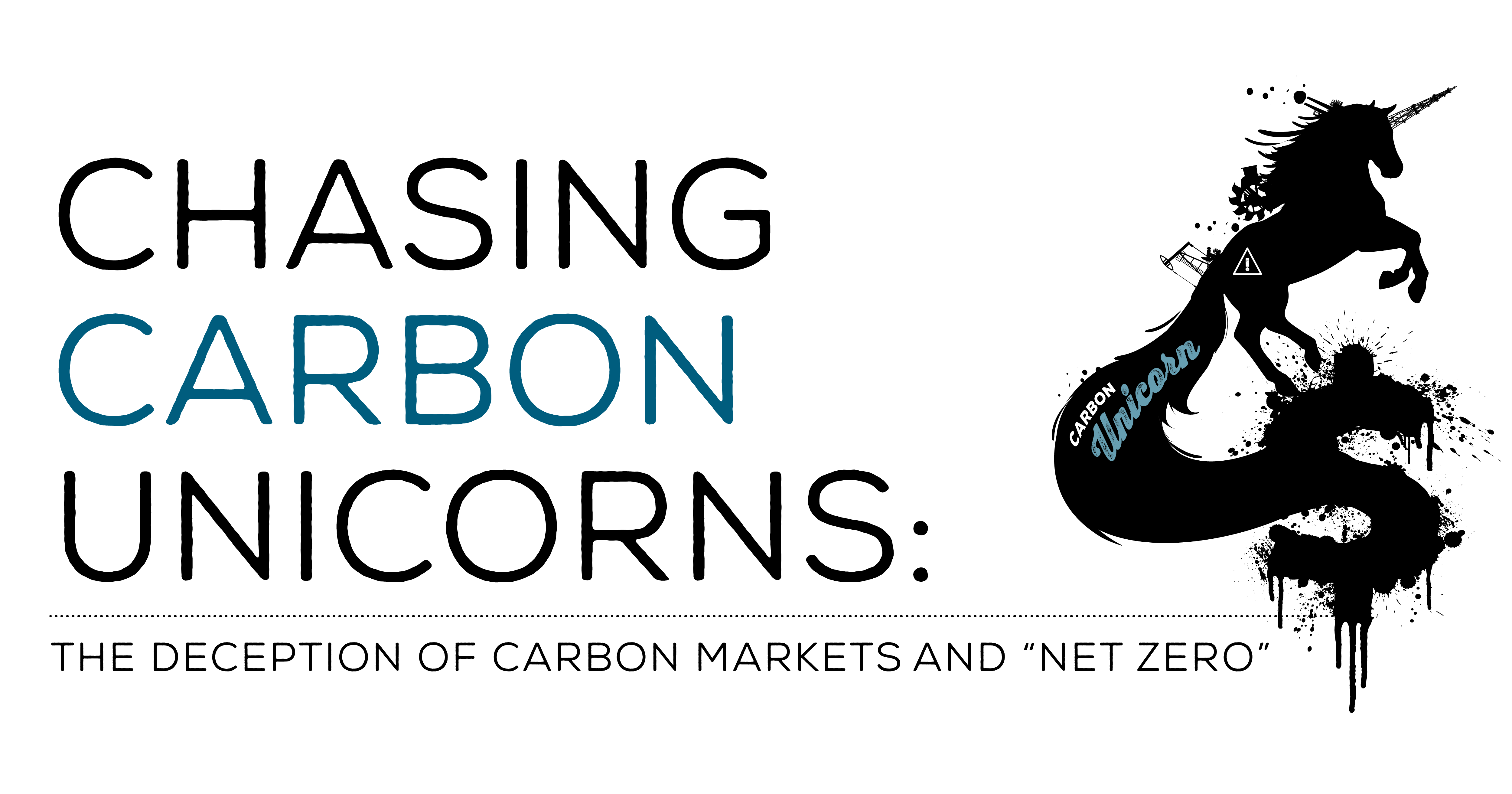
24 February 2020: Climate justice organisations today release a new report: Chasing Carbon Unicorns: The deception of carbon markets and “net zero”.

In the lead up to delayed COP26 climate talks in the UK, and as big polluters continue to expand fossil fuel exploitation, this report unpacks the science behind carbon offsetting and reveals how “net zero” pledges will never solve the climate crisis. 

The report is available in English, Portuguese, French, and Spanish.

Powerful actors are using “net zero” pledges to hide their climate inaction. Stopping the climate crisis requires us to stop burning fossil fuels – no magical thinking will solve this problem, just immediate action and system change. But transnational corporations and governments are hiding behind the “net” in “net zero” – claiming that they just need to pay someone else to remove carbon, through carbon offsetting, rather than taking action on their own.

This report unpacks the science behind “net zero” claims and how they are used to obscure climate inaction. It explores the new strategies to expand carbon offset markets, linked with new “net zero” demand for offsets. It also explains the roles played by various actors involved in the effort to “make offsetting great again”. These include less obvious players such as a few large mainstream conservation organisations, as well as the more obvious ones: the banks, the finance industry, and corporate interests behind maintaining the status quo of fossil fuel production and consumption.

Report published by Friends of the Earth International, La Via Campesina, Indigenous Environmental Network, Corporate Accountability, Asian Peoples’ Movement on Debt and Development, Third World Network, Grassroots Global Justice Alliance, Climate Justice Alliance and Justiça Ambiental.

REPORT RELEASE

Gas in Mozambique: A Windfall for the Industry, a Curse for the Country

Today JA!, Friends of the Earth France and Friends of the Earth International have released a report which exposes deep French involvement in the gas industry in Mozambique. The report, entitled Gas in Mozambique: A Windfall for the Industry, a Curse for the Country, details how the French government, its banks and corporations are part of a web of state corruption, arms deals, human rights violations and economic diplomacy, all in the interests of a $60 billion industry that has left destruction in its wake before a single drop of liquid natural gas has even been extracted.

The report shows how the French State, major private banks including BNP Paribas, Société Générale and Crédit Agricole, and fossil fuel giant Total, are some of the greatest beneficiaries of the devastating impacts of the industry in the northern province of Cabo Delgado.

JA! works closely with local communities directly facing these impacts on a daily basis. We have seen entire villages uprooted from their homes, fisherpeople moved many kilometres from the coast, and their struggle and heartbreak at losing the land and sea that has been their livelihood for generations.

We have been present with them as they try to speak up in meetings where Total brings the news of their coming difficulties and losses, but have their voices suppressed. They have told us of their nightmarish fear of insurgents who have terrorised the region with violent and fatal attacks, and of the heavy-handedness of the military that has been deployed to protect the industry.

The report includes detailed and up-to-date information from the ground, and divulges the depths to which the French public authorities have gone to ensure their economy, bankers, fossil fuel and arms industry are the greatest profiteers of the gas exploitation, even it it means devastation of the local environment, lives, economy and climate.

With this report, JA!, Friends of the Earth France and Friends of the Earth International call for the French state, banks and fossil fuel companies to withdraw from their involvement in Mozambique, stop the country’s dependence on fossil fuels and cease corrupt diplomatic dealings which are leaving the Mozambican people, and the planet, in a state of hardship and chaos.

“France is determined to ensure that this gas windfall benefits first and foremost its own transnational corporations, even if this means sowing chaos for Mozambique and setting off a climate bomb equivalent to seven times France’s annual greenhouse gas emissions. Neither the French government, nor Total and its bankers, seem concerned about the impacts this will have in fuelling climate crisis, local conflict, corruption and human rights violations.”— Cécile Marchand, Climate and Corporate Justice Campaigner at Friends of the Earth France

“The fossil fuel industry is peddling a lie that gas can be part of the clean energy transition. In reality, this so-called transition in Mozambique has meant a shift from freedom to human rights violations, from peace to conflict, from communities living well through farming and fishing to starving populations deprived of their livelihoods. The gas rush, which is exacerbating the climate crisis and benefiting only transnational corporations and corrupt elites, must stop.”— Anabela Lemos, Director of Justiça Ambiental (JA!)/Friends of the Earth Mozambique

LINKS TO THE REPORT

English Executive Summary: https://www.foei.org/resources/gas-mozambique-france-report

Relatório Português: https://www.foei.org/wp-content/uploads/2020/06/Gas-Mocambique_Portuguese.pdf

French report: https://www.foei.org/wp-content/uploads/2020/06/De-l-eldorado-gazier-au-chaos_Gas-au-Mozambique_Amis-de-la-terre_rapport_FR.pdf

For enquiries

For press enquiries, please contact:

Cécile Marchand, Friends of the Earth France, cecile.marchand@amisdelaterre., +33(0)669977456

Daniel Ribeiro, Justiça Ambiental, daniel.ja.mz@gmail.com, +258842026243

Friends of the Earth International, press@foei.org

JA! is taking on Sasol

Over the last month, JA! has been confronting South African energy company Sasol in several ways, interrogating them on what they’re really getting up to in Mozambique.

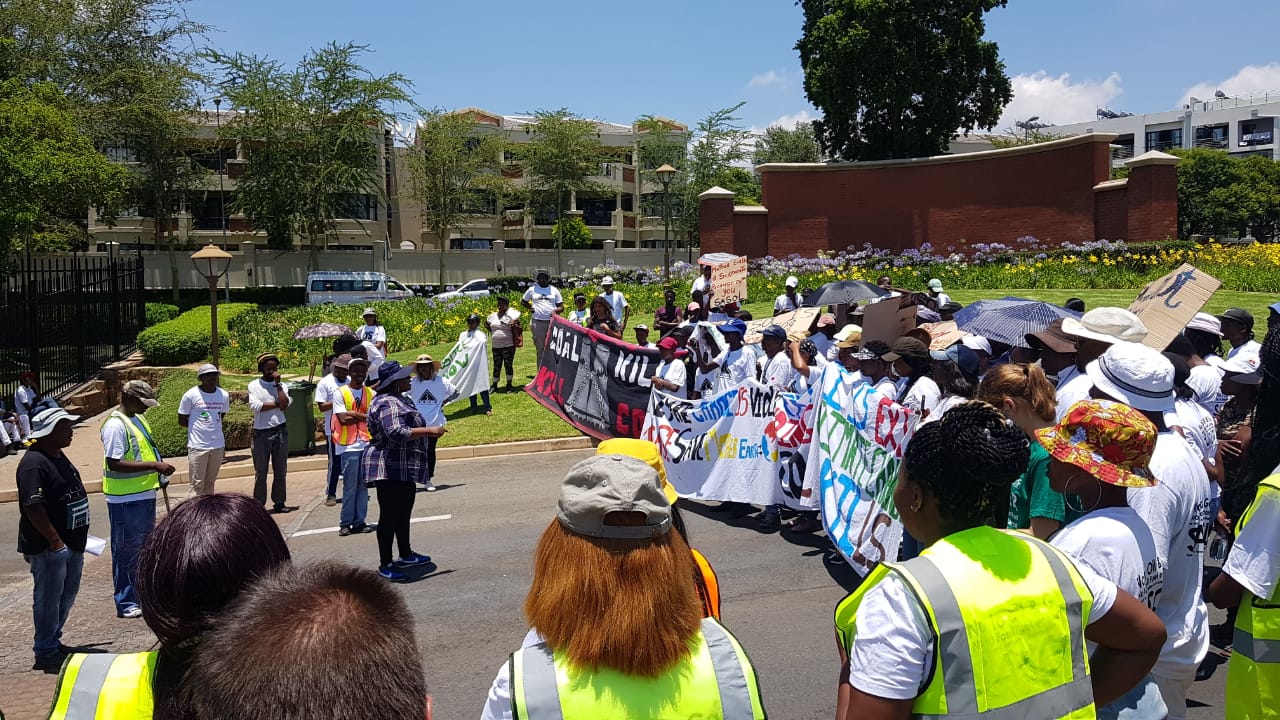
Most recently, last week JA! attended the Sasol 2019 Annual General Meeting (AGM) in Johannesburg, along with four other civil society organisations, to question the board and inform shareholders about what the company is currently doing, and planning to do, in Mozambique.PHOTO-2019-11-27-09-12-09

Leading up to the AGM, JA! sent the company questions to understand the technicalities of their present and future projects, followed by a meeting with five vice presidents at their headquarters in Johannesburg, with the support of a fellow activist from partner organisation groundWork.

JA! raised two issues at the AGM:

The first was about the Pande and Temane gas fields in Inhambane that Sasol has been operating since 2006 after removing many community members from their homes and creating only 300 permanent jobs. Sasol has been accused of transfer pricing in this operation – Sasol Petroleum International (now Sasol Africa) is the sole purchaser of the gas extracted here by its wholly-owned subsidiary Sasol Petroleum Temane, which it buys at a tiny percentage of the market value.

The second question was about Sasol’s planned shallow-water drilling off the coast of Vilankulos, also in Inhambane. The drilling will destructively affect fishing communities, endangered species of animals and plants, and the tourism industry, a huge income generator for the province. Accompanying JA! Was a member of the Protect Bazaruto Campaign, which is working to stop the project.

Here are the questions asked by JA!:

1. The first subject is the Pande and Temane project in Inhambane.

To give context, Sasol has regularly insisted that the fields have brought benefits to the surrounding communities since operations began in 2006. However, setting aside schools and soccer fields, the rate of literacy and employment has increased only in line with the rest of the country, including those provinces without extractive industries. Furthermore, 12 years later, according to the World Bank, only 25% of the population of Inhambane has access to electricity, which is less than the country as a whole, at 27%.

When communities were relocated from their homes in 2006, they were given once- off compensation of R 12 000. I emphasise, R 12 000. However, Sasol signed a Power Purchase Agreement (PPA) with the government which promises annual benefits to the people. Note that this amount is a mere 2.75% of the 6% production tax that the company pays to the government.

JA! questions are:

  • Why has Sasol not paid the annual benefits to the communities as per the PPA for the last four years?

  • Does Sasol recognise that the amount it offers as benefits is too little to maintain the livelihood of a family?

  • And will Sasol renegotiate the terms of the PPA to increase the amount of the benefit, by using total revenue as a basis as opposed to production tax, now that it has the option to do so?

2. The second subject regards Sasol’s planned seismic testing and drilling for gas in the shallow waters off the coast of Vilankulos

Sasol plans to do seismic testing and drilling in ocean shallow water ocean blocks 16 and 19 in Bazaruto, a national park and IUCN Important marine mammal area. Block 16 is home to the only viable dugong species in the Western Indian Ocean as well as two important reefs for commercial and subsistence fishing for many communities.

The best case scenario for this drilling is impacting critically endangered species such as dugong; Fish stocks and livelihoods of fishing communities; sustainable tourism which is central to the economy and can outlast oil and gas.

While Sasol maintains that it is taking all necessary actions to avoid environmental damage, it has been well documented that mitigation of the impacts of gas drilling and seismic testing is impossible. Communities, too, have shown strong resistance to the project.

JA! question is:

  • As it is scientifically certain that seismic testing and drilling will diminish the last viable population of dugong in the Western Indian Ocean, why does Sasol believe it has the right to contribute to the extinction of an iconic species, violate national laws protecting national parks, and detrimentally affecting the livelihood of fishing communities?”

Responses:

At the end of the round of questions, we received a verbal response from Jon Harris, Executive Vice President: Upstream, who JA! has engaged with on previous occasions.

His response was vague, a public relations exercise and in it he repeated the same story of the great benefits that the company had allegedly brought, and that we need to look at smaller sections of the population of Inhambane, those in the immediate vicinity of the plant, and not the province as a whole. He said he was not aware of whether people had been receiving benefits or not, and did not answer whether they would renegotiate their PPA with the government, which would enable the people to receive more benefits.

Regarding Vilankulos, he said that seismic drilling has no impact on the environment, and that they are putting the utmost care into avoiding any impact on animals.

There are several aims of JA! Attending an AGM like this – to confront the board, to inform shareholders, to ask questions, to receive information and to alert the media. There is always the risk that the responses will not be helpful, or even relevant, but our presence there was imperative – were it not for JA!’s presence few people would have known about Sasol’s crimes in Mozambique.

Outside protesters, against Sasol, and same are about to hand over the memorandum to Sasol Vice President Marcel Mitchelson

PHOTO-2019-11-27-11-44-47

JA! speaks truth to TNC’s in Europe!

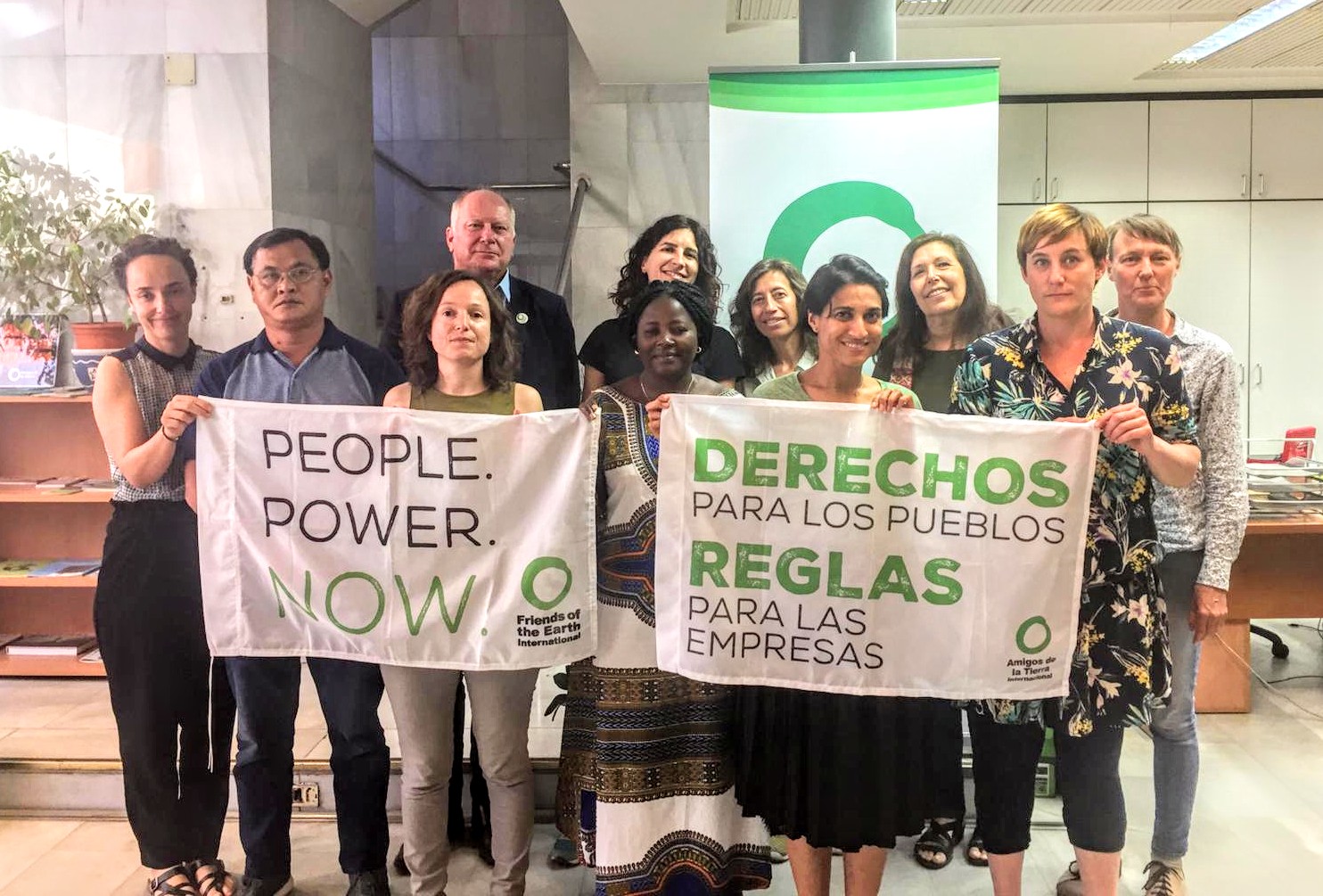
Lobby tour participants and organisers FoE Spain in Madrid


Over the past few weeks, JA! took part in a lobby tour organised in Europe, by Friends of the Earth Europe, where we met with current partners, made new allies, shared our anti-gas struggle and confronted the companies and banks who make up the liquid natural gas industry in northern Mozambique. This tour was imperative for the campaign, because so many of the companies and banks involved in the industry are based in Europe.

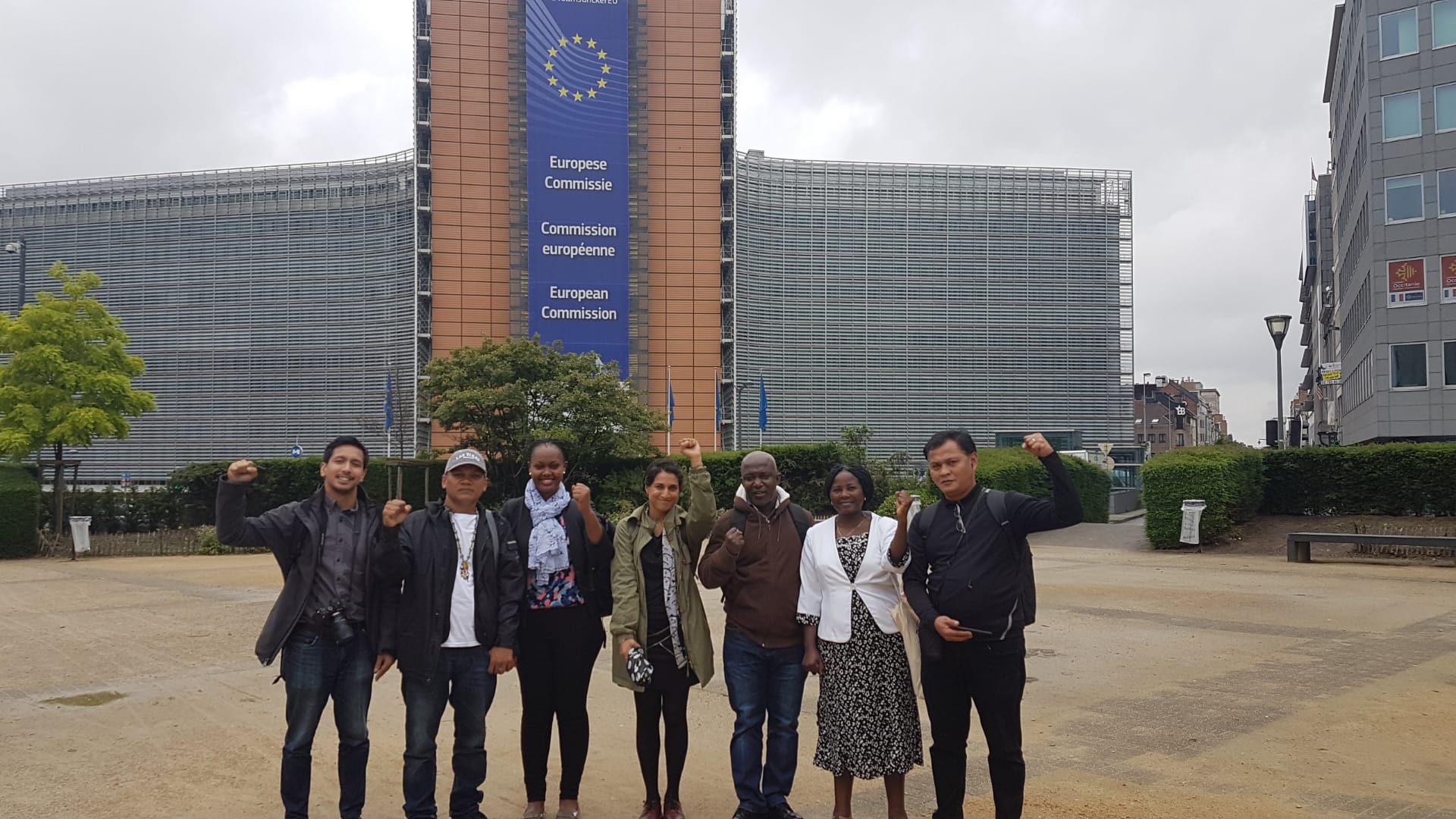
Lobby tour participants outside the EU Brussels

The tour, which went through Rome, Madrid, Amsterdam, Paris and Brussels, was aimed at creating awareness about our struggle against the gas industry in Mozambique and demonstrating the critical need for a Binding Treaty on Human Rights and Transnational Corporations (TNCs) at the United Nations. Currently, there is no accountability mechanism at the UN, only guiding principles which companies do not abide by, as they see them as an impediment to their greed and profit.


Our partners had arranged for JA!, along with activists from the DRC and the Phillipines to meet with current and new partners and allies, as well as industry players and state authorities.
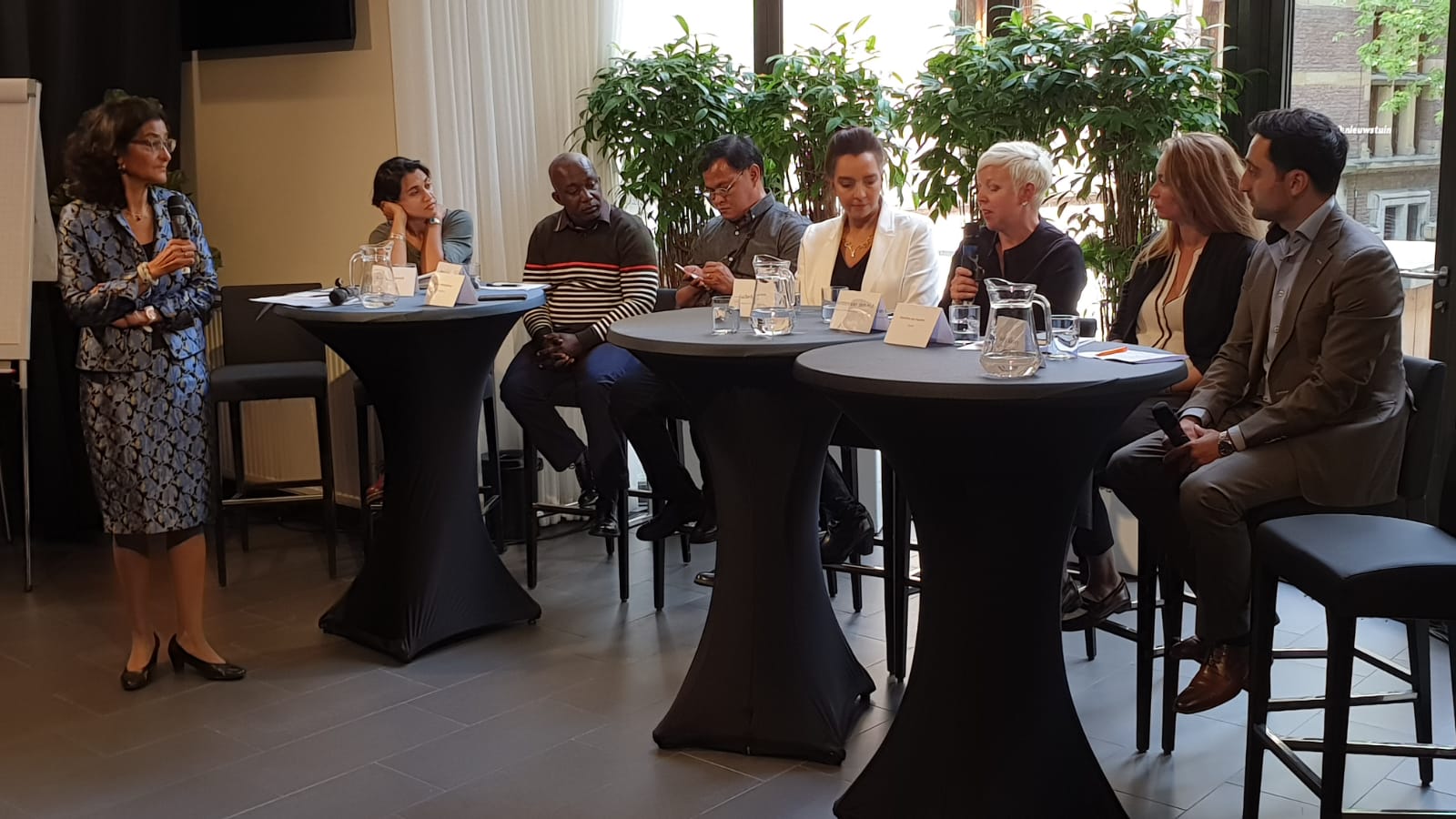
Panel discussion with lobby tour participants and parliamentarians in the Hague2

Our confrontations with the industry were often met with blatant hostility, when we tried to hold them accountable for their actions, and when we raised questions they didn’t like. We attended four annual general meetings (AGM’s), those of Shell, Natixis, Eni and Total.

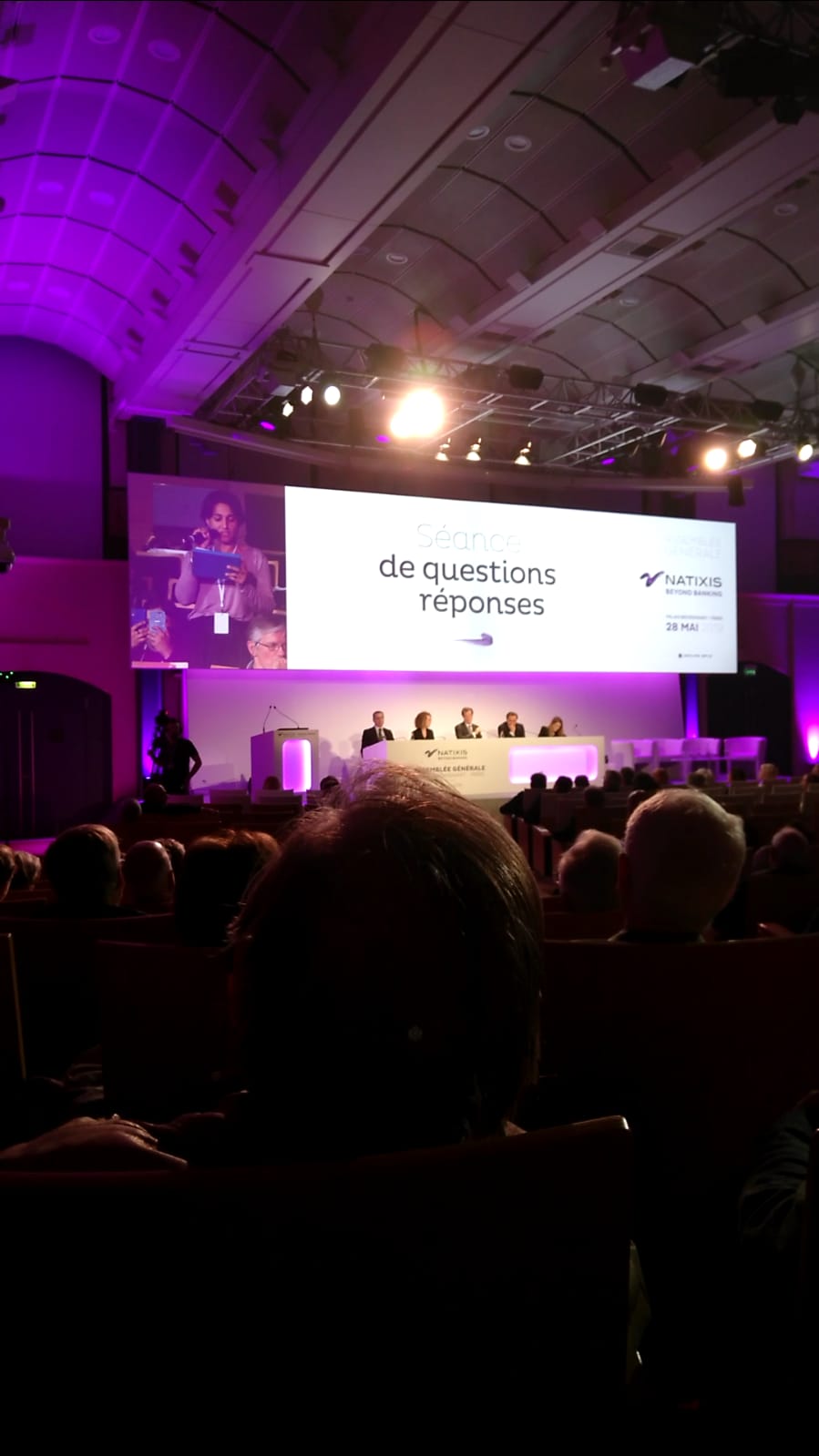
Intervention at natixis AGM

Natixis, the French bank which arranged for the entrance of three major French banks to finance the Coral LNG Project1, was so hostile at their AGM that when JA! attempted to ask a question about their negligence and ineptness in the project, they turned off the microphone and refused to answer the question. Shareholders were shouting “go home!” as JA! and partner organisations walked out of the meeting.


At the Shell AGM in Amsterdam, we were part of a large contingent of civil society organisations, mostly Dutch but also some European. Shell has a sale and purchase agreement (SPA) with Mozambique LNG to buy 2 million tonnes of gas per year for 13 years.


JA! and an organisation from Nigeria were the only attendees from the global South. The response to our questions was, as expected, vague, but our voice had been heard and carried in the Dutch media. Shell had little respect for activists – when the Nigerian activist raised the impacts that Anadarko’s project was having on their community in the Niger Delta, the Charles Holliday, Shell’s Chairman, responded that he should approach the ‘helpdesk’ in the foyer for assistance.

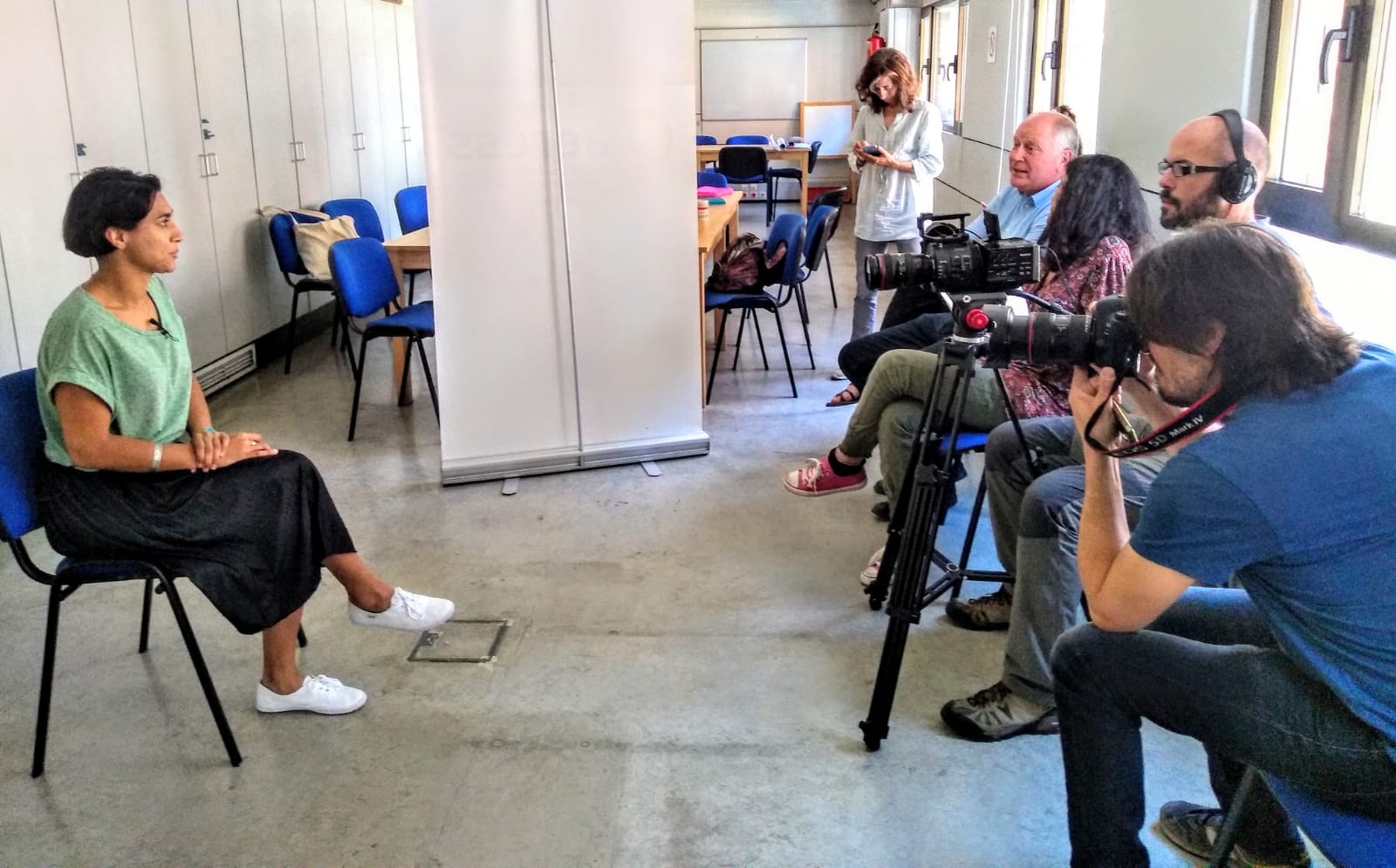
Interview with online news outlet madrid2

The third AGM we attended was that of Total in Paris, which is the new owner of the Mozambique LNG Project2, since May when it purchased Anadarko’s Africa assets. Anadarko, however, is still operating the project, and plan to hand over the lead to Total at the end of the year. After Greenpeace disrupted the AGM last year, there was a large police presence, and for some reason that was not properly explained to us, even though dozens of activists had arranged for access to the AGM, only JA! and an activist from Greenpeace were allowed into the plenary. JA!’s question was met with a dismissive answer, with Total evading responsibility for the impacts of the gas industry on the ground, claiming that responsibility lies with Anadarko.


This was a theme that came up in all AGM’s that we attended, including the fourth one, that of Italian company Eni, in Rome. Eni, along with ExxonMobil has the biggest stake in operating the Coral South LNG Project in Mozambique. We found that all the companies that we confronted, including during the one-on-one meetings we had with industry financiers BNP Paribas and BPI (French Public Investment Bank) put all the blame for the impacts on Anadarko. When we pushed them for answers, it became clear that none of these companies had even looked at the Environmental Impact Assessment that Anadarko had made in 2014, and yet were blaming them for all the climate injustices that were taking place. They are conveniently ignorant.


JA!’s partners had arranged for us to hold meetings with several authoritative bodies, including Michel Forst, UN Rapporteur on HRD; French parliamentarians from the working group on human rights and TNC’s; the deputy director of the Dutch Ministry of Foreign Affairs; a parliamentarian from political party ally in Spain, Unidas Podemos; Belgian parliamentarians, and party representatives at the European Union.


We also met with other organisations, including Oxfam, Amnesty International, Food First Information and Action Network (FIAN), the Centre for Research on Multinational Corporations (SOMO) and Action Aid.


In each country we spoke at events, to full houses of activists, journalists and the general public, some meetings of over 100 people. Our partners organising the tour had built a media campaign around our visit. Here are links to some of the articles about our struggle in European media and blogs:


Publico (Spain)


Les Echos (France)


Basta (France)


Observatories de Multinationales


L’Humanite (France)


Banktrack


Foe Scotland


It was great to see the amount of interest in our campaign, once people were made aware of the issue, and on the flipside, frightening to see how little attention the industry had been given in European media. But we believe that this tour has taken us several steps forward in the following ways:

  •  We have made many new partners and allies in the campaign throughout Europe, strengthening our coalition
  • We have shared the campaign with people working on or interested in the issue of fossil fuels and climate justice, including activists, journalists, academics and students.
  • We have directly questioned industry players one on one, from which we received some crucial information
  • We raised the issue in large industry public platforms, AGM’s, leading to attention on written and social media, and making shareholders aware
  • We have brought the issue to the radar of high level individuals on an EU level, and on the level of political parties, parliament and ministries

Now that we have strengthened the foundation of the Campaign in Europe, we must continue to push for answers and accountability. Push for activists in Europe to take their power as European citizens to hold their companies to account, and push them to force their governments, at national and EU level, to take responsibility for those corporations from whom they receive their tax.

1 Area 4 is operated by MRV, a joint venture company comprising ExxonMobil, Eni and CNPC, which holds a 70% interest in the concession for prospection and production in that area. Galp, KOGAS and Empresa Nacional de Hidrocarbonetos de Moçambique each hold 10% interest. ExxonMobil will lead the construction and operation of liquefied natural gas production facilities and related infrastructure on behalf of MRV, and Eni will lead the construction and operation of upstream infrastructure, extracting gas from offshore deposits and piping it to the plant.

2 The Area 1 block is operated by Anadarko Mozambique Area 1, Ltd, a wholly-owned subsidiary of the Anadarko Petroleum group, with a 26.5% stake, ENH Rovuma Area One, a subsidiary of state-owned Empresa Nacional de Hidrocarbonetos, with 15%, Mitsui E&P Mozambique Area1 Ltd.(20%), ONGC Videsh Ltd. (10%), Beas Rovuma Energy Mozambique Limited (10%), BPRL Ventures Mozambique BV (10%), and PTTEP Mozambique Area 1 Limited (8.5%).

Tagged , , , , , , , , , , , , , , , , , , , , , , , , , , , ,

JA! causes a ruckus at the Eni AGM

On Wednesday 14 May, JA! Attended the AGM of Italian oil and gas giant Eni, in Rome, where we put CEO, Claudio Descalzi, Chairperson Emma Marcegaglia and the board of executives on the spot in front of about 50 shareholders, by asking them questions about their work on gas in Mozambique and oil in South Africa that they really did not want to deal with. This was the first time we had been at the Eni AGM and we were able to go with the help of our Italian partners, Re:Common.

The meeting started at 10am and went on till 9pm, unusually late. After submitting written questions two weeks ago, we received the written answers, in Italian, literally as we walked into the meeting, and had to study them while the meeting was already in session, to see what they had or had not answered sufficiently before we were given a chance to speak.

JA! was given 10 minutes for an intervention. We first gave the context of the way Enis Coral Liquid Natural Gas Project was destroying endangered flora and fauna, and forcing people off their land before operations had even started, as well as their oil exploration in Block ER236, off the South Coast of Durban, affecting the livelihoods of at least 20 fishing communities and followed this with a barrage of questions about both of these issues, none of which were properly answered by CEO Descalzi.

While we asked many questions covering a range of topics, the main issues we raised were:

– Why did Eni begin operations in Mozambique in 2006, when they only received their license in 2015, and only completed their environmental impact assessment (EIA) in 2014? (This EIA was done in conjunction with Anadarko)

– Why is Enis gas project in Mozambique releasing greenhouse gases that will increase the whole of Mozambiques carbon emissions by 9.4% by 2022, when their main focus for the next ten years is decarbonisation?

– Why did Eni ignore the poor and marginilised communities of the South Coast of Durban, while only engaging with the wealthy communities at country clubs and upmarket hotels, to do their EIA?

Descalzi was extremely patronising in his responses, saying that Eni had not done any drillingin South Africa, so he is not sure about the forced removals of fishing communities that you (Ilham) are talking about.

He also interrupted JA, to say that Eni is not involved in Area 1 so the EIA for Mozambique But this is a lie, as Enis logo is on the front page of the EIA.

He did not answer the questions about them beginning operations in Mozambique before they received their license. He also claimed that the resettlement process of what we know to be forcefully-removed communities in Mozambique was in line with the EIA.

He said that the answers to the other questions were in the document of written responses, which will be released next month.

After the end of the AGM, Descalzi sought out JA !representative, and thanked JA! for the questions, to which JA! responded that none of the questions had actually been sufficiently answered, and that his so-called responses were offensiveas they contradicted what JA! Has seen on the ground, and which we are told by affected communities. He is basically, JA! said, saying that we are either ignorant or lying.

It was clear that we, and our partners Re:Common had an impact on Descalzi as he was answering our questions, he stumbled, saying Im well-cooked, an Italian saying meaning that he was extremely tired. That he sought Ilham out before anybody else was quite telling, offering her his personal contact details. Now lets see what happens

JA! will publish a more detailed post, the questions asked, and the verbal responses from Descalzi, as well as an analysis. Its important to note that Eni, and Descalzi, along with Shell, are currently defendants in a court case, charged with one of the worlds biggest corruption scandals, allegedly paying $ 1.3 billion in bribes, to Nigerian politicians for the purchase of an oil field in Nigeria. Lets see now, if he keeps his word by responding fully and personally to the questions he has offered to personally answer, while also remembering, Can we trust one of the most corrupt men in the world?

Tagged , , , , , ,

Justica Ambiental’s intervention at Eni Annual General Meeting

14 June 2019

Rome

I represent an organisation called Justica Ambiental/Friends of the Earth Mozambique in maputo. Ive come quite a long way to ask Eni some questionsI will ask in particular questions about the onshore and offshore work in Area 1 and Area 4 of the Rovuma Basin in Mozambique, which includes the Coral Floating Liquid Natural Gas Project, and the Mozambique Liquid Natural Gas Project, and the offshore oil and gas exploration in Block ER236 off the South Coast of Durban in South Africa.

we want to give some context to the shareholders:

Although the extraction in Mozambique has not yet begun, already the project has taken land from thousands of local communities and forcefully removed them from their homes. We work with and visit most regularly the villages of Milamba. Senga and Quitupo. The project has taken away peoples agricultural land, and has instead provided them with compensatory land which is far from their homes and in many cases, inarable. Fishing communities which live within 100 metres of the sea are now being moved 10 km inland.

Furthermore, the noise from the drilling will chase fish away from the regular fishing area, and the drilling and dredging will raise mud from the seabed which will make fishing even more difficult with little visibility.

There is little to no information about the type of compensation people will receive. Communities think the ways in which peoples compensation has been measured and assessed is ridiculous. For example, the company assesses someones land by counting their belongings and compensating them financially for those goods. Another way is by counting the number of palm trees that one person has on their land. Most people have been given a standard size of land of 1 hectare. This is regardless of whether they currently have 1 hectare, 5 hectares, or even ten hectares.

80% of Mozambicans dont have access to electricity, and need energy to live dignified lives. Despite this incredibly low electricity rate, the LNG projects will not help Mozambique and its people benefit from its resources. Instead the LNG will be processes and exported to other countries, in particular Asia and Europe.

The projects will have a huge negative impact on the local environment, destroying areas of pristine coral reefs, mangroves, and seagrass beds, including endangered flora and fauna in the Quirimbas Archipelago, a UNESCO Biosphere.

Mozambique is a country that is already facing the impacts of climate change. In the last two months, two cyclones hit the country hard, as we saw most recent with Cyclone Idai and Cyclone Kenneth that together killed over 600 people and affected at least 2 million.. The EIA admits that the contribution of the projects greenhouse gases to Mozambiques carbon emissions will be major.

This project will require a huge investment by the Mozambican government, which would be better spent on social programs and renewable energy development. The project itself will require an investment of up US$ 30 billion. This project will divert funds that should be going to education and other social necessities, including $2 billion that the World Bank estimates is necessary to rebuild the country after the cyclones, in order to build and maintain infrastructure needed for the gas projects.

Over the last year and a half, there as been a scourge of attacks on communities in the gas region, which many communities believe are linked to the gas projects because they only began once gas companies became visible. In order to ensure the security of the gas companies and contractors, the military has been deployed in the area and maintains a strong presence, and several foreign private security companies have been contracted by the companies.


SOUTH AFRICA

While the human rights and environmental violations against the people of the South Coast are many, the particular issue Id like to raise is that of the lack of meaningful public participation with the affected communities, who were totally excluded from the process.

Exclusivity of meetings:

Eni held a total of 5 meetings.

Three of them were at upper end hotels and country clubs in the middle class areas of Richards Bay, Port Shepstone and in Durban. This is extremely unrepresentative of the vast majority of people who will be affected, many of whom live in dire poverty: communities of as Kosi Bay, Sodwana Bay, St Lucia,, Hluluwe, Mtubatuba, Mtunzini, Stanger, Tongaat, La Mercy, Umdloti, Verulam, Umhlanga, Central Durban, Bluff, Merebank, Isipingo, Amanzimtoti, Illovu, Umkomaas, Ifafa Beach, Scottsburgh, Margate, Mtwalume, Port Edward and surrounding townships like Chatsworth, Inanda, Umlazi, Phoenix and KwaMakhuta. This is blatant social exclusion and discrimination.

During the two so-called public participation meetings with poorer communities in February and October 2018, attended by both Eni and consultants Environmental Resources Management, the majority of people affected were not invited. The meetings, held by Allesandro Gelmetti and Fabrizio Fecoraro were held in a tiny room with no chairs. Eni had not invited any government officials.

[Sasol head of group medial liaison Alex Anderson, confirming the meeting, said: Eni, our partner, is the operator and the entity managing this process. Sasol is committed to open and transparent engagement with all stakeholders on this project, as its an ongoing process over the coming year. We value the engagement and the feedback we receive, so that we consider stakeholder concerns into the development of the project.]

Eni says it dropped the finalised EIAs off at 5 libraries for the interested parties to read. However these libraries are difficult for most of the affected communities to travel to, and one of the libraries, Port Shepstone library, was in fact closed for renovations at the time.

QUESTIONS:

Civil society in Mozambique:

The response to our question was not answered, and I would like to reformulate it.

Is Eni working with any Mozambican organisations as part of its community engagement, and which are they?

Is Eni working with any organisations, Mozambican and from elsewhere, who are NOT paid by the company?

Reforestation:

Id like to quote an article in the FT article David Sheppard and Leslie Cook 15 March 2019- Eni to plant vast forest in push to cut greenhouse gas emissions, which says, I quote:

by planting trees which absorb CO2 from the atmosphere, companies like Eni are looking to offset their pollution that their traditional operations create.

Italian energy giant Eni will plant a forest 4 times the size of Wales as part of plans to cut greenhouse gas emissions

1. Does Eni dispute the truthfulness of the Financial Times article

Eni says that it has already begun the contract process with the governments of the countries in Southern Africa, where these forest projects will take place.

1. Has the company assessed whether there actually is 81 000 hectares of unused land available for this project?

2. Has Eni already held any public participation meetings with the communities who live on the land that will be used for ?

3. who is doing this assessment and when will it begin

4. how many communities and people will be affected?

EIA s:

1. In the case of Area 1, Eni responded that the responsibility for ongoing public participation with the communities of Cabo Delgado lies with Anadarko for the joint EIA. Does Eni confirm it is relying on another company to guarantee that its own project fulfills requirements for an EIA?

2. Also on Area 1, the last EIA was done in 2014? Why does Eni rely on an impact assessment that is 5 years old?

3. Eni has responded that it only concluded its EIA in 2014, but had already begun seismic studies in 2007 and prepared for exploration in 2010. Furthermore, Eni only received its license from the Mozambique government in 2015. This is a whole 8 years after it had begun seismic studies.

Why did Eni begin studies that affect the environment and people before completing an EIA?

Decarbonisation:

This question was not sufficiently answered: I have asked why Enis decarbonisation strategy does not align with its actions in Mozambique, where the EIA says, and I quote from Chapter 12: The project is expected to emit approximately 13 million tonnes of CO2 during full operation of 6 LNG trains.

By 2022 the project will increase the level of Mozambiques GHG emissions by 9.4%

The duration of the impact is regarded as permanent, as science has indicated that the persistence of carbon dioxide in the atmosphere is said to range between 100 and 500 years, and therefore continues beyond the life of the project.

I ask again, how does this align with Enis decarbonisation strategy?

Private security:

1. Who is Eni using as their private security companies in Mozambique and in South Africa?

2. What was the legal process the company went through to contract these private security companies?

3. If any companies are not registered locally, what legal process did Eni go through to bring them to Mozambique and South Africa?

Contractors:

1. Will Eni provide us with a list of all their contractors in Mozambique and in South Africa?

2. if not why not?

Jobs in South Africa:

You have not answered our question here

How many jobs will Eni create at its operation in SA?

How many of these jobs will be paid by Eni?

Contract

I ask this in the name of the South Durban Community Environmental Alliance. The organisation requested Eni to make available the contract signed with the Dept of Environmental Affairs and Petroleum Agency South Africa that gives Eni permission to conduct seismic testing. Eni has said no, because the right to the document lies with a contractor.

Tagged , , , , , , , , , , , ,