Category Archives: land grabbing

Justica Ambiental’s intervention at Eni Annual General Meeting

14 June 2019

Rome

I represent an organisation called Justica Ambiental/Friends of the Earth Mozambique in maputo. Ive come quite a long way to ask Eni some questionsI will ask in particular questions about the onshore and offshore work in Area 1 and Area 4 of the Rovuma Basin in Mozambique, which includes the Coral Floating Liquid Natural Gas Project, and the Mozambique Liquid Natural Gas Project, and the offshore oil and gas exploration in Block ER236 off the South Coast of Durban in South Africa.

we want to give some context to the shareholders:

Although the extraction in Mozambique has not yet begun, already the project has taken land from thousands of local communities and forcefully removed them from their homes. We work with and visit most regularly the villages of Milamba. Senga and Quitupo. The project has taken away peoples agricultural land, and has instead provided them with compensatory land which is far from their homes and in many cases, inarable. Fishing communities which live within 100 metres of the sea are now being moved 10 km inland.

Furthermore, the noise from the drilling will chase fish away from the regular fishing area, and the drilling and dredging will raise mud from the seabed which will make fishing even more difficult with little visibility.

There is little to no information about the type of compensation people will receive. Communities think the ways in which peoples compensation has been measured and assessed is ridiculous. For example, the company assesses someones land by counting their belongings and compensating them financially for those goods. Another way is by counting the number of palm trees that one person has on their land. Most people have been given a standard size of land of 1 hectare. This is regardless of whether they currently have 1 hectare, 5 hectares, or even ten hectares.

80% of Mozambicans dont have access to electricity, and need energy to live dignified lives. Despite this incredibly low electricity rate, the LNG projects will not help Mozambique and its people benefit from its resources. Instead the LNG will be processes and exported to other countries, in particular Asia and Europe.

The projects will have a huge negative impact on the local environment, destroying areas of pristine coral reefs, mangroves, and seagrass beds, including endangered flora and fauna in the Quirimbas Archipelago, a UNESCO Biosphere.

Mozambique is a country that is already facing the impacts of climate change. In the last two months, two cyclones hit the country hard, as we saw most recent with Cyclone Idai and Cyclone Kenneth that together killed over 600 people and affected at least 2 million.. The EIA admits that the contribution of the projects greenhouse gases to Mozambiques carbon emissions will be major.

This project will require a huge investment by the Mozambican government, which would be better spent on social programs and renewable energy development. The project itself will require an investment of up US$ 30 billion. This project will divert funds that should be going to education and other social necessities, including $2 billion that the World Bank estimates is necessary to rebuild the country after the cyclones, in order to build and maintain infrastructure needed for the gas projects.

Over the last year and a half, there as been a scourge of attacks on communities in the gas region, which many communities believe are linked to the gas projects because they only began once gas companies became visible. In order to ensure the security of the gas companies and contractors, the military has been deployed in the area and maintains a strong presence, and several foreign private security companies have been contracted by the companies.


SOUTH AFRICA

While the human rights and environmental violations against the people of the South Coast are many, the particular issue Id like to raise is that of the lack of meaningful public participation with the affected communities, who were totally excluded from the process.

Exclusivity of meetings:

Eni held a total of 5 meetings.

Three of them were at upper end hotels and country clubs in the middle class areas of Richards Bay, Port Shepstone and in Durban. This is extremely unrepresentative of the vast majority of people who will be affected, many of whom live in dire poverty: communities of as Kosi Bay, Sodwana Bay, St Lucia,, Hluluwe, Mtubatuba, Mtunzini, Stanger, Tongaat, La Mercy, Umdloti, Verulam, Umhlanga, Central Durban, Bluff, Merebank, Isipingo, Amanzimtoti, Illovu, Umkomaas, Ifafa Beach, Scottsburgh, Margate, Mtwalume, Port Edward and surrounding townships like Chatsworth, Inanda, Umlazi, Phoenix and KwaMakhuta. This is blatant social exclusion and discrimination.

During the two so-called public participation meetings with poorer communities in February and October 2018, attended by both Eni and consultants Environmental Resources Management, the majority of people affected were not invited. The meetings, held by Allesandro Gelmetti and Fabrizio Fecoraro were held in a tiny room with no chairs. Eni had not invited any government officials.

[Sasol head of group medial liaison Alex Anderson, confirming the meeting, said: Eni, our partner, is the operator and the entity managing this process. Sasol is committed to open and transparent engagement with all stakeholders on this project, as its an ongoing process over the coming year. We value the engagement and the feedback we receive, so that we consider stakeholder concerns into the development of the project.]

Eni says it dropped the finalised EIAs off at 5 libraries for the interested parties to read. However these libraries are difficult for most of the affected communities to travel to, and one of the libraries, Port Shepstone library, was in fact closed for renovations at the time.

QUESTIONS:

Civil society in Mozambique:

The response to our question was not answered, and I would like to reformulate it.

Is Eni working with any Mozambican organisations as part of its community engagement, and which are they?

Is Eni working with any organisations, Mozambican and from elsewhere, who are NOT paid by the company?

Reforestation:

Id like to quote an article in the FT article David Sheppard and Leslie Cook 15 March 2019- Eni to plant vast forest in push to cut greenhouse gas emissions, which says, I quote:

by planting trees which absorb CO2 from the atmosphere, companies like Eni are looking to offset their pollution that their traditional operations create.

Italian energy giant Eni will plant a forest 4 times the size of Wales as part of plans to cut greenhouse gas emissions

1. Does Eni dispute the truthfulness of the Financial Times article

Eni says that it has already begun the contract process with the governments of the countries in Southern Africa, where these forest projects will take place.

1. Has the company assessed whether there actually is 81 000 hectares of unused land available for this project?

2. Has Eni already held any public participation meetings with the communities who live on the land that will be used for ?

3. who is doing this assessment and when will it begin

4. how many communities and people will be affected?

EIA s:

1. In the case of Area 1, Eni responded that the responsibility for ongoing public participation with the communities of Cabo Delgado lies with Anadarko for the joint EIA. Does Eni confirm it is relying on another company to guarantee that its own project fulfills requirements for an EIA?

2. Also on Area 1, the last EIA was done in 2014? Why does Eni rely on an impact assessment that is 5 years old?

3. Eni has responded that it only concluded its EIA in 2014, but had already begun seismic studies in 2007 and prepared for exploration in 2010. Furthermore, Eni only received its license from the Mozambique government in 2015. This is a whole 8 years after it had begun seismic studies.

Why did Eni begin studies that affect the environment and people before completing an EIA?

Decarbonisation:

This question was not sufficiently answered: I have asked why Enis decarbonisation strategy does not align with its actions in Mozambique, where the EIA says, and I quote from Chapter 12: The project is expected to emit approximately 13 million tonnes of CO2 during full operation of 6 LNG trains.

By 2022 the project will increase the level of Mozambiques GHG emissions by 9.4%

The duration of the impact is regarded as permanent, as science has indicated that the persistence of carbon dioxide in the atmosphere is said to range between 100 and 500 years, and therefore continues beyond the life of the project.

I ask again, how does this align with Enis decarbonisation strategy?

Private security:

1. Who is Eni using as their private security companies in Mozambique and in South Africa?

2. What was the legal process the company went through to contract these private security companies?

3. If any companies are not registered locally, what legal process did Eni go through to bring them to Mozambique and South Africa?

Contractors:

1. Will Eni provide us with a list of all their contractors in Mozambique and in South Africa?

2. if not why not?

Jobs in South Africa:

You have not answered our question here

How many jobs will Eni create at its operation in SA?

How many of these jobs will be paid by Eni?

Contract

I ask this in the name of the South Durban Community Environmental Alliance. The organisation requested Eni to make available the contract signed with the Dept of Environmental Affairs and Petroleum Agency South Africa that gives Eni permission to conduct seismic testing. Eni has said no, because the right to the document lies with a contractor.
Tagged , , , , , , , , , , , ,

Petitions to government institutions fall into oblivion

On the 21st of September 2016, Justiça Ambiental, in partnership with the World Rainforest Movement, submitted to the Ministry of Land, Environment and Rural Development, to the Ministry of Agriculture and Food, to Green Resources and to Portucel a petition signed by 12332 people exposing the numerous conflicts and social, environmental and economic impacts – especially in the local communities directly affected. The petition stated the following:

“On September 21st, on the occasion of the International Day of Struggle Against Tree Monocultures, we, the undersigned organizations, groups, movements and individuals, expressed our solidarity and support to the communities that are fighting against the expansion of these large plantations. We demand that Green Resources, Portucel and all other companies and financial capital investors who are usurping land or planning to support the capture of fertile agricultural land for tree monocultures in eastern and southern Africa return it to the communities. By doing so, they can help prevent new conflicts between plantation companies and governments and contribute to solve the many that already exist across the region. We demand that the Government of Mozambique maintain its Land Law and ensure that the rights of communities to land, water and food are duly respected.”

The conflicts and impacts of monoculture plantations are not exclusive to rural communities in Mozambique. In fact, they are a characteristic of this type of investment and can be found everywhere where plantations of this type are promoted.

The petition was submitted to the aforementioned bodies with the knowledge of:

The Office of the President of the Republic

The Parliament

The Attorney General’s Office

The Governor of the Province of Zambézia

The Governor of the Province of Niassa

The Governor of the Province of Nampula

However, to date, after more than 2 years, none of the institutions above deigned to respond…

These public institutions, that we are told exist to serve and defend the interests of the people, are the ones who systematically ignore their concerns, demands and petitions…

In August 2018, Justiça Ambiental, ADECRU (Academic Action for the Development of Rural Communities) and Nampula’s UPC (Provincial Peasants Union) facilitated the process of drafting and submitting a petition on behalf of the communities affected by Green Resources, which contained some 3406 signatures from members of affected communities. The petition exposed in detail the innumerable situations these communities were subjected to and the various attempts at conflict resolution that have had no results at all. This last petition was submitted to the following institutions:

Ministry of Agriculture and Food Safety, addressed to the Minister;

Ministry of Land, Environment and Rural Development, addressed to the Minister;

The Parliament’s 5th Committee – Committee on Agriculture, Economy and the Environment;

Green Resources Mozambique;

Mozambican Bar Association;

Norfund;

Embassy of Norway in Mozambique; and

National Commission on Human Rights

Of these institutions, only the National Human Rights Commission responded and was showed interest in investigating the matter, however, so far nothing else has happened.

Land conflicts persist, communities affected and deceived with promises of better living and employment are still waiting for a response, they continue to wait for a solution to their many complaints, and to believe that there will be answers to their many appeals !!!

More frightening than our government’s silence and inaction over these petitions and complaints regarding this type of investment, is that it continues to promote the monoculture plantations business, it continues to invite investors and distribute land that is not vacant, nor is it infertile or marginal – as they claim in order to defend their investments.

The latest versions of the Forestry Policy and Implementation Strategy, of the 2035 Forest Agenda and of the National Forestry Program, which are allegedly still under public discussion, clearly demonstrate that our government, particularly the environment and forest sectors, is far from realizing the scale of the social, environmental and even economic impacts of this investment.

Even more serious than the complete absence of current knowledge about the negative impacts of large monoculture plantations on the environment, in particular on maintaining the ecological balance on which we all depend, is the arrogance with which they refuse to learn from the many examples that exist throughout the world. It is completely unacceptable and absurd to hear a forestry technician effusively defend that monoculture plantations are forests and then insist by asking “are those not trees?”! It is equally unacceptable that the definition of forests can be altered to accommodate the interests of many false solutions such as REDD and the commodification of nature. Yet, this is precisely what is happening in the sector.

Important instruments such as the 2035 Forest Agenda and the National Forestry Program are being developed under the leadership of government’s “strategic partners”, with tremendous economic interests in the sector, such as the World Bank that has poured millions and millions of dollars in these “make-believe” processes. Yet we, the Mozambican organizations that stand our ground against the complete pillage of our resources, are the ones who are constantly accused of serving foreign interests. The influence and power enjoyed by these “strategic partners” who finance and direct these processes is visible and frightening. Who rules our country? Are we really sovereign? Or is that speech valid only when your “strategic partners” and our eternal “financiers” are angry with your crazy adventures with public money? Are we only sovereign then?

Public participation is still a huge challenge, and it does not seem to us that there is a real desire to improve, since this way it is much easier to conduct the processes without much resistance. Mozambican civil society barely participates in public discussion processes, whether about environmental aspects or other issues. The participants of these meetings are mostly representatives of civil society organizations and other organizations and sometimes some students. This weak participation also tells us a great deal about the way citizens feel about these processes and, above all, what can be expected of them.

In the case of the above-mentioned instruments, it should be noted that technical committees have been set up for the elaboration and discussion of these, but the space attributed to civil society organizations is always very small and it is not clear how organizations are “chosen” to participate . JA! participated in the technical committee and despite the numerous comments on the various versions of the document, nothing was really considered and properly analyzed. Our natural resources, our forests and ecosystems are only treated as profit-making resources, we do not consider their biological importance and the fact that we are part of this planet and depend on the biological services that these ecosystems provide us and that allow life on Earth.

It seems childish to remember that we do not own Planet Earth and nature, we are part of it. We are the most stupid and destructive part of it…

Our stupidity is demonstrated over and over again by the state of our planet, by the state of our forests, rivers and other ecosystems… We don’t see the other animals – the ones we call irrational – destroying their habitat as humans do… for profit!

JA! Visit finds confusion and distrust in Cabo Delgado gas region

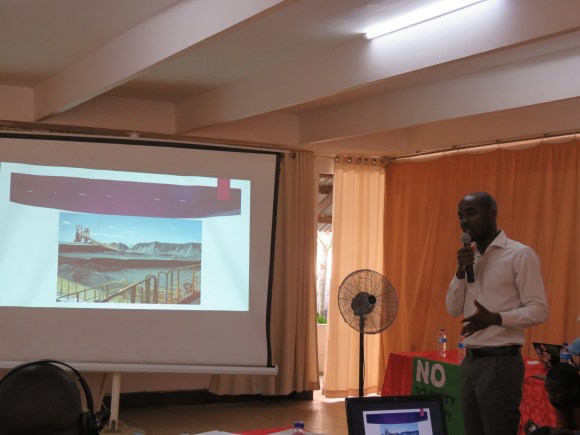
DSCF2153When JA! team visited Pemba at the end of February, 2019, the biggest city in Cabo Delgado province, to learn about the current situation of the ‘gas rush’ in northern Mozambique, it quickly became apparent to us that there is very little clarity and transparency about what is actually happening in the gas industry. Attacks on communities, land grabs, the stage of the companies’ operations, and even which companies are involved, have left people uncertain and confused.

 

The industry is constantly changing, with one example at the time being the pending takeover of US company Anadarko, which is the leader of one of the two major projects since it first ‘discovered’ gas in the Rovuma Basin in 2010. Just two weeks ago, Chevron put in a bit to purchase Anadarko for $ 33 billion, and a mere few days later, Occidental Petroleum tried to outbid them with $ 38 billion.

This has huge implications – communities who have been in communication with Anadarko about resettlement and compensation, or already signed agreements with them, the government’s financial agreements with Anadarko and investments in the project – these will all need to change, and more frighteningly, nobody knows how they will change.


Furthermore, the stages of the gas projects are constantly changing, new contractors come in and new deals are signed in the blink of eye. The official information out there is that In 2006, 10 trillion cubic feet of natural gas was discovered in the Rovuma Basin off the coast of northern Mozambique. There are two concession areas that the Mozambique government has already given the rights away to:

IMG_20190225_150151_9

Area 1, the location of the Mozambique LNG Project, which was led by Anadarko, but will now be led by Chevron and Occidental Petroleum, and Area 4, the location of the Coral LNG Project that is lead by Eni and Exxon.*

And both projects have secured purchasers which ultimately has given them the financial green light to operate.


Over the last year, there have been many violent attacks on villages in the gas region, and there are different theories about who is responsible and who benefits from them. Due to these attacks, on this trip the JA! Team was unable to travel to the communities with which we work near Palma.

Instead, our focal point that we work with closely, arranged to bring two community members to meet us in Pemba instead.


Even though we were unable to travel to Palma during this visit, just meeting with people in Pemba – NGOs, activists and journalists – pointed us to an increasing number of issues arising. Basically, the more people we spoke to, the more people we realized we needed to speak to.

Two people from communities being affected by the industry, Crisanto Silva from Senga, and Burahani Adinane from Milamba, traveled six hours to tell us about the situation they are facing now.


Mr Burahani told us how his community left Milamba in February and are staying with family in Palma because they felt very unsafe, in constant fear of being attacked. He says that at the end of last year, Anadarko made an agreement with the community telling them what they would receive as compensation. They have not yet signed that agreement with the government, and Anadarko has not returned that agreement document to them as they said they would, so they are in a constant state of uncertainty and limbo.


He says that the compensation assessment process has been ridiculous – one way the company assesses someone’s land is by counting their belongings and compensating them financially for those goods.


People with 5 hectares (ha) of land are going to get only 1.5 ha in compensation,” he says. “I have 64 ha but will only get 1.5 ha!  The company did the measurement by counting the number of trees in the plot. I had 583 trees, but how do I fit that in 1 hectare?”


The fishing community is being moved 10 km inland, away from the sea, where it will be very difficult for them to get to their fishing grounds, which will also be the location of a new port construction project. And actually, people have lost access to the sea even before the process has been completed.


Now we will be resettled from the sea,” says Mr Burahani,and personally, i don’t know how to do anything but fish”.


Crisanto Silva, from Senga, which is the village that the removed communities will be resettled in, told us about the problem of the military in the area. Following the violent attacks on villages, mainly those around or in the gas region,  that have been taking place since October 2017, the government has brought the military, allegedly to protect the communities from the attackers. Nobody is sure about who is responsible for the attacks, but there are many theories going around. The official government line is that they are carried out by Muslim extremists, but many others believe that gas companies, or powerful people in government are responsible themselves.


However, Mr Crisanto says that the military who is supposed to be protecting them, instill fear in the community instead. They stand around drinking beer, says Mr Crisanto, and give the people of Senga a curfew of 8pm, and then beat up people who are out after that. “But the army is only in the village till midnight,” Mr Crisanto says, “which I don’t understand… We are too afraid to go to the fields but the army refuses to escort us, so we are left without food.”


Mr Crisanto also says that he knows the ecosystem will be completely destroyed, and the Anadarko and Exxon factories are right next to the port that will be built. The port will go 2km into the sea, and the excavation is disturbing the sea bed. This is really affecting fishing patterns and the amount of fish in the area.


After speaking with the community members, we held several other meetings that provided important information. One of the other urgent issues is that of media oppression – two community journalists from Cabo Delgado were imprisoned for a long time, with one, Amade Abubacar, detained from 5 January to 23 April 2019. While the official reason for his arrest is unclear, Amnesty International says the he was arrested for documenting deadly attacks by armed groups against civilians.


This has left the few journalists who are not following the mainstream government rhetoric in constant fear of their lives or of losing their credibility if they write or say anything which does not align with it. The journalists we spoke with insisted on speaking to us in our hotel room because even being seen with us would put them in danger.


We spoke with a few NGO’s, some of whom provided us with very interesting information. We learnt about the vast current issues with the resettlement process. For example, the areas where Anadarko plans to give people machambas (farmlands) is at high risk of attacks, and it is very difficult for civil society to physically go there to protect people from these attacks. Communities feel that monetary compensation is not enough, as it is their ancestral land that is being taken from them. When they have meetings with companies about the process, they are not given the space to ask questions, and when they hold meetings with civil society, the military appears to disrupt the meeting. Anadarko is also known to hold resettlement meetings with individual families, which is divisive, and there is growing hostility over who gets which machambas.


We also learnt that many areas in Cabo Delgado, including areas where people are given machambas, are actually not arable, because Portuguese colonizers used them to grow cotton plantations which utilized many chemicals and degraded the soils.


Another rather disturbing piece of information is that while we met several NGOs doing interesting work, there are very few in Cabo Delgado working on the gas issue that do not receive funding for some or other service from Anadarko. It raises questions of independence and transparency for us when NGOs receive money from the very companies they are supposed to be challenging.


After those few days we spent in Pemba, it became clear that things are changing very quickly – the presence of the companies and private security is growing, fear of attacks and military is increasing and people are already losing their homes and livelihoods. There is a sense of unease in the air – many people don’t want to talk, or if they do, are afraid to say anything openly against the government or industry.


There is no doubt that the need to stop the industry is urgent, as the devastation we are already seeing may be irreversible. We will continue to work closely with the affected communities, as part of a campaign that uses different approaches – local and international to stop gas in Mozambique!

Broken Lives,Stolen Futures. A short documentary made by JA! of the sad situation of the communities in Cabo Delgado, Mozambique, affected by the gas exploration..


Of Coral FLNG, ExxonMobil owns a 35.7 percent interest in Eni East Africa S.p.A. (to be renamed Mozambique Rovuma Venture S.p.A.), which holds a 70 percent interest in Area 4, and is co-owned with Eni (35.7 percent) and CNPC (28.6 percent). The remaining interests in Area 4 are held by Empresa Nacional de Hidrocarbonetos E.P. (10 percent), Kogas (10 percent) and Galp Energia (10 percent).


In Mozambique LNG, Anadarko (soon to be taken over by Chevron or Occidental Petroleum or?) leads the LNG project with a 26.5 percent ownership stake. Other owners include the Mozambique state energy company, 15 percent; Japan’s Mitsui Group, 20 percent; India’s ONGC Videsh, 16 percent; India’s Bharat, 10 percent; Thailand’s PTT Exploration and Production, 8.5 percent; and Oil India Ltd., 4 percent.

Tagged , , , , , , , , , , ,

Who benefits from gene drives as a modern biotechnology?

Article presented At CBD COP14 in Egypt 18.11.2018
by Kwami D. Kpondzo Campaigns officer / Les Amis de la Terre-Togo
Africa Regional Focal Point of Global Forest Coalition

The world is suffering because biodiversity is poorly protected and poorly preserved. The question remains, how do we plan to conserve biodiversity for a better life on earth? is it by traditional knowledge or by modern technology? Indeed, today, modern biotechnology is put forward as the solution to improve the life of human beings on earth. This technology invades the field of agriculture, forestry and the fishery with the aim of improving productivity. It is at the root of the destruction of biodiversity and the imbalance in the harmony of nature. In addition, the introduction of biotechnologies like genetically modified organisms (GMOs), synthetic biology and gene drives (digital sequence information technologies) have an impact on the livelihoods of communities. The GMOs were originally promoted with the claim that they would benefit people and biodiversity as well; but this is not the case. The example of failed BT cotton in India and Burkina are examples why we do not need this risky and failed technologies.

In India, the Andhra Pradesh Coalition, in its report titled “Did BT cotton still fail in Andhra Pradesh in 2003-2004?”, investigated the cases of 164 small-scale farmers in three districts of Andhra Pradesh between 2003 and 2004. The report states that BT cotton increased yields insignificantly and that overall profits of farmers growing BT cotton were reduced by 9%. In Africa, a COPAGEN report titled “BT Cotton and us – The Truth of Our Fields!”, published in April 29, 2017, draws a damning conclusion. It describes the consequences, in Burkina Faso, of genetically modified cotton cultivation developed by Monsanto. The peasant field research over a period of three years involving 203 cotton producers clearly showed that in the 2014-2015 and 2015-2016 cotton seasons, yields were lower than those of conventional cotton. These examples show the danger of the use of these modern biotechnologies in agriculture.

There is clearly a conflict of interest between the conservation of biodiversity and the use of genetically modified organisms and other forms of modern biotechnology like gene drives. These gene drives could have a serious impact on human health, environment and biodiversity.

In the light of various findings regarding the use of modern biotechnology in agriculture, there is every reason to believe that the promoters of modern biotechnology are benefiting from it.

We say NO to gene drives and all false solutions to the biodiversity crisis.

Administrative Court sentences mining company JINDAL and the Government of Tete Province for violation of community rights

Justiça Ambiental submitted a case to the Administrative Court of the Province of Tete (ACPT) in February 2016. The proceedings concerned the behavior of the Government and mining company JINDAL, which results in a breach of the fundamental rights and freedoms of the affected communities by failing to materialize their fair resettlement in the context of coal mining in an area located in Chirodzi, Marara, in the Province of Tete – mining concession No. 3605C attributed to JINDAL.

In response, ACPT rejected the request of Justiça Ambiental, on February 29, 2016, alleging, without legal basis, that the State is an illegitimate party and that the procedural means used by Justiça Ambiental were improper.

For Justiça Ambiental, there is no doubt that the ACPT decision was based on presumptions and tried, at all costs, to accommodate previous questions without knowing the merits of the case. This court reached a decision on the basis of arbitrariness and in clear abuse of the discretionary powers that the law confers on the judge of the case.

Under the terms of the law, in particular the Constitution of the Republic, the Mining Law and the Regulation on Resettlement Resulting from Economic Activities, it is incumbent upon the Mozambican State and JINDAL to create conditions for fair resettlement and to improve the living conditions of cause.

Justiça Ambiental did not agree with the decision of said Judgment nº 03 / TAPT / 16, filed the appeal in March 2016, and the proceeding was processed with reference number 25/2016 – 1ª, in the First Section of Contentious Administrative Court. This Court analyzed the case for a period of two years and decided to give reason to Justiça Ambiental, considering that the request of this civil society organization in defense of the environment and the social and economic rights of the local communities, through Judgment No. 41/2018 of June 12, should be carried out.

The Court ruled that ACPT judgment No 03 / ACPT / 2016 should be annulled and ordered JINDAL and the Government of the Province of Tete to complete, within six months of notification of the judgement, a fair resettlement of the community of Cassoca.

Justiça Ambiental has shown to the Administrative Court that the resettlement of the families affected by the project has not yet been materialized due to the simultaneous responsibility of JINDAL and the Mozambican Government. Justiça Ambiental also demonstrated the lack of necessary infrastructures and other basic social, economic and cultural conditions for a life with the minimum of dignity for the families in question.

It should be noted that the First Section of the Administrative Court states in its decision that the resettlement procedure in question has been going on for a long time, with the consequent deterioration of the living conditions and survival of the populations affected and surrounded by mining in the area granted to JINDAL, which justifies censorship by this Court, so much so that JINDAL has the resettlement plan approved since 2013 and signed commitments with the Government to erect houses and ensure adequate housing of affected families, but has never fulfilled such obligations to date.

Therefore, it is a question of a judicial victory, but one that is not yet felt in the living conditions of the affected communities. Therefore, Justiça Ambiental appeals to all society concerned for a joint campaign in the sense of those condemned to respect the Judgment and carry out resettlement accordingly. Justiça Ambiental is aware that the Mozambican Bar Association has also condemned JINDAL for violating the rights of the communities concerned.

There is no doubt, therefore, that the exploitation of mineral coal in Tete constitutes a breach of the fundamental rights and freedoms of the affected communities, rather than contributing to their social and economic development.

Maputo, 17 September 2018

Dirty Energy at the Climate Justice Meeting

10.jpeg

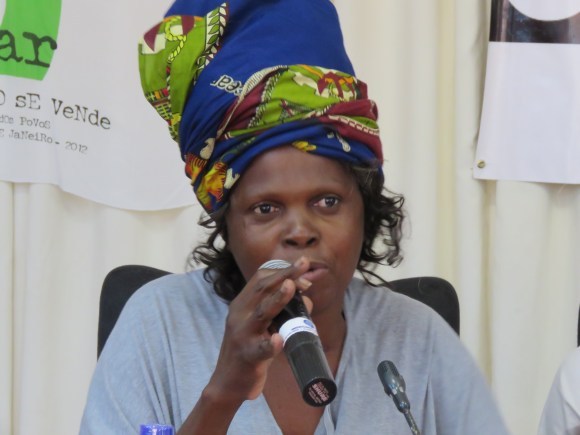
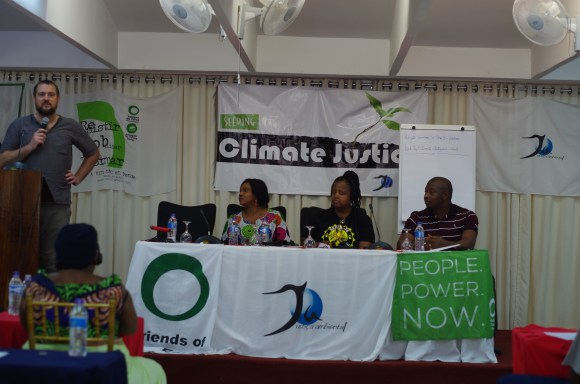
The theme for Day 2 of our Climate Justice meeting that happened last week was Dirty Energy. The topics ranged from oil and gas to coal and waste management.

The day started with an input by Makhoma Lekalakala on the impacts of coal mines and coal-fired power stations in South Africa, but which happen around the world. These include water pollution from acid mine drainage, which continues even after the operations are over, because they are either not decommissioned or not closed properly. There is major air pollution, with nearby communities struggling with breathing. In fact, health degradation is the worst impact, and is an externality not included in the price of coal. Another issue is food insecurity, as people are displaced from their farmlands and water sources.

6

Perito Alper Tarquinho talked about the situation of coal mining in Mozambique. When companies talk to communities about new coal operations, they say that this ‘development’ will bring them direct benefits and bring money to the country and the people. But this ‘development’ actually harms people. People are not respected in the companies’ decision making processes. What is most important to them is to satisfy their shareholders.

7

Verónica da Silveira Reino took this further by giving the example of Vale who mines coal in Tete province in Mozambique. It doesn’t consult and forces community members to sign documents which will agree to their forced removals from their homes and their fertile land.

Indian company Jindal, also in Tete is operating where the community still lives.

Thomas Mnguni talked about Eskom, which knows its legal obligations but does not comply. The work they do as groundWork is to point out how Eskom, which is a state-owned entity violates our human rights, according the Bill of Rights in the South African Constitution. People deserve the right to health, land and a clean environment.

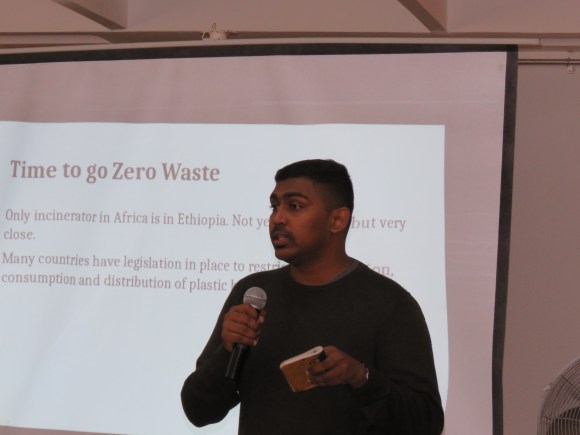
Niven Reddy explained the waste to energy system, which is the thermal treatment of waste. This enforces wasteful culture. For GAIA, burning waste is not the solution, recycling and composting is. If things can’t be re-used or recycled, they should not be produced in the first case.

8

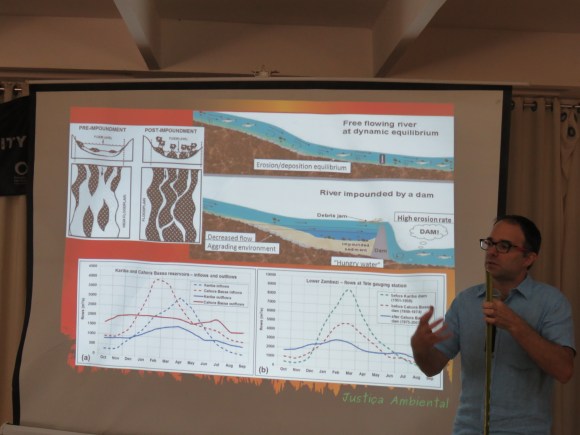
Daniel Ribeiro talked about the impacts of mega-dams. Rivers are vital for distribution of nutrients and sediments. Dams impede this cycle and aggravate erosion. 20% of river fish species were decimated due to mega-dams. 63% of all forced displacements are due to mega dams.

It’s also a water-grab, the wall of the dam is used to remove people from access to water. Mega-dams are also linked to increased seismic activity. Methane emissions are also another impacts of Dams. There are major human rights abuses against people fighting dams. Land is very central to rural communities, we must fight for it. Dams take up huge amount of land leading to loss of life, loss of culture and loss of traditional territories.

9

Greg Muttitt spoke on the global politics of oil. The most important politics of oil, he says, is the struggle against the oil industry. He spoke of three activists from history from whom he gained inspiration to fight the oil industry. The first was American journalist Ida Tarbell who wrote a book about Standard Oil in the 1800’s which led to a successful court case against the oil industry.

The second was Mohammed Mosadegh, the Prime Minister of Iran, who forced BP out of the country in the 1950’s. He who was removed from power in a coup in 1953, by the Shah who was a big supporter of BP. This brought the oil companies back and created authoritarian rule.

The third was Nigerian activist Ken Saro-Wiwa, who led a non-violent campaign against Shell and other companies in the 1980’s. In 1994, the state framed him for murder and executed him.

3

Something we keep seeing a lot through history is how companies go into a new country to drill for oil, and sign a bad deal with the government, who often does not have the same legal and financial expertise as the companies from the global North. When the oil is flowing, and the state realizes that the deal does not benefit them, it is too late.

Not only does the industry need to stop looking for more oil, it needs to stop building pipelines and terminals, and those in operation must be shut down before they run out. Solutions will not come from corporations but from social movements in the north and south. Our movements are stronger now than ever before.

Thuli Makama talked about the politics of oil in Africa and said that people often assume that if oil development happens in Africa, the profit will flow down to communities, but that is never the case. This is the nature of the beast. It is carefully engineered.

The discussions of what will happen with oil exploitation in Africa do not take place in Africa, but in European boardrooms with corporations, financial institutions and states present.

An issue is that extraction is preceded by conflict. Oil and conflict are cousins, it is most often that where you find the one you will find the other. Oil money also ends up funding armed conflict.

Another feature of oil in Africa is causes a lot of suffering at local level. In the Niger delta, oil operations kills farming, fishing and biodiversity, and the people can no longer feed themselves. African governments are captured and cannot rise against corporations.

5

Mike Karipko said that the discovery of oil in your community is a declaration of war on your community! A war on your land, your daughters, your mothers. And oil is so cheap because all the costs to the environment, land rivers and the community are externalized, as big government officials are bought over by companies. Because the companies provide the government with bribes, the tax money of the people is no longer important, so they are not listened to.

Emem Okon talked about the impact that dirty energy has on women. Whatever the impact on a community, the impact on women will be triple, like we see in the Niger Delta. Women are the lifeline in a community and any bad impacts increases the burden on women. For example, women are the farmers and providers of food and water for their families. If their farmland is taken and water is polluted, and there is no other source of livelihood, they are traumatised.

Ike Teuling spoke about the campaign by the farming community of Groningen in the Netherlands, where Shell has gas fields. The drilling regularly created tremors and earthquakes. 100,000 houses were damaged and collapsed, each of these farming families are taking Shell to court individually. These are farmers who are often uneducated having to face Shell’s lawyers every day. The state constantly says that the safety of people in Groningen is most important, but the gas drilling cannot stop because they depend on it for power.

These people have realised that compensation is not enough – if Shell compensates them for the destruction of a house but they continue to drill, their next house will also collapse. So they joined the movement against gas completely.

1

João Mosca said huge parts of corporate profits are not charged as tax, so the state doesn’t collect big amounts as revenues which could be spent on education and healthcare. Until 2016, the Mozambican economy was growing, but who actually benefited? We have a massive increasing external debt.

When companies come and promise job creation, they actually provide very few jobs, because the projects are capital intensive and not labour intensive. The jobs that are available are non-qualified positions leading to even more exploitation of labour.

Fatima Mimbire spoke on the Redistribution of Wealth and Investment in Community Development of the gas exploration in Mozambique to compensate the communities that are impacted by the gas exploration and the models of processes and regulations that needed to be installed. That the legal framework is fragile and that in reality there are many negative examples, all over the world.

Daniel Ribeiro presented on the impacts of gas in Mozambique. There are no examples in Africa that are able to escape this reality. Many impacts are difficult to predict. For example, when boats come from the other side of the world to transport gas, they come empty to carry the gas back. But they add water on the way to keep the ship stable. This brings ballast water which brings organisms not from our coast. This is a reason for the invasion of alien species int the coast.

Our bio system is already diminishing. When drilling takes place, more than 300 chemicals are released that are found to be cancer-causing, in humans, and more than 1000 which are fatal to animals and plants.

The gas industry is notorious for human rights violations. In fact, according to the UN, an increase in human rights violations is proportionate with an increase in dependancy on oil and gas.

Many countries are regarding gas as a ‘transition’ fuel to renewable energy, because they say it has less impact on climate change, because it emits less CO2 than oil. But gas emits methane which is 80% stronger than CO2 over 20 years. Apart from that, the process of exploiting gas is very difficult to control. There is a lot of leakage, and no technology currently available to solve these problems. We need to distinguish their lies from truth. When they say Mozambique will develop through gas, this is a lie. Our debts will only increase.

The discussions at the end of the presentations were intense and with many interventions arising from the participants. Unfortunately we had to end the debate, because we were already past the time and there was still the next day, full of more presentations and debates.

4

Under Water

Tagged , , , , , , , , , , , , , , , , , , ,

CORPORATE IMPUNITY: STRATEGIES OF STRUGGLE (PART II)

As we mentioned in last month’s article, corporate impunity – the crime that does pay off – is a complicated matter. At the moment, our chests are still filled with the breath of fresh air brought to us at the end of last month by the second session of the Permanent People’s Tribunal (PPT), where a panel of 8 jurors and almost 200 participants listened attentively to the complaints of communities and activists who suffer first hand the consequences of a system that favours and protects transnational corporations. Experts noted and reiterated what is no longer news to us: the criminal behaviour of these corporations reflects the field of impunity in which they operate. In addition to providing us with a (unpublished) report of deliberations that will help to expose the behaviour of these companies, this jury also made clear that the mobilization of peoples and the opening of spaces like this court are a fundamental part of the fight for justice.

03

About PPT, we have little more to say right now. You can find more information on the cases presented here, or read the press release of Southern Africa’s Campaign to Dismantle Corporate Power’s (of which we are part) here. This year, the visibility given to the different cases was notorious (like this article on ProSavana in the South African press), and there was also room for an update on the cases brought to the PPT last year in Swaziland. But this is not the time to slow down – after the PPT, more important moments regarding this issue are coming up.

Nowadays, there is a great legal asymmetry between, on the one hand, the endless regulations that protect and safeguard private investments (even shielding them from political decisions that may conflict with the companies’ financial expectations), and on the other, the non-existent coercive legislation which upholds human rights. Corporations rely on a wide range of international norms that act in their defence – from free trade agreements to investor-state dispute settlement mechanisms – but none that regulates their actions in the light of their impacts. Apparently, for years now we have been hoping that, by themselves, guiding principles or corporate social responsibility (voluntary, unilateral, and non-enforceable) become enough to prevent corporate human rights abuses by the corporations, but obviously, this has not happened and will not happen.04

The national laws of countries such as ours are very weak, not to mention the very limited capacity to enforce them and supervise them. That is one of the reasons why Shell remains unpunished despite the criminal spills it is responsible for in Nigeria, or why hundreds of people are being driven from their land to make way for palm plantations in Indonesia. This is why fighting for the enforcement of existing national legislation is an important step, but it can not be the only one if we really want to stop the impunity of these powerful corporations. It is necessary to think beyond. In today’s globalized world, corporations operate in different national jurisdictions, and take advantage of this to evade accountability. For us, expanding the limits of international law and demanding legal instruments that provide a path from where victims of such violations may demand justice seems to be as urgent or even more.

01

The Intergovernmental Working Group mandated to draft a binding Treaty on Transnational Corporations and Human Rights, set up by the UN Human Rights Council in 2014, will meet for the third time in October of this year, then, the concrete terms of the text to be included in the Treaty will be discussed. This initiative, which started with the governments of Ecuador and South Africa, has been gaining strength and supporters. Numerous countries, mostly in the Global South, have already expressed their support for the Treaty, as is the case of Uruguay, which sees in this instrument an opportunity to protect its public policies that are being threatened by the interests of transnational corporations. Mozambique, unfortunately, remains completely out of this discussion and didn’t even show up at the two sessions of the Working Group in the recent years.

An alliance was formed by civil society organizations from around the world to support the drafting of this law, and has actively participated in the sessions of the Working Group to ensure that it will truly represent the needs of those affected. One of the requirements of this alliance is that this treaty contains solid provisions that prohibit corporate interference in the process of formulating and implementing laws and policies. According to Friends of the Earth International (FoEI), also part of the Treaty Alliance, it must establish the criminal and civil liability of transnational corporations in order to fill existing legal gaps in international law, and should apply also to all subsidiary companies and those that form part of its supply chain. Learn more about FoEI’s contributions to the Treaty here.

06


When existing legislation does not address all of society’s problems and needs, new legislation must be created. It was like that with the implementation of universal suffrage, with the abolition of slavery, and in so many other historical moments. We believe that we are about to reach an important milestone in the struggle for the sovereignty of peoples and against corporate impunity, and as the poet once said, there is nothing more powerful than an idea whose time has come.

Tagged , , , , , , , , ,

Corporate Impunity: Strategies of struggle (Part I)

2016 was an important year in our continent’s struggle against corporate impunity: the first session of the Southern African Peoples Permanent Tribunal (PPT) took place in Swaziland. This Court, which was founded more than 30 years ago in Italy, is an independent body that examines situations of systemic human rights violations – especially in cases where existing legislation (both national and international) is not capable of safeguarding the rights of populations. Although it does not have the power to issue an obligatory sentence for the company (which, by the way, is very important and is one of the reasons we are working for – but let’s talk about it later on), the PPT is strategically very important: On the one hand, it allows victims to be heard and advised by a panel of experts from various areas and to establish partnerships; and on the other, it is a moment of complaint and visibility for the cases, and therefore, of exposure to infringing companies. And although in our country this criminal impunity is often seen as a synonym of cleverness and of the perpetrators degree of influence, on the international level things are not quite like that. Being labelled as a human rights violator is a matter of great concern to these corporations, and therefore it can lead to a change of attitude – not because their ethical principles and values are very important to them, but simply because a bad reputation affects the only thing that truly matters to corporations: their profits.

Ten cases from Swaziland, Zimbabwe, South Africa, Zambia and Mozambique were presented in last year’s PPT, most of them related to the extractive industry. From our country, for the serious impacts that their activities have on the communities around them and for the noncompliance with the promises they made to those communities before settling in the region (to the point that one of them actually started its mining activities without resettling those living within the concession area – as we have denounced through various channels including this one), we took to the court VALE and JINDAL. A Panel of Jurors listened attentively to the communities’ grievances and to a contextualization made by invited experts, and then released its deliberations.

This year the process is repeated: in August, seven cases from the Southern Africa region will be presented by the affected communities themselves and by the civil society organizations who work with them. This time, the general theme of the cases is Land, Food and Agriculture. In addition to cases presented by Zambia, Malawi, Tanzania, Madagascar and Mauritius – who will denounce large corporations such as Parmalat and Monsanto – this session of the PPT will also hear the denunciation of two Mozambican cases: the proposed Mphanda Nkuwa dam on the already strangled Zambezi River; and ProSavana, the Mozambican, Brazilian and Japanese governments’ triangular partnership program that aims to develop agribusiness in the Nacala Corridor. These two Mozambican cases have the same particularity: they are not yet implemented. However, and this is what made us chose these two cases for this year’s PPT (because, let’s face it, what we are not lacking in our country are examples of human rights violations by private initiatives), despite not being implemented yet, its impacts are not less significant.

In Mphanda Nkuwa, for example, local communities were visited for the first time in 2000 by representatives of the companies responsible for the construction of the dam. They ere warned that they could not build new houses in that region because they would not be compensated for them. Since then, these people live in total uncertainty and can no longer make any long-term plans, at the risk of losing their assets when they start construction. ProSavana, on the other hand, has been characterized by the secrecy, manipulation and misrepresentation of information with the aim of promoting a false idea that the project will promote agricultural development in the northern region of the country, while in fact it is an initiative that will serve to facilitate large scale encroachment of peasant lands. This program will also destroy the livelihoods of local populations and exacerbate their already grave poverty. There are already reports of manipulation and intimidation of leaders of local peasant organizations.

The mobilization of civil society (Mozambican, Japanese and Brazilian) in opposition to ProSavana was fundamental to halt to the initial plans of this program and postpone the conclusion of its Master Plan. The purpose of taking these two cases to the PPT is to bring together even more elements that may help stop these projects.

Spaces such as the PPT are also crucial for perceiving trends, identifying development models, and analyzing common practices of transnational corporations – as well as their strategies to escape responsibility. Thus, by moving these experiences to a more global scale, it is easy to see that these violations of fundamental human rights are not perpetrated by one or another transnational corporation in isolation. That is, these are not a couple of rotten apples in a sack full of beautiful apples. Rather, it is a generalized behavior that is enabled by an architecture of impunity, characteristic of our extractive capitalist development system. This architecture of impunity puts corporate rights above human rights, and makes way for an abundant number of examples of very lucrative corporate crimes.

The architecture of impunity consists of several elements and actors:

We have the economic power of corporations – on the basis of which these establish their relations with one another and with states – and of international financial institutions;

We have political power, which in turn is responsible for capturing policies and politicians that fail to regulate the collective interests of society to serve private interests;

Trade architecture, embodied by numerous trade and investment agreements, facilitates profit and allows corporations to file lawsuits against governments should they make decisions that affect their anticipated profits;

Legal power is represented by the financial capacity to hire and dispose of influential lawyers who defend corporations in endless processes, as well as by inadequate and insufficient legal instruments that regulate their actions; and finally

Social power, which is exercised in all spheres of our lives through the influence that corporations have in the media, academic spaces, civil society organizations, among others.

Discussing some of these elements and developing the cases that will be presented in the PPT next month, were the objectives that motivated the Workshop on the Architecture of Impunity, held in the context of the Southern Africa Campaign to Dismantle Corporate Power. Since it is the affected communities themselves who present the cases to the Panel of Jurors in the PPT, this enabled them to get the support of several resource people, to appeal, discuss and deepen the specificities of their denunciations and also to identify common ground with the other cases.

But the struggle to end corporate impunity is not only fought in the field of opinion sentences, nor is the important opinion of a panel of judges our only weapon to demand a different behavior from transnational corporations. Another battle is being waged to develop a legal instrument that will ultimately have the power to condemn and punish corporations – since the absence of such an instrument is currently one of the biggest gaps in international law. We are talking about the UN Intergovernmental Working Group, created in 2014 with the mandate to develop a binding treaty for transnational corporations on human rights issues, which will meet in October this year for its third session. At this time, transnational corporations simply have to follow voluntary standards and guiding principles that “advise” best practices on human rights issues. There is no doubt that this blind faith in corporate goodwill has had grave and irreparable consequences, both on people and on the planet. In next month’s article, we will look into this issue more carefully, getting deeper into the debate about the urgency of a legal mechanism that is accessible to any community affected by the operations of a transnational corporation. For now, we continue to look closely at next month’s PPT, certain that this will be another important moment regarding the convergence of struggles for a fairer, healthier and more common-good oriented world.

Tagged , , , , , , , , , , , , , , , , , , , , , , ,

When African Renewable Energy Was Hijacked

A few years ago, during the United Nations climate change negotiations in Paris in December 2015, 55 African leaders launched the Africa Renewable Energy Initiative (AREI). It pledged to follow a people-centred approach to renewable energy development and energy access work across our continent. It talked about rights and equity, very important for our context and for justice. It talked about community ownership and distributed power for African people, in both senses of the word ‘power’. It demanded new and additional renewable energy for our people – no double counting of funds for other projects. It was an African-owned and African-led initiative.

JA! people participated in the AREI meetings in Paris in December 2015 and in Marrakesh in November 2016. Civil society was included into this process from the beginning. Could this become something we would be proud of as Africans? The AREI was a unique approach, in a continent marred by ever-increasing development of dirty energies like coal, oil, gas and big hydro, where it is commonplace to sacrifice our people, kill the local ecology, grab lands and destroy the climate at the same time. The AREI put in strong and important criteria in place to avoid these terrible impacts and said that projects would not support fossil fuels or nuclear.

The AREI really pledged to be different. And this pledge to go for a different, people-based approach is really important. It moves us away from a system fix approach to a system change approach, to change the base principles which drive how we think about energy for people.

In Paris, developed countries stepped forward with $10 billion in pledges to support this initiative. But would these countries really let this initiative survive? Or would money talk? The frightening answer came just over a year later, and by early March 2017, the AREI was already in danger.

The first attack came from the European Commission (EC), and the French government which had helped birth this initiative in the UN talks in their country. What did the attack look like? They came forward at the board meeting with a plan to fund 19 renewable energy projects with an investment of a whopping 4.8 billion. You can read the press release dated 4 March of the European Commission at this link – http://europa.eu/rapid/press-release_IP-17-442_en.htm. When something sounds too good to be true, it usually is. The claim for 4.8 billion is false, they are providing a mere €300 million themselves and hoping to leverage the rest. Not just that, remember the AREI’s commitment for new and additional projects with strong criteria to prevent environmental injustices? Well, these proposed projects were already partly pre-existing ones, with all kinds of double-counting and dodgy accounting taking place on the financing. Some of the projects, like a geothermal project in Ethiopia, are from 2014, the year before the AREI initiative was even finalized. Worst of all, these projects are being rammed through without caring about criteria and impacts. Our colleagues discovered that at least 1 of these projects involves fossil fuels interests. We heard that 14 of these projects were just rubber-stamped through, while 5 of them were not even reviewed due to lack of time. The base principles of AREI were the first to be under attack. Even the vague notion of system change is threatening to the system.


African civil society began to hit back at this affront. By early April, JA! had joined over 180 African organizations who signed up to a letter demanding this hijack of the AREI be reversed. Last week at the UN negotiations in Bonn, on 18 May 2017, 111 international organizations outside of Africa released a letter supporting the African demands for the EC and France to stop the hijack of African renewable energy. A lot of media pick-up has happened around these letters.

The EC knows it is being watched and is now on the back-foot. Our European colleagues were invited to a meeting with them in Bonn last week, where they found out that the EC is seriously trying to do damage control. They are shocked by the media pick-up and are calling it a scandal. But they are not yet saying how they will do things differently. This meeting took place on 16 May 2017. Some mainstream system-fix type civil society people already wanted to stop the international letter since they said the EC is talking to us. Others said, no way, the EC and France need to be exposed and they made sure the letter was released 2 days later, before the Bonn talks closed. You can read the press release here- http://campaign.r20.constantcontact.com/render?m=1102862873361&ca=c6022777-a64f-4bd8-b159-69ebbf8df668.