Tag Archives: biodiversity

September 21st : International Day of Struggle Against Tree Monocultures

Today, September 21, 2024, is the International Day of Struggle Against Tree Monocultures! On this day, we publicly denounce, once again, the numerous and serious impacts of industrial plantations on the lives of rural communities, including their livelihoods and the ecosystems on which they directly depend on.

Year after year we bring reports and complaints from affected communities… year after year we demonstrate how evident the negative impacts are on the lives of the vast majority of those affected, and that the “better life” promised by companies such as Portucel and Green Resources as well as by our Government, only served as a discourse to deceive communities into giving up their lands! The “empty” discourse of “development” that encouraged the land grabbing of community lands to make way for plantations was forgotten at that moment, all that remains is the memory and the hurt of the countless peasant families deliberately deceived! Some still believe that companies will fulfill the promises made, will build schools, bridges, hospitals and that they will eventually have jobs that will change their lives. Some don’t even realize that all these promises are actually the responsibilities of the Mozambican Government, and that these are the same promises made in all electoral campaigns, and little or nothing actually happens!

The denunciations, appeals and complaints from affected communities and social organizations and movements have been largely ignored year after year by the various State institutions responsible for looking after the interests of the People! 

This year, we celebrate this day in a very different context from the previous ones, in the middle of the Election Campaign! It was exactly to escape this context that we held our International Meeting Against Monoculture Plantations, in celebration of the International Day of Struggle Against Monoculture Plantations, on the 22nd and 23rd of August.

The meeting took place in the Province of Manica, and was attended by members of communities directly affected by plantations from the companies Portucel, Green Resources and Mozambique Holdings, from the Provinces of Manica, Zambézia and Nampula, as well as members of Quilombola communities in Brazil also affected by plantations. The objective of the meeting was to promote exchanges between communities affected by industrial Plantations and to carry out visits to some affected communities, to understand their impacts on site. We didn’t see any development, we didn’t see any improvement in the living conditions, we saw eucalyptus plantations, which enrich foreign businessmen, where before we saw farms to feed the people.

At this meeting, organized in partnership by Justiça Ambiental, the World Rainforest Movement, Missão Tabita and AJOCME, we once again listened and felt the enormous negative impact that these plantations have on the lives of communities! Testimony after testimony we heard how they were deceived, how they regret having believed, we see the feelings of despair and anguish in the face of the new reality.

“Everything the company has done to date does not compensate for what we lost by giving up our land” – Affected by Portucel Moçambique plantations, Zambézia Province

“The company arrived with many promises, school, hospital, but nothing happened and now we can’t even produce well in the lowlands, because these trees are drying up our water” – Affected by Portucel Mozambique plantations, Manica Province. 

“We were deceived because we didn’t know anything, they arrived with many promises, we accepted because we believed we would have a better life, they promised to fix the roads, school and hospital. Not even paying compensation for our land, others received little and others saw nothing. Now our struggle is really big, to recover our lands for agriculture, because we are peasants, that’s all we do” – Affected by Green Resources plantations, Nampula Province.

We urge the Government of Mozambique to reject all false solutions to climate change and for the people’s well-being, such as carbon credit projects, and invest effort and resources in supporting peasant agriculture, for a diversified and quality food production through agroecology in order to ensure food sovereignty; We urge the Government to promote and facilitate community-based initiatives to generate income and conserve our natural resources and important ecosystems! We also urge the Government to carry out, as a matter of urgency, a serious and impartial assessment of the social, environmental and economic impacts of the industrial plantations that it has promoted so much and continues to promote, as this will clearly demonstrate that these plantation model does not work.

Continuing to allow and promote false solutions will worsen the lack of political will and financing to implement real, decentralized solutions based on the needs, interests and will of the people.

Plantations are not forests! Plantations take away land, resources and ways of life…

We stand in solidarity, today and always, with all peoples and communities that resist the usurpation of their territories and ways of life!

The struggle goes on!

For rights, For justice, For a better world for everyone!

Tagged , , , ,

Justiça Ambiental entrevista a Organização de Trabalhadores de MoçambiqueCentral Sindical, por ocasião do 1 de Maio, Dia Internacional do Trabalhador

thumbnail (1)

Entrevista a Damião Simango, membro do secretariado, responsável pelas relações internacionais e porta-voz da OTM-CS

Justiça Ambiental (JA!):

Caro Damião, obrigada por esta oportunidade de conversa. Sabemos que a Organização dos Trabalhadores de Moçambique – Central Sindical (OTM-CS) é a maior entidade representativa dos trabalhadores no país. Pode nos falar um pouco do que é a OTM e como se estrutura?

Damião Simango (DS):

A OTM é a central sindical mais antiga e mais representativa de Moçambique. Estamos em todas as províncias e em alguns distritos. Congregamos diversos sindicatos nacionais (15) que incluem o sindicato dos funcionários do estado, e também a associação dos trabalhadores da economia informal. No total, e pelas estatísticas de 2018, somos cerca de 145 a 150 mil membros. Na sua estrutura, a OTM também tem uma estrutura representativa das mulheres e outra dos jovens.

Existem outros sindicatos independentes, como o dos professores e jornalistas. Outra importante federação sindical é a CONSILMO, a Confederação Nacional de Sindicatos Independentes e Livres de Moçambique.

JA!:

Qual é a vossa missão?

Damião Simango (DS):

A OTM é uma congregação que dá a voz aos trabalhadores em Moçambique. Lutamos pela defesa e promoção dos nossos direitos e interesses sócio-profissionais, junto às entidades empregadoras e através do contacto permanente com organizações do Estado e outros actores sócio-profissionais e económicos.

JA!:

Indo directo ao assunto, aproximamo-nos do dia do trabalhador, 1 de Maio. Na situação em que vivemos actualmente, devido à pandemia do COVID-19 e as medidas tomadas para tentar contê-la, de que forma o trabalho da OTM é afectado por esta situação?

Damião Simango (DS):

Esta situação impacta-nos de muitas formas. Por exemplo, em condições normais, nesta altura provavelmente estaríamos nas negociações em torno do salário mínimo, mas estas foram suspensas por causa do COVID-19. Estas negociações estão previstas por lei, que prevê que anualmente deve haver um reajuste nos salários mínimos.

Claro que, por um lado, podemos compreender a fragilidade das empresas neste momento devido à pandemia, no entanto, a nossa preocupação é o trabalhador. Gostaríamos de, em contrapartida, particularmente durante a pandemia, ter a garantia da manutenção dos postos de trabalho e pagamento dos salários.

Devemos notar que, apesar de não se aumentarem os salários, a pressão sobre os salários já baixos dos trabalhadores aumentou – não só devido ao incremento dos preços dos produtos essenciais, como também pelo surgimento de novas demandas e despesas extraordinárias, como as máscaras, materiais de limpeza e higiene, etc.

JA!:

E quais são as vossas principais preocupações face ao cenário actual?

Damião Simango (DS):

Neste momento da pandemia, o que mais nos preocupa é o futuro dos trabalhadores. Em Moçambique não temos, por exemplo, um subsídio de desemprego ou uma segurança de rendimento para estas situações, principalmente para os grupos mais vulneráveis. Apenas o subsídio de emergencia básico previsto pelo INSS (Instituto Nacional de Segurança Social), e o subsídio de acção social previsto pelo INAS (Instituto Nacional de Acção Social), que varia entre Mts 540 e Mts 1050. Portanto se esta situação se prolongar por mais 3-4 meses, o que isto vai significar para os trabalhadores? Isto preocupa-nos muito, devido ao impacto que provavelmente terá nos trabalhadores e, consequentemente, na sociedade. Alguns impactos disto poderão ser um intensificar da pobreza, desigualdade, violência doméstica, criminalidade, entre outros.

JA!:

Recentemente, um grande número de organizações e indivíduos da sociedade civil, incluindo a OTM-CS, publicou um documento de posicionamento a respeito do Estado de Emergência. Este documento contém algumas propostas concretas para o governo, incluindo na área de emprego e protecção social. Quais são as vossas demandas neste momento? (Este posicionamento pode ser consultado em: https://aliancac19.wordpress.com/)

Damião Simango (DS):

De forma ampla, nós exigimos que o governo desempenhe o seu devido papel de protector social, que se torna mais urgente que nunca devido à situação de crise. Queremos que não sejam tomadas nenhumas medidas sem que se pense concretamente como é que os grupos sociais irão implementá-las, em particular as camadas mais vulneráveis.

O INSS tem evoluído bastante nos últimos tempos. Por exemplo há alguns anos, para se registar no INSS, teria que ser através da entidade empregadora. Isso já evoluiu, agora o trabalhador informal pode se registar no INSS de forma independente. Mas é preciso continuar a evoluir, principalmente no sentido de ampliar a abrangência da protecção social, que alcança ainda poucas pessoas, e adoptar medidas concretas para lidar com esta crise.

Sabemos que os empresários tudo farão para proteger as suas empresas, e alguns poderão até mesmo aproveitar-se desta crise para lograrem outros intentos que em condições normais não poderiam. Temos noção que a CTA (Confederação das Associações Económicas de Moçambique) tem um grande poder de influência sobre o governo, e já há tempos que temos observado uma pressão por medidas que contribuem para a precarização do trabalho e do trabalhador. No entanto, temos que perceber que as medidas propostas pelas empresas e demais entidades empregadoras não serão suficientes para lidar com esta crise, é fundamental que o governo intervenha com medidas de protecção social. O que nós exigimos, portanto, é que o governo possa dar uma resposta concreta a estas questões, e que as medidas negociadas não sejam em qualquer circunstância em detrimento dos direitos dos trabalhadores e da sua protecção social.

JA!:

Esta crise causada pela pandemia COVID-19 vem evidenciar também uma série de outras crises, de desigualdade, pobreza, precariedade do trabalho, etc, tanto a nível de Moçambique como a nível global. Como é que vê a interligação destas crises com o sistema sócio-económico predominante, o capitalismo neoliberal?

Damião Simango (DS):

As crises são oportunidades – isto pode até soar mal, mas é verdade. As oportunidades apresentam-se de diversas formas, e esta é uma delas. Temos a oportunidade de repensar o papel do Estado e, de forma mais ampla, o modelo de desenvolvimento que seguimos. Antes, a maioria das pessoas estava convencida que este modelo, por ser o mais praticado actualmente, é o que responde às nossas necessidades. Agora é hora de despertarmos, e percebermos que este modelo não nos serve. E foi, neste caso, o sector da saúde que evidenciou isto – vemos milhares de mortes nos Estados Unidos, principalmente da população mais pobre, porque têm um sistema de saúde privado.

Precisamos de resgatar um papel fundamental do Estado, que é o seu papel protector da sociedade, garantindo a sobrevivência do seu povo. Este papel, que tem sido fragilizado devido ao modelo económico vigente, não se pode perder. É agora o momento ideal para o Estado desempenhar o seu papel protector, independentemente das pressões impostas pelo sistema de mercado.

Sabemos que o sector empresarial conta com forte apoio, fundos e especialistas para defender as suas posições. Nós não contamos com o mesmo apoio – mas sabemos o que queremos! Queremos a sociedade e os trabalhadores protegidos pelo Estado. Não haverá qualquer saída viável, justa e produtiva desta crise sem os trabalhadores.

thumbnail

Muito obrigada pela vossa disponibilidade para conversar conosco, e estamos em solidariedade com a vossa luta!


Tagged , , , , , , , , , , , , ,

Under Water

Tagged , , , , , , , , , , , , , , , , , , ,

The Green Deserts of our Future

Monoculture forest plantations are fast increasing in developing countries and although this growth is fuelled by low production aDSC_0212nd labour costs, carbon sequestration for the developed, and government incentives, these plantations have serious social and environmental impacts.  Mozambique is no exception, here plantations are springing up rapidly and the government is keen to attract investment into these plantations for paper production.

On the 6th of August 2012 JA! participated in a seminar on ‘Forest Plantations and Industry in Niassa’.  The seminar took place at the VIP Hotel, Maputo and included the presence of a large number of individuals of the Forestry and Agriculture sectors.  The seminar was organised by the Niassa Forest Association together with the State Department of Land and Forestry and presided over by the Minister of Agriculture.  Mozambique is being transformed into a major global producer and the successful examples of South Africa, Uruguay, and Chile were mentioned.

The first presentation of the seminar was the “Evaluation of the Forest Plantations in Niassa Province 2005-2012” wherein it was mentioned that prior to 2005 there was no investment in tree plantations and after 2005 investment into these plantations surged leading to the current occupation of 165.772.80 hectares of land by plantations of which 32.409.00 hectares constitutes Pine and Eucalyptus plantations.  Some social and environmental problems experienced due to this type of investment were recognised as being caused by the enormous demand for land, waves of investment, poorly conducted community consults, and land grabbing cases.  All these problems were treated as if they had either been resolved or were in the process of being resolved, however with every passing day more and more serious incidents of land grabbing continue to be reported here. 

In other meetings the government’s desperate and blind desire to attract more and more investment into monoculture tree plantations has been clear.  This is evidenced by the speed with which the Regulation of Forest Plantations was proposed and approved while other legal instruments await years and years for approval such as the Law of Popular Action and the Law of Conservation Areas to name only those related to the environment.  The land for these DSC_0213plantations which is often described as ‘degraded’ is not degraded in the eyes of local populations who leave tracts of land fallow for revitalisation and future use nor is it degraded in the eyes of conservationists who see great importance in conserving the natural bush for biodiversity.  However others, interested in the implantation of these fake forests, are quick to regard this land as degraded.

The seminar left us with more questions than answers.  Who do the processes of community consult actually serve?  The community does not have the right to veto any project, they could be against it, they could protest, but the state has the final word and the state has decided.  What is the purpose of the Environmental Impact Assessment (EIA) study when the mitigation measures set out to address the impacts of a project are only in some cases possible or realistic?  This kind of situation leaves countries like Mozambique in a very difficult position as they have no way of rectifying a situation made difficult by the plantations and the effect their implantation has on rural farming communities and their environment.  The state gives the go ahead to projects that do not even have completed EIAs required by law. 

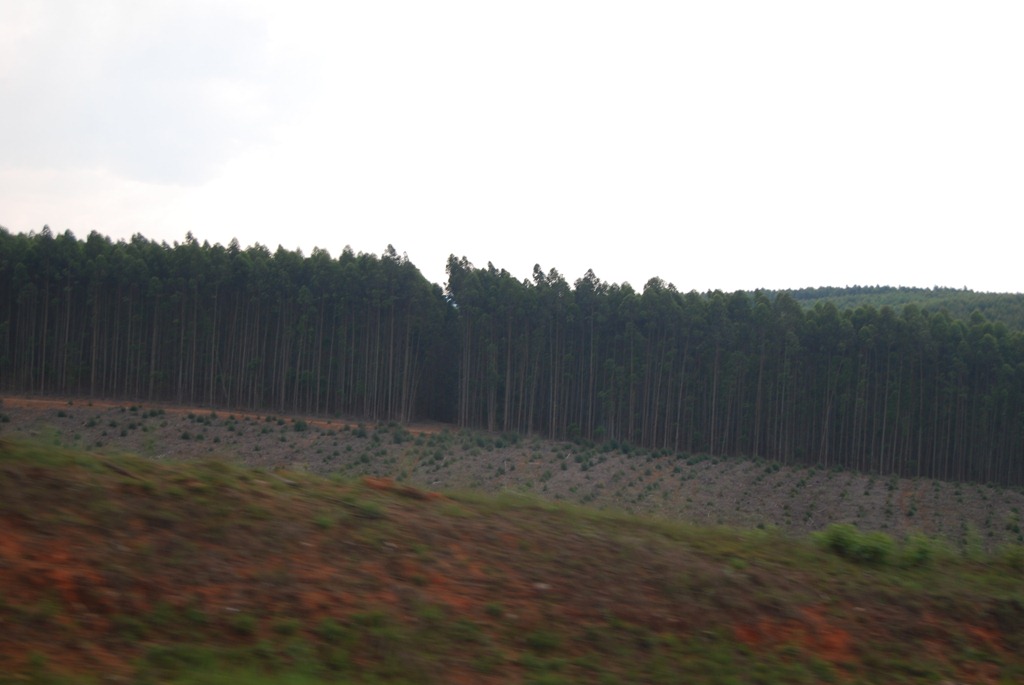
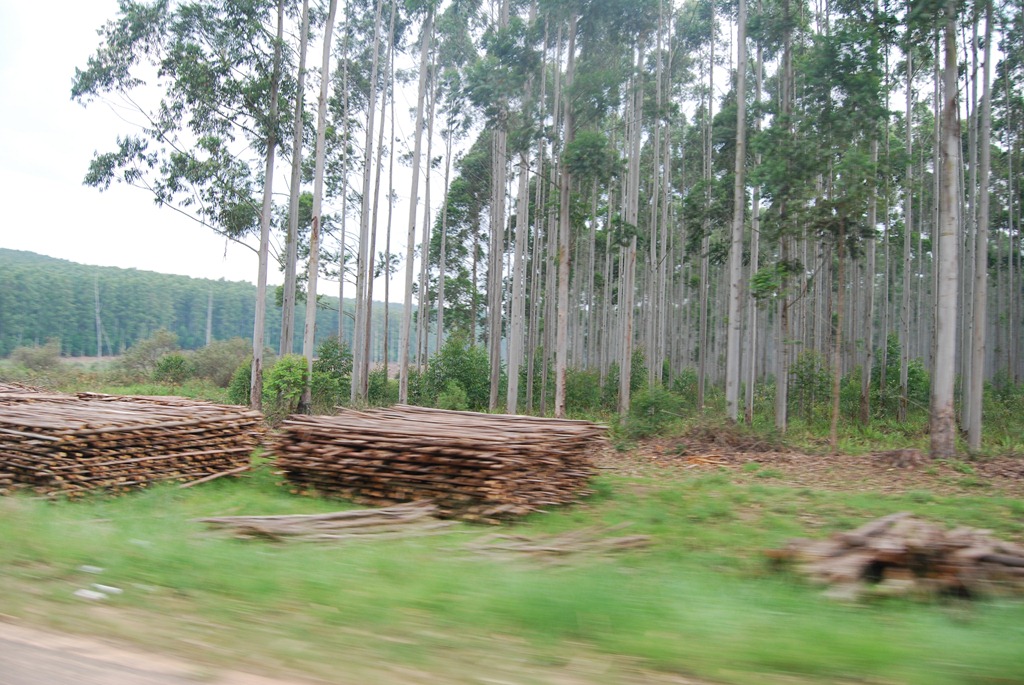
At the end of the day, the issue is that there is no clear admittance of the distinction between a natural forest and a monoculture tree plantation or ‘forest plantation’.  This is a serious problem because many would point to the idea that a tree plantation contributes to conservation but the impacts of monoculture tree plantations on the biodiversity of an ecosystem are large.  Consider for a moment what a tree plantation looks like; it is densely planted with only one (or a couple) tree variety.  This impacts the pollinators and other animals dependant on the natural vegetation for their survival (to read more about this research on Nature.com) and the sustainability of the natural forest.  The diversity of tree species in natural forests aids this survival whereas monoculture tree plantations leave no room for it.  It is also important to note that many of the tree monocultures like Pine and Eucalyptus are not indigenous to Mozambique and their impact on local species and water must be taken into consideration.  In Mpumalanga, South Africa, Philip Owen founder of Geasphere describes how the Pine and Eucalyptus plantations have dried up the groundwater, streams and rivers there. 

DSC_0218Tree plantations are a form of agriculture, they are not forests in any way as they have been shamefully described by companies in an attempt to take advantage of the growing concern of deforestation which is a current and ever-increasing issue.  These tree plantations are food deserts, they yield nothing in terms of sustenance, and whatever species are able to survive in these plantations are eradicated as pests. 

These plantations are green deserts.  They offer no sustenance, they offer no reprieve from deforestation or the loss of natural forests and the species therein.  They have been described as being void of life – that not one animal or bird can be heard within these fake forests.  They emit the silence of lifelessness.  They are quite simply wood farms of invasive tree species which dry up water sources and are implanted on community lands labelled as degraded.  This cannot be regarded as a sustainable practise for our future.


For more information on plantations vs. natural forests please follow these links:


‘Green desert’ monoculture forests spreading in Africa and South America

http://www.guardian.co.uk/environment/2011/sep/26/monoculture-forests-africa-south-america


Geasphere Mozambique – Information about the Mozambican experience

http://www.geasphere.co.za/mozambique.htm


“Monoculture tree plantations are “green deserts” not forests, say activists.”  http://news.mongabay.com/2008/0919-plantations_hance.html?menu=Select+a+News+Topic


Plantation vs. natural forest: Matrix quality determines pollinator abundance in crop fields (Scientific Report from Nature.com) http://www.nature.com/srep/2011/111028/srep00132/full/srep00132.html

Tagged , , , , , , , , ,