Tag Archives: agriculture

September 21st : International Day of Struggle Against Tree Monocultures

Today, September 21, 2024, is the International Day of Struggle Against Tree Monocultures! On this day, we publicly denounce, once again, the numerous and serious impacts of industrial plantations on the lives of rural communities, including their livelihoods and the ecosystems on which they directly depend on.

Year after year we bring reports and complaints from affected communities… year after year we demonstrate how evident the negative impacts are on the lives of the vast majority of those affected, and that the “better life” promised by companies such as Portucel and Green Resources as well as by our Government, only served as a discourse to deceive communities into giving up their lands! The “empty” discourse of “development” that encouraged the land grabbing of community lands to make way for plantations was forgotten at that moment, all that remains is the memory and the hurt of the countless peasant families deliberately deceived! Some still believe that companies will fulfill the promises made, will build schools, bridges, hospitals and that they will eventually have jobs that will change their lives. Some don’t even realize that all these promises are actually the responsibilities of the Mozambican Government, and that these are the same promises made in all electoral campaigns, and little or nothing actually happens!

The denunciations, appeals and complaints from affected communities and social organizations and movements have been largely ignored year after year by the various State institutions responsible for looking after the interests of the People! 

This year, we celebrate this day in a very different context from the previous ones, in the middle of the Election Campaign! It was exactly to escape this context that we held our International Meeting Against Monoculture Plantations, in celebration of the International Day of Struggle Against Monoculture Plantations, on the 22nd and 23rd of August.

The meeting took place in the Province of Manica, and was attended by members of communities directly affected by plantations from the companies Portucel, Green Resources and Mozambique Holdings, from the Provinces of Manica, Zambézia and Nampula, as well as members of Quilombola communities in Brazil also affected by plantations. The objective of the meeting was to promote exchanges between communities affected by industrial Plantations and to carry out visits to some affected communities, to understand their impacts on site. We didn’t see any development, we didn’t see any improvement in the living conditions, we saw eucalyptus plantations, which enrich foreign businessmen, where before we saw farms to feed the people.

At this meeting, organized in partnership by Justiça Ambiental, the World Rainforest Movement, Missão Tabita and AJOCME, we once again listened and felt the enormous negative impact that these plantations have on the lives of communities! Testimony after testimony we heard how they were deceived, how they regret having believed, we see the feelings of despair and anguish in the face of the new reality.

“Everything the company has done to date does not compensate for what we lost by giving up our land” – Affected by Portucel Moçambique plantations, Zambézia Province

“The company arrived with many promises, school, hospital, but nothing happened and now we can’t even produce well in the lowlands, because these trees are drying up our water” – Affected by Portucel Mozambique plantations, Manica Province. 

“We were deceived because we didn’t know anything, they arrived with many promises, we accepted because we believed we would have a better life, they promised to fix the roads, school and hospital. Not even paying compensation for our land, others received little and others saw nothing. Now our struggle is really big, to recover our lands for agriculture, because we are peasants, that’s all we do” – Affected by Green Resources plantations, Nampula Province.

We urge the Government of Mozambique to reject all false solutions to climate change and for the people’s well-being, such as carbon credit projects, and invest effort and resources in supporting peasant agriculture, for a diversified and quality food production through agroecology in order to ensure food sovereignty; We urge the Government to promote and facilitate community-based initiatives to generate income and conserve our natural resources and important ecosystems! We also urge the Government to carry out, as a matter of urgency, a serious and impartial assessment of the social, environmental and economic impacts of the industrial plantations that it has promoted so much and continues to promote, as this will clearly demonstrate that these plantation model does not work.

Continuing to allow and promote false solutions will worsen the lack of political will and financing to implement real, decentralized solutions based on the needs, interests and will of the people.

Plantations are not forests! Plantations take away land, resources and ways of life…

We stand in solidarity, today and always, with all peoples and communities that resist the usurpation of their territories and ways of life!

The struggle goes on!

For rights, For justice, For a better world for everyone!

Tagged , , , ,

MAPUTO DECLARATION AGAINST CORPORATE IMPUNITY FOR HUMAN RIGHTS  AND CLIMATE JUSTICE

15 August 2024

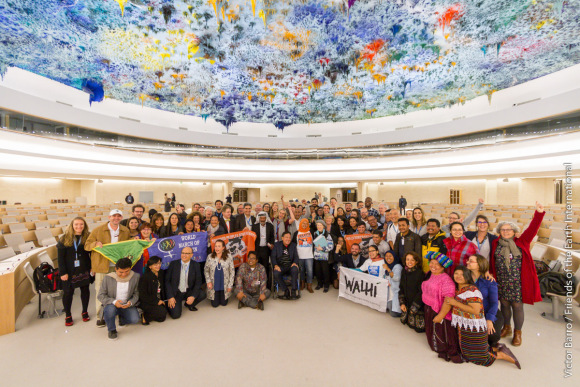
We are social movements, civil society organisations, grassroots communities, peasants, lawyers, academics, experts, working people and others, from different provinces of Mozambique and also from South Africa, Zimbabwe, Botswana, Swaziland, Kenya, Democratic Republic of Congo, Rwanda, Togo, Uganda, Nigeria, Tunisia, Cameroon, Algeria, Senegal, and allies from Japan, Mexico, Portugal and United States of America. 

We met for the 8th Workshop on Corporate Impunity and Human Rights in Maputo, Mozambique, from 12-15 August 2024, organised by Justiça Ambiental JA!. Our workshop was conducted in multiple languages including Portuguese, Xangana, Nyungwe, Makonde, Swahili, Makua, isiZulu, Arabic, English, French, Spanish.

We acknowledge the struggles for justice and survival of our peoples and communities, especially of women and children. We stand against apartheid, occupation, war, conflict, militarisation and genocide, in Palestine, Cabo Delgado, Sudan, Democratic Republic of the Congo, Bangladesh and everywhere. We reiterate our unconditional solidarity with peoples resistance and struggles for justice everywhere.

We note that the capitalist, colonial, patriarchal, classist, racist and deeply unequal system is an enemy of peoples and planet; it places profits above life and plunders territories and common goods. 

We shared about African political economy, colonialism and the violent power of transnational corporations. We note that the global north, enabled by our own political class, continues to perpetuate the myth that Africa will remain poor if we don’t exploit our fossil fuels; thereby drawing many African countries into perpetual economic entrapment through a dependence on fossil fuels which exacerbate the climate crisis. Our African governments misuse the concept of the ‘right to development’ to continue enriching themselves. We assert our collective and individual human right to a dignified life, to a development that responds adequately to cultural and social realities within the African context; however this is not what is being offered to us. Our States have the legal obligation to protect, respect, promote and fulfil the human rights of their citizens.

We know too well that human rights are not just an imported concept, they are deeply linked to African histories and lives, as affirmed in the African Charter of Human and Peoples Rights. We denounce the impacts that are already affecting our peoples lives and livelihoods, from climate change to fossil fuels, extractivism, land grabbing and dispossession. People are suffering from multi-crises that they had no part in creating.

We denounce the structural architecture of impunity and unregulated power of transnational corporations and the playbook they use to spread denial and disinformation. We denounce the corporate capture of our democracies causing shrinking civic space and increased attacks on environmental human rights defenders. We reject “free” trade and investment agreements that undermine the sovereignty of our States.

We denounce the architecture of climate injustice. The countries of the global north have created the climate crisis and they must act first and fastest to address it. But the opposite is happening. We need to phase out fossil fuels and support a just transition that guarantees sovereignty in the global south. Our governments must do everything possible to protect the peoples and all forms of life already affected by the climate crisis, including in COP climate negotiations where fossil fuel lobbies have been allowed to dominate the agendas and create barriers to action.

We assert the need to cut emissions at source. No forests or carbon sinks can compensate for these emissions. The forests, our lands and our rivers are our life, they are not new markets for capital. African forests must not be captured. There should be nothing about us without us. We assert our right to say no. 

KODAK Digital Still Camera

OUR VISION

We are constructing our vision for the world we want to live in, the world we want to leave for our children. Our demands are as follows:

  1. On Corporate Impunity and the Climate Crisis:
  • We demand a strong and effective UN Binding Treaty on transnational corporations and human rights, so that they are held liable for the crimes they commit.
  • We demand that current financial injustices, like inequality, debt, tax and wage evasion and illicit financial flows are dismantled along with the institutions that drive these processes.
  • We support struggles against dirty energy and fossil fuels that challenge the impunity of the system. We join the call for the establishment of a Peoples World Commission on a fair, fast, full, funded Fossil Fuel Phase out, to discuss how this phase out will actually happen, and support the process towards a fossil fuel non-proliferation treaty.
  • We reject all false solutions including carbon markets, REDD, offsets, geoengineering, net zero, “natural” gas, hydrogen, mega-dams, industrial plantations and delaying tactics.
  1. On Rights, Sovereignty, Repair and Reparations:
  • We call for socially-owned renewable energy systems.
  • We demand the strengthening of rights-based frameworks, including land and forest rights.
  • We support community forest management and peasant agroecology towards food sovereignty.
  • We demand healing justice and reparations for communities whose rights have been violated.
  • We affirm that there is no climate justice under occupation, apartheid, conflict and militarisation.
  • We denounce and reject the normalisation of war and conflicts and the accompanying dehumanisation (e.g. Palestine, Sudan, DRC, Western Sahara, Cabo Delgado and everywhere).
  1. On Feminist Economics:
  • We support a new economy for people and planet – a solidary and circular economy that values and centres care work and bodily autonomy; an economy that centres sustainability and abundance of collective life, as opposed to profit and individual gain. From extraction to regeneration. 
  • We call for the reclamation of the public sphere to ensure peoples rights and support public services.

Above all, our vision is based on our human values of solidarity, cooperation, Ubuntu and Eti-uwem. We will continue fighting, resisting, mobilising, organising, and moreover transforming our societies. We assert our right to say NO!

GROUPS / COLLECTIVES PRESENT AT THE WORKSHOP:

Advocacy Coalition for Sustainable Agriculture (ACSA) – Uganda 

ALTERNACTIVA – Acção pela Emancipação Social – Mozambique

Alternative Information and Development Centre (AIDC) – South Africa

Associação de Cooperação Para o Desenvolvimento – Mozambique

Associação de Jovens Combatentes Montes Errego (AJOCME) – Mozambique

Associação dos Jornalistas Ambientais – Mozambique 

Associação LaVatsongo – Mozambique 

Bairro Bagamoio Moatize – Mozambique

Basilwizi Trust – Zimbabwe 

Centre Congolais pour le Développement Durable (CODED) – République Démocratique du Congo

Centre pour la Justice Environnementale – Togo

Centro de Jornalismo de Investigação Moçambicano (CJIM)

Centro para Desenvolvimento Alternativo (CDA) – Mozambique 

Don’t Gas Africa

Dynamique pour le Droit, la Démocratie et le Développement Durable (D5) – République Démocratique du Congo

Earthlife Africa

Entembeni Crisis Forum (ECF) – South Africa

Environmental Rights Action, FoE Nigeria

Environment Governance Institute – Uganda

Fair Finance Coalition – Southern Africa

FishNet Alliance Network – Africa

Fórum Mulher – Mozambique 

Friends of the Earth Africa

groundWork, Friends of the Earth South Africa

Health of Mother Earth Foundation – Nigeria / Africa

Hikone – Mozambique

Justiça Ambiental JA! – Mozambique

KULIMA – Mozambique 

La Via Campesina Southern and Eastern Africa

Missão Tabita – Mozambique

Mukadzi-Colaboratório Feminista – Mozambique 

Natural Justice – Africa

No REDD in Africa Network (NRAN)

Observatório das Mulheres – Mozambique

Oilwatch Africa

Power Shift Africa

Resource Rights Africa – Uganda

Right to Say No Campaign – South Africa

Rural Women’s Assembly (RWA) – Southern Africa

South Durban Community Environmental Alliance (SDCEA) – South Africa

Southern Africa Campaign to Dismantle Corporate Power

Southern Africa Green Revolutionary Council (SAGRC)

Support Centre for Land Change (SCLC) – South Africa 

União Nacional de Camponeses (UNAC) – Mozambique

Uganda Land Owners Association

WoMin African Alliance

ZIMSOFF – Zimbabwe

350Africa.org

Afrikagrupperna

Climáximo – Portugal 

FIAN International

Friends of the Earth International

Friends of the Earth Japan

Global Campaign to Reclaim Peoples Sovereignty, Dismantle Corporate Power and Stop Impunity

Global Forest Coalition

International Rivers (IR)

Oilwatch International

Transnational Institute (TNI)

World Rainforest Movement (WRM)

IN SOLIDARITY:

Actions Internationales pour le Développement et le Climat AidClimat

Africa Climate Movements Building Space

Africa Network for Environment and Economic Justice (ANEEJ)

Associação Consciente Sociedade – Mozambique

Associação Homens pela Mudança (HOPEM) – Mozambique

Bio Vision Africa (BiVA)

CHePEA

Centre de Recherches et d’Appui pour les Alternatives de Développement – Océan Indien (CRAAD-OI)

Coligação de 4 Bairros da Localidade Canhavane – Mozambique 

Egyptian Organization for Environmental rights

Enviro Vito NPO – South Africa

Foundation for Environmental Rights Advocacy and Development FENRAD – Nigeria

Grassroots International

Green Advocates International

Innovation pour le Développement et la Protection de l’Environnement – République Démocratique du Congo

JOINT – NGO league in Mozambique

Legal Rights and Natural Resources Center – FoE Philippines

Les Amis de la Terre – Togo

Ligue des Jeunes Paysans de la République Démocratique du Congo (LJP-RDC)

Malamba-Mazuene, Inhambane – Mozambique

Movimento dos Atingidos por Barragens (MAB) – Brazil

Muyissi Environnement – Gabon

National Association of Professional Environmentalists (NAPE) – Uganda

PENGON – Friends of the Earth Palestine

Protecting Our Environment Today (POET)

Thenjinosi Community Development Project – South Africa

University of Johannesburg – Centre for Social Change, South Africa

West Coast Food Sovereignty and Solidarity Forum – South Africa

Tagged , , , ,

Mozambique Holdings employee attacks peasant women in Namadoe community, Lugela District

Conflicts between members of the communities affected by the Mozambique Holdings company’s plantations and its managers and employees in the Lugela district have been ongoing since the company begun its activities in the area. Until today, there is no information on how the land use title was transferred from Madal to Mozambique Holdings Lda, despite the numerous requests for information submitted to Government.

The affected communities claim that there was no community consultation process for the transfer of the land use title, and that they were allowed by Madal to use several areas under Madal’s title for food production. Since Mozambique Holdings Lda started operating, several community members lost their production areas without any compensation, as some of these areas were under Madal’s land title but always used by the communities.

JA! and the community associations have already denounced several situations of intimidation, threats, insults and even aggression against community members and the destruction of fields and stored foods. These situations were publicly denounced, and formal complaints were submitted to the relevant authorities, including the Police. The perpetrators of these acts are well known by all, they are and have been denounced and nothing has happened. Due to the increase and aggravation of conflict situations and the dissatisfaction of these communities, the District Administration intervened with the company in order to convince the company to allow the communities to use part of the lowlands for rice production and for the last two years this has been the case.

However, last Sunday, the 14th of May, two peasant women from the Namadoe community were in one of these low-lying areas planting cabbage when Mr. Binua, from Mozambique Holdings, who was driving by saw them there, he stopped his motorcycle and ran towards them. As they say, the two peasant sisters, as soon as Mr. Binua reached one of the peasant women, without saying a single word, he began to violently attack her. The sister ran away, but quickly realized that her sister was still being beaten and returned to defend her. The fear was quickly forgotten and together they defended themselves against Mr. Binua, having attacked him until he bit one of the ladies and fled on his motorbike taking with him the peasant women’s two machetes, but in the escape, he left his cell phone behind. This same man has already assaulted other members of the community, men, women and even a girl, with impunity, and continues to walk arrogantly through the communities as if he was untouchable. Last Sunday, he was not so lucky, and by all accounts he received a brave and well-deserved beating from the two sisters, acting in self-defense.

Mr. Binua, not happy with the outcome, went on to file a complaint with the Chief of Locality, who forwarded the case to the Police Station in Tacuane. We are following the situation in order to ensure protection and if needed legal assistance to these brave peasant women who are fed up of being disrespected, insulted and bullied by an outsider who believes to be above the law.

The reduction of the production areas of these communities has brought them countless challenges, these as many communities in our country depend on these lands to produce food and it is these same lands that have been granted to companies like this one, who do not respect local communities, their culture, traditions and ways of life and still think act as if they were above the law. The most recent cyclone Freddy destroyed several food production fields in these communities, and it is in this harsh context that these communities find themselves.

Due to all these issues Mozambique Holdings LDA is not welcome by the communities, it does not contribute in any way to improve the living conditions of these communities, the managers and foreign staff have a terrible relationship with the locals. Since the company begun its operations, it has only aggravated communities’ situation of poverty and vulnerability, and Government, by failing to act in the face of these crimes, is in fact supporting their criminal activity. Communities feel abandoned by the government in this situation, and impunity reigns.

Who is behind Mozambique Holdings? Who protects them? And who protects and defends the rights of these communities?

The Struggle goes on!

Enough of Impunity!

Tagged , ,

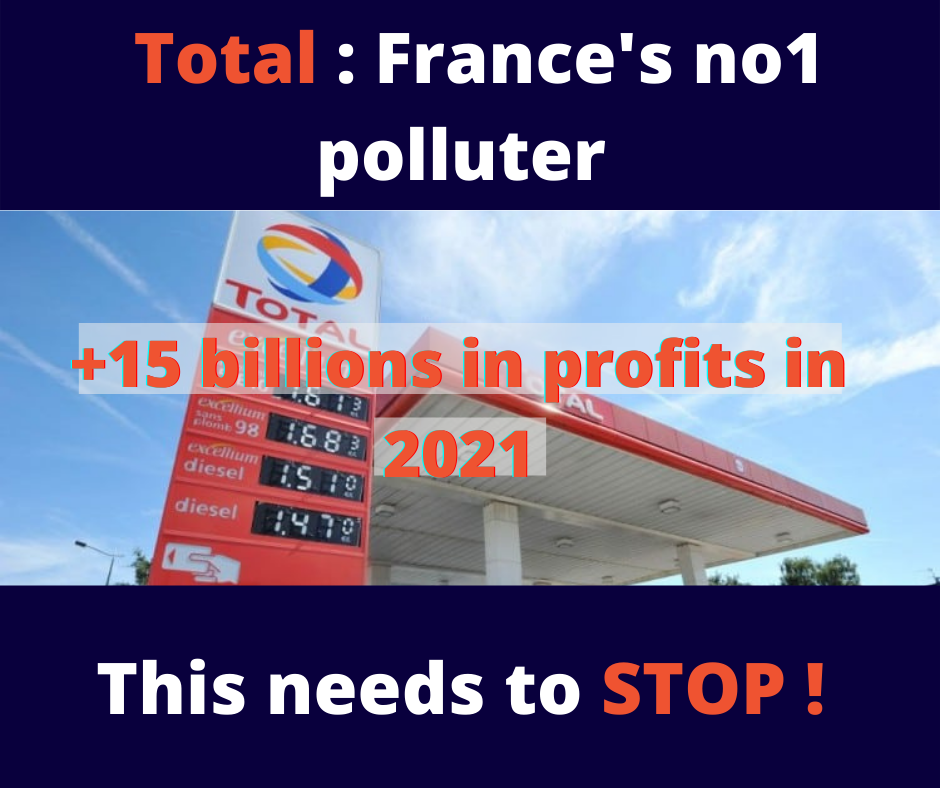
TOTAL’S 2021 15 BILLION EUROS PROFIT COMES AT THE EXPENSE OF THE PEOPLE OF THE GLOBAL SOUTH

This week, Total announced that in 2021 it made 15 billion Euros, the biggest profits any company has ever made in French history. They are unashamedly boasting about this money, money that will go to wealthy European shareholders, money that they have made at the expense of the climate and people and the environment in the global South.

Total is one of the biggest players in Mozambique’s gas industry, leading the Mozambique liquid Natural Gas (LNG) project and is constructing the onshore Afungi LNG Park, which houses the aerodrome, treatment plants, port, offices and other support facilities for all the projects. To make way for the 70 square kilometre park, the company displaced over 550 families, thousands of people, from surrounding communities.

Even though extraction hasn’t even happened yet, fishing communities who had been living mere metres from the ocean for generations were displaced to a ‘relocation village’ more than 10 km inland, with no way of getting to the sea. Farmers who had now lost their land, were given small, inadequate pieces of land far from the relocation houses they had been given.

Their ‘consultation’ process with these communities has been a joke. In meetings between communities and companies, community leaders – many of whom have developed financially beneficial relationships with the industry – are present, and people avoided speaking out for fear of losing their compensation, or of physical threats. This is exacerbated by communities’ lack of basic knowledge law, thereby unable to demand their rights.

JA! works closely with communities on the ground in the gas region, and have seen how the only jobs created for locals were menial, unskilled and temporary. Communities’ complaints to Total about irregular compensation payments were waved away. And now that Total’s project was paused in April 2021, they have stopped compensation payments completely.

The project will also have irreversible impacts on the climate and destroy coral reefs and endangered species of the UNESCO Biosphere, the Quirimbas Archipelago.

But Total’s crimes go beyond Mozambique, to many other Southern countries. One of their planned projects, the East Africa crude Oil Pipeline (EACOP) has been the subject of major campaigns by civil society and even a lawsuit in France by Friends of the Earth France. According to the StopEACOP Campaign:

“Stretching for nearly 1,445 kilometers, the East African Crude Oil Pipeline (EACOP) would have disastrous consequences for local communities, for wildlife and for the entire planet – we have to stop it. The project threatens to displace thousands of families and farmers from their land. It poses significant risks to water resources and wetlands in both Uganda and Tanzania – including the Lake Victoria basin, which over 40 million people rely upon for drinking water and food production. The pipeline would rip through numerous sensitive biodiversity hotspots, and risk significantly degrading several nature reserves crucial to the preservation of threatened elephant, lion and chimpanzee species.”

To read more about EACOP see: https://www.stopeacop.net/

In Myanmar, Total was providing the oppressive military junta with the majority of its revenue, from its Yadana gas project. The military junta is known for ethnic cleansing of the Rohingya population, and mass human rights violations including rape, sexual abuse, torture and disappearances of protestors. Recently Total claimed it would stop its operations in Myanmar, but again, it will be getting away with the destruction it has left in is wake.

Total has also been active in the Taoudeni basin of Mali in the Sahel since 1998. Since 2013, over 3000 French troops have been in Mali, and 4 other Sahel countries, with France using the same rhetoric as they and Rwanda have done in Mozambique: to rid the area of ‘jihadists’.

In Yemen, the Balhaf LNG site of which Total owns 39% was exposed for housing the base for the Shabwani Elite, an UAE-backed tribal militia since 2016. Officially a counter-terrorism group, they have unofficially become known as a group created to protect fossil fuel interests. The site also has also been exposed to house UAE notorious ‘secret prisons’ holding Yemeni detainees.

For more see https://ja4change.org/2021/10/22/france-rwanda-and-total/

in the week of the announcement, many organisations from around the world held a social media storm, where tweeted about Total’s actions and ‘hijacked’ their twitter, facebook and linkedIn accounts.

It is inhumane that Total and its shareholders use their profits to have oysters and champagne in Paris’ restaurants, while this money comes by violating the rights of human beings, their bodies, the environment and the climate.

In Mozambique, Total must stop the gas exploitation entirely, but it cannot slink away from the mess it has already made. It must take responsibility and provide reparations for all the lives destroyed, all the lands grabbed, and the livelihoods lost.

Total must stop its destruction all over the global south, and the world, but that by itself does not erase years of abuse and dispossession overnight! Total and the fossil fuel industry gas industry must be held accountable for the impacts and human rights violations faced by affected communities and be obliged to fully compensate the communities and remediate the damage caused!

Tagged , , , , , , , ,

Justiça Ambiental entrevista a Organização de Trabalhadores de MoçambiqueCentral Sindical, por ocasião do 1 de Maio, Dia Internacional do Trabalhador

thumbnail (1)

Entrevista a Damião Simango, membro do secretariado, responsável pelas relações internacionais e porta-voz da OTM-CS

Justiça Ambiental (JA!):

Caro Damião, obrigada por esta oportunidade de conversa. Sabemos que a Organização dos Trabalhadores de Moçambique – Central Sindical (OTM-CS) é a maior entidade representativa dos trabalhadores no país. Pode nos falar um pouco do que é a OTM e como se estrutura?

Damião Simango (DS):

A OTM é a central sindical mais antiga e mais representativa de Moçambique. Estamos em todas as províncias e em alguns distritos. Congregamos diversos sindicatos nacionais (15) que incluem o sindicato dos funcionários do estado, e também a associação dos trabalhadores da economia informal. No total, e pelas estatísticas de 2018, somos cerca de 145 a 150 mil membros. Na sua estrutura, a OTM também tem uma estrutura representativa das mulheres e outra dos jovens.

Existem outros sindicatos independentes, como o dos professores e jornalistas. Outra importante federação sindical é a CONSILMO, a Confederação Nacional de Sindicatos Independentes e Livres de Moçambique.

JA!:

Qual é a vossa missão?

Damião Simango (DS):

A OTM é uma congregação que dá a voz aos trabalhadores em Moçambique. Lutamos pela defesa e promoção dos nossos direitos e interesses sócio-profissionais, junto às entidades empregadoras e através do contacto permanente com organizações do Estado e outros actores sócio-profissionais e económicos.

JA!:

Indo directo ao assunto, aproximamo-nos do dia do trabalhador, 1 de Maio. Na situação em que vivemos actualmente, devido à pandemia do COVID-19 e as medidas tomadas para tentar contê-la, de que forma o trabalho da OTM é afectado por esta situação?

Damião Simango (DS):

Esta situação impacta-nos de muitas formas. Por exemplo, em condições normais, nesta altura provavelmente estaríamos nas negociações em torno do salário mínimo, mas estas foram suspensas por causa do COVID-19. Estas negociações estão previstas por lei, que prevê que anualmente deve haver um reajuste nos salários mínimos.

Claro que, por um lado, podemos compreender a fragilidade das empresas neste momento devido à pandemia, no entanto, a nossa preocupação é o trabalhador. Gostaríamos de, em contrapartida, particularmente durante a pandemia, ter a garantia da manutenção dos postos de trabalho e pagamento dos salários.

Devemos notar que, apesar de não se aumentarem os salários, a pressão sobre os salários já baixos dos trabalhadores aumentou – não só devido ao incremento dos preços dos produtos essenciais, como também pelo surgimento de novas demandas e despesas extraordinárias, como as máscaras, materiais de limpeza e higiene, etc.

JA!:

E quais são as vossas principais preocupações face ao cenário actual?

Damião Simango (DS):

Neste momento da pandemia, o que mais nos preocupa é o futuro dos trabalhadores. Em Moçambique não temos, por exemplo, um subsídio de desemprego ou uma segurança de rendimento para estas situações, principalmente para os grupos mais vulneráveis. Apenas o subsídio de emergencia básico previsto pelo INSS (Instituto Nacional de Segurança Social), e o subsídio de acção social previsto pelo INAS (Instituto Nacional de Acção Social), que varia entre Mts 540 e Mts 1050. Portanto se esta situação se prolongar por mais 3-4 meses, o que isto vai significar para os trabalhadores? Isto preocupa-nos muito, devido ao impacto que provavelmente terá nos trabalhadores e, consequentemente, na sociedade. Alguns impactos disto poderão ser um intensificar da pobreza, desigualdade, violência doméstica, criminalidade, entre outros.

JA!:

Recentemente, um grande número de organizações e indivíduos da sociedade civil, incluindo a OTM-CS, publicou um documento de posicionamento a respeito do Estado de Emergência. Este documento contém algumas propostas concretas para o governo, incluindo na área de emprego e protecção social. Quais são as vossas demandas neste momento? (Este posicionamento pode ser consultado em: https://aliancac19.wordpress.com/)

Damião Simango (DS):

De forma ampla, nós exigimos que o governo desempenhe o seu devido papel de protector social, que se torna mais urgente que nunca devido à situação de crise. Queremos que não sejam tomadas nenhumas medidas sem que se pense concretamente como é que os grupos sociais irão implementá-las, em particular as camadas mais vulneráveis.

O INSS tem evoluído bastante nos últimos tempos. Por exemplo há alguns anos, para se registar no INSS, teria que ser através da entidade empregadora. Isso já evoluiu, agora o trabalhador informal pode se registar no INSS de forma independente. Mas é preciso continuar a evoluir, principalmente no sentido de ampliar a abrangência da protecção social, que alcança ainda poucas pessoas, e adoptar medidas concretas para lidar com esta crise.

Sabemos que os empresários tudo farão para proteger as suas empresas, e alguns poderão até mesmo aproveitar-se desta crise para lograrem outros intentos que em condições normais não poderiam. Temos noção que a CTA (Confederação das Associações Económicas de Moçambique) tem um grande poder de influência sobre o governo, e já há tempos que temos observado uma pressão por medidas que contribuem para a precarização do trabalho e do trabalhador. No entanto, temos que perceber que as medidas propostas pelas empresas e demais entidades empregadoras não serão suficientes para lidar com esta crise, é fundamental que o governo intervenha com medidas de protecção social. O que nós exigimos, portanto, é que o governo possa dar uma resposta concreta a estas questões, e que as medidas negociadas não sejam em qualquer circunstância em detrimento dos direitos dos trabalhadores e da sua protecção social.

JA!:

Esta crise causada pela pandemia COVID-19 vem evidenciar também uma série de outras crises, de desigualdade, pobreza, precariedade do trabalho, etc, tanto a nível de Moçambique como a nível global. Como é que vê a interligação destas crises com o sistema sócio-económico predominante, o capitalismo neoliberal?

Damião Simango (DS):

As crises são oportunidades – isto pode até soar mal, mas é verdade. As oportunidades apresentam-se de diversas formas, e esta é uma delas. Temos a oportunidade de repensar o papel do Estado e, de forma mais ampla, o modelo de desenvolvimento que seguimos. Antes, a maioria das pessoas estava convencida que este modelo, por ser o mais praticado actualmente, é o que responde às nossas necessidades. Agora é hora de despertarmos, e percebermos que este modelo não nos serve. E foi, neste caso, o sector da saúde que evidenciou isto – vemos milhares de mortes nos Estados Unidos, principalmente da população mais pobre, porque têm um sistema de saúde privado.

Precisamos de resgatar um papel fundamental do Estado, que é o seu papel protector da sociedade, garantindo a sobrevivência do seu povo. Este papel, que tem sido fragilizado devido ao modelo económico vigente, não se pode perder. É agora o momento ideal para o Estado desempenhar o seu papel protector, independentemente das pressões impostas pelo sistema de mercado.

Sabemos que o sector empresarial conta com forte apoio, fundos e especialistas para defender as suas posições. Nós não contamos com o mesmo apoio – mas sabemos o que queremos! Queremos a sociedade e os trabalhadores protegidos pelo Estado. Não haverá qualquer saída viável, justa e produtiva desta crise sem os trabalhadores.

thumbnail

Muito obrigada pela vossa disponibilidade para conversar conosco, e estamos em solidariedade com a vossa luta!


Tagged , , , , , , , , , , , , ,

JA! speaks truth to TNC’s in Europe!

Lobby tour participants and organisers FoE Spain in Madrid


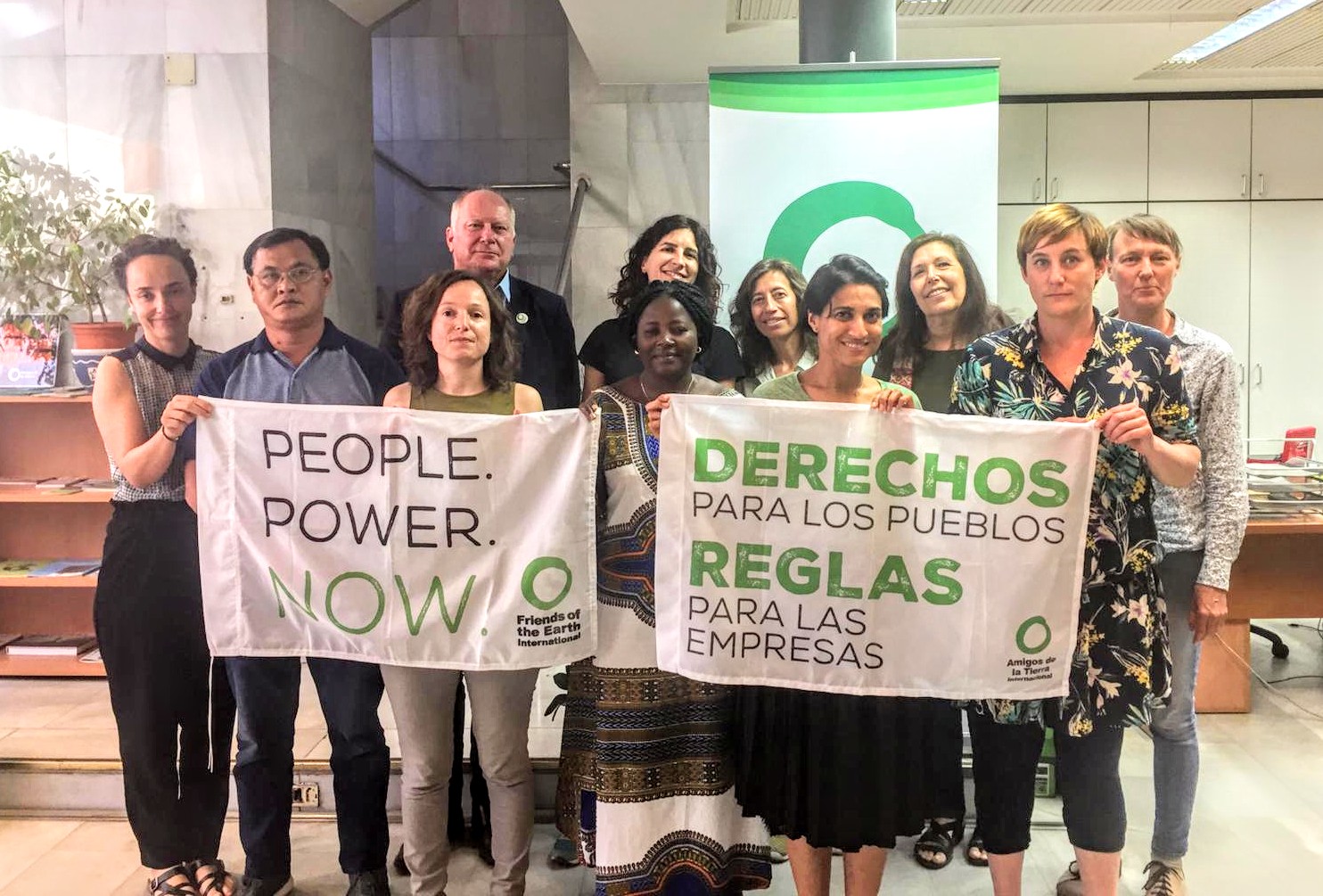
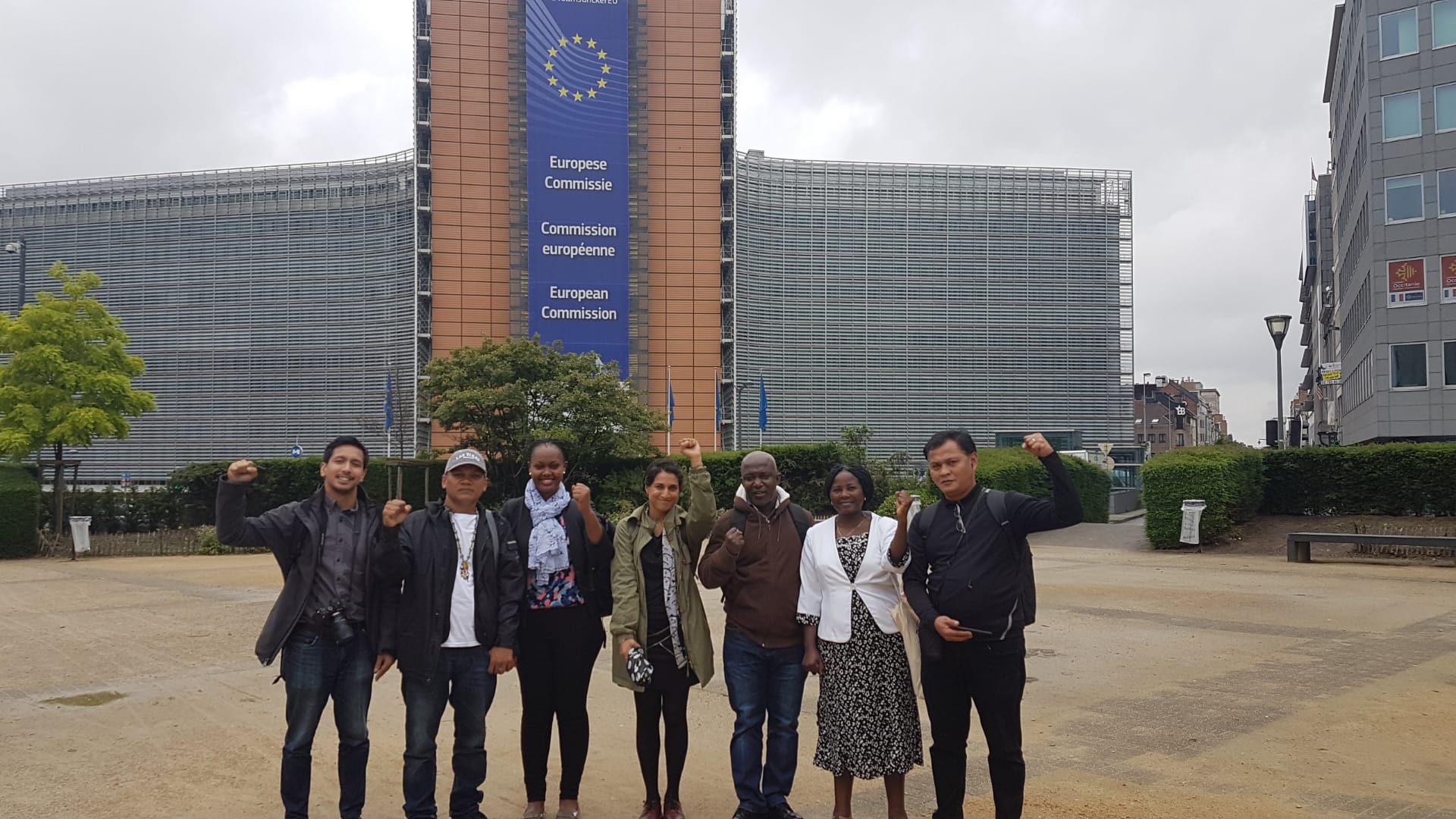
Over the past few weeks, JA! took part in a lobby tour organised in Europe, by Friends of the Earth Europe, where we met with current partners, made new allies, shared our anti-gas struggle and confronted the companies and banks who make up the liquid natural gas industry in northern Mozambique. This tour was imperative for the campaign, because so many of the companies and banks involved in the industry are based in Europe.

Lobby tour participants outside the EU Brussels

The tour, which went through Rome, Madrid, Amsterdam, Paris and Brussels, was aimed at creating awareness about our struggle against the gas industry in Mozambique and demonstrating the critical need for a Binding Treaty on Human Rights and Transnational Corporations (TNCs) at the United Nations. Currently, there is no accountability mechanism at the UN, only guiding principles which companies do not abide by, as they see them as an impediment to their greed and profit.


Our partners had arranged for JA!, along with activists from the DRC and the Phillipines to meet with current and new partners and allies, as well as industry players and state authorities.
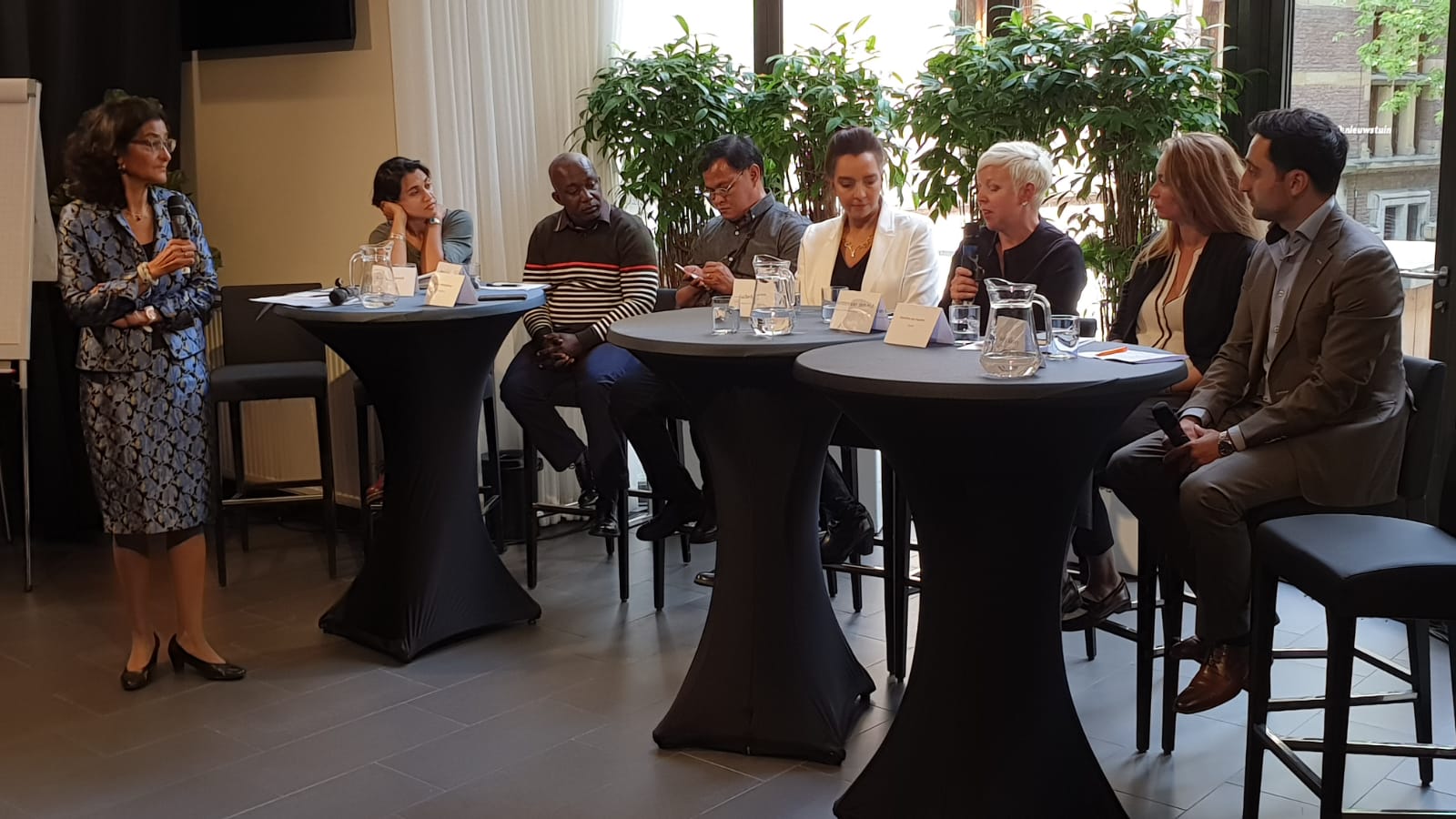
Panel discussion with lobby tour participants and parliamentarians in the Hague2

Our confrontations with the industry were often met with blatant hostility, when we tried to hold them accountable for their actions, and when we raised questions they didn’t like. We attended four annual general meetings (AGM’s), those of Shell, Natixis, Eni and Total.

Intervention at natixis AGM

Natixis, the French bank which arranged for the entrance of three major French banks to finance the Coral LNG Project1, was so hostile at their AGM that when JA! attempted to ask a question about their negligence and ineptness in the project, they turned off the microphone and refused to answer the question. Shareholders were shouting “go home!” as JA! and partner organisations walked out of the meeting.


At the Shell AGM in Amsterdam, we were part of a large contingent of civil society organisations, mostly Dutch but also some European. Shell has a sale and purchase agreement (SPA) with Mozambique LNG to buy 2 million tonnes of gas per year for 13 years.


JA! and an organisation from Nigeria were the only attendees from the global South. The response to our questions was, as expected, vague, but our voice had been heard and carried in the Dutch media. Shell had little respect for activists – when the Nigerian activist raised the impacts that Anadarko’s project was having on their community in the Niger Delta, the Charles Holliday, Shell’s Chairman, responded that he should approach the ‘helpdesk’ in the foyer for assistance.

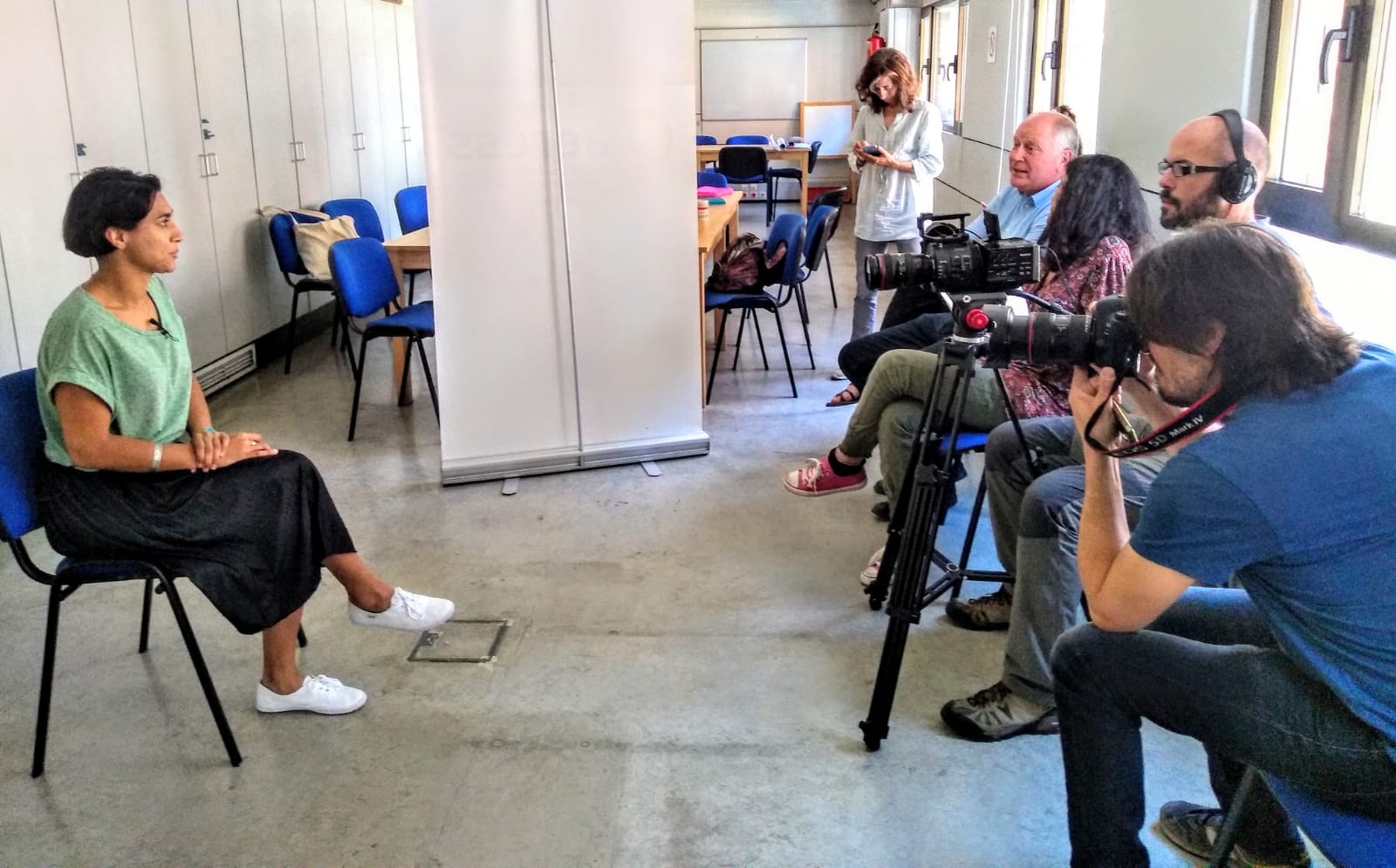
Interview with online news outlet madrid2

The third AGM we attended was that of Total in Paris, which is the new owner of the Mozambique LNG Project2, since May when it purchased Anadarko’s Africa assets. Anadarko, however, is still operating the project, and plan to hand over the lead to Total at the end of the year. After Greenpeace disrupted the AGM last year, there was a large police presence, and for some reason that was not properly explained to us, even though dozens of activists had arranged for access to the AGM, only JA! and an activist from Greenpeace were allowed into the plenary. JA!’s question was met with a dismissive answer, with Total evading responsibility for the impacts of the gas industry on the ground, claiming that responsibility lies with Anadarko.


This was a theme that came up in all AGM’s that we attended, including the fourth one, that of Italian company Eni, in Rome. Eni, along with ExxonMobil has the biggest stake in operating the Coral South LNG Project in Mozambique. We found that all the companies that we confronted, including during the one-on-one meetings we had with industry financiers BNP Paribas and BPI (French Public Investment Bank) put all the blame for the impacts on Anadarko. When we pushed them for answers, it became clear that none of these companies had even looked at the Environmental Impact Assessment that Anadarko had made in 2014, and yet were blaming them for all the climate injustices that were taking place. They are conveniently ignorant.


JA!’s partners had arranged for us to hold meetings with several authoritative bodies, including Michel Forst, UN Rapporteur on HRD; French parliamentarians from the working group on human rights and TNC’s; the deputy director of the Dutch Ministry of Foreign Affairs; a parliamentarian from political party ally in Spain, Unidas Podemos; Belgian parliamentarians, and party representatives at the European Union.


We also met with other organisations, including Oxfam, Amnesty International, Food First Information and Action Network (FIAN), the Centre for Research on Multinational Corporations (SOMO) and Action Aid.


In each country we spoke at events, to full houses of activists, journalists and the general public, some meetings of over 100 people. Our partners organising the tour had built a media campaign around our visit. Here are links to some of the articles about our struggle in European media and blogs:


Publico (Spain)


Les Echos (France)


Basta (France)


Observatories de Multinationales


L’Humanite (France)


Banktrack


Foe Scotland


It was great to see the amount of interest in our campaign, once people were made aware of the issue, and on the flipside, frightening to see how little attention the industry had been given in European media. But we believe that this tour has taken us several steps forward in the following ways:

  •  We have made many new partners and allies in the campaign throughout Europe, strengthening our coalition
  • We have shared the campaign with people working on or interested in the issue of fossil fuels and climate justice, including activists, journalists, academics and students.
  • We have directly questioned industry players one on one, from which we received some crucial information
  • We raised the issue in large industry public platforms, AGM’s, leading to attention on written and social media, and making shareholders aware
  • We have brought the issue to the radar of high level individuals on an EU level, and on the level of political parties, parliament and ministries

Now that we have strengthened the foundation of the Campaign in Europe, we must continue to push for answers and accountability. Push for activists in Europe to take their power as European citizens to hold their companies to account, and push them to force their governments, at national and EU level, to take responsibility for those corporations from whom they receive their tax.

1 Area 4 is operated by MRV, a joint venture company comprising ExxonMobil, Eni and CNPC, which holds a 70% interest in the concession for prospection and production in that area. Galp, KOGAS and Empresa Nacional de Hidrocarbonetos de Moçambique each hold 10% interest. ExxonMobil will lead the construction and operation of liquefied natural gas production facilities and related infrastructure on behalf of MRV, and Eni will lead the construction and operation of upstream infrastructure, extracting gas from offshore deposits and piping it to the plant.

2 The Area 1 block is operated by Anadarko Mozambique Area 1, Ltd, a wholly-owned subsidiary of the Anadarko Petroleum group, with a 26.5% stake, ENH Rovuma Area One, a subsidiary of state-owned Empresa Nacional de Hidrocarbonetos, with 15%, Mitsui E&P Mozambique Area1 Ltd.(20%), ONGC Videsh Ltd. (10%), Beas Rovuma Energy Mozambique Limited (10%), BPRL Ventures Mozambique BV (10%), and PTTEP Mozambique Area 1 Limited (8.5%).

Tagged , , , , , , , , , , , , , , , , , , , , , , , , , , , ,

JA! causes a ruckus at the Eni AGM

On Wednesday 14 May, JA! Attended the AGM of Italian oil and gas giant Eni, in Rome, where we put CEO, Claudio Descalzi, Chairperson Emma Marcegaglia and the board of executives on the spot in front of about 50 shareholders, by asking them questions about their work on gas in Mozambique and oil in South Africa that they really did not want to deal with. This was the first time we had been at the Eni AGM and we were able to go with the help of our Italian partners, Re:Common.

The meeting started at 10am and went on till 9pm, unusually late. After submitting written questions two weeks ago, we received the written answers, in Italian, literally as we walked into the meeting, and had to study them while the meeting was already in session, to see what they had or had not answered sufficiently before we were given a chance to speak.

JA! was given 10 minutes for an intervention. We first gave the context of the way Enis Coral Liquid Natural Gas Project was destroying endangered flora and fauna, and forcing people off their land before operations had even started, as well as their oil exploration in Block ER236, off the South Coast of Durban, affecting the livelihoods of at least 20 fishing communities and followed this with a barrage of questions about both of these issues, none of which were properly answered by CEO Descalzi.

While we asked many questions covering a range of topics, the main issues we raised were:

– Why did Eni begin operations in Mozambique in 2006, when they only received their license in 2015, and only completed their environmental impact assessment (EIA) in 2014? (This EIA was done in conjunction with Anadarko)

– Why is Enis gas project in Mozambique releasing greenhouse gases that will increase the whole of Mozambiques carbon emissions by 9.4% by 2022, when their main focus for the next ten years is decarbonisation?

– Why did Eni ignore the poor and marginilised communities of the South Coast of Durban, while only engaging with the wealthy communities at country clubs and upmarket hotels, to do their EIA?

Descalzi was extremely patronising in his responses, saying that Eni had not done any drillingin South Africa, so he is not sure about the forced removals of fishing communities that you (Ilham) are talking about.

He also interrupted JA, to say that Eni is not involved in Area 1 so the EIA for Mozambique But this is a lie, as Enis logo is on the front page of the EIA.

He did not answer the questions about them beginning operations in Mozambique before they received their license. He also claimed that the resettlement process of what we know to be forcefully-removed communities in Mozambique was in line with the EIA.

He said that the answers to the other questions were in the document of written responses, which will be released next month.

After the end of the AGM, Descalzi sought out JA !representative, and thanked JA! for the questions, to which JA! responded that none of the questions had actually been sufficiently answered, and that his so-called responses were offensiveas they contradicted what JA! Has seen on the ground, and which we are told by affected communities. He is basically, JA! said, saying that we are either ignorant or lying.

It was clear that we, and our partners Re:Common had an impact on Descalzi as he was answering our questions, he stumbled, saying Im well-cooked, an Italian saying meaning that he was extremely tired. That he sought Ilham out before anybody else was quite telling, offering her his personal contact details. Now lets see what happens

JA! will publish a more detailed post, the questions asked, and the verbal responses from Descalzi, as well as an analysis. Its important to note that Eni, and Descalzi, along with Shell, are currently defendants in a court case, charged with one of the worlds biggest corruption scandals, allegedly paying $ 1.3 billion in bribes, to Nigerian politicians for the purchase of an oil field in Nigeria. Lets see now, if he keeps his word by responding fully and personally to the questions he has offered to personally answer, while also remembering, Can we trust one of the most corrupt men in the world?

Tagged , , , , , ,

Under Water

Tagged , , , , , , , , , , , , , , , , , , ,

CORPORATE IMPUNITY: STRATEGIES OF STRUGGLE (PART II)

As we mentioned in last month’s article, corporate impunity – the crime that does pay off – is a complicated matter. At the moment, our chests are still filled with the breath of fresh air brought to us at the end of last month by the second session of the Permanent People’s Tribunal (PPT), where a panel of 8 jurors and almost 200 participants listened attentively to the complaints of communities and activists who suffer first hand the consequences of a system that favours and protects transnational corporations. Experts noted and reiterated what is no longer news to us: the criminal behaviour of these corporations reflects the field of impunity in which they operate. In addition to providing us with a (unpublished) report of deliberations that will help to expose the behaviour of these companies, this jury also made clear that the mobilization of peoples and the opening of spaces like this court are a fundamental part of the fight for justice.

03

About PPT, we have little more to say right now. You can find more information on the cases presented here, or read the press release of Southern Africa’s Campaign to Dismantle Corporate Power’s (of which we are part) here. This year, the visibility given to the different cases was notorious (like this article on ProSavana in the South African press), and there was also room for an update on the cases brought to the PPT last year in Swaziland. But this is not the time to slow down – after the PPT, more important moments regarding this issue are coming up.

Nowadays, there is a great legal asymmetry between, on the one hand, the endless regulations that protect and safeguard private investments (even shielding them from political decisions that may conflict with the companies’ financial expectations), and on the other, the non-existent coercive legislation which upholds human rights. Corporations rely on a wide range of international norms that act in their defence – from free trade agreements to investor-state dispute settlement mechanisms – but none that regulates their actions in the light of their impacts. Apparently, for years now we have been hoping that, by themselves, guiding principles or corporate social responsibility (voluntary, unilateral, and non-enforceable) become enough to prevent corporate human rights abuses by the corporations, but obviously, this has not happened and will not happen.04

The national laws of countries such as ours are very weak, not to mention the very limited capacity to enforce them and supervise them. That is one of the reasons why Shell remains unpunished despite the criminal spills it is responsible for in Nigeria, or why hundreds of people are being driven from their land to make way for palm plantations in Indonesia. This is why fighting for the enforcement of existing national legislation is an important step, but it can not be the only one if we really want to stop the impunity of these powerful corporations. It is necessary to think beyond. In today’s globalized world, corporations operate in different national jurisdictions, and take advantage of this to evade accountability. For us, expanding the limits of international law and demanding legal instruments that provide a path from where victims of such violations may demand justice seems to be as urgent or even more.

01

The Intergovernmental Working Group mandated to draft a binding Treaty on Transnational Corporations and Human Rights, set up by the UN Human Rights Council in 2014, will meet for the third time in October of this year, then, the concrete terms of the text to be included in the Treaty will be discussed. This initiative, which started with the governments of Ecuador and South Africa, has been gaining strength and supporters. Numerous countries, mostly in the Global South, have already expressed their support for the Treaty, as is the case of Uruguay, which sees in this instrument an opportunity to protect its public policies that are being threatened by the interests of transnational corporations. Mozambique, unfortunately, remains completely out of this discussion and didn’t even show up at the two sessions of the Working Group in the recent years.

An alliance was formed by civil society organizations from around the world to support the drafting of this law, and has actively participated in the sessions of the Working Group to ensure that it will truly represent the needs of those affected. One of the requirements of this alliance is that this treaty contains solid provisions that prohibit corporate interference in the process of formulating and implementing laws and policies. According to Friends of the Earth International (FoEI), also part of the Treaty Alliance, it must establish the criminal and civil liability of transnational corporations in order to fill existing legal gaps in international law, and should apply also to all subsidiary companies and those that form part of its supply chain. Learn more about FoEI’s contributions to the Treaty here.

06


When existing legislation does not address all of society’s problems and needs, new legislation must be created. It was like that with the implementation of universal suffrage, with the abolition of slavery, and in so many other historical moments. We believe that we are about to reach an important milestone in the struggle for the sovereignty of peoples and against corporate impunity, and as the poet once said, there is nothing more powerful than an idea whose time has come.

Tagged , , , , , , , , ,

Supports who?

Another mega agricultural project launched in Mozambique

We received the news about its launching ceremony with skepticism. For many of us, it was the first time we were hearing about the project. Another mega project loaded with ambitious and (some) noble goals, like so many others that preceded it and vanquished without achieving half of what they set out to do.

“This mega project of my Government, whose objective is to gradually take rural families out of poverty, is the embodiment of the investment in Mozambican families as the main mechanism to promote sustainable, integrated and inclusive development and reduce regional and local asymmetries”, said Filipe Nyusi.

It is premature to make major considerations or comments on the subject because still very little is known. We have not yet had access to any document on the project, and the little information that exists is circulating in the mainstream media. However, the simple fact that a project this big (judging by the amounts involved and by the 125 thousand families of alleged beneficiaries) is launched in this manner, leads us to ask: Where did this project come from?

Once again, this is a top to bottom approach. The project was designed, discussed and launched, without giving the alleged beneficiaries or other interested parties and/or affected people, the chance to participate in its construction!

Surely there are more than enough reasons to justify the urgency to launch this project. To justify why there was no time to perform appropriate public consultations; to involve the many actors who deal with agricultural issues such as research institutions, academics, civil society, grassroots organizations and peasants in discussions on priorities for the development of peasant agriculture; and to design the project on the basis of a truly open and transparent process.

To justify their hurry, the noblest of reasons will be invoked, such as the urgent need to support the development of the peasantry, given their evident poverty and vulnerability. Obviously, old and less noble arguments – which, truth be said, are nothing but mere distractions – will also come back, like accusing those who question the project of being against development and/or unpatriotic.

Interestingly enough, the World Bank and other similar agencies are far more influential in deciding what may or may not happen in Mozambique than the Mozambican people. And although, as we have said earlier, we know nothing about this project yet, we risk guessing that the role of the World Bank is not limited to financing it. They have certainly been involved in the project’s conception, ensuring that their altruistic support goes mainly to what interests them most: agro-business and forest plantations – monocultures of exotic species – they call reforestation.

“More than 5,000 jobs will be created by forest plantations, through the reforestation of more than 1600 hectares of degraded lands.”

According to information in the media, this project was conceived by MITADER and will be supported by the World Bank! The perfect wedding!

In other words, we owe a great debt to our government (and no, it is not that hidden and illegal debt we talking about)! We are deeply grateful to them for granting us another ready-made project to reduce poverty. Free from burdens such as having to think about development issues, about inclusive and participatory strategies, about how to ensure that the priorities of the peasantry are properly included, and even about how we want to manage our resources and how we want to see our country in the coming years.

For now, let’s wait for the enthusiasm to fade so we can then try to understand how this mega project is supposed to work and, above all, how will it – unlike the many others in the past just like it (loaded with the same promises and the same rivers of money to implement) – finally get Mozambicans out of poverty?

Who has left poverty behind thanks to the fantastic green revolution? Who has left poverty behind growing jatropha or other biofuels? Who will benefit from Prosavana? Someone always profits, but who? And at what cost? How many hundreds of thousands of Mozambicans’ well being will these ready made projects with incognito beneficiaries “cost”?

And while misunderstandings and failures in communication are, unfortunately, too often invoked to justify civil society’s opposition to so many mega-projects, – even though they are never the main reason – people insist on doing things behind closed curtains. Where is the official information about the project? It has already been inaugurated; it is already being advertised in the media; but it is not available on the websites of the entities involved and all we know about it is what is being reported by the media.

We would also like to believe and share their enthusiasm, but skepticism has taken over us long ago. Now we prefer a “seeing is believing” approach, and we have not seen anything yet …


Tagged , , , , , , ,